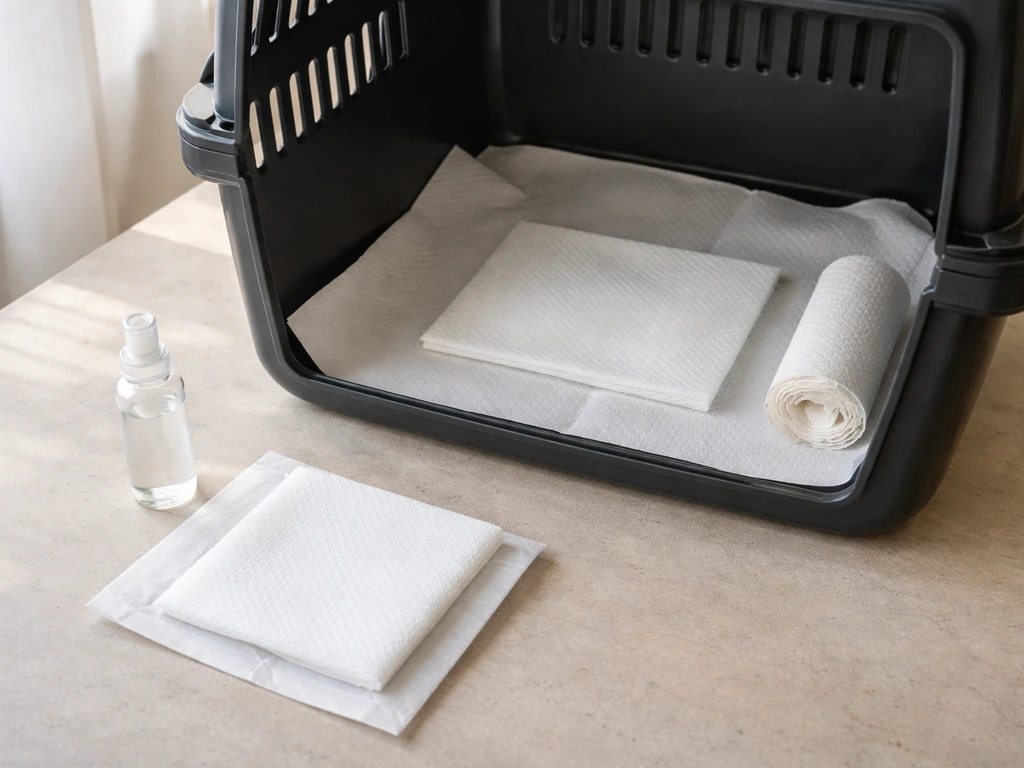
No, hydrogen peroxide is not safe to put on a bird's wound. Even the standard 3% pharmacy bottle can damage healthy tissue, slow healing, and make the injury worse. Skip it entirely. The best thing you can do right now is gently flush the wound with clean water or saline, keep the bird warm and calm in a dark container, and get it to a wildlife rehabber or avian vet as soon as possible. A bird also needs veterinary guidance on what to do for injuries so it can heal properly what does a bird receive when it gets hurt.
Is Hydrogen Peroxide Safe for Bird Wounds? First Aid
Marcus Chen
27 May 2026
Why hydrogen peroxide is a bad idea for bird wounds
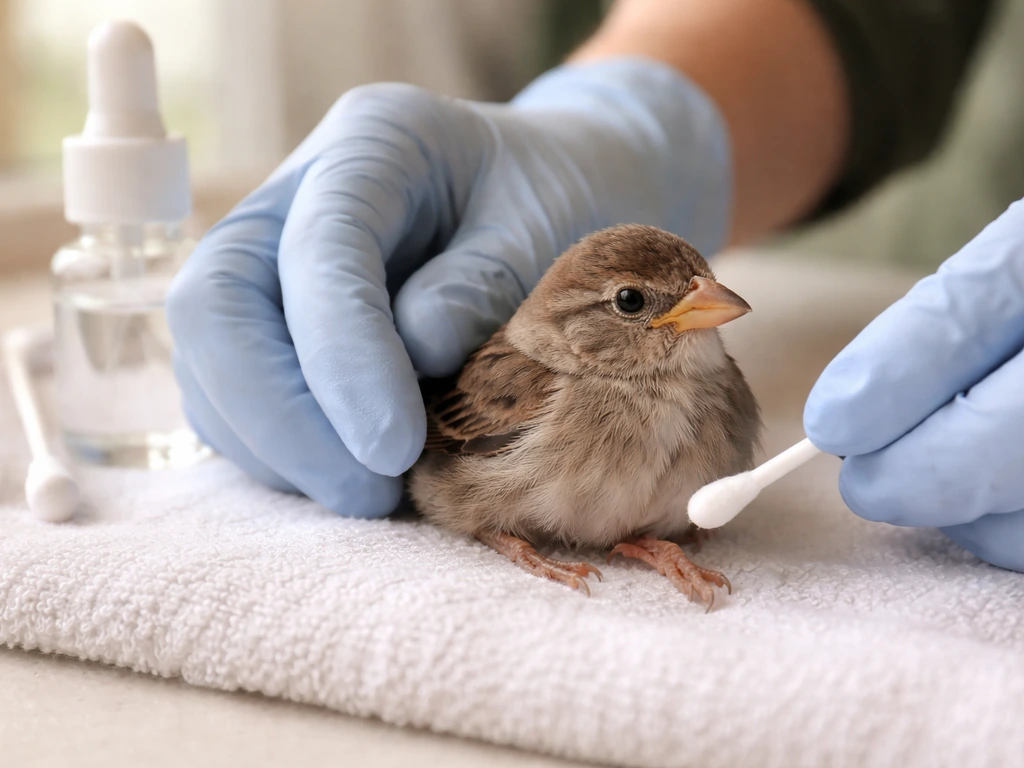
The main problem with hydrogen peroxide is that it does not distinguish between bacteria and living tissue. It oxidizes everything it contacts, including the healthy cells that are supposed to be closing the wound. Wildlife rehabilitation guidelines from multiple states explicitly list undiluted hydrogen peroxide as not recommended for wound cleansing precisely because it harms normal tissue. Research on wound healing backs this up: higher concentrations of hydrogen peroxide retard wound closure and cause oxidative damage to healing tissue. University of Utah Health puts it plainly: it can do more harm than good as a wound cleaner.
Birds are also much smaller and more physiologically fragile than humans or even most pets. A wound that seems minor to you involves a proportionally much larger surface area for the bird. Applying hydrogen peroxide to a small bird's cut is not just ineffective, it is genuinely likely to worsen tissue damage at a scale that matters. Add in the stress of being handled and the bird's already elevated physiological state, and you have a real risk of compounding the harm.
When to avoid hydrogen peroxide completely
- Any open wound, cut, puncture, or laceration on a bird
- Near the eyes, ears, mouth, or nostrils
- On burns or abraded skin
- On featherless or thin-skinned areas like the feet, legs, or around the beak
- When the bird is already in shock or severely stressed (i.e., almost always in a rescue situation)
What hydrogen peroxide actually does to wound tissue
When you apply hydrogen peroxide to a wound, it releases oxygen rapidly. That fizzing you see is not bacteria being killed, it is oxidative damage happening. Studies have shown that high concentrations of hydrogen peroxide delay wound closure and alter the biological markers involved in healing. For a bird, whose entire body may weigh less than a few ounces, even localized oxidative damage can interfere with recovery in a serious way.
The tissue most important for healing, the granulation tissue that forms as a wound closes, is exactly what hydrogen peroxide disrupts. Killing that tissue sets the healing process back and opens the door to infection because the wound stays open longer. So the instinct to 'disinfect' with hydrogen peroxide actually creates the problem you are trying to prevent.
Safe first-aid steps you can do right now
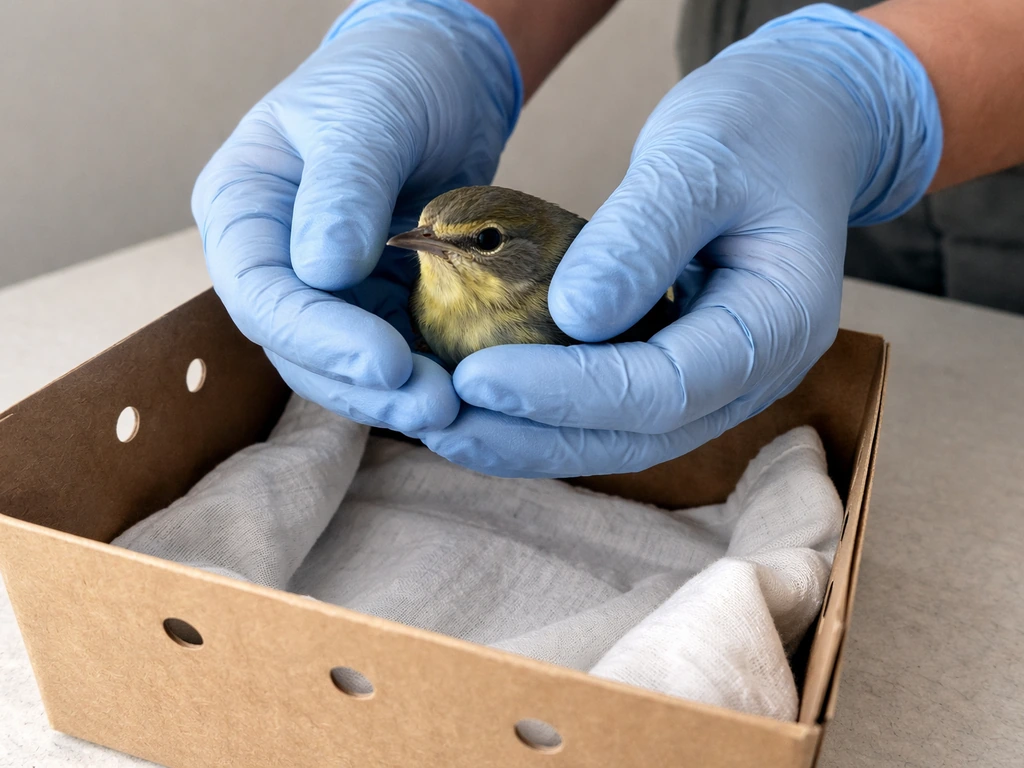
The most important thing you can do for an injured bird is stabilize it, not treat it. Wildlife organizations from Tufts Wildlife Clinic to Audubon and the Golden Gate Bird Alliance all say the same thing: get the bird into a warm, dark, quiet container and minimize handling. If the bird does not fly away, place it in a warm, quiet enclosure and call a wildlife rehabilitator immediately, according to Audubon warm, dark, quiet container. That step alone dramatically improves a bird's chances before professional help arrives.
- Put on gloves if you have them, then gently pick up the bird with both hands and place it in a cardboard box or paper bag with air holes. Line it with a soft cloth or paper towels.
- Keep the container warm. Place it on a heating pad set to low (with a towel between the bird and pad) or near a warm spot. A cold bird goes into shock faster.
- Keep it dark and quiet. Covering the box reduces stress, which is critical. A stressed bird's heart rate can become dangerous on its own.
- If there is visible bleeding, apply very gentle pressure with a clean cloth or gauze for a few minutes. Do not press hard on wing or leg injuries where a fracture might be present.
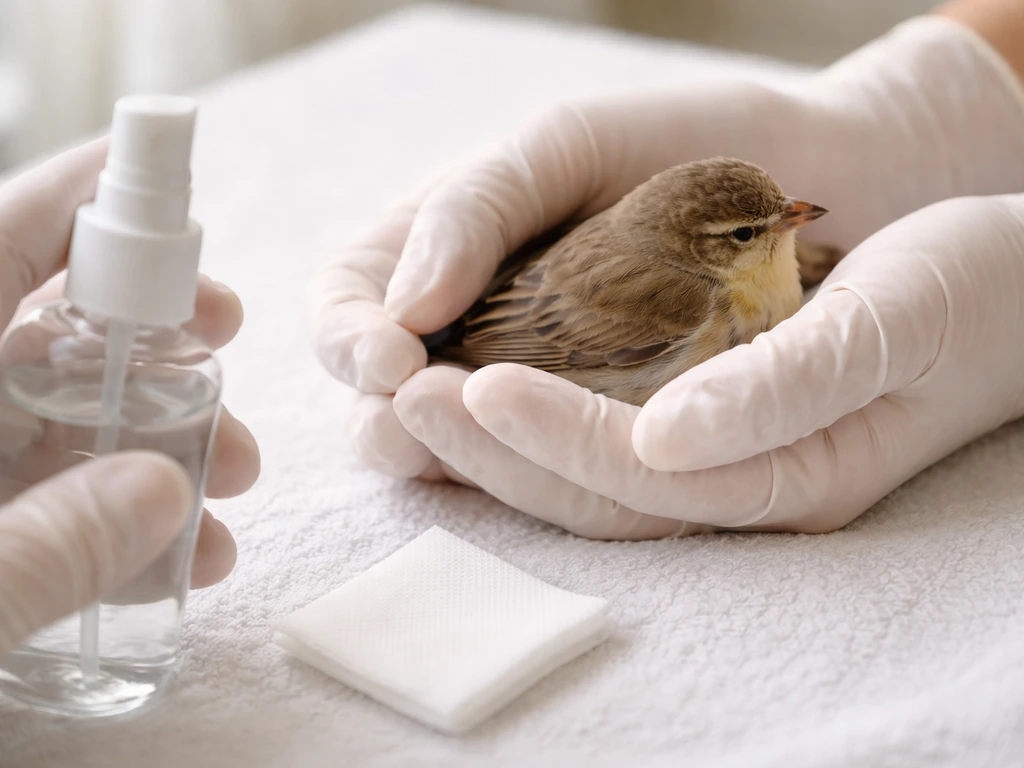
- If the wound has obvious debris or dirt, you can gently flush it with clean tap water or, ideally, saline solution. Use a syringe or squeeze bottle if you have one. Flush gently, do not scrub.
- Do not give the bird food or water. It is tempting, but it adds stress and can cause harm if the bird has internal injuries.
- Call a wildlife rehabilitator or avian vet immediately while the bird is resting in the box.
What to use instead of hydrogen peroxide
For cleaning a bird wound at home, sterile saline is your best option. If you are wondering whether anything else is safe, stick with guidance for what to put on a bird wound what can i put on a bird wound. You can buy wound-wash saline at a pharmacy, or make a basic version by dissolving about a quarter teaspoon of non-iodized salt in a cup of boiled and cooled water. Flush the wound gently. Sterile water works too if saline is not available.
If you want to use an antiseptic, diluted chlorhexidine and diluted povidone-iodine (betadine) are both considered appropriate by veterinary and wildlife rehabilitation guidelines. The key word is diluted. Chlorhexidine should be at 0.05% (the standard antiseptic solution from the store is much more concentrated, so you need to dilute it significantly). Povidone-iodine should be around 1%, which means diluting a 10% solution roughly tenfold. Keep both away from the bird's eyes, ear canals, and mouth. If you are unsure about concentration, plain saline or clean water is safer.
Antibiotic ointments like Neosporin are worth mentioning because people reach for them instinctively. Avoid applying them without specific veterinary guidance. Some formulations contain ingredients that are not safe for birds, and ointments can mat feathers, reduce insulation, and interfere with the bird's ability to preen. Leave ointments to the professionals unless a vet explicitly tells you to use one.
| Product | Safe for Bird Wounds? | Notes |
|---|---|---|
| Hydrogen peroxide (3%) | No | Damages healthy tissue, delays healing, avoid entirely |
| Sterile saline | Yes | Best first choice for flushing and cleaning |
| Clean tap water | Yes | Acceptable if saline is unavailable |
| 0.05% chlorhexidine solution | Yes (with care) | Keep away from eyes, ears, mouth; requires proper dilution |
| 1% povidone-iodine (betadine) | Yes (with care) | Dilute from 10% stock; keep away from sensitive areas |
| Neosporin or antibiotic ointments | Not without vet advice | Can harm birds; mats feathers; wait for professional guidance |
| Rubbing alcohol | No | Highly irritating and toxic to bird tissue |
| Witch hazel | No | Too astringent; not appropriate for open wounds |
Different wounds need different handling
Surface cuts and scrapes
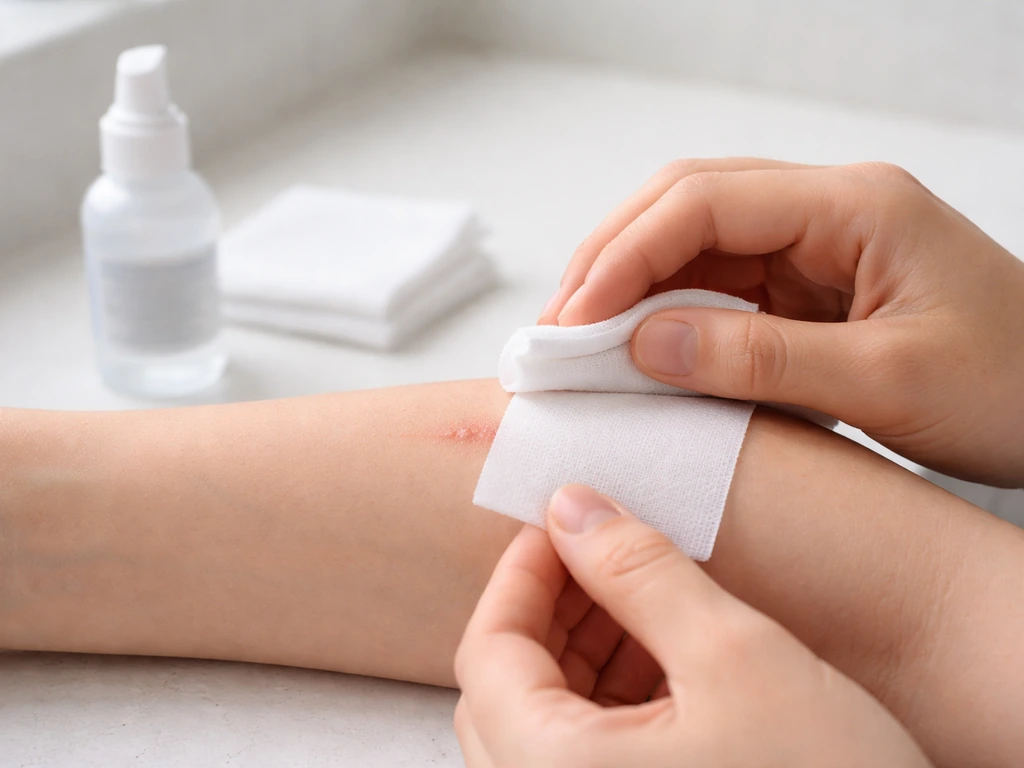
A visible but shallow cut that is not actively bleeding can be gently flushed with saline or clean water. Pat the area dry with a clean cloth and cover it loosely if possible. Watch for signs of infection: swelling, redness spreading from the wound, discharge, or a bad smell. Even minor cuts in birds can become infected quickly, so a vet check within 24 hours is still a good idea.
Puncture wounds (especially cat or dog bites)
Puncture wounds are a veterinary emergency, full stop. Cat saliva in particular contains Pasteurella bacteria that can kill a bird within 24 to 48 hours even when the wound looks tiny. If a cat touched the bird at all, even a brief contact with claws or teeth, treat it as urgent and get the bird to a rehabber or avian vet the same day. Flush the wound generously with saline while you arrange transport, but do not delay care to do extensive home treatment. These birds almost always need antibiotics.
Wing injuries
A drooping wing, a wing held at an odd angle, or a visible wound on the wing all suggest fracture or significant soft-tissue damage. Do not try to splint or wrap the wing yourself unless you have been trained to do so. Improper wrapping cuts off circulation. The best thing you can do is get the bird into a snug but not tight container so the wing is supported against the body, keep it warm, and get professional help.
If there is an open wound on the wing, a gentle saline flush is fine, but leave the structural assessment to the vet. For a wing injury, outcomes can vary, and if you are also wondering do clipped bird wings grow back, that is something a wildlife rehabber or avian vet can explain for your bird's specific situation.
In many cases, birds can recover after wing injuries with proper care from a wildlife rehabber or avian vet can a bird with clipped wings ever fly again.
Foot and leg injuries
Feet and legs are delicate and highly vascular. A bleeding foot wound should have gentle pressure applied with clean gauze. Flush gently with saline if there is contamination. Avoid any tight wrapping on toes, as birds lose toes very quickly if blood flow is cut off. Leg fractures are common in birds that have hit windows or been caught by pets. Again, resist the urge to splint without training, and focus on warmth, calm, and getting to a professional.
Burns
Burns can happen when birds land on hot surfaces or contact electrical elements. For a burn, the priority is cooling the area gently with room-temperature water (not ice cold) for a few minutes, then covering loosely with a clean damp cloth. Do not apply butter, oil, toothpaste, or any home remedy. Burns are painful and prone to serious infection in birds, so veterinary care is urgent.
Window collision injuries
A bird that has hit a window may not have any obvious external wounds, but that does not mean it is fine. Window strikes commonly cause internal bleeding, concussion, and spinal injuries. In an air crash investigation, experts similarly look beyond what appears on the surface to identify the real cause of injury and risk. The visible symptoms may be just a dazed, stunned bird sitting on the ground.
Place it in a dark, warm, quiet box and wait up to an hour. If it does not recover and fly off on its own, or if it shows any neurological signs like head tilting, circling, or inability to perch, it needs a wildlife rehabber. Virginia DWR advises that any bird with broken bones, bleeding, deformity, cat bite or puncture wounds, maggots or warbles, [head tilting](https://dwr. virginia.
gov/wildlife/injured/birds/), or large bubbles under the skin should be taken to a wildlife veterinarian or rehabilitator for diagnosis and treatment. Do not put food or water in the box.
When to stop home care and call for help immediately
There are situations where no amount of careful home first aid is going to be enough, and trying to do more can cost the bird its life. Wounded bird syndrome meaning can refer to a condition where injured birds become unusually lethargic or stressed during recovery. Call a wildlife rehabilitator or avian vet right away if you see any of the following.
- Bleeding that does not slow down after two to three minutes of gentle pressure
- A wound that is deep, large, or has exposed bone or tissue
- Any bite or scratch from a cat, even if the wound looks minor
- A broken or deformed bone in a wing or leg
- The bird is unconscious, unresponsive, or having seizures
- Head tilting, circling, or other signs of neurological damage
- Maggots, fly eggs (small white clusters), or a foul smell from a wound
- Visible infection: pus, extreme swelling, or spreading redness
- Large bubbles under the skin (can indicate gas-forming infection or air sac injury)
- The bird is a protected wild species and you are unsure about handling it legally
To find help fast, search for a licensed wildlife rehabilitator in your area through your state's Department of Wildlife or equivalent agency, or use resources like the Wildlife Rehabilitators directory. In the US, you can also call your nearest humane society or animal control, who can often refer you. In the UK and Australia, organizations like the RSPCA have dedicated injured wildlife lines. While you wait for guidance or transport, keep the bird in that warm, dark, quiet box and resist the urge to keep checking on it.
Aftercare, monitoring, and keeping things from getting worse
If you are keeping the bird temporarily before a vet appointment or rehabber pickup, check on it visually every couple of hours without opening the box unnecessarily. You are looking for signs that the bird is upright, alert, and not getting worse. Listen for sounds through the box: breathing that sounds labored, clicking, or wheezing is a red flag.
Keep the environment consistent: warm (around 85 to 90 degrees Fahrenheit for small injured birds), dark, and quiet. No pets in the room, no loud noises, no children hovering. Stress kills injured birds faster than many injuries do. Do not offer food unless a rehabber specifically tells you what to give and how. Water offered incorrectly can cause aspiration, which is fatal.
Watch the wound site if it is visible. Swelling that increases rapidly, discharge that was not there before, or a change in color around the wound edges can all indicate infection taking hold. If you notice these signs before you can get to a vet, call for guidance rather than adding more products to the wound.
Once the bird is in professional hands, the rehabber or vet will assess whether the wound can heal on its own or needs active treatment. Some wounds do close without intervention if they are kept clean and the bird is otherwise healthy, but that determination really does need trained eyes. The question of whether a bird's injury can resolve on its own is something a professional is best placed to answer after a proper look, since it depends on the wound depth, location, species, and overall condition of the bird.
After any injury, preventing re-injury matters too. If the bird was struck by a window, applying window collision tape or decals on the outside of the glass can prevent future strikes. If a pet was involved, keeping cats indoors and dogs leashed in bird-rich areas eliminates the most common sources of puncture wounds. These are small changes that make a real difference for birds in your immediate area.
FAQ
Is it safe to use the 3% hydrogen peroxide from the pharmacy if the wound looks small?
No. The 3% bottle is still considered unsafe because it can injure living healing tissue, even when it looks like it is only “disinfecting.” If you need antiseptic at all, only use the diluted options mentioned in the article, and keep them away from eyes, mouth, and ear canals.
What should I do if I already used hydrogen peroxide on the wound?
Do not use it. If you already applied hydrogen peroxide, gently flush the wound with sterile saline or clean water to remove residue, then stop using peroxide and get the bird to a wildlife rehabber or avian vet for guidance.
What does the bubbling/fizz mean, is it disinfecting bacteria?
Use a saline or clean water flush instead. The “fizz” from peroxide is not a harmless cleaning action, it reflects oxidative damage. Flushing with saline removes debris without harming granulation tissue.
Can I use hydrogen peroxide to stop bleeding or “sanitize” a bleeding bird wound?
If the wound is actively bleeding, apply gentle pressure with clean gauze. For contamination, do a gentle saline flush, then keep the bird warm and get professional help. Avoid peroxide on any bleeding or open tissue.
If I diluted hydrogen peroxide, would it be safer than 3%?
Only if a trained vet or rehabber tells you to and at the correct dilution. Undiluted hydrogen peroxide and strong antiseptic solutions can slow healing or worsen tissue injury, especially in small birds.
How long should I flush a bird wound at home, and when do I stop?
Rinse first, then reassess. Flush gently with sterile saline, pat dry with a clean cloth if needed, and watch for worsening signs like expanding swelling, spreading redness, discharge, or bad odor. If you see those changes, call for guidance rather than adding more products.
If the puncture wound looks tiny, do I still need to see a vet immediately?
No home product can replace the evaluation needed for puncture wounds and for wing or leg injuries. Even when the skin looks fine, bacteria can be trapped inside and require antibiotics, so seek same-day care.
Is it okay to bandage or wrap a bird wound after cleaning?
Cover loosely only when appropriate for shallow cuts. Avoid tight bandaging, anything that reduces circulation (especially for toes and feet), and anything that mats feathers. If you are unsure, use the dark, warm container approach and get professional guidance.
What if the bird seems sick even though the wound looks minor?
Yes, and it should change your plan. If the bird seems lethargic, cannot perch, has trouble breathing, or shows neurological signs (such as circling or head tilting), treat it as urgent and contact a wildlife rehabber immediately rather than focusing only on the wound.
How quickly should I contact a wildlife rehabber or avian vet after first aid?
Because small birds can worsen quickly, it is better to call for help sooner rather than waiting. If you cannot reach care right away, keep the bird warm (about 85 to 90°F for small injured birds), dark, quiet, and minimize handling, then escalate once you hear any concerning breathing sounds or see rapid swelling.
What if the wound is near the eye, can I use diluted chlorhexidine or iodine?
If the wound area is near the eye, do not put antiseptics in. Use gentle saline rinses around the area only if you can do so without touching the eye, then seek urgent guidance from a rehabber or avian vet.
Can bird wounds heal on their own if I just clean them with saline and keep them warm?
Often, yes. Many superficial cuts can heal with proper flushing and support, but depth, location, and species matter. A professional assessment is needed to decide whether the wound needs closure, debridement, or medication.
Should I offer food or water to a bird while waiting for rehab after treating a wound?
Do not put food or water in the transport box. Offer nothing until a rehabber or vet tells you what is safe and how to administer it, because aspiration or digestive complications can be fatal.
Next Article
What Can I Put on a Bird Wound Safely First Aid
Safest first aid for bird wounds: what to apply, what to avoid, and when to get urgent avian vet help.