
Sometimes, yes, a bird can recover on its own, but only in a narrow set of circumstances: it was briefly stunned by a window collision and shows no other signs of injury, or it's a fledgling that isn't actually hurt at all. In almost every other situation, birds cannot heal themselves well enough to survive. Broken bones, puncture wounds, deep lacerations, beak injuries, and internal injuries will not resolve without treatment. The honest answer is that "wait and see" is only appropriate for about an hour, and only when the bird looks truly unharmed except for being dazed.
Can an Injured Bird Heal Itself? Signs and What to Do
Marcus Chen
12 May 2026
When a bird might actually be okay on its own
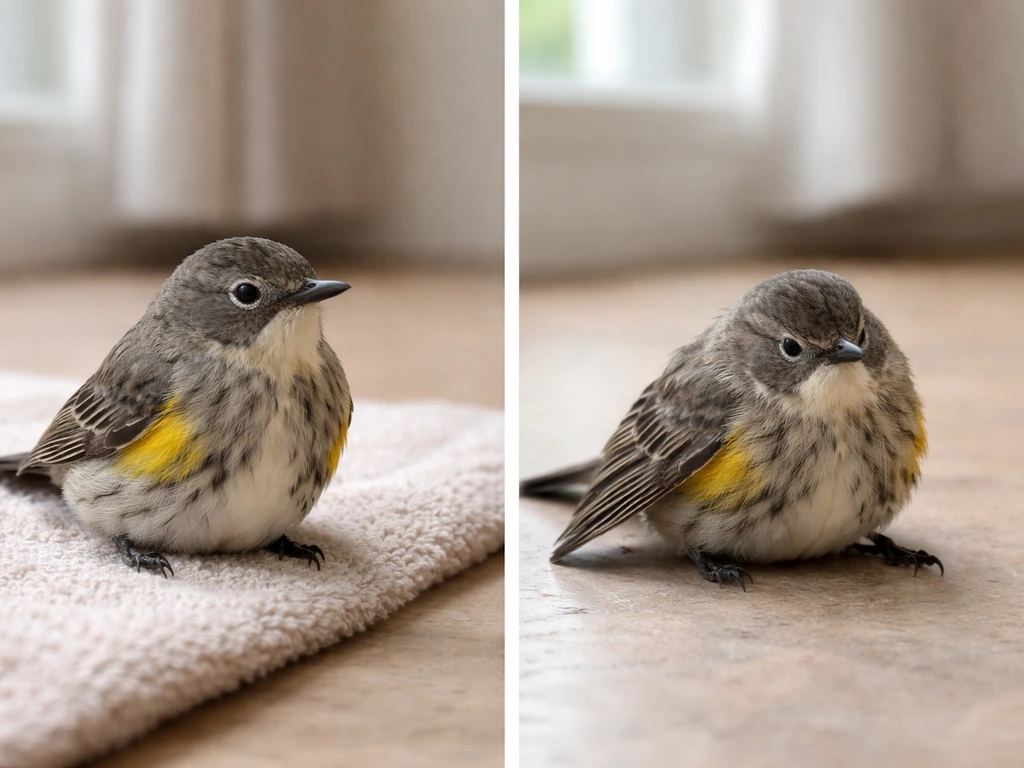
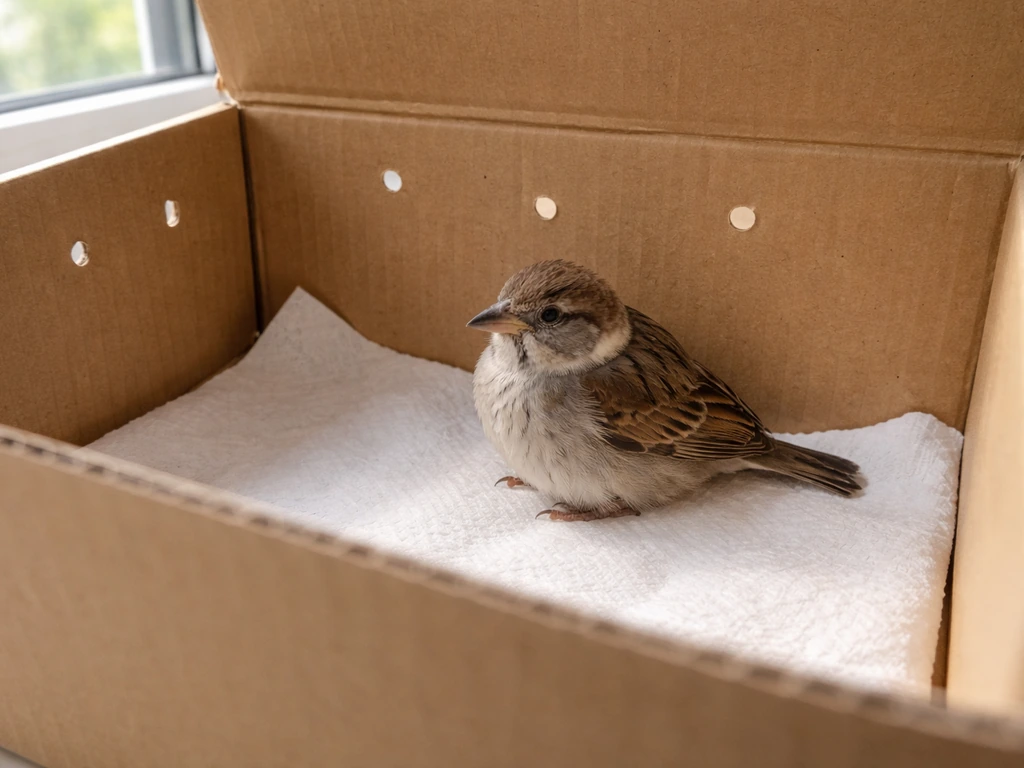
The clearest case where leaving a bird alone is the right call: a window-strike bird that is upright, breathing normally, holding both wings symmetrically, and just sitting quietly. Stunned birds often recover within 15 to 60 minutes. The American Bird Conservancy, Audubon, and the U.S. Fish and Wildlife Service all give the same rough window: one hour. If the bird flies off after that, great. If it doesn't, it needs help.
The other "leave it alone" situation is a fledgling on the ground. Young birds that are fully feathered, hopping around, and screaming loudly are usually not injured; they're just learning to fly. Their parents are almost certainly nearby. Picking them up because they look helpless is one of the most common well-meaning mistakes people make, and it actually pulls the bird away from its parents and puts unnecessary strain on wildlife rehabbers who are already stretched thin.
Beyond those two situations, birds don't have the ability to set their own bones, close deep wounds, fight bacterial infections without antibiotics, or realign a damaged beak. Expecting a bird with a broken wing to heal on its own is like expecting a person with a compound fracture to walk it off. The injury will worsen, infection sets in, and the bird suffers. If you're seeing any of the signs below, don't wait.
Stunned vs. actually injured: what to look for
The first thing to figure out is whether the bird is just temporarily dazed or genuinely hurt. Wounded bird syndrome meaning refers to the idea that birds may appear calm or stunned at first, but still need timely assessment to ensure they are not seriously injured. Here's how to tell them apart quickly, without touching the bird if you can help it.
| Sign | Probably stunned | Likely injured — needs help |
|---|---|---|
| Body position | Upright or sitting normally | On its side, flopped over, or hunched |
| Wings | Both held symmetrically and close to body | One drooping, twisted, or held at a strange angle |
| Eyes | Blinking, both open | Closed, partially closed, or asymmetric |
| Breathing | Normal, quiet | Labored, open-mouth, tail pumping |
| Bleeding | None visible | Any visible blood |
| Response to approach | Alert, tries to move away | Non-responsive or barely reacts |
| Legs | Gripping surface or standing | Unable to stand, one leg dangling |
A stunned bird will usually improve noticeably within the first 15 to 30 minutes. If you're not seeing improvement by the one-hour mark, treat it as injured and contact a wildlife rehabilitator or avian vet.
What to do right now: first-aid basics
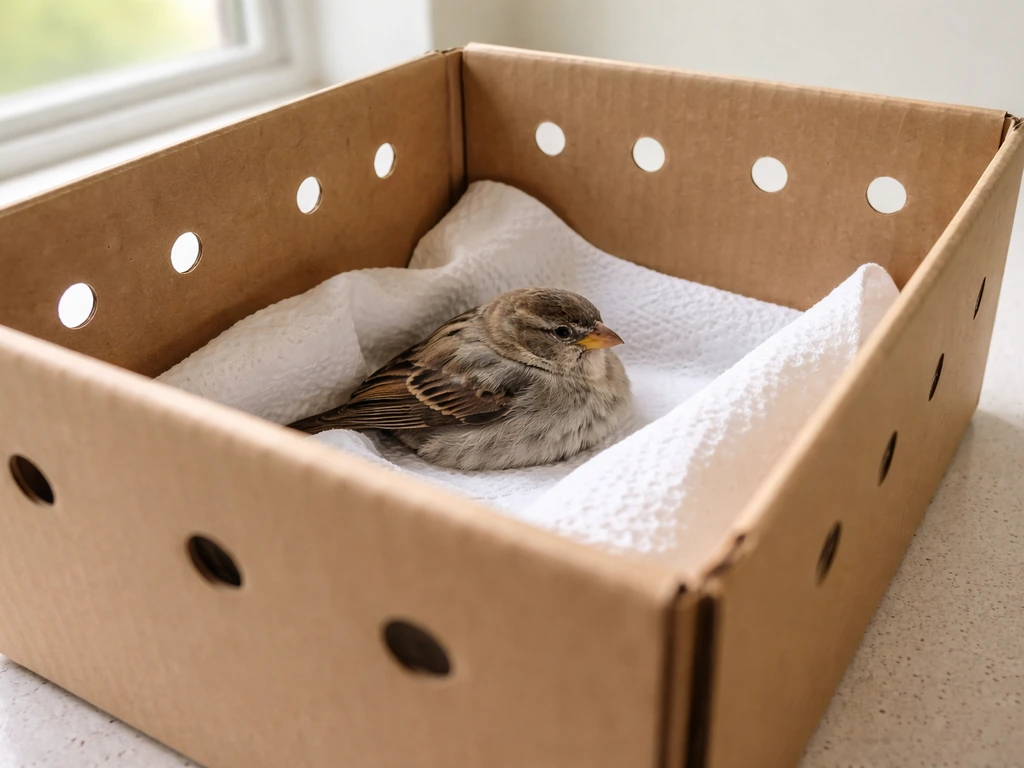
The goal of immediate first aid isn't to fix anything. It's to stabilize the bird, reduce stress, and keep it safe until a professional can help. Here's what that looks like in practice.
Do these things
- Put the bird in a cardboard box with air holes punched in the lid. Size it so the bird can stand and turn around, but not much bigger than that. Line the bottom with a paper towel or a small piece of cloth.
- Keep it warm. If the bird feels cold, place the box half on and half off a heating pad set to low, so the bird can move away from the heat if it gets too warm. A warm water bottle wrapped in a towel works too. Target temperature is roughly 75 to 85°F for small birds.
- Keep it dark and quiet. Put the box somewhere away from kids, pets, and noise. No TV, no radio, no peeking every two minutes. Stress alone can kill injured birds.
- If there's visible bleeding and you need to act before help arrives, apply gentle, steady pressure with a clean cloth. Don't use hydrogen peroxide — it damages delicate bird tissue and should never go on an open wound without a vet's guidance.
- Note what happened: where you found the bird, what you think caused the injury, what time it was, and any visible wounds or unusual posture. This information helps a rehabber or vet assess the bird faster when you call.
Don't do these things
- Do not give food or water. This is one of the most important rules. Feeding the wrong thing, or feeding a bird that is in shock, can cause aspiration or death. Even water can be dangerous if given incorrectly. Wait for professional guidance.
- Do not give any human medications, antiseptic sprays, or home remedies. These can be fatal to birds.
- Do not keep opening the box to check on it. Each time you open it, you're adding stress.
- Do not put the bird in a wire cage. Wire causes feather damage and can injure a panicking bird further.
- Do not try to splint a wing or leg yourself unless a rehabilitator is walking you through it over the phone.
- Do not chase the bird if it's moving around. A panicked injured bird can make its injuries worse.
Red flags that mean get help now, not later
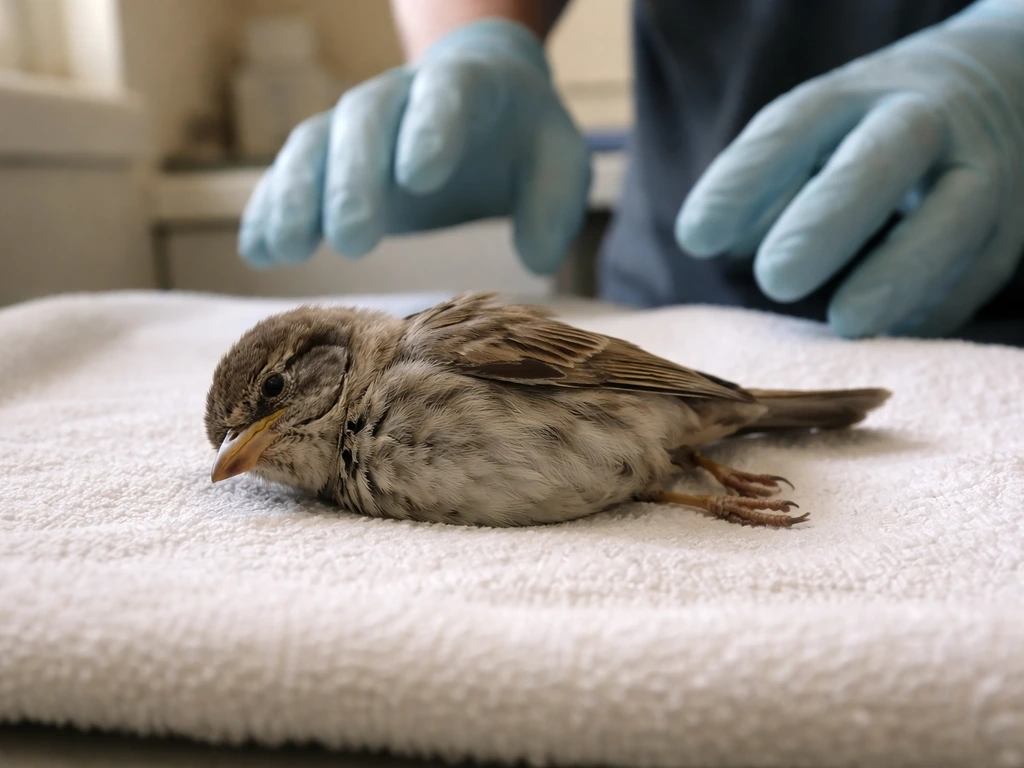
Some injuries are not a wait-and-see situation at all. If you see any of the following, skip the one-hour observation window and contact a wildlife rehabilitator or avian vet immediately.
- Profuse or ongoing bleeding
- The bird is non-responsive or lying completely on its side
- Visible broken bone (protruding or visibly deformed limb)
- Trouble breathing: open-mouth breathing, tail pumping with each breath, clicking sounds
- Head tilt or loss of coordination (possible neurological injury)
- Cat or dog bite, even if you see no wound (more on this below)
- Puncture wounds of any kind
- Maggots or fly eggs visible on the bird
- Large bubbles or swelling under the skin
- The bird was found near a cat or dog even if it looks physically fine
These signs indicate injuries that will not improve on their own, and in most cases the clock is already running. Birds have fast metabolisms and go downhill quickly. An hour matters.
Specific scenarios and what to do
Window collision
This is the most common situation people encounter. A bird hits a window, falls to the ground, and sits there looking dazed. If there's no visible bleeding, no drooping wing, and the bird is upright, blank" rel="noopener noreferrer">box it up in a dark, quiet container and check every 15 minutes by opening the box outside. Many birds recover and fly off within an hour. If it hasn't flown within 60 minutes, or if you notice any injury signs during those checks, call a wildlife rehabilitator. Even a bird that looks fine after a collision can have internal injuries that aren't obvious, so it's always worth a quick call to a rehabber to describe what you're seeing.
Cat or dog attack
This is a medical emergency regardless of how the bird looks. Cat saliva contains bacteria that is often lethal to small birds, and even a tiny puncture wound that you can't see will almost certainly cause a fatal infection without antibiotics. The Wildlife Center of Virginia puts it plainly: animals that have been in a cat's mouth need treatment even if they aren't obviously injured. Do not watch and wait. Box the bird up and get it to a wildlife rehabilitator or avian vet the same day. Dog bites tend to cause more obvious blunt-force trauma, but the same urgency applies.
Broken wing or leg
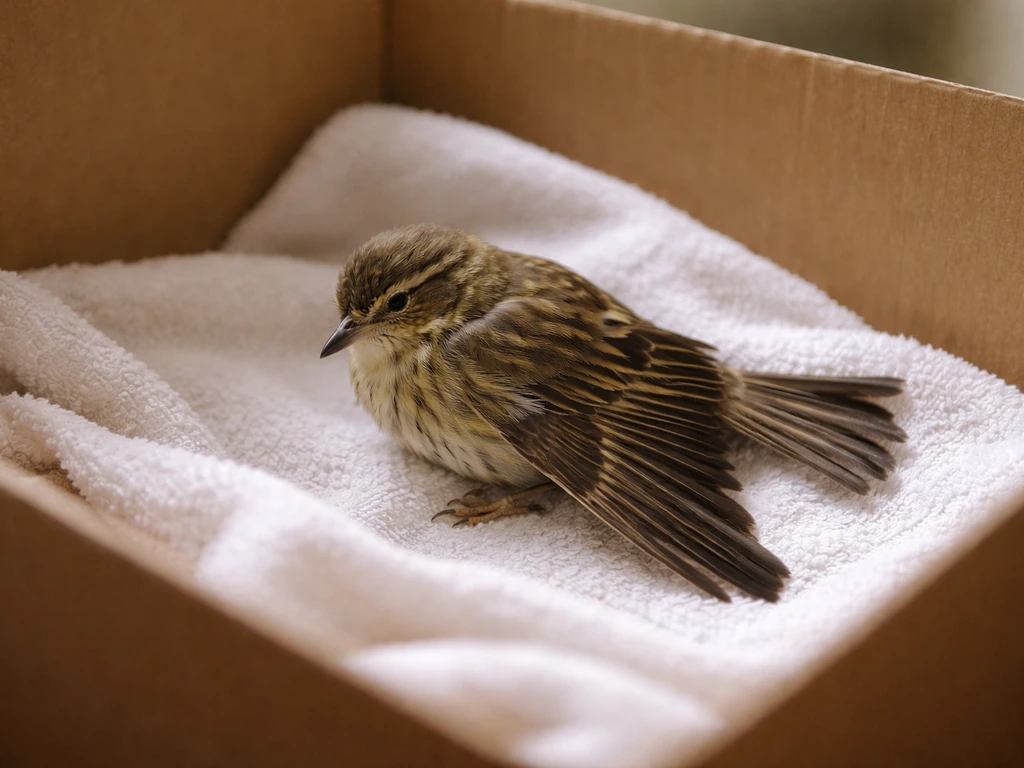
A drooping wing held lower than the other, or a leg that the bird won't bear weight on, usually means a fracture. Birds do not heal broken bones well enough to survive without treatment. Clipped bird wings are not a true self-healing injury, so get professional guidance if you suspect damage.
A bird with clipped wings may still be able to fly again in some cases, but a rehabber can tell you what to expect based on the extent of the injury. A break left unset will fuse incorrectly or become infected, and the bird will lose the ability to fly or perch permanently. Don't attempt to splint it yourself.
Secure the bird in a box, keep it calm and warm, and get it to a rehabber as quickly as possible. This is not a wait-and-see injury.
Bleeding
Any active bleeding is a red flag. Apply gentle, steady pressure with a clean cloth and hold it there. Avoid using hydrogen peroxide on bird wounds unless a licensed rehabilitator or avian vet tells you to, since it can damage tissue and delay healing clean cloth. Do not use hydrogen peroxide or any antiseptic product on the wound, hydrogen peroxide damages bird tissue and can make things worse. If bleeding slows, get the bird boxed and to a professional. If it doesn't slow within a few minutes of steady pressure, that's an emergency.
Beak injuries
A damaged or misaligned beak is a serious problem because birds use their beaks for everything: eating, preening, climbing, and defense. A beak that is cracked, split, or visibly displaced cannot heal properly without veterinary attention. In the meantime, do not try to feed the bird or manipulate the beak. Box it up, keep stress low, and get professional help.
Nest emergencies and young birds
If you've found a very young bird (no feathers or only sparse downy fluff) that has fallen from a nest, the best move is to put it back if you can safely reach the nest. The myth that parent birds reject young touched by humans is false. If the nest is destroyed or unreachable, contact a rehabber right away; these nestlings need specialized feeding every 20 to 30 minutes and cannot survive long without expert care. The U.
S. Fish & Wildlife Service also recommends contacting help if you find an injured or orphaned wildlife baby bird contact a rehabber right away.
A fully feathered fledgling hopping on the ground, as mentioned earlier, is a different story: watch from a distance and let the parents handle it.
Keeping the bird stable at home while you wait
Think of everything you're doing at home as stabilization, not treatment. Your job is to keep the bird alive and calm until it gets to someone who can actually help.
- Warmth: a box half-on, half-off a heating pad set to low is the safest method. The bird can self-regulate by moving. A warm (not hot) water bottle wrapped in a towel tucked into one corner of the box also works.
- Darkness: cover the box or put it somewhere dim. Darkness significantly reduces a bird's stress response.
- Quiet: no household noise nearby. Keep pets and children away from the room.
- No food, no water: this cannot be overstated. Even if the bird looks hungry, do not attempt to feed it without explicit instructions from a rehabber.
- Minimal handling: once the bird is in the box, leave it alone. Every interaction adds stress. If you need to transport it, keep the box level and drive quietly with the radio off.
How to find help and what to say
Finding a wildlife rehabilitator or avian vet quickly is the most important step you can take. Here are the fastest ways to do it.
- Go to Animal Help Now (animalhelpnow.org) and enter your location. It pulls from state and federal licensee lists to show you the nearest licensed wildlife rehabilitators.
- Visit the National Wildlife Rehabilitators Association (NWRA) website and use their "Find Help" page.
- Search your state's Department of Natural Resources or Fish and Wildlife agency website — most maintain a licensed rehabilitator registry.
- Call a local avian vet directly if wildlife rehab options are limited. Not all vets treat wild birds, but many will triage and stabilize in an emergency.
- If you're in a rural area with limited options, call the nearest wildlife rehabilitator anyway and describe what you're seeing — many will advise you over the phone on what to do while you arrange transport.
When you call, be ready to give them: your name and location, where and when you found the bird, the species if you know it, and a description of what you're observing (posture, visible wounds, behavior, what may have caused the injury). The more specific you can be, the faster they can help you. If you saw the incident (a window strike, a cat attack, a car collision), say so. That context changes how the intake team will prioritize and prepare.
For transport, keep the bird in the box. Don't transfer it to a wire cage or open carrier. Drive directly to the facility and keep the car quiet. If the trip is long, keep the box stable so it doesn't slide around, and maintain a comfortable car temperature. The bird's warmth comes from the box setup you've already created, so don't crank the heat in the car on top of that.
The bottom line is this: if the bird is stunned and otherwise looks unharmed, give it one quiet hour in a box. If it flies away, you did your job. If it doesn't, or if there's any sign of real injury, your next move is to find a licensed rehabilitator or avian vet today, not tomorrow. If you want to know what injured birds receive, it helps to understand what a wildlife rehabilitator or avian vet typically provides. Birds deteriorate fast, and most injuries that look manageable at first become critical within 24 hours without treatment. The faster you get them to someone qualified, the better their odds.
FAQ
Can an injured bird heal itself if it looks okay at first?
In most cases, no. A bird can only recover on its own in a short, narrow window when it is truly just stunned, upright, breathing normally, and shows no other injury signs. If it still has no clear improvement by about one hour, or it has any visible wounds, drooping wing, bleeding, limping, or breathing difficulty, assume it needs professional care rather than waiting.
What should I do if a bird hit a window and seems dazed but unhurt?
Yes, sometimes. If a window-strike bird is upright, breathing normally, holding both wings evenly, and is simply dazed, you can observe for up to one quiet hour while it rests in a dark, secure box. Improvement should be noticeable within 15 to 30 minutes. If there is no improvement by 60 minutes, treat it as injured and contact a wildlife rehabilitator.
If a window-collision bird is quiet in a box, is it safe to let it go later?
No. Even if the bird seems calm after a collision, it can have internal injuries that are not obvious from the outside. If it does not fly off within the hour, or you notice any injury signs during checks, call a wildlife rehabilitator so they can assess and monitor for problems like internal bleeding or concussion.
Can I splint a bird’s broken wing or try to set it myself?
Not safely. For birds with drooping wings, a leg it will not bear weight on, or any suspected fractures, do not try to splint or reposition the limb or wing yourself. Stabilize the bird in the box, keep it warm and calm, and get it to a rehabilitator or avian vet quickly because fractures and misalignment worsen without treatment.
What if the bird is bleeding, should I clean the wound with hydrogen peroxide?
If it is actively bleeding, you should apply gentle, steady pressure with a clean cloth and hold it without repeatedly checking. Do not use hydrogen peroxide or antiseptic products unless a licensed wildlife professional specifically instructs you, since these can damage tissue and delay healing. If bleeding does not slow within a few minutes of steady pressure, treat it as urgent and get immediate help.
Can I feed an injured bird if its beak looks damaged?
Avoid feeding and handling, especially if the beak is cracked, split, displaced, or the bird cannot eat normally. Beaks are used for eating, preening, climbing, and defense, and damaged beaks often require veterinary or rehabilitator care. Until you get professional help, box the bird, keep stress low, and do not try to manipulate the beak.
My cat may have grabbed a bird, but I only see minor marks. Does it still need treatment?
If it was in a cat’s mouth, treat it as a medical emergency even if there are no obvious punctures. Cat bacteria often cause rapidly fatal infections in small birds. Box it and contact a wildlife rehabilitator or avian vet the same day.
A fully feathered bird is on the ground and chirping, should I pick it up?
If the bird is fully feathered and hopping while calling loudly, it is often a fledgling that is learning, not a wounded bird. The best choice is to watch from a distance and let parents care for it. You should only intervene if you see clear injury signs like bleeding, inability to stand or fly, drooping wing, or signs it cannot move normally.
What if the bird is a very young nestling with no feathers, do I need to call someone immediately?
For a nestling with little or no feather coverage that has fallen, try to return it to the nest if you can reach it safely. The “parents reject human-touched babies” idea is false. If the nest is unreachable or destroyed, contact a wildlife rehabilitator right away because nestlings need specialized, frequent feeding.
How should I transport an injured bird to a rehabber or vet?
During transport, keep the bird in a stable, dark, quiet container and drive directly to the facility. Avoid swapping containers mid-transport, avoid open carriers or wire cages, and keep the car temperature comfortable without blasting heat into the box. If the trip is long, prevent shifting so it does not slide around and stress increases.
If I miss the one-hour window, can I wait until tomorrow to get help?
Call sooner rather than later when any injury sign is present, because birds can deteriorate quickly. Many injuries that seem manageable can become critical within about 24 hours without treatment. If you are past the one-hour observation for a stunned but otherwise unhurt bird, contact a professional that day.