
Some bird wounds can heal on their own, but most wing injuries cannot, and waiting too long is where things go wrong. A minor surface scrape on a feathered area, with no bleeding and a bird that is alert and standing normally, may resolve without intervention. But the moment you see a drooping wing, open wound, active bleeding, or a bird that cannot fly or stand, you are almost certainly looking at an injury that needs professional help. The honest answer is: when in doubt, call a wildlife rehabilitator first and observe second.
Can a Bird Wound Heal on Its Own? What to Do Now
Marcus Chen
13 Apr 2026
When a bird wound might heal on its own
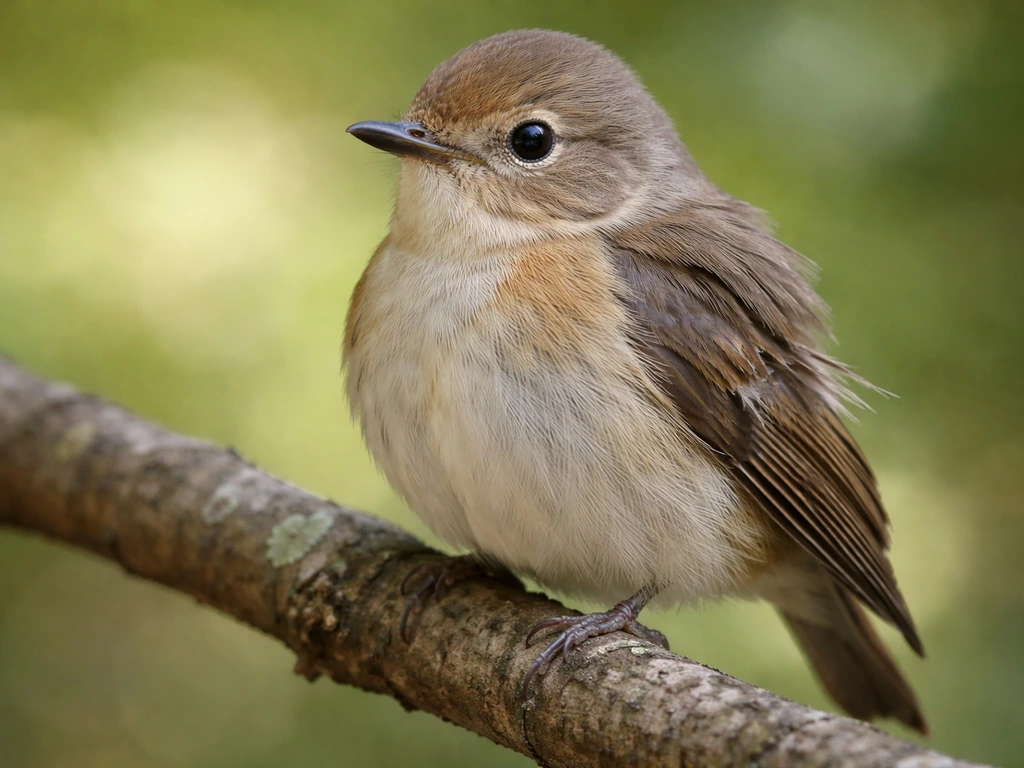
The short list of situations where brief observation is reasonable is actually pretty narrow. If a bird appears uninjured, is sitting still, holds its wings normally against its body, keeps its eyes open, and holds its head up without effort, it may simply be stunned or resting. In that case, watching quietly from a distance for a short window makes sense before you intervene. Wildlife guidance from the U.S. Fish and Wildlife Service puts it plainly: if the bird has no trouble keeping its eyes open or its head up, and is breathing normally, give it a chance to recover on its own.
Superficial feather damage, a small surface abrasion with no broken skin, and minor scrapes on tougher areas like the feet may also fall into the "monitor" category rather than the emergency category. Most bleeding skin wounds will clot on their own given time and a calm environment. The problem is that birds hide pain and injury remarkably well, which means what looks minor on the surface often is not.
One important note before you decide to wait: even a bird that appears to recover and flies away after a window collision may still be carrying a fatal internal injury. The safest approach, if you have any doubt at all, is to contact a wildlife rehabilitator and describe what you are seeing. The U.S. Fish & Wildlife Service also advises keeping the bird safe and avoiding illegal handling when you find a sick, injured, or orphaned bird or a baby bird Found a Sick, Injured, or Dead Bird?. They can help you decide over the phone whether to observe or act.
How to assess a wing wound safely
The goal here is a quick visual assessment, not a hands-on examination. You do not need to handle the bird to get a good picture of what you are dealing with. Start by observing from a few feet away for a couple of minutes. Look at how the bird holds its wings: are both wings tucked symmetrically against the body, or is one drooping lower than the other? A drooping or extended wing is one of the clearest visible signs of a fracture or serious soft-tissue injury.
Next, look at its posture, eyes, and breathing. Is the bird standing or able to right itself? Are its eyes fully open and tracking movement? Is it breathing with its mouth open, or can you see the tail bobbing with each breath? Open-mouth breathing and visible chest or tail movement while breathing are signs of respiratory distress and need immediate attention. Then look for visible blood, wounds, or deformity anywhere on the body, not just the wing.
What you should not do during this assessment is attempt to stretch the wing out to check it, prod the bird to see if it can walk, or pick it up repeatedly to examine it from all angles. Unnecessary handling is stressful for birds and can make shock worse. Head trauma may also not be obvious from the outside, so even a bird that looks physically intact may have internal injuries from impact. Keep your assessment quick and visual, and then make your decision.
First aid you can safely do right now
If the bird needs to be moved or stabilized while you wait for a rehabber or arrange transport, there are a few things you can do that genuinely help and will not make things worse. The goal at this stage is survival and calm, not treatment.
Controlling bleeding
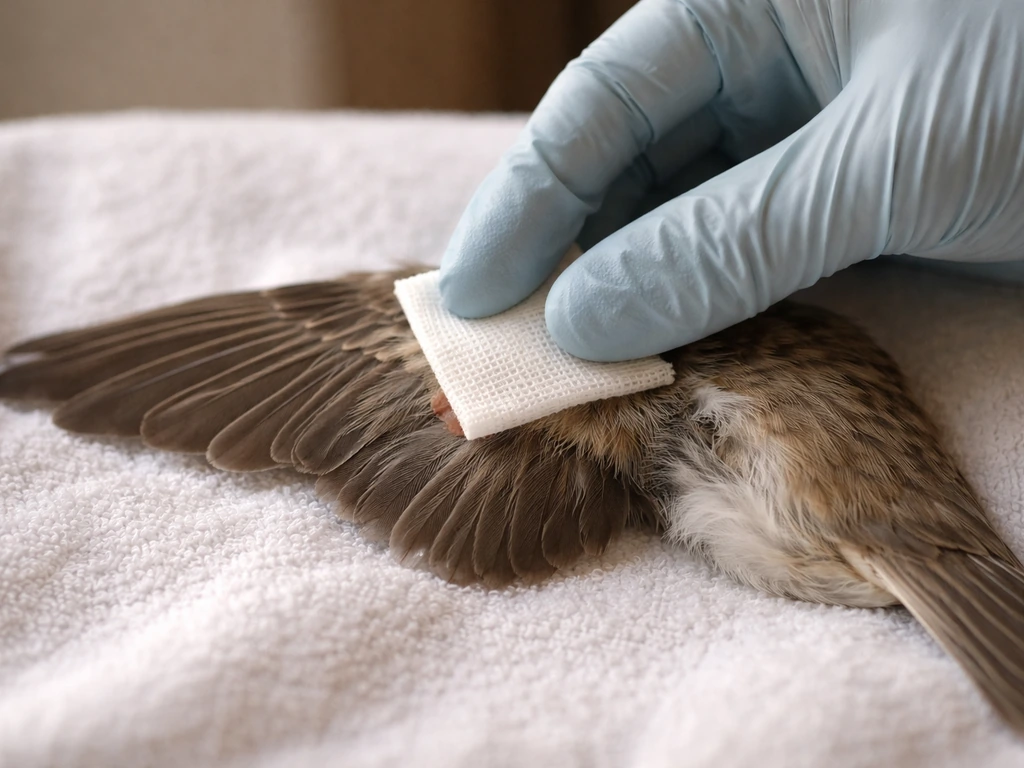
If there is active bleeding, apply very gentle direct pressure using a clean cloth or gauze. Hold it in place without pressing hard. For larger wounds or wounds the bird is chewing at, a light temporary bandage can help until a vet sees the bird. Do not use salves, ointments, petroleum jelly, or any thick oily substance on the wound. These can mat feathers, trap bacteria, and interfere with the bird's ability to regulate temperature. If you are wondering what you can put on a bird wound, the answer for at-home care is essentially: clean water only, and only on the surface.
Cleaning the wound
If there is visible debris on a surface wound, you can gently rinse it with clean, room-temperature water. Do not use hydrogen peroxide. It stings, and more importantly, it damages healthy tissue and actually slows healing, particularly on deep wounds, puncture wounds, or bite injuries. If you want to know more about why that is, the article on whether hydrogen peroxide is safe for bird wounds covers the tissue damage risk in detail. Stick to plain water for surface rinsing and leave anything deeper to a professional.
Warmth and stress reduction
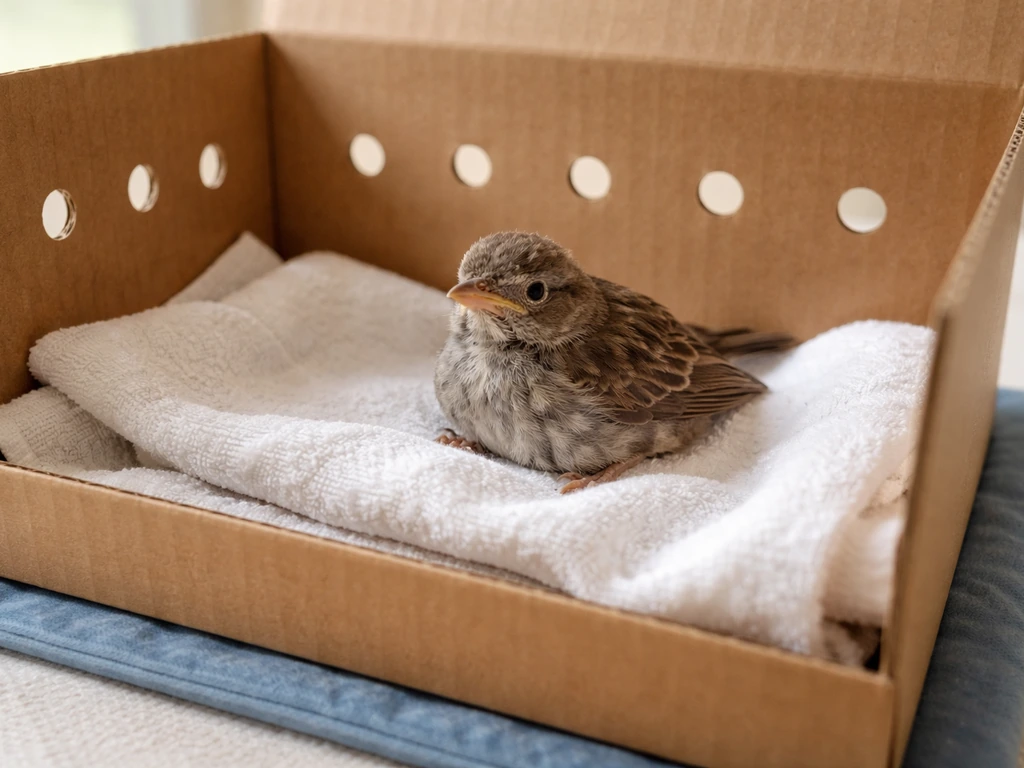
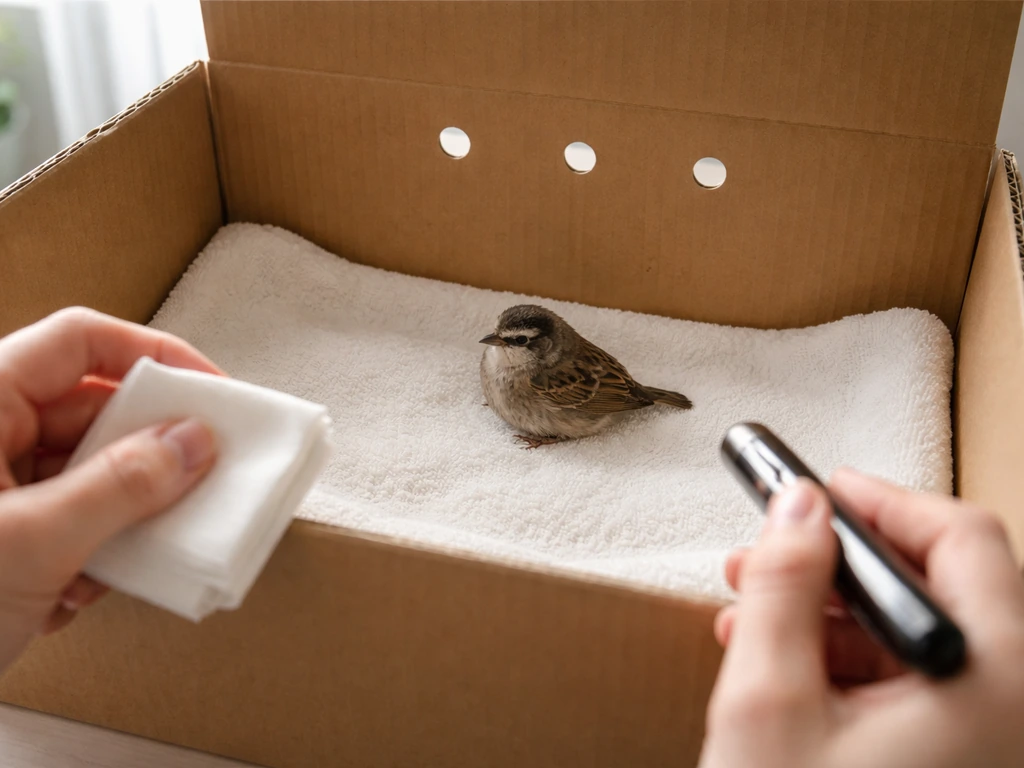
Warmth is one of the most important things you can provide. Place the bird in a cardboard box with air holes, lined with a soft cloth or paper towel. Put the box on a heating pad set to low, or place a hot water bottle wrapped in a towel inside. The goal is gentle warmth, not heat. A dark, quiet environment reduces stress dramatically and gives the bird the best chance of stabilizing while you arrange help. Do not check on it constantly, do not offer food or water if the bird is injured or in shock, and do not give any medication or pain relief unless specifically instructed by a vet.
Red flags that mean you should not wait
These signs mean you need to contact a wildlife rehabilitator or avian vet immediately, not in a few hours:
- A wing or leg held out from the body, or visibly drooping or deformed
- Active bleeding that does not slow with gentle pressure
- Open-mouth breathing, gasping, or visible tail bobbing with each breath
- Visible puncture wounds, especially from a cat or dog
- Deep wounds, exposed tissue, or wounds with debris embedded in them
- The bird cannot stand, keeps falling over, or cannot right itself
- Eyes partially or fully closed, or the bird cannot hold its head up
- Extreme lethargy, fluffed feathers, and no response to nearby movement
- Any blood visible on the body, beak, or feathers
- Signs of shock: cold to the touch, limp, unresponsive
A broken wing is not something that heals on its own. Even when a wing fracture looks manageable from the outside, swelling and instability progress quickly, and forcing a bird to attempt flight before the fracture is treated can turn something repairable into a permanent disability. Do not try to splint or immobilize a wing at home unless you are being guided in real time by a licensed rehabilitator or avian vet. Understanding whether an injured bird can heal itself depends heavily on the type and severity of the injury, and for anything involving bones or deep tissue, the answer is almost always no without professional care.
Puncture wounds from cat or dog bites are a specific category that looks deceptively minor. Cat bites in particular create small entrance wounds that close quickly over deep tissue damage, making them prime conditions for serious bacterial infection. Do not be reassured by a wound that looks small. Any bird that has been in a cat's or dog's mouth needs a vet, full stop.
Common scenarios: window collisions, pet injuries, and nest emergencies
Window collisions
Window strikes are one of the most common bird emergencies people encounter. Most of them involve some degree of internal injury even when the bird looks fine. If the bird is on the ground near a window, stunned but breathing normally with eyes open, place it in a dark box and give it at least two hours of quiet before assessing again. Do not leave it on the ground; cats and other predators will find it. If the bird shows any of the red flags listed above after the collision, do not wait the two hours. Get it to a rehabber.
The American Bird Conservancy is direct on this point: window-collision victims should be taken to a rehabilitator even if they appear to fly away, because an unseen injury can still be fatal. Most window strikes involve internal injuries that only a licensed wildlife rehabber can properly assess. This is not a scenario where observation at home is a safe long-term plan.
Pet attacks
If your cat or dog got hold of a bird, treat it as an emergency regardless of how the bird looks. Cats especially inflict deep puncture wounds that are highly prone to infection. The bird may appear alert and even able to hop around, but internal injuries and infection risk are real even when nothing visible is wrong. Get the bird into a safe, warm, dark box immediately and call a wildlife rehabilitator or avian vet. Do not delay this one.
Nest emergencies and baby birds
A baby bird on the ground is not automatically an emergency, but an injured baby bird always is. If the bird is a nestling (no feathers or very few, eyes possibly still closed), it needs warmth and professional care urgently. If it is a fledgling (fully or mostly feathered, hopping around), it may simply be in the normal process of learning to fly, and the parents are likely still feeding it nearby. Watch quietly for a few hours to see if the parents return. Keep the bird warm and quiet while you wait: a heating pad on low under half the box, or a warm water bottle wrapped in a towel, works well.
If the fledgling or nestling has a visible injury like bleeding or a drooping wing, or if it has been in contact with a cat or dog, do not wait for the parents. It needs professional help now. The guidance from California's Department of Fish and Wildlife says the same: contact a permitted wildlife rehabilitation facility if there are visible signs of distress or if the bird has been in contact with a predator. If you can’t return a nestling to its nest or observe a nestling or fledgling with visible signs of distress, contact a permitted wildlife rehabilitation facility or a California Department of Fish and Wildlife regional office contact a permitted wildlife rehabilitation facility if there are visible signs of distress or if the bird has been in contact with a predator.
Observe or get help: how to decide and what to do next
Here is a simple decision framework based on what you are seeing:
| What you observe | What to do |
|---|---|
| Bird is upright, eyes open, wings normal, breathing quietly | Observe from a distance for 1 to 2 hours; contact rehabber if no improvement |
| Bird is stunned but no visible injuries (e.g., window strike) | Place in a dark, warm box for 2 hours; call rehabber if red flags appear |
| One wing drooping, deformed, or held away from body | Do not wait. Contact wildlife rehabilitator or avian vet immediately |
| Active bleeding, open wound, or deep puncture | Apply gentle pressure, box the bird, get to a vet today |
| Open-mouth breathing, gasping, tail bobbing with breath | Emergency. Contact a rehabber or vet right now |
| Bird has been in a cat or dog's mouth | Emergency. Treat as a bite wound regardless of visible injury |
| Baby bird with visible injury or predator contact | Emergency. Contact wildlife rehabilitator immediately |
How to find help near you
Finding a licensed wildlife rehabilitator is easier than most people expect. Animal Help Now (animalhelpnow.org) lets you search by your current location and is recommended by Audubon Great Lakes as a quick way to find nearby help. The Humane Society also maintains a state-by-state list of rehabilitators. If you cannot reach anyone through those channels, contact your local fish and wildlife agency: in Florida, for example, FWC regional offices can provide guidance when you cannot reach a licensed rehabber directly. Most wildlife rehabilitators are also happy to give phone advice while you stabilize the bird.
When you call, have this information ready: the species if you know it, where you found the bird, what happened if you saw it (window strike, pet attack, found in yard), and a specific description of the symptoms you are seeing. The more detail you can give, the faster they can help you decide on next steps. You do not need to be an expert; just describe what you see.
One last thing worth knowing: wildlife rehabilitation in most states requires a permit, which is why your role is stabilization and transport, not treatment. What a bird actually receives when it gets hurt in a professional setting, including pain management, wound treatment, and physical therapy, is far beyond what any of us can safely provide at home. Getting the bird to that care quickly is genuinely the most helpful thing you can do.
What to expect from healing and outcomes
Healing time for bird wounds varies a lot depending on the type of injury. Surface wounds on healthy birds can resolve in days with proper care. Fractures take weeks, and not all fractures heal in a way that allows a bird to fly again. A bird that cannot fly after a wing injury does not always mean the treatment failed; it sometimes means the injury was severe enough that survival with limited flight is the best possible outcome.
This is actually a meaningful consideration when it comes to wing injuries specifically. Questions about whether flight can be restored, and what partial recovery looks like, come up a lot in the context of both wild birds and pet birds. If you are dealing with a bird whose wing feathers or flight feathers were damaged or clipped rather than broken, the recovery path is different: whether clipped bird wings grow back depends on the molt cycle, and whether a bird with clipped wings can ever fly again is a separate but related question. For wild birds with traumatic wing injuries, the honest answer is that the sooner professional care begins, the better the odds of a full recovery.
Do not let uncertainty stop you from acting. If you are not sure whether what you are seeing is serious, call a rehabber and describe it. They would rather take your call and reassure you that the bird is fine than have you wait on something that needed treatment hours ago. The bird's best chance is always prompt, calm action on your part followed by professional care as quickly as you can arrange it.
One final note: you may occasionally hear the phrase "wounded bird syndrome" used in a different context entirely. Just to be clear, that is a psychological or behavioral metaphor, not a medical term. If you want to understand what wounded bird syndrome actually means in that context, it has nothing to do with physical bird injuries. Similarly, if you have come across references to a documentary called Air Crash Investigation: A Wounded Bird, that is an aviation program and unrelated to the wildlife first-aid question you are trying to answer here.
FAQ
If the bird stops bleeding, can I wait to see if it heals by itself?
Do not assume safety just because bleeding stopped. Birds can hide deeper tissue damage, especially with punctures or bite injuries. If the wing is drooping, the bird cannot stand, or you saw an impact or predator contact, call a wildlife rehabilitator even if the wound looks quieter.
Can I wrap a bird wound tightly to keep it from reopening?
Avoid tight bandaging. Light, temporary coverage can help keep a wound from being disturbed while you arrange care, but constricting wraps can impair breathing or circulation. If toes or the skin appear to discolor or the bird becomes more distressed, remove the wrap and seek guidance immediately.
Is it okay to use alcohol, antiseptic spray, or antibiotic ointment on a bird wound?
Not without professional instruction. Many products irritate tissue, cause birds to groom and ingest harmful substances, or trap contamination in ways that delay healing. Plain clean water is the only surface option for rinsing debris, then focus on warmth and transport.
How long should I observe a seemingly okay bird after a window strike?
A quiet, dark box and at least two hours is reasonable only if breathing is normal and there are no visible red flags. Recheck sooner and get help immediately if you notice mouth-open breathing, tail or chest effort with breaths, inability to right itself, drooping, or any blood or deformity.
What should I do if the bird is sitting still but won’t open its eyes or keeps its head low?
Those can be signs of more than simple rest, particularly if the bird is not tracking movement or looks unable to maintain normal posture. In that case, treat it as an injury or shock scenario, keep it warm and quiet, and contact a rehabilitator for next steps.
Can I give the bird food or water while it waits for a rehabber?
Usually no. Food and water can be risky if the bird is in shock, injured internally, or unable to swallow properly. Focus on a dark, warm environment and let a licensed professional guide feeding only if appropriate for the species and condition.
Is warming the bird on a heating pad safe if I am not sure how badly it is hurt?
It is helpful when done gently, low setting, with indirect heat through a towel or cloth liner. Never place the bird directly on a hot surface, and stop if the bird appears overly agitated or you notice overheating. The goal is stability, not heat therapy.
The wound looks minor, but it is on the foot or leg, should I still get help?
Yes, foot and lower-limb injuries often need more care than they appear, especially if the bird is limping, holding a foot up, or you suspect a puncture. Even small-looking scrapes can hide deeper damage, and birds may compensate until the injury worsens.
A wing feather looks broken, but the wing is not drooping. Do I need to worry about a fracture?
Feather damage alone can heal, but a broken feather can still occur alongside soft-tissue injury. If the wing position is abnormal, the bird shows instability, or you suspect an impact, call for guidance. A visible droop or inability to tuck both wings evenly is a stronger indicator of something that needs professional evaluation.
If I find a baby bird, when should I treat it as urgent rather than waiting for parents?
If it is a nestling, with little or no feathering, or if it is bleeding, has a drooping wing, or was exposed to a cat or dog, seek professional help right away. For a fledgling that is fully or mostly feathered and hopping, observation can be reasonable, but you still need to act quickly if distress signs appear.
Should I try to check the wing for a fracture by gently feeling for bumps?
No. Hands-on probing increases stress and can worsen injury, especially with possible fractures or internal trauma. Use only quick visual assessment from a few feet away, then stabilize, keep it warm, and get phone guidance.
What information should I have ready when I call a wildlife rehabilitator?
Be ready with the species if you know it, where you found the bird and when, what likely happened (window strike, pet attack, suspected fall or collision), and a clear description of posture, wing position, eye status, and breathing pattern. If you can, include whether there is any bleeding and whether the bird can right itself.
If a rehabber says to wait, what is the safest way to transport the bird?
Use a breathable cardboard box with air holes and soft lining for grip reduction, keep it dark and quiet, and avoid moving it repeatedly. Keep heat gentle with a low heating pad or wrapped hot water bottle, and drive carefully to minimize vibrations. If the bird deteriorates en route, stop and call for immediate instructions.
Next Articles
Can a Bird With Clipped Wings Ever Fly Again? What to Do
Yes, sometimes. Learn if clipped wings can regrow, what to check now, and when to contact a vet or rescue.
Can a Bird Live With One Wing? Survival and First Aid
Can a bird live with one wing? Injury outcomes and step-by-step first aid, plus when to get urgent help.
Can a Bird Survive With One Eye? What to Do Now
Learn if birds can cope with one eye and what to do now for an injured bird’s eye safely and urgently.