If you found a young bird on the ground and you're not sure whether to step in or step back, here's the fast answer: most fledglings you find are fine and do not need your help. The ones that do need help will show you clear warning signs. Learn to tell the difference in about 60 seconds, and you'll know exactly what to do next.
Should I Help a Fledgling Bird? What to Do Now Safely
Marcus Chen
30 May 2026
How to tell a fledgling from a nestling or hatchling
This is the most important step, and it only takes a quick look. Baby birds go through three stages before they can survive on their own, and the stage the bird is in changes everything about how you should respond.
| Stage | What it looks like | Should it be on the ground? |
|---|---|---|
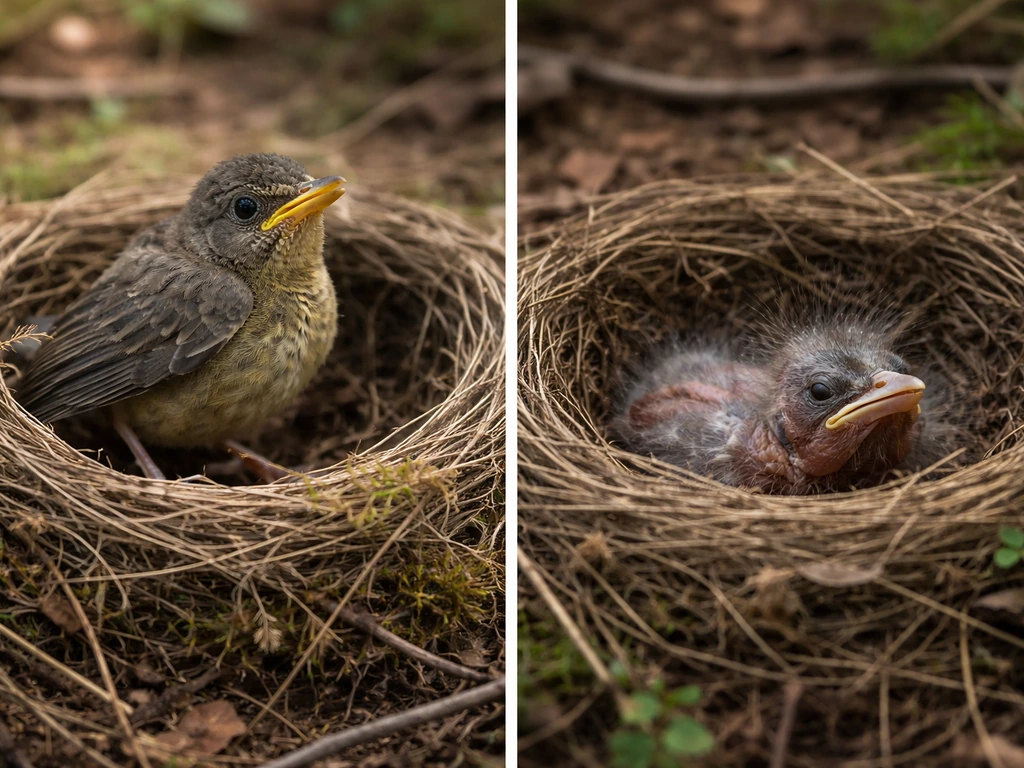
| Hatchling | Mostly or completely naked, eyes closed, very small | No — needs to be in a nest immediately |
| Nestling | Some pin feathers coming in, eyes starting to open, still helpless-looking | No — still depends on nest and parents |
| Fledgling | Nearly fully feathered, bright-eyed, can hop or perch, short stubby tail | Yes — this is normal and expected |
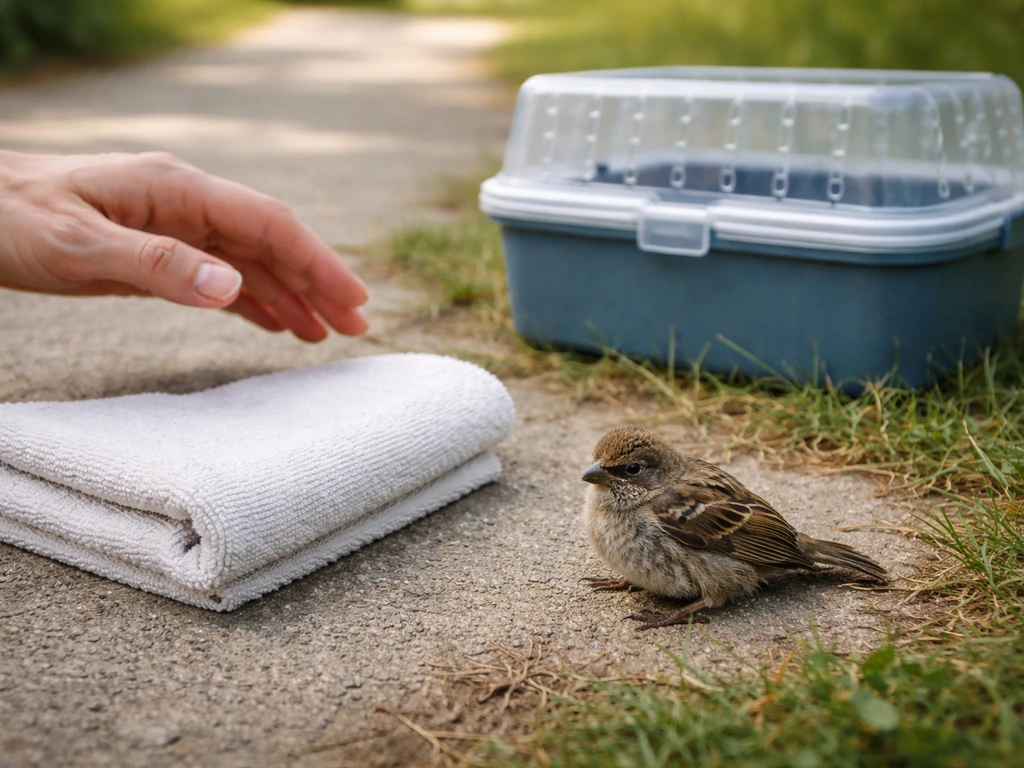
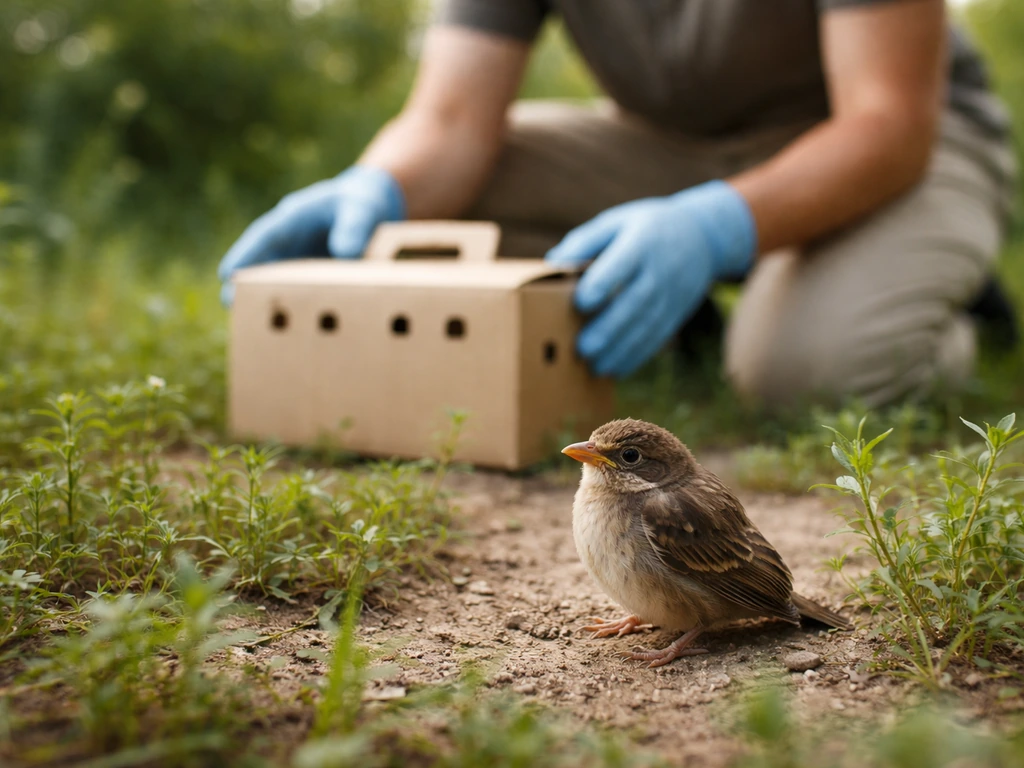
A fledgling looks like a slightly scrubby, smaller version of an adult bird. Its feathers are mostly in, its eyes are open and alert, and it can hop around or grip a branch. This bird is supposed to be on the ground. It has left the nest intentionally (or been nudged out), and its parents are almost certainly watching it from nearby. According to the Audubon Society, if a songbird has feathers and can hop, it is a fledgling and you should leave it alone. This normal fledging period lasts roughly one to two weeks for most songbirds.
A nestling or hatchling is a different story. If the bird is mostly naked, has closed or barely-open eyes, looks floppy, or can't hold up its own head, it has come out of the nest too early. That's when gentle intervention to reunite it with its nest may be appropriate, as long as you follow the right steps.
Quick safety check: injury signs and when to step in
Once you know you're looking at a fledgling (fully feathered, mobile), do a fast 30-second visual assessment before touching anything. Most healthy fledglings will try to hop away from you or look around alertly. That's a great sign. What you're watching for are the red flags that mean this bird is in genuine trouble.
- A wing hanging at an unnatural angle or dragging on the ground
- Visible bleeding anywhere on the body
- Labored, open-mouthed breathing when the bird is not hot
- Inability to stand or stay upright (falling to one side, lying flat)
- Paralysis or limp legs
- A visibly damaged or stuck beak
- Obvious wounds consistent with a cat or dog attack (punctures, torn skin, missing feathers in patches)
- A bird that has just hit a window and is not recovering after 15 to 20 minutes
- A bird that is cold to the touch and lethargic (chilling is an emergency in baby birds)
If you see any of these signs, this is not a normal fledgling situation. The bird needs help now. Skip ahead to the handling and transport sections below. If you see none of these signs and the bird looks alert and mobile, there's a very good chance its parents are nearby and it is doing exactly what it is supposed to be doing.
Leave it alone vs. step in: how to decide
The single biggest mistake people make is rescuing a bird that doesn't need rescuing. In some cases, people ask should you put an injured bird out of its misery, but you should first consult a wildlife rehabilitator to confirm the best humane option. Well-meaning intervention can separate a fledgling from its parents at a critical time, cause stress that's genuinely harmful, and in the case of birds like owls and raptors, risk imprinting that makes the bird unable to survive in the wild. Here's a simple framework for making the call.
Leave it alone if:
- The bird is fully feathered and can hop or perch
- It shows none of the injury signs listed above
- You can see or hear adult birds in nearby trees or shrubs (they may be scolding you)
- It's in a reasonably safe location away from immediate traffic or predators
- You've watched for 30 to 60 minutes and the parents have returned at least once
Step in if:
- The bird shows any injury signs from the list above
- It is a naked or lightly-feathered hatchling or nestling that has fallen from a nest
- It has been attacked by a cat or dog (even with no visible wounds — internal injuries are common)
- It's been alone in the same spot for more than two hours with no parent activity
- It's in immediate danger from traffic, lawn mowers, or other hazards that can't be addressed by simply moving it a short distance
- It is cold, limp, or completely unresponsive
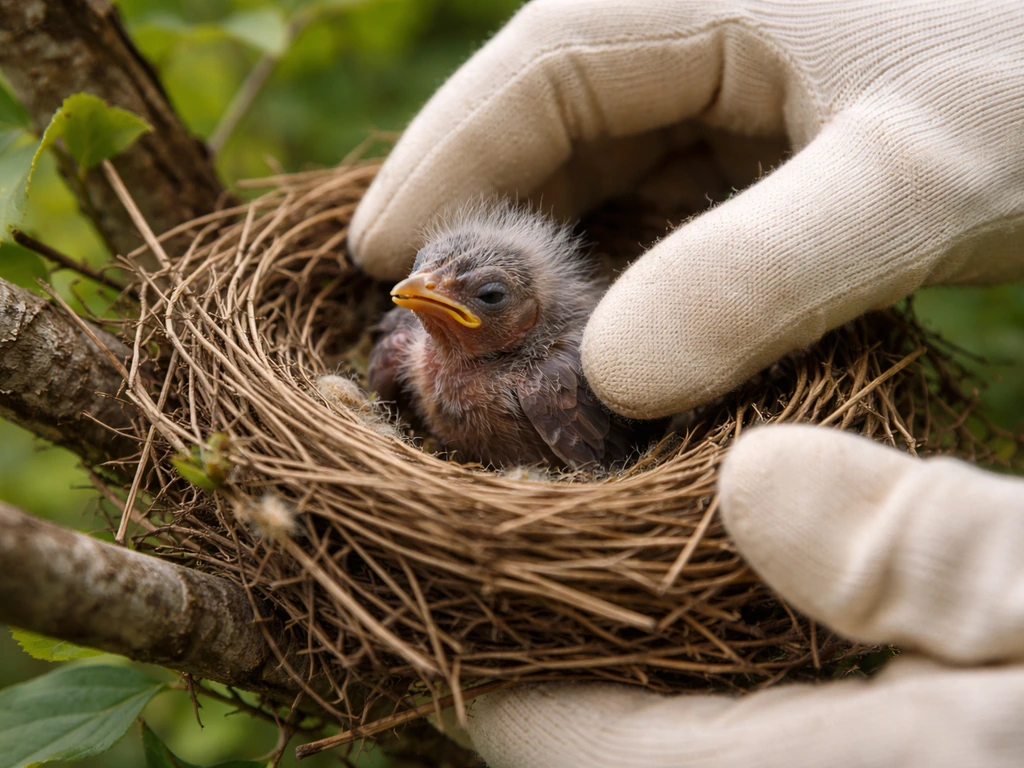
One thing worth knowing: if the bird is a hatchling or nestling and you can locate the nest safely, you can put it back. The old myth that a parent will reject a baby you've touched is exactly that, a myth. Parent birds do not abandon their young because a human handled them. If you can see the nest and reach it without putting yourself at risk, gently returning the bird is almost always the right move.
What to do right now: warmth, enclosure, and minimal handling
If you've decided the bird needs help, the first goal is to stabilize it safely while you contact a wildlife rescue or avian vet. You are not trying to treat or rehabilitate the bird yourself. You are trying to keep it alive, calm, and contained until a professional can take over.
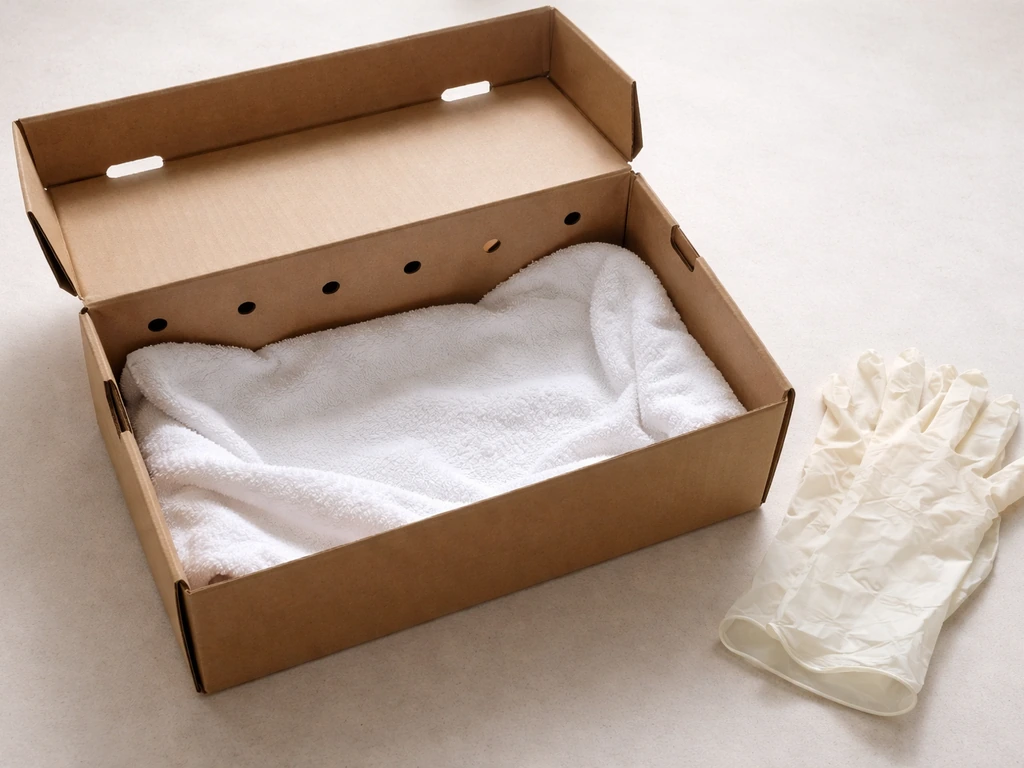
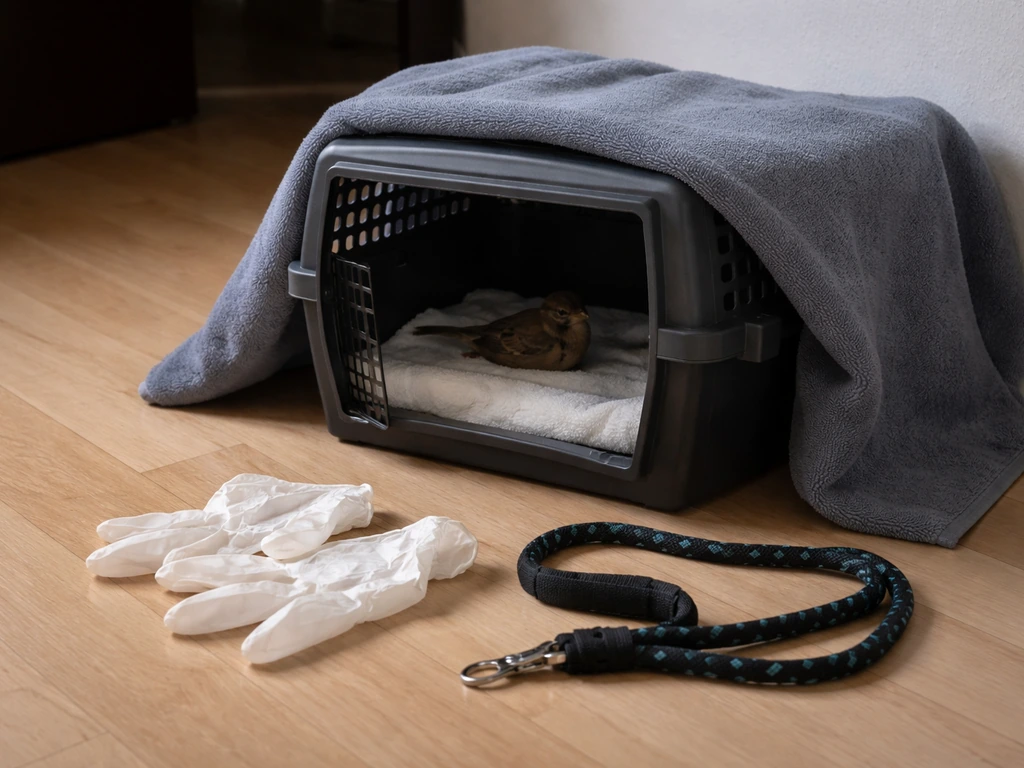
- Wash your hands before and after handling the bird. Use gloves if you have them, though clean bare hands are fine for a brief transfer.
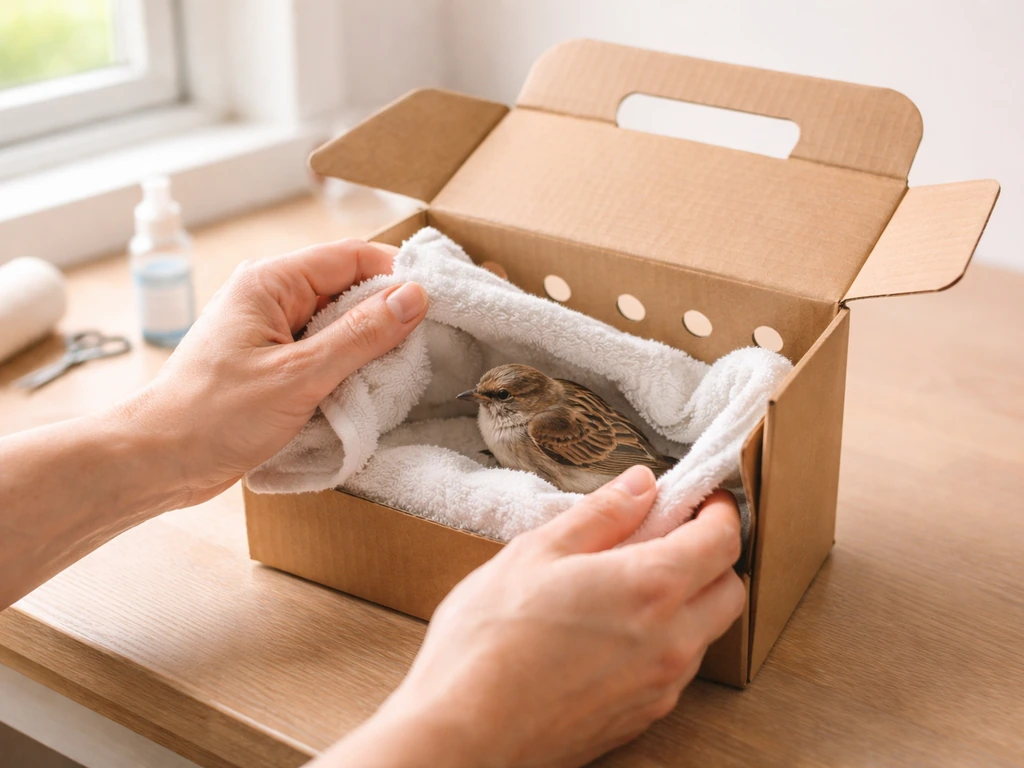
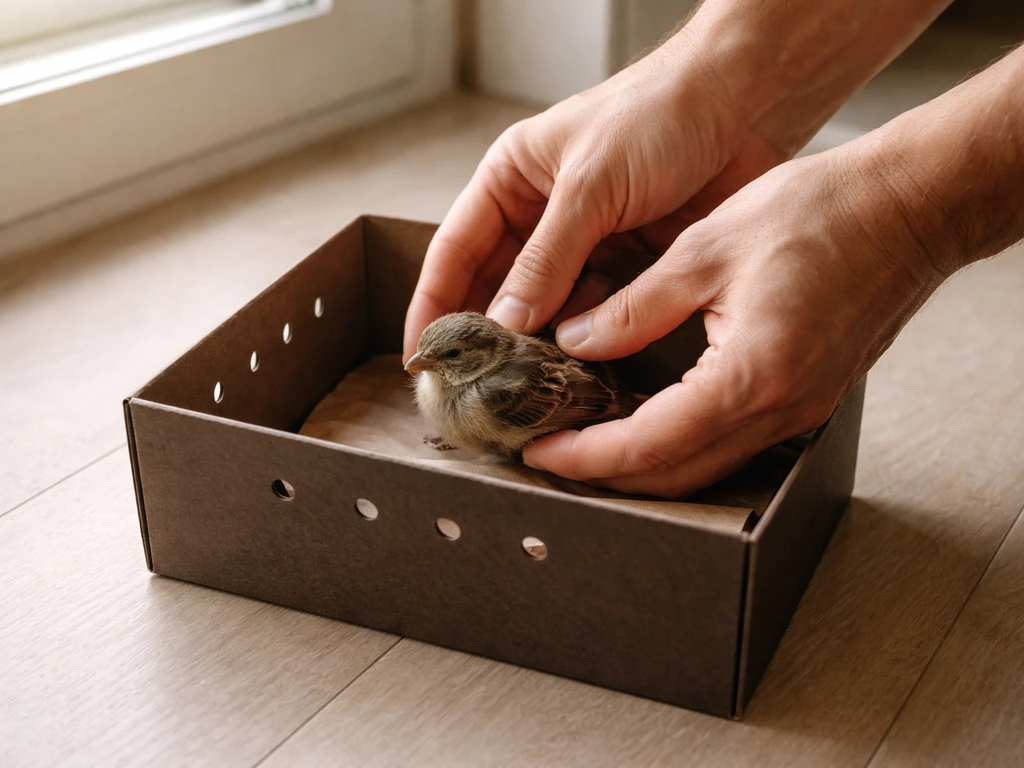
- Pick up the bird by gently cupping both hands around its body, securing the wings against its sides. Don't squeeze. Hold it firmly enough that it can't flail and injure itself.
- Place it in a small cardboard box with a few air holes punched in the sides. Line the bottom with a soft cloth or paper towels — nothing with loops that tiny toes can get caught in.
- Put the lid on. Darkness and quiet calm a bird down fast. Minimize how often you open the box.
- If the bird feels cold, place the box half on top of a heating pad set to low, or tape a hand warmer to the outside of one side of the box. The bird needs to be able to move away from the heat source if it gets too warm — never heat the entire box.
- Keep the box in a quiet, indoor spot away from pets, children, and loud noise. No radio, no television nearby.
- Contact a wildlife rehabilitator or avian vet immediately — do not wait to see if the bird improves on its own.
Speed matters here, especially for small birds. A chilled or injured fledgling can decline very quickly. Getting a professional on the phone within the first hour is much better than waiting several hours to decide.
What NOT to do (this list could save the bird's life)
I've seen more birds harmed by good intentions than by neglect. These are the most common mistakes to avoid absolutely.
- Do not feed the bird. This is the biggest one. Baby birds have very specific dietary needs and feeding the wrong thing — bread, milk, water forced into the beak, worms from your yard, crackers — can cause aspiration (fluid in the lungs), nutritional deficiencies, or death. If the bird is dehydrated, leave that to a professional.
- Do not force it to drink water. Giving a bird water by dropper or dipping its beak in a bowl can cause it to aspirate and drown in tiny amounts of liquid.
- Do not try to make it fly. Tossing a bird into the air or setting it on a high surface to 'encourage' flight can cause a fall injury on top of whatever was already wrong.
- Do not keep it in a cage with a wire mesh floor or sides where it can damage its feathers or feet.
- Do not handle it repeatedly to check on it. Every time you open the box, you're adding stress. Check once, then leave it alone.
- Do not house it with other animals or birds you own. Disease transmission goes both ways, and the stress of a predator nearby is lethal.
- Do not assume it will be fine overnight without professional input. Call for help the same day you find it.
Handling specific situations: window strikes, pet attacks, and nest emergencies
Window strikes
A fledgling or juvenile bird that hits a window may be stunned but not permanently injured. Place it gently in a dark box (as described above) and give it up to 20 to 30 minutes in quiet darkness. Some birds recover fully from a concussive stun in that time. If after 30 minutes it is still unable to stand, hold its head upright, or it's showing any of the injury red flags, treat it as an emergency and contact a rehabilitator. Do not leave a stunned bird outside on the ground, cats will find it.
Cat or dog attacks
This is one situation where you should intervene even if the bird looks fine. Cats especially carry Pasteurella bacteria in their mouths, and even a single puncture wound, too small to see, can cause a fatal infection in a bird within 24 to 48 hours. If your cat (or any cat or dog) has had the bird in its mouth, picked it up, or batted it around, the bird needs antibiotic treatment from a vet today. Box it up and call immediately. Do not wait to see if it deteriorates.
Nest emergencies
If a hatchling or nestling has fallen from a nest and the nest is still intact and reachable, put the bird back. It's genuinely that simple. If the nest itself has been destroyed (by wind, a predator, a trim of the tree), you can fashion a substitute nest from a small container like a berry basket or a plastic cup with drainage holes poked in the bottom. Line it with the original nesting material if you can find it, or dry grass, and secure it to the tree as close to the original nest location as possible. Then watch from a distance, at least 30 feet away, to see if the parents return within an hour or two. If the parents don't come back, or if the original tree or bush is completely gone, contact a rehabilitator.
When to call a professional and how to find one today
Call a wildlife rehabilitator or avian vet the same day in any of these situations: the bird has visible injuries, it was caught by a cat or dog, it hasn't recovered from a window strike within 30 minutes, it's a hatchling or nestling with no retrievable nest, or it's a fledgling that has been alone for more than two hours with no parent contact. Don't wait until the next morning. Most birds don't survive overnight without proper care when they're already stressed or injured.
Here's how to find help quickly. The fastest options in the US are the Wildlife Center of Virginia's national directory, the NWRA (National Wildlife Rehabilitators Association) finder at nwrawildlife.org, and the Humane Society's wildlife help line. You can also call your nearest avian vet and ask for a wildlife referral even if they don't treat wild birds themselves, they usually know who does locally. Your state's fish and wildlife agency is another quick route; many have 24-hour emergency lines specifically for wildlife.
When you call, be ready to describe the bird's approximate size and coloring, where you found it, what happened (window strike, cat attack, found on ground, etc.), and what symptoms you're seeing. This helps the rehabilitator give you the right next steps immediately and prioritize urgent cases. Some will ask you to transport the bird; others can give you detailed phone guidance if transport isn't possible.
Your practical next steps based on what you're seeing
If the bird is a healthy fledgling with no injury signs and parents are likely nearby: move away, watch from a distance, and leave it alone. If there are nearby cats, dogs, or other hazards and the bird can't fly yet, you can move it a few feet to a safer spot like a low shrub, but don't take it inside or far from where you found it.
If the bird is injured, was attacked, has been alone too long, or is a hatchling or nestling without a retrievable nest: box it up using the steps above, keep it warm and quiet, and call a wildlife rehabilitator or avian vet right now. If you’re wondering whether you should kill an injured bird, the safest move is usually to get professional help instead of taking lethal action should i kill an injured bird. If you need to know what to do after you find an injured wild bird, the next steps can help protect it until a professional takes over If the bird is injured, was attacked, has been alone too long, or is a hatchling or nestling without a retrievable nest. If you think the bird is injured, you should not touch it unless you need to move it to safety and can follow the handling guidance. While you wait, don't feed it, don't handle it more than necessary, and don't let anyone (especially kids or pets) stress it further.
The goal is always to get the bird back to the wild, and the best way to make that happen is to do less, not more, until a professional is involved. Your job right now is to protect the bird from additional harm and make the call. That's genuinely enough.
FAQ
How can I tell if it’s really a fledgling on the wrong ground spot, or a bird that should be left alone even if it looks “stranded” to me?
Check distance from cover and nearby adult activity. If the bird is fully feathered, alert, and in an area with nearby bushes, hedges, or tree branches, it is often waiting for parents. If you hear calls nearby or see another adult bird in the same general area, treat it as normal fledging and step back rather than repeatedly moving it.
Is it okay to pick up a fledgling to put it back on a branch?
Only consider gentle repositioning if it is in immediate danger (for example, near traffic or where cats can reach it). Avoid handling for convenience, because repeated capture attempts can delay fledging and increase stress. If you move it, do it quickly, keep it outdoors, and place it within a few feet of where you found it.
What if the parents do not come back while I’m watching?
For injured birds or for nestlings without a retrievable nest, contact help immediately. For a nestling where you returned it to the nest (or a substitute nest you set up), watch from at least 30 feet away for an hour or two. If there is no parent response in that window, or if the original nest site is gone, contact a rehabilitator the same day.
Should I feed the bird if it looks hungry or keeps opening its mouth?
No. Do not feed wild birds. Even appropriate food can cause choking or crop problems, and wrong diet and water timing can be fatal. If the bird needs help, call a wildlife rehabilitator so they can assess hydration, injuries, and species-specific feeding needs.
What should I do about a fledgling that’s chirping loudly or seems very “vocal” even though it looks mobile?
Vocalizing does not automatically mean distress. Healthy fledglings often call to parents and may hop or flap while staying grounded. Use the red-flag signs approach, then choose watch-from-distance if it is alert and mobile, unless there are immediate hazards like cats, dogs, or traffic.
If I find a bird near a window and it seems okay after dark, do I still need to call anyone?
If it regained normal posture and is able to stand and move normally after a 20 to 30 minute quiet, you typically do not need to call. If it stays dazed, can’t hold its head up, or shows any injury signs after the waiting period, treat it as urgent and contact a rehabilitator rather than assuming it will “shake it off.”
My cat brought me the bird but it was alive, what is the safest immediate step?
Box it up and call for guidance right away. Cat-related injuries can become lethal quickly even if there are no obvious wounds. Do not wait to see symptoms, because hidden punctures can lead to rapid infection that requires veterinary antibiotics.
Should I offer water to a stunned or cold bird?
Do not give water or food. Instead, focus on keeping it warm and calm (in the box) while you contact a wildlife professional. If a bird is chilled, warming should be gentle and indirect, and the rehabilitator can advise on appropriate temperature ranges for that species.
What if the bird is injured but I can’t find a local wildlife rehabilitator right away?
Use an emergency wildlife line or an avian vet for a wildlife referral same day. If transport is not possible, ask the caller for step-by-step stabilization instructions. Prioritize preventing stress and keeping the bird contained, rather than trying home treatment.
How do I safely box a bird without making it worse?
Use a small ventilated container (a box or carrier) lined with something simple and keep the bird dark and quiet. Handle it minimally, avoid squeezing, and keep the container away from heat sources like radiators or direct sunlight. Once boxed, limit movement and do not try to examine eyes or wings further.
Do I need to identify the species before contacting help?
You don’t need perfect identification, but you should estimate size and describe coloring and location. If you can safely note features (for example, long tail, raptor shape, or songbird type) include that when you call, because diet and housing requirements differ by group.
Is it ever appropriate to keep a fledgling temporarily in the house?
Generally no. If it needs help, it should still be kept boxed and calm until you reach a professional, but the goal is to minimize indoor exposure and delay. Avoid prolonged captivity, especially overnight, and keep it away from kids and pets. If you must keep it briefly while contacting help, follow the quiet, dark, contained approach.
Citations
A typical way to distinguish stages: hatchlings are essentially featherless with eyes closed; nestlings have some feathers starting to develop and eyes are open; fledglings have near-complete feathering and are expected to be out of the nest (often on the ground) though they may not be able to fly well yet.
https://news.cornell.edu/media-relations/tip-sheets/wildlife-baby-boom-what-do-if-you-find-baby-animal
Audubon’s practical indicator for many songbirds: if the bird has feathers and can hop around on the ground (and/or perch), it’s likely a fledgling and its parents are probably nearby; if you think it’s a fledgling, leave it alone.
https://www.audubon.org/birding/faq