
In most cases, you should not leave an injured bird alone. In most cases, you should not leave an injured bird alone should you help an injured bird. If a bird is visibly hurt (bleeding, a drooping wing, unable to stand, or just sitting on the ground not moving), it needs help. The one situation where leaving it alone makes sense is if the bird looks alert, is holding its wings normally, and you genuinely cannot spot any injury. In that case, watch from a distance for an hour or two. If it doesn't fly off on its own, or if you see any clear sign of injury, it's time to step in carefully.
Should I Leave an Injured Bird Alone? What to Do Now
Marcus Chen
27 Apr 2026
Leave it alone vs. step in: a quick decision
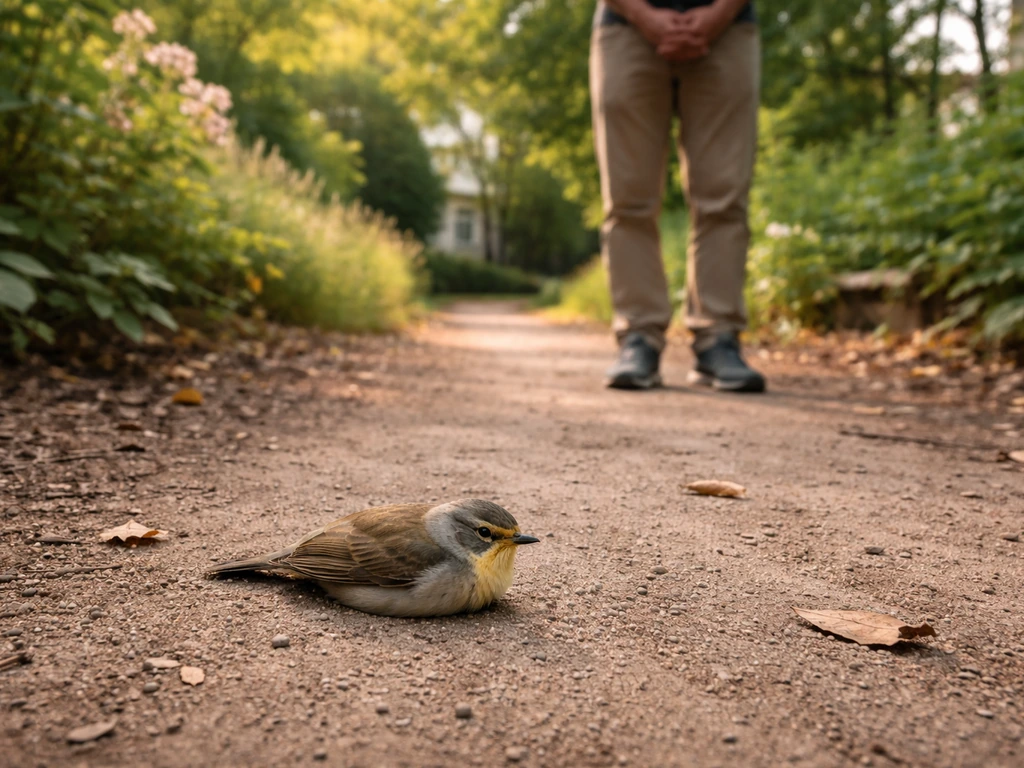
This is the question everyone freezes on, and understandably so. Here's how to think about it quickly. A bird that is simply sitting on the ground is not automatically in trouble. Fledglings (young birds that have feathers and are learning to fly) spend days hopping around on the ground while their parents watch from nearby. Those birds should almost always be left alone. The parents are usually close, feeding them regularly, and human interference can do more harm than good. If you are wondering should i help a fledgling bird, the key is to watch for signs of injury and remember that most fledglings are best left with their parents nearby.
But a fully feathered adult bird on the ground that isn't moving, is wobbling or circling, has a visibly drooping wing, is bleeding, or won't react to your approach? If you can touch an <a data-article-id="E322F766-F302-4771-89BF-C52F8A3E8D35">injured bird</a>, do it only briefly and then contact a wildlife rehabilitator for next steps. That bird is in trouble. If a bird is suffering and there is no realistic chance of recovery, a wildlife rehabilitator can tell you whether euthanasia is the humane option should you put an injured bird out of its misery. If a bird is suffering and there is no realistic chance of recovery, a wildlife rehabilitator can tell you whether euthanasia is the humane option should you put an injured bird out of its misery should i kill an injured bird? Find the humane option guidance next: should you put an injured bird out of its misery. The same goes for any bird that's been in a cat or dog's mouth, or one you watched hit a window. Those situations require action.
| Situation | What to do |
|---|---|
| Alert bird on ground, no visible injury, reacts to approach | Watch from a distance for 1-2 hours. Leave alone if it eventually flies off. |
| Feathered fledgling hopping on ground, no injury | Leave it. Parents are almost certainly nearby feeding it. |
| Bird hit a window and is stunned but upright | Place in a quiet, protected spot away from traffic and predators. Monitor closely. |
| Bird is bleeding, has a drooping wing, or can't stand | Intervene. Contain safely and contact a wildlife rehabber or avian vet now. |
| Bird was caught by a cat or dog | Intervene immediately, even if wounds aren't visible. Cat saliva is toxic to birds. |
| Featherless or eyes-closed nestling on the ground | Try to locate and return to the nest. If you can't, contact a rehabber. |
| Bird circling, staggering, or showing labored breathing | Intervene and seek professional help urgently. |
How to assess the bird from a distance
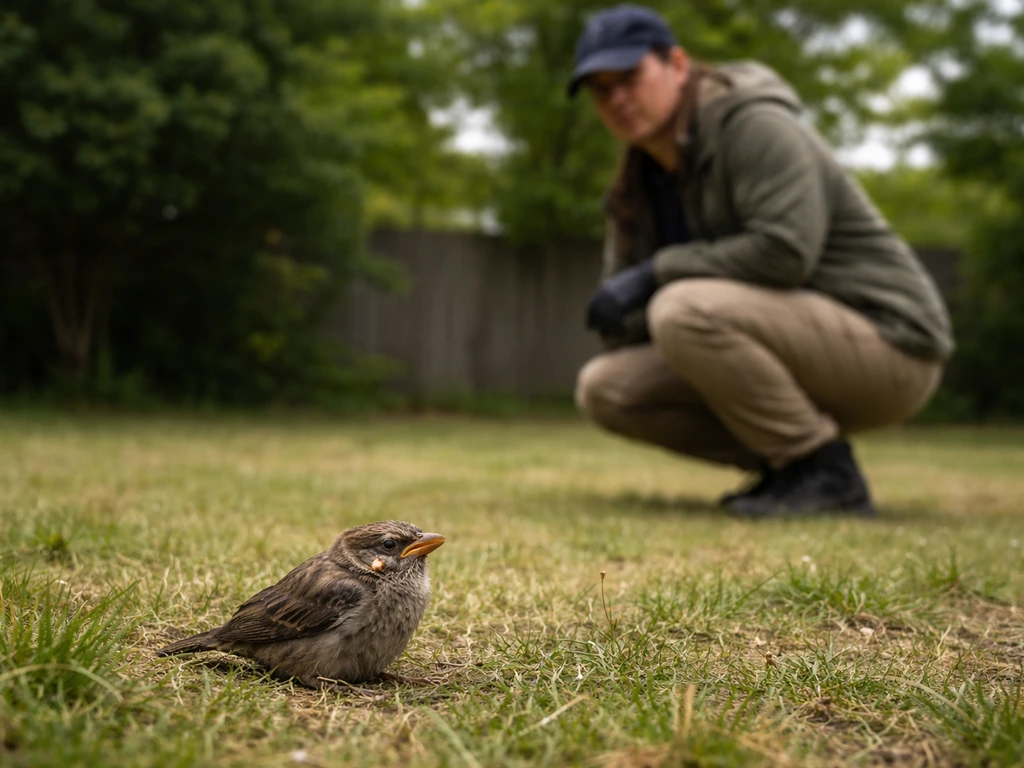
Before you do anything, take a few steps back and watch. You want to give yourself 30 to 60 seconds to just observe without approaching. Moving in too fast can cause a bird to panic, bolt into traffic, or go into shock. Injured birds can go into shock from stress alone, so calm and slow is always better.
Here's what you're looking for while you watch from a safe distance:
- Is the bird holding both wings normally against its body, or is one drooping?
- Is the bird standing upright, or is it listing to one side, staggering, or falling over?
- Can you see any blood, open wounds, or matted feathers?
- Is the bird alert and tracking your movement, or does it seem dazed and unresponsive?
- Is it breathing normally, or does its tail pump up and down with each breath (a sign of labored breathing)?
- Are its eyes open and responsive, or half-closed and glassy?
- Is there a cat, dog, or other predator nearby?
If the bird looks alert, both wings are tucked normally, and it reacts to your presence by hopping away or watching you, it may not need help. Keep pets away from the area (keep dogs on a lead if they're with you), stay back, and give it time. If it's still there an hour later, reassess. But if you see any of the warning signs above, it's time to act.
Immediate first aid: what to do right now
If you've decided the bird needs help, the goal of first aid is simple: keep it calm, keep it warm, and keep it safe until you can hand it off to a professional. You are not trying to treat it. You are just buying it time.
Step 1: Contain it safely
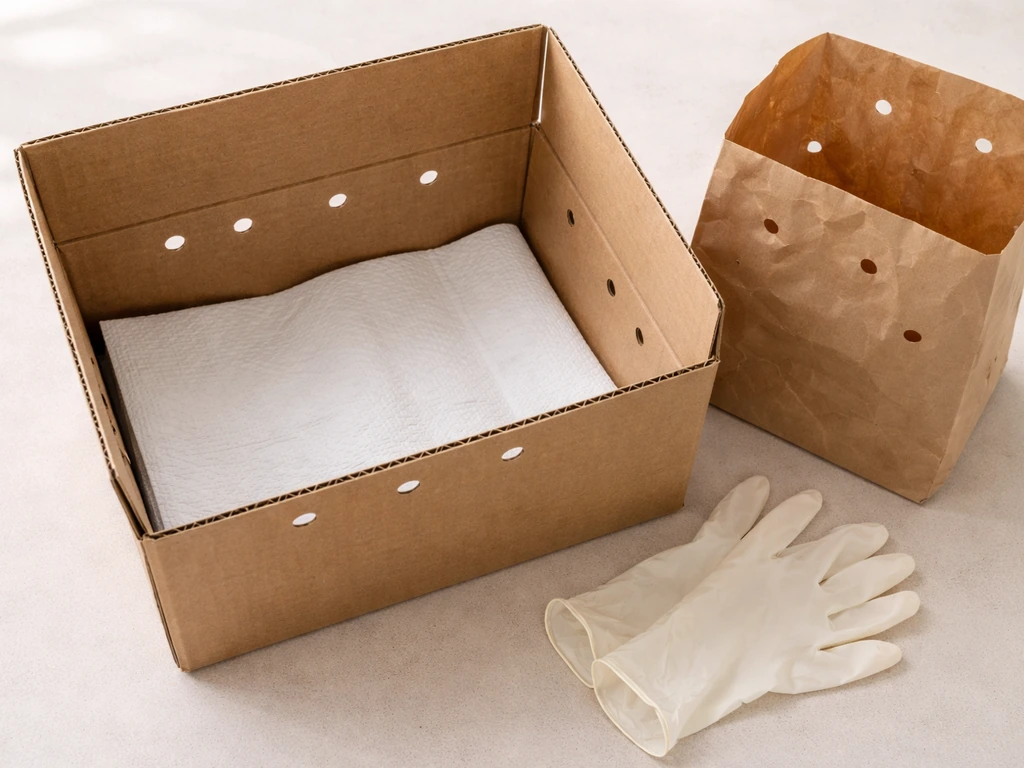
Get a cardboard box or a paper bag (not plastic) with air holes poked in the sides. Line the bottom with a folded paper towel or a piece of cloth. To pick up the bird, wear gloves if you have them, or use a light towel. Cup the bird gently but firmly over its wings with both hands so the wings stay folded against its body. Place it in the container and close the lid or fold the top. A dark, enclosed space immediately reduces the bird's stress and stops it from thrashing and injuring itself further. Don't leave the top open, even if the bird seems calm, because it may try to escape as it recovers.
Step 2: Keep it warm
Injured birds lose body heat fast, especially small ones. You can place a warm (not hot) water bottle wrapped in a cloth next to the bird inside the box, or fill a sock with uncooked rice, microwave it for about 30 seconds, and tuck it against the side of the container. The goal is gentle warmth, not heat. If the bird can move away from the warm object, that's fine. Never put the bird directly on a heat source.
Step 3: Keep it dark, quiet, and still
Put the box somewhere quiet, away from pets, children, loud TVs, and direct sunlight. A bathroom, a closet, or the back seat of a parked car all work. Don't keep opening the box to check on it. Every time you open the box, you reset the stress clock for that bird. Check once every 20 to 30 minutes maximum. And call for help right away rather than waiting to see if the bird improves on its own.
Common scenarios and what they actually mean
Window collisions
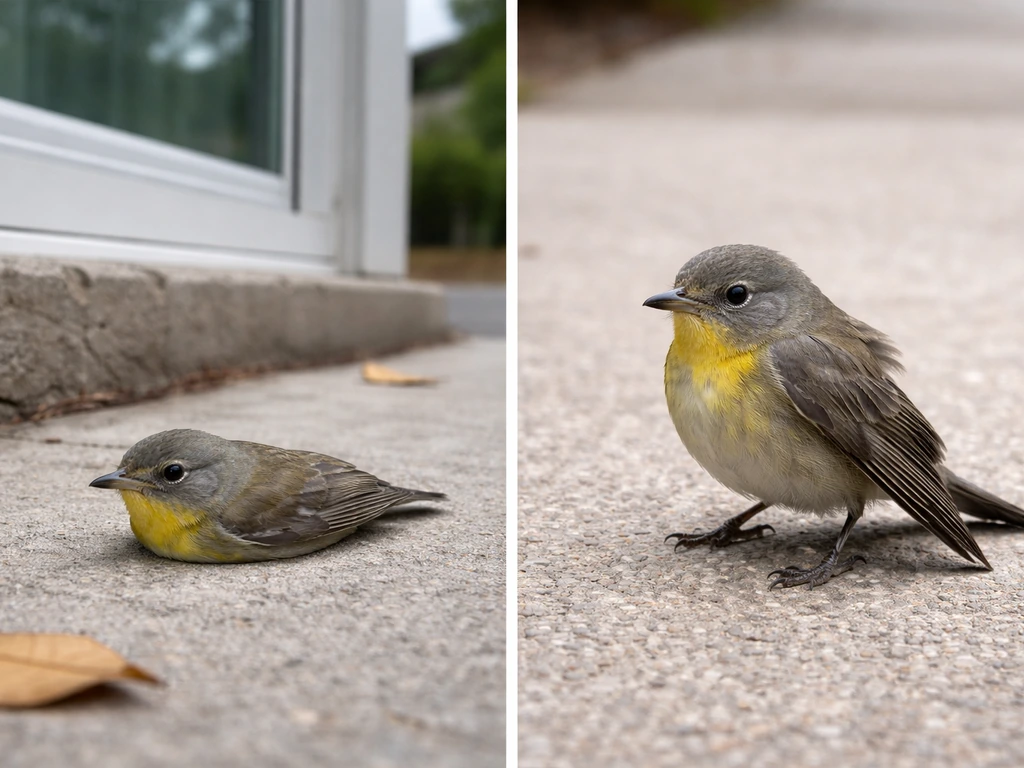
Window strikes are one of the most common reasons people find stunned birds on the ground. The bird might look okay at first, just sitting dazed beneath a window. Sometimes birds do recover on their own from a mild stun and fly off within 15 to 20 minutes. But here's the problem: internal injuries from a window strike aren't visible from the outside. A bird can look fine and be bleeding internally. If the bird has any blood around its face, swelling near its eyes, trouble keeping its head up, or labored breathing, those are serious red flags. Even if it looks normal, if it hasn't flown away within 30 minutes, treat it as injured and get it to a rehabber. The safest approach with any window strike is to place the bird in a quiet box and contact a wildlife rehabilitator rather than just leaving it on the windowsill and hoping for the best.
Broken wing or leg
A drooping wing that hangs below the normal resting position, or a leg that looks twisted or won't bear weight, almost always means a fracture. Don't try to splint it yourself. You can easily make the injury worse. Just contain the bird, keep it still, and get it to a professional. Fractures are very treatable when handled correctly, but DIY wrapping or splinting can cut off circulation or cause further damage.
Beak injuries
A cracked or broken beak looks alarming and is genuinely serious. The beak is full of blood vessels and nerve endings, and beak injuries often bleed heavily. There's nothing helpful you can do at home for a beak injury beyond containment. Don't try to bandage it or press on it. Keep the bird still, warm, and calm, and get it to an avian vet or rehabilitator urgently.
Cat or dog attacks
This is the scenario where "leave it alone" is never the right call. Cat saliva contains bacteria that are toxic to birds, and even a single puncture wound from a cat's tooth or claw can be lethal within 24 to 48 hours without antibiotic treatment. Even if the bird looks completely fine after a cat got hold of it, it needs to see a wildlife vet or rehabilitator that same day. Don't wait to see if symptoms appear. They almost certainly will, and by then it will be too late.
Nestlings on the ground
A nestling is a baby bird that's featherless or mostly featherless, with eyes that may still be closed. If you find one on the ground, the first step is to look for the nest above you and try to gently place the bird back in it. The myth that parent birds will abandon a chick you've touched is exactly that: a myth. Birds have a very poor sense of smell and will almost always continue caring for their young if you return them to the nest. If the nest is destroyed or you truly can't reach it, contact a wildlife rehabilitator right away. Keep the bird warm with a heated rice sock wrapped in a cloth while you make that call.
Red flags that mean call a professional right now
Some signs mean you skip the "watch and wait" entirely and go straight to calling a wildlife rehabilitator or avian vet. Don't second-guess yourself if you see any of these:
- Active bleeding or open wounds
- Drooping or dragging wing
- Inability to stand or hold the head up
- Labored breathing (tail bobbing with each breath, open-mouth breathing)
- Seizures, tremors, or circling behavior
- Eyes half-closed or unresponsive to movement nearby
- Bird was caught by a cat or dog, even briefly
- Visible swelling, especially around the eyes or head after a window strike
- Shivering or obvious hypothermia (fluffed up and cold to the touch)
- Featherless nestling found alone with no nest in sight
Even if a bird appears to be recovering on its own, a bird that looked fine after flying into a window can deteriorate quickly. The American Bird Conservancy notes that even birds that appear able to fly may have injuries that become fatal without treatment. When in doubt, call.
Things that feel helpful but actually make it worse
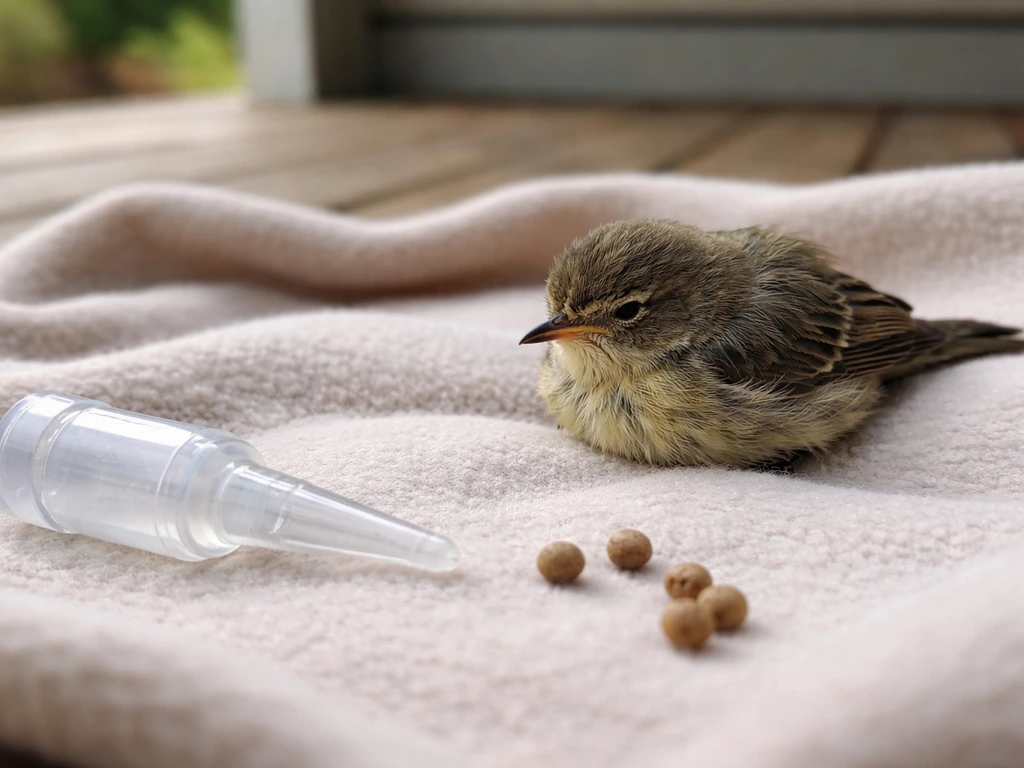
The instinct to nurture an injured animal is natural, but several well-meaning actions are genuinely dangerous for birds. Knowing what not to do is just as important as the steps above.
- Don't offer food or water. This is the big one. Forcing food or liquid into an injured bird can cause it to aspirate (inhale liquid into its lungs), which can be fatal. Baby birds especially can die from aspiration of a single drop of water given the wrong way. Leave feeding entirely to the professionals.
- Don't try to splint a broken wing or leg. Without knowing the exact fracture type and without the right materials, you will almost certainly make the injury worse.
- Don't keep handling the bird to check on it. Every handling is a stress event. Once the bird is contained, leave it alone.
- Don't put the bird in a cage with a mirror, toys, or other birds. Stress from stimulation can kill an already compromised bird.
- Don't release the bird outside to "let it go if it can." A bird that can't fly will be exposed to predators and the elements instantly.
- Don't try to chase or corner a bird that's mobile. If it's moving and you can't catch it easily, you risk causing further injury. Contact a rehabilitator for advice first.
- Be aware of the legal side: in the U.S., most wild birds are protected under the Migratory Bird Treaty Act. It is illegal to keep a wild bird at home, even temporarily with good intentions. The goal is always to transfer the bird to a licensed rehabilitator as quickly as possible.
How to find help and what to do next
Finding a wildlife rehabber or avian vet
The fastest way to find someone who can help in the U.S. is to use the Animal Help Now website (animalhelpnow.org), which connects you to the nearest licensed wildlife emergency helpers based on your location. You can also search the National Wildlife Rehabilitators Association (NWRA) directory or call your local animal control office or humane society. They typically keep a list of licensed rehabbers nearby. In the UK, the RSPCA helpline (0300 1234 999) can advise and direct you to the nearest wildlife hospital. In Australia, WIRES (1300 094 737) handles wildlife rescue nationally.
When you call, have this information ready so you don't waste time:
- What type of bird it appears to be (size, color, any distinguishing markings)
- Where exactly you found it (address or nearest landmark)
- What condition it's in (the specific signs you observed)
- What happened if you know (window strike, cat attack, found on road, etc.)
- Whether you've already contained it and what you used
Transporting the bird
Once you have a destination, keep the box in the footwell or on the back seat of the car where it won't slide around. Don't put it in the trunk. Keep the car quiet (no loud music), and keep the journey as smooth as possible. If you have to wait before transporting, keep checking that the container is warm and the ventilation holes aren't blocked. Don't transport the bird without calling ahead first. Some facilities have specific intake procedures, and a quick call means they can be ready for you when you arrive.
What happens after you hand it off
Wildlife rehabilitators will assess the bird, provide pain relief and fluids if needed, and begin treatment appropriate to the injury. Recovery timelines vary hugely: a mildly stunned window-strike bird might be released within days, while a bird with a wing fracture may need weeks of care. Most rehab centers are understaffed and rely on volunteers, so don't expect daily updates. What you can do is document the drop-off with the date, the facility name, and a contact number in case you want to follow up. Knowing you got the bird to the right place is genuinely enough, and it matters more than you might think.
If you're still uncertain whether to intervene, the safest default is to contain the bird, keep it calm and warm, and call a professional before deciding anything else. If your activity involves migratory birds, the Migratory Bird Treaty Act has specific permit and authorization structures that determine what is legally allowed, and CRS summarizes these legal frameworks blank" rel="noopener noreferrer">migratory birds permit and authorization structures. The question of whether to pick the bird up, whether you can legally keep it short-term, and how long it should stay in a box before transport are all worth thinking through carefully, but getting a rehabber on the phone first will answer all of those questions faster than any guide can. That said, you can legally keep an injured wild bird for short-term care in many places, but you should confirm the rules locally before holding onto it legally keep it short-term. As a general rule, ask the rehabilitator how long to keep the injured bird in the box before transport, since timing depends on the type of injury how long to keep injured bird in box.
FAQ
If the bird seems alert, can I still leave it alone even if it is on the ground for a while?
Yes, but only if it looks fully responsive (normal wing position, no bleeding, can stand or hop normally) and you can keep pets away. If it has not moved, flown off, or improved within about 1 to 2 hours, reassess and contact a wildlife rehabilitator rather than continuing to wait.
What should I do if I’m not sure whether it is a fledgling or an injured adult?
Use mobility and injury cues. Fledglings usually look like they have feathers and may hop around, and they can stay on the ground while parents are nearby. If you see a drooping wing, bleeding, trouble keeping balance, labored breathing, or the bird will not react, treat it as injured and contain it.
Is it safe to feed or give water to an injured wild bird while I wait?
Usually no. Do not offer food or water, because swallowing trouble, shock, and aspiration are risks, especially for birds that are dazed or bleeding. Focus on containment, warmth, and keeping the bird calm until you reach a rehabilitator.
Can I cover the bird with my jacket or pick it up right away if it’s in danger?
Yes if there is an immediate hazard like traffic, a cat nearby, or the bird is about to be stepped on. Otherwise, observe for 30 to 60 seconds from a distance first, then contain it calmly. The goal is to prevent injury escalation without causing panic.
Should I put the injured bird back outside in a “safer” spot after I capture it in a box?
No. After containment, keep the box indoors in a quiet, warm, dim place until you can transport. Returning it outdoors can undo stabilization, increase stress, and reduce your control over safety from predators and people.
If I suspect a window strike but the bird looks normal, do I still need to call?
Call if it does not fly off quickly. As a practical rule, if it has not gone within about 30 minutes, treat it as injured even if it appears fine, because internal injuries may not be visible externally.
What if the bird got into a cat’s mouth and then escaped, but it looks okay?
Do not rely on appearance. Cat saliva bacteria and puncture wounds can lead to severe infection within a day or two even when the bird seems intact, so contact a wildlife rehabilitator the same day.
Can I splint a drooping wing or twisted leg to help it “hold still” for transport?
No. DIY splinting can worsen fractures, restrict circulation, and make treatment more difficult. Instead, contain the bird so it cannot thrash, keep it warm, and get professional care.
How do I prevent the bird from escaping or injuring itself while it’s in the box?
Use a ventilated paper bag or cardboard box with the top closed or folded securely. Keep it dark and minimize handling, because birds may thrash when startled. Avoid checking continuously, check only every 20 to 30 minutes maximum.
Is it okay to keep the bird in the box for hours before calling, if I’m busy?
Call as soon as you can. If you must wait, keep the container warm (not hot), ensure vents are not blocked, and do not delay transport once a facility tells you it’s ready for intake. Prolonged delay increases stress and can worsen injuries.
Do I need gloves, and what if I don’t have them?
Gloves help reduce both bites and disease risk, but if you do not have them, use a light towel to gently cup the bird over the wings. Avoid squeezing the chest or forcing contact, and wash hands thoroughly after.
What information should I share with the rehabber to help them decide quickly?
Tell them the bird species if you can, where you found it, what happened (window strike, cat/dog, hit by car), when you found it, current signs (bleeding, drooping wing, breathing issues), and that you have it contained and warm. This helps them provide intake instructions and triage priorities.
Can I legally keep an injured wild bird temporarily while waiting for help?
In many places short-term containment is allowed, but rules vary by country, state, and even species. Ask the wildlife rehabilitator or local animal control for guidance, and do not keep it longer than they advise.