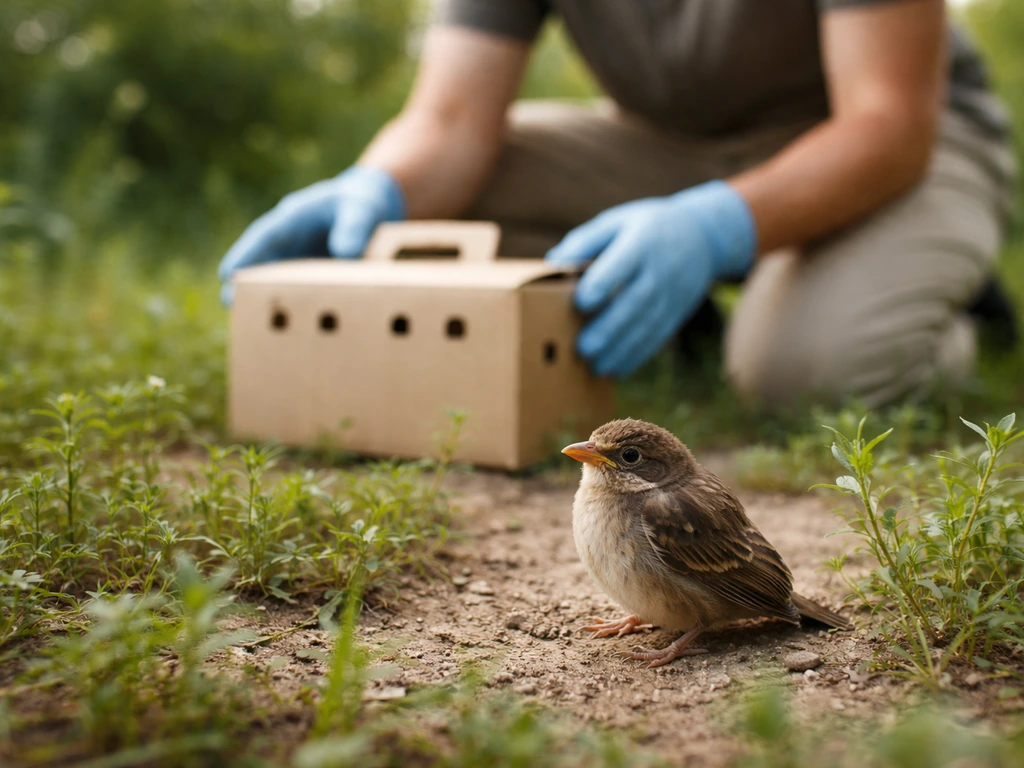
Almost certainly, no. You should not attempt to euthanize an injured bird yourself. Most birds that look like they're suffering can recover with proper care, and attempting DIY euthanasia is both illegal for most wild birds under U.S. federal law and very likely to cause more suffering, not less. What you should do right now is stabilize the bird, reduce its stress, and get it to a blank" rel="noopener noreferrer">licensed wildlife rehabilitator or avian vet as quickly as possible. That is the most humane thing you can do.
Should You Put an Injured Bird Out of Its Misery?
Marcus Chen
30 May 2026
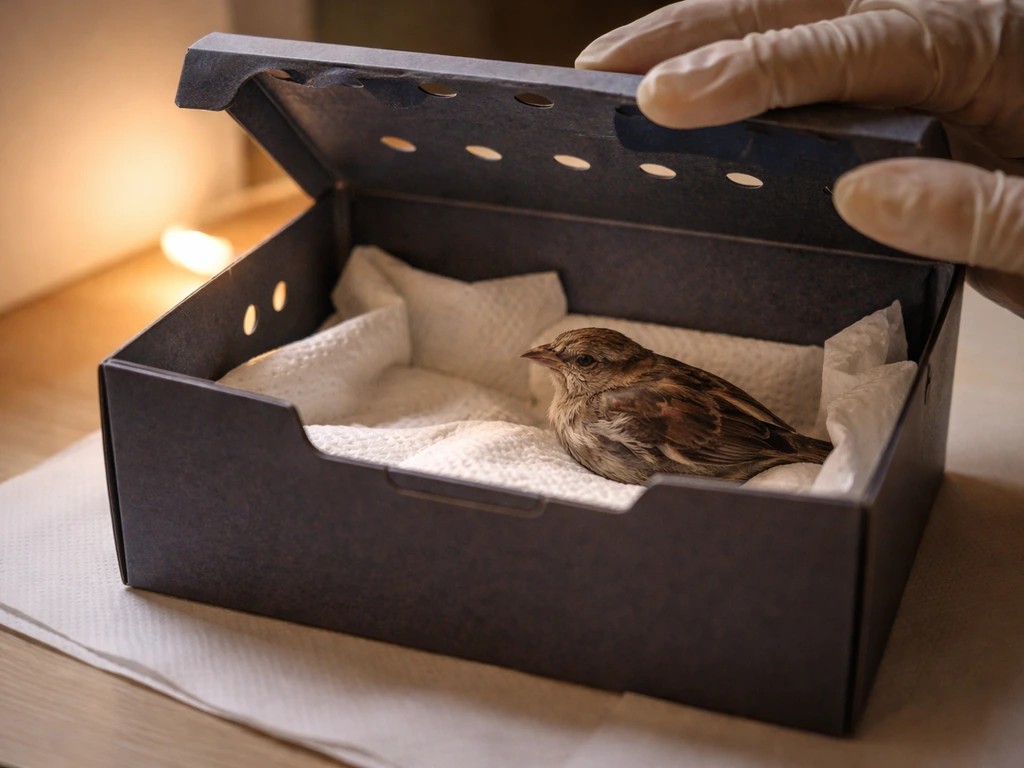
What 'out of its misery' really means (humane options vs. risky DIY)
When people search for this, they're usually scared and compassionate, not callous. You're watching a bird struggle and you want the suffering to stop. That instinct is good. But 'putting it out of its misery' means something very specific in a clinical context: humane euthanasia using a controlled substance administered by a licensed professional. It's not something you can safely replicate at home.
In the U. S. , most wild birds are protected under the Migratory Bird Treaty Act (50 CFR § 21. 22).
That law covers an enormous range of species, from sparrows and robins to hawks and herons. As a private citizen, what you're legally permitted to do is take temporary possession of an injured migratory bird for the sole purpose of immediate transport to a licensed veterinarian or a federally permitted wildlife rehabilitator.
In Washington State, private citizens need a permit from the Washington Department of Fish & Wildlife (WDFW) to practice wildlife rehabilitation licensed veterinarian or a federally permitted wildlife rehabilitator. That's it.
Holding onto it, attempting to treat it yourself for more than a brief stabilization period, or attempting euthanasia are not covered.
Genuine humane euthanasia for birds involves an injectable overdose of sodium pentobarbital, which is a controlled substance only veterinarians can legally administer. Methods people try at home, including suffocation, freezing, crushing, or blunt force, are not humane. They are painful and traumatic. If a bird is truly beyond help, a vet or rehabilitator will make that call quickly and handle it correctly. Your job is to get the bird to that person.
Do this right now to reduce suffering
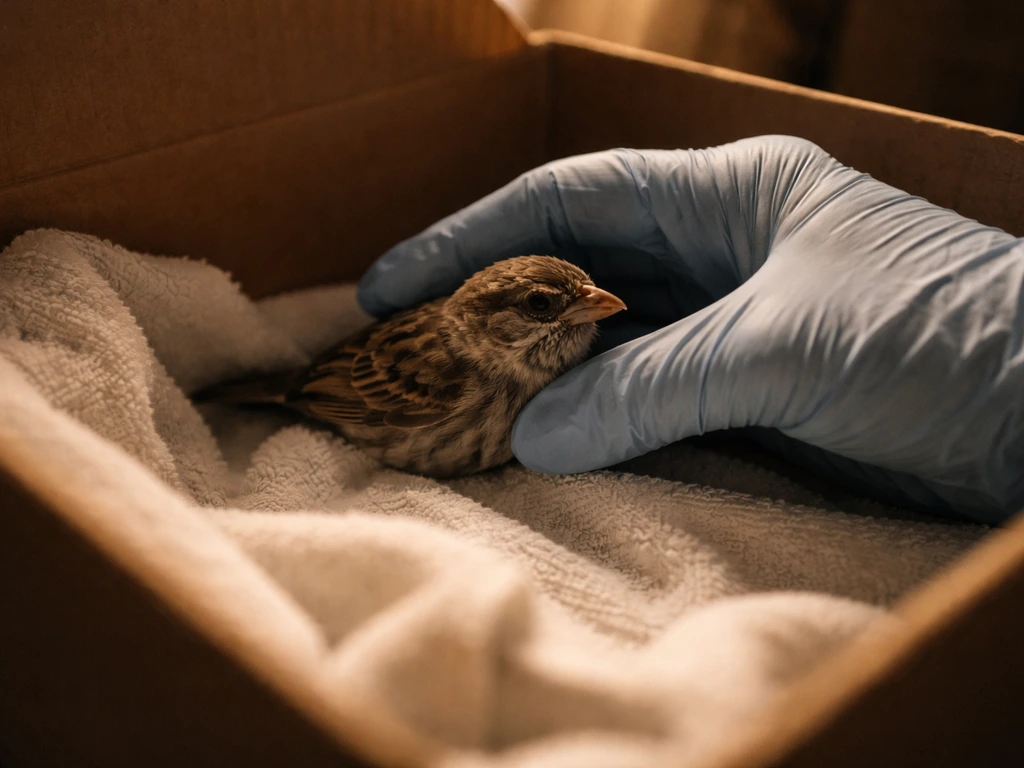
Before you do anything else, the goal is simple: contain the bird safely, keep it warm and dark, and minimize handling. Stress kills injured birds fast. A bird in shock can die from overstimulation alone, so a calm, quiet environment is genuine first aid.
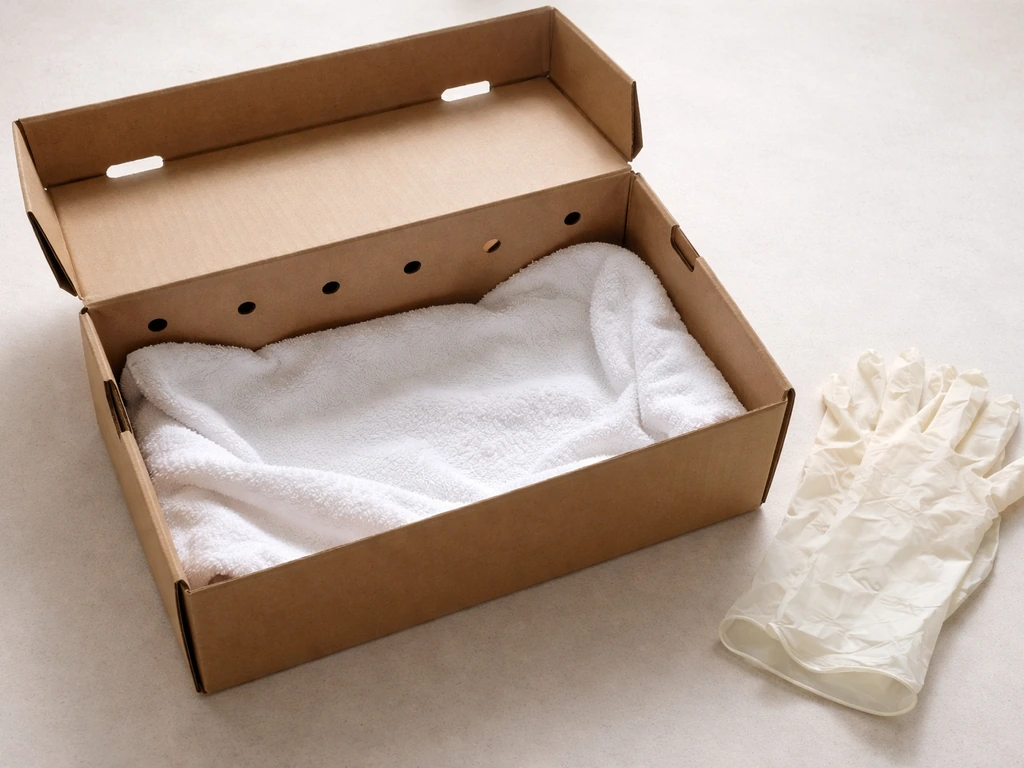
- Put on gloves if you have them. Even small birds can scratch or bite when frightened, and some carry external parasites.
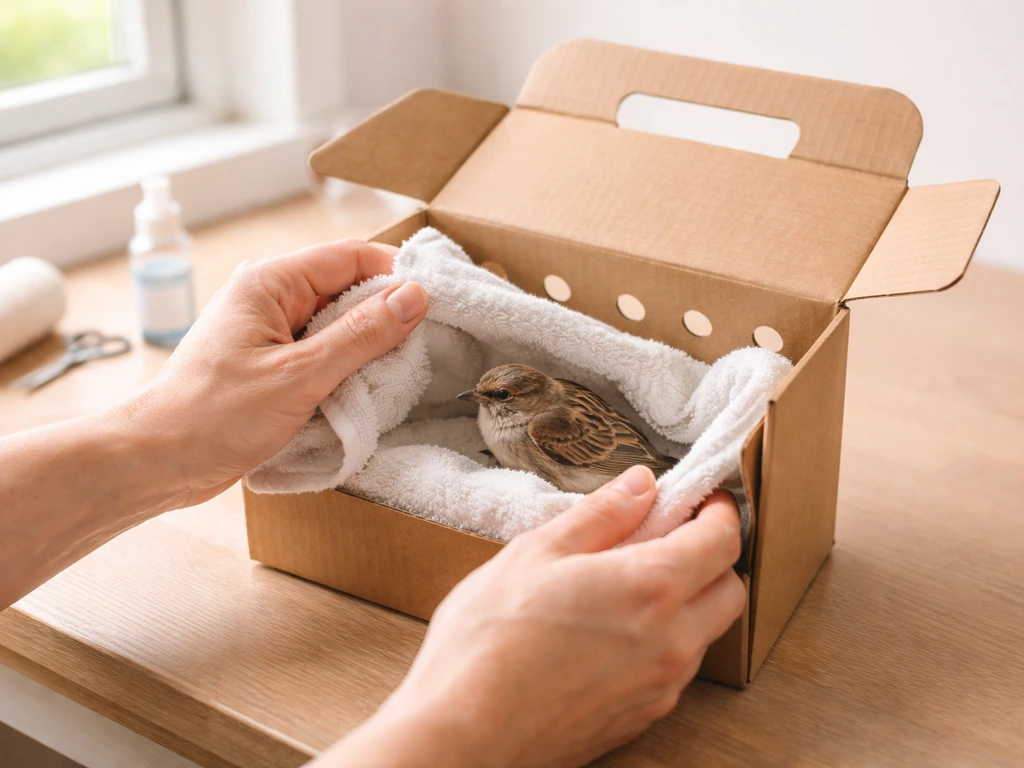
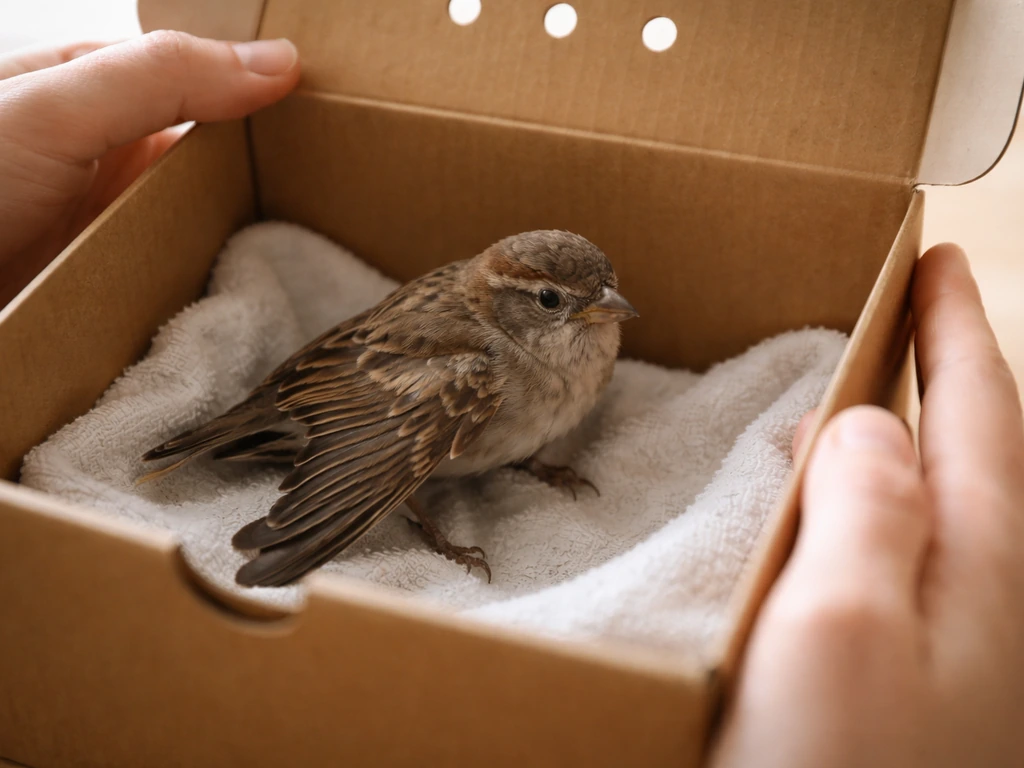
- Gently place the bird in a cardboard box lined with a soft cloth or paper towel. Do not use a wire cage or clear container, the bird needs darkness to calm down.
- Make small air holes in the lid, then close it. Darkness reduces panic significantly.
- Place the box in a warm, quiet spot away from pets, children, and noise. Room temperature (around 70 to 80°F) is fine for most birds. For very small or featherless baby birds, place a heating pad on its lowest setting under half the box so the bird can move off the heat if needed.
- Do not keep peeking inside. Every time you open the box, you're adding stress. Check once every 30 minutes at most.
- Call a wildlife rehabilitator or avian vet immediately while the bird is contained and resting.
That's the full immediate action list. Nothing fancy required. A box, a cloth, and a phone call will do more for a suffering bird than almost anything else you can improvise.
Quick severity check: urgent help now vs. monitor for a bit
Not every injured-looking bird is in crisis. Sometimes a bird just needs 30 to 60 minutes to recover from a window collision or a near-miss with a cat. But other signs demand you act immediately. Here's how to tell the difference.
Get help immediately if you see any of these
- Active bleeding that isn't stopping
- Open fracture (bone visibly through skin)
- Unable to hold its head up or keep its eyes open
- Seizures or continuous trembling lasting more than a minute or two
- Panting or labored breathing that continues for more than 15 to 20 minutes
- Puncture wounds from a cat or dog (even small ones, because cat saliva bacteria are fatal to birds within 24 to 48 hours without antibiotics)
- Obvious spinal injury or paralysis of legs
- Severely matted or oiled feathers preventing movement
- Bird is cold to the touch and unresponsive
You can monitor briefly (but still call a pro) if
- The bird is alert and reactive but just sitting on the ground
- It just hit a window and seems dazed but is upright
- Wings are held normally but it isn't flying yet
- Eyes are open and tracking your movement
- Breathing appears normal
Even the 'monitor briefly' cases should involve a call to a wildlife rehabilitator. They can advise you over the phone within minutes on whether you need to transport or wait. Don't skip that call.
Handling and basic first aid by injury type
You are not expected to be a vet. But there are a handful of things you can do, and a handful you absolutely shouldn't, depending on what you're dealing with.
Broken or drooping wing
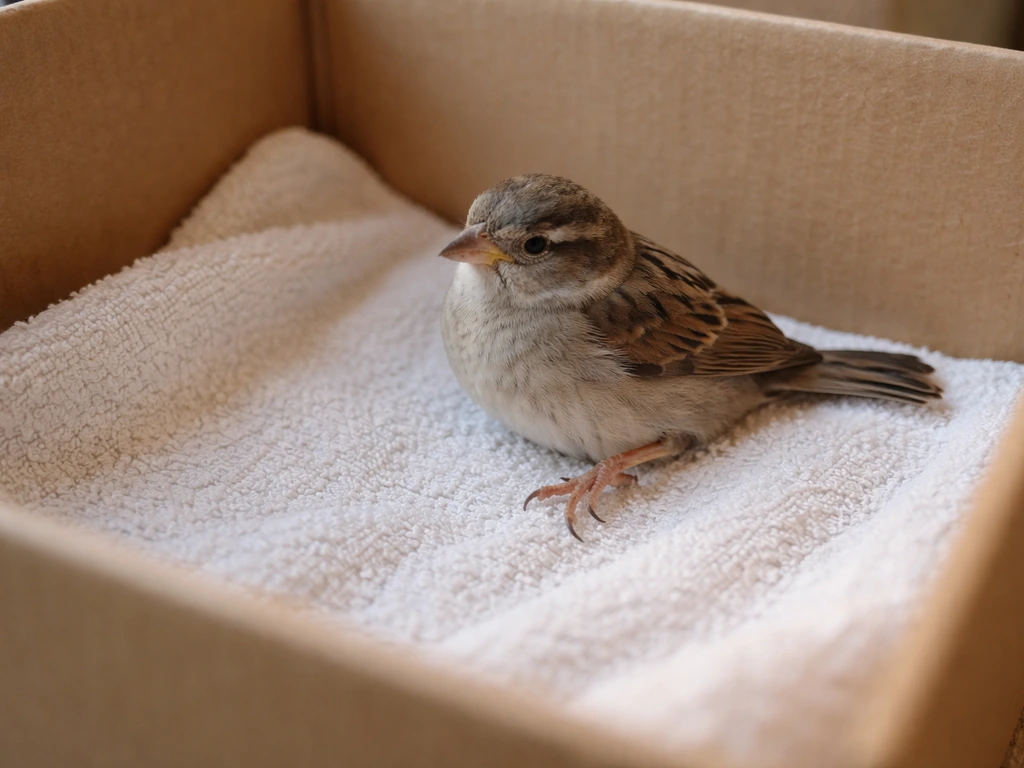
A drooping wing that hangs lower than normal is usually a fracture. Do not try to splint it yourself. Improper splinting causes more damage. Just contain the bird in a box with minimal space so it can't flap around and injure itself further. Keep the box snug but not crushing, think of it like a body wrap that prevents extra movement without adding pressure.
Injured or twisted leg
A bird that can't grip properly or holds one leg up is likely injured. Don't attempt to straighten or bind the leg. Line the box floor with a folded cloth so the bird has something soft and grippy to stand on rather than a slippery surface. Transport as soon as possible.
Bleeding
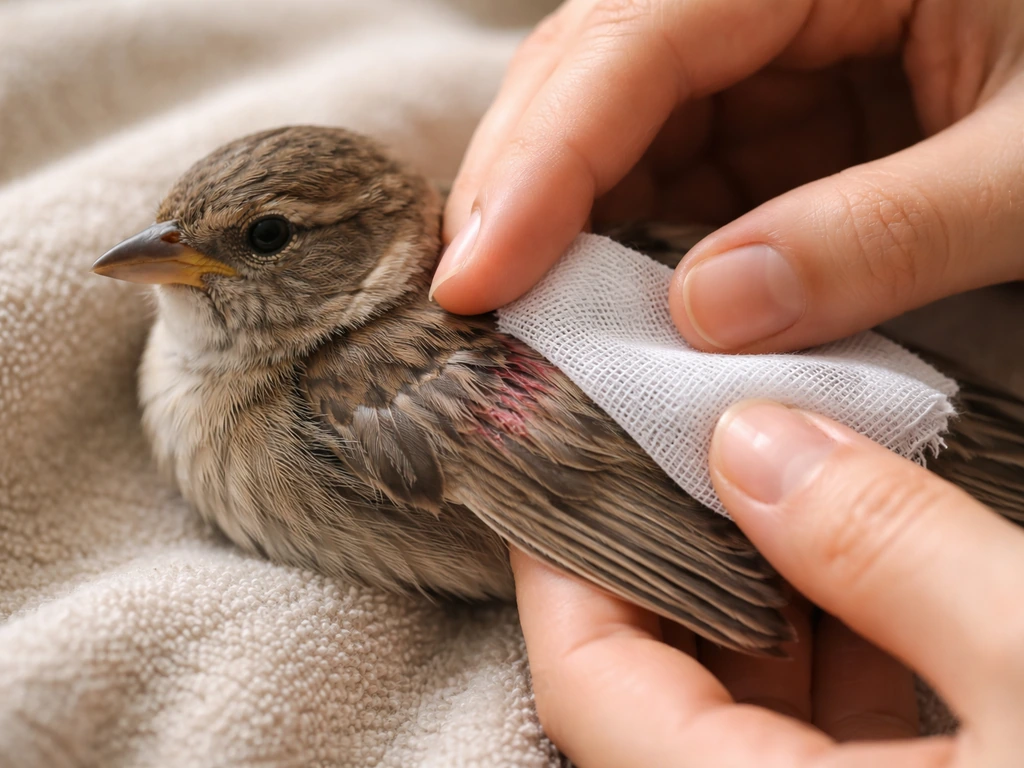
If the bird is bleeding, apply very gentle pressure with a clean cloth or gauze for about 60 seconds. Don't press hard. Birds have very little blood volume, so even modest blood loss is serious. If bleeding is from a broken blood feather (one of the large wing or tail feathers), you can sometimes remove it cleanly with a straight pull to stop the bleeding, but this is painful for the bird and ideally done by a rehabilitator. If bleeding stops, keep the wound clean and get the bird to help. If it doesn't stop within two to three minutes, that's an emergency.
Head trauma
A bird that seems stunned, is tilting its head, circling, or has one eye closed after a collision has likely sustained head trauma. Keep it in a dark, quiet box. Do not try to stimulate it or check on it repeatedly. Many birds recover from mild head trauma within an hour if they're kept calm and warm, but a vet needs to evaluate for internal bleeding or neurological damage. Do not assume recovery means full recovery without professional assessment.
Special scenarios worth knowing
Window collisions
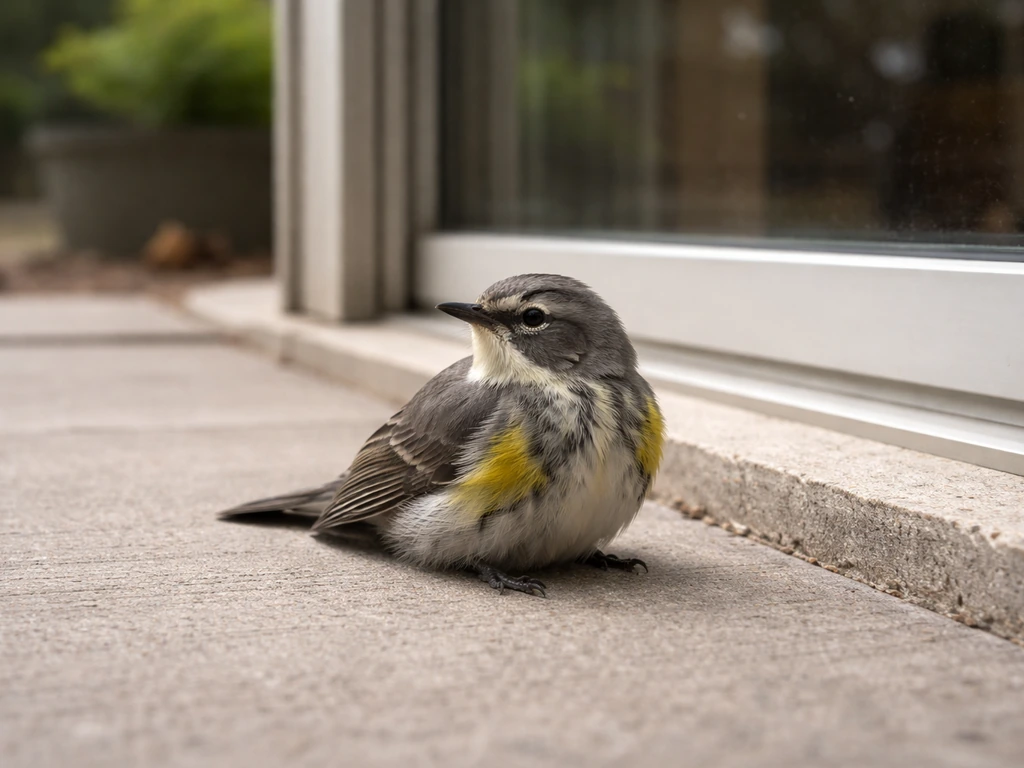
Window strikes are one of the most common reasons people find stunned birds. The bird hits glass at speed and may be dazed, unable to fly, or lying on its side. Most are in temporary shock from the impact. Put the bird in a dark box immediately, set a timer for 30 to 60 minutes, and keep it in a quiet spot. Many birds will be alert and attempting to move within that time window. If it's still unresponsive, dazed, or showing any of the urgent signs listed above after an hour, transport to a rehabilitator. Even if it seems fine, consider calling a rehab line to check, because internal bleeding from head trauma isn't always obvious right away.
Pet attacks (cats and dogs)
This is the one case where 'it looks okay' is the most dangerous assumption you can make. Cat saliva carries Pasteurella bacteria that cause fatal septicemia in birds, often within 24 to 48 hours of a puncture wound, even a tiny one. A bird that was grabbed by a cat but appears unharmed still needs antibiotics immediately. This is a same-day vet visit, no exceptions. Dog bites tend to cause more visible trauma (crushing injuries, fractures) and are also emergencies. Don't wait to see if the bird improves.
Baby birds and nest emergencies
Baby birds require a separate set of considerations. A nestling (featherless or with only pin feathers) found on the ground is genuinely at risk and needs professional help within hours. If you can see and safely reach the nest, you can place the bird back in it. The myth that parent birds abandon babies that have been touched by humans is false.
But if the nest is destroyed or unreachable, put the nestling in a small container lined with tissue, keep it warm, and call a wildlife rehabilitator immediately. Do not attempt to feed it. A fledgling (fully feathered, hopping around on the ground) is often just learning to fly and may not need rescue at all. Parent birds continue to feed fledglings on the ground.
Observe from a distance for 30 minutes before intervening.
When to call a wildlife rescue or avian vet right now
Any injured bird that isn't a fledgling learning to fly should trigger a call to a professional. Here's the practical guide to making that happen fast.
How to find help in the next five minutes
- Search 'wildlife rehabilitator near me' or visit the National Wildlife Rehabilitators Association (NWRA) or Wildlife Rehabilitators directory online.
- In the U.S., you can also call your state's Department of Fish and Wildlife or Game Commission. They maintain lists of licensed rehabilitators in your region.
- The Humane Society and local animal shelters often have referral contacts for bird rehab even if they don't treat birds directly.
- Search 'avian vet near me' for birds with injuries requiring immediate medical treatment, especially cat attacks, severe bleeding, or obvious fractures.
- In the UK, the RSPCA helpline (0300 1234 999) provides guidance and can dispatch assistance for injured wild birds.
What to tell them when you call
- The species if you know it, or a description (size, color, type of bird)
- How you found it and what likely happened (window strike, cat attack, found in yard, etc.)
- What symptoms you're seeing (bleeding, unable to stand, seizures, dazed, etc.)
- Your location and whether you can transport
Most rehabilitators and wildlife vets are used to receiving calls from people with zero bird knowledge. You don't need to know what species it is. Just describe what you see and where you are. They'll guide you from there.
How to transport safely
Keep the bird in the closed, ventilated box for the entire journey. Don't open it in the car to check. Keep the car quiet, avoid loud music, and drive calmly. Don't let the box tip over. Place it on a flat seat or the floor of the passenger footwell wedged so it can't slide. Temperature in the car should be comfortable, not hot.
Things that seem helpful but actually make it worse
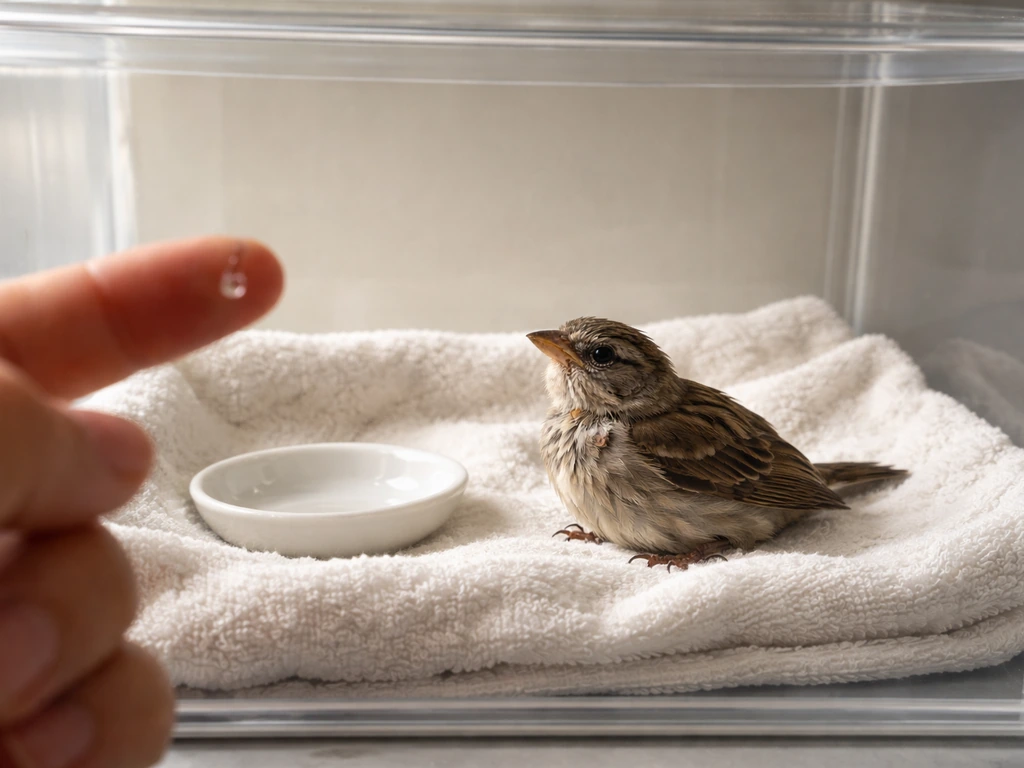
This section matters as much as any other, because well-meaning actions cause a lot of unnecessary bird deaths.
| What to avoid | Why it causes harm |
|---|---|
| Giving food or water | Birds in shock can't swallow safely and may aspirate (inhale) water into their lungs. Many human foods are toxic to birds. Wait for professional guidance. |
| Offering bread, milk, or worms | Nutritionally wrong and potentially fatal for most bird species. Baby birds especially need species-specific diets. |
| Keeping the bird in a wire or open cage | Causes additional injury from wing flapping and prevents the darkness needed to reduce stress. |
| Checking on the bird constantly | Every interaction adds stress hormones that can cause or worsen shock. |
| Attempting DIY euthanasia | Illegal for most wild birds, almost always inhumane in practice, and unnecessary in most cases where a professional can help. |
| Releasing the bird too early | A bird that appears to have recovered may still have internal injuries, infection from a cat bite, or neurological damage. Always get clearance from a professional before release. |
| Keeping the bird long-term at home | Illegal without a permit in most U.S. states and many other countries. Unpermitted rehabilitation causes harm even when well-intentioned. |
The hardest part of helping an injured bird is doing less than you want to. Your instinct is to intervene, feed, comfort, and fix. But the kindest thing you can do for a suffering bird in most cases is contain it safely, keep it calm and dark, and move fast to get it to someone with the training and legal authority to actually help.
If you're wondering whether you should even pick the bird up, or whether leaving it alone might be better, those are genuinely different questions depending on where the bird is and what happened to it. If you're thinking about leaving it alone, the safest move is still to stabilize the bird and contact a licensed wildlife rehabilitator or avian vet for guidance should i leave an injured bird alone.
The decision to help an injured bird versus observe from a distance is worth thinking through carefully. If you’re deciding whether to help, the safest approach is to contact a licensed wildlife rehabilitator as soon as possible should you help an injured bird. And if euthanasia ever is the right outcome, it's a decision that happens at the end of a professional assessment, not in your backyard.
RSPCA notes that if euthanasia is ever the best interest of the animal’s welfare, it is a decision handled through professional care rather than by private actions in a backyard euthanasia ever is the right outcome.
If you are wondering can i keep an injured wild bird, focus on temporary holding for transport to a licensed wildlife rehabilitator or avian vet. The bird you're looking at right now almost certainly deserves that chance.
FAQ
How long should I monitor an injured bird before I contact a professional?
If the bird is actively bleeding, has trouble breathing, was bitten or scratched by a cat or dog, or you suspect head trauma, do not wait for it to “sleep it off.” Use a dark ventilated box, keep it warm and quiet, and call a wildlife rehabilitator or avian vet immediately (cat contact is same-day). If none of those apply, you can still call for guidance during the 30 to 60 minute window rather than deciding to delay on your own.
Should I feed or give water to an injured bird to help it recover?
Feeding is risky because the wrong food or technique can cause choking, aspiration into the lungs, or further stress. Offer no food or water and focus on containment and warmth. For nestlings and any bird that is not already alert and self-sufficient, feeding attempts are a common reason well-meaning rescues end badly.
Can I give the bird pain relief or antibiotics I have at home?
Do not put medication, eye drops, or human painkillers on a wild bird. Many drugs are toxic to birds at small doses, and some can mask symptoms a vet needs to assess. Stick to first aid basics (warmth, darkness, minimal handling) and let the vet or rehabilitator treat if needed.
What’s the safest way to contain the bird for transport (box, towel, and temperature)?
Do not use towels or surfaces that trap claws or cause slipping. A better setup is a ventilated box lined with soft cloth or tissue so the bird can grip. Avoid overheating, too much light, and repeated checking, because stress and temperature swings can worsen shock.
If I find an injured bird, can I keep it until it’s better and release it myself?
Yes. Even if you plan to release the bird later, you still must treat the initial step as temporary holding for transport only. If you keep it beyond stabilization, or for purposes other than getting it to a permitted professional, you risk violating wildlife protection rules and you also increase the bird’s stress and chance of deterioration.
What should I do if the bird has a drooping wing or a possible fracture?
If you find a bird with an injured wing, do not try to straighten it or set a splint unless a rehabilitator tells you to. Minimal space in the box helps prevent flapping, and the soft grippy lining reduces further stress on the leg and feet. Improper splints can worsen fractures or damage joints.
How do I handle bleeding, and when is it considered an emergency?
For bleeding from minor sources, gentle pressure for about a minute can be appropriate, but you should not keep pressing for a long time or tightly wrap the area. If bleeding continues after a couple minutes, treat it as an emergency and transport. Because birds have low blood volume, even “small” bleeding can become serious fast.
What signs mean the bird may have internal injuries even if it seems okay?
Some birds look calm but still have internal injuries, especially after glass collisions. If the bird stays unresponsive, keeps tilting, or has one eye closed after the short recovery window, transport. Also, call to rule out internal bleeding, because recovery from external symptoms does not guarantee neurologic recovery.
The bird looks fine after a cat attack, do I still need a vet visit?
If you see a cat bite or scratch, assume infection is possible even when the skin looks only slightly damaged. Pasteurella-related infections can become fatal within a day or two, so you should arrange same-day antibiotics through a vet rather than waiting for visible worsening.
How do I decide between a fledgling I should watch and a nestling that needs rescue right away?
If the bird is a fledgling, observe from a distance for about 30 minutes first, since parents often continue feeding on the ground. If it is unsteady, cannot hop, looks chilled, or you suspect it was attacked, use a box and contact a rehabilitator. If it is a nestling that is featherless or only has pin feathers, get professional help within hours and do not feed it.
Is it okay to pick up a wild bird, and how can I do it safely?
Wear gloves if you can, and avoid direct contact with blood or respiratory secretions. If you need to pick the bird up, do it gently and support the body, then put it in a dark box without delays. Afterward, wash hands thoroughly. Even when euthanasia is off the table, safe handling helps protect both you and the bird.