Yes, you can touch an injured bird, but only when it's necessary to move it out of immediate danger or get it into safe containment. If you’re also wondering whether you can keep an injured wild bird at home, it’s usually not appropriate and you should contact a wildlife rehabilitator or avian vet instead can i keep an injured wild bird. Touching a wild bird should be deliberate and minimal, not a reflex. If the bird is already in a safe spot and not in danger of being hit by a car, grabbed by a cat, or exposed to extreme weather, your first move is actually to pause and assess before you reach for it. If the bird is injured but not in immediate danger, it often makes sense to pause and assess first rather than pick it up right away pick up an injured bird. If you are wondering whether you should leave an injured bird alone, the safest approach is to leave it where it is only if it is already in no immediate danger, and otherwise box it and get professional help should i leave an injured bird alone.
Can You Touch an Injured Bird? What to Do Safely
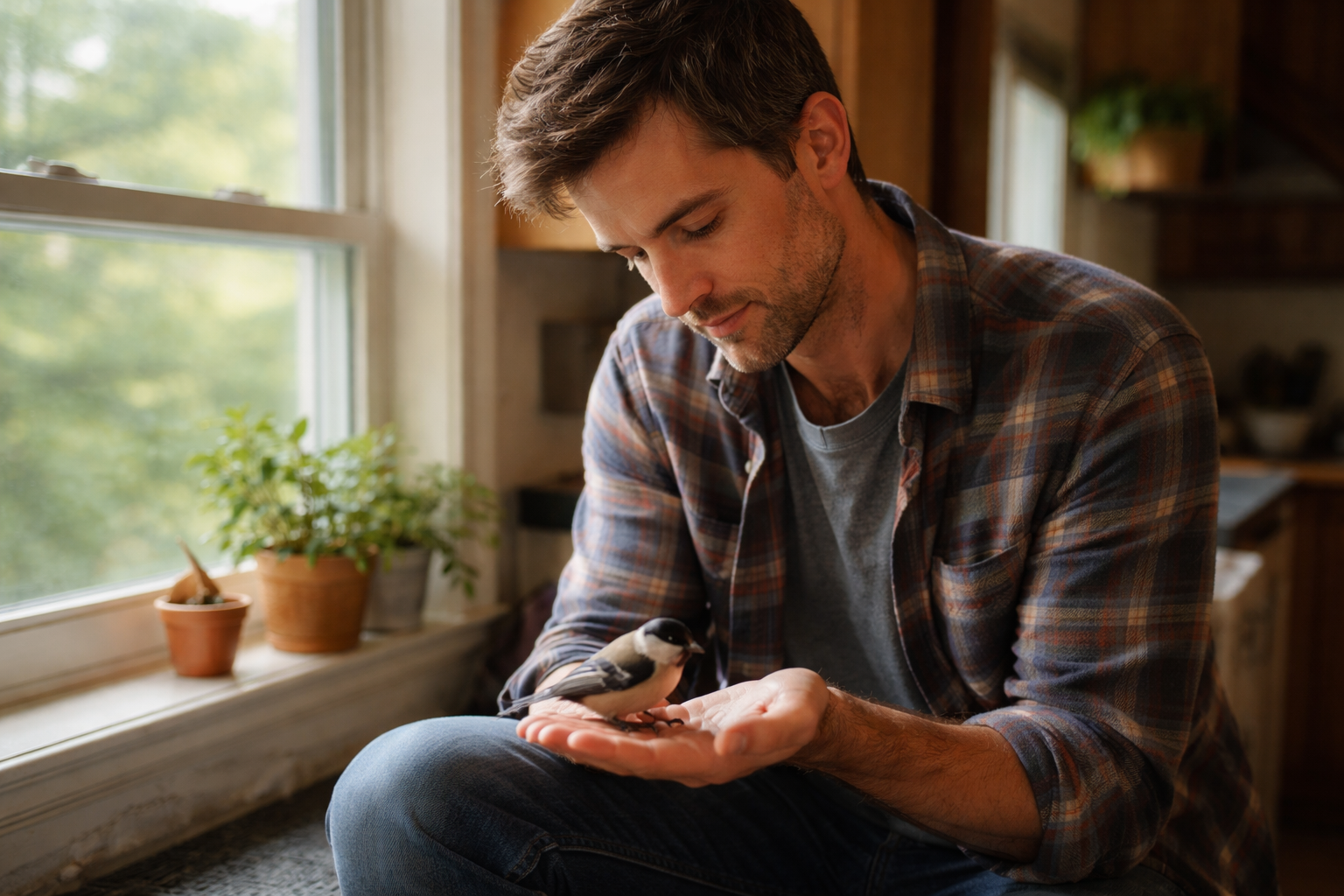
When touching is okay vs. when to hold back
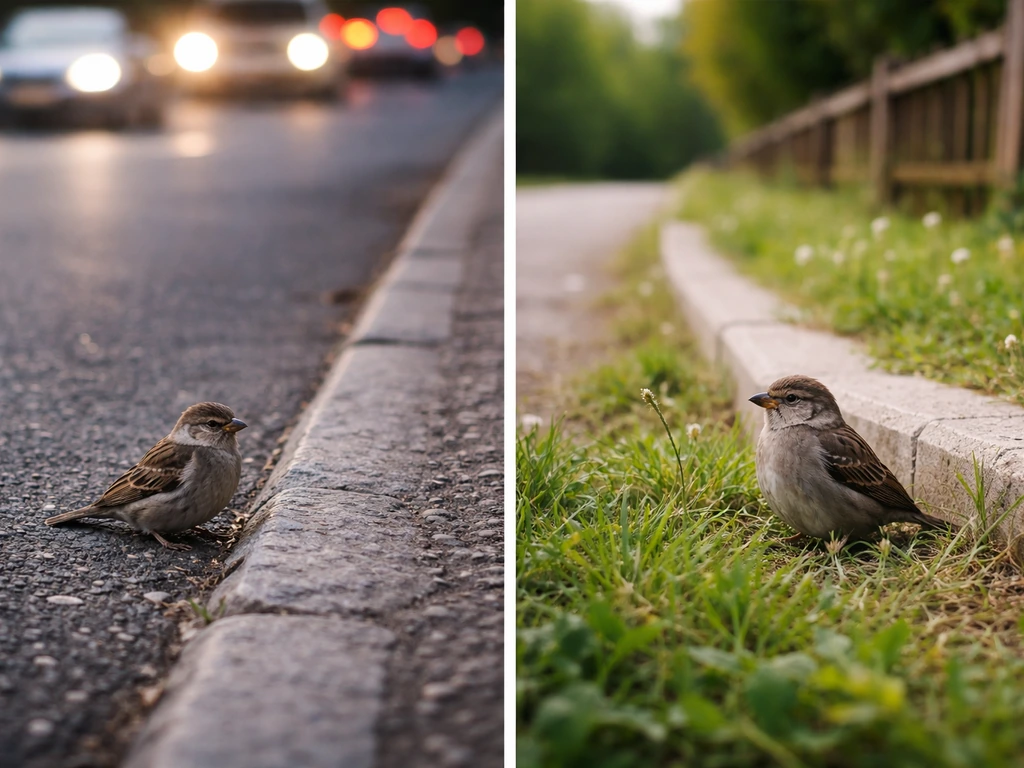
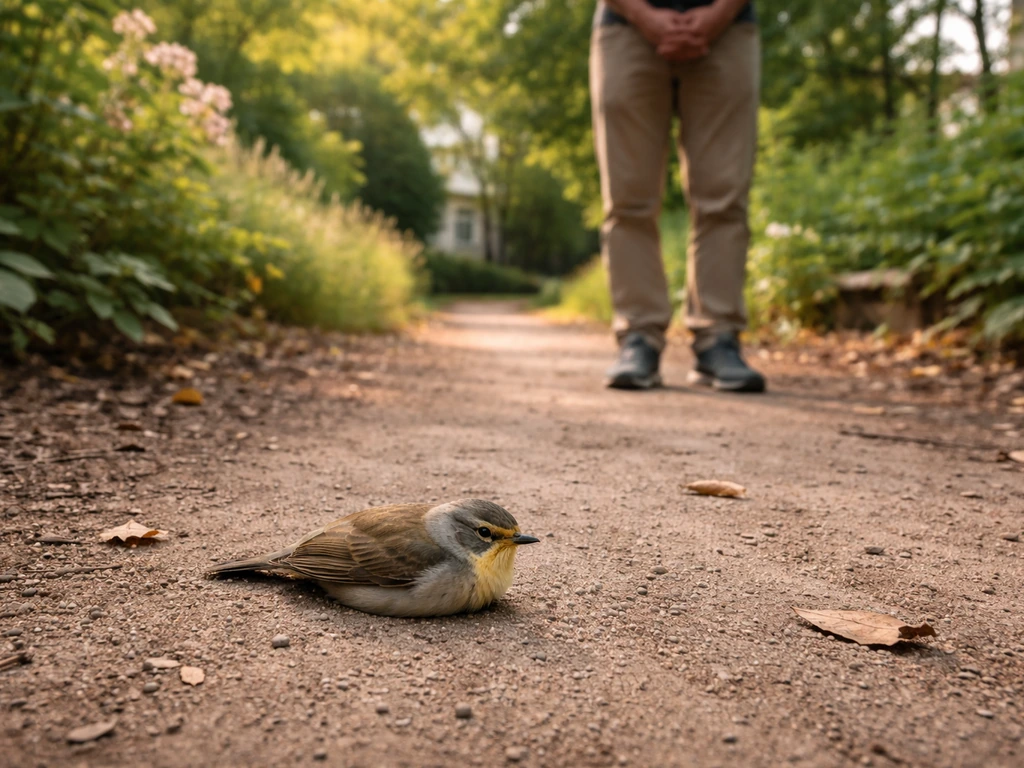
Touching is reasonable when the bird is in immediate danger and can't move itself to safety. Think: middle of a busy road, exposed in a yard with a cat nearby, or lying in direct rain with no shelter. In those cases, a gentle, quick pick-up to move it somewhere safer is the right call. Touching is also appropriate to place the bird into a secure box for transport to a wildlife rehabilitator or avian vet.
Hold back if the bird is alert, upright, and simply sitting on the ground in a safe area. If you are wondering whether to help a fledgling bird, the key is to first figure out whether it is actually in danger or just learning to fly. Fledglings, for example, spend several days on the ground while they're learning to fly, and they look injured when they're not. If the bird can move its wings, holds its head up, and reacts to your approach, it may not need handling at all. The same goes for birds that appear stunned after a window strike: many recover on their own within 30 to 60 minutes if left in a quiet, sheltered spot away from predators.
Also pause if you're dealing with a large bird of prey like a hawk or owl, a heron, or any bird that could seriously injure you. These birds have powerful talons and beaks, and handling them without experience can hurt both of you. In those situations, call a wildlife rescue first and follow their instructions.
| Situation | Touch the bird? | Why |
|---|---|---|
| Bird in middle of road or near active predator | Yes, move it | Immediate danger outweighs handling stress |
| Bird stunned after window strike, in safe spot | Not yet | May recover in 30-60 min on its own |
| Fledgling on ground, alert and moving | No | Likely healthy, learning to fly |
| Bird with visible injury (bleeding, drooping wing) | Yes, to contain | Needs professional care soon |
| Large raptor (hawk, owl, heron) | No without guidance | High injury risk to you and the bird |
| Bird that has been in a cat's mouth | Yes, urgent | Cat bacteria cause fatal infection within hours |
Safety checks before you make contact
Before you touch anything, take about 30 seconds to check two things: the bird and yourself. Wild birds can carry diseases including avian influenza (bird flu), salmonella, and various parasites like mites and lice. This isn't a reason to panic, but it is a reason to protect yourself properly before you make contact.
Look at the bird first. Is it showing any unusual neurological signs, like circling, trembling, or seizure-like movements? Is it one of a group of dead or dying birds in the same area? These can be signs of something contagious. If you're seeing multiple sick birds in one place, keep your distance and report it to your local wildlife authority or animal control before touching anything.
For most single injured birds, the practical risk to a healthy adult is low as long as you take basic precautions. Wash your hands thoroughly with soap and water after any contact. Don't touch your face while handling the bird. If you have open cuts on your hands, cover them or use gloves. Keep children and pets away from the area while you're handling the bird.
How to actually pick up and contain the bird
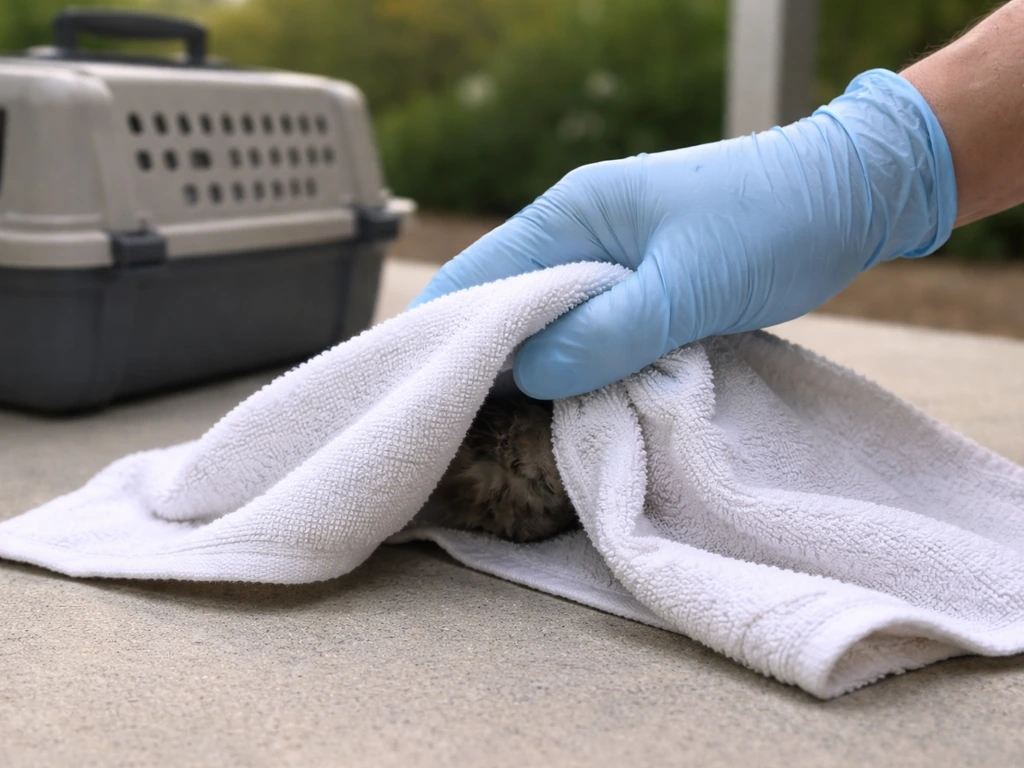
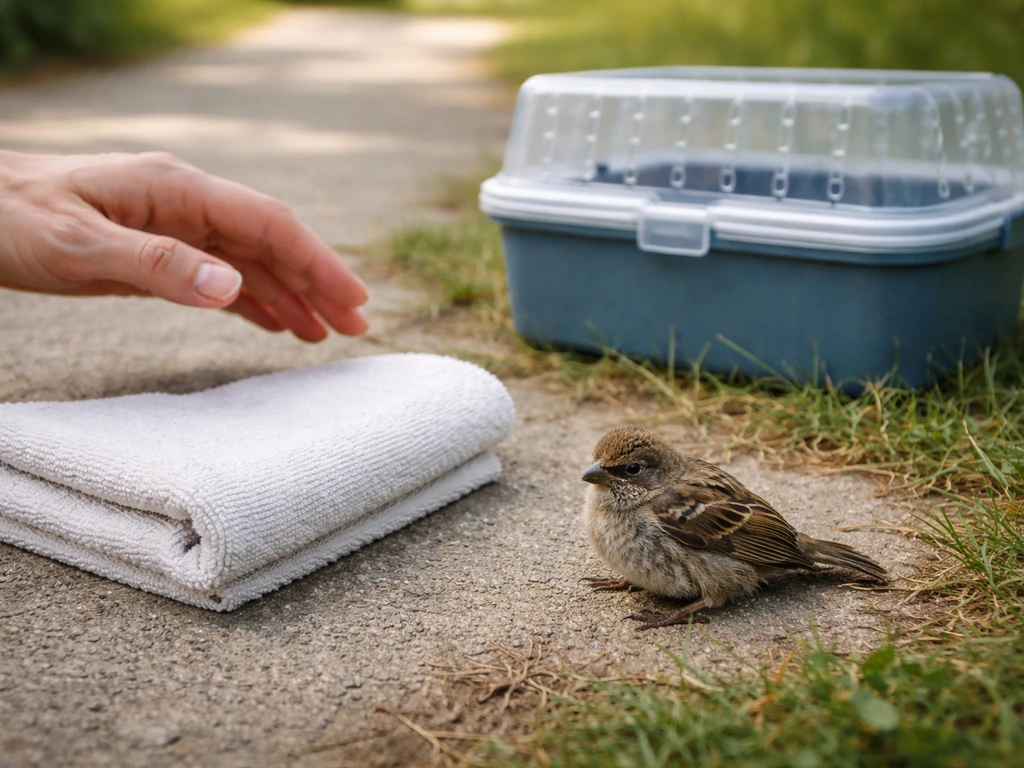
The towel method is the safest approach for most small to medium birds. Grab a clean towel, a light jacket, or even a large t-shirt. Drape it over the bird and scoop it up gently from underneath, wrapping the wings against the body. You're not squeezing, just keeping the wings from flapping so the bird can't injure itself or escape. Keep the head covered to reduce stress: a covered bird calms down faster than one that can see everything happening around it.
If you have gardening gloves or rubber gloves handy, wear them, especially for birds with sharp beaks or talons. For a very small bird like a sparrow or finch, your bare cupped hands work fine as long as you wash up afterward. The key is a firm but gentle grip: firm enough that the bird can't thrash and hurt itself, gentle enough that you're not compressing its chest (birds breathe partly by expanding their chest, so chest compression can suffocate them).
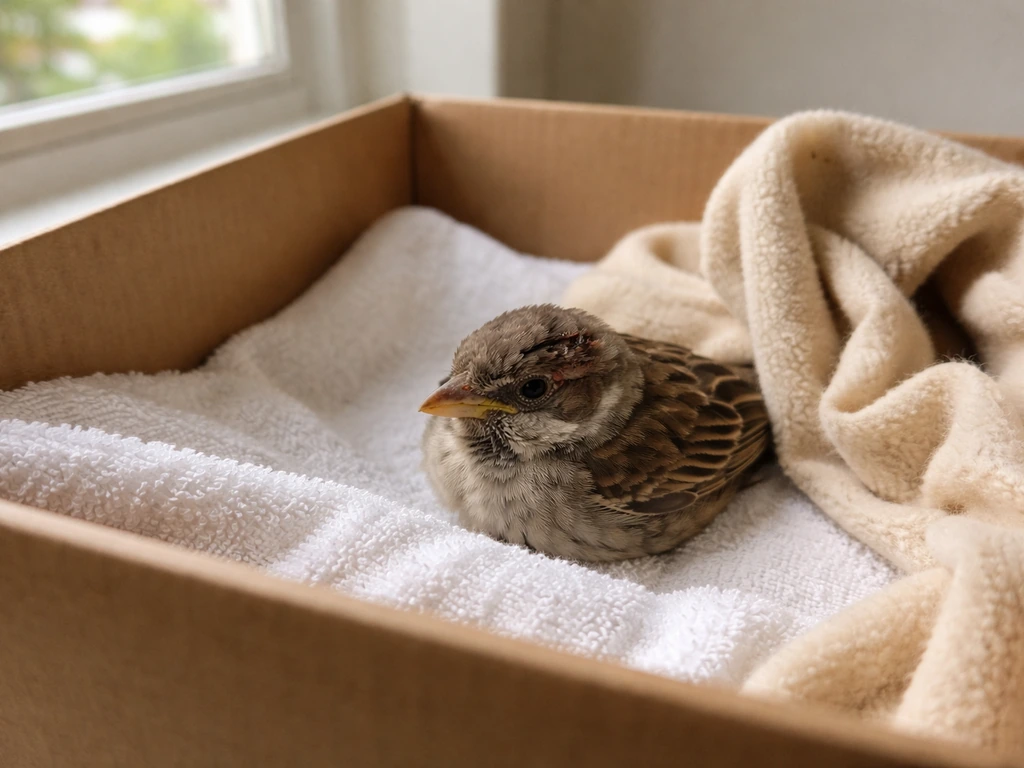
Once you have the bird contained, place it in a cardboard box with air holes punched in the lid. Line the bottom with a folded towel or paper towels so it has something to grip. The box should be just big enough for the bird to stand and turn around, not large enough for it to flap and injure itself further. Close the box, place it somewhere quiet and dimly lit, and leave it alone. Every time you check on it or talk to it, you're adding stress to an already stressed animal.
First aid basics for common situations
Window collisions
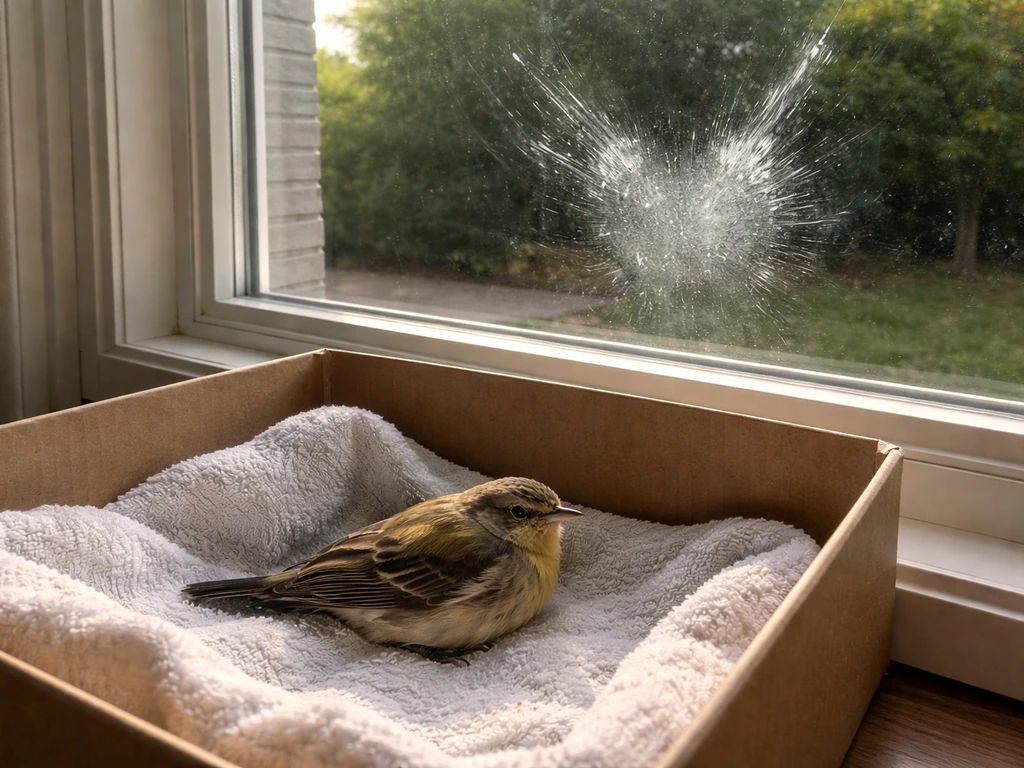
Window strikes are one of the most common reasons people find injured birds. The bird hits the glass at speed and is stunned by the impact, often lying on its side or sitting motionless on the ground below the window. If the bird is in a safe spot and not in danger, you can simply move it to a nearby sheltered area, like under a bush, and wait. Check back in an hour. Many birds fully recover and fly off. If it hasn't improved after 60 minutes, or it's getting worse (rolling to one side, seizure-like movements, obvious bleeding), that's your cue to box it and call for help.
Broken wing or leg
If a wing is drooping at an odd angle, or a leg is dangling or clearly deformed, the bird needs a professional. Your job is containment, not treatment. If you are wondering should i kill an injured bird, it is usually better to prioritize safe containment and professional help instead. Get the bird into a box and call a wildlife rehabilitator or avian vet. Don't try to splint the limb yourself. A badly applied improvised splint can cut off circulation, cause more damage, or permanently ruin the bird's chance of recovery. Keep the bird still and quiet while you arrange transport.
Cat attacks
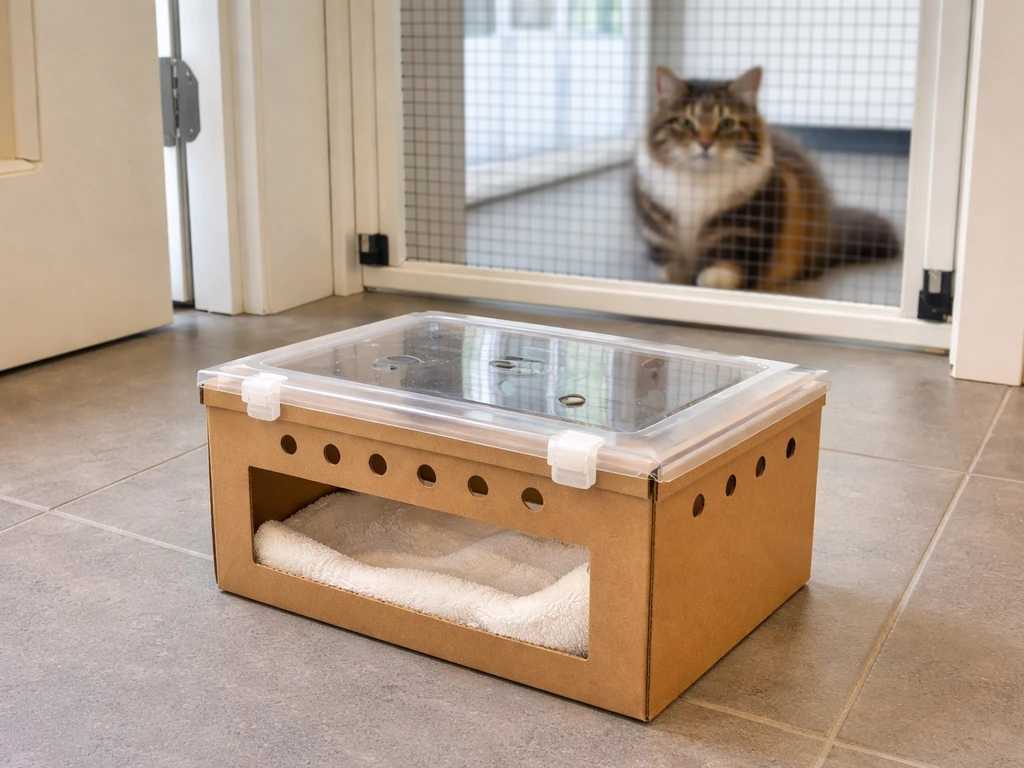
This one is urgent and non-negotiable. A bird that has been in a cat's mouth needs a wildlife rehabilitator or avian vet within a few hours, even if it looks completely fine. Cat saliva contains bacteria, particularly Pasteurella, that causes fatal septicemia in birds incredibly quickly. There may be no visible wounds, but internal punctures from a cat's teeth are common and deadly without antibiotics. Don't wait to see how the bird does. Box it and make the call immediately.
Beak injuries
A damaged or partially broken beak is serious because the bird can't feed itself. If you notice a broken or badly misaligned beak, the bird needs professional evaluation. There's nothing safe to do at home for a beak injury beyond keeping the bird contained and calm. Don't try to clean it or straighten it.
Nest emergencies
If a baby bird (one with little or no feathers) has fallen from a nest, and you can see the nest and safely reach it, you can put the bird back. The myth that parent birds reject chicks that have been touched by humans is not true. If the nest is destroyed or unreachable, contact a wildlife rehabilitator, as nestlings need specialized feeding and warmth that's very hard to replicate at home. Fully feathered fledglings on the ground are a different story, and usually don't need intervention at all.
What not to do
This section matters as much as the how-to part, because well-intentioned mistakes are one of the main reasons birds don't make it after being found by people.
- Don't feed or give water. Feeding an injured bird the wrong thing can kill it. Even the right food can cause aspiration (the bird inhales liquid into its lungs) if it's in shock. Keep it empty and contact a professional who can advise on feeding.
- Don't try to force it to drink. Holding a bird's beak open and dripping water in is a fast way to cause aspiration pneumonia.
- Don't give any medications, including pain relievers. Human medications like ibuprofen and acetaminophen are toxic to birds. Don't give anything without direct instruction from a vet.
- Don't attempt to splint a broken wing or leg yourself. Improvised splints almost always make things worse and can permanently end a bird's ability to fly.
- Don't try to force the bird to fly. If a bird can't take off on its own, tossing it into the air to 'test' it causes additional injury and extreme stress.
- Don't keep it in a bright, noisy environment. Stimulus like music, TV, children, or pets keeps the bird in a constant state of panic, which is physically harmful.
- Don't put it in a wire cage. A bird thrashing against wire bars will break feathers and can injure its beak and face.
- Don't assume it will get better on its own if it's clearly injured. Broken bones, cat bites, and internal injuries don't self-resolve.
When to get professional help right away
Some situations don't give you the option to wait and see. Call a wildlife rehabilitator or avian vet immediately if:
- The bird has been caught by a cat or dog, even briefly
- There is visible bleeding that doesn't stop within a few minutes
- The bird is having seizures, tremors, or is circling in an uncontrolled way
- A wing or leg is visibly broken or dangling
- The bird cannot hold its head up
- The bird is cold, limp, or unresponsive
- You can see maggots or fly eggs (small white clusters) on the bird
- The bird is a protected raptor, owl, waterfowl, or other large species
To find help, search for 'wildlife rehabilitator near me' or 'bird rescue near me' in your area. In the US, the Wildlife Center of Virginia and the National Wildlife Rehabilitators Association both have online directories. In the UK, the RSPCA (England and Wales), SSPCA (Scotland), or the RSPB can point you to local rehabilitators. In Australia, WIRES and Wildlife Victoria have helplines. Many wildlife rescue organizations have 24-hour phone lines specifically for urgent situations.
When you call, be ready to describe: what species the bird appears to be (or just 'small brown bird' is fine), where you found it and what happened (window strike, found near a cat, etc.), what injuries you can see, and how the bird is behaving right now. This helps the responder triage the situation quickly and tell you exactly what to do next.
What to do while you wait for help
Once the bird is boxed and you've made the call, your main job is to keep it stable. That means warmth, darkness, and quiet. A bird in shock loses body heat fast. You can gently warm the box by placing half of it on top of a heating pad set to low, or by putting a warm water bottle wrapped in a cloth on one side of the box. The bird needs to be able to move away from the heat source if it gets too warm, so don't heat the whole box.
Keep the box in a quiet room away from pets, children, and loud noise. Don't keep checking on it every few minutes. Every time you open the box, you're adding stress. A quick check every 30 minutes is more than enough unless you notice something alarming like sounds of distress or complete silence when it was moving before. In general, keep the injured bird in the box and out of sight until a wildlife rehabilitator tells you it's ready, which is often within the first hour for mild cases but longer for more serious injuries how long to keep injured bird in box.
If the bird recovers on its own before the rehabilitator arrives, great. Release it where you found it if it's safe to do so, ideally in the late afternoon so it has time to orient itself before dark. A bird that can fly, hold itself upright, and respond to its surroundings is probably ready to go. If you're not sure whether it's actually ready to be released, that's a good question to run by the wildlife rescue contact you've already spoken to.
The reality is that the best thing most people can do for an injured wild bird is handle it as little as possible, keep it safe and calm, and get it to a professional as fast as they can. Your job isn't to fix it. In some cases where recovery is impossible, people ask should you put an injured bird out of its misery, but that decision should only be made by a qualified wildlife professional. Your job is to keep it alive and stable until someone with the right training and equipment can take over, and that's genuinely valuable even if it doesn't feel like much.
FAQ
If I already touched the injured bird, did I ruin its chances?
Only if you must, and only for the shortest time needed to remove it from danger or place it in a transport box. If it is already in a safe, sheltered spot, your best “no touch” option is to keep pets and people away and reassess from a distance, then box it if conditions change.
What should I do immediately after touching an injured wild bird?
Not necessarily. The bigger issue is adding stress or delaying care. Wash your hands right away, avoid touching your face, and get it to a rehabilitator if it seems truly injured, weak, bleeding, or was exposed to a cat, window strike with ongoing symptoms, or bad weather.
Can I leave an injured bird alone for a while, or should I always pick it up right away?
If the bird is alert, upright, and not at risk of predators or traffic, the safest step is usually to leave it and monitor from afar for about an hour. If you cannot confirm it is safe, or if it is getting worse, box it and contact a wildlife professional rather than repeatedly checking and handling it.
Can you touch an injured bird and also feed it or give it water?
Yes, with the same “minimal and necessary” rule, but avoid attempts to feed it or give water unless a wildlife professional instructs you. Most birds need species-specific diets, and giving the wrong food or liquids can cause choking or aspiration.
Is it ever okay to try to treat the bird’s injuries at home?
Don’t. Unless it is a nestling you can safely return to the nest, feeding and trying to hydrate injured birds at home is risky, and attempting to “fix” a beak, wing, or leg usually worsens outcomes. Contain it, reduce stress, and arrange professional care.
How can I tell if it’s really injured or just a fledgling learning to fly?
Generally avoid contact with a bird on the ground that appears to be injured but may be a fledgling. If it is responsive, holds its head up, and can move its wings, it may not need handling. If you are unsure, keep it safe from cats and traffic, then call a rehabilitator for guidance.
What if the bird looks fine after a cat brought it to me?
If it is in a cat’s mouth, the situation is urgent even when there are no visible wounds. Box it and call immediately, because internal punctures and rapidly spreading infection can be fatal without antibiotics.
How long should I wait after a window strike before I intervene?
Watch for progression. If there is no improvement after about 60 minutes for a window-strike bird, or the bird worsens with rolling, seizure-like movements, or obvious bleeding, you should switch from waiting to containment and call for professional help.
Can I splint a drooping wing or a dangling leg to keep it from moving?
No, do not use tape, rubber bands, or improvised splints. A poorly applied fix can restrict breathing or circulation and cause lasting damage. The correct move is containment (in a ventilated box) and prompt professional evaluation.
What’s the safest way to pick up a bird that won’t stop moving or flapping?
If you must move it, use the towel or jacket method to control flapping and prevent escape, then place it in a box with air holes. Try not to squeeze the chest, keep the head covered to reduce stress, and handle only as long as needed to get it into containment.
What should I do if I find more than one sick bird near each other?
If you see multiple dead or dying birds in the same area, treat it as potentially contagious. Do not touch additional birds, keep your distance, and report to local wildlife authorities or animal control so they can assess for outbreaks and advise next steps.
My kids or pets are nearby. Can we watch the bird and still leave it safely?
If the bird is fully feathered and able to sit upright, immediate blanket “pet contact” is usually unnecessary. Keep children and pets away, reduce noise, and only handle to prevent harm, then call for instructions if it does not improve or seems impaired.
Can I touch a baby bird on the ground and put it back in the nest?
If it is a baby bird with little or no feathers and the nest is nearby and reachable safely, you can return it to the nest. If the nest is unreachable or destroyed, contact a rehabilitator, because nestlings need specialized warmth and feeding.
What if the injured bird is a hawk or owl, can I still touch it?
Use personal safety and injury signs to decide. If the bird is a large raptor, has talons and a strong beak, or could seriously injure you, do not attempt to handle it. Call wildlife rescue and follow their instructions instead.
When is it safe to release an injured bird after you contacted a rehabilitator?
Release is appropriate only when the bird is stable and able to fly or move normally, and the location is safe. If you are unsure, ask the wildlife responder you contacted, because releasing too early can lead to repeated injuries or predation.
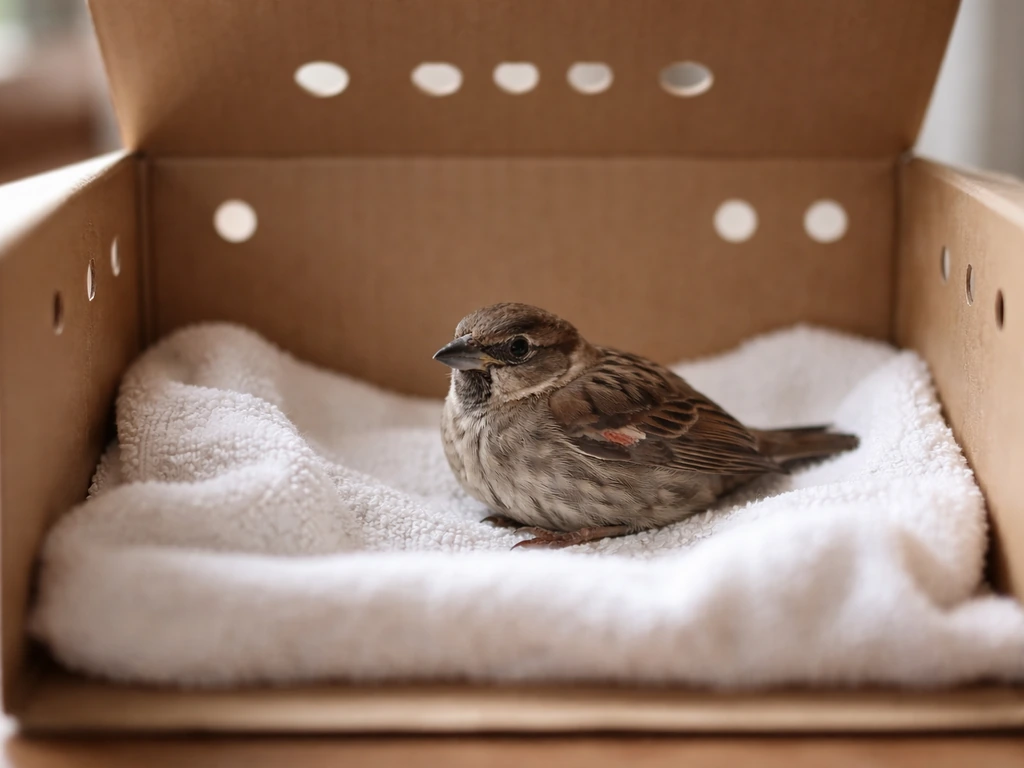
How long to keep an injured bird in a box, plus first-aid dos and signs to get vet help fast.
Learn can you keep an injured wild bird, what to do now, safe first aid, and when to call a wildlife rescue
Decision guide for injured birds: when to leave alone, how to check safely, immediate first aid steps, and rescue contac