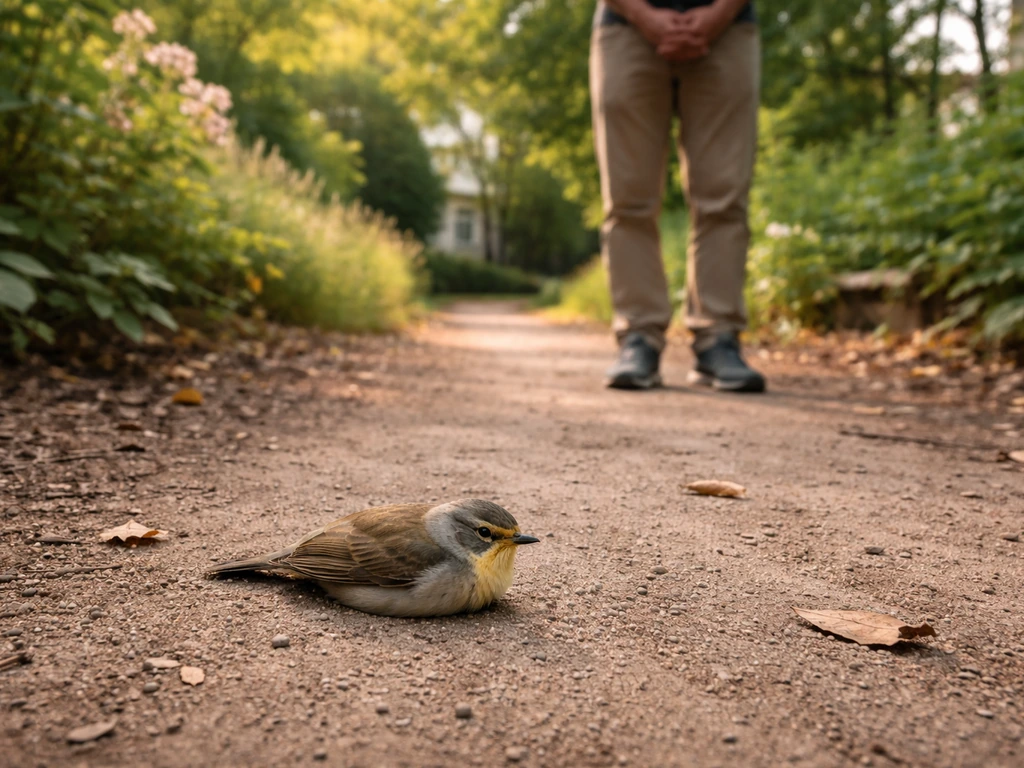
You can temporarily hold an injured wild bird to keep it safe while you arrange transport to a licensed wildlife rehabilitator or avian vet. That is the legal limit in most countries, including the US, UK, and EU. You cannot legally keep it long-term, attempt full rehabilitation yourself, or rehome it as a pet. The good news is that 'temporary' is enough to genuinely save the bird's life, and this article walks you through exactly what to do right now.
Can I Keep an Injured Wild Bird? What to Do Right Now
Marcus Chen
4 May 2026
Can you legally or ethically keep an injured wild bird?
The honest answer is: for a short time, yes. Long-term, no. In the US, federal law under 50 CFR § 21.76 prohibits possessing or transporting migratory birds without a permit. However, there is a built-in Good Samaritan exception specifically for situations like yours. If you find a sick, injured, or orphaned migratory bird, you are legally allowed to take it into your hands and transport it directly to a permitted wildlife rehabilitator or licensed veterinarian. That exception exists because lawmakers understood that real people find hurt birds and need a window of time to do the right thing.
In the UK, GOV.UK outlines a similar framework. You can keep a disabled wild bird for rehabilitation purposes with the goal of releasing it, but the rules depend on the species. For birds listed on Schedule 4 (which includes birds of prey and other protected species), a specific licence (GL07) allows an authorised person to keep the bird for up to 15 days without needing to register for rehabilitation. Across the EU, the Birds Directive tightly controls holding wild birds, so the same principle applies: temporary care to enable handoff to a professional is acceptable; keeping the bird indefinitely is not.
Ethically, the picture is just as clear. Wild birds are not pets. Even if you did everything right at home, an injured wild bird needs specialist knowledge, proper nutrition, and eventually a controlled release process that a kitchen and a cardboard box simply cannot provide. Keeping one long-term, even with the best intentions, usually means a slower, more stressful death for the bird. Your job is to stabilize and hand off, not to cure.
Immediate first steps when you find a hurt bird
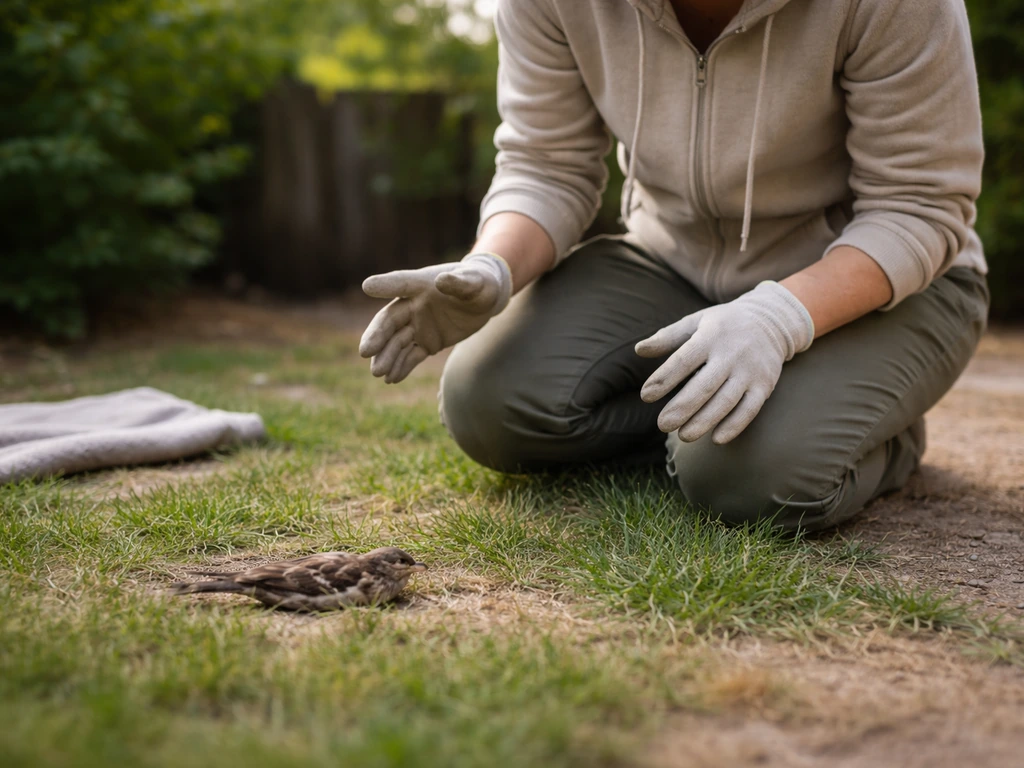
Before you do anything, slow down for thirty seconds and assess. If you are wondering should you pick up an injured bird, start by slowing down and assessing the bird’s condition first. A bird sitting still on the ground is not automatically injured. Fledglings (young birds with short tail feathers and a fluffy look) are often on the ground learning to fly, and their parents are usually nearby watching.
If you have a fledgling that seems abandoned or injured, the safest move is to contact a licensed wildlife rehabilitator for species-specific guidance fledglings. If the bird is hopping around, alert, and looks physically whole, it may not need your help at all. Scooping it up can actually do more harm than good in that situation.
Signs that tell you the bird genuinely needs help include: a visibly drooping or held-out wing, an inability to stand or perch, bleeding, a wound you can see, a bird that has been brought in by a cat or dog, one that is lying on its side, or one that lets you walk right up to it without any attempt to flee. Birds have a strong survival drive; if it is not trying to get away from you, something is wrong.
- Stay calm and move slowly. Sudden movements increase the bird's stress and can trigger fatal shock.
- Keep pets and children away from the area immediately.
- Observe for 60 seconds before touching. Is the bird actually injured, or just resting?
- If it clearly needs help, put on gloves if you have them (protective for both of you), or use a light towel.
- Call a wildlife rehabilitator or avian vet now, even before you pick the bird up if possible. They can guide you in real time.
How to contain it temporarily and prevent stress or further injury
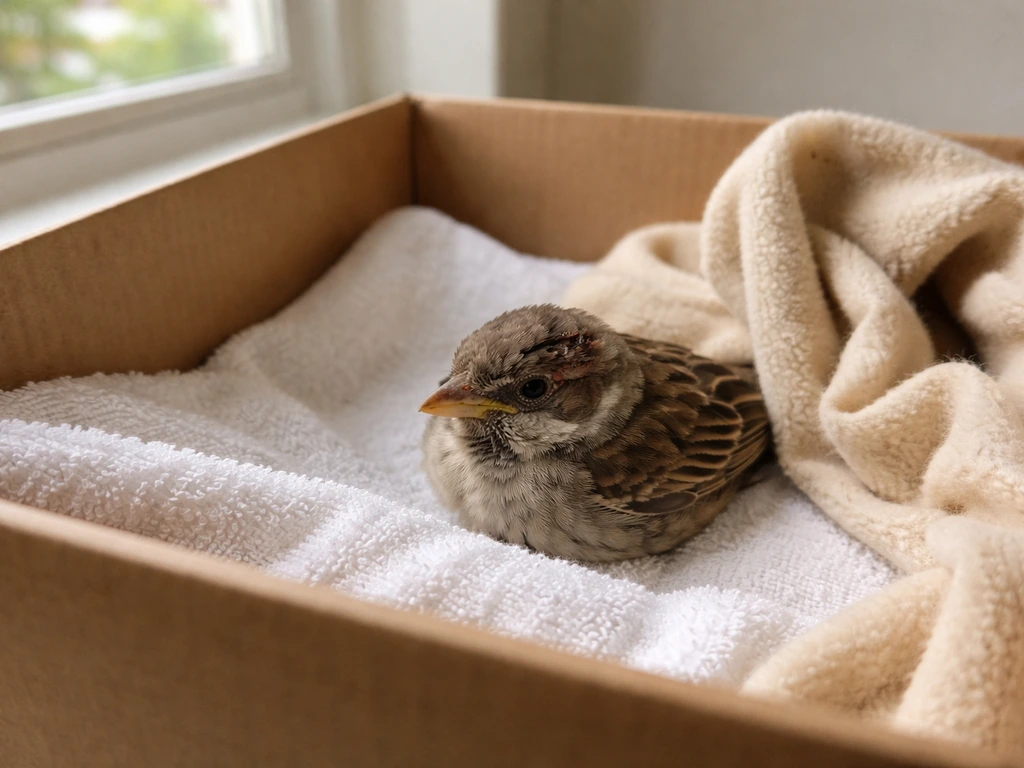
The container matters more than most people realize. A cardboard box with a lid works well because it blocks visual stimulation, which calms the bird significantly. Poke small holes in the sides for ventilation but keep the interior dark. Line the bottom with a non-slip surface like a folded paper towel or a thin cloth. Do not use anything fluffy or loose that the bird's feet or claws can get tangled in.
Size the box so the bird can stand upright and turn around but not flap its wings. Too much room means the bird can thrash and injure itself further. Gently place the bird inside, fold the lid closed, and put the box in a warm, quiet, dark room away from noise, pets, and foot traffic. The ideal temperature is around 85 to 90 degrees Fahrenheit (29 to 32 degrees Celsius) for small songbirds in shock. You can achieve this by placing a heating pad set to low under half the box so the bird can move away from the heat if it gets too warm. Never cover the entire bottom with heat.
Resist the urge to keep checking on the bird. In most situations, you only need to keep the injured bird in the box long enough to stabilize it and get it to a licensed wildlife rehabilitator or avian vet how long to keep injured bird in box. Every time you open that box, you are triggering a stress response. Check once every 30 to 60 minutes at most, and only if necessary. Keep handling to the absolute minimum until you can get the bird to a professional.
First aid basics by common injury and scenario
Window strike
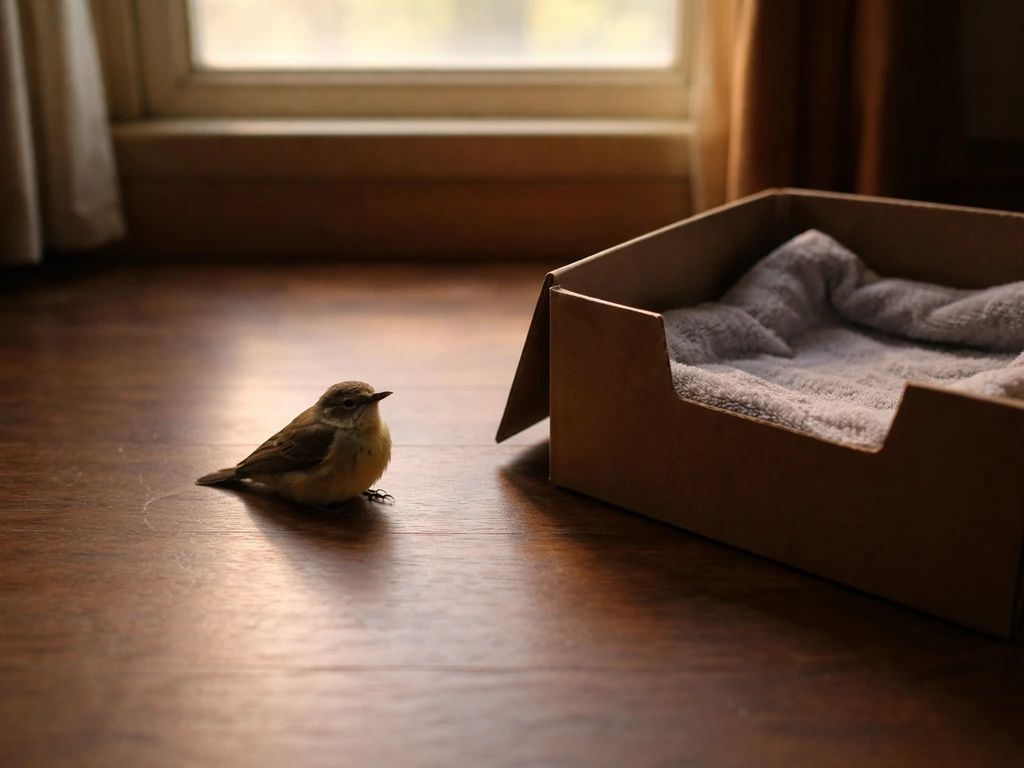
Window collisions cause concussion-like head trauma. The bird is often found on the ground directly below a window, stunned, upright but immobile. Place it in a dark, warm box as described above and wait. Many window-strike birds recover on their own within 20 to 30 minutes. After that time, if the bird is alert, responsive, and trying to escape the box, take it outside, open the lid, and see if it flies away. If it is still unresponsive, tilted, or struggling to stand after an hour, it needs professional evaluation.
Pet attack (cat or dog)
This is a critical scenario. Cat saliva carries bacteria called Pasteurella multocida that is almost always fatal to birds unless they receive antibiotics within a few hours. Even if a bird that was caught by a cat looks perfectly fine and uninjured, it needs veterinary treatment the same day. Do not wait to see if it recovers on its own. Get it to a wildlife rehabilitator or avian vet as fast as possible and tell them it was in contact with a cat.
Entanglement (string, fishing line, netting)
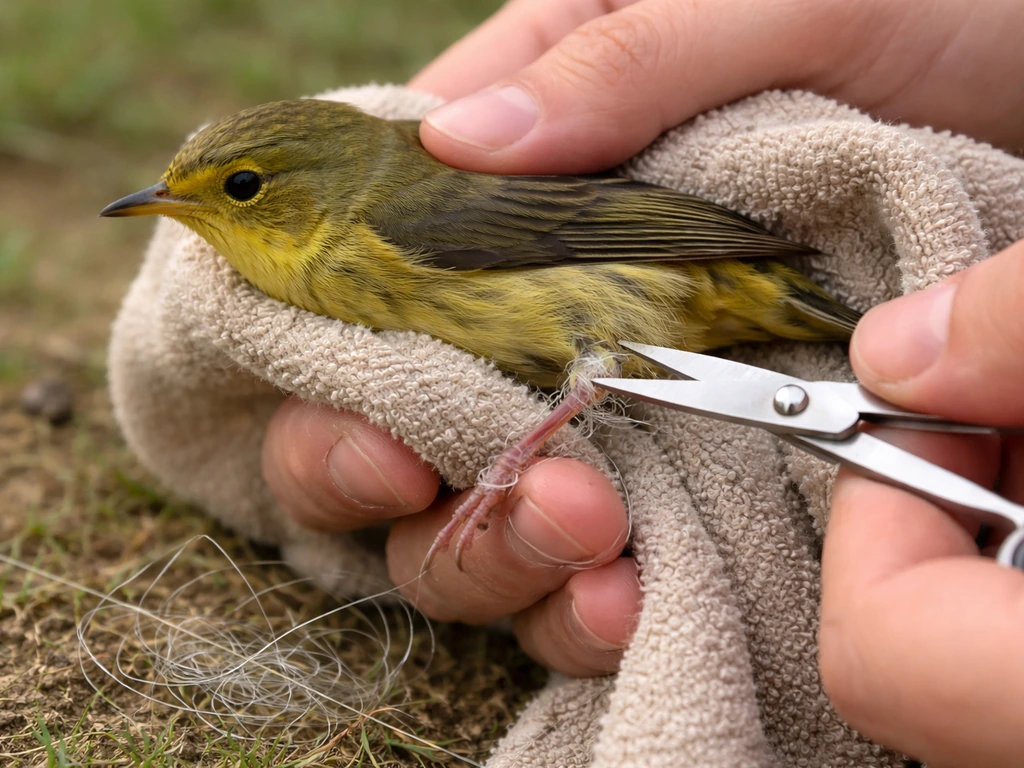
If the bird is actively entangled, only cut or remove the material if you can do so without pulling or twisting limbs. Use small scissors and work slowly. If the line or netting is wrapped tightly around a leg or wing, do not pull at it. Cut it as close to the skin as you safely can and leave the rest for a vet to remove. Forceful removal can cause the tissue to tear or cut off circulation. Once the bird is free (or as free as you can safely make it), box it and get moving.
Nest emergency (fallen chick or baby bird)
A common myth is that if you touch a baby bird, the parent will abandon it. If you are wondering can you touch an injured bird safely, the key is to minimize handling and get it to a licensed wildlife rehabilitator or avian vet as soon as possible. This is not true. Birds have a very limited sense of smell and will not reject a chick because it smells like a human.
If you find a nestling (a featherless or barely feathered chick) that has fallen from a nest, look for the nest nearby and gently place the chick back in it. If the nest is damaged or gone, you can create a makeshift nest from a small container lined with dry grass and attach it to a branch near where you found the chick.
Then step back and watch from a distance to see if the parents return within 30 to 60 minutes. If they do not, or if the chick is clearly injured, contact a rehabilitator.
Bleeding and visible wounds
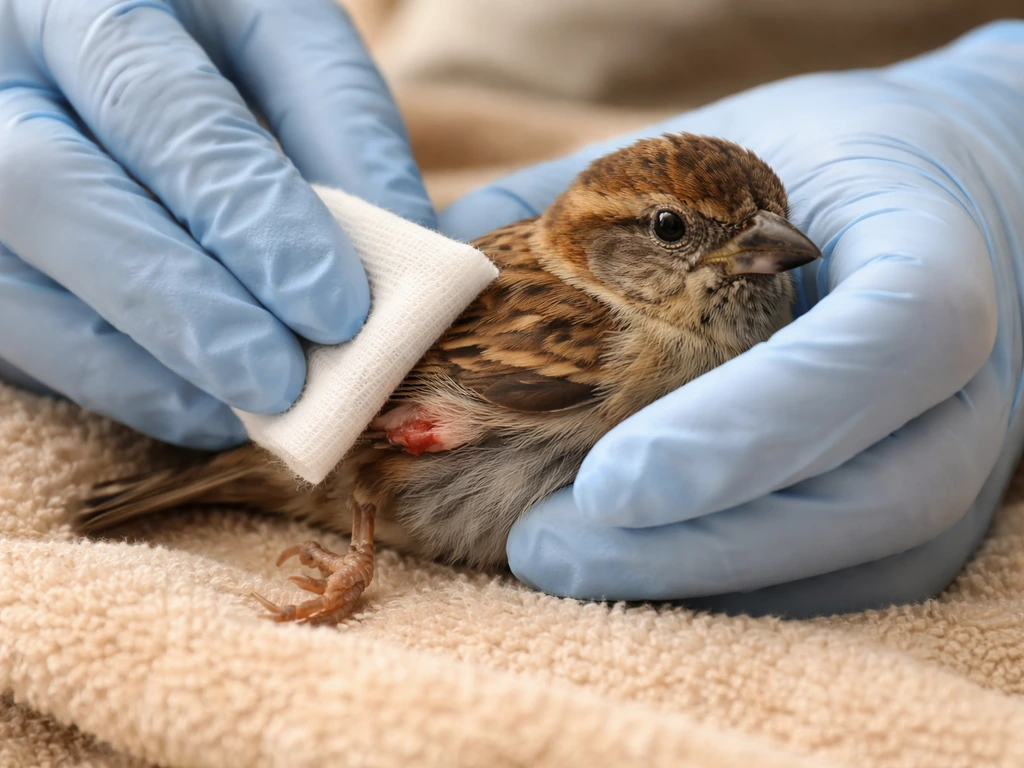
If the bird is actively bleeding, apply very gentle pressure with a clean cloth or gauze for a minute or two. Do not use cotton balls; the fibers stick to wounds. Do not apply any antiseptic sprays or ointments. Once the bleeding has slowed, box the bird and prioritize getting it to a vet. A bird losing blood is urgent.
What not to do
This list is just as important as the first aid steps, because well-meaning mistakes are one of the most common reasons injured birds do not make it.
- Do not give food or water. Forcing food or water into an injured or shocked bird is a leading cause of death in found birds. Aspiration (inhaling fluid into the lungs) happens instantly and is fatal. A bird in shock cannot digest food safely either.
- Do not give any human medications, vitamins, or supplements. Ibuprofen, acetaminophen, and many other common drugs are toxic to birds at even tiny doses.
- Do not attempt to splint or bandage a broken wing or leg yourself unless a wildlife vet talks you through it in real time. Improper wrapping restricts circulation and causes tissue death.
- Do not keep the bird in a wire cage or aquarium. Wire causes feather damage, and glass/aquariums have poor ventilation and cause overheating.
- Do not place the bird outside 'to see if it can fly.' A bird that is injured and placed in the open is at immediate risk from predators.
- Do not keep the bird overnight without making contact with a rehabilitator. Every hour without proper care reduces its chances.
- Do not assume a baby bird on the ground needs rescuing before you observe whether parents are nearby.
When and where to get help fast
Your fastest route to finding a licensed wildlife rehabilitator in the US is the National Wildlife Rehabilitators Association (NWRA) directory or the Wildlife Center of Virginia's online finder. If you are looking for a specific place to call, Reddit users on r/WildlifeRehab mention Wildlife Center of Virginia as an option in some situations.
In the US, you can also call your nearest state wildlife agency, which is legally required to direct you to licensed help. The ASPCA and local Humane Societies often have contacts as well. In the UK, the RSPCA helpline (0300 1234 999) is the most direct route for injured wild birds, and they can arrange collection in many cases.
In other countries, a local avian vet is your best first call if you do not know of a dedicated wildlife rescue.
When you call, have this information ready: the species if you know it (or describe it clearly), where exactly you found it, what you think happened, what visible injuries you can see, and what you have already done. The more specific you are, the faster they can triage and advise you. Many rehabilitators will also give you guidance over the phone while you are en route, which is incredibly helpful.
If you are in a rural area with no rehabilitator nearby, the next best option is any licensed veterinarian. Even a dog-and-cat vet can provide emergency stabilization, pain management, and triage until the bird can be transferred to a specialist. Call ahead so they are prepared when you arrive.
Releasing back to the wild vs. continued care: what happens next
If the bird recovers quickly from a minor stun or window strike, you may be the one who gets to release it. The rule of thumb is: if the bird is alert, holding its body upright, and actively trying to escape, it is ready to be assessed for release. Take it outside, open the box at ground level in a quiet area away from traffic and cats, and step back. A healthy bird will fly away within seconds. If it hops around but does not fly, or flies only a short distance before landing and sitting still, it still needs professional evaluation.
For anything beyond a brief stun, the bird almost certainly needs time with a licensed rehabilitator before release is appropriate. Broken bones require weeks of healing and often physical therapy. Birds that have been kept in captivity for even a few days can lose the muscle tone and behavioral conditioning they need to survive in the wild. A rehabilitator will manage the full recovery and assess the bird's readiness for release using criteria you and I simply cannot replicate at home.
Sometimes, sadly, a bird is too severely injured to survive or be released. You should not kill an injured bird yourself; instead, stabilize it and get professional help as fast as possible should i kill an injured bird. A responsible rehabilitator will be honest with you about that. In those cases, humane euthanasia is genuinely the kindest outcome. If you find yourself wondering whether an injured bird can or should be helped at all, or whether intervention does more harm than good, those are real and valid questions that other guides on this site address directly.
| Situation | Your role | Urgency |
|---|---|---|
| Window strike, bird is stunned but upright | Dark warm box, wait 30-60 min, attempt release | Monitor; vet if not recovered in 1 hour |
| Cat or dog attack, any contact | Box immediately, go to vet or rehab today | Same day, urgent |
| Visible bleeding or open wound | Gentle pressure, box, transport | Urgent, within hours |
| Broken wing (drooping, held out) | Box without handling wing, transport | Same day |
| Entanglement | Cut line carefully, box, transport | Urgent |
| Fallen nestling (no injury) | Return to nest if possible, observe for parents | Monitor 30-60 min; call rehab if parents do not return |
| Fledgling on ground (hopping, feathered) | Observe from distance, do not remove | Intervene only if injured or parents absent for hours |
The bottom line is this: you can absolutely help an injured wild bird, and finding one is not a situation to panic over. If you are wondering whether you should i leave an injured bird alone, the safest approach is to follow the immediate steps here and then get it to a licensed professional. Your role is to provide a safe, calm, dark, warm container and get the bird to someone who can take it further.
Wildlife Center of Virginia advises contacting the Wildlife Center or a permitted wildlife rehabilitator as soon as possible when you find a sick, injured, or young wild animal needing intervention Help & Advice. That is genuinely enough to save a life. Make the call, keep the bird quiet, and get moving.
FAQ
If it looks healthy, can I still keep an injured wild bird until I can take it to a rehabilitator later today?
Yes, for safety and stabilization while you arrange help, but only if you are not observing clear injury. If it is bleeding, unable to stand or perch, has a dropped wing, or was attacked by a cat or dog, treat it as urgent and do not delay. If you are unsure, box it in a dark, warm, quiet place and call a wildlife rehabilitator or avian vet right away for guidance on timing.
How long is “temporary” in practice before I must transfer it?
The safest rule is to transfer as soon as you reasonably can after the first stabilization. For window strikes that improve quickly, you can reassess after 20 to 30 minutes as described, but for anything beyond brief stunning, assume it needs professional care before release. Keeping it overnight should generally be avoided unless a licensed facility has instructed you to hold it.
Can I give the bird food or water while it is in the box?
Avoid feeding or watering. Birds in shock or with injuries often aspirate if they swallow the wrong way, and the wrong diet can worsen injuries. Focus on warmth, darkness, and minimal handling, then hand off to a rehabilitator or avian vet for proper triage and nutrition.
What should I put on the bottom of the box, newspaper or paper towel?
Use a non-slip surface such as a folded paper towel or a thin cloth. Avoid newspaper because it can be slippery and encourages thrashing. Skip fluffy materials or anything loose that can snag claws or wrap around legs.
Should I keep the bird warm by covering the box completely or using a heat lamp?
Do not cover the entire bottom with heat and avoid heat lamps. Instead, use gentle under-box warmth on the low setting so the bird can move away if needed. Check that the bird has the option to cool down, and place the box in a draft-free warm room.
Is it okay to release the bird if it starts moving again but cannot fly?
No. If it is still unable to fly, sitting weakly, or just hopping, it likely needs evaluation for fractures, internal injury, concussion, or shock. Releasing too early can cause predation or starvation, and rehabilitators typically assess readiness using more than just visible recovery.
I found a baby bird, can I keep it to raise it until it can fly?
Do not keep it long-term. Instead, determine whether it is a fledgling or a nestling. Nestlings often need to be returned to the nest if possible, and if the nest is gone or the chick is clearly injured, contact a rehabilitator. Long-term home rearing is where most survival failures happen because nutrition and behavioral conditioning are difficult to replicate.
If I touch the bird, will it be rejected by its parents?
For most birds, parental rejection due to human scent is a myth. The priority is still minimizing handling and getting help quickly. If it is a nestling that appears intact enough to return, putting it back (or creating a temporary nest nearby) is usually more appropriate than keeping it yourself.
What if I don’t know whether it is a migratory species, am I still allowed to help?
In general, you are still allowed to provide immediate, humane first aid for stabilization and then transport to a licensed professional. When legal details are unclear, do not try to keep the bird as a pet. The safest path is to contact the nearest wildlife rehabilitator or avian vet and follow their instructions.
Can I keep the bird in a cage “just temporarily” instead of a box?
A cage can increase stress because it allows more visibility and movement. A dark, enclosed container reduces stimulation and helps calm the bird. If you must use another container, keep it dim and secure, with the bird able to stand and turn around without flapping.
What should I do if a cat or dog was involved but the bird seems uninjured?
Treat it as urgent even if there are no visible wounds. Cat saliva bacteria can be deadly without rapid antibiotics, so get it to a wildlife rehabilitator or avian vet the same day. Tell them the animal contact history so they can triage appropriately.
If the bird is entangled in fishing line or netting, can I remove it myself?
Only remove what you can do without pulling or twisting limbs. If material is tightly wrapped around a leg or wing, do not yank it. Cut as close to the skin as safely possible and leave remaining material for a vet to remove, then box it and get professional care.
Should I place the bird outside to warm up or “let it rest” in a yard?
No. Outdoor exposure increases stress, cooling, and risk from cats, dogs, traffic, and predators. Keep it in a warm, quiet, dark indoor space and only reassess outside when you have strong signs it is ready for release, such as alertness and active escape behavior after a brief stun.
Next Article
Should I Leave an Injured Bird Alone? What to Do Now
Decision guide for injured birds: when to leave alone, how to check safely, immediate first aid steps, and rescue contac