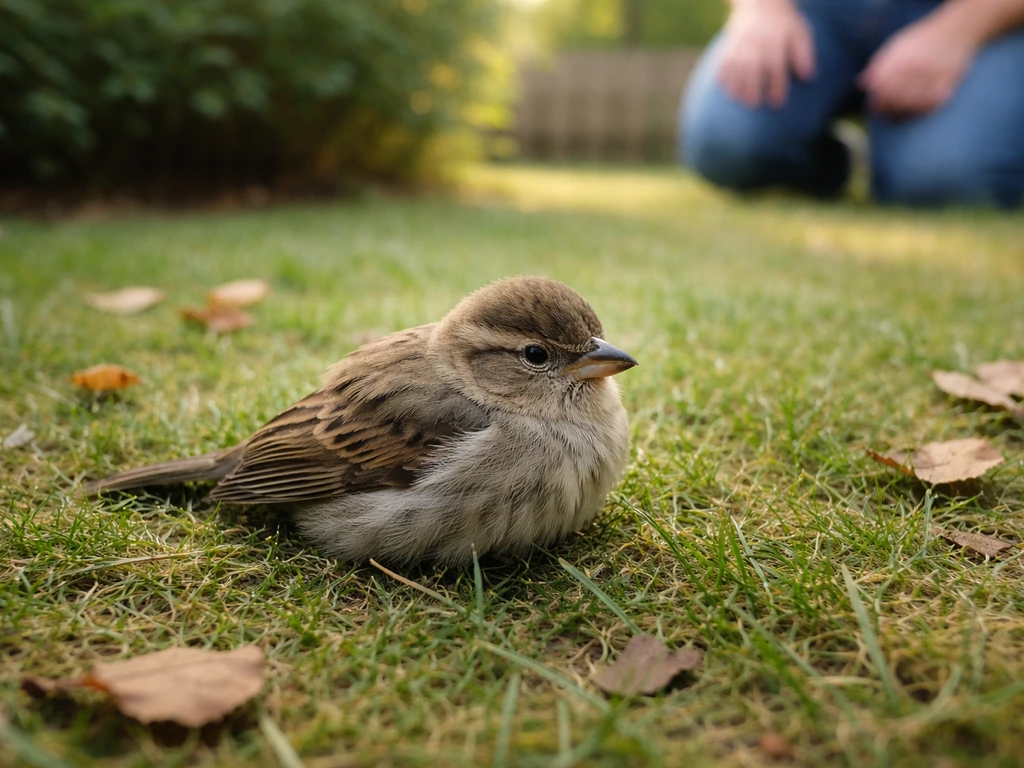
A bird in pain will usually look quiet, fluffed up, and withdrawn. It may sit on the ground without trying to escape, hold a wing lower than the other, keep its eyes closed or half-closed, or breathe with visible effort. Those are your real warning signs. A bird that's just scared will be alert, will try to flee, and will look at you. A bird that's hurting often won't bother.
Signs a Bird Is in Pain: What to Do Next Today
Marcus Chen
23 May 2026
How birds show pain: body language and breathing
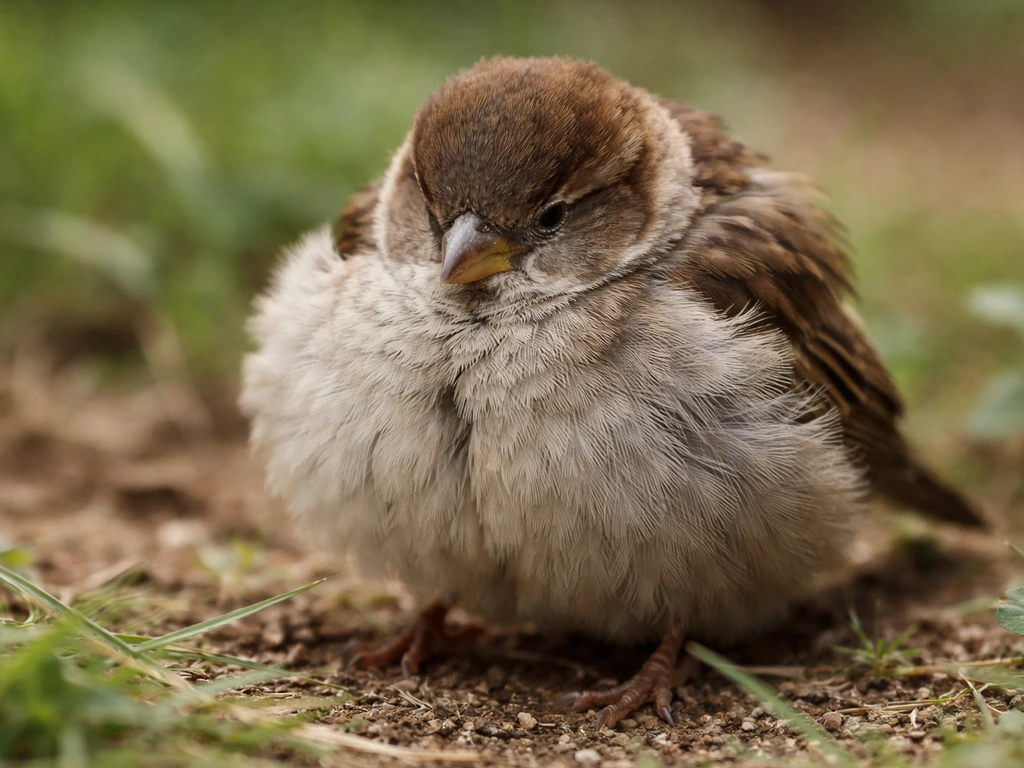
Birds hide pain instinctively because showing weakness attracts predators. That means by the time you can clearly see something is wrong, the bird is usually in real trouble. If you're trying to figure out how to know if a bird needs help, start by comparing what you see to these warning signs warning signs something is wrong. Here's what to watch for:
- Fluffed or puffed-up feathers held away from the body, especially when the temperature isn't cold
- Hunched posture, with the head pulled toward the chest and the body low
- Eyes closed or partially closed when the bird should be alert
- Sitting very still and making no attempt to fly or hop away when you approach
- Tail bobbing up and down with every breath (this is a key sign of respiratory effort)
- Open-mouth breathing when the bird isn't overheated
- Wheezing, clicking, or raspy sounds with each breath
- Labored, rapid, or irregular breathing visible in the chest and belly
- Unusual vocalizations: repeated distress calls, or complete silence when the bird would normally make noise
- Collapse or inability to right itself when placed upright
Breathing changes are one of the most reliable pain and distress signals. If you’re wondering how to tell if a bird is in distress, focus on breathing changes, posture, and whether it keeps trying to escape pain and distress signals. Open-mouth breathing combined with tail bobbing in a small songbird is a respiratory emergency. Blue or pale tissue around the beak or eyes, gasping, or seizures mean you need to move fast.
Injury vs. illness: behavior changes that tell the difference
Injured birds and sick birds can look similar, but the circumstances usually give you a clue. If the bird was found near a window, was brought in by a cat, or you watched something happen to it, injury is the likely cause. If it was just found sitting in an open area with no obvious trauma, illness is more likely. Either way, the response is the same: safe containment and professional help. But here's how the behavior patterns tend to differ:
| Sign | More likely injury | More likely illness |
|---|---|---|
| Onset | Sudden, tied to an event | Gradual, no known cause |
| Posture | Asymmetrical (one wing low, one leg raised) | Symmetrically hunched or puffed |
| Bleeding or wounds | Possible | Rare |
| Head tilt or disorientation | Common after collision or attack | Can appear in neurological illness |
| Appetite/energy | Normal before incident | Declining for days |
| Responsiveness | May be dazed but can improve | Often steadily worsening |
Both injured and ill birds need professional care. The difference matters mostly for your own situational awareness and for the information you give a wildlife rehabilitator or avian vet when you call them. It's also worth knowing that a bird that looks fine after a window strike may still have internal injuries or a concussion, so don't let calm behavior fool you into thinking it's okay.
Figuring out where the bird is hurt
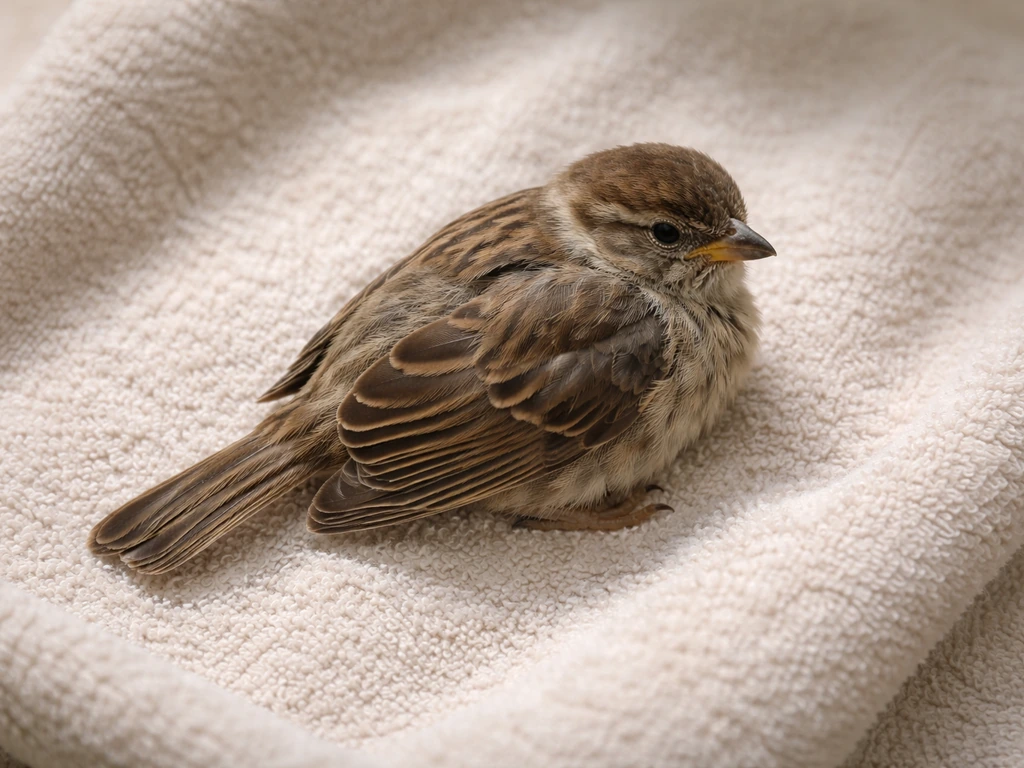
You don't need to do a full examination. A quick visual check from a short distance is usually enough to identify the likely injury area without causing more stress to the bird. Here's what to look for in each area:
Wings
A drooping wing that hangs lower than the other, or one that sticks out at an odd angle, usually means a break or dislocation. The bird may also hold the wing slightly away from the body or drag it along the ground. Don't try to straighten or splint the wing yourself. You can cause more damage and significant pain. Get it to a rehabber.
Legs and feet
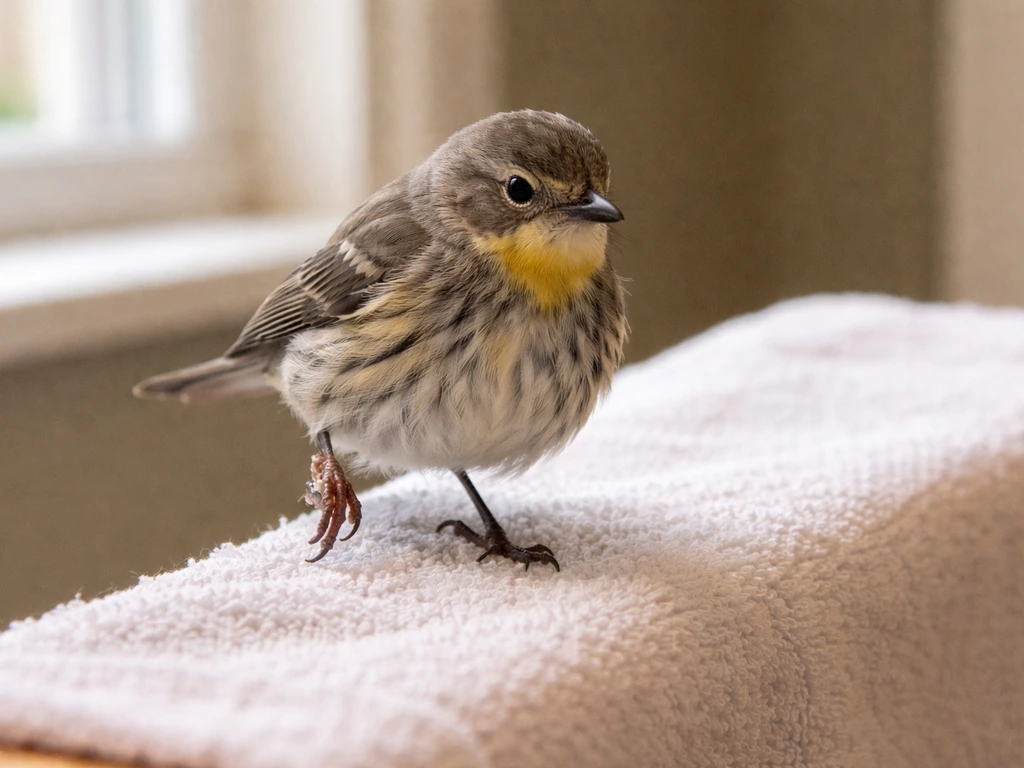
Limping, holding one leg up, or an inability to stand or perch are the main indicators. A bird that keeps toppling to one side or can't grip a surface it's placed on has a leg or foot problem. Sometimes fishing line, wire, or plant material is tangled around the foot and cutting off circulation. Look carefully before assuming a break.
Beak
A cracked, split, or misaligned beak is a serious injury. Active bleeding from the beak is an emergency. Even a minor beak injury can prevent the bird from eating, so don't assume it will manage on its own. If the beak is visibly deformed or bleeding, that bird needs veterinary care today.
Eyes
One eye closed or swollen, discharge around the eye, cloudiness, or a visible wound near the eye all point to injury or infection. In some cases, a bird can have vision problems that look similar to injury, so it may still be blind even if you do not see obvious wounds Eye injuries. Blindness can also show up as eye problems, so look for cloudiness, discharge, or a visible wound near the eye, and contact a wildlife rehabilitator right away if you suspect vision loss. Eye injuries are painful and can deteriorate quickly. A bird with eye problems related to a collision or attack may also have other hidden trauma.
Flight ability
An adult bird sitting on the ground that doesn't try to fly when approached is one of the clearest signs something is wrong. Healthy adult wild birds almost always flee. If it attempts to fly but can only flutter or circle to one side, that tells you there's a wing or neurological issue. Don't chase it to test its flight. One observation is enough.
Common situations that cause bird pain and injury
Window collisions
This is one of the most frequent causes of injured birds found near homes. A bird that hits a window hard enough to knock it down has likely suffered a concussion, internal bleeding, or other trauma even if it looks physically intact. External injuries can be subtle or invisible. Do not assume the bird is fine just because it's breathing and has no visible wounds. Birds that survive the initial impact but don't receive care often deteriorate within hours.
Pet attacks (especially cats)
Cat attacks are particularly dangerous because cats carry bacteria in their saliva (notably Pasteurella) that can kill a bird within 24 to 48 hours even from a puncture wound that looks minor. If a cat has had a bird in its mouth, that bird needs antibiotic treatment from a wildlife vet or rehabilitator the same day, period. Don't wait to see if it improves. Dog bites cause similar internal trauma and crushing injuries.
Entanglement
Fishing line, netting, wire, and even dense grass can wrap around legs, wings, or necks. Entangled birds often thrash and worsen the situation. If you can safely contain the bird without pulling on the line or wire, do so. Do not try to cut the material yourself unless the bird is in immediate danger and help is hours away. You can accidentally cut through feathers, tendons, or skin. A rehabber or vet can remove it safely.
Nest falls and parent failure
A baby bird (nestling, covered in down or with pin feathers) found on the ground is almost always in distress. If you can see the nest and safely reach it, place the bird back. Parent birds do not abandon young because of human scent. If the nest is gone or unreachable, you're looking at a wildlife rehabber situation. A fledgling (fully feathered, hops around) is often just learning to fly and may not need help unless it's injured or a cat is nearby.
What to do right now
Your job in the first few minutes is to get the bird somewhere safe and stable without causing more harm. Here's how to do that:
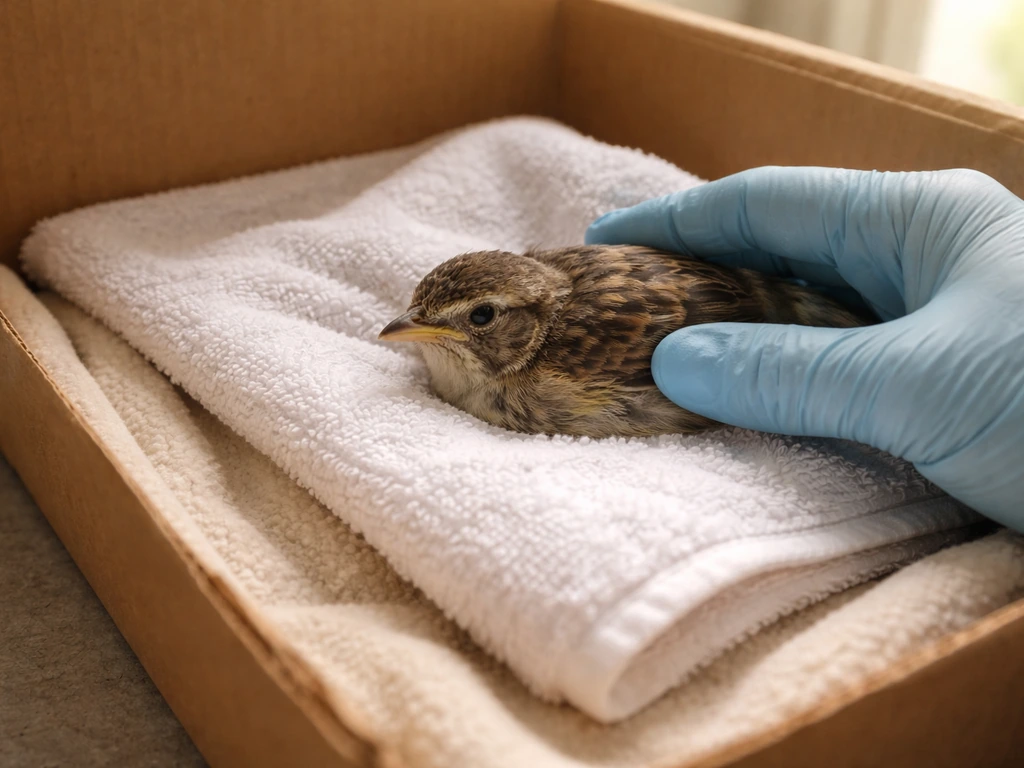
- Put on gloves if you have them. Wild birds can scratch, bite, and carry parasites. If no gloves, use a cloth or towel.
- Gently scoop the bird up by cupping both hands around its body. Don't squeeze. Keep the wings lightly held against the body. For small birds especially, avoid closing your fingers tightly around the chest, which can restrict breathing.
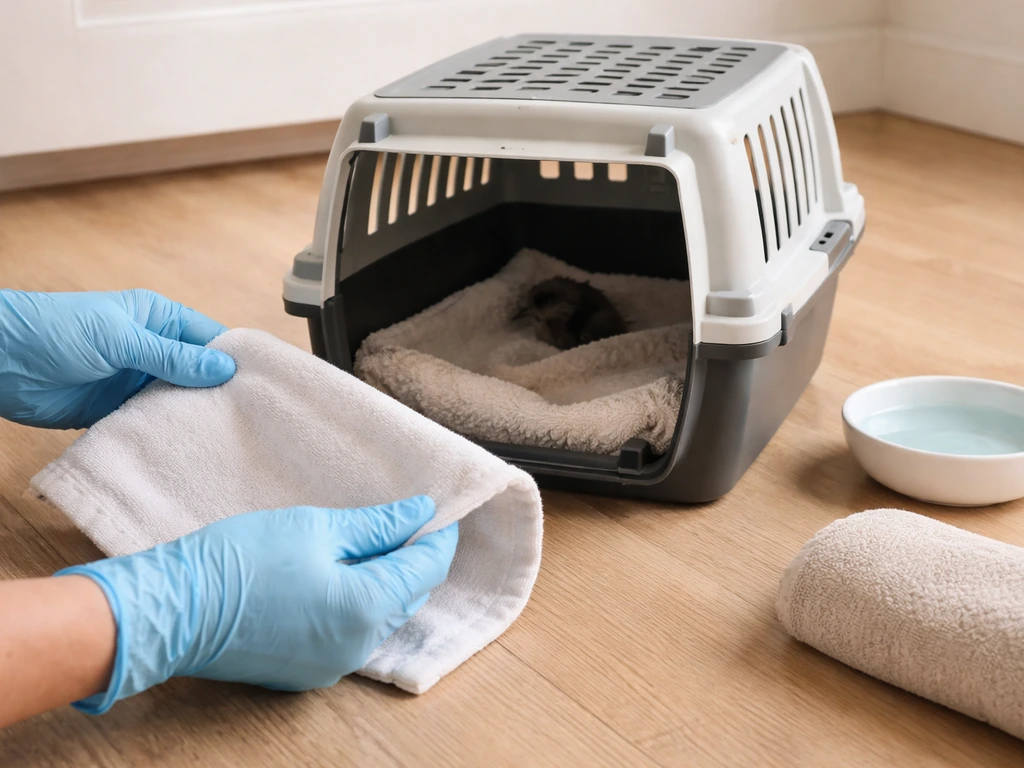
- Place the bird into a box (a shoebox works well) lined with a paper towel or cloth. Put a few air holes in the lid. Do not use a cage or open container, as seeing the environment causes ongoing stress.
- If the bird seems cold or is in shock, place a small water bottle filled with warm (not hot) water and wrapped in a towel on one side of the box. This lets the bird move away from it if it gets too warm.
- Close the box and put it somewhere warm, quiet, and dark. A bathroom or a quiet room away from pets and children is ideal.
- Do not give food or water. You can aspirate a bird trying to force fluids on it, and food can cause additional problems. The exception is hummingbirds, which can go into hypoglycemic shock quickly. If you're dealing with a hummingbird, a drop of plain sugar water on its beak tip is sometimes recommended, but call a rehabber immediately.
- Call a wildlife rehabilitator or avian vet right away. Don't wait to see if the bird improves on its own.
When it's urgent: red flags that mean go now
Most injured birds need care within a few hours. But some situations are true emergencies where you should be driving or calling while someone else drives. Treat the following as urgent: If you’re concerned about rabies, focus on contacting a wildlife professional or avian vet right away for guidance, since rabies is a serious risk and requires special handling Treat the following as urgent.
- Uncontrolled or ongoing bleeding from any wound site, beak, or foot
- Open-mouth breathing, gasping, or audible wheezing at rest
- Pronounced tail bobbing with every breath
- Blue or pale tissue around the beak or eyes
- Seizures, twitching, or complete inability to hold the head up
- Collapse: the bird cannot stand at all and doesn't respond to gentle touch
- Known cat or dog attack (even with no visible injury)
- Head trauma with disorientation, circling, or inability to stand upright
- Rapid decline in alertness after an initial period of seeming okay
To find help: Animal Help Now (animalhelpnow.org) is the fastest way to locate a wildlife rehabilitator near you in the US. It uses your location to show nearby contacts and emergency resources. The Association of Avian Veterinarians also has a searchable directory for licensed avian vets. If you're in a state like Wisconsin or Massachusetts, your state's Department of Natural Resources or wildlife agency often maintains a public map of licensed rehabilitators with the species each one accepts. When you call, tell them the species if you know it, how the bird was found, what signs you're seeing, and your location.
What not to do, and how to monitor while you wait
The instinct to help is good. But some common first-aid attempts cause more harm than the original injury. Avoid all of the following:
- Do not give food, water, or any medication. Even well-meaning feeding can cause aspiration or dangerous metabolic issues.
- Do not apply antiseptics like hydrogen peroxide or iodine directly to wounds, especially near the eyes, beak, or ears. These can cause serious chemical burns to delicate tissue.
- Do not attempt to splint or set a broken wing or leg yourself. Incorrect splinting causes additional injury and pain.
- Do not bathe or rinse the bird unless there is a toxic substance on its feathers and you've been specifically advised to do so by a professional.
- Do not keep the bird in a warm, brightly lit space or next to a heat source that can overheat it. Overheating is as dangerous as being too cold.
- Do not let children or other pets near the box.
- Do not keep checking on the bird repeatedly. Every time you open the box, you stress the animal and slow its recovery.
While you wait for help or transport, check on the bird once every 30 to 60 minutes by quietly lifting the lid for just a few seconds. You're looking for any change in breathing (better or worse), whether it's more or less upright, and whether there's any new bleeding. Note what you observe so you can describe it accurately to the rehabber or vet. If the bird becomes more alert and starts trying to flutter or escape, that's a positive sign. Dehydration can also make a bird weak, lethargic, or more responsive to careful observation, so it's worth checking for dehydration signs as well. Keep the box closed and keep waiting for professional guidance.
If it's late at night and no wildlife rescue is reachable, keep the bird in the dark, quiet box in a warm room and call first thing in the morning. If no rescue is open, Golden Gate Bird Alliance recommends using a warm, dark, quiet containment box such as a shoebox lined with cloth or paper towel and not providing food or water overnight. Most birds will stabilize for several hours in those conditions. What they won't survive is unnecessary handling, noise, light, cold, or misguided first aid attempts overnight.
One last thing worth saying: you're already doing more than most people by looking this up. Identifying whether a bird is in real pain, rather than just startled or resting, is a genuinely useful skill, and the signs covered here give you enough to make a confident call. Trust what you're seeing, act quickly, and get the bird to someone who can treat it properly. The NYC Bird Alliance notes that rehabbers and authorized professionals often blank" rel="noopener noreferrer">provide pain relievers and anti-inflammatories to reduce brain swelling, so guidance encourages bringing the bird in as soon as possible rather than attempting DIY care. That's the best outcome for both of you.
FAQ
How can I tell whether a bird is in pain or just stunned or exhausted?
Use the “response” lens, not just how it looks. A stunned bird may sit low and quiet, but it usually improves after a brief, calm, dark rest. If the bird is repeatedly gasping, has blue or pale tissue, cannot grip, or shows worsening breathing or bleeding, treat it as pain or medical emergency instead of temporary shock.
Is it okay to pick up a bird if I think it’s in pain?
Only for safe containment. Minimize handling time, keep the bird in a ventilated box, and avoid steady gripping. If you must move it, use a towel to gently guide, keep the head supported, and stop if you see new bleeding or the bird shows more respiratory effort.
What should I do if a bird is fluffed up but breathing looks normal?
Fluff plus withdrawal can still indicate pain, especially if the bird keeps eyes closed or half-closed. Recheck after 30 to 60 minutes for breathing changes, new bleeding, or worsening posture. If there is any inability to stand, leg held up, drooping wing, or no attempt to escape when approached, contact a wildlife rehabilitator anyway.
A bird is limping, can I apply bandages or splint it at home?
No, not unless a trained rehabilitator or vet instructs you. Improvised splints and pressure bandages can trap swelling and cause additional tissue damage. Instead, place it in a secure, quiet container and get professional help, especially if it cannot perch or keeps toppling.
What if there is no visible injury, but the bird won’t try to fly?
Don’t assume “nothing is wrong.” Window collisions and neurological issues can leave external injuries subtle or invisible. If it cannot take off when you approach, or it only flutters and circles to one side, treat it as urgent trauma and arrange help the same day.
How do I handle an entangled bird if I can’t tell what the material is?
Contain it first, then look only from a safe distance. Avoid pulling because even “light” lines can be embedded in skin or tendons. If the bird is thrashing or the material is around the neck or tightening, seek immediate help and do not attempt cutting unless a professional says it’s appropriate and timing is critical.
What are the signs that a cat-related bird needs antibiotics right away?
Any bird that was punctured, has a cat bite history, or shows sudden decline after a cat interaction should be treated as time-sensitive. If you witness a cat with the bird in its mouth, assume infection risk even if wounds look minor, and contact a wildlife vet or rehabilitator the same day for antibiotic evaluation.
Do I need to worry about rabies if a bird seems sick or uncoordinated?
Rarely, but if you’re concerned about rabies exposure, follow the “urgent guidance” route immediately and do not attempt home treatment. Use professionals’ instructions because handling and containment protocols differ from typical injured-bird situations, especially for public safety.
Can I give water, food, or meds to a bird that seems in pain?
Generally no. Water can be dangerous if the bird is breathing poorly or cannot swallow safely, and giving food too early can worsen choking risk. Do not administer human medications. Focus on warmth, darkness, and stable containment until a rehabilitator or avian vet advises.
What’s the best way to check a bird while waiting for help?
Check every 30 to 60 minutes by doing a quick visual look, watching breathing effort and posture, and noting whether there’s new bleeding. Keep the container closed as much as possible to reduce stress. If breathing worsens or the bird becomes more unresponsive, escalate immediately with your rehabber or vet.
Should I keep the bird warm or cool?
Warm and stable is better than cold or overheated. Keep the box in a warm, draft-free area, not near heat sources that can overheat it. If the bird is panting or showing heavy respiratory effort, avoid added heat and focus on quiet containment while you contact help.
What should I do if I find a baby bird on the ground?
First, determine whether it is a nestling (mostly down or pin feathers) versus a fledgling (fully feathered, hopping). For nestlings, return it to the nest if you can do so safely and the nest is reachable. For fledglings, don’t assume distress without injury or a cat present, but if the baby is limp, calling weakly, bleeding, or clearly injured, treat it as urgent rehab care.
When should I delay waiting and instead transport immediately?
Transport immediately when you observe open-mouth breathing, tail bobbing with respiratory distress, active bleeding, seizures, collapse, or a bird with a known high-risk cause like cat attack or strangling/entanglement around the neck. For less obvious cases, one observation window still matters, but don’t wait for “it might get better” if breathing or neurologic signs are worsening.
Next Article
How to Tell If a Bird Is in Distress and What to Do
Spot distress signs in wild birds, assess injuries safely, and get the right help fast with first-aid tips.