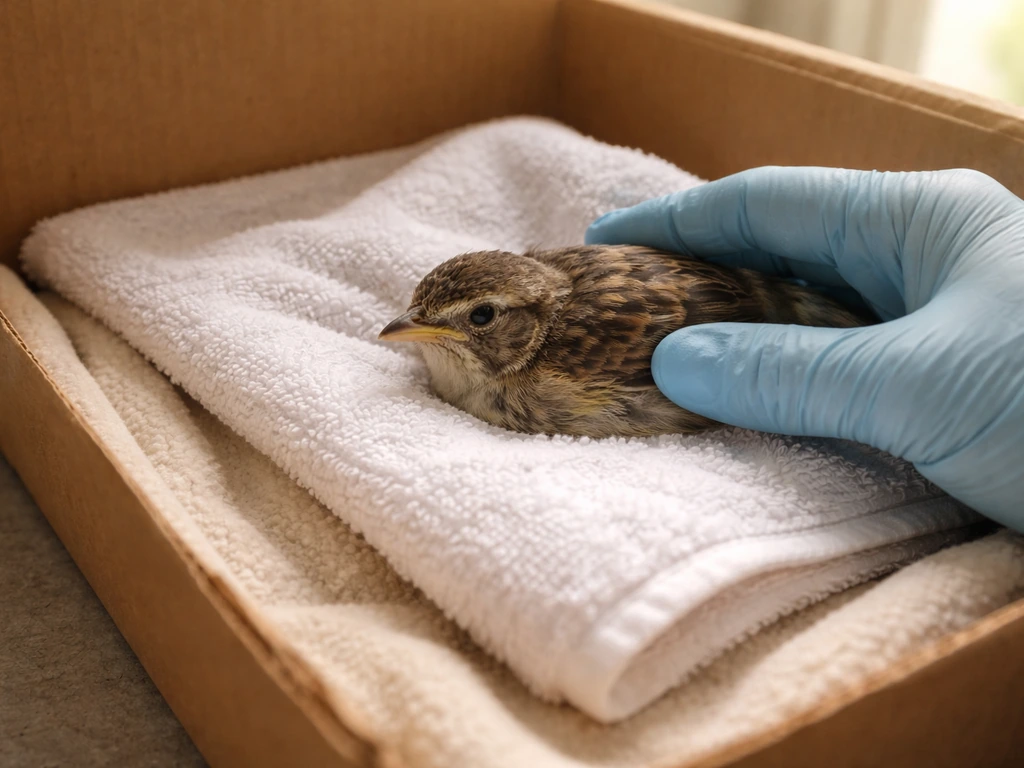
To check if a bird is breathing, crouch down or hold the bird gently at eye level and watch the chest and abdomen for a slow, rhythmic rise and fall. If you can't see movement, cup your hand loosely around the bird without squeezing and feel for the faintest warmth or air movement near its beak. If you suspect a bird is suffering, look for signs like labored breathing, weakness, or not responding normally, and contact a wildlife professional for guidance faintest warmth or air movement. Most breathing in small birds is subtle and fast, so give yourself a full 15 to 20 seconds before drawing any conclusion.
How to Check If a Bird Is Breathing: Quick First Aid
Marcus Chen
28 May 2026
Quick safety checks before you assess breathing
Before you touch the bird, take five seconds to look around. Is it on a road, near a cat, or somewhere children or other animals could make things worse? Remove those hazards first. Move the bird away from immediate danger only if staying still puts it at greater risk. A bird lying still on a window ledge after a collision, for example, is usually safer right there than being picked up and moved unnecessarily.
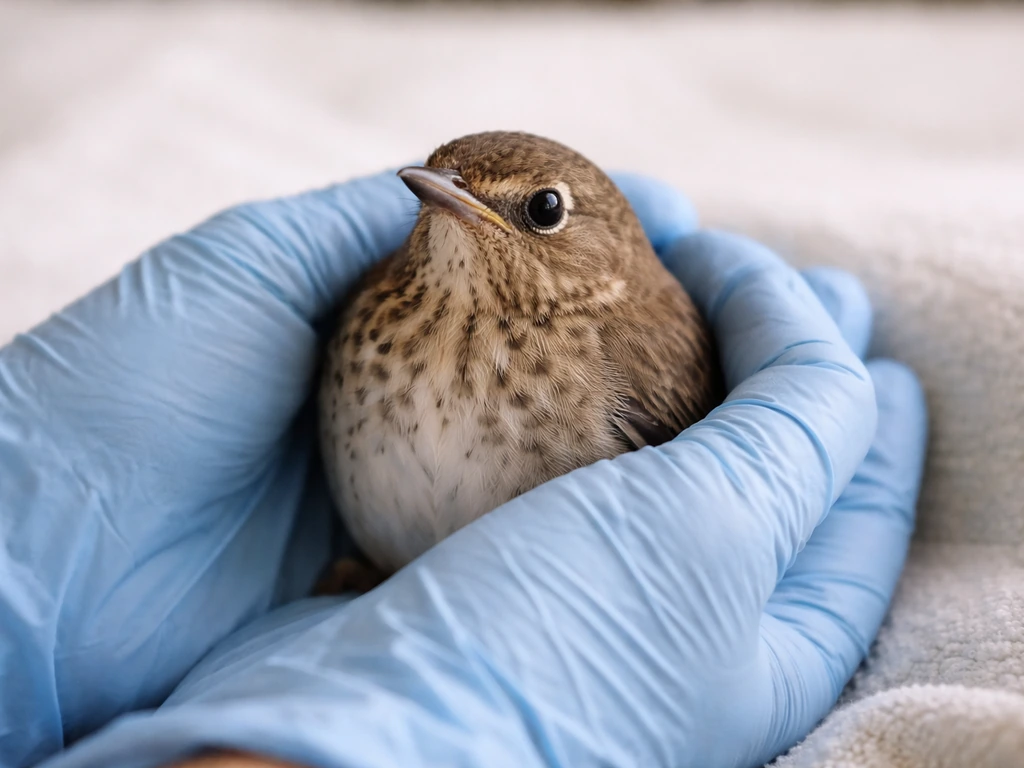
Always put gloves on before handling any wild bird. Even small songbirds can carry bacteria, and a bird that's more alert than it looks can bite or scratch hard. If you don't have gloves, use a folded cloth, a light towel, or even a plastic bag over your hands. The U.S. Fish & Wildlife Service also recommends keeping children and pets well back during any wildlife assessment, so call them away before you get close.
Once the immediate area is safe, avoid the urge to scoop the bird up right away. A lot of useful information about breathing comes from watching it undisturbed for 20 to 30 seconds first. Stress alone can suppress visible breathing movement in a stunned bird, so your calm approach actually helps you get a more accurate read.
How to observe breathing (movement, posture, and airflow)
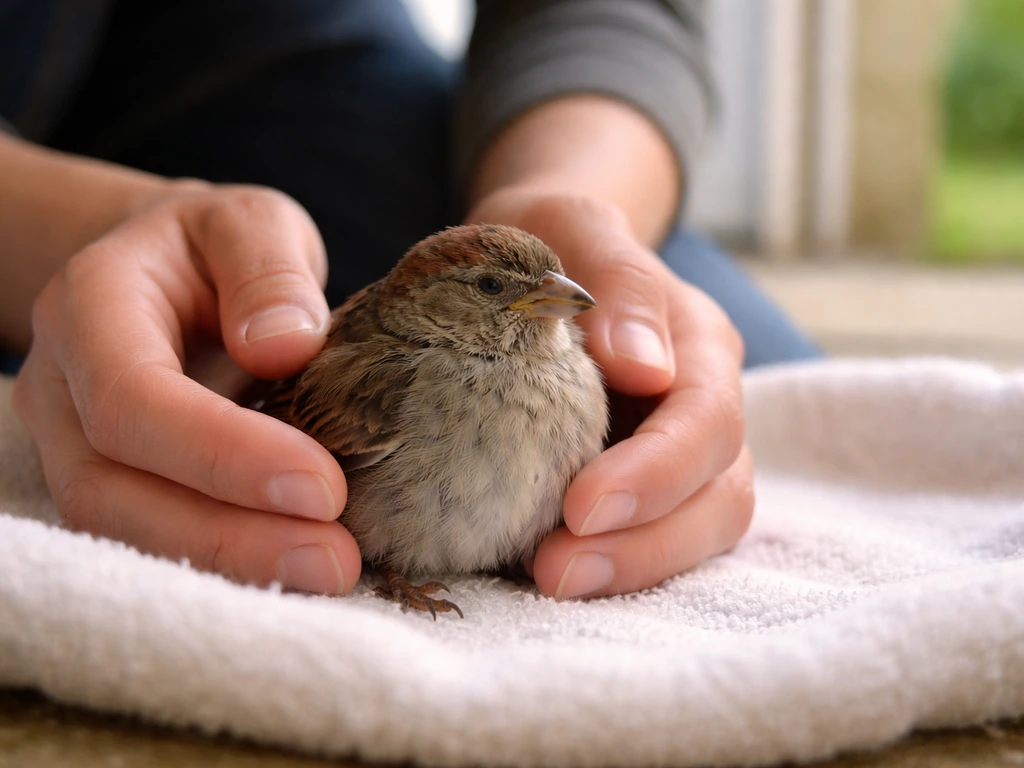
Get low and level with the bird. Natural light helps enormously here. What you're looking for is a gentle, repetitive movement in the chest and lower abdomen, almost like a slow pulse or a tiny bellows working. In small birds like sparrows or finches, this can be very fast (30 to 60 breaths per minute is normal) and each movement is tiny. In larger birds like pigeons or crows, breathing is slower and easier to see.
If the bird is sitting upright, watch the feathers just at the base of the wings and along the sides of the belly. Those feathers will shift very slightly with each breath. If the bird is lying on its side, the visible flank will rise and fall more obviously. Give it a full count of 20 before deciding nothing is happening.
If visual observation isn't giving you a clear answer, pick the bird up gently using both hands so the wings are held against the body (this also calms the bird). Bring the back of your hand close to its beak and nostrils without blocking them. You should feel intermittent, warm puffs of air. Alternatively, place your fingertips lightly on the keel (the bony ridge at the center of the chest) and feel for the smallest vibration or movement. Neither method is foolproof on its own, so combine both.
Signs of distress vs normal breathing patterns
Knowing what normal looks like makes it much easier to spot a problem. If you suspect the bird is blind or has trouble seeing, it may behave differently and need extra care and a safer environment while you arrange help a bird is blind. A healthy bird breathes with its mouth closed, its body upright, and no visible effort. The breathing is quiet and rhythmic.
Because rabies is a serious concern with certain wildlife, it helps to know how to know if a bird has rabies so you can take proper safety precautions. Learn how to tell whether a bird is suffering by watching for red flag distress signs like open-mouth breathing, tail bobbing, and wheezing. A bird that has just had a scare or been handled may breathe a little faster than usual, but it should settle within a minute or two.
Distress signs are different and worth learning. Open-mouth breathing (especially when the bird is not overheating) is a red flag. So is a tail that bobs up and down with each breath, which means the bird is working hard to move air. Wheezing, clicking, or rattling sounds on inhale or exhale suggest fluid or an obstruction in the airway. A bird hunched with its feathers puffed out and its eyes half-closed may be breathing, but it's struggling. These are all signs you are dealing with something beyond a brief stun and need professional help sooner rather than later. If you're also noticing signs of broader distress, that connects closely to assessing whether a bird is in distress more generally.
| What you see or hear | What it likely means |
|---|---|
| Quiet, rhythmic chest movement, beak closed | Normal breathing, bird may just be stunned |
| Fast breathing that slows within 1-2 minutes | Stress response, monitor closely |
| Open-mouth breathing with no obvious heat cause | Respiratory distress, seek help |
| Tail bobbing with each breath | Bird is working hard to breathe, urgent |
| Wheezing, clicking, or rattling sounds | Possible airway obstruction or infection, urgent |
| No visible movement for 20+ seconds | May not be breathing, act immediately |
When you suspect a bird is not breathing (what to do immediately)
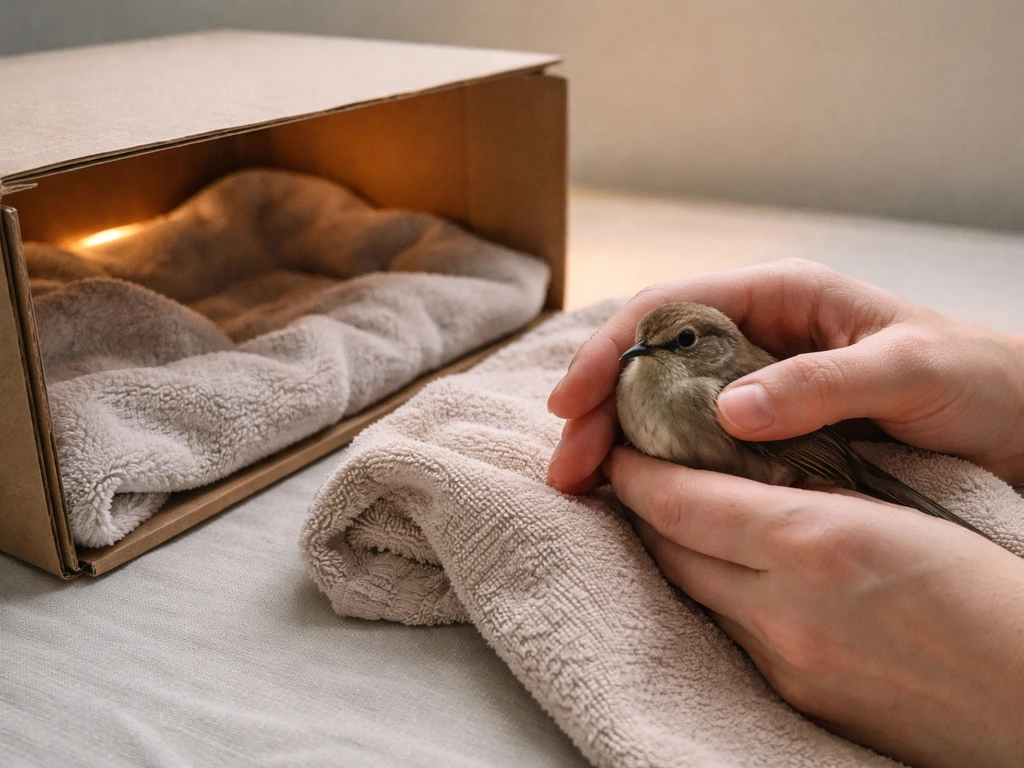
If after 20 to 30 seconds of careful observation you cannot detect any breathing movement, warmth from the beak, or chest vibration, act fast but stay calm. If you are still unsure about what you are seeing, you may also wonder, can a bird be blind, since reduced awareness can make signs harder to interpret. First, gently reposition the bird. Sometimes a bird lying with its neck at an awkward angle has a partially blocked airway. Carefully straighten the head and neck into a natural position, then check again for 10 to 15 seconds.
If there's still no sign of breathing, place the bird in a small, ventilated box lined with a soft cloth or paper towel. The box should be warm (around 85 to 90°F / 29 to 32°C) and dark. Warmth is critical: a bird in shock or near death from exposure may resume breathing once its core temperature rises slightly. You can place the box on a heating pad set to low, or near (not on) a warm air vent. Do not give food or water at this stage, as advised by Tufts Wildlife Clinic, since an unconscious or barely conscious bird can aspirate liquid into its lungs.
Bird CPR exists but is not recommended for untrained people on small birds. The anatomy is too delicate and the risk of further injury is high. Your best intervention right now is warmth, darkness, quiet, and getting a wildlife professional on the phone within the next five minutes.
What to check next: responsiveness, heartbeat, and injuries
Once you've confirmed or established some breathing, do a quick secondary assessment. Responsiveness comes first. Does the bird react when you move your hand slowly toward its face? Do its eyes open? Does it try to move away? Any voluntary movement is an encouraging sign. A bird that is completely unresponsive to touch and sound is in a critical state even if it is breathing.
To check for a heartbeat, hold the bird gently in one hand with your thumb and forefinger on either side of the keel, low on the chest. A bird's heartbeat is very fast (200 to 400 beats per minute in small species) and feels like a rapid flutter rather than a distinct thump. If you feel nothing after 15 seconds, that's significant. In larger birds like pigeons, the heartbeat is easier to feel and a little slower.
Do a brief visual check for obvious injuries without probing or manipulating the bird unnecessarily. Look for blood, a wing held at an odd angle, leg damage, or any visible puncture wounds (common after cat attacks). These findings tell you how urgently you need professional care and what information to relay when you call for help. Signs of pain in a bird, like guarding a limb or flinching at touch, are also worth noting and passing along to the rehab contact.
Deciding next steps: rescue, vet/wildlife rehab, and emergency contact
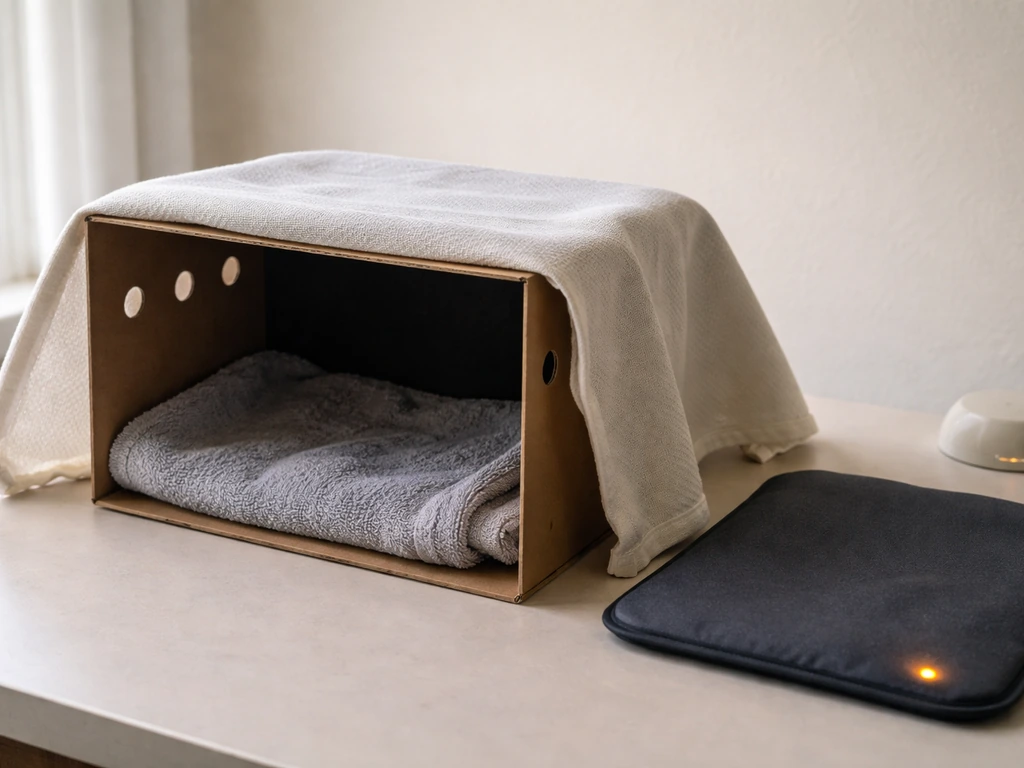
If the bird is breathing but stunned, such as after a window collision, the standard advice is to secure it in a warm, dark, quiet box and wait 20 to 30 minutes. Many stunned birds recover on their own and can be released where they were found. If it doesn't recover within that window, or if it's clearly injured, that's when you make the call.
For birds that are not breathing, unresponsive, visibly injured, or showing serious respiratory distress, contact a licensed wildlife rehabilitator or avian vet immediately. In the U.S., the Wildlife Rehabilitators Directory, your state wildlife agency, or the Humane Society's local branch can connect you quickly. In the UK, the RSPCA emergency line handles wild bird emergencies. In other countries, search for your national wildlife rescue network or contact a local avian vet directly.
While you wait for help or transport, keep the bird in that warm, dark, ventilated box. Minimize handling, noise, and exposure to other animals. The RSPCA recommends placing a suspected sick or injured bird in a well-ventilated box (if possible) to keep it safe and minimize handling and stress well-ventilated box (if possible) to minimize handling and stress. Don't offer food or water. Check breathing every few minutes by opening the box briefly and watching for chest movement. Note any changes, because the rehab center or vet will want to know whether the bird's condition is stable, improving, or declining.
If you're not sure whether the bird needs help at all, the general rule is: a wild bird that lets you walk up and pick it up almost always needs help. Healthy wild birds do not allow that. Combine what you've learned about breathing with a broader read of the bird's overall state, including whether it looks dehydrated, is showing signs of pain, or seems disoriented. All of that information together will help you and the wildlife professional decide how to proceed quickly and safely.
FAQ
What should I do if I cannot clearly see chest movement, but the bird seems warm and otherwise okay?
If the bird is warm, alert, and you see regular chest or flank movement (even if subtle), it is likely breathing. If it is lying on its side or with feathers fluffed, pause longer (up to 30 seconds) and watch the base of the wings and belly area, since the “belly only” check can miss motion.
How reliable is checking for warm air at the beak compared with watching the chest?
Use the nostril and beak-area check only as a supplement. Try to count breaths for 20 seconds first, then warm puffs from the beak and any tiny chest vibration. If you still cannot detect anything and the bird is unresponsive, treat it as not breathing until warmth and a second check change the outcome.
Is it better to feel for heartbeat or focus only on breathing?
Do not rely on a single method. Visual movement can stop when a bird is stunned, and touch can be hard to interpret because the heartbeat is very fast. The best approach is to combine a 20 to 30 second visual watch with a brief beak-area warmth check or a light keel vibration check, then recheck after warming if needed.
What if I cannot feel a heartbeat, but I still think the bird is breathing?
If the bird is breathing but you do not feel a heartbeat after about 15 seconds, it can still be alive, especially in small birds where beats are extremely fast. A “no heartbeat felt” result matters most when paired with absent responsiveness or absent breathing signs.
What if the bird seems hot, is breathing with its mouth open, or appears overheated?
If you suspect overheating, look for open-mouth breathing, a very hunched posture with fluffed feathers that looks heat-stressed, and breathing that looks forced rather than quiet and rhythmic. In that situation, do not keep it in a warm recovery box, call for wildlife advice right away, and prioritize cooling the environment around the bird rather than heating the bird’s core.
Can a bird breathe fast for a short time after being stunned, and when should I worry?
After a collision or handling, breathing may speed up temporarily. Recheck at 1 to 2 minute intervals and look for a trend toward calmer, quieter breaths. If it does not settle within a couple minutes, or if you notice tail bobbing, wheezing, clicking, or rattling, seek help sooner.
How do I check breathing if the bird’s neck or body position makes it hard to see movement?
If the bird is in a tough angle (neck twisted, body contorted, or lying where its beak is pressed into feathers), gently reposition the head and neck into a natural line and recheck breathing for 10 to 15 seconds. Avoid repeated turning or aggressive manipulation, because it can worsen injury or airway obstruction.
Once I put the bird in a warm box, when is it safe to offer food or water?
Warmth and darkness are mainly for stabilization. Do not give food or water because aspiration risk is high when a bird is unconscious or barely conscious. Offer only what professionals instruct, after the bird is fully alert and swallowing safely.
What if the bird is breathing, but I hear clicking, wheezing, or rattling?
If the bird appears to be breathing but has obvious airway noise (wheezing, clicking, rattling) or open-mouth breathing, treat it as respiratory distress rather than “just stunned.” Keep it warm, quiet, and minimize handling, but contact a rehabilitator or avian vet immediately instead of waiting out a long observation window.
The bird seems to have breathing, but it will not respond at all. Is it still an emergency?
If the bird is breathing but completely unresponsive, that combination suggests severe shock or injury. Keep it warm and dark, limit handling, and arrange professional help right away. Responsiveness is a key “severity” marker even when breaths are present.
How should I monitor breathing changes over time while I wait for help?
If the bird’s breathing is present but changing (getting harder, more open-mouth, more tail bobbing), do not wait for a long recovery window. Act faster, because worsening changes can mean airway injury or fluid buildup. Recheck briefly, then contact help immediately.
Next Article
Signs a Bird Is in Pain: What to Do Next Today
Learn signs a bird is in pain and get step-by-step actions, triage, and urgent guidance to help it fast.