
A bird in genuine distress will usually show you. The clearest signs are: it doesn't fly away when you approach, a wing is drooping or held at an odd angle, it can't stand or keeps falling over, it's bleeding or gasping, or its eyes are half-closed and its head keeps dropping. Any one of those means the bird needs help now, not later. If the bird is just sitting quietly but alert, watching you with bright eyes and holding itself upright, it may simply be scared or temporarily stunned. That distinction matters because how you respond is completely different.
How to Tell If a Bird Is in Distress and What to Do
Marcus Chen
18 May 2026
Quick reality check: what 'distress' can actually look like
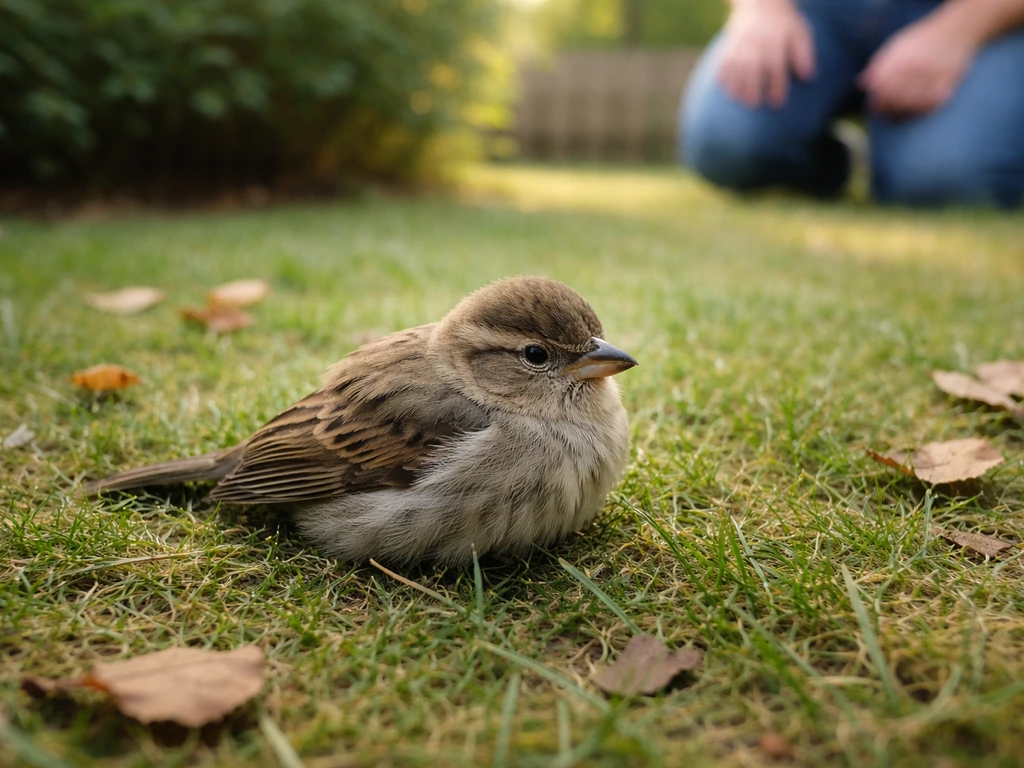
Healthy birds freeze and go still when they feel threatened. That's not distress, that's survival instinct. A lot of people call a bird 'injured' simply because it's sitting on the ground looking dazed, but the real question is whether it's recoverable on its own or whether something is seriously wrong. The rule of thumb that works well in the field is this: a bird that cannot or will not fly away when you walk right up to it is telling you something. Healthy birds do not let humans get close. If you can practically pick it up without chasing it, that's a red flag.
That said, not every situation is a full emergency. A bird that just hit a window might be genuinely stunned but otherwise unhurt, and it may recover completely within an hour. A fledgling (a young bird with feathers that's learning to fly) will naturally spend time on the ground and doesn't always need rescuing. Context and the bird's specific signals together tell the real story, which is why it's worth doing a quick, calm assessment before jumping to action.
Safety first: how to approach without making it worse
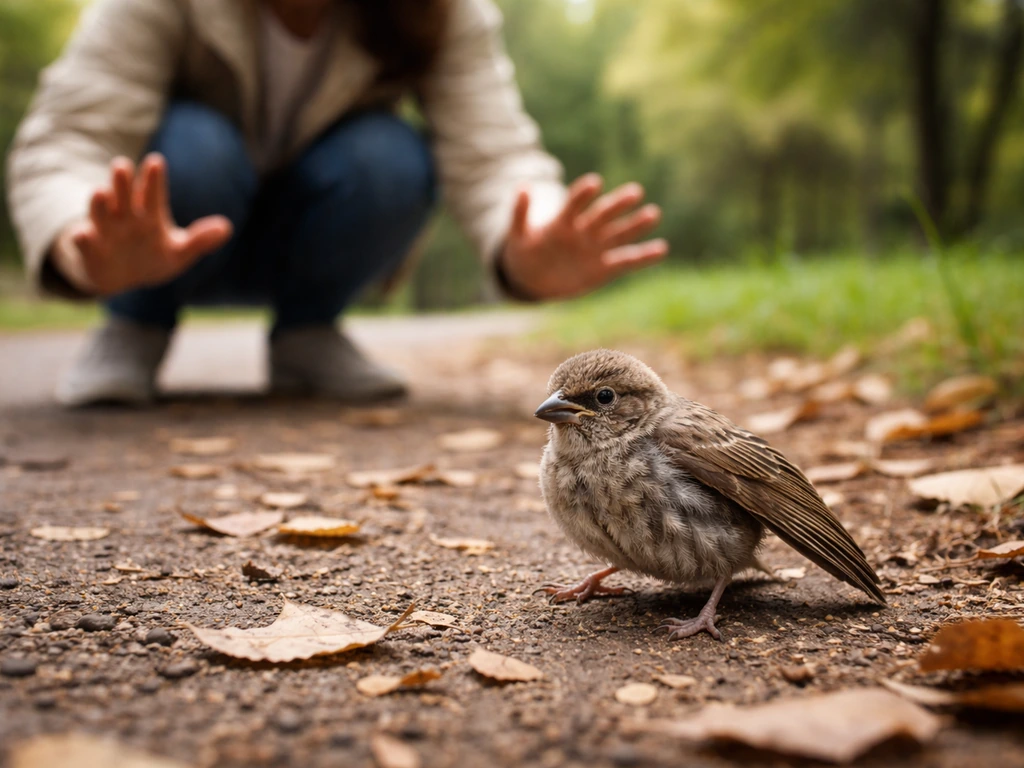
Before you touch anything, slow down. A stressed bird can injure itself further trying to escape, and some birds, especially larger ones like herons, crows, or raptors, can seriously injure you with their beaks, talons, or wings. Approach slowly and quietly from the side rather than looming over the bird from above, which feels like a predator attack from its perspective.
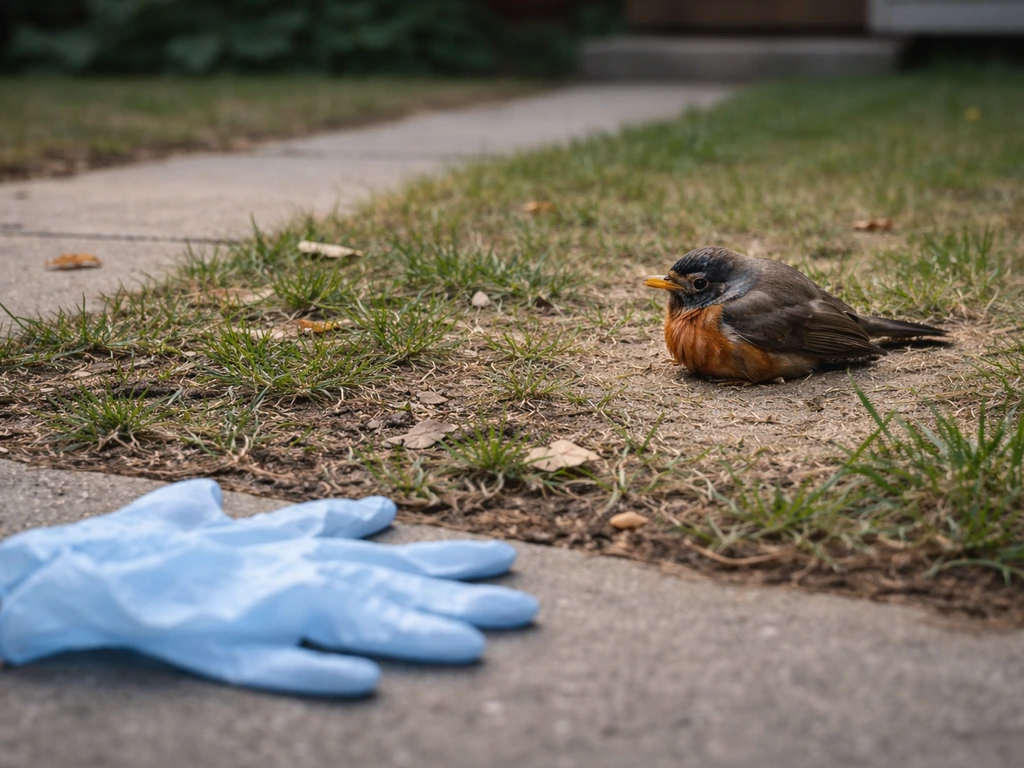
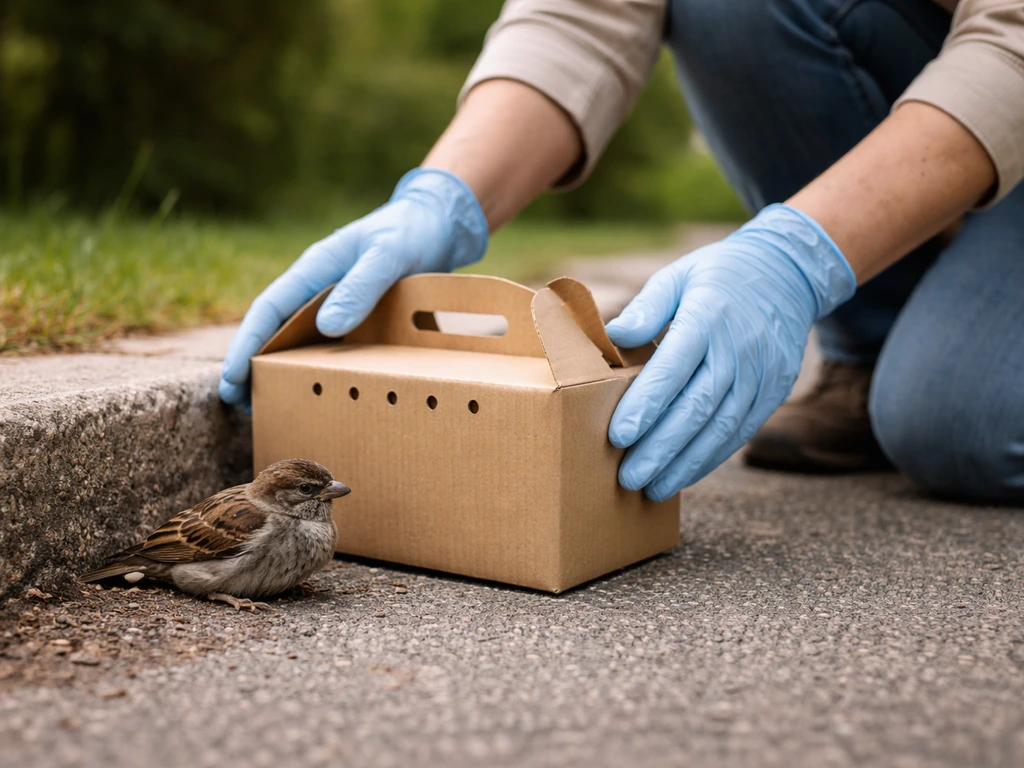
Wear gloves if you have them, or use a light towel or cloth. This protects you from scratches and bites, but it also reduces the skin-to-skin contact that transfers your scent and body oils to the bird. Keep children and pets back and away, both for safety and to avoid adding more stress to an already overwhelmed animal. Keep your voice low and your movements slow. The calmer you are, the calmer the bird is, and that genuinely makes a difference for its chances of survival.
Once you're close enough to observe without touching, take thirty seconds to actually look at it before doing anything else. What you see in those thirty seconds will tell you almost everything you need to know.
Signs of injury by body area
Wings
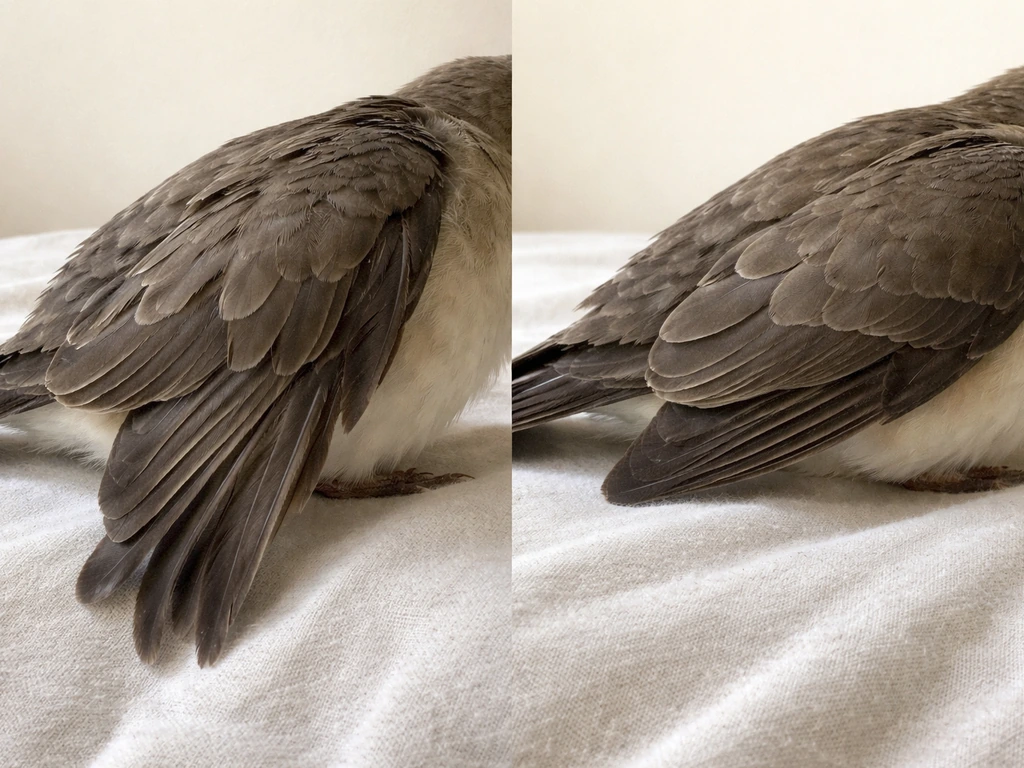
A healthy bird holds both wings tight and symmetrical against its body when at rest. If one wing is drooping lower than the other, hanging at an odd angle, or the bird keeps trying to fold it and can't quite manage it, that's a strong sign of a break or soft tissue injury. Don't try to straighten or splint it yourself. Even gentle manipulation of a broken wing causes serious pain and can make the fracture worse.
Legs and feet
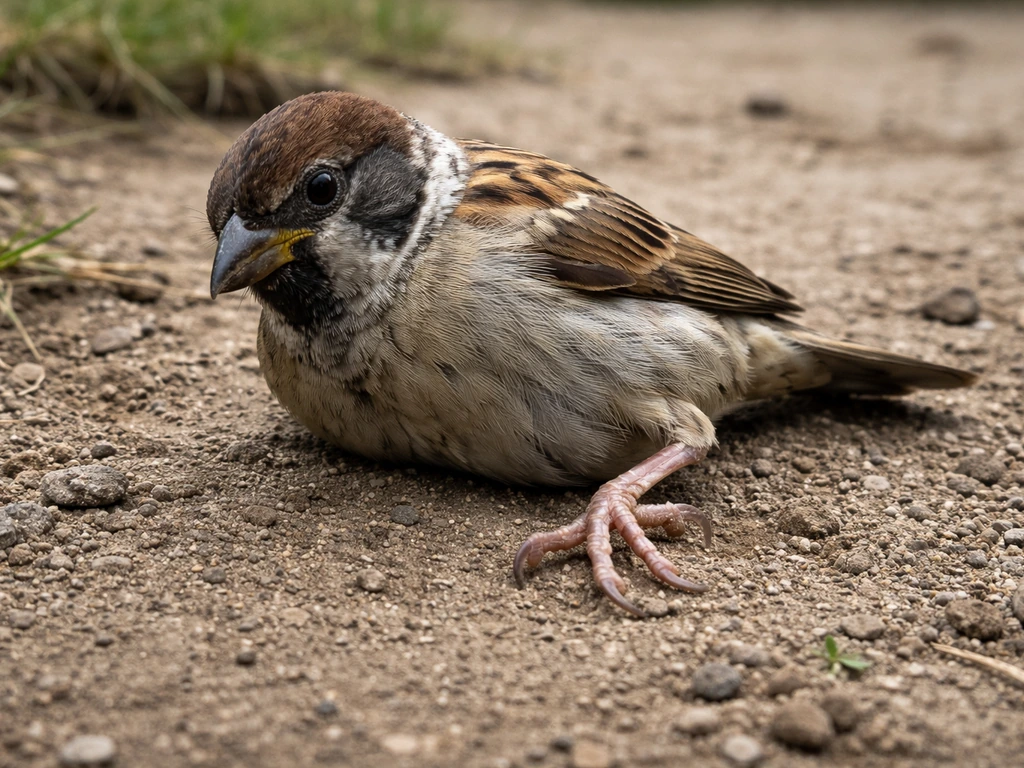
Watch how the bird is positioned on the ground. Can it stand? Is it putting weight on both legs? A bird that keeps tumbling to one side, that drags a leg, or that curls its toes abnormally may have a leg fracture or neurological damage. Leg injuries are serious because birds need their legs to perch, roost, and feed. A bird that can't stand is a bird that needs help.
Beak
A beak injury is easy to miss but important to notice. Look for a cracked or visibly misaligned beak, or blood around the beak or nostrils. A bird with a damaged beak can't feed itself effectively even if it can fly, so it will gradually starve without intervention. If the beak looks off or has visible trauma, the bird needs professional assessment.
Breathing and energy
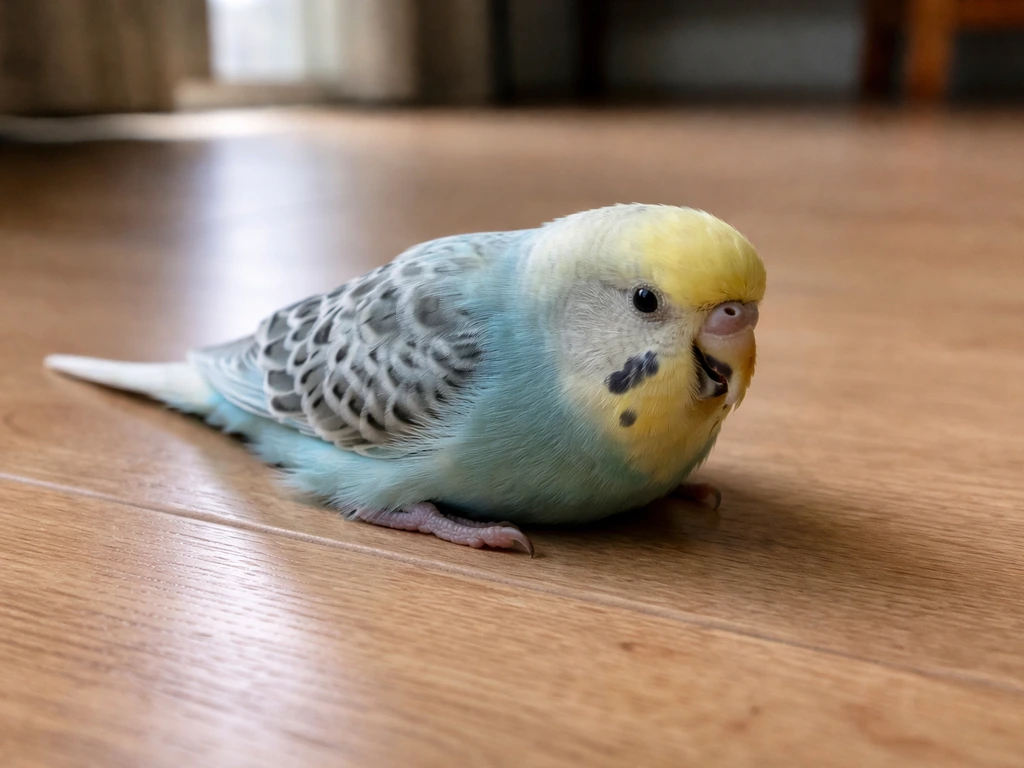
This is one of the most important things to check. Normal bird breathing is fast but smooth and mostly invisible. If the bird is breathing with its beak open, gasping, bobbing its tail up and down with each breath, or you can hear wheezing or clicking sounds, that's labored breathing and it's a serious sign. A bird that can't keep its eyes open, that lets its head droop, or that seems completely unresponsive to your presence is in shock or shutting down. These are get-help-now signals.
Behavior and posture red flags
Beyond specific body parts, the bird's overall behavior tells you a lot. Here are the posture and behavior signals that, in my experience, reliably indicate a bird that cannot help itself:
- Cannot fly or barely flutters when attempting takeoff (stays grounded when you approach closely)
- Losing balance repeatedly, tilting to one side, or falling over
- Head tilted to one side (can indicate concussion or inner ear injury)
- Sitting with feathers puffed up and eyes partly or fully closed during daylight
- Visible bleeding anywhere on the body
- Flies or maggots present on the bird (a sign of prolonged or severe injury)
- Completely unresponsive to your presence or touch
- Unusually aggressive or frantic struggling that seems panicked beyond normal fear
One thing worth calling out: shock can make a bird look almost peaceful. It may sit very still, feel limp, and not react much at all. These signs can include obvious pain behaviors like persistent distress, unusual stillness, or struggling to move comfortably signs a bird is in pain. This calm appearance is deceptive. A bird in shock needs warmth and professional care urgently, not reassurance that it's 'probably fine.'
Aggression is the other extreme that surprises people. A bird that's thrashing, pecking hard, and fighting you is actually showing a good sign of alertness, but it still needs assessment if it can't fly. Don't mistake feistiness for health.
Common situations and what to look for
Window collisions
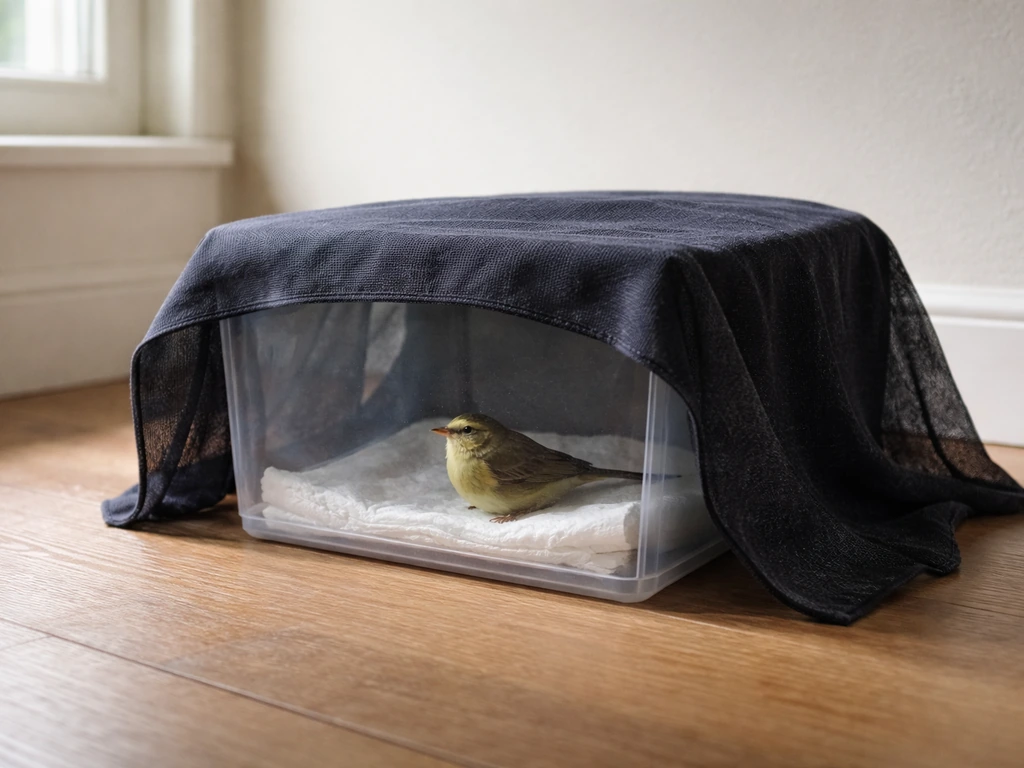
This is probably the most common scenario people encounter. A bird hits a window, and you find it stunned on the ground beneath it. The tricky part is that a collision can cause internal injuries or concussion that aren't visible from the outside. A bird may seem dazed but okay, then deteriorate or die hours later. So the approach is conservative: assume more is wrong than you can see.
If the bird is breathing and alert but not flying, give it a chance to recover in a safe, contained environment (more on that in the first aid section below). Check it after an hour. If it hasn't clearly improved, or if it shows any of the red flags above, contact a wildlife rehabilitator. Don't leave it on the ground near the window, because another collision or a predator are both real risks.
Pet interactions
Cat and dog attacks are deceptive in a different way. Even if a bird looks completely fine after being grabbed by a cat, it almost certainly needs professional attention. Cat saliva contains bacteria (particularly Pasteurella) that cause fatal infections in birds within 24 to 48 hours, even from a light puncture wound that's invisible to you. If a cat or dog has had a bird in its mouth, don't wait to see if it 'seems okay.' Get it to a wildlife rehabilitator or avian vet the same day. This is non-negotiable from a bird welfare standpoint. If you suspect rabies, treat it as a red flag and contact a wildlife rehabilitator or avian veterinarian right away.
Nest emergencies
Finding a baby bird on the ground sends most people into rescue mode, but the response depends heavily on the bird's age and condition. A nestling (pink, featherless, eyes closed) on the ground does need help. A fledgling (fully or mostly feathered, hopping around) is often right where it's supposed to be, with its parents nearby. The parents are usually still watching and feeding it even if you can't see them.
The baby bird needs urgent help if it's featherless, has its eyes closed, is visibly injured, bleeding, or has been touched by a cat. The U. S. Fish & Wildlife Service notes that baby birds usually do not need your help unless they are featherless or have their eyes closed, since urgency depends on their age or stage [featherless or has its eyes closed](https://www.
fws. gov/rivers/story/what-do-if-you-find-baby-bird-injured-or-orphaned-wildlife). If it's a fledgling with no visible injuries and you can keep pets and children away, the best thing you can do is leave it alone and let its parents finish the job. If a fledgling hasn't flown or been collected by a parent after about three hours, or if you genuinely can't keep predators away, that's when you call a rehabilitator.
Immediate first-aid basics (and what not to do)
The goal of basic first aid here is containment and calm, not treatment. You are not the vet. Your job is to keep the bird safe, warm, and unstressed until a professional can take over.
- Contain the bird gently in a cardboard box or paper bag with a lid or closure. A shoebox works perfectly. Poke a few small air holes in the top.
- Line the bottom with a soft cloth, paper towels, or newspaper so the bird has traction.
- Keep the container dark and quiet. Darkness reduces stress significantly and helps prevent the bird from injuring itself by thrashing.
- Keep the bird warm. Room temperature is a minimum. If the bird is cold or shivering, place a hot water bottle or a heating pad set to low under one half of the box so the bird can move toward or away from the heat.
- Put the box somewhere quiet, away from pets, children, TVs, and activity.
- Contact a wildlife rehabilitator or avian vet while the bird is contained.
If there is active bleeding, you can apply gentle pressure with a clean cloth. Do not apply anything else to wounds: no antiseptic creams, no hydrogen peroxide, no bandages that could restrict circulation. These do more harm than good with birds.
If a wing is broken, do not try to splint it yourself. Fold the wing gently against the bird's body as you place it in the box and let the containment itself act as a soft restraint. The same applies to leg injuries: gentle containment prevents further movement, and that's enough.
What not to do (this list matters as much as the steps above)
- Do not give the bird food or water. Aspiration (inhaling liquid) is a real risk, and the wrong food can be toxic or cause additional problems. Even well-meaning feeding can kill a bird.
- Do not try to force the bird to fly or 'test' whether it can.
- Do not give it any human medication or over-the-counter products.
- Do not use a container with loops, netting, or strings inside where legs can get tangled.
- Do not handle the bird more than necessary. Every handling episode causes stress, and stress can cause heart failure in already compromised birds.
- Do not leave it outside uncontained, even briefly, thinking it will be fine.
When to seek help urgently and how to find the right person
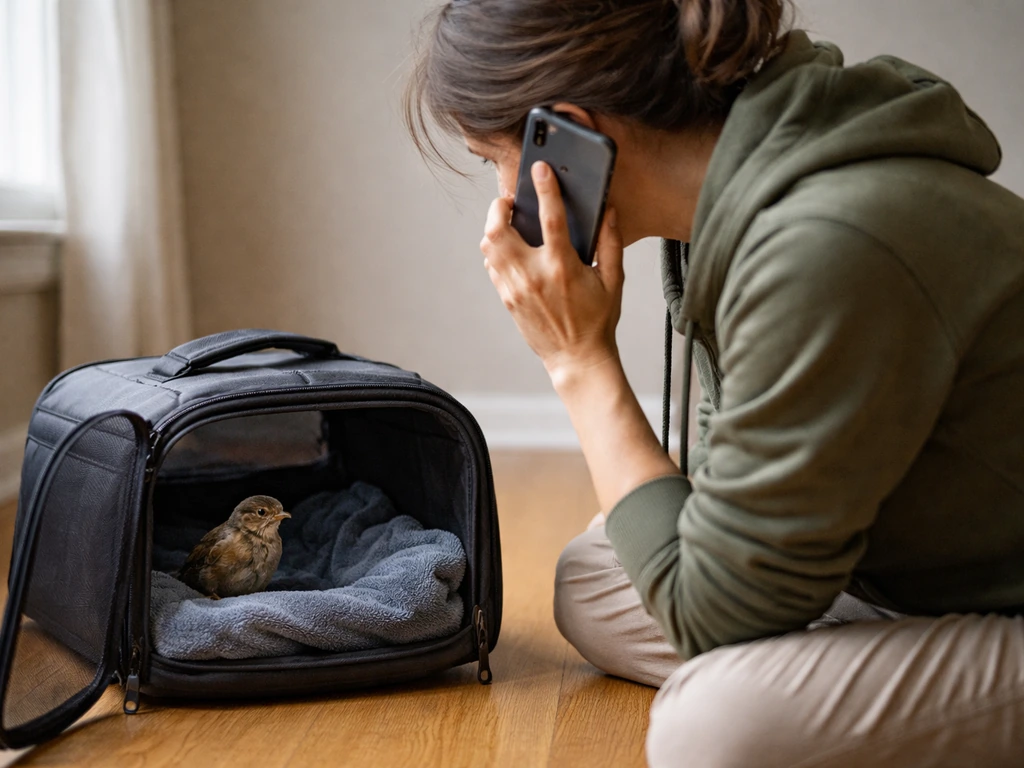
Some situations are urgent enough that you shouldn't wait at all. Call or go immediately if the bird has any of the following:
- Active or heavy bleeding
- Labored or open-mouthed breathing, gasping, or audible wheezing
- Cannot keep its head up or eyes open
- Has been in a cat's or dog's mouth
- Is a featherless nestling (eyes closed, no feathers)
- Has visible flies or maggots on it
- Has been on the ground in distress for more than two hours without improvement
For non-urgent situations (stunned window collision, fledgling on the ground, no visible wounds), give the bird up to a couple of hours in safe containment. If it hasn't clearly recovered by then, make the call.
Who to call and how to find them
Your two options are a licensed wildlife rehabilitator or an avian veterinarian. For wild birds, a wildlife rehabilitator is usually the better first call because they're permitted to handle native species, they know wild bird physiology specifically, and many offer free or low-cost care. Wildlife Center of Virginia says you can locate permitted help by referring you to a rehabilitator based on your location and species, and it notes that Virginia DWR maintains a statewide online directory of permitted wildlife rehabilitators. Avian vets are the right call for pet birds or if no rehabilitator is available, though they typically charge for services.
| Resource type | Best for | Cost | How to find |
|---|---|---|---|
| Licensed wildlife rehabilitator | Wild birds, all injuries and species | Usually free or donation-based | Search 'wildlife rehabilitator near me' or contact your state/provincial wildlife agency for a directory |
| Avian veterinarian | Pet birds, emergencies when no rehabber is available | Standard vet fees | Search 'avian vet near me' or check the Association of Avian Veterinarians website |
| Local humane society | Initial advice, sometimes interim care | Varies | Call your local branch directly |
| State/provincial wildlife agency | Referrals, permitted rehabber lists | Free referral | Search your state or province name plus 'wildlife rehabilitator directory' |
When you call, be ready to describe: the species if you know it (or a description of size, color, markings), where you found it, what happened if you know (window strike, cat attack, etc.), and the specific symptoms you're seeing. The more detail you give, the faster they can triage and advise you.
While you're waiting for transport or a callback, keep the bird in the warm, dark, quiet container. Turn off the radio during transport, drive smoothly, and keep the box level. Don't check on the bird repeatedly by opening the box, even though the instinct to look is strong. Every opening adds stress. Trust the process, get the bird to help, and let the professionals take it from there.
Knowing how to tell if a bird is in distress is really about watching closely and trusting what you see. A common question is whether a bird can be blind, and the signs can be subtle at first can a bird be blind. How to tell if a bird is blind uses the same careful observation, focusing on the eyes and how the bird responds to light and movement.
A bird that lets you walk up to it, can't fly, is bleeding, gasping, or can't hold its head up is asking for help in the only way it can. One clue can be blindness, so look for signs like bumping into objects, poor tracking, or an inability to focus. Dehydration can also cause breathing changes, weakness, and a bird that cannot hold its head up, so use the same close observation to spot it early gasping. Your job is to respond calmly, contain safely, and get it to someone qualified as quickly as the situation demands.
You don't need to do more than that, and trying to do more can genuinely hurt more than it helps.
FAQ
What if the bird runs or you can get close but it still seems “off” (weak, sleepy, or unusually still)?
Distance alone is not enough. If it cannot or will not resume normal behavior within a short recovery window, or it shows head droop, one wing held wrong, repeated collapse, or breathing changes, treat it as distress even if it is not obviously bleeding.
How can I tell the difference between a stunned bird and a bird in shock?
A stunned bird typically has normal posture and can improve over time once kept warm and quiet. Shock is often more “shut down,” with limpness, inability to keep the head up, very reduced responsiveness, or breathing that looks labored even if it appears calm.
Is it ever safe to move the bird to a better spot on my own?
It can be okay only for a short, low-stress reposition to get it out of immediate danger (road, active lawn equipment, predators). Avoid chasing, repeated handling, or relocating repeatedly. If it is already in contact with hazards like cats or vehicles, containment and quick contact with a professional is usually safer.
Should I offer food or water to a distressed wild bird while waiting for help?
Do not. Do not give water or food to a wild bird in distress because it can choke or inhale fluid, and it can worsen shock or internal injuries. Focus on warmth, darkness, and quiet until a wildlife rehabilitator or avian vet takes over.
What is the “warmth” target for a contained bird, and what should I avoid?
Use a warm, dark container rather than high heat. Avoid heating pads directly under the bird, hot water bottles, or anything that could overheat one spot. Aim for gentle warmth so the bird can recover without getting burned or overheated.
If a bird is bleeding but still breathing, is it still an emergency?
Yes. Active bleeding plus any other red flag (gasping, inability to stand, head droop, unresponsiveness) means it should be seen urgently. Stop only the bleeding you notice with gentle pressure on a clean cloth, then focus on containment and professional care.
How long should I wait after a window strike before calling someone?
If it does not clearly improve within about an hour, or if any red flags appear at any point, contact a wildlife rehabilitator. If it seems alert but still cannot fly, you can allow up to a couple of hours in safe containment, then re-check and call if there is no obvious improvement.
A cat grabbed a bird and it looks “fine” now. Do I still need to contact a professional?
Yes. Even if there are no visible punctures, cat and dog bacteria can cause serious infection within 24 to 48 hours. Seek same-day care if a cat or dog had the bird in its mouth.
What if I find a fledgling that is not flying, but it seems healthy and parents might be nearby?
If it is mostly feathered and uninjured, and you can keep pets and people away, leaving it alone is often best. If it has not been collected by parents after about three hours, it shows visible injury, or you cannot protect it from predators, call a rehabilitator.
How do I handle an injured bird in a way that reduces risk to me?
Keep low, slow approach from the side, avoid looming over it, and maintain a barrier like a towel and gloves if possible. Do not attempt to restrain a raptor or large bird unnecessarily, and do not put your hands near the beak or legs unless you are trained. When in doubt, call for help.
Can I use tape, bandages, or antiseptic on wounds if I have them?
Avoid all of those unless a professional instructs you. Birds can be harmed by restrictive bandaging, and antiseptic or peroxide can irritate tissues. Clean, gentle pressure for active bleeding and then containment is the safer default.
When should I suspect something internal even if the bird looks outwardly “okay”?
Window strikes and falls can cause concussion or internal bleeding that you cannot see. If it cannot fly normally, has abnormal breathing, collapses, or does not improve quickly, treat it as more serious than it looks and contact a professional.
Next Articles
How to Know If a Bird Has Rabies: Safe Steps Now
Learn safe steps to assess a strange bird, avoid handling, and get urgent rabies exposure guidance and rescue help.
How Do You Know If a Bird Is Suffering? Signs and First Aid
Learn how to tell if a bird is suffering and what to do next with safe, step-by-step first aid and when to call.
How to Know If a Bird Needs Help: Quick Signs and Steps
Spot distress signs in birds, decide urgent vs monitor, and get safe first-aid steps for collisions and injuries.