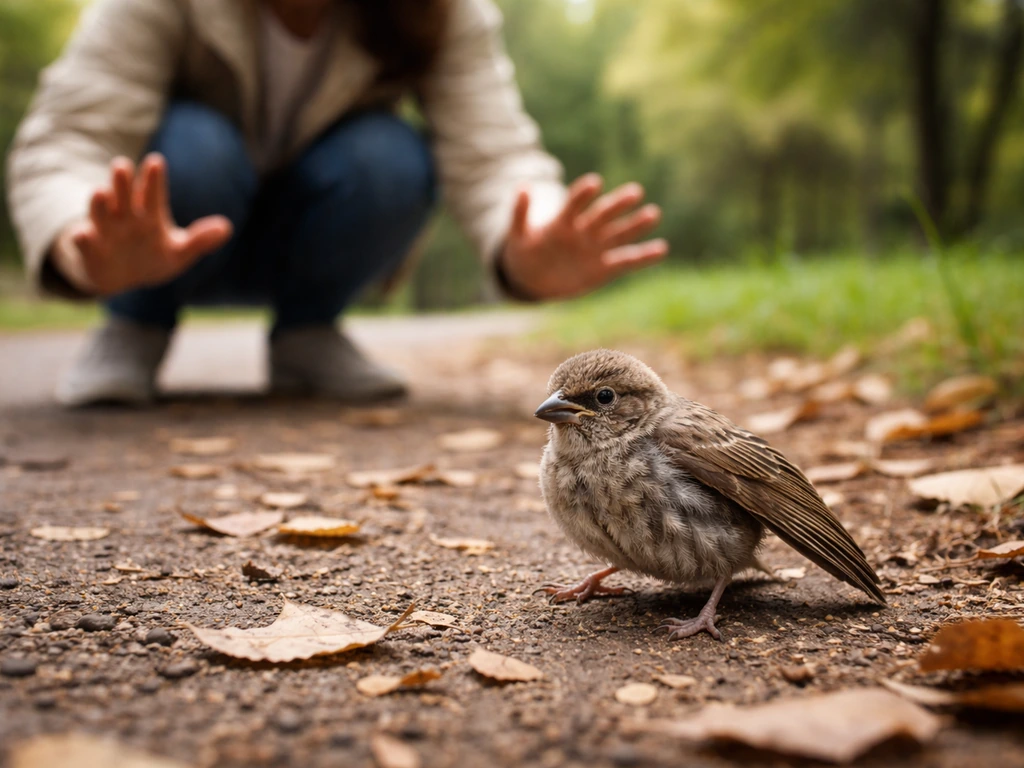
A suffering bird almost always shows it through behavior and posture before anything else. If a bird is sitting on the ground and isn't flying away from you, that's your first signal. Healthy wild birds don't let people walk up to them. Add in any of these, drooping wings, labored breathing, a head tilted to one side, obvious bleeding, a leg or wing sticking out at a wrong angle, or a glassy unfocused look, and you're looking at a bird that needs help. If you are unsure, use these signs to figure out how to know if a bird needs help before you decide what to do next. Trust your gut here. If something looks wrong, it probably is.
How Do You Know If a Bird Is Suffering? Signs and First Aid
Marcus Chen
30 Apr 2026
Body language and behavior signs that a bird is suffering
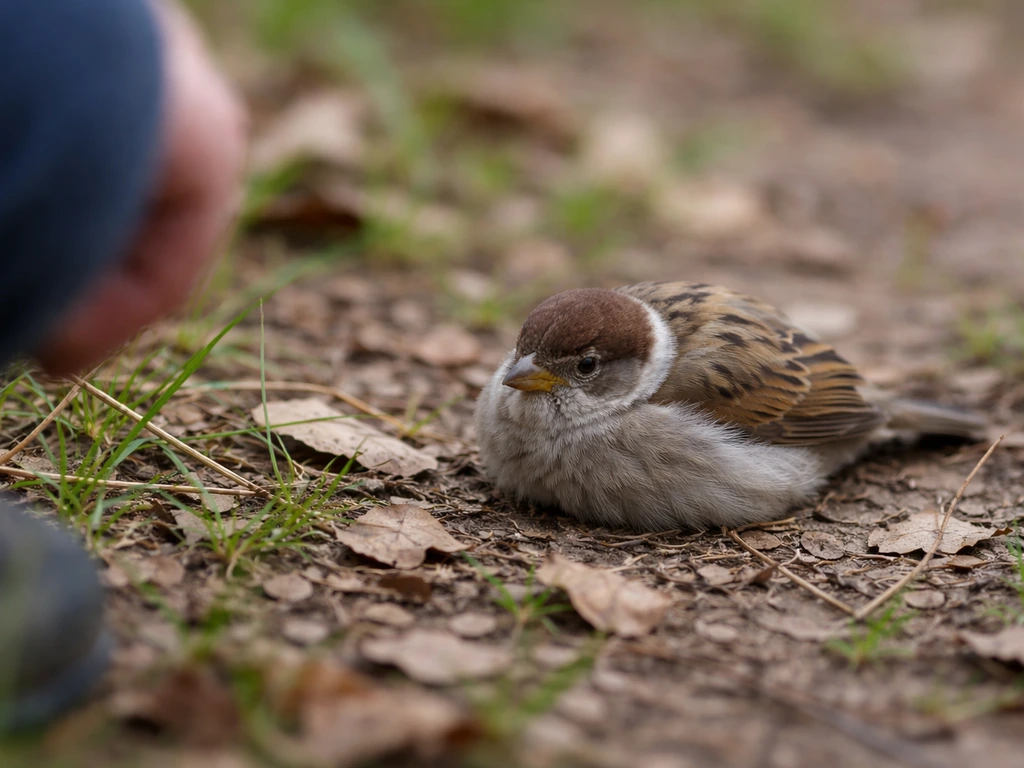
Birds instinctively hide pain and weakness. In the wild, showing vulnerability attracts predators, so they mask illness until they can't anymore. By the time a bird is visibly struggling, it's usually been suffering for a while. Here are the clearest signs to watch for:
- Sitting on the ground and not attempting to fly away when you approach
- Fluffed feathers held tight to the body for an extended period (not just a brief preening pause)
- Drooping wings — one or both hanging lower than normal or dragging on the ground
- Tail bobbing rhythmically up and down with each breath, which is a classic sign of respiratory distress
- Open-mouth breathing when the bird isn't overheated or recently active
- Head tilting or lolling to one side, or the bird unable to hold its head upright
- Eyes partially or fully closed during the day, or a glazed, unfocused look
- Inability to stand — sitting directly on its keel (chest) rather than on its feet
- Repeated distress calls that don't stop
- Trembling, shaking, or seizure-like movements
- Disorientation — walking in circles, bumping into things, or showing no fear response
Any one of these warrants closer attention. Multiple signs together mean you need to act now. The no-fear response is especially telling: a bird that sits calmly while you crouch beside it is not tame, it's in crisis.
Physical injury signs: what to look for on the bird's body
Once you've spotted behavioral clues, a quick visual scan of the bird's body can tell you a lot more. You don't need to handle it to see most of these.
Wings
A healthy bird holds both wings symmetrically, tucked close to its body. One wing hanging lower, dragging on the ground, or held at an awkward angle points to a fracture or dislocation. You might also see visible swelling, a bend in the wrong place, or feathers parted around an injury. Don't try to fold the wing back into position, that causes more harm.
Legs and feet
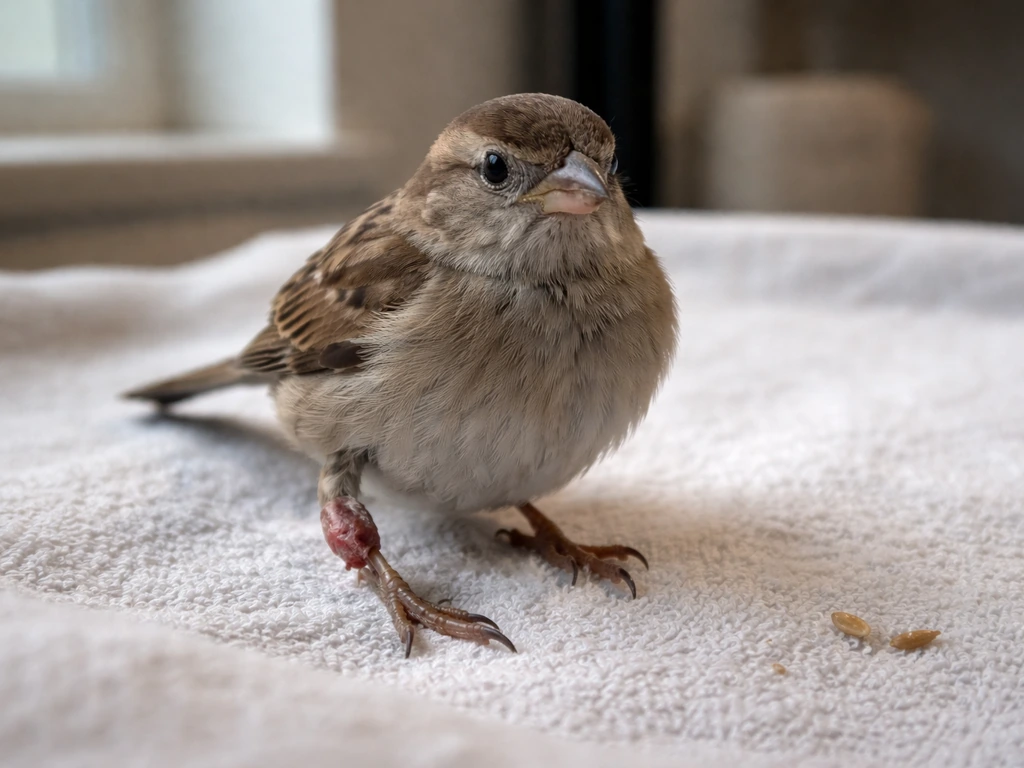
A broken leg often makes itself obvious. The bird may be unable to bear weight, and the leg may stick out sideways or at an odd angle. Look also for swelling, cuts at the joint, or fishing line, wire, or string wrapped around the leg or toes. Entanglement injuries are common and easy to miss at first glance. Do not attempt to unwrap line or wire yourself unless it's clearly loose and coming right off, you risk injuring the bird further or getting bitten.
Beak
A cracked, misaligned, or bleeding beak is a serious injury that makes eating impossible. You might see the upper and lower mandibles not meeting evenly, or an obvious chip or split. Birds with beak injuries often look like they're trying to eat or preen but can't complete the motion.
Eyes
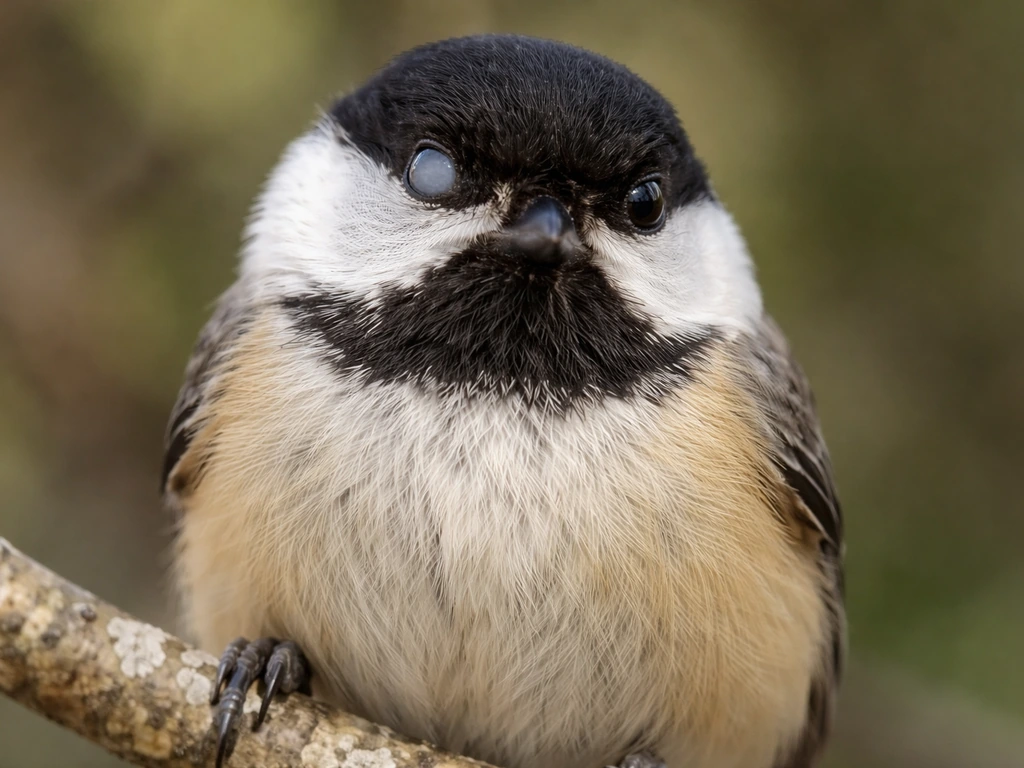
Both eyes should be bright, clear, and fully open. Cloudy eyes, discharge, swelling around the eye socket, or one eye staying closed while the other is open all signal a problem. Eye injuries are especially common after window collisions and cat attacks. If you're trying to figure out whether a bird might have a vision problem on top of everything else, that's worth flagging when you call for help. One question people sometimes ask is can a bird be blind, and vision issues should be mentioned when you call for help vision problem.
Breathing
You should barely be able to see a healthy bird breathing. If the chest is heaving visibly, if the bird is breathing with its mouth open, or if you can hear clicking or wheezing sounds, that's respiratory distress. Tail bobbing, as mentioned above, often accompanies this. Breathing problems can come from trauma, illness, or a bird that's inhaled something. It's one of the more urgent signs on this list.
Bleeding and wounds
Active bleeding, puncture wounds (often from cat or dog bites), matted or blood-stained feathers, or exposed tissue are all emergencies. Cat and dog bites in particular introduce bacteria deep into tissue that causes rapid infection, even if the wound looks minor, a bird that's been in an animal's mouth needs veterinary attention within hours, not days.
Not every bird on the ground is in trouble
This is one of the most important things to get right, because well-meaning people sometimes "rescue" birds that don't need rescuing. Here's how to tell the difference.
Fledglings doing their thing
Every spring and summer, fledglings, young birds that have left the nest but aren't fully flight-capable yet, get scooped up by concerned people who think they're injured. A fledgling is typically feathered but stubby-tailed, hops around on the ground, and may look a bit clumsy. This is completely normal. The parents are almost always nearby and still feeding it. Unless the bird is obviously injured, has been in contact with a cat or dog, or is in immediate danger from traffic or other hazards, leave it alone. Moving it far from the area separates it from its parents.
Window-strike birds that are just stunned
After hitting a window, a bird may sit on the ground looking dazed for up to an hour or two. If there's no visible injury, no bleeding, no wing or leg at a wrong angle, and it's alert and upright, it may just be recovering from the concussion-like impact. Move it somewhere safer (off the ground, out of reach of cats) and give it time. If it hasn't flown off within a couple of hours, or if it seems to be getting worse rather than better, contact a wildlife rehabilitator. Don't try to force it to fly.
Feathers that look wrong but aren't
Some birds look raggedy during molting, which is a normal seasonal process. Wet feathers after rain can make a bird look disheveled and larger than it is. If the bird is standing upright, moving normally, and flying away from you, it's fine. The test is always behavior, not just appearance.
Sleeping birds
Some birds sleep deeply enough that they seem unresponsive. If a bird is perched upright in a normal roosting posture and wakes up and moves away when gently disturbed, it's fine. A bird that is genuinely suffering will either not respond at all or will be unable to move normally when it does.
What to do right away when you find a suffering bird
The goal in the first few minutes is simple: reduce stress, provide warmth, and contain the bird safely. You're not trying to treat it, you're trying to keep it alive and calm until a professional can take over.
Approach calmly and protect yourself
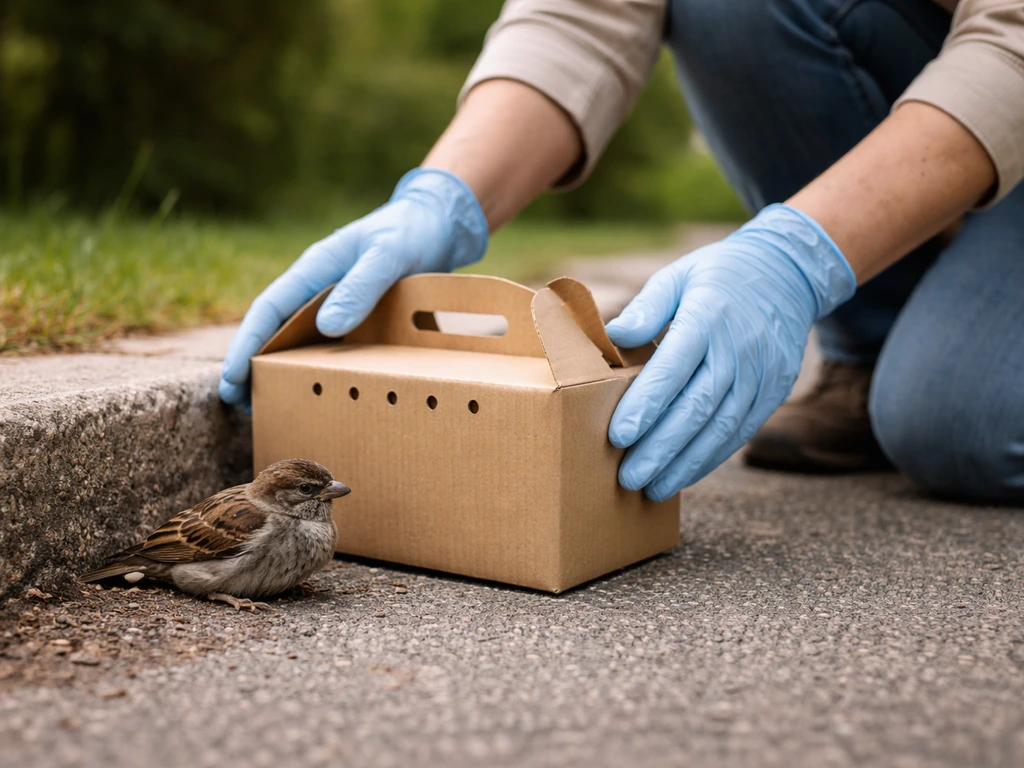
Move slowly and keep noise to a minimum. Cover your hands with a light towel or wear gloves if you have them, this protects you from scratches and bites, and reduces the amount of your scent and body heat the bird is exposed to. Most wild birds pose no serious injury risk to adults, but larger species like herons, hawks, and owls have strong talons and beaks, so be cautious with your approach. If you're dealing with a large bird of prey, call for professional help rather than handling it yourself.
Contain the bird
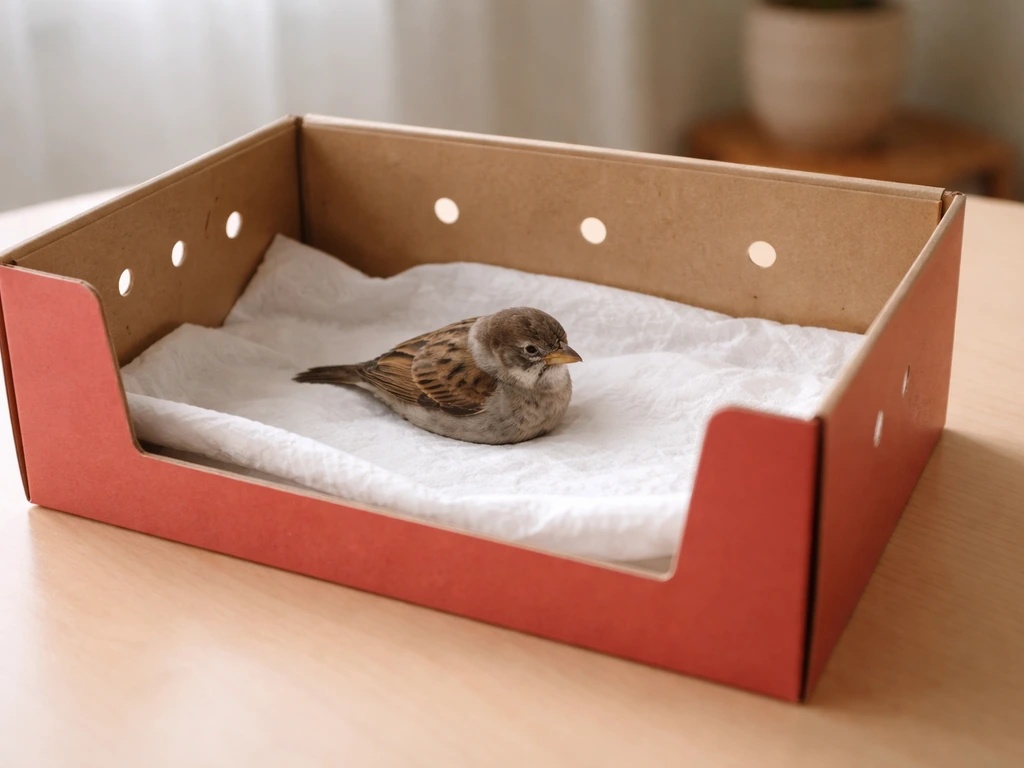
A cardboard box with some air holes and a soft cloth or paper towel lining on the bottom works perfectly. A shoebox is ideal for smaller birds. Gently scoop the bird up using the towel, place it in the box, and close it. The darkness immediately reduces the bird's stress response. Don't use a wire cage or anything with perches, an injured bird can hurt itself further trying to grip or move around. Make sure the box has ventilation but is otherwise secure.
Keep it warm and quiet
Place the box in a warm, quiet room away from children, pets, and noise. If the bird feels cold, you can put a heating pad on its lowest setting under half of the box (not underneath the whole thing, so the bird can move off the heat if needed). A small hand warmer wrapped in a cloth and placed in a corner of the box also works. Aim for warmth without overheating. Don't open the box repeatedly to check on it, every time you do, you're adding stress.
First aid do's and don'ts
There's a short list of things you can helpfully do, and a longer list of things that feel instinctively right but will actually harm the bird. Know both.
| Do this | Don't do this |
|---|---|
| Cover your hands before handling | Handle the bird barehanded more than necessary |
| Place the bird in a dark, ventilated box | Use a wire cage or open container |
| Keep the bird warm using a heating pad on low (under half the box) | Use direct heat sources like heat lamps or blow dryers |
| Apply gentle, direct pressure with a clean cloth if there is minor bleeding | Try to clean or treat wounds with antiseptics, hydrogen peroxide, or human first aid products |
| Keep the environment dark and quiet | Feed or water the bird — this can cause aspiration and is advised against by wildlife experts |
| Contact a wildlife rehabilitator or avian vet as soon as possible | Attempt to splint a wing or leg without training |
| Note what happened (window strike, cat attack, etc.) to tell the rehabilitator | Give the bird any human medications or supplements |
| Keep children and pets away from the box | Force the bird to stand, move, or attempt to fly |
blank" rel="noopener noreferrer">The no-food, no-water rule is one that surprises most people, but it's consistent guidance from wildlife rehabilitation experts and the U.S. Fish and Wildlife Service alike. An injured bird's digestive system may be shutting down, and forcing fluids or food can cause aspiration or make internal injuries worse. U.S. Fish & Wildlife Service guidance says to never give food or water to injured or orphaned wildlife blank" rel="noopener noreferrer">forcing fluids or food. A licensed rehabilitator will assess hydration and feeding needs properly.
When you need professional help right now
Some situations can't wait a few hours to see how things develop. Contact a wildlife rehabilitator or avian veterinarian immediately if you see any of the following:
- Active, uncontrolled bleeding
- Obvious fracture — wing or leg at a clearly wrong angle, bone visible
- Open-mouth breathing, wheezing, or audible respiratory sounds
- The bird cannot right itself when gently placed upright
- The bird has been in a cat's or dog's mouth, even briefly
- You suspect poisoning (the bird was near bait stations, insecticides, or rodenticide use)
- The bird is tangled in fishing line, wire, or netting
- Severe head trauma — circling, seizures, or complete unresponsiveness after a window strike
- A bird that is dehydrated (skin on the neck stays tented when gently pinched) or clearly emaciated
To find help, search for "wildlife rehabilitator" plus your city or county, or use the National Wildlife Rehabilitators Association directory online. The ASPCA and Humane Society websites also have tools to locate local resources. When you call, have this information ready: the species if you know it (a photo helps), where you found the bird, what you think happened, what symptoms you're seeing, and what you've done so far. The more detail you give, the faster they can advise you.
Keeping the bird stable until help arrives
Once you've made contact with a rehabilitator or vet, your job is to keep the bird as stable and calm as possible until you can get it to them. Here's how to do that well.
- Keep the box in a warm (around 85-90°F for most small birds in shock), dark, and quiet space. Avoid air conditioning vents, windows, and high-traffic areas.
- Check that the box isn't getting too hot by briefly touching the outside. You want warmth, not a sauna.
- Do not open the box to look at the bird unless the rehabilitator specifically instructs you to reassess it.
- If transporting the bird, place the box on the seat next to you rather than in the trunk, keep the car quiet (radio off), and drive smoothly. Sudden stops and loud music add significant stress.
- Keep the box level during transport. Don't let it tip or slide.
- If the bird deteriorates visibly — convulsions, gasping — call the rehabilitator back immediately for updated instructions.
- Don't bring other pets or children in the car if you can avoid it. Smells and sounds from animals the bird perceives as predators are extremely stressful.
The most important thing you can do in the window between finding the bird and getting it to a professional is simply to do less, not more. Warmth, darkness, quiet, and a secure container are genuinely the best tools you have. The urge to do more, to feed it, to try to fix the wing, to keep checking on it, is understandable, but restraint is the real first aid here.
If you're unsure whether what you're seeing qualifies as distress (versus a fledgling learning to hop or a stunned bird recovering), it helps to also know the specific signs of dehydration, breathing problems, or blindness, since those conditions have their own distinct tells and affect how urgently you need to act. To learn those specific vision-related cues, see how to tell if a bird is blind.
A bird showing multiple overlapping signs from different categories is almost always in genuine trouble and warrants a call for help, not a wait-and-see approach. You should also be aware of rabies in birds, especially if the bird seems unusually tame or disoriented how to know if a bird has rabies.
Signs a bird is in pain can include multiple overlapping symptoms like trouble breathing, visible wounds, or abnormal posture, so act quickly and contact a wildlife rehabilitator multiple overlapping signs.
FAQ
How long can I wait before getting help if I think the bird is suffering?
Call a wildlife rehabilitator or avian veterinarian sooner if you notice breathing abnormalities, open or deep wounds, or a misaligned wing or leg. For other issues, use a short observation window (about 30 to 60 minutes) only if the bird is otherwise stable (upright, alert-ish, no bleeding, no abnormal breathing). If it is not improving or is worsening during that time, treat it as suffering and seek help.
What signs are easy to miss when trying to figure out if a bird is suffering?
Yes, even if it looks “normal” to you, some red flags are subtle. Watch for one eye staying closed, discharge from the eye, tail bobbing that comes with chest heaving, and clicking or wheezing sounds. These can indicate injury or illness without obvious blood or broken bones.
How can I tell the difference between a resting bird and a bird in pain?
Never assume a bird is suffering just because it is on the ground. Some birds are actively hopping, resting after a fall, or learning to fly. The deciding factors are behavior and ability to function: normal birds tend to move away and maintain balanced posture, while suffering birds stay grounded, show drooping or awkward limb angles, or cannot right themselves.
I see fishing line or string on a bird’s leg, should I remove it right away?
If you suspect entanglement, do not pull the line or wire and do not try to untangle it if it is tight or you would have to force it off. Only remove slack that clearly comes away with no resistance. Otherwise, contain the bird and contact a rehabilitator so they can remove it safely and assess nerve, circulation, and muscle damage.
If a bird has a chipped beak but seems alert, is it still suffering?
If a bird’s beak looks chipped or misaligned, it can quickly lead to dehydration and starvation because it may not be able to eat properly. Even if the bird is alert, treat beak trauma as urgent and arrange professional care the same day, especially if it cannot open or close the mandibles normally.
Why would a wild bird let me get close, and how do I know if it is really injured?
Many birds will appear “tame” when they are injured or disoriented, but it can also happen after window strikes while they are dazed. The key difference is response and trajectory: a dazed but recovering bird should gradually regain coordinated movement and fly off after a short period, while an injured bird continues to sit, show abnormal breathing, or fail to improve.
Is it okay to put an injured bird in a cage or should I use a box?
A box is safer than a cage because it prevents struggling and reduces the risk of further injury from gripping bars or perches. Make sure the bird has ventilation and a secure lid, keep it in darkness, and avoid repeatedly reopening the container to check on it since each check increases stress.
What should I not do when I think a bird is suffering at home?
Do not force food or water by mouth, and do not give any home remedies or medications. Aspiration risk is real in birds, and some injuries can worsen when the digestive and airway systems are stressed. The safest immediate approach is warmth, quiet, darkness, and arranging professional help.
When is it an emergency, not just “needs help”?
If there is active bleeding, puncture wounds (common with cats and dogs), exposed tissue, or abnormal breathing, assume it cannot wait. Arrange immediate contact with a rehabilitator or emergency avian care, especially if you are seeing rapid deterioration or ongoing distress sounds.
Are there situations where I should not pick up the bird at all?
Handle only if you must to contain it, and use protective covering (towel or gloves). For large birds of prey, avoid handling entirely because talons and beaks can cause serious injury and stress the bird further. Call a professional or rehabilitator for guidance if the bird is a hawk, owl, or similar size.
If a bird flies off after being startled, does that mean it was not suffering?
If the bird is moving normally and flying away after a brief period, that points more toward recovery than ongoing suffering. If it cannot fly off, remains on the ground, has abnormal posture, or keeps signs like breathing trouble or bleeding, that points toward injury or illness and requires professional assessment.
What information should I have ready when I call a wildlife rehabilitator?
Yes. Tell the caller about the species if known, where you found it, what you observed (posture, breathing sounds, eye condition, bleeding), and any hazards involved (cats, dogs, window strike, entanglement, traffic). Also mention how long it has been like that and whether it improved at all after you moved it to safety.
Next Article
How to Know If a Bird Needs Help: Quick Signs and Steps
Spot distress signs in birds, decide urgent vs monitor, and get safe first-aid steps for collisions and injuries.