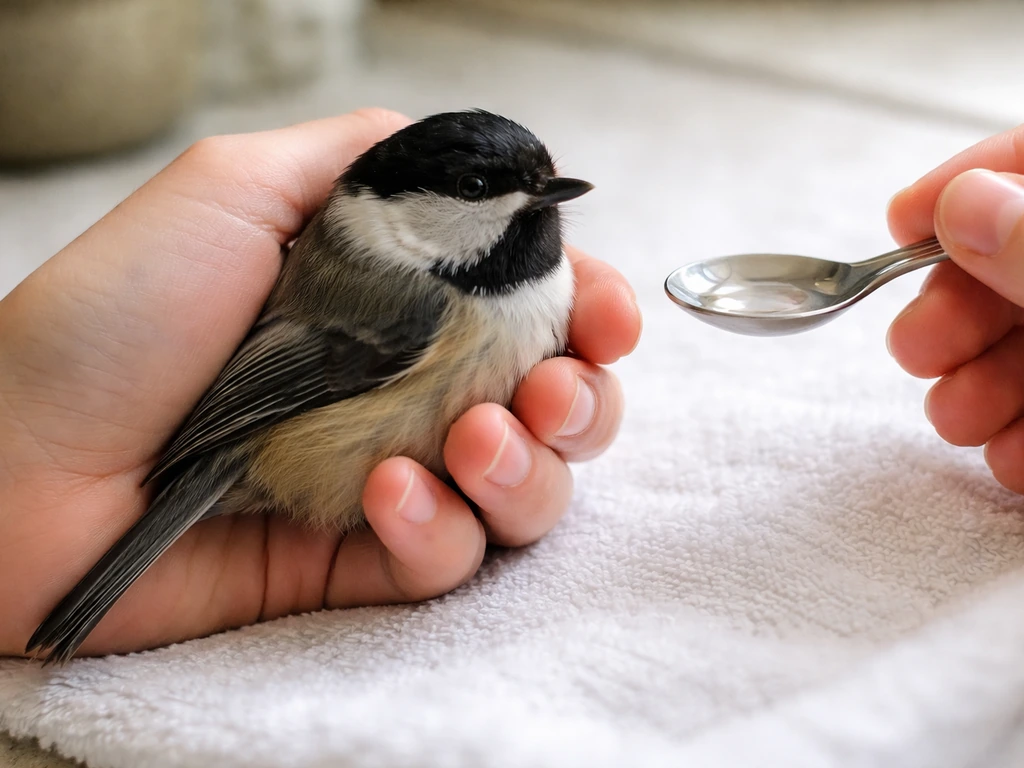
A bird needs help if it lets you walk up and pick it up, is lying on its side, has a drooping or dangling wing, is bleeding, is breathing with its mouth open or tail bobbing, or simply cannot fly away when given the chance. Those are the real red flags. If a bird is sitting still but alert, watching you, and flutters away when you get close, it almost certainly does not need your intervention. The difference between those two pictures is what this guide will help you see clearly.
How to Know If a Bird Needs Help: Quick Signs and Steps
Marcus Chen
25 Apr 2026
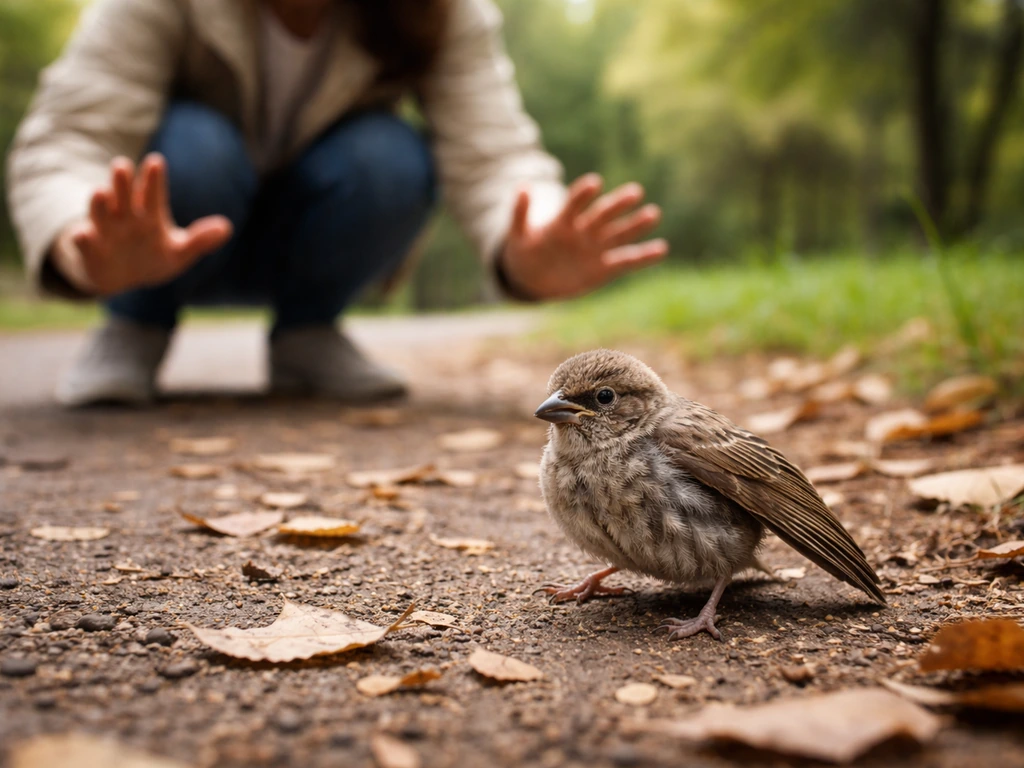
Fast at-a-glance signs a bird needs help
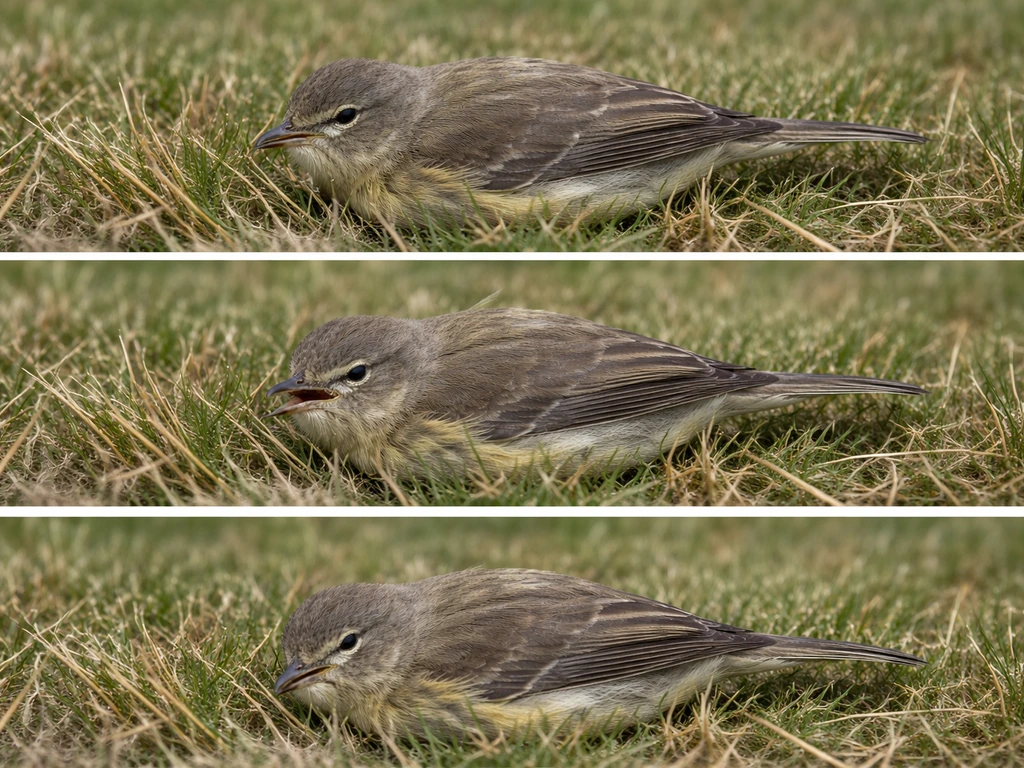
Before you touch anything, just observe for about 60 seconds. Most of the information you need is visible from a few feet away. These are the signs that mean the bird is genuinely in trouble:
- Cannot stand, or is lying on its side or flat on the ground
- Breathing with its mouth open, panting, or you can see its tail bobbing with every breath
- One or both wings drooping or hanging at an odd angle
- Visible bleeding, wounds, or feathers matted with blood
- Limping or holding a leg up and unable to bear weight
- Unresponsive or barely reacting when you approach
- Eyes closed, head tucked, fluffed up feathers in warm weather (not cold)
- Tangled in string, netting, fishing line, or debris it cannot free itself from
- Has been sitting in the same spot, not moving, for more than two hours
One easy field test: if you can walk up and pick the bird up without it trying to escape, that alone tells you something is seriously wrong. Healthy wild birds do not let people catch them.
Safety first: what to do before you touch the bird
Your safety matters here, not just the bird's. Wild birds can carry bacteria, parasites, and in rare cases pathogens that affect humans. More immediately, beaks and talons can cause real injury, especially with larger birds like hawks, owls, herons, or loons. If the bird in front of you is a raptor or a large wading bird, do not attempt to pick it up without speaking to a licensed wildlife rehabilitator first.
For any wild bird, wear heavy gloves if you have them, or wrap your hands in a thick towel. Keep your face away from the beak. Handle the bird as little and as briefly as possible. Under U.S. federal law it is also illegal to take a wild bird home to care for it yourself or keep it as a pet without a rehabilitator permit, so your goal right now is stabilization and handoff, not treatment.
While you are assessing the situation, keep dogs, cats, and other pets well away. Cats especially carry bacteria in their saliva that is rapidly fatal to birds even from a scratch that looks minor. If a cat has had contact with the bird at all, that bird needs a vet or rehabilitator visit regardless of how intact it looks on the outside.
Assess breathing, alertness, posture, and movement (triage basics)
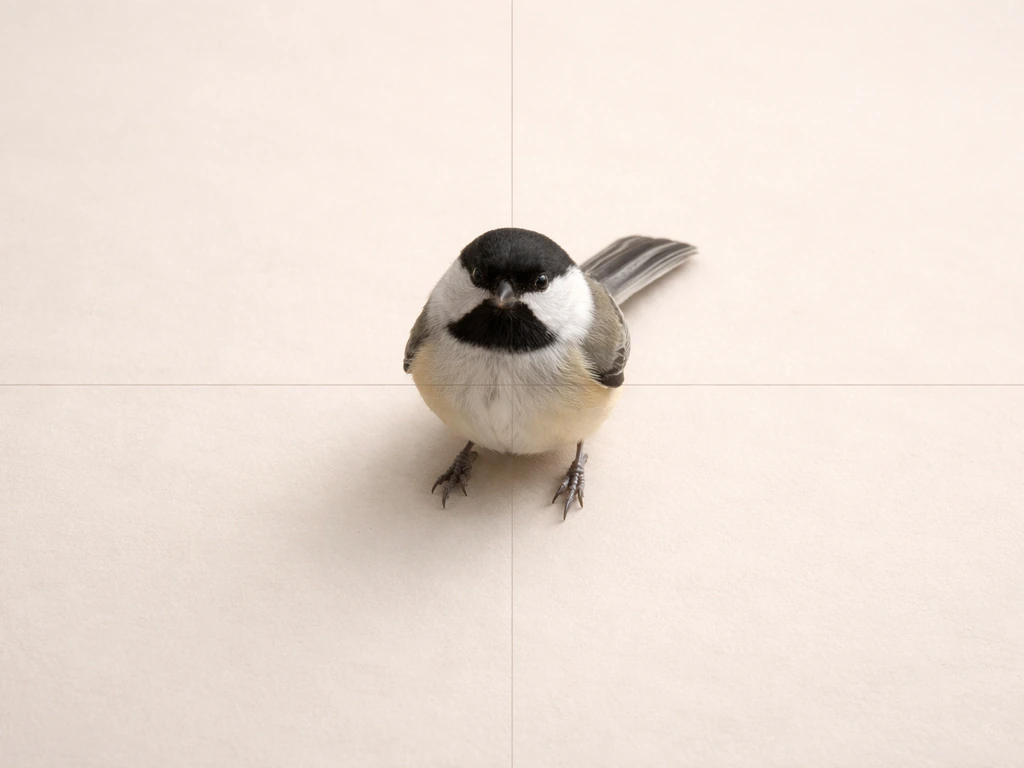
Think of this as a quick four-part check you can run in under two minutes from a short distance.
Breathing
[Normal bird breathing is quiet](/sick-or-stunned-birds/how-to-check-if-a-bird-is-breathing) and you should not really notice it. If you can see the bird's chest heaving, if its beak is open, if its tail bobs up and down rhythmically with each breath, or if it sounds wheezy or clicking, those are signs of respiratory distress. The RSPCA uses roughly two hours of visible panting or fast breathing as a threshold for serious concern. In practice, if a bird is open-mouth breathing and it is not in extreme heat, treat it as urgent right now.
Alertness
A bird in shock or serious distress will often look dull. Eyes half-closed, slow to react, not tracking your movement. A healthy bird, even a sick-looking one, should at minimum be watching you. If the bird is non-responsive or barely reacts when you pick it up, that is an emergency.
Posture
Birds in pain or shock often hunch down, fluff their feathers, and hold their head low or tucked. A wing held out to the side or drooping lower than the other is a major red flag. Lying flat or on its side means the bird cannot support itself and needs immediate help.
Movement

Place the bird gently on a flat surface outdoors (with gloves) and step back a few feet. A stunned bird that is otherwise okay will often right itself and eventually fly off. If it stays put, stumbles, or cannot launch into flight after you have given it space and a few minutes, it needs help. Audubon's practical rule: if it does not fly away after you put it outside, call a wildlife rehabilitator.
Common scenarios: window collision, pet interaction, entanglement
Window collision
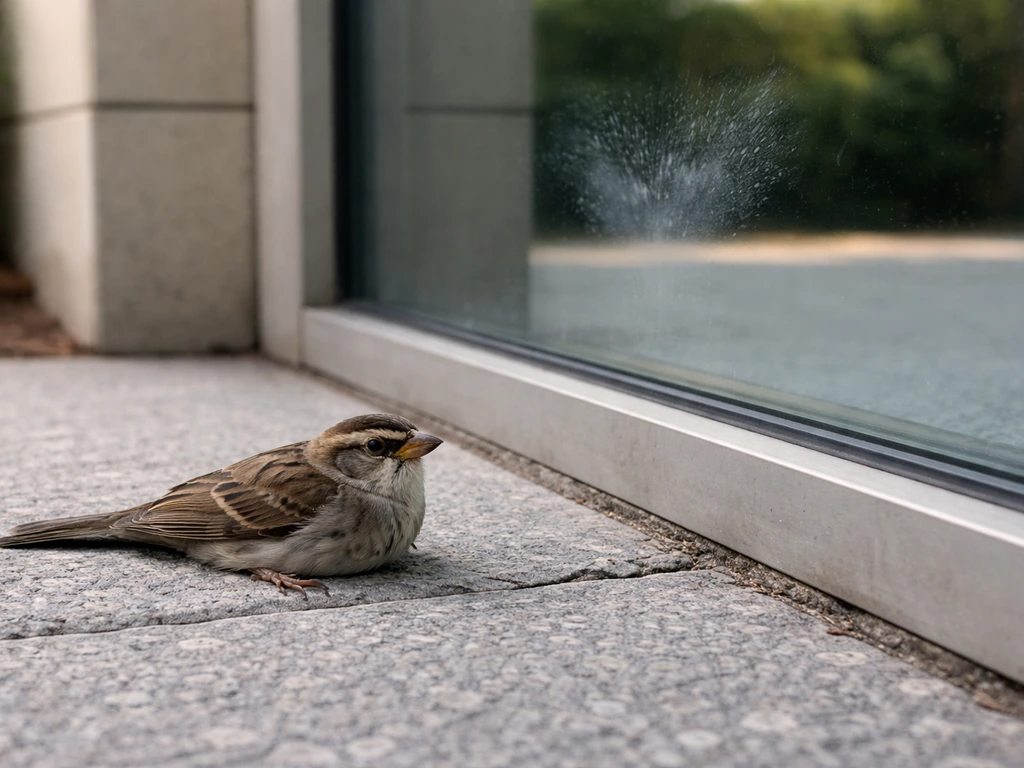
This is probably the most common situation people encounter. A bird hits a window, falls to the ground, and sits there stunned. Many of these birds recover on their own within 15 to 30 minutes. The right move is to gently place the bird in a ventilated box (more on that below) and check every 15 minutes to see if it is alert enough to fly.
For window collisions, Northwoods Wildlife Center recommends placing the bird in a small covered box with paper towels, then attempting a release after about an hour, and contacting them if it does not fly away a small covered box with paper towels, then release after about an hour. If it has not recovered after an hour, or if it shows any of the injury signs above, it needs professional care.
If it seems fine but you find blood near the window, broken feathers, or obvious asymmetry in the wings, still get it checked.
Cat or dog interaction
Even if the bird looks completely fine on the outside after a cat attack, internal injuries and bacterial infection from the cat's saliva are almost certain to be fatal without antibiotic treatment within hours. Do not wait to see how it does. Any bird that has been in a cat's mouth or has cat scratch marks needs a vet or rehabilitator today. Dogs tend to cause more obvious trauma, so you will likely see clear injury signs, but the same rule applies.
Entanglement
Fishing line, netting, tinsel, and string can wrap around legs, wings, or necks and cut off circulation fast. If the bird is tangled but otherwise alert, you may be able to carefully cut away the material with small scissors while wearing gloves, as long as you can do it quickly and safely without causing more injury. If it is deeply embedded, tied in multiple loops, or the leg or wing already looks dark or swollen, do not try to remove it yourself. Get the bird to a rehabilitator right away with the entanglement material still on if removing it risks more injury.
Injury-specific cues and what they likely mean
| Injury type | What you see | What it likely means | Urgency |
|---|---|---|---|
| Wing injury | Wing drooping, held out to side, or dragging; asymmetry between wings | Broken bone, dislocation, or soft tissue damage; bird cannot fly | High: call a rehabilitator today |
| Leg injury | Limping, holding leg up, leg at wrong angle, or knuckling over on foot | Fracture or dislocation; bird cannot perch, stand, or escape predators | High: needs professional care |
| Beak injury | Beak cracked, broken, or significantly misaligned; bird cannot close its bill | Structural damage that prevents eating and drinking | High: cannot self-feed; urgent |
| Bleeding | Wet red feathers, active blood flow, or blood on the ground nearby | Open wound; risk of shock, blood loss, infection | Emergency: contact help immediately |
| Head injury | Dull eyes, unable to hold head up, circling, inability to balance | Concussion or neurological damage, often from window/vehicle collision | High to Emergency depending on severity |
Bleeding profusely and broken limbs are listed as wildlife emergencies by the Wildlife Center of Virginia, meaning they require the same urgency as a 911 call for a person. Do not wait to see if the bird improves on its own in those cases.
Immediate first aid and stabilization steps
Your job right now is not to treat the bird. Your job is to keep it alive and calm until a professional takes over. These steps apply to almost every injured bird scenario:
- Put on gloves or wrap your hands in a thick towel before touching the bird.
- Gently pick the bird up by cradling its body with both hands, holding the wings lightly against its sides so it cannot flap and injure itself further.
- Place it in a cardboard box with ventilation holes punched in the sides and lid. Line the box with a non-looping towel or paper towels so the bird can grip the surface without slipping or getting its feet tangled.
- If the bird is cold, wet, or shivering: place a heating pad on its lowest setting under half the box (so the bird can move away from the heat if needed), or place a hot-water bottle wrapped in a towel inside the box next to the bird. A 75-watt bulb positioned near the box also works as a heat source. Do not put the heat source directly against the bird.
- Put the lid on the box and place it in a warm, dark, quiet room away from pets, children, and noise. Darkness reduces the bird's stress significantly.
- Do not give the bird food or water unless a rehabilitator has specifically told you to. It sounds counterintuitive, but feeding an injured bird can cause choking, aspiration, or other complications. The only exception is if a rehabilitator walks you through it by phone.
- Call a wildlife rehabilitator or avian vet while the bird is resting in the box. Do not delay the call to monitor the bird first.
What not to do: do not put the bird in water, do not force its beak open, do not give it bread or milk or human food, do not place it in a cage with wire mesh it can injure itself on, and do not put it near loud music, a TV, or other stressors. If the bird is bleeding actively, you can apply gentle pressure with a clean cloth, but do not try to bandage a wing yourself.
When to call a pro: avian vet vs. wildlife rescue and urgency rules
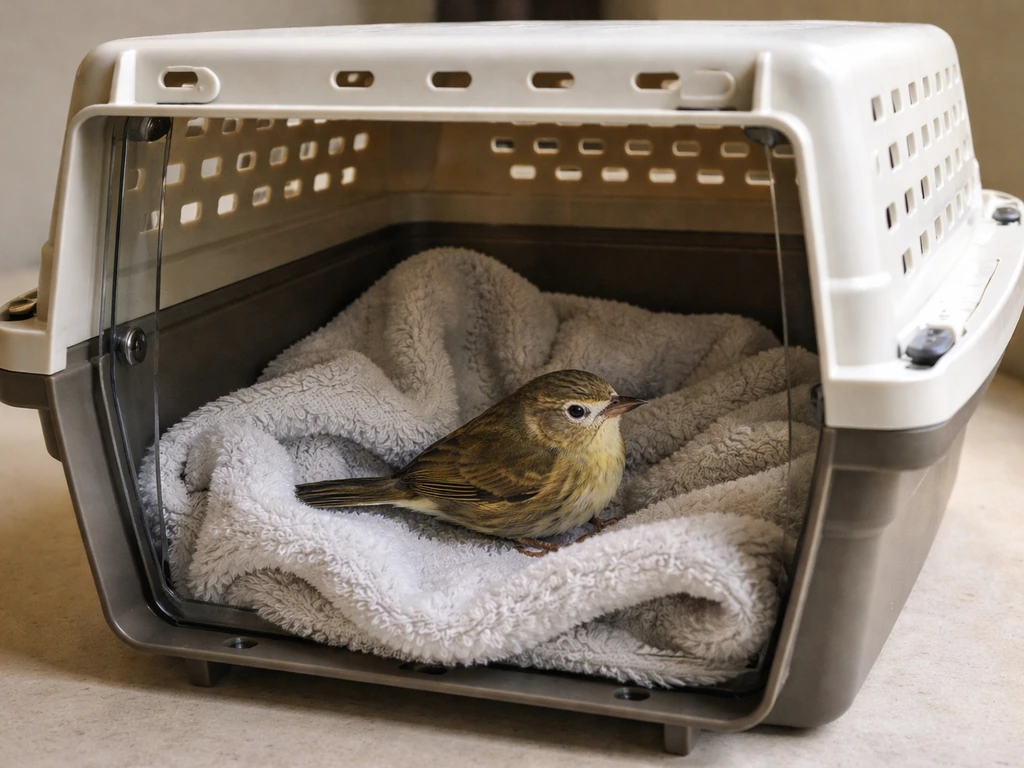
The short version: for wild birds, a licensed wildlife rehabilitator is almost always your first call. For pet birds (parrots, canaries, cockatiels, etc.), an avian vet is the right destination. Wildlife rehabilitators are trained specifically in wild bird medicine, they have the legal permits required to hold and treat wild animals, and their services are typically free.
Call immediately, today, without waiting to monitor, if the bird has any of the following:
- Active bleeding that has not stopped
- A broken or dangling limb
- Is non-responsive or nearly so
- Is a raptor (hawk, owl, falcon, eagle) or large wading bird (heron, loon)
- Has been in contact with a cat
- Is breathing with its mouth open and is not in extreme heat
- Has a beak injury that prevents it from closing its bill
For a stunned window-collision bird with no other obvious injury signs, you have a window of about an hour to monitor before it becomes a call situation. Check every 15 minutes. If it is not showing clear improvement by the 45-minute to one-hour mark, make the call.
One thing worth knowing: it is illegal under federal law to keep a wild bird at home for care without a rehabilitation permit, even with the best intentions. This is not just a technicality. Injured wild birds need species-specific care, controlled environments, and in many cases medications that require a license to administer. The kindest thing you can do is get the bird to someone who is set up for exactly this.
How to get help quickly: finding services nearby and transporting the bird
Finding a wildlife rehabilitator near you is easier than most people expect. For example, the Wildlife Center of Virginia provides assistance 7 days a week from 9:00 am to 5:00 pm Eastern. Search online for 'wildlife rehabilitator near me' or 'wildlife rescue [your city or county].' The National Wildlife Rehabilitators Association and the Wildlife Rehabilitators Association both maintain searchable directories. The ASPCA and local humane societies can also point you to the right contact. Many areas have 24-hour wildlife emergency lines.
When you call, be ready to tell them: what species the bird appears to be (or just describe it), where you found it, what you observed (the symptoms you noticed), what happened if you know it (hit a window, found near a cat, etc.), and how long the bird has been in this condition. That information helps the rehabilitator prioritize and give you accurate guidance on next steps.
For transport, keep the bird in the ventilated box you have already set up. Do not open the box in the car. Keep the car quiet, at a comfortable temperature, and drive smoothly. Avoid the radio and conversation near the box if you can. The bird is already under enormous stress and every bit of calm helps. If you are using a heat source, make sure it stays on the lowest setting and is not in direct contact with the bird.
If you genuinely cannot get to a rehabilitator and they cannot come to you, ask them by phone to walk you through exactly what to do in the interim. Most rehabilitators are used to this situation and will guide you. Do not start improvising on your own, because well-meaning actions like force-feeding or wrapping wings incorrectly can cause more harm than doing nothing.
If you are noticing signs beyond physical injury, such as the bird seeming confused, unable to track movement, or stumbling in circles, those can point to neurological issues or other conditions. Rabies can also cause behavior changes and neurological symptoms in birds, so if you suspect rabies, contact a wildlife professional right away how to know if a bird has rabies.
Even if the bird seems otherwise okay, a question like can a bird be blind is one you should raise with a rehabilitator if you notice vision-related behavior. If you are unsure whether the bird is in distress, compare what you see against the signs in this guide and call a rehabilitator when you are concerned how to tell if a bird is in distress.
If you are unsure whether it is suffering, use the signs in this guide and call a licensed wildlife rehabilitator when you are concerned how do you know if a bird is suffering. These assessments are also where you would start to check for vision problems, such as whether the bird seems blind or unable to see properly whether a bird can see.
Related concerns like whether a bird can see, whether it is dehydrated, or whether it is in pain are worth keeping in mind as you describe what you are observing to the rehabilitator, since they will ask follow-up questions along those lines. If you suspect the bird is in pain, treat that as urgent and get it to a licensed rehabilitator as soon as you can whether it is in pain.
FAQ
What if the bird is alert but still injured, like a drooping wing or mild bleeding?
Treat it as needing help anyway. A bird can be responsive and still have a fracture or internal damage, and a wing drooping lower than the other is a strong indicator of functional injury even if it flutters when approached.
Can I tell the difference between a stunned bird and one that is really in trouble?
Look for improvement after you give it space. A stunned bird should gradually right itself and show increasing alertness, then attempt to launch. If there is no clear improvement within the hour (or it cannot get airborne when you place it outside), that is the point to call.
Should I offer water or food if the bird opens its beak or looks thirsty?
No. Do not give water, bread, milk, or any human food. Open-mouth breathing is usually respiratory distress, and feeding can worsen aspiration risk or delay proper care.
What should I do if the bird is tangled but still tries to hop or flee?
If it is able to move away and is not showing distress signs, it may still benefit from professional help. If you can remove a loose, single piece quickly and safely with gloves, you may do so, but if it is embedded, multiple-looped, or you see swelling or darkened tissue, stop and transport with the material left in place.
Is it safe to move the bird from the road if it seems okay otherwise?
If it is upright, alert, and can reposition away from you, it may be able to recover without handling. If it is in active danger (traffic, lawn equipment, pets nearby), you can gently encourage it to move using your presence from a distance, but avoid grabbing unless it is a true emergency and you can do so safely.
How long can I wait before calling, if I am not sure?
Use a short window based on context. For window-collision birds, monitor for up to about an hour with checks every 15 minutes. If you see worsening breathing, loss of responsiveness, major imbalance, or bleeding, do not wait.
What if the bird is bleeding but not “profusely”?
Any active bleeding should be treated as urgent. Apply gentle pressure with a clean cloth only to slow bleeding, keep the bird calm, and call a wildlife rehabilitator or avian vet promptly rather than waiting for it to stop on its own.
Do I have to keep my pets away the whole time, even if I put the bird in a box?
Yes. Cats and dogs can contaminate the area, even if they never bite the bird. Prevent contact with the box, nearby surfaces, and your hands, then wash up after you handle anything the bird touched.
If I find a bird at night, does it change how I should assess “needs help”?
At night, assume it is more urgent if it is not quickly stabilizing when you control the environment. Limit light and noise, keep the bird warm and quiet in a ventilated box, and contact a rehabilitator as soon as possible, especially if it is open-mouth breathing or unable to right itself.
What if the bird is a hatchling or fledgling that is on the ground?
Ground birds are not automatically injured. If it is a young bird with intact plumage and can hop or flutter but is separated from its parents, give it space and check from a distance first. If you see drooping wing, mouth open breathing, blood, extreme weakness, or it cannot move upright, treat it as injured and get professional help.
If I am worried about rabies, should I approach to confirm symptoms?
No. Do not get close or handle the bird if you suspect neurological illness. Contact a wildlife professional right away, keep people and pets away, and avoid contact with saliva or droppings.
What should I tell the rehabilitator if I cannot identify the exact species?
Provide the best description you can: size compared to common objects, color pattern, beak shape, where you found it, and behavior (sitting upright versus lying on side, wing droop, breathing pattern). Also note any likely cause you observed, like window impact, cat contact, or entanglement.
Can I transport the bird in a pet carrier or cardboard box instead of a ventilated box?
If you have access to a ventilated container, use it, because airflow and reduced stress matter. Avoid wire-mesh cages. If you must improvise, prioritize ventilation, secure the bird so it cannot flap repeatedly, and keep the car quiet and temperature-controlled.
Next Article
How to Tell If a Bird Is Dehydrated: Signs and Next Steps
Spot dehydration signs in birds, quick at-home checks, and immediate safe steps plus when to get urgent vet help