Hard mouth in a bird dog means the dog is crushing, chewing, or damaging birds and retrieves instead of carrying them gently to hand. It's one of the more frustrating problems to fix because it's easier to prevent than cure, but it absolutely can be improved with the right training progression.
How to Fix a Hard Mouth Bird Dog Safely Today
Marcus Chen
8 Jun 2026
If you also need guidance on immediate safety after a dog attacks a bird, see how to treat a bird attacked by a dog as a related option treating an injured bird after an attack. The fix starts with breaking the retrieve into three separate phases (pickup, hold, and delivery), identifying exactly where the grip goes wrong, and rebuilding each phase with calm repetition and clear reinforcement. You don't need fancy equipment to start today.
Quick note before we dig in: if you found this page searching about a bird that got hurt by a dog during a training attempt, scroll down to the bird-welfare section near the bottom. This article is specifically about fixing the dog's grip mechanics in bird-dog retrieval training, not about treating an injured bird, but we cover both.
What hard mouth actually looks like (and how to confirm it safely)
Hard mouth gets misdiagnosed a lot. The textbook definition is a dog that crushes, chews, or damages the bird or dummy while retrieving it. That's different from a dog that rolls a bird around in its mouth without clamping down, or one that plays keep-away after the retrieve. Those habits are annoying and worth fixing, but they aren't technically hard mouth. Knowing which problem you actually have changes your training plan.
To assess your dog's grip, watch for two things during a low-stakes retrieve: pressure and relinquish behavior. Pressure means active clamping or chewing motion during the carry. Relinquish behavior means whether the dog willingly gives the bumper or bird to hand on cue, or whether it locks down and guards it. A truly hard-mouthed dog often does both: clamps down during the carry and resists giving it up.
The safest way to assess is with a soft training bumper or a foam dummy, not a real bird. Have the dog retrieve it in a calm, low-distraction environment and watch the jaw muscles and carry posture during the run back. If you see repeated chewing motion, visible compression of the bumper, or the dog pausing to re-grip and bite down harder, that's genuine grip pressure. If the bumper comes back saliva-soaked but structurally intact and the dog delivers it without a fight, you're looking at sloppy delivery mechanics rather than true hard mouth.
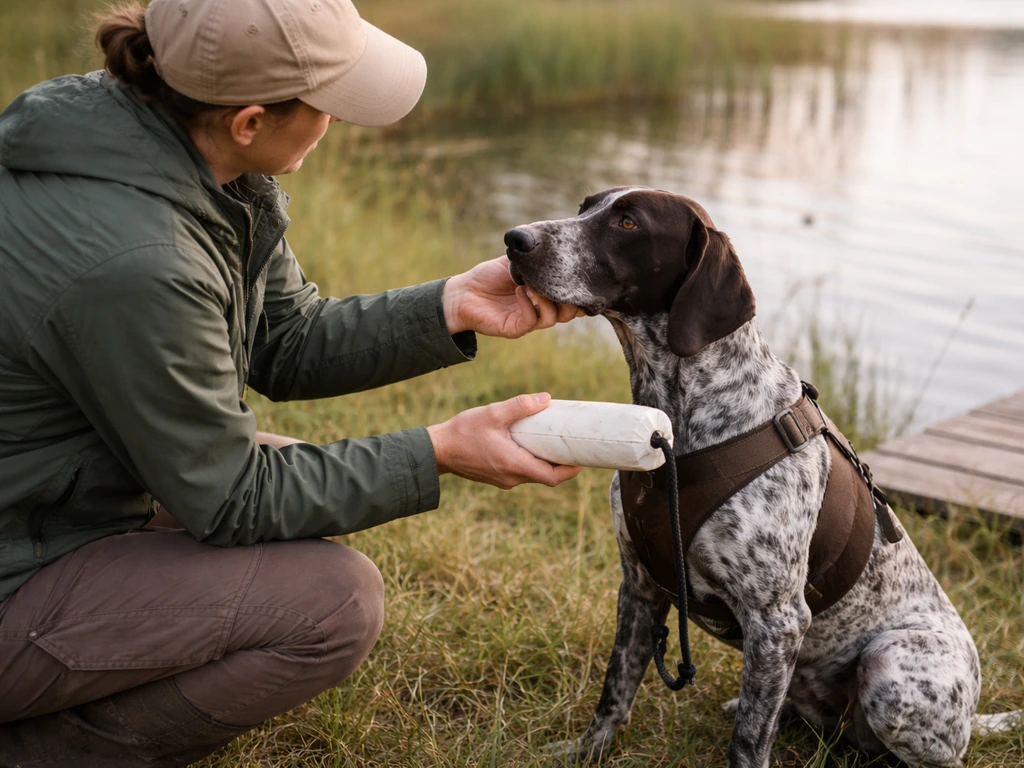
You can also gently cup your hand under the bumper at delivery (don't pull) and feel how hard the dog is holding. A soft-mouthed dog relaxes its jaw when you cup underneath. A hard-mouthed dog clamps tighter. That tactile check is more useful than just watching from a distance.
Why your dog is gripping too hard
Hard mouth usually develops from one or more of these causes, and it's worth thinking through your own training history honestly before you start the fix.
- Tug-of-war games: This is the single biggest training mistake that creates hard mouth. When you play tug and pull back against the dog, you are directly teaching it to clamp harder to win. The dog learns that maximum jaw pressure is rewarded with engagement and excitement.
- Pulling the retrieve from the dog's mouth: If you've ever grabbed a bumper and yanked it away before the dog releases on cue, you've accidentally taught the dog that gripping harder is how it keeps the retrieve. The dog perceives a loose grip as a risk.
- Retrieving games where the dog won't relinquish: Chasing a dog around the yard trying to get a dummy back, or letting it run off with the ball, teaches possession behavior that overlaps heavily with hard-mouth tendencies.
- Over-arousal during retrieves: A highly aroused dog (excited, frantic, running flat-out) has elevated muscle tension throughout its body, including its jaw. High-drive dogs are more prone to clamping down when the prey drive is firing hard.
- Skipping delivery training: Many owners teach the dog to go get the bird but never formally train the delivery to hand. The dog fills in the gap with whatever behavior comes naturally, which is often a tight grip and a reluctant drop.
- Genetics and natural biting habits: Some bloodlines have harder mouths than others. This doesn't mean it can't be improved, but it does mean your training needs to be more consistent and patient than with a naturally soft-mouthed dog.
- Inadequate reinforcement history: If the dog has never been clearly rewarded for a gentle, willing delivery, it has no reason to offer one.
Go through that list and check honestly which ones apply. If you've been playing tug or pulling retrieves away, those habits need to stop immediately, starting today, before any new training will stick.
Building soft pickup and delivery from the ground up
The core principle here is simple: teach the retrieve in separate pieces, reinforce each piece heavily, and never skip a step. Gun Dog and Ducks Unlimited training materials both emphasize that holes in the retrieve chain almost always come from rushing the progression or skipping foundational steps. Hard mouth is often one of those holes.
Start with a soft, unexciting object
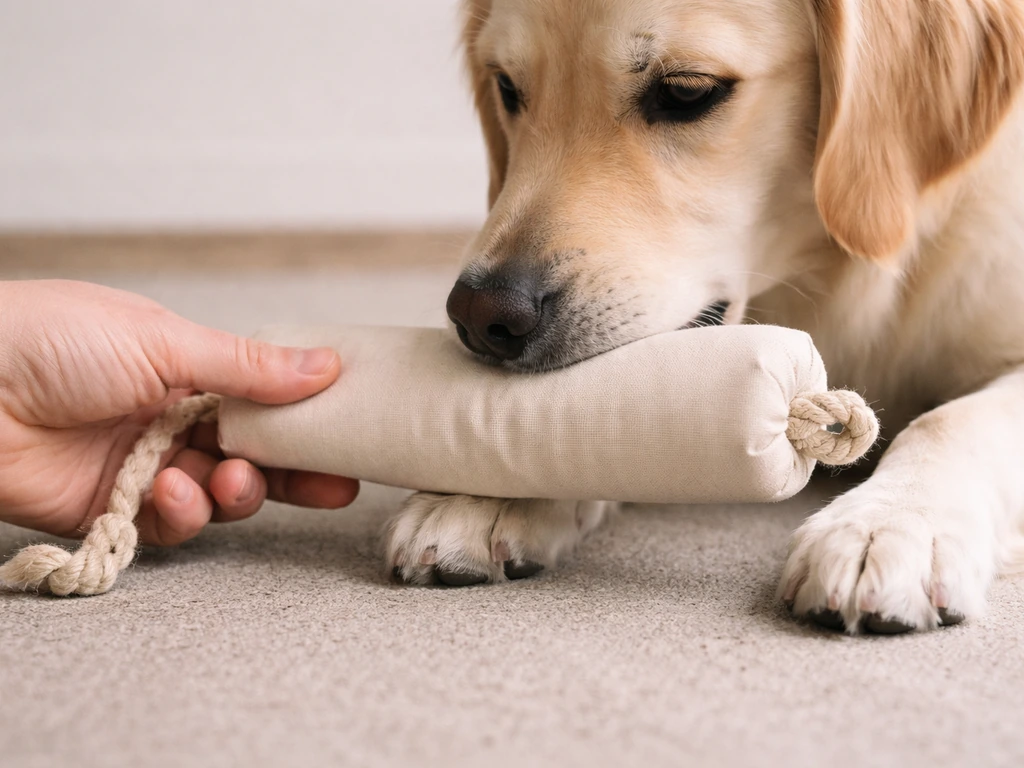
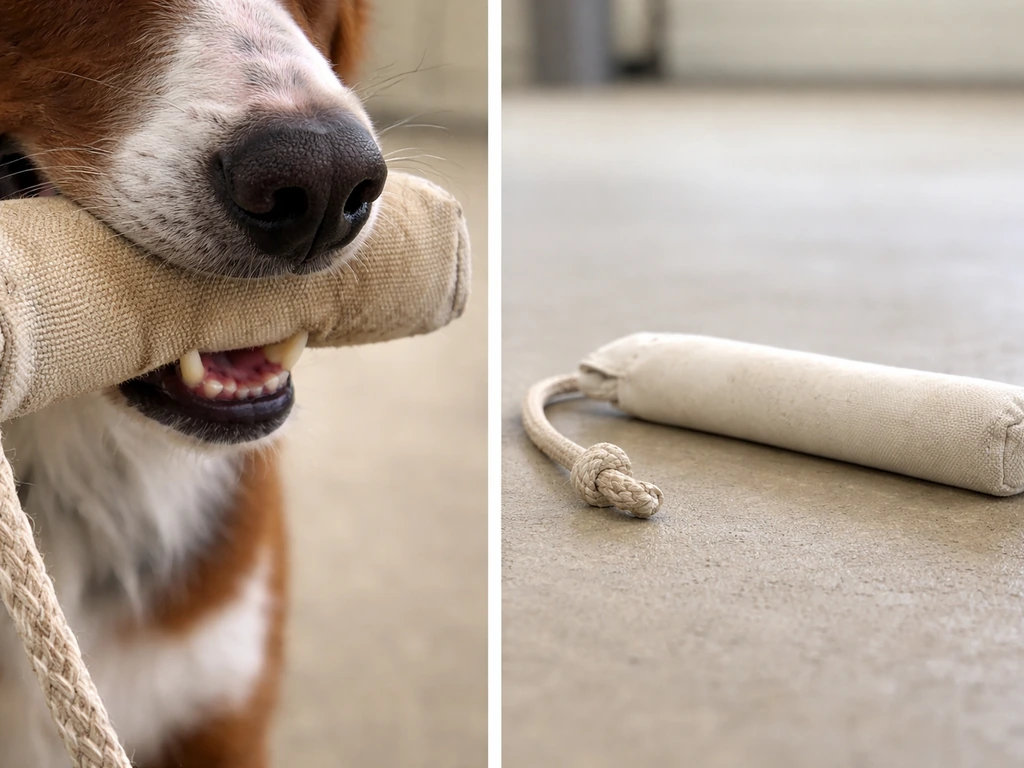
Begin with a soft canvas bumper or a rolled-up sock, not a bird, not a ball, not anything that bounces or rolls excitingly. The lower the arousal, the easier it is for the dog to think clearly and carry gently. Hold the bumper out at the dog's mouth level and let the dog take it from your hand. The moment the dog takes it with a calm, even grip, mark that (with a click or a quiet "yes") and immediately offer a treat with your other hand. You're marking the moment of calm pickup, not the whole retrieve.
Work the hold separately
Once the dog takes the bumper calmly from your hand, teach it to hold still with it in its mouth. Ask for a two-second hold, then five, then ten. Mark and reward any moment you see the jaw stay still without chewing. If the dog starts to chomp, gently place a hand under the bumper (don't squeeze or pull) to interrupt the behavior, reset, and try again with a shorter hold. You are rewarding stillness of the jaw, not just possession of the object.
Add movement slowly
Only after the dog reliably holds the bumper still in your hands do you introduce movement. Take one step back and call the dog to you. Keep your voice calm, not excited. High-pitched excited recall cues spike arousal and spike grip pressure. Mark and reward a calm walk toward you with the bumper still in the mouth. Gradually extend the distance, but watch the jaw during the approach: if chewing starts as the dog moves, you've moved too fast. Drop back to a shorter distance.
The exercises that actually reduce grip pressure
Exchange and give
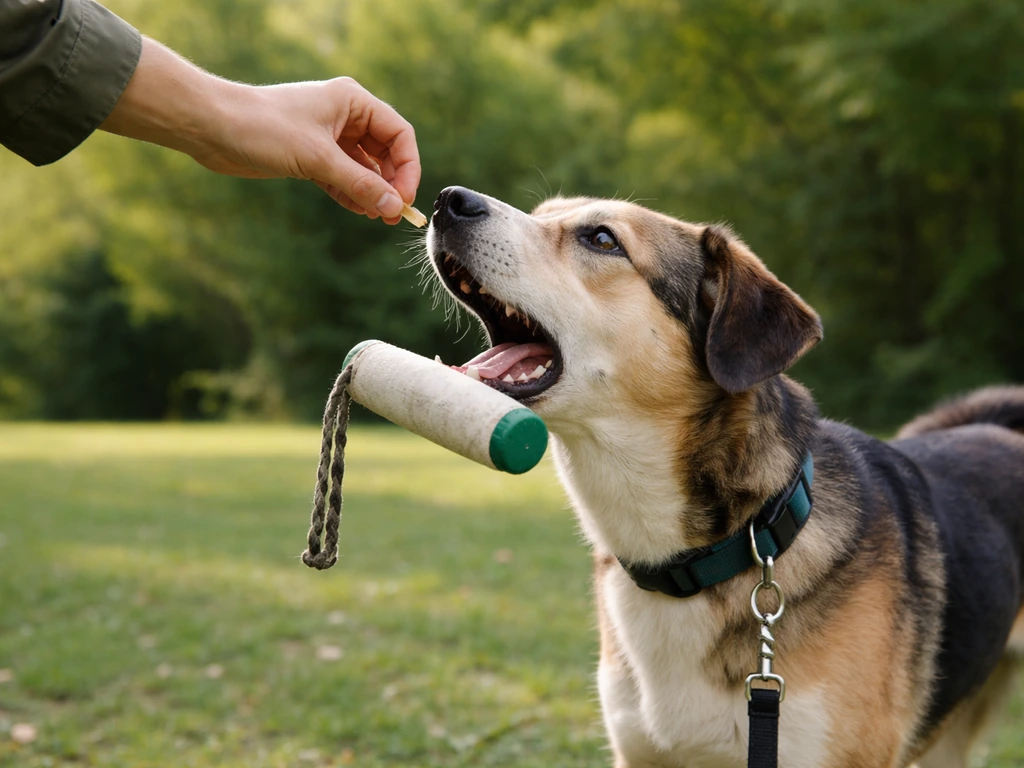
Exchange training is the fastest way to fix a dog that grips and guards. Hold a high-value treat at the dog's nose while it's holding the bumper. As the dog opens its mouth to take the treat, the bumper drops naturally into your waiting hand. Say "give" right as the jaw opens, not after the bumper falls. Immediately reward with the treat and then immediately offer the bumper back. That last part matters a lot: giving the bumper back tells the dog that releasing doesn't mean losing the fun. Over time, the dog learns that "give" predicts treat plus more retrieving, and the white-knuckle grip starts to disappear.
Impulse control before and during the retrieve
A lot of grip pressure is just unmanaged arousal. Building a sit-stay or place behavior before every single retrieve is not just obedience work, it's directly lowering the physical tension the dog carries into the pick-up. Ask for a calm sit, pause three to five seconds after the bumper lands before releasing the dog, and reward the calm send rather than the frantic one. A dog that runs out in a controlled state almost always carries back in a controlled state.
The retrieval ladder: bumpers to feathers to birds
Once the dog is carrying a canvas bumper softly and delivering it willingly, you can move up the ladder gradually. The progression looks like this:
- Soft canvas bumper with no scent or texture additions (baseline)
- Canvas bumper with feathers attached or wrapped around it (adds bird scent and texture without the full prey-stimulus of a real bird)
- Frozen bird or wing (reduced movement, lower arousal than a live or fresh bird)
- Cold whole bird (still lower arousal than fresh)
- Fresh whole bird in a controlled low-distraction environment
At each step up, watch the grip. If the dog clamps harder or starts chewing, you moved up too fast. Drop back one step, solidify that level for several more sessions, and try again. There is no timeline here. Some dogs take a week to move up the ladder. Some take months. Rushing it is what created the problem in the first place.
Slow retrieves
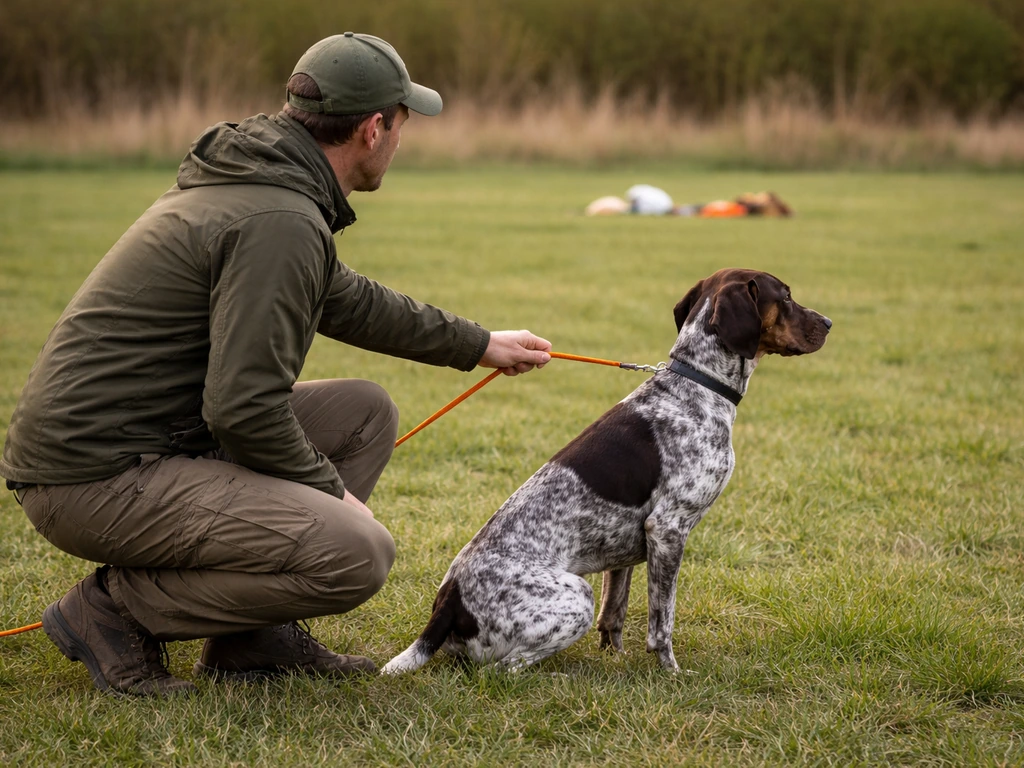
Fast, high-drive retrieves look impressive but they are training runs for hard mouth. Practice walking retrieves: throw the bumper a short distance, let the dog retrieve it, but call the dog back to you at a walk, not a sprint. You can use a check cord (a long lightweight line) to help slow the dog's return pace if needed. A slower return pace means lower arousal, which means a lighter jaw.
Troubleshooting: why the grip is still too hard
If you've started the exercises above and the dog is still clamping or chewing, work through these common causes before assuming the dog just can't be fixed.
| Problem | Likely cause | Fix |
|---|---|---|
| Dog clamps harder during delivery | Anticipating a pull or correction at handoff | Stop all pulling and forced take-aways; use exchange/treat method only at delivery for 2 to 4 weeks |
| Dog chews during the carry but not pickup | Over-arousal mid-retrieve | Slow the retrieve, use a check cord, practice shorter distances |
| Dog delivers fine on bumpers but chews birds | Bird scent or texture triggers prey drive spike | Step back to feathered bumpers, build more reps before reintroducing real birds |
| Dog gives the bumper but grabs it back immediately | Incomplete give training, possession behavior | Reward after give before handing back; practice exchange with multiple objects |
| Training has stalled for weeks with no improvement | Reinforcement timing is off, or the behavior is too generalized | Video your sessions and review where you're marking; consider a trained observer or professional |
| Dog shows growling or guarding at delivery | Possession aggression, separate from hard mouth | Stop retrieval training immediately; consult a certified behavior professional |
One thing that trips a lot of people up is reinforcement timing. The marker (click or verbal "yes") needs to happen at the exact moment of the correct behavior, not two seconds later when you've already taken the bumper. If your timing is even slightly late, you may be accidentally marking the grip rather than the release. Watching back video of your own training sessions is one of the most useful diagnostic tools available.
What not to do (and keeping birds safe)
Some commonly suggested "fixes" for hard mouth will make the problem significantly worse. Avoid all of these:
- Never play tug with a dog you're trying to develop a soft mouth in. Tug teaches the dog to clamp harder to win, and that lesson transfers directly to retrieves.
- Never pull a retrieve from the dog's mouth. This is probably the single fastest way to convince a dog it needs a death grip to keep what it earned.
- Do not use electric collar corrections for jaw pressure unless you are working directly with an experienced professional trainer who specializes in retrievers. Poorly timed corrections can increase stress and anxiety around the retrieve, which makes grip pressure worse, not better.
- Do not use live birds during early mouth-training progressions. Live birds increase arousal dramatically, and a hard-mouthed dog can injure or kill a bird in seconds. Work up the retrieval ladder using frozen birds or wings before introducing live birds.
- Do not use "squeeze and hurt" methods, like pinching the lip against teeth to punish chewing. These methods damage trust and can create avoidance of the retrieve entirely.
If a bird gets hurt during training
If your dog injures a bird during a training session, stop the session immediately and separate the dog from the bird. Do not try to feed or give water to the injured bird. Don't attempt to splint or treat the wounds yourself. The right step is to contact a licensed wildlife rehabilitator or an avian veterinarian as quickly as possible.
Signs that a bird needs immediate professional help include visible bleeding, a wing or leg held in an abnormal position, inability to stand, or the bird sitting still and allowing you to approach (healthy wild birds don't do that). Contact a licensed wildlife rehabilitator or avian veterinarian as quickly as possible if a bird was attacked by a dog. If a bird was attacked by a dog, get veterinary advice right away even if it seems calm at first. Your state wildlife agency website or a quick search for "wildlife rehabilitator near me" will get you a local number.
If your dog has already eaten or damaged a bird during training, prioritize bird welfare by contacting a licensed wildlife rehabilitator or avian veterinarian right away. The U. S. Fish and Wildlife Service and Audubon both maintain resources for finding local help. For credentialed dog trainers and behavior consultants, consider searching the blank" rel="noopener noreferrer">CCPDT 'Find a Trainer' directory for CPDT/CBCC-certified professionals (https://www.ccpdt.org/).
Only licensed rehabilitators have the equipment and training to give injured wild birds a real chance at recovery.
This is also worth saying plainly: if you're working with a hard-mouthed dog, keeping live birds out of the training equation until the dog has demonstrated reliable soft-mouth mechanics on bumpers and frozen birds is both a practical training decision and the right thing to do for bird welfare. If your dog attacked a bird, prioritize the bird's safety first and then get the dog evaluated so you can address the behavior and prevent a repeat my dog attacked a bird what do i do. This guidance also helps in the moment when your dog caught a bird and you need to protect the bird and decide what to do next what do i do.
When to stop DIY training and get professional help
Some hard-mouth cases respond quickly to the steps above. Others don't, and trying to push through a stalled case without outside expertise usually makes things worse. Here are the situations where getting professional help isn't optional, it's the right call:
- The dog is showing any growling, snapping, or guarding behavior around the retrieve or at delivery. This is no longer a grip-mechanics problem; it's a possession aggression issue that requires a qualified behavior professional.
- You have been working consistently for four to six weeks with no measurable improvement in grip pressure.
- The dog is damaging birds or equipment on every retrieve despite working through the progression steps.
- You are not confident in your own training timing or consistency and want a trained eye on your sessions.
- The dog has other behavior concerns (high reactivity, resource guarding in other contexts, fear responses) that may be underlying the hard-mouth issue.
Finding a qualified trainer
For a retriever or bird-dog specific problem like hard mouth, look for trainers with verifiable experience in retriever or pointing-breed field work, not just general obedience credentials. Ask specifically whether they have worked with mouth-pressure issues and what methods they use. A good trainer will be able to describe their approach in plain language and will not rely heavily on punishment-based corrections as the primary tool.
If you want certified credentials as a starting vetting point, the Certification Council for Professional Dog Trainers (CCPDT) and the International Association of Animal Behavior Consultants (IAABC) both maintain searchable directories. The OSU Extension service also publishes practical guidance on vetting trainers and behavior consultants if you want a checklist for interviewing candidates.
OSU Extension also provides a PDF guide on finding a qualified trainer or behavior consultant, including practical vetting guidance for when to stop DIY and consult an expert OSU Extension service also publishes practical guidance on vetting trainers and behavior consultants.
For a bird-dog specific search, regional hunting dog clubs and breed-specific retriever clubs often maintain referral lists of trainers with proven field-work experience, which is a more targeted resource than a general directory.
Hard mouth is genuinely one of the harder habits to fully reverse once it's established, which is why Gun Dog and others in the retriever world stress prevention so heavily. But with patience, consistent mechanics work, and the willingness to slow everything down and build from scratch, most dogs show meaningful improvement. Start with the exchange game today, stop all tug and forced retrieval, and give every session a clean, calm structure. That's the foundation everything else builds on.
FAQ
How can I tell if my bird dog is hard-mouthing, or just being rough and exciting during the retrieve?
Re-check at low arousal and low distraction, then compare two moments: jaw pressure during the carry and what happens at delivery. If chewing starts only when the dog is hyped, you likely have a pacing/arousal issue rather than a true grip-mechanics problem. Hard mouth typically shows clamping pressure and reduced willingness to relinquish even when the dog is calm.
What should I do if my dog delivers the bumper willingly but still damages birds during real hunting situations?
If the dog softens on bumpers but crushes live birds, the bird scenario is raising arousal and changing grip. Keep live birds out of training until the dog reliably performs pickup, hold, and delivery on the same level of challenge (duration, distance, and excitement). Then add challenge slowly, first with frozen birds or other non-bouncing, non-live targets, and monitor grip the moment movement begins.
How long should I practice the pickup, hold, and delivery steps before moving up the ladder?
Use performance criteria, not a calendar. Move up only when the dog can complete the full chain (pickup, still hold, calm walk-in, and give) with no new chewing or clamping. If pressure appears, drop back one rung and repeat several sessions with the same criteria. Some dogs need many repetitions across weeks, especially if the habit is well established.
My timing is good sometimes, but I still see chewing after I mark. What’s the most common reinforcement mistake?
Most often the marker fires slightly too late, so you reward the wrong moment (like the instant the dog clamps harder or re-grips). Make your mark earlier by rehearsing the exact behavior definition (example: mark the first calm jaw stillness after pickup, not the moment you take the bumper). Recording sessions and reviewing video helps you spot consistent late timing.
Can I use food to stop the hard mouth instead of rebuilding the retrieve mechanics?
Yes, food can be useful, but it should be tied to specific skills, especially exchange. Use the treat at the dog’s nose to create natural mouth opening and pair it with a clear cue like “give” at the moment the jaw opens. Avoid tossing food away repeatedly to distract the dog into grabbing harder. The goal is calm relinquish plus an immediate return of the bumper to teach releasing doesn’t end the fun.
What if my dog keeps guarding the bumper and won’t take the treat during exchange?
Lower the challenge and increase the clarity of the exchange routine. Practice the exchange with shorter holds, at lower arousal, and with higher value treats that the dog will reliably chase into an open-mouth position. If guarding escalates, pause and reset to the earlier hold step where the dog can succeed, then reintroduce the treat-only swap with very brief duration.
Is it safe to correct hard mouth by increasing pressure or using physical restraint during training?
Generally, no. The approach should interrupt chewing gently and reset without squeezing or yanking. Physical corrections during grip often increase tension and can worsen jaw clamping. If you need control, use positioning and structured requests (like sit or place before pickup), and slow the retrieve rather than forcing the jaw mechanics.
Can I train with a real bird as a target to speed up fixing hard mouth?
Avoid real birds for problem-solving until the dog demonstrates soft-mouth mechanics consistently on safer targets. Real birds are welfare-sensitive, and a dog that can crush will learn the wrong behavior quickly. If a live-bird situation is unavoidable in your environment, prioritize bird welfare first, then work on the dog’s mechanics with bumpers and frozen or otherwise safer non-live targets.
What if my dog only hard-mouths when I throw farther or when I call at a run?
That pattern points to arousal and return pace. Switch to walking retrieves to keep grip light, add distance more slowly, and use a check cord if needed to prevent sprinting. Mark and reward only when the jaw stays quiet during approach. If chewing begins as soon as you increase speed, you’re moving up before the dog can carry safely.
When is it time to hire a professional trainer or behavior consultant for hard mouth?
Get outside help sooner if the dog escalates, continues clamping after you fix marker timing and slow progression, or you have repeated bird damage incidents. Also seek help if you cannot reliably get the dog to deliver to hand on a bumper, because you may need a specialized plan for mouth pressure plus guarding. Choose someone with retriever or bird-dog field experience and methods focused on building mechanics, not punishment.
What should I do if my dog attacked a bird during a training attempt?
Stop the training immediately and contact a licensed avian veterinarian or wildlife rehabilitator as quickly as possible. Do not attempt to feed or treat the bird yourself. If there’s visible bleeding, abnormal limb or wing posture, inability to stand, or the bird seems unusually still, treat it as urgent professional care.