
If you've just found a bird that's been attacked, the most important things you can do right now are: keep it warm, keep it dark and quiet, handle it as little as possible, and contact a licensed wildlife rehabilitator or avian vet as fast as you can. Most attack injuries are more serious than they look, especially bites and punctures, and birds go downhill fast. The steps below will help you stabilize the bird safely while you get professional help on the way.
How to Help a Bird That Has Been Attacked: First Aid Steps
Marcus Chen
1 May 2026
First: Make It Safe for You and the Bird
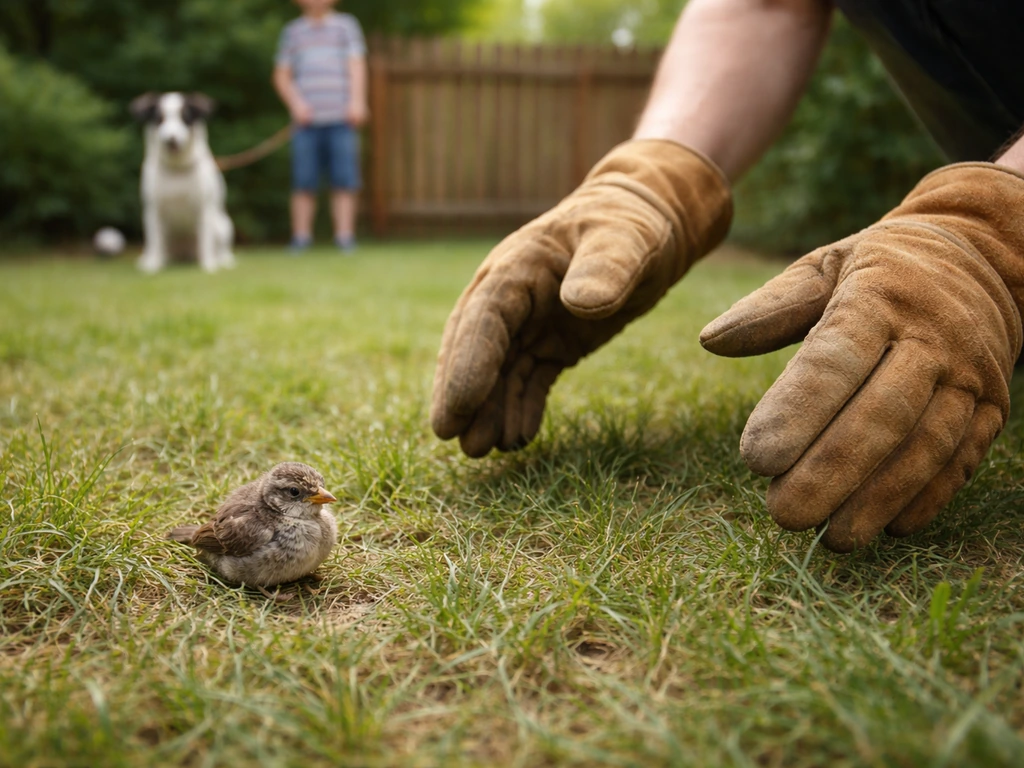
Before you touch anything, get any dogs, cats, or curious kids away from the area. Even a well-meaning pet hovering nearby will send the bird deeper into shock. Birds of prey, herons, and even small songbirds can scratch or peck hard when panicked, so protect yourself before you protect them.
Put on thick gloves if you have them, leather garden gloves work well. If you don't have gloves, use a folded towel or thick cloth to pick the bird up. Drape the towel gently over the bird first, then scoop it up from underneath, keeping your hands over the wings so it can't flap and injure itself further. Never grab a bird by the wings or tail. Work slowly and quietly. Sudden movements or loud voices make things worse.
Once you have the bird contained, resist the urge to keep checking on it or showing it to others. Every unnecessary interaction adds stress, and stress alone can kill an already-traumatized bird.
Initial Assessment: Breathing, Responsiveness, Bleeding, and Shock
Do a quick visual check before and while you're containing the bird. You're looking for a handful of things that tell you how urgently it needs professional care.
Breathing is your first priority. Normal bird breathing should be barely visible. If you see the bird breathing with its beak open, straining its whole body with each breath, or bobbing its tail up and down with every breath (tail bobbing is a classic sign of respiratory distress in birds), that's a medical emergency. Get to a vet or wildlife rehab immediately, don't wait to see if it improves.
Next, check responsiveness. Is the bird upright and trying to move away from you, or is it limp, unresponsive, or completely still? A bird that's alert and struggling is in better shape than one that doesn't react to your approach at all. Unresponsiveness, seizure-like movements, or inability to hold its head up are all emergency signs.
Look for visible bleeding. A small amount of blood on feathers doesn't always mean catastrophic injury, but bleeding that won't slow down is serious. Check around the head, neck, and body for wounds. Puncture wounds from teeth or claws can look tiny on the surface but go deep, so don't be reassured just because you can't see much. Finally, watch for signs of shock: a bird that's dull, fluffed up, barely reactive, and sitting hunched on the ground is likely in shock even without visible wounds.
Immediate First Aid for Attack Injuries
Bleeding and wounds
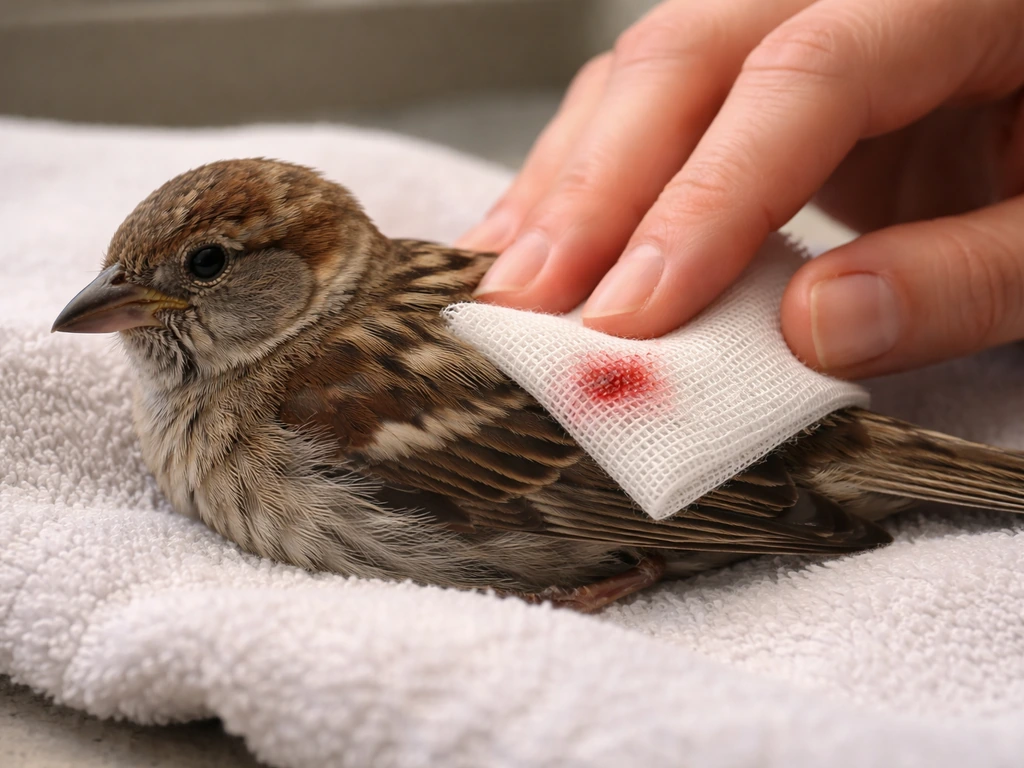
If the bird is actively bleeding, apply gentle, steady pressure with a clean cloth or gauze for a few minutes. Do not use cotton balls, fibers can stick to wounds. Once bleeding slows, leave the wound alone. Do not apply ointments, antiseptic creams, or any oily or thick substance to the wound. These can mat feathers, get ingested during grooming, and cause additional harm. Your job here is stabilization, not treatment.
One specific warning: if you see a feather that appears to be bleeding from its base (a blood feather or pin feather), do not pull it out. Pulling a blood feather causes significant blood loss and pain. Leave it and let a professional handle it.
Suspected fractures
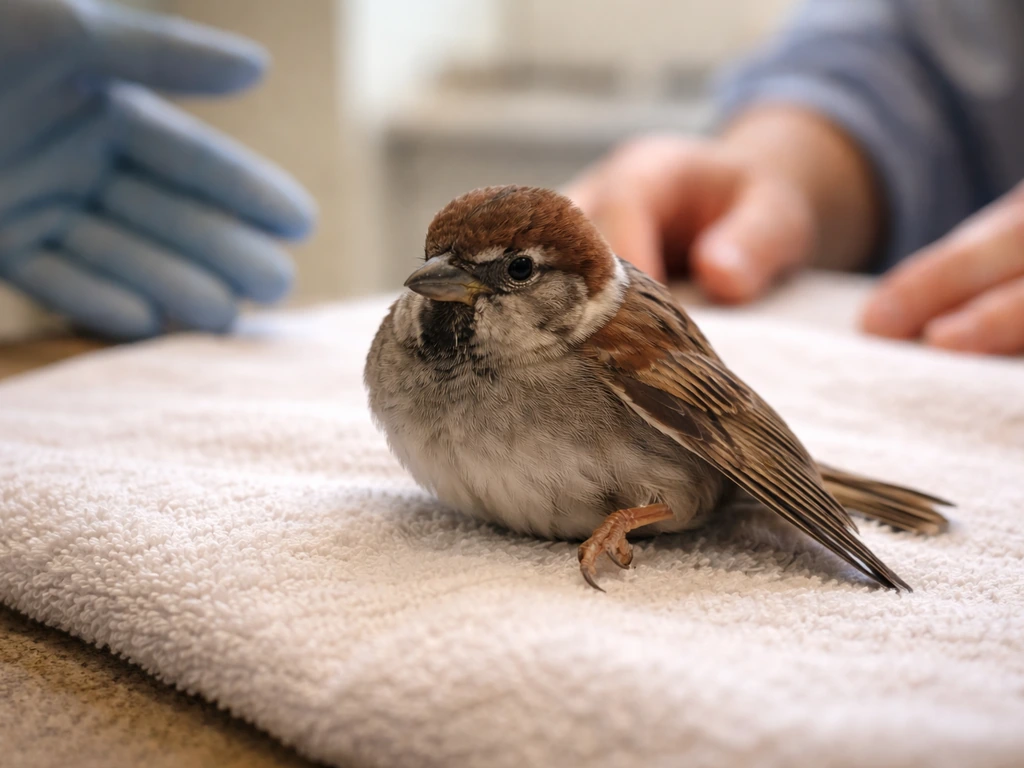
A drooping wing, a leg held at an odd angle, or a bird that can't bear weight are all signs of a possible fracture. Do not attempt to splint or straighten the limb yourself. Without proper training and equipment, you'll almost certainly cause more damage. The right move is to get the bird into a secure, padded container so it can't thrash and worsen the fracture, and then get it to professional care. Immobilization through containment is your goal, not DIY surgery.
Puncture wounds and invisible injuries
Puncture wounds from teeth or claws are among the most deceptive injuries you'll encounter. The entry point might look like nothing, a tiny hole in the feathers, but underneath there can be significant tissue damage, internal injury, or the start of a serious infection. If the bird was caught in an animal's mouth or struck by talons, assume there are puncture wounds even if you can't find them. This bird needs a professional evaluation, full stop.
Cat and Dog Attacks vs. Other Attacks: Why It Matters
If the bird was attacked by a cat, the infection risk is extreme, and speed matters more than almost anything else. If the bird was attacked by a dog, treat it as an emergency and call a licensed wildlife rehabilitator or avian vet right away cat. blank" rel="noopener noreferrer">Cat saliva carries Pasteurella multocida, a bacteria that's deadly to birds. Studies show Pasteurella is found in roughly 50 to 75 percent of cat bite cases, and a bird can die from systemic infection within 24 to 48 hours of a bite even if it looks perfectly fine at first. This is not something you can wait on. Any bird that has been in a cat's mouth or scratched by a cat needs antibiotic treatment from a vet or wildlife rehabber, and it needs it today.
Dog attacks carry infection risk too, including Pasteurella and Staphylococcus, but the wounds are often more immediately visible and traumatic. A dog that caught and shook a bird may have caused internal injuries or fractures that aren't obvious from the outside. Treat any dog attack as a serious trauma event requiring urgent professional care, not just wound cleanup.
Treat any dog attack as a serious trauma event requiring urgent professional care, not just wound cleanup, and tell them it was a bird attacked by dog so they can prioritize the right stabilization steps bird attacked by dog what to do. Dog attacks can also happen when a dog caught a bird, and in that case the same urgent, professional-care guidance applies dog caught and shook a bird.
If your dog killed the bird, you still should contact a wildlife rehabilitator or avian vet for guidance on next steps and to confirm whether any care or testing is needed Dog attacks carry infection risk too, including Pasteurella and Staphylococcus. If your dog ate a bird, treat it as a serious trauma and possible internal injury, and contact an avian vet or wildlife rehabilitator right away dog-related bird emergencies.
If your dog ate a bird, treat it as an urgent injury and get a vet or wildlife rehabber involved right away dog attack. If your dog killed a bird, contact a vet or wildlife rehabilitator right away, even if the bird looks mostly fine dog ate a bird.
Attacks from other birds (hawks, crows, jays) or wildlife like foxes or raccoons carry bacterial contamination risks as well, but without the specific Pasteurella urgency of a cat bite. That said, talon or claw punctures still go deep, and any attack that left the bird unable to fly, walk normally, or stay upright warrants immediate professional attention. If you're dealing with a scenario where a dog was involved specifically, the guidance on dog-related bird emergencies goes into even more detail on trauma patterns and what to tell the vet. If the dog involved is a bird dog, the same urgent injury and infection steps apply, including how to handle hard mouth injuries safely and quickly dog-related bird emergencies.
Safe Containment and Transport: Warmth, Quiet, and Timing
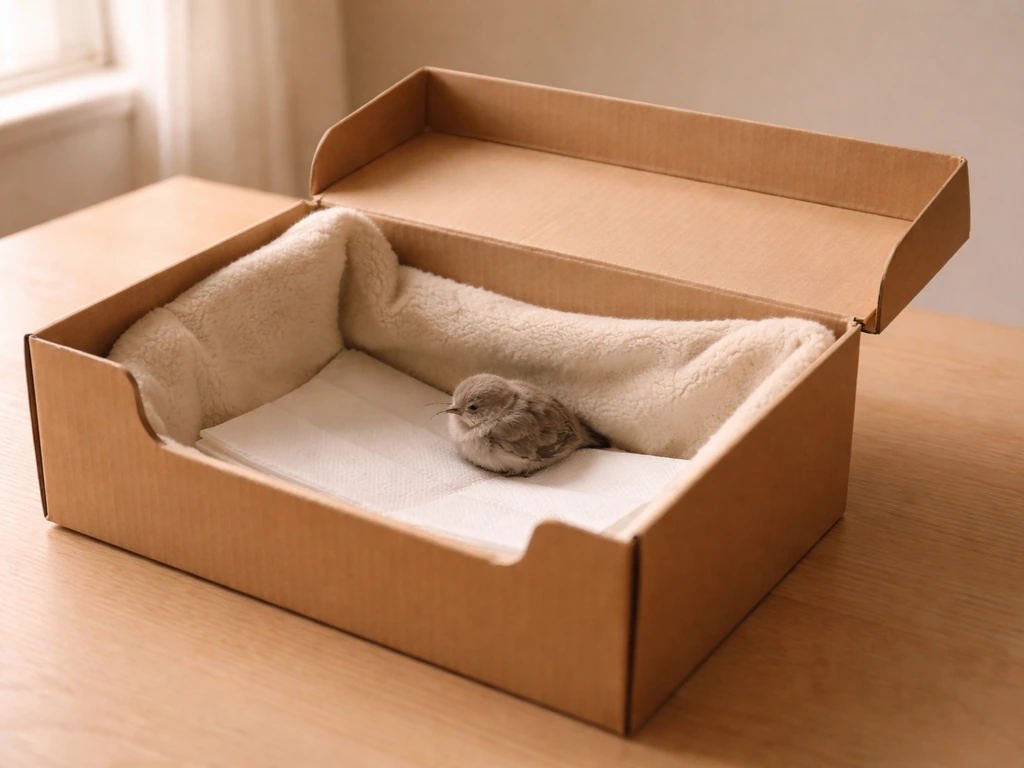
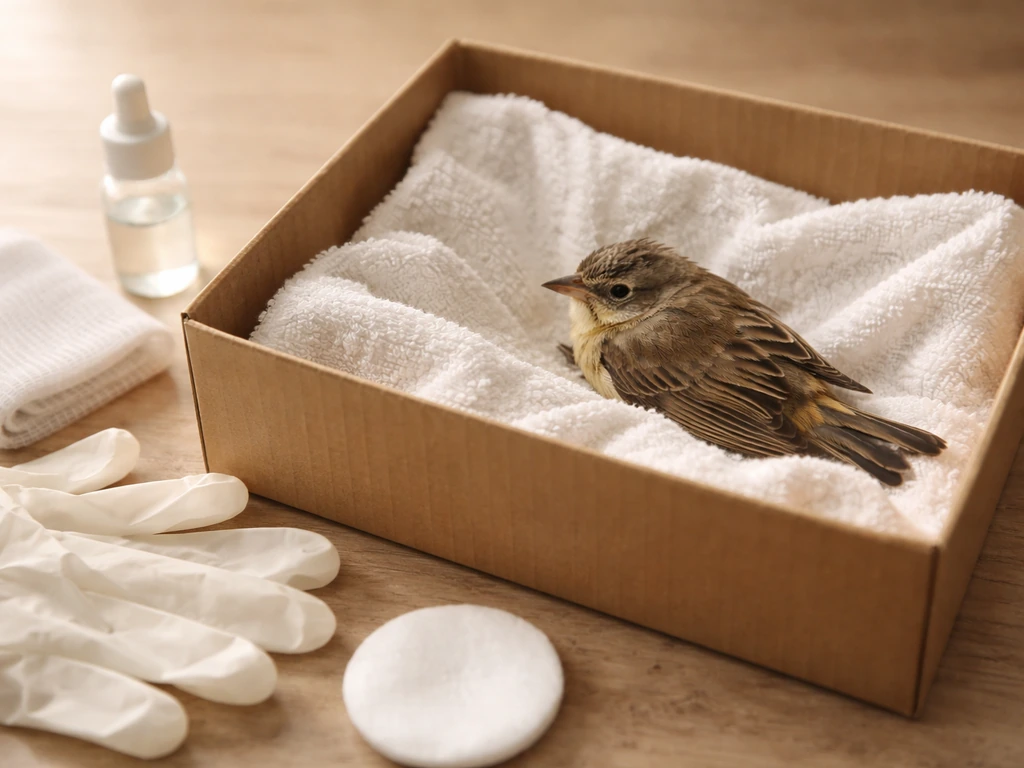
Once the bird is secure, your container setup makes a real difference. A shoebox or similar cardboard box works well. Line the bottom with a paper towel or a soft cloth (not terry cloth or anything with loops that toes can catch in). Put the bird inside and close the lid, but make sure the box has ventilation. Poke several small holes in the sides if the box is fully sealed. A well-ventilated but dark, enclosed space reduces visual stimulation and keeps the bird calmer.
Warmth is critical. Injured birds lose body temperature fast, especially small ones. Place a heating pad set to low under one half of the box, or use a hot water bottle wrapped in a cloth on the outside. The key is that the bird must be able to move away from the heat source if it gets too warm. Never put a heat source directly against the bird or seal it into an overly hot space. If the bird is cold and shivering, warmth alone can keep it alive long enough to reach help.
During transport, keep the box level, minimize conversation and noise in the car, and drive smoothly. Avoid playing music. The goal is to arrive with a bird that's as calm and stable as possible. Don't keep opening the box to check. The best thing you can do is get moving quickly.
What Not to Do (Common Well-Meaning Mistakes)
- Do not offer food or water. Even a small drop of water given to an unconscious or semi-conscious bird can go into its lungs. Food is equally harmful before the bird is assessed by a professional. This is one of the most common mistakes and it can be fatal.
- Do not give any medications, including human painkillers, antibiotic creams, or anything from a pet medicine cabinet. Birds metabolize drugs completely differently from mammals and many common medications are toxic to them.
- Do not try to splint a wing or leg yourself. A poorly applied improvised splint causes pain, cuts off circulation, and often makes the fracture worse.
- Do not apply ointments, petroleum jelly, coconut oil, or any thick substance to wounds or feathers. These are difficult or impossible to clean off and can cause additional harm.
- Do not keep the bird in a bright, noisy environment. A clear plastic tub or a glass tank on your kitchen counter while kids run around is genuinely dangerous for a bird in shock.
- Do not wait and see. Birds are prey animals and hide illness and injury until they physically can't anymore. If a bird is sitting on the ground and letting you approach, something is seriously wrong. Delaying by even a few hours can be the difference between survival and death.
- Do not release the bird back outside because it seems to be recovering. A cat-bitten bird that appears to perk up still needs antibiotics. What looks like recovery can be a brief rally before rapid collapse.
When to Contact an Avian Vet or Wildlife Rehab, and What to Tell Them
The honest answer is: contact someone right now, before you finish reading this article if possible. You don't need to have everything figured out first. Do not give the injured bird food, water, or medication unless directed by a licensed wildlife rehabilitator Do not give it food, water, or medication unless you are directed to do so by a licensed wildlife rehabilitator.. Call while the bird is in its box. If you see any of the following, treat it as a same-day emergency with no waiting:
- Open-mouth breathing or visible tail bobbing with each breath
- Uncontrolled or heavy bleeding
- Collapse, seizures, or inability to hold its head up
- Known or suspected cat bite or scratch
- Visible fracture or dangling limb
- Completely unresponsive to your presence
- Any bird that was in an animal's mouth, even briefly
To find help, search for a licensed wildlife rehabilitator in your area through your state or regional wildlife agency, or use resources like the National Wildlife Rehabilitators Association directory. Your local humane society or animal control office can often refer you to someone quickly. If you can't reach a wildlife rehabber, an avian vet (a vet who specializes in birds) is your next best option. A general practice vet may be able to provide emergency stabilization in a true crisis, but avian specialists are significantly better equipped for bird-specific injuries and medications.
When you call, be ready to tell them: what kind of bird it appears to be (songbird, raptor, pigeon, etc.), what attacked it and when, what symptoms you're seeing right now (breathing, responsiveness, visible wounds), and where you're located. The more specific you are, the faster they can triage and give you guidance. If the rehabber is far away, ask whether there's someone closer who can receive the bird, or whether they can walk you through stabilization over the phone.
Aftercare While You Wait and Knowing When to Escalate
Once the bird is in its box and you've made contact with a professional, your main job is to leave it alone. Seriously. The best thing you can do while waiting or driving is nothing. Don't open the box every few minutes. Don't show it to neighbors. Don't try to hand-feed it. Keep the environment warm, dark, and quiet.
That said, you should monitor from the outside. If you can hear the bird moving around or responding inside the box, that's generally a good sign. If you hear labored, rasping sounds or complete silence from a bird that was moving earlier, those are signals to escalate. If you're still waiting for a callback and the bird's condition seems to be getting worse, call again or go directly to the nearest avian vet without waiting.
Watch for these warning signs that mean you need to move faster: the bird becomes completely still and unresponsive, breathing sounds change to open-mouth or gasping, the bird feels cold to the touch through the cloth even with a heat source in place, or bleeding restarts and won't slow. Any of these means you don't wait for a callback, you go.
In terms of what recovery looks like, a bird that was briefly stunned or caught without deep puncture wounds may recover with rest and, if a cat was involved, a course of antibiotics. More serious injuries involving fractures, internal trauma, or heavy blood loss will require professional care over days to weeks. Don't expect a bird to be hopping around and ready for release in a few hours. Realistic recovery takes time, and the goal for the next hour or two is simply keeping the bird alive and stable until it's in expert hands.
If a professional has cleared the bird and you're monitoring it at home temporarily, check in every 30 to 60 minutes for changes in posture, breathing, and alertness. A bird that is improving will gradually become more upright, more alert, and more reactive to your presence. A bird that is deteriorating will become quieter, more hunched, and harder to rouse. Trust your gut: if something feels wrong, escalate immediately rather than waiting to be sure.
FAQ
Should I clean the wounds or wash the bird after an attack?
Yes, but only in very limited situations. If the bird is actively bleeding, apply gentle steady pressure with clean gauze or cloth for a few minutes, then leave the wound alone. Do not give water, food, vitamins, or pain relief, and do not attempt to clean puncture wounds (bites and punctures can worsen infection if opened or scrubbed).
What if the bird looks mostly okay, can I wait a little?
It depends on the symptoms, not the injury you see. Any bird with trouble breathing (open-mouth breathing, tail bobbing, straining) or seizure-like or unresponsive behavior needs immediate emergency care, even if bleeding looks minor. Also treat cat attacks as a same-day urgency because infection can become fatal quickly.
Can I give the bird water or food to help it recover faster?
Do not use an electrolyte drink, milk, or human medicine. If you see a bird that is alert enough to swallow, it still should not be hand-fed during the first-aid phase because stress and aspiration risk are high. Let a rehabber or avian vet determine hydration and nutrition needs after exam.
What container should I use for transport, and what should I avoid?
A shoebox or similar container is fine, but avoid anything with gaps that could let the bird escape and avoid smooth surfaces that let it slide. Line the bottom with plain paper towel or a soft cloth without loops, keep the box dark and ventilated with small side holes if needed, and transport with the box kept level.
How should I handle the bird if it keeps fighting or trying to bite?
Use gloves or a towel as described in the article, then let the bird stay contained. If the bird bites or scratches while you’re trying to restrain it, stop and prioritize closing the box and getting professional help, because further handling increases injury and stress.
How do I tell if the bird is warm enough, and how do I avoid overheating?
Temperature checks are about safety, not comfort. Feel through the cloth, if the bird stays cold even with a low heat source, treat it as getting worse and move to faster in-person care. Never heat directly against the bird or overheat a sealed container, since birds can overheat quickly.
What should I do if the rehabber says they will call back but the bird gets worse?
Yes. If you are told to wait for a callback but the bird’s condition worsens (new bleeding that won’t slow, open-mouth gasping, complete unresponsiveness, persistent inability to hold posture), do not wait. Call again, or go directly to the nearest avian vet or emergency wildlife service.
The bird is breathing but I hear noises, is that still an emergency?
If you hear wheezing, rasping, or repeated open-mouth breathing, prioritize immediate escalation. Open-mouth breathing and gasping are different from quiet resting breathing, so treat noisy, labored respiratory sounds as an emergency rather than something that will settle.
What signs during waiting at home mean I should stop monitoring and rush to a vet?
Watch for silent deterioration. If it becomes completely still and unresponsive, stops responding to the environment, or you can’t feel warmth as expected through the cloth even when heating is on, escalate rather than waiting for improvement.
Why is a cat attack still urgent even when there are no obvious punctures?
After a cat interaction, plan for urgent antibiotic assessment, even if you see no wound and even if it seems lively. Cat saliva contamination can lead to rapidly developing systemic illness, so “no visible injury” does not downgrade the urgency.
What if there’s no bleeding after a dog attack, do I still need a vet?
If the bird was caught by a dog but not obviously bleeding, it still can have internal trauma or hidden punctures. Treat it as serious trauma requiring urgent professional evaluation, and tell the provider that a dog caught and shook it, or that it was in the dog’s mouth.
When I call for help, what details matter most?
Yes, report the exact scenario because it changes risk level and treatment urgency. Tell the professional whether it was a cat bite or scratch, dog mouth contact, talon strikes, or an attack by another bird, and whether you found it after dawn or after several hours.
Is it okay to keep checking the bird’s injuries while waiting for help?
A quick field check is useful, but avoid prolonged handling. If you are going to check, do it while containing the bird with minimal movement, then return it to darkness and quiet. Excess handling can worsen shock, especially in small birds.
How should I move or adjust the bird’s setup without stressing it?
If you can safely lift the bird without removing it from the container, that is better than opening repeatedly. If you need to reposition a heat source, do it outside the bird’s view and minimize vibration, then close the lid promptly.