If a bird has just been attacked by your dog, the single most important thing you can do right now is contain the dog, gently pick up the bird with a cloth or towel (without squeezing), place it in a dark, ventilated box lined with paper towels, and call a wildlife rehabilitator or avian vet immediately. If your dog attacked a bird, act quickly to contain the dog, keep the bird warm and dark, and contact an avian vet or wildlife rehabilitator right away. Dog attacks are almost always a veterinary emergency for birds, even when the bird looks fine on the surface, because puncture wounds from teeth introduce bacteria deep into tissue and can be fatal within hours if untreated.
Bird Attacked by Dog: What to Do First and When to Seek Help
Marcus Chen
29 May 2026
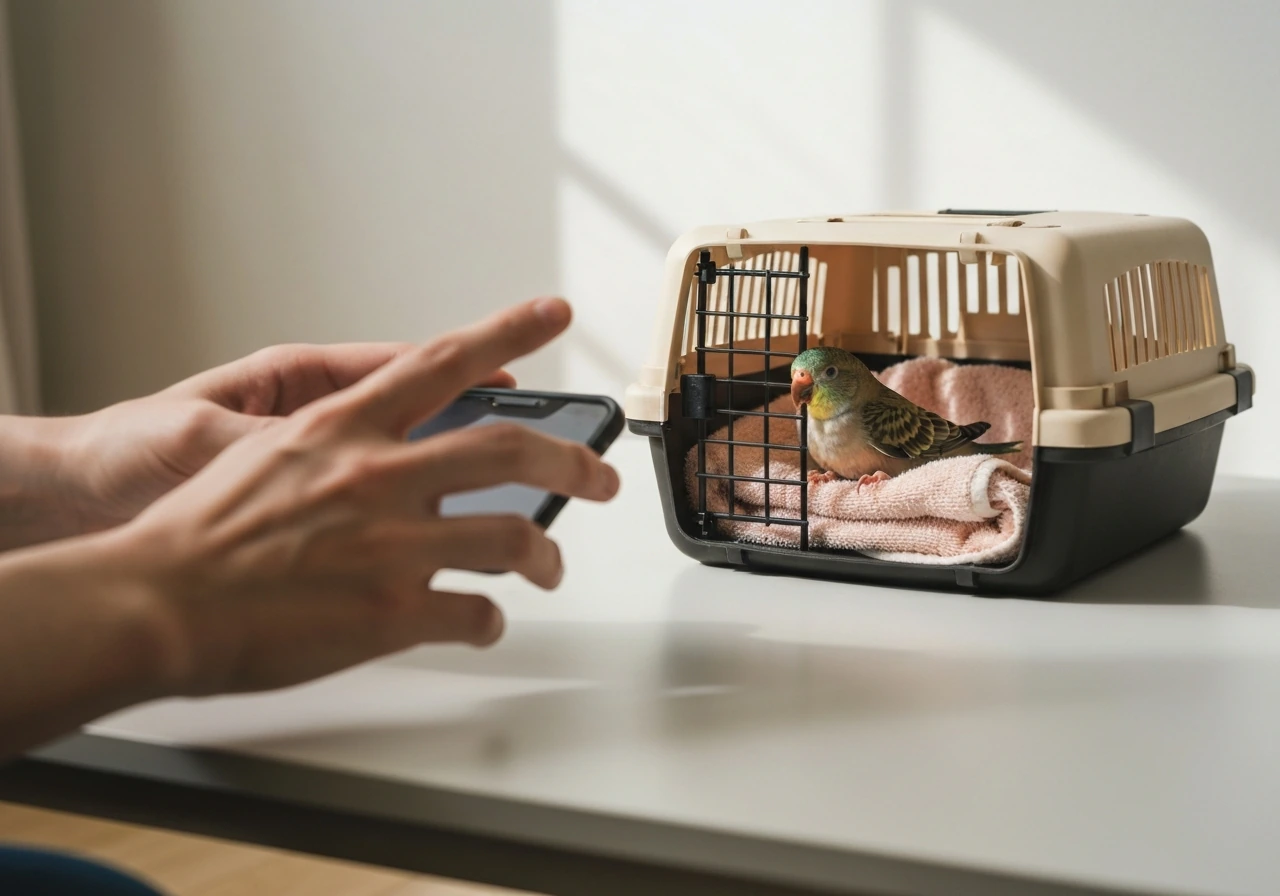
First things first: secure the dog and the bird
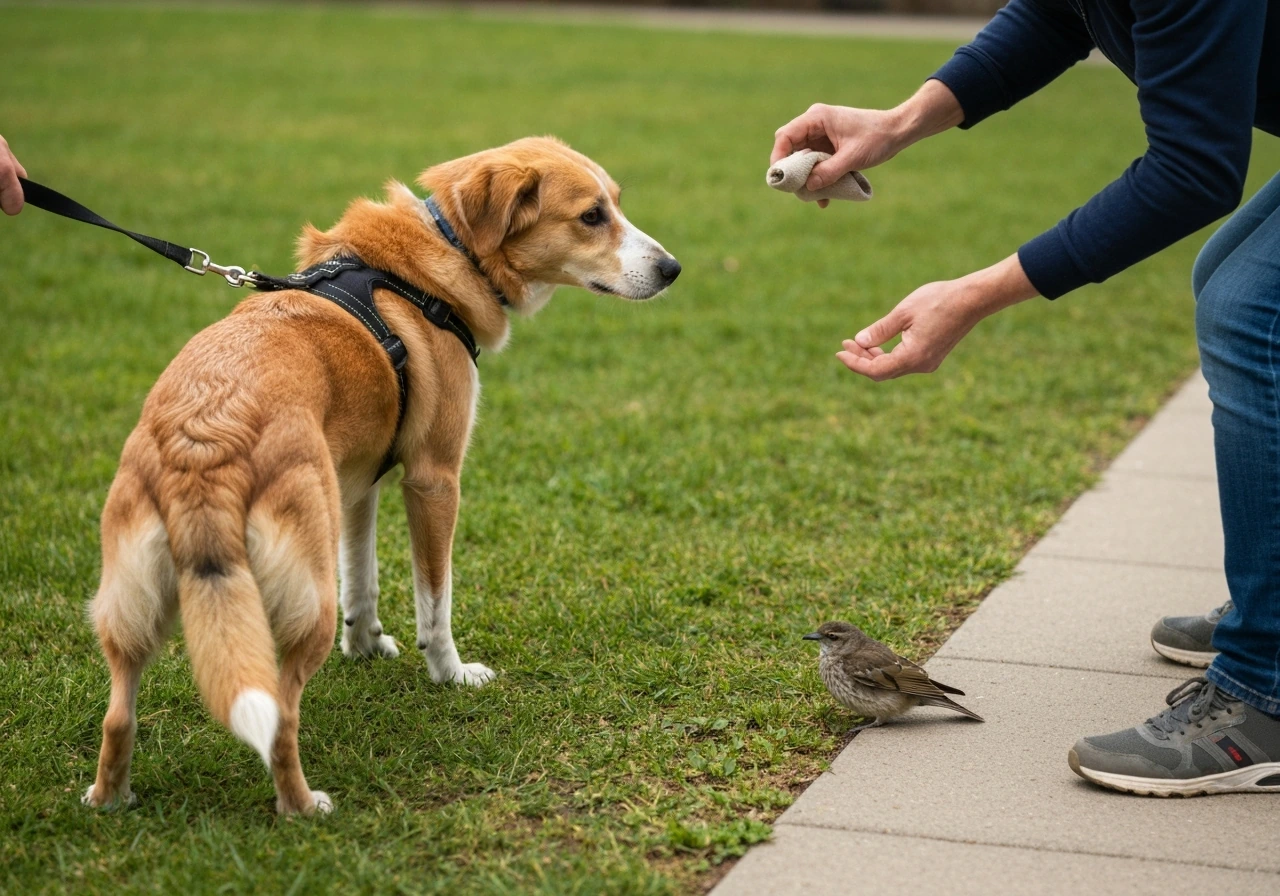
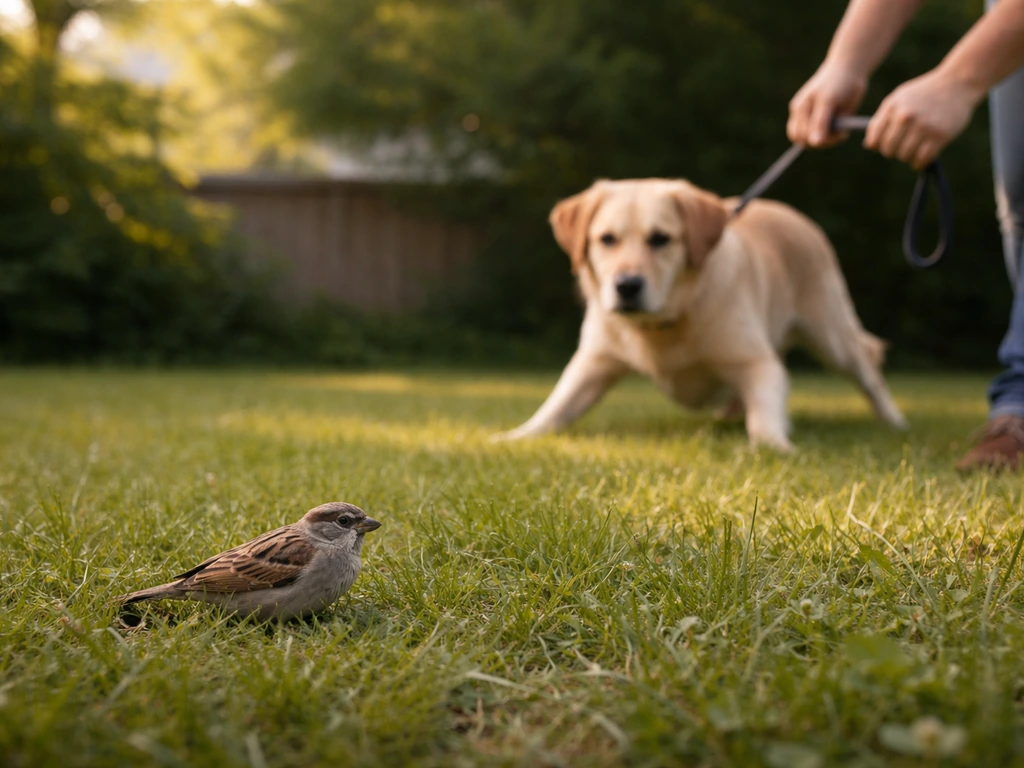
Before you do anything else, get the dog away from the bird and keep it away. Put the dog inside, on a leash, or behind a gate. This matters for two reasons: the dog may attack again if given the chance, and a bird in survival mode will exhaust itself trying to escape even a calm dog just standing nearby. That stress alone can kill a bird that is already injured.
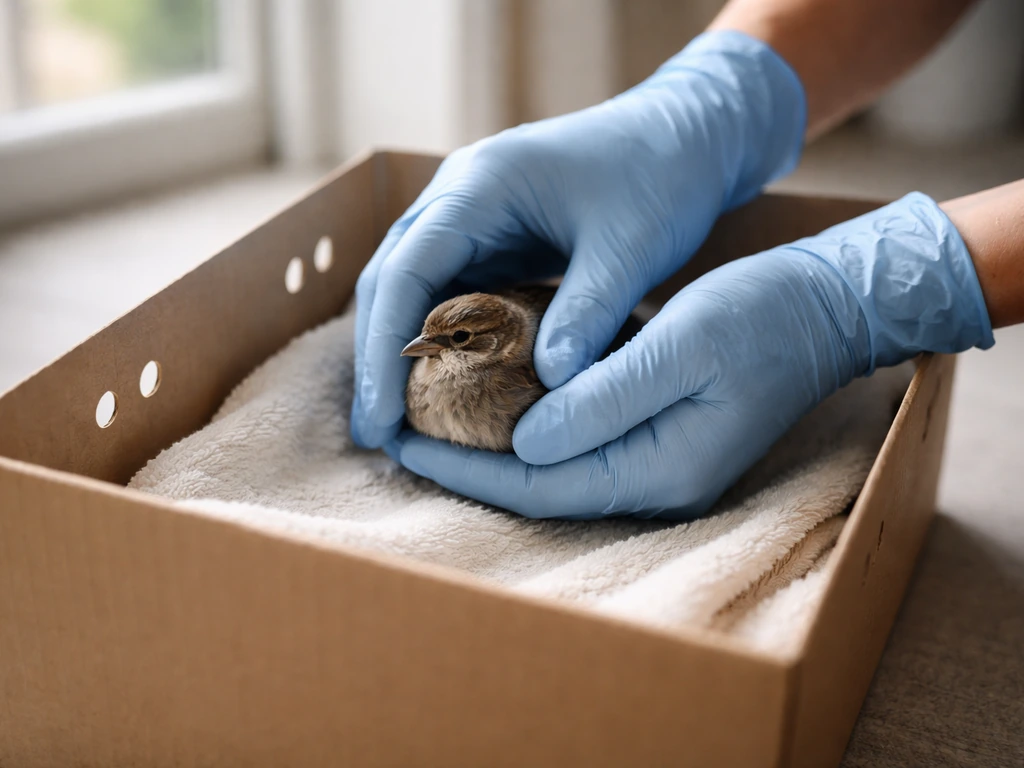
Once the dog is secured, protect yourself before you touch the bird. Wild birds (and even pet birds that are frightened) can scratch or bite hard enough to break skin. Use a folded towel, a thick cloth, or even a light jacket to pick the bird up. Cup it loosely in both hands so the wings are gently held against the body but you are not squeezing. You want to support it, not restrain it tightly. Keep your face away from the beak.
If the bird has fluttered somewhere like under a bush or into a corner, do not chase it. Give it 60 seconds to settle, then approach slowly and quietly from one direction. A bird that is still moving is at least still alive, and panicking it further by chasing it does real damage. If the bird is out in the open and clearly unable to fly, it usually will not run far, so you have time to be calm about this.
What injuries to look for right after a dog attack
Dog attacks can cause a range of injuries, and the tricky part is that the worst ones are often invisible at first glance. Here is what to look for quickly while you are handling the bird to place it in the box. Keep the assessment brief, no more than 30 seconds, to reduce stress.
- Puncture wounds: These are the most dangerous and the hardest to see. Part the feathers gently with a finger and look for small holes in the skin, especially on the chest, back, and sides. Even one puncture wound is an emergency.
- Active bleeding: Look for wet, matted feathers with red or dark staining. Check the neck, wings, and legs especially.
- Wing position: A wing hanging lower than the other, or held at a strange angle, usually means a fracture or dislocation.
- Leg injuries: A leg dangling or held at an odd angle, or obvious swelling, suggests a break. Birds often grip with their feet when held; if one foot is not gripping, that is a sign of injury.
- Beak damage: Cracks, chips, or misalignment of the upper and lower beak. This affects the bird's ability to eat and needs professional attention.
- Shock signs: Eyes half-closed, unresponsive, very still, shallow breathing, or a cold body temperature are all signs the bird is in shock.
- Stunned or unresponsive: If the bird is limp or barely reacting, treat it as an urgent emergency. Keep it warm and call for help immediately.
Here is the thing I always tell people: you cannot fully assess a dog attack injury by looking. Dog teeth are narrow and go deep. A bird with clean, unruffled feathers and no visible blood can have internal injuries or deep puncture wounds that will cause a fatal infection within 24 to 48 hours without antibiotics. Do not let a bird that 'looks okay' convince you that professional help is optional.
Basic first aid: what you can and cannot do at home
Your job right now is not to fix the bird. For home steps to manage specific injuries, see also how to fix hard mouth bird dog so you know what to avoid and what to do next while waiting for help Your job right now is not to fix the bird.. Your job is to keep it alive and calm until a professional can take over. Emergency treatment priorities in birds are to stabilize the bird first, including distinguishing active bleeding from blood without active bleeding to support survival blank" rel="noopener noreferrer">keep it alive and calm until a professional can take over. That distinction matters, because a lot of well-meaning first aid actually causes more harm than good.
Controlling bleeding
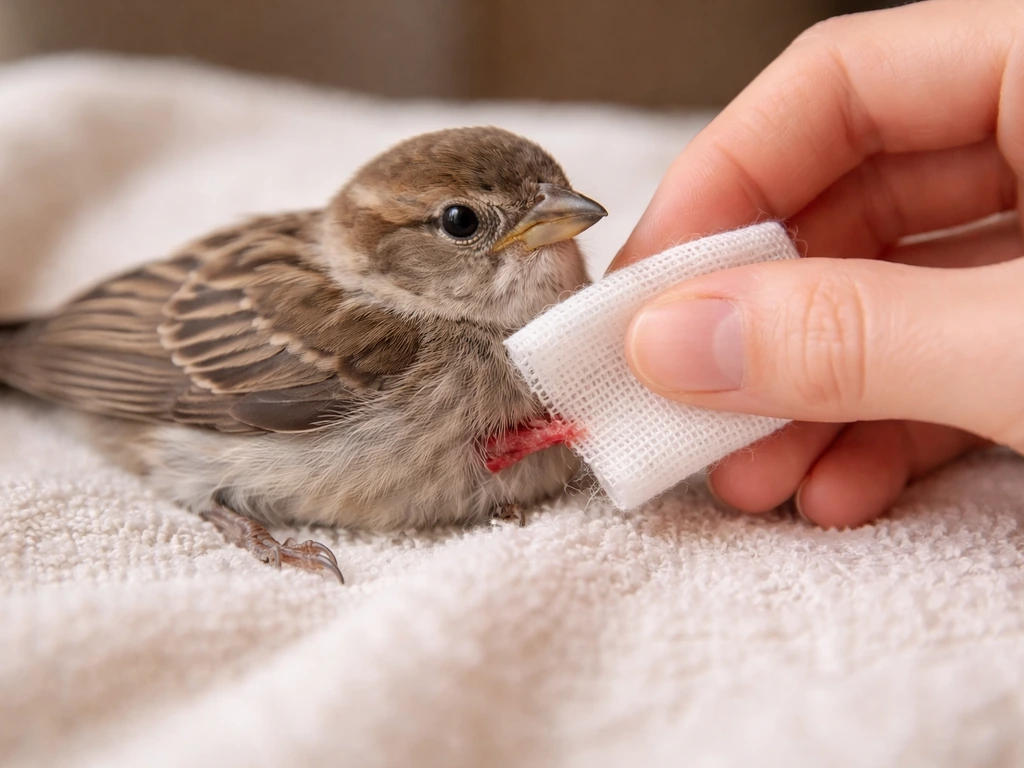
If the bird is actively bleeding, that is the only thing that justifies touching the wound before professional help. Apply very gentle pressure with a clean cloth or gauze. Do not press hard. For small surface wounds, a tiny pinch of cornstarch or flour can help clot the blood. For a broken blood feather (a feather still growing with a blood supply), do not pull it out unless you have been specifically instructed to do so by a vet or rehabber, as this can make bleeding worse. Hold gentle pressure and get to help fast.
Warmth and shock reduction
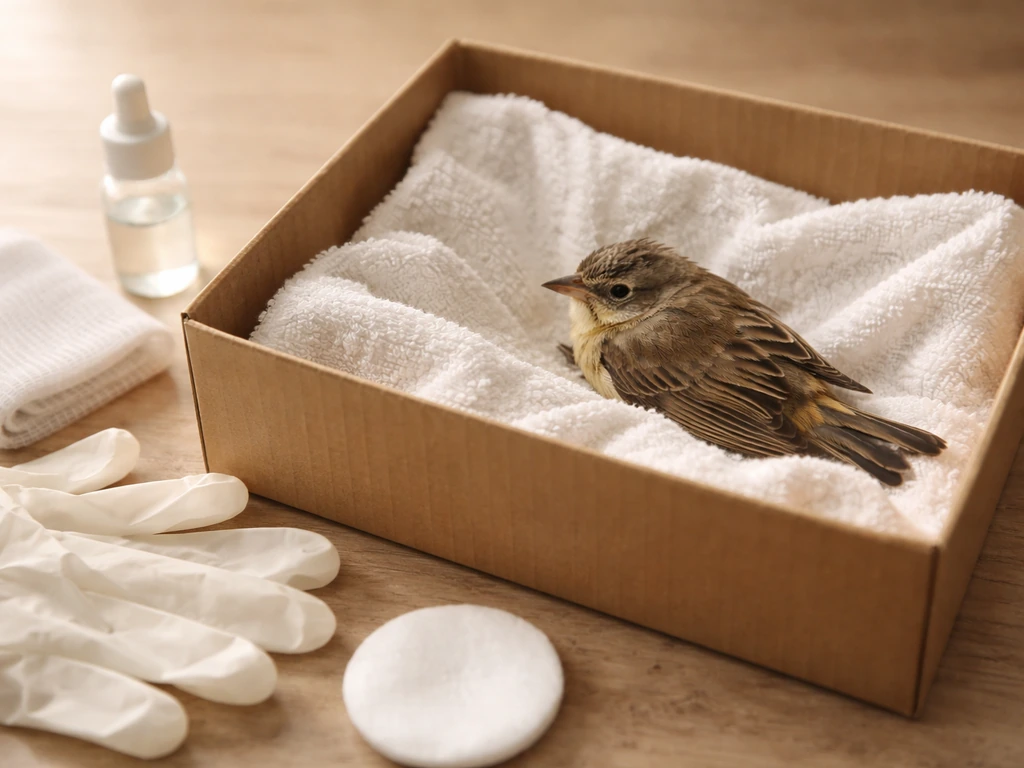
Injured birds lose body heat fast, and shock is a leading cause of death after trauma. Line a shoebox or similar container with paper towels or a soft cloth (avoid anything with loose loops that can catch toes, like terrycloth towels), put the bird inside, close the lid with a few small air holes punched in the top, and keep the box somewhere warm and quiet. Room temperature around 80 to 85 degrees Fahrenheit is ideal if you can manage it; a heating pad on the lowest setting placed under half the box works well. The bird can move away from the heat if it gets too warm. Keep the environment dark and quiet to reduce panic.
What not to do
- Do not give the bird food or water. An injured bird cannot regulate swallowing properly and can aspirate liquid into its lungs, which is fatal.
- Do not apply hydrogen peroxide, antiseptic sprays, or antibiotic ointments to wounds unless a vet tells you to. Many human antiseptics are toxic to birds.
- Do not try to straighten or splint a broken wing or leg yourself. You will cause more pain and tissue damage.
- Do not keep checking on the bird by opening the box repeatedly. Every time you do, the bird panics and wastes energy it cannot afford to lose.
- Do not offer the bird to children to hold or show to other pets.
When to transport immediately vs. when to wait briefly
In most cases, a bird attacked by a dog should be seen by a professional the same day, ideally within a few hours. If you need step-by-step help with what to do and what to avoid between capture and transport, follow the guidance on how to help a bird that has been attacked transport immediately. After a dog attack, follow these steps for how to treat a bird attacked by a dog and get professional help the same day. But some situations are more urgent than others.
| Situation | What it means | Action |
|---|---|---|
| Puncture wounds visible (any size) | High infection risk, possibly internal damage | Transport immediately to avian vet or rehabber |
| Active, uncontrolled bleeding | Life-threatening blood loss | Apply gentle pressure and transport immediately |
| Bird is limp, unresponsive, or cold | Severe shock or internal injury | Keep warm and transport immediately |
| Wing or leg hanging at abnormal angle | Fracture or dislocation | Transport same day, within 2 to 3 hours if possible |
| Bird is alert, standing, no visible wounds | Still possible puncture/internal injury | Place in box and monitor for 30 minutes, then transport same day |
| Bird appears to fly off on its own | May still have puncture wounds | Difficult to help further; watch area and call a rehabber for advice |
I want to be direct here: there is really no scenario after a dog attack where 'wait and see overnight' is the right call. If you are wondering what to do if your dog eats a bird, treat it as an urgent emergency and skip any “wait and see” approach. If you’re wondering what to do after my dog killed a bird, the safest next step is to contact a wildlife rehabilitator or avian vet right away. The bacteria from a dog's mouth, particularly Pasteurella multocida, can cause fatal septicemia in birds within 24 to 48 hours. A bird that seems fine at 7 PM can be dead by morning without antibiotics. If you cannot reach an avian vet or wildlife rehabber today, keep the bird warm and dark, and keep trying.
How to find an avian vet or wildlife rehabilitator near you
Finding the right help fast is often the hardest part, especially in the evening or on a weekend. Here are the most reliable ways to locate someone who can actually treat a bird after a dog attack.
- Search 'wildlife rehabilitator near me' or 'avian vet near me' right now. Many wildlife rehabbers work from home and are not listed in standard business directories, so also try a local wildlife rehab network or state wildlife agency website.
- In the United States, the Wildlife Rehabilitators Directory at the National Wildlife Rehabilitators Association (NWRA) and the Animal Help Now app (animalhelpnow.org) let you search by location and type of animal.
- Call your local humane society or animal shelter even if they cannot treat birds themselves. They often have a direct number for wildlife resources in your area.
- Search '[your state or country] wildlife rescue' to find state- or region-specific hotlines. Many areas have 24-hour wildlife emergency lines.
- In the UK, the RSPCA's 24-hour line (0300 1234 999) handles injured wildlife. In Australia, contact WIRES (1300 094 737) or a local wildlife carer network.
- If you cannot reach anyone, your regular vet may be able to provide basic stabilizing care or a shot of antibiotics even if they are not a bird specialist. In a dog-attack scenario, that antibiotic treatment can be lifesaving.
When you call, tell them: the type of bird if you know it, that it was attacked by a dog, approximately how long ago, what injuries are visible, and what condition the bird is in right now (conscious, breathing, temperature of the room). The more specific you are, the faster they can triage and advise you.
Transporting the bird safely
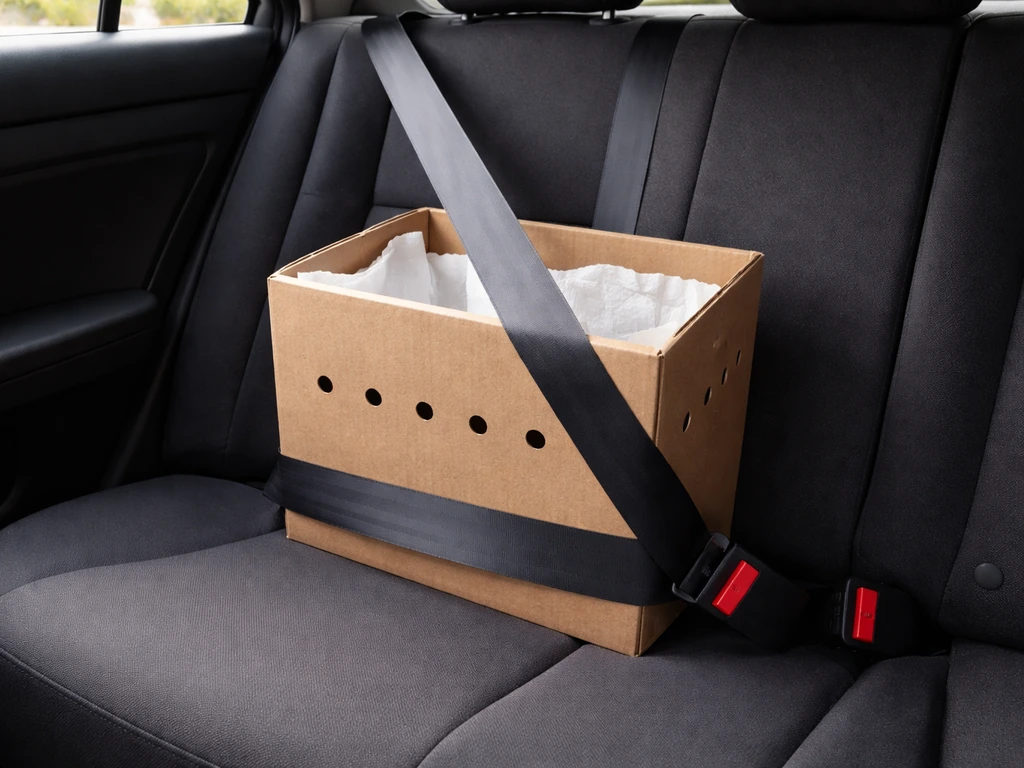
The carrier setup is simple: a cardboard box or paper bag with ventilation holes, lined with paper towels. Do not use a wire cage, which allows the bird to grip and injure itself further. Do not put water in the box. Make the box just large enough for the bird to stand up in without having room to flap and injure itself more.
During transport, keep the box on the seat or floor where it will not slide around. Minimize talking, music, and sudden movements. If it is cold outside, keep the car warm. If it is hot, keep the car cool and do not place the box in direct sunlight through the window. Have someone else drive if you can, so you are not splitting attention between the road and the bird.
Caring for the bird at home while you wait for help
If there is going to be any delay before you can reach professional help, here is how to keep the bird stable in the meantime. The goal is to reduce stress and maintain warmth, nothing more complicated than that.
- Keep the box in a room that is quiet, away from pets, children, and loud appliances.
- Maintain ambient warmth: 80 to 85 degrees Fahrenheit is the target. A heating pad on low under half the box works. Check that the bird can move away from the heat source.
- Do not open the box to check on the bird more than once every few hours, and only briefly.
- Do not offer food or water even if the bird appears alert and hungry-looking. This rule holds until a professional tells you otherwise.
- If the bird is a pet bird rather than a wild bird, your avian vet may have different instructions, but the containment and warmth principles still apply.
- Write down the time of the attack, what you saw, and any changes in the bird's behavior or condition. This information helps the vet or rehabber significantly.
Do not expect the bird to show improvement while it is in your care at home. Stabilization, not recovery, is what home care provides. If the bird seems to get worse, limp, less responsive, or showing labored breathing, escalate your urgency in finding professional help.
How to stop this from happening again
Dogs have a strong prey drive, and even gentle, well-trained dogs will chase or snap at a bird given the opportunity. This is normal dog behavior, not a sign that your dog is dangerous, but it does mean you need to manage the environment rather than rely on training alone.
Supervision and physical barriers
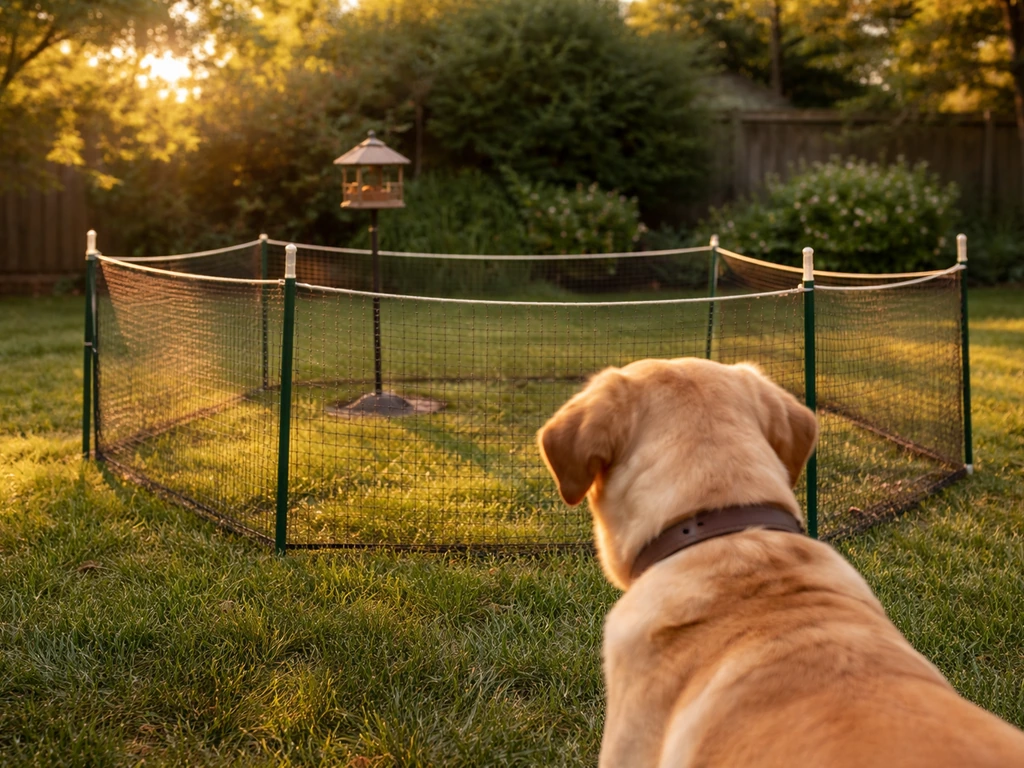
The most effective prevention is physical separation. If you have bird feeders in the yard, place them where the dog cannot access the landing zone below them. Birds feeding on the ground are extremely vulnerable. Feeders on poles with clear sightlines, positioned away from where the dog roams freely, dramatically reduce incidents. If you have a yard, consider a separate dog run or enclosed dog area that keeps the dog away from bird-heavy zones like garden beds, hedges, and water features.
Training and management
Teaching a reliable 'leave it' command is genuinely useful and worth the investment of a few training sessions. It will not eliminate prey drive, but it gives you a way to interrupt the behavior before it results in a catch. Never leave your dog unsupervised in areas where ground-feeding or low-nesting birds are present, especially during spring and early summer when fledglings are on the ground and easy targets.
Protecting nesting areas
If you know birds are nesting in your yard, temporarily fence off or block access to that area during nesting season. A simple temporary garden fence or a few plant pots arranged as a barrier can be enough to redirect your dog's patrol route away from a nest. It is a low-effort step that prevents a lot of preventable incidents.
If your dog has a pattern of catching birds rather than just investigating them, it is worth talking to a professional trainer who specializes in prey drive management. This goes beyond basic obedience and involves specific techniques for impulse control that are much more effective than corrections after the fact.
FAQ
My dog only mouthed the bird, there are no visible injuries. Do I still need to treat it as urgent?
Yes. Even without blood or torn feathers, dog teeth can cause deep punctures and bacteria can work within 24 to 48 hours. Keep the bird warm and dark, secure the dog, and contact an avian vet or wildlife rehabilitator the same day.
What if the bird is bleeding a little, can I clean the wound at home?
Avoid flushing or scrubbing. If it is actively bleeding, apply gentle pressure with clean gauze or cloth to slow it, then move to warming and transport. Cleaning inside a small puncture can push contamination deeper and worsen outcomes.
Should I give the bird water or sugar water to keep it strong?
Do not put water in the box or offer fluids by mouth. Stress and aspiration risk are real, and the priority is warmth, darkness, and professional care. Fluids can wait until a vet assesses hydration and breathing.
How warm is “warm enough” if I do not have a heating pad?
Use a warm, not hot, heat source placed under half the container (for example, a bottle or hand warmer wrapped in cloth). If the bird can move away, the setup is safer. Avoid direct heat that could overheat or burn the skin, especially if the bird is partially covered by paper towels.
The bird is breathing but keeps twitching or seems very weak. Is it still okay to wait an hour or two for help?
Do not wait if breathing looks labored, the bird is unresponsive, or it is rapidly worsening. Escalate immediately, call for the fastest available avian vet or emergency wildlife line, and keep the bird warm and quiet while you arrange transport.
What should I do if the bird is fully caught and the dog brings it back to me?
Secure the dog again before touching the bird, even if you think the first round is over. Birds in survival mode can panic when the dog is nearby, and a second bite risk is common. Then pick up with a towel, contain in a ventilated box, and call for help right away.
Can I use a pet carrier or a wire cage for transport?
Prefer a ventilated cardboard box lined with paper towels. Wire cages can let the bird grip and injure itself further, and plastic pet carriers without ventilation can trap heat and increase stress. If all you have is a carrier, line it, add ventilation holes, and keep it dark and still.
What if I cannot reach any wildlife rehabilitator tonight?
Keep trying to find an avian-capable provider, but do not delay the basic stabilization steps. Keep the bird warm, dark, and contained, then be ready to go at first opening if the phone triage advises it. If the bird is cooling or worsening, treat that as higher urgency than scheduling.
Should I try to identify the bird species before calling the vet?
If you can do it quickly without chasing, it helps, but it is not required to act. When you call, describe size and key features you notice (for example, color of wings, beak shape, whether it is a fledgling). The timing and dog-attack history matter most for triage.
When is it safe to stop worrying and just monitor at home?
After a dog attack, there is no safe “monitor only” period. Even when a bird looks alert, internal puncture injury can be fatal without antibiotics. The correct stop point is when a qualified professional has examined the bird and provided a plan.
How do I prevent my dog from doing this again without keeping the dog away from the yard entirely?
Use physical barriers and change access paths, for example, block ground-feeding zones and restrict dog roaming near feeders, garden beds, hedges, and nest areas. A reliable “leave it” helps interruption, but separation is the main prevention because prey-drive behavior can override training.