If your dog just ate or caught a bird, here is what to do right now: secure your dog, check whether the bird is still alive, and get the bird to a wildlife rehabilitator or avian vet as fast as possible. Even if the bird looks fine on the outside, any bird that has been in a dog's mouth needs professional evaluation. The clock matters here, so keep reading and move quickly.
My Dog Ate a Bird: What Do I Do Right Now?
Marcus Chen
8 Apr 2026
What to do right this second
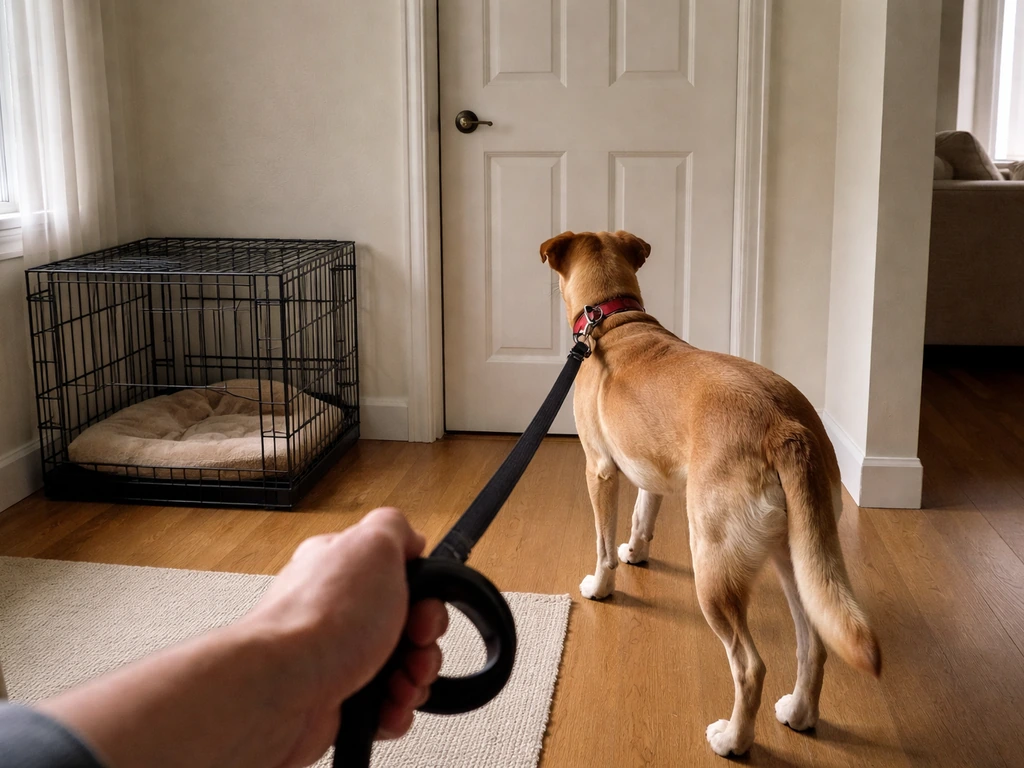
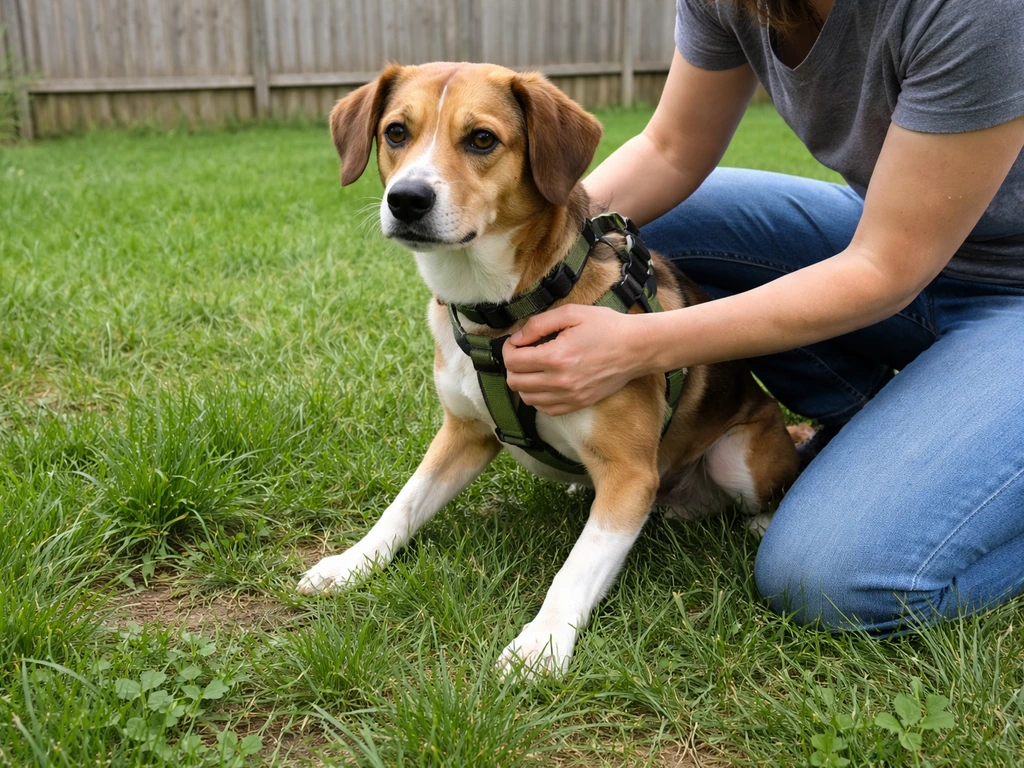
First, get your dog away from the bird. Put your dog in another room, crate them, or leash them outside. You cannot assess the situation clearly with the dog still circling. Once the dog is separated, take a breath. Your dog is probably fine for the moment, and now your attention can go where it is most needed.
Next, check your dog quickly for any immediate red flags. Is your dog coughing hard, gagging, drooling heavily, holding their mouth open, or pawing at their face? Those are signs of choking, and they require immediate action. If your dog is breathing normally and acting like themselves, they are not in crisis right now, and you have a few minutes to deal with the bird before circling back to your dog's health.
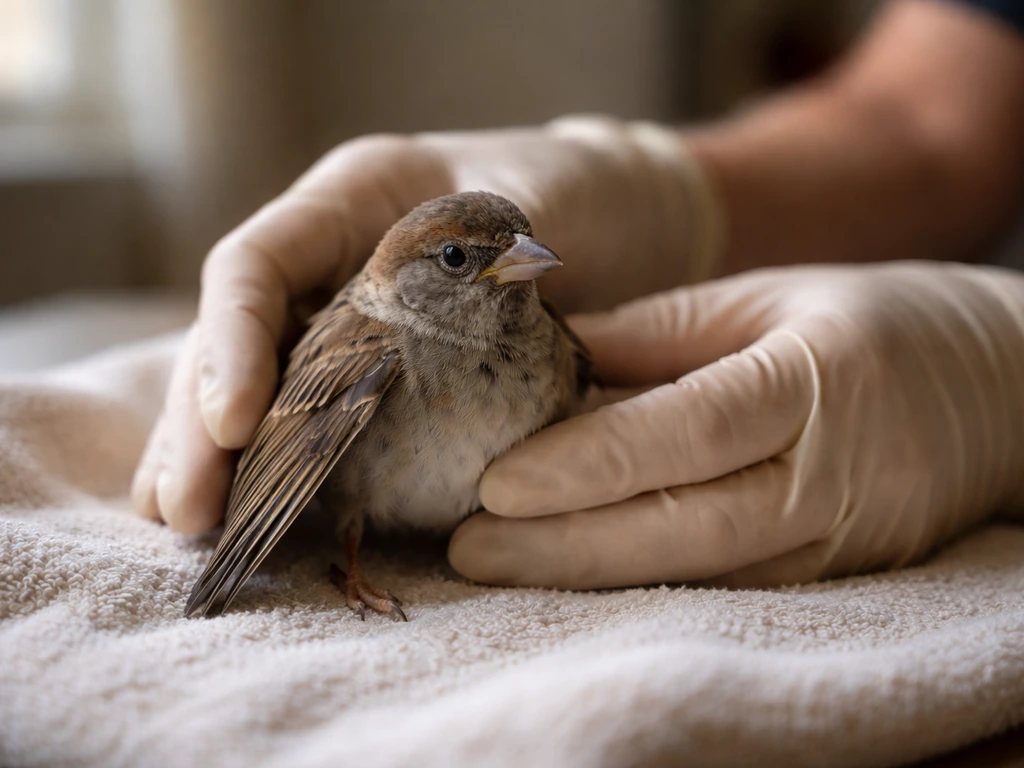
Before you touch the bird, protect yourself. Put on gloves if you have them. Wild birds can carry Salmonella, Campylobacter, mites, and other pathogens that transfer through contact with blood, saliva, or feathers. If you do not have gloves, use a cloth, a plastic bag turned inside out over your hand, or any barrier you have nearby. Wash your hands thoroughly with soap and water before and after handling.
Is the bird alive, deceased, or injured?
Approach the bird slowly and look before you touch. A bird that is obviously deceased (no movement, stiff, cool to the touch, eyes dull or sunken) still needs to be handled carefully for hygiene reasons, but it is no longer a rescue emergency. Remove it and dispose of it safely, then focus entirely on your dog.
If the bird is alive, look for these injury signs without picking it up yet. Serious red flags include any bleeding from the body, wings, beak, or feet; a wing drooping at an unnatural angle, which usually means a fracture; the bird lying flat on the ground and not attempting to move away from you; labored or open-mouth breathing; or the bird appearing limp and unresponsive. Any of these signs means you are dealing with a significantly injured bird that needs professional help, not home care.
A bird that is alert, holding its wings normally, and trying to hop or fly away may have escaped serious injury, but that does not mean it is safe. Even a bird with no visible wounds can have internal puncture injuries from a dog's teeth, and those injuries are often fatal without treatment. As one wildlife rescue guideline puts it plainly: any bird that was in the mouth of a dog must be brought in for examination, no exceptions.
If you are also wondering about the broader situation of what happens when a dog catches a bird, what to do when your dog catches a bird covers the full range of scenarios, including birds that escape versus ones that do not.
Basic first aid for an injured bird after a dog encounter
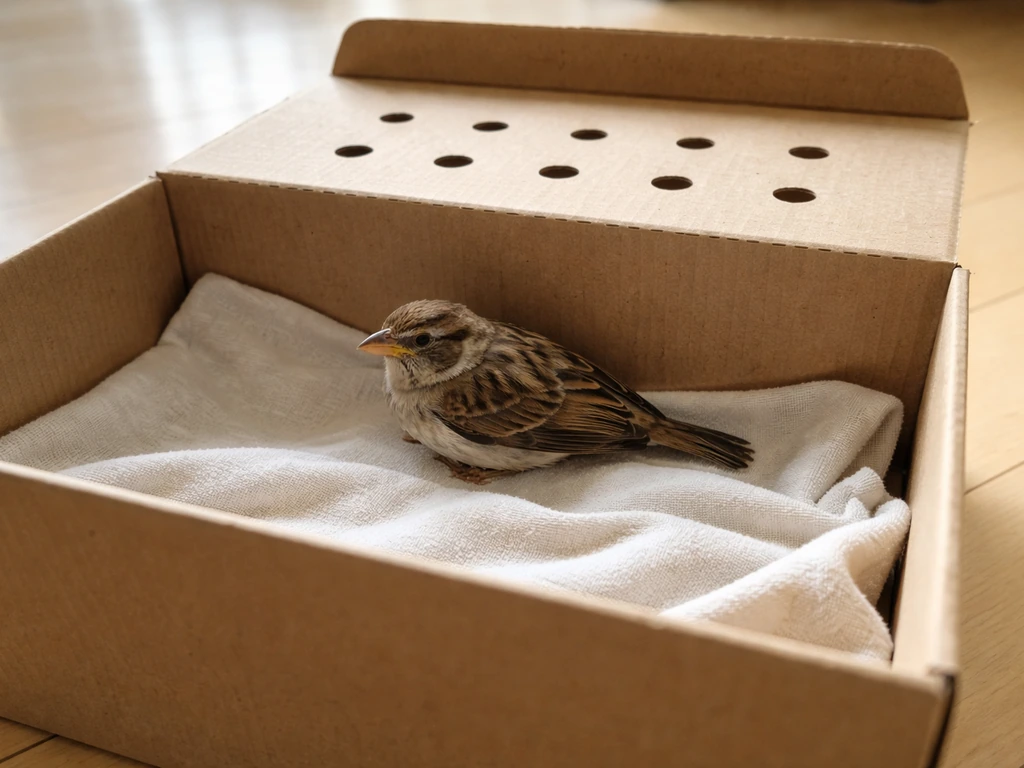
Your goal with first aid is to reduce stress and stabilize the bird until you can hand it off to a professional. You are not treating injuries yourself. Here is what to do:
- Find a cardboard box or container with ventilation holes poked in the top. It should be big enough for the bird to sit upright but not so large that the bird slides around.
- Line the bottom with a clean cloth, paper towel, or newspaper so the bird has traction.
- Gently scoop the bird up using both hands or a light cloth draped over it, and place it in the box. Try to minimize the time you handle it.
- Close or loosely cover the box to make it dark inside. Darkness calms birds dramatically and reduces the shock response.
- Keep the box in a warm, quiet room away from children, your dog, and loud noises. Do not put it in the sun or near a heat vent that could overheat the bird.
- Do not offer food or water. It sounds counterintuitive, but feeding an injured bird can cause aspiration or make a vet's assessment harder. Leave that decision to the rehabilitator.
- Contact a wildlife rehabilitator or avian vet immediately. The bird should not stay in that box longer than absolutely necessary.
If you need more detail on the specific injuries a bird sustains in a dog attack and how to respond to each one, how to treat a bird attacked by a dog goes deeper on wound types, shock signs, and stabilization.
When to call a vet or wildlife rescue (and exactly what to say)
Call immediately if the bird has any visible bleeding, is not moving, is breathing with difficulty, or if you know the dog punctured or chewed it. Even if none of those things are obvious, you should still make the call. Dog saliva contains bacteria that can kill a bird within 24 to 48 hours even when there is no visible wound, so time is genuinely critical here.
For a wild bird, your best first call is to a licensed wildlife rehabilitator. Search WildlifeRehabber.org by zip code to find someone nearby. The International Wildlife Rehabilitation Council also maintains a directory of rehabilitators you can search by location. If the bird appears to be a raptor (hawk, owl, falcon), the American Eagle Foundation's Find a Rehabber page can direct you to a raptor-specific center. You can also call your state's wildlife agency directly; they are required to maintain lists of licensed rehabilitators.
If you cannot reach a rehabilitator quickly, call a local avian vet. Not every general practice vet treats wild birds, but many will at least stabilize the animal or point you to someone who can. Your state veterinary association often has a searchable directory online.
When you call, have this information ready:
- What kind of bird it appears to be (sparrow, pigeon, crow, robin, or just 'small brown bird' if you are unsure)
- Approximately how long ago the incident happened
- Whether the dog caught, chewed, or fully swallowed any part of the bird
- Any visible injuries: bleeding, drooping wing, lying flat, labored breathing
- Your location so they can advise on the nearest drop-off point
During transport, keep the box covered and the environment quiet. Audubon also advises placing an injured bird somewhere quiet while you contact a local wildlife rehabilitator the environment quiet. Do not talk loudly near the box or play the radio. Stress alone can kill an already-compromised bird, and the short drive matters.
For a broader overview of helping birds after a pet encounter, how to help a bird that has been attacked covers the full process from initial response through handoff to a professional.
Watching your dog afterward
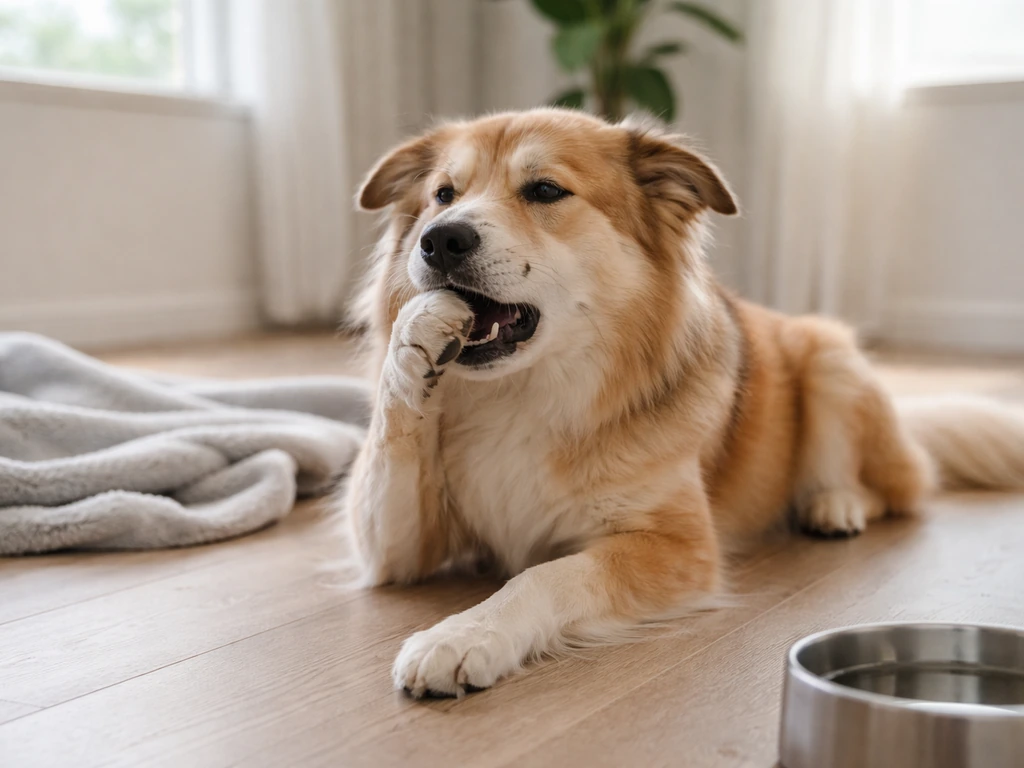
Once the bird situation is handled, turn your attention back to your dog. Most dogs that eat or mouth a bird are completely fine, but there are a few things worth monitoring over the next 24 to 48 hours.
Choking and foreign body risk
If your dog swallowed feathers, small bones, or a whole small bird, there is a risk of a gastrointestinal blockage or irritation. Watch for coughing, gagging, or pawing at the mouth in the first hour, which can indicate something is stuck. Over the next day or two, keep an eye out for vomiting, loss of appetite, lethargy, a distended abdomen, or straining to defecate. Any of those signs should prompt a call to your vet.
Illness from ingestion
Wild birds can carry Salmonella and Campylobacter, and a dog that ate an infected bird could develop gastrointestinal illness. Signs include diarrhea (sometimes bloody), vomiting, and lethargy appearing within 12 to 72 hours. Birds can also carry external parasites like mites that may transfer to your dog. If your dog develops a skin reaction or unusual scratching after the incident, mention it to your vet.
When to call the vet for your dog
Call your vet right away if your dog shows any signs of choking, trouble breathing, unresponsiveness, bleeding from the mouth, or seizures. For gastrointestinal symptoms that develop later, contact your vet for guidance. If you are worried about something your dog ingested and cannot reach your regular vet, the ASPCA Animal Poison Control Center is available 24 hours a day at (888) 426-4435.
What not to do (common mistakes that make things worse)
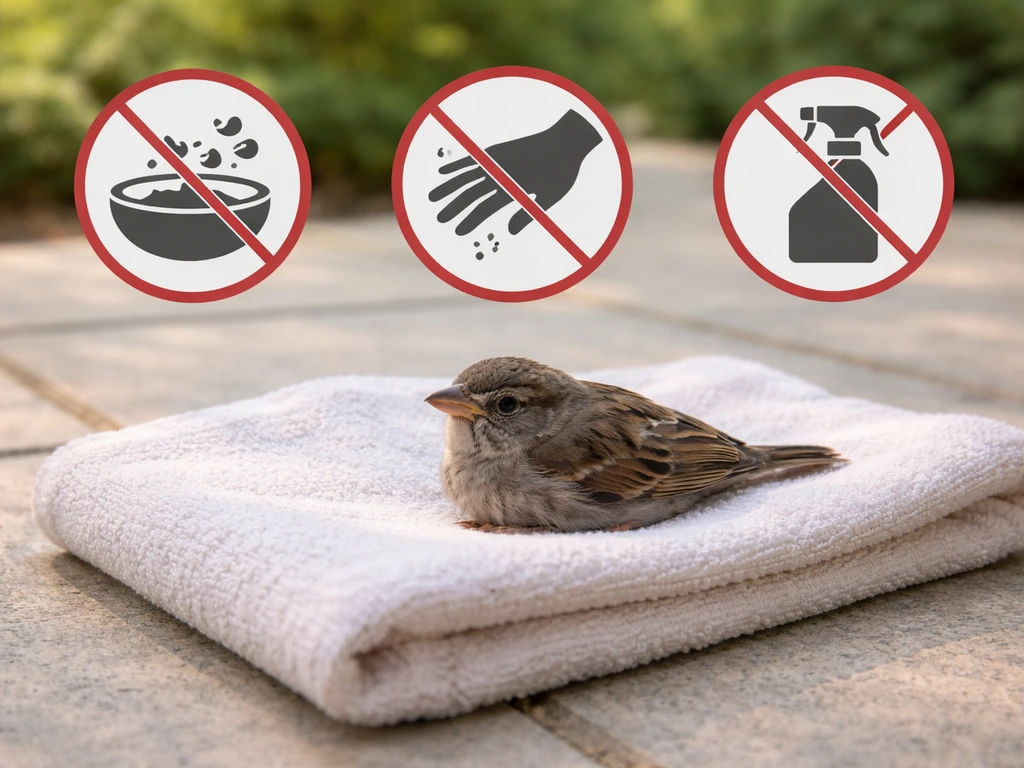
In a stressful moment it is easy to reach for the wrong instinct. Here are the things to avoid:
- Do not give the bird food or water. It seems kind, but it can cause aspiration in a bird that is in shock, and it can complicate veterinary assessment.
- Do not attempt to splint a broken wing or clean a wound yourself unless a wildlife professional specifically instructs you over the phone.
- Do not leave the bird outside in a box or on the ground thinking it will 'fly away when it is ready.' A bird that cannot fly after a dog encounter is not recovering; it is going into shock.
- Do not hold onto the bird for more than an hour or two trying to nurse it yourself. Unlicensed holding of wild birds is restricted under the Migratory Bird Treaty Act, and more importantly, a bird's chances of survival drop significantly without professional care.
- Do not let other pets or children near the box while you are making calls.
- Do not assume the bird is fine just because it looks uninjured on the outside.
How to stop this from happening again
If your dog caught a bird in your yard, the most direct fix is management. Keep your dog on a leash or inside a fenced area when birds are active, especially in the early morning and at dusk. Remove bird feeders from areas your dog can access freely, since feeders concentrate ground-feeding birds near dog territory. If your dog has a strong prey drive, this is worth addressing in training.
Dogs that repeatedly catch or kill birds sometimes develop what hunters call a hard mouth, and there are specific training approaches for working through that. How to fix a hard mouth in a bird dog explains the behavior and practical training methods in detail.
If the bird in question survived and is a wild native species, you may want to read more about the full range of what to do if your dog killed a bird, particularly around reporting, local wildlife regulations, and disposal if the bird did not survive.
A quick reference: situations and what they call for
| Situation | Immediate action | Professional help needed? |
|---|---|---|
| Bird is visibly deceased, dog acting normal | Remove and dispose of bird; monitor dog for GI symptoms | Call vet if dog shows symptoms within 48 hours |
| Bird is alive, no visible injuries | Box the bird (dark, quiet, warm); call wildlife rehabilitator now | Yes, required — dog saliva is dangerous even without visible wounds |
| Bird is alive with visible bleeding or broken wing | Box the bird carefully; call wildlife rehabilitator or avian vet immediately | Yes, urgent |
| Bird is unresponsive or in shock | Box the bird; transport to wildlife vet as fast as possible | Yes, emergency |
| Dog is choking or pawing at mouth | Call vet immediately; do not wait | Yes, emergency |
| Dog ate bird whole or large portions | Monitor for vomiting, lethargy, GI distress; call vet if symptoms appear | Call vet to discuss; may need exam |
The honest bottom line
Your dog eating or catching a bird is stressful, and it happens more often than people expect. In most cases your dog will be fine. The bird, unfortunately, faces much longer odds without fast professional help. The most important thing you can do right now is get the bird secured in a quiet, dark box and make the call to a wildlife rehabilitator. Do not wait to see if it improves on its own. And if the bird did not survive, that is a loss, but your responsibility then is simply to your dog's health and preventing it from happening again.
For a full walkthrough of the dog side of this scenario, what to do if your dog eats a bird covers the health risks and vet guidance in more depth. And if you are dealing specifically with the aftermath of a more violent encounter, what to do if your dog attacked a bird and what to do when a bird is attacked by a dog both provide additional guidance on injury assessment and next steps.
FAQ
What if the bird looks “okay” after my dog spit it out, do I still need to call a rehabber?
If you can see any bleeding, the bird is not moving, it is breathing with difficulty, or you suspect the dog punctured or chewed it, call immediately. If none of those are present, you still should not assume it is safe, because internal injuries can be missed at home. Keep the bird in a covered, quiet container while you wait to speak with a wildlife rehabilitator.
Should I try to feed the bird, give it water, or give it any medication at home?
Do not give the bird water, food, or over-the-counter meds. For first aid, the safest approach is minimal handling, gentle containment, and quiet transport if the bird is alive. If the bird is deceased, bagging for disposal with gloves or a barrier is the priority, then focus on your dog’s health.
What is the safest way to transport or store the bird before the call?
Avoid bringing the bird into your kitchen or letting pets approach it. Place it in a dark, ventilated box away from traffic and loud noise. If you must hold the box, keep it away from your face, then wash hands thoroughly after.
What if I cannot find a wildlife rehabilitator nearby or they do not answer?
Yes. Even if you cannot reach a licensed wildlife rehabilitator right away, call an avian-capable emergency vet, your regular vet for urgent advice, or your state wildlife agency. In the meantime, focus on containment and keeping the bird calm, then return attention to your dog.
My dog is still worked up and won’t release the bird, how do I decide between waiting vs calling right away?
If your dog is chewing or actively trying to get the bird, separate first by leashing, crating, or moving to another room. Only then assess choking signs. If your dog shows severe coughing, gagging, drooling heavily, open-mouth breathing, seizures, or unresponsiveness, treat it as an emergency and call your vet immediately.
My dog probably swallowed part of the bird, should I induce vomiting?
If you suspect your dog swallowed any part of the bird, do not induce vomiting unless a veterinarian tells you to. Monitor closely for the early signs listed (coughing or gagging in the first hour, then vomiting, appetite changes, lethargy, distended abdomen, or straining over the next day or two) and call your vet if any appear.
What symptoms from a bird-mouth incident should I watch for on my dog, and when should I call?
If the dog is otherwise normal, you can observe at home, but have a low threshold to call if symptoms appear. For example, diarrhea or vomiting within 12 to 72 hours, especially if bloody, or new skin irritation or unusual scratching should be reported promptly to your vet.
How should I protect myself and my home if the bird had blood or saliva on it?
Use gloves or a barrier (like a plastic bag turned inside out) and wash hands right after. Do not touch your eyes, nose, or mouth while handling. Also, keep the bird handling supplies separate from food-prep areas and wash any washable surfaces the bird contacted.
If my dog mouthed or chewed the bird, should I check my dog’s mouth for injuries too?
Do not clean the bite area with harsh chemicals or oils, but you should still check your dog’s mouth and face for cuts, bleeding, or swelling. If you see puncture wounds or the dog is pawing at the mouth, contact your vet, because oral and facial infections can develop quickly.
If the bird did not survive, what should I do with the body, and do I need to report anything?
For leftover bird remains, bag and dispose of them securely, so other animals cannot access them. If the bird is a protected species in your area or there is reporting required after a kill, confirm local rules with your state wildlife agency or the rehabilitator you contacted.
Next Articles
Can a Bird Live With One Wing? Survival and First Aid
Can a bird live with one wing? Injury outcomes and step-by-step first aid, plus when to get urgent help.
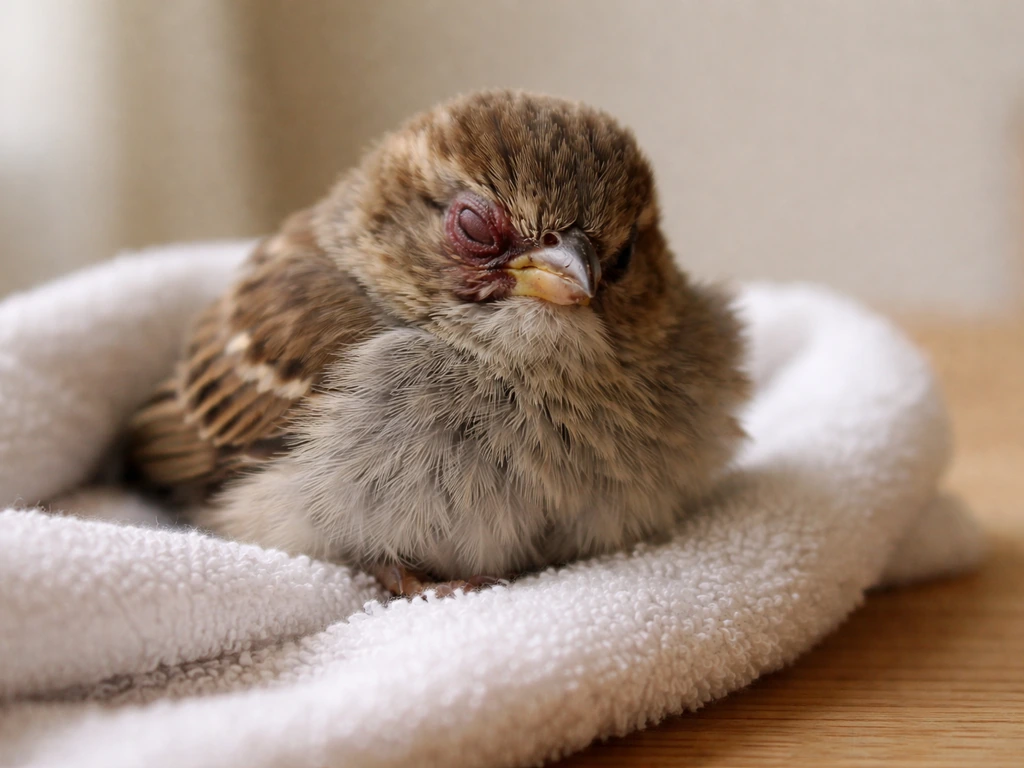
Can a Bird Survive With One Eye? What to Do Now
Learn if birds can cope with one eye and what to do now for an injured bird’s eye safely and urgently.
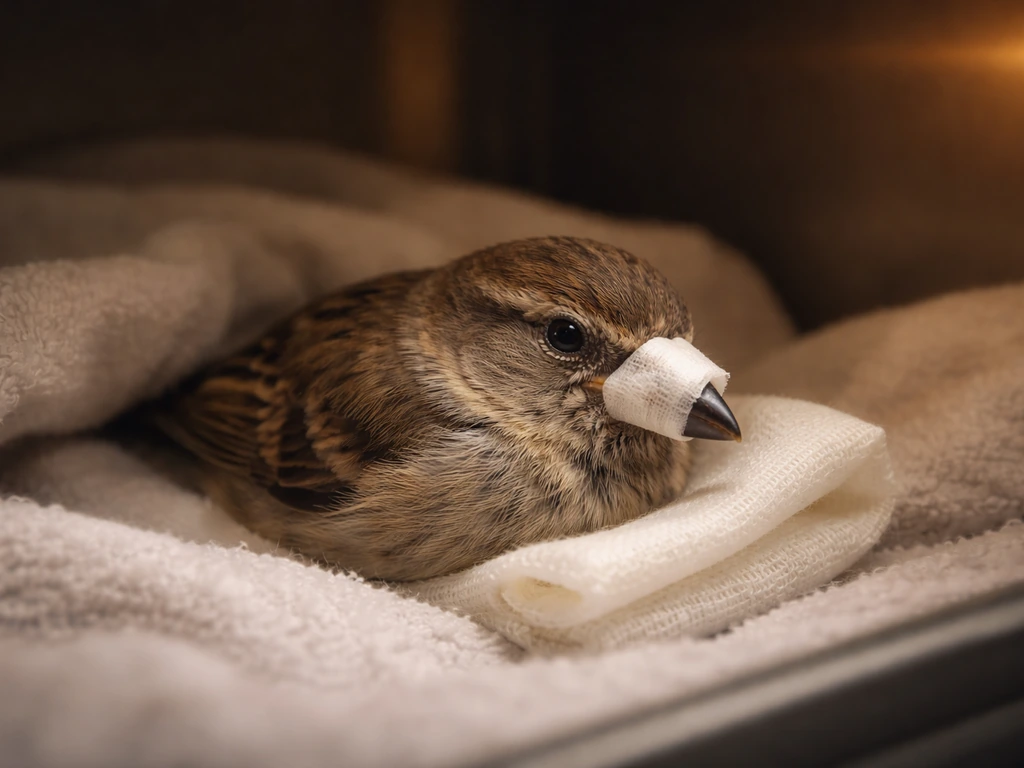
Can a Bird Survive With a Broken Beak? What to Do Now
Learn if a bird with a broken beak can survive, spot danger signs, and do safe first aid until a vet rescues it.