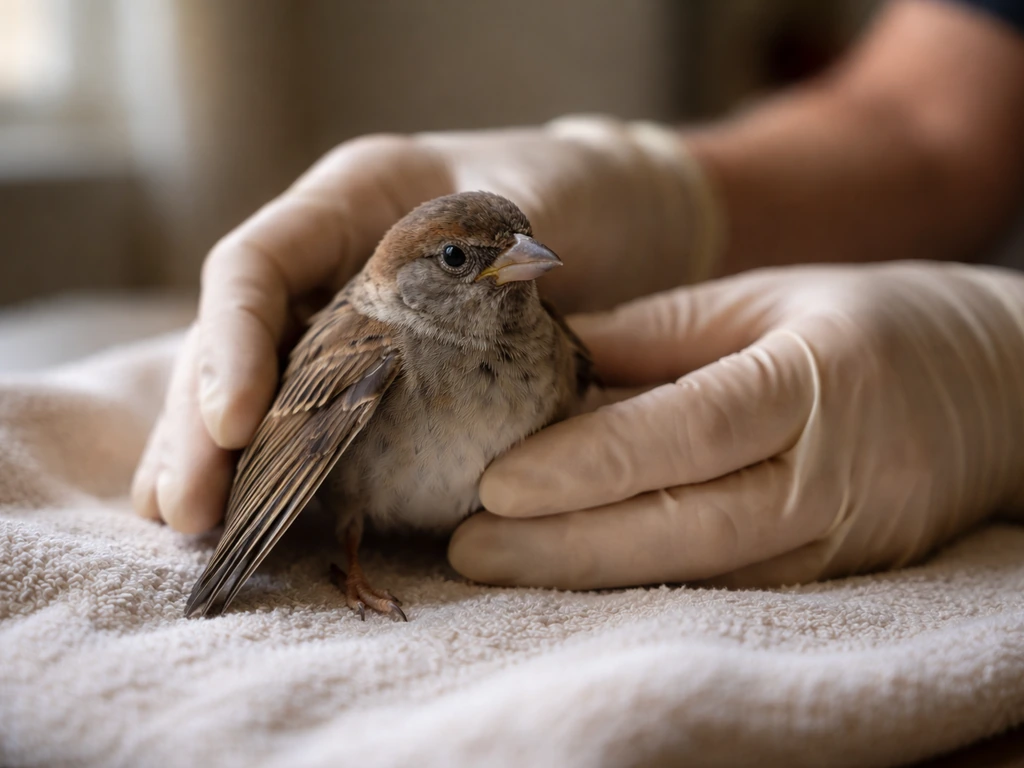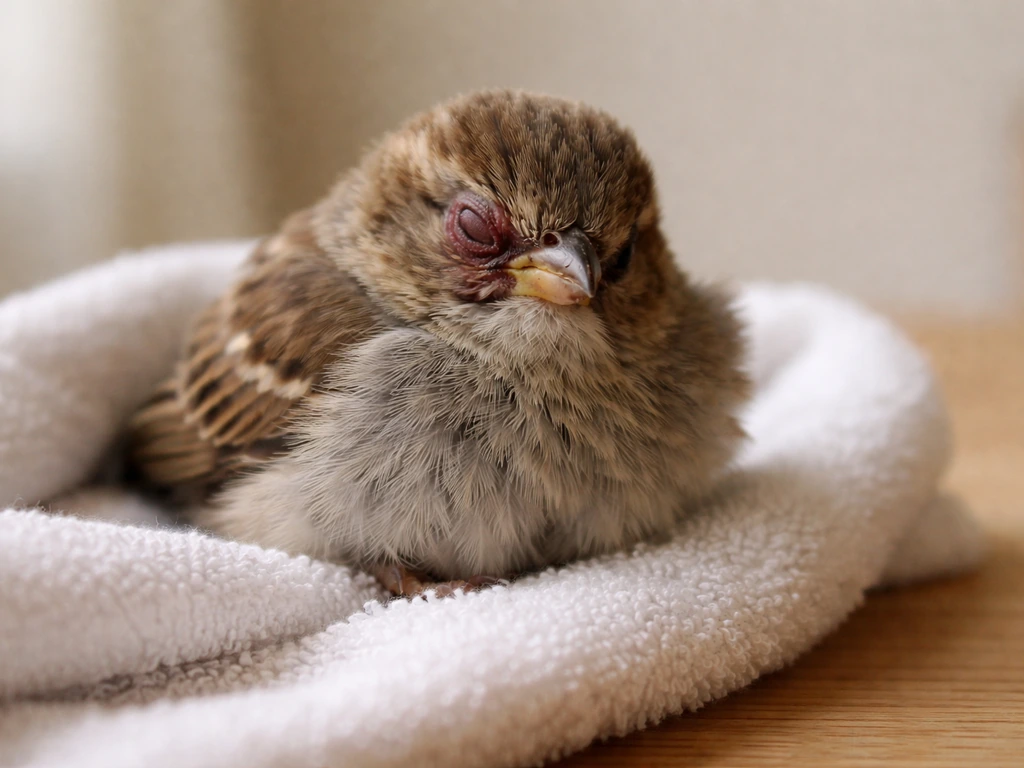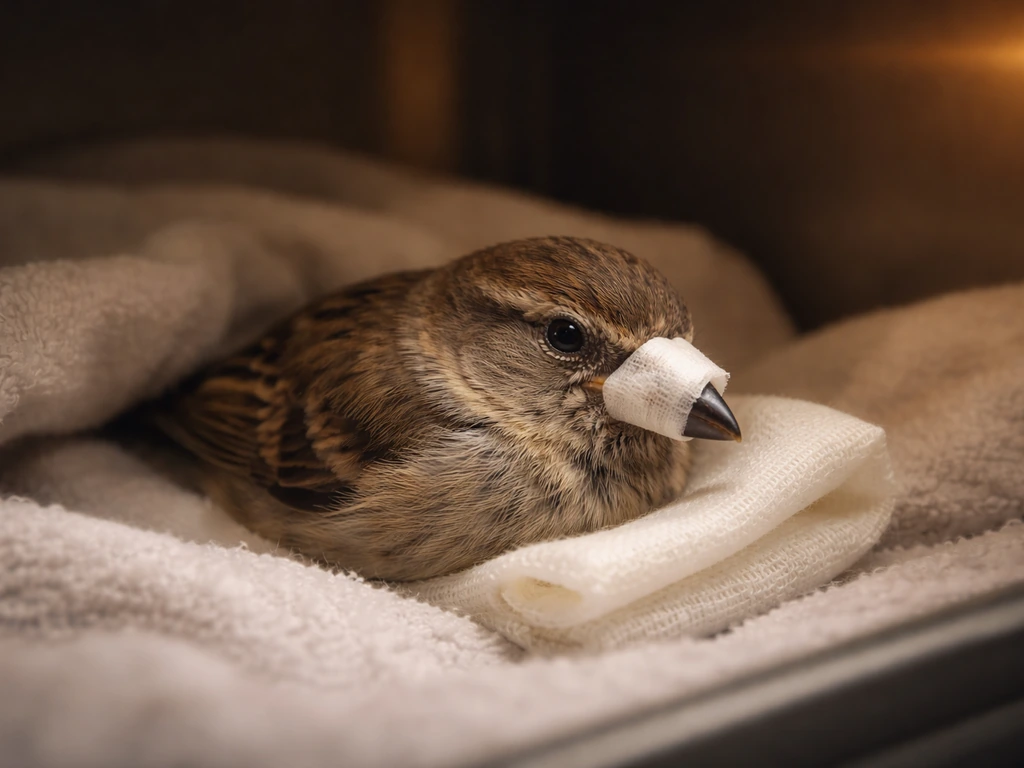
A bird vet is most commonly called an avian veterinarian, or avian vet for short. That's the term you'll see on clinic websites, directories, and professional associations. If you're dealing with a wild bird rather than a pet, the person you need is often a wildlife rehabilitator or a wildlife veterinarian, and the place you're calling is usually a wildlife rehabilitation center rather than a standard veterinary clinic. Knowing which term to use matters because it determines who picks up the phone and whether they can actually help the bird in front of you.
What Is a Bird Vet Called? Names and Who to Call
Marcus Chen
11 Apr 2026
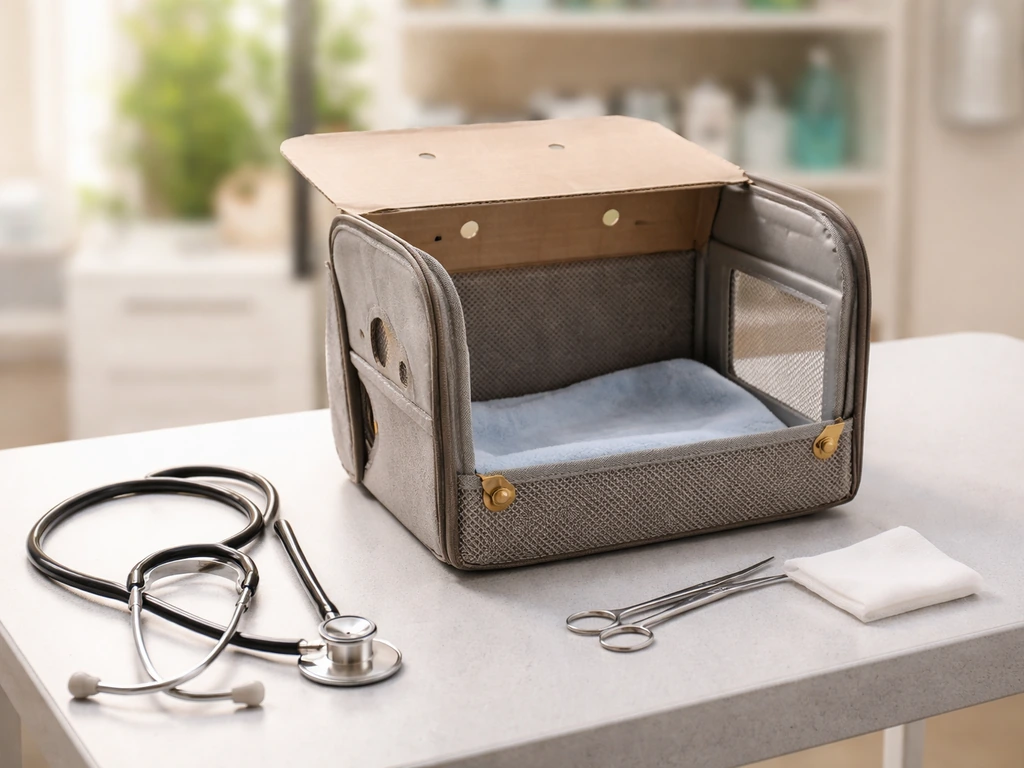
Common names for a bird vet
These four terms come up most often, and they're not always interchangeable:
- Avian veterinarian (or avian vet): A licensed vet who specializes in birds, most often pet birds like parrots, cockatiels, canaries, and similar species. This is the gold-standard term when searching for professional bird care.
- Bird veterinarian: An informal but widely understood version of the same thing. Works fine in a Google search if 'avian vet' returns no local results.
- Wildlife veterinarian: A vet who works specifically with wild animals, including birds. Often employed by wildlife centers, zoos, or universities rather than private clinics.
- Wildlife rehabilitator: Not a veterinarian, but a government-permitted specialist trained to rescue, treat, and release injured or orphaned wild birds and animals. For most injured wild birds, this is the first call you should make.
In everyday conversation people often just say 'bird vet' and that's completely fine. The distinction between these titles only matters when you're deciding who to contact for a specific situation, which is what the rest of this guide covers.
Choosing the right specialist for your situation
The type of bird you're dealing with changes who you need to call. Here's how to think about it quickly:
| Situation | Who to call | Why |
|---|---|---|
| Injured or sick pet bird (parrot, budgie, cockatiel, etc.) | Avian veterinarian | They're trained in companion bird medicine and can prescribe medication, run diagnostics, and provide ongoing care |
| Injured wild bird found outside | Wildlife rehabilitator or wildlife rehabilitation center | They hold the legal permits required to treat and house wild birds; most regular vets cannot legally keep wild birds long-term |
| Wild bird needing emergency stabilization, no rehab available | Any willing vet or emergency animal hospital | In a true emergency, any professional care is better than none while you locate a permitted rehabilitator |
| Wild bird with complex injuries (broken bones, deep wounds) | Wildlife veterinarian at a rehabilitation center | These injuries need X-rays, surgery, and specialist knowledge beyond basic first aid |
One practical note: many general practice vets are not comfortable treating birds, especially wild ones. Don't be surprised if a regular dog-and-cat clinic turns you away. That's not indifference; it's honesty about their training. An avian vet or wildlife rehab center is genuinely the better option for the bird.
What to do the moment you find an injured bird
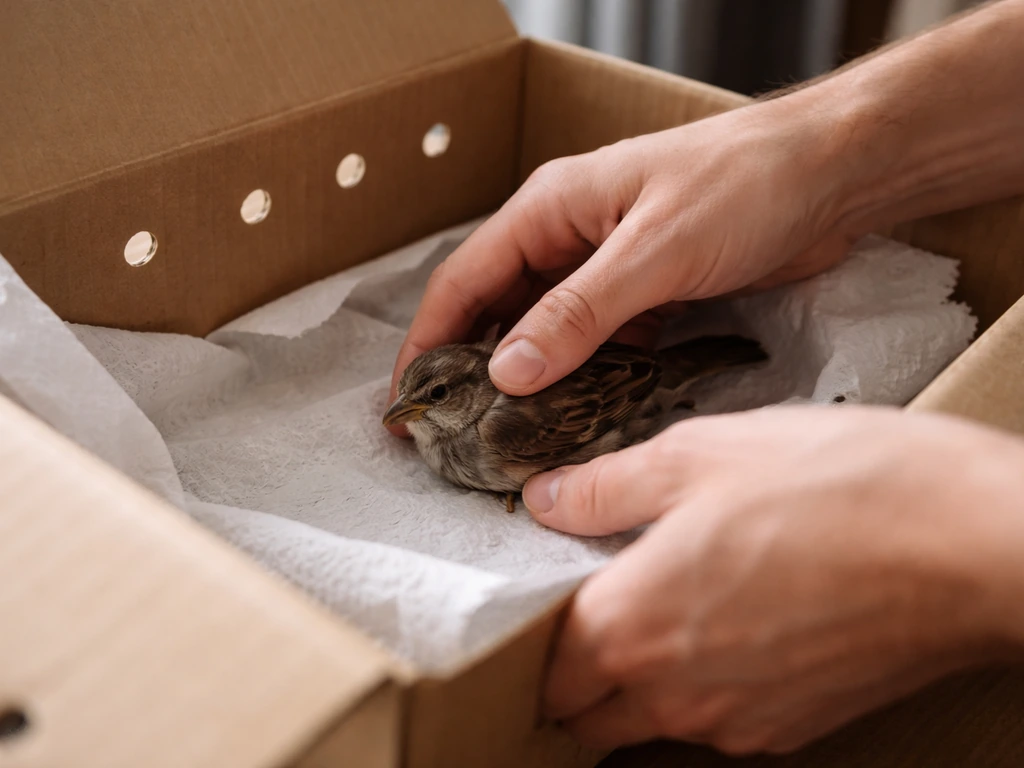
Before you even pick up the phone, there are a few things that make a real difference in whether the bird survives until professional help arrives. The goal at this stage is simple: keep the bird alive, calm, and contained without making things worse.
- Contain the bird. Place it gently in a cardboard box or paper bag with air holes. Line the bottom with a soft cloth or paper towel. A secure container prevents the bird from injuring itself further by thrashing around.
- Keep it warm. Birds lose heat fast when they're in shock or injured. Place the box in a warm, quiet room. If the bird is cold, you can put a heating pad set to low under one half of the box (not the whole bottom, so the bird can move away if it gets too warm).
- Keep it dark and quiet. Darkness reduces stress significantly. Close the lid or fold the box top over. Don't keep checking on the bird; every peek adds stress.
- Do not offer food or water. This one surprises people, but injured birds often cannot swallow safely and may aspirate water into their lungs. Unless a licensed rehabilitator or vet tells you otherwise, skip the food and water entirely.
- Do not try to 'fix' injuries yourself. No splinting, no pulling out stuck objects, no cleaning wounds with household products. Well-meaning intervention frequently causes more damage.
Once the bird is contained and warm, call for help. If you're unsure about any of these steps or want more detail on the process, there's a full breakdown of how to take a bird to the vet that walks through each stage carefully.
Injury-specific next steps
Broken wing or leg
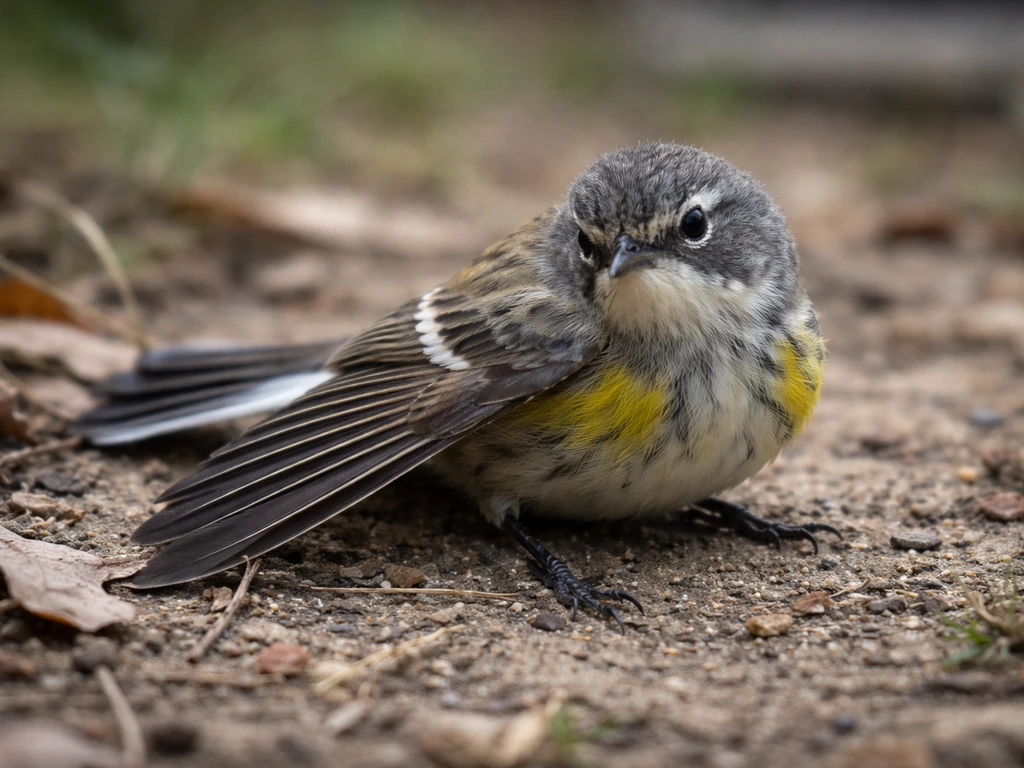
A bird with a broken wing will often hold one wing lower than the other or drag it on the ground. A broken leg may cause the bird to hop awkwardly or collapse to one side. Both are genuine emergencies. Do not attempt to splint the injury yourself; bird bones are hollow, small, and easy to fracture further with an amateur attempt. Contain the bird as described above, limiting its movement, and get it to a wildlife rehabilitator or avian vet as fast as possible. The sooner fractures are stabilized by a professional, the better the outcome.
Window collision birds
Window strikes are one of the most common bird emergencies. A bird that has just hit a window may be stunned but not visibly injured. In that case, contain it in a box and place it somewhere quiet for up to an hour. Many birds recover and can be released. However, if the bird cannot hold its head up, has labored breathing, or can't keep its eyes open after 30 to 60 minutes, it needs professional attention immediately. The U.S. Fish & Wildlife Service is clear on this: those signs mean the bird requires a licensed wildlife rehabilitation facility, not more waiting. Birds that look fine after a window collision can still have internal injuries, head trauma, or eye damage that isn't obvious on the surface.
Cat or dog attacks
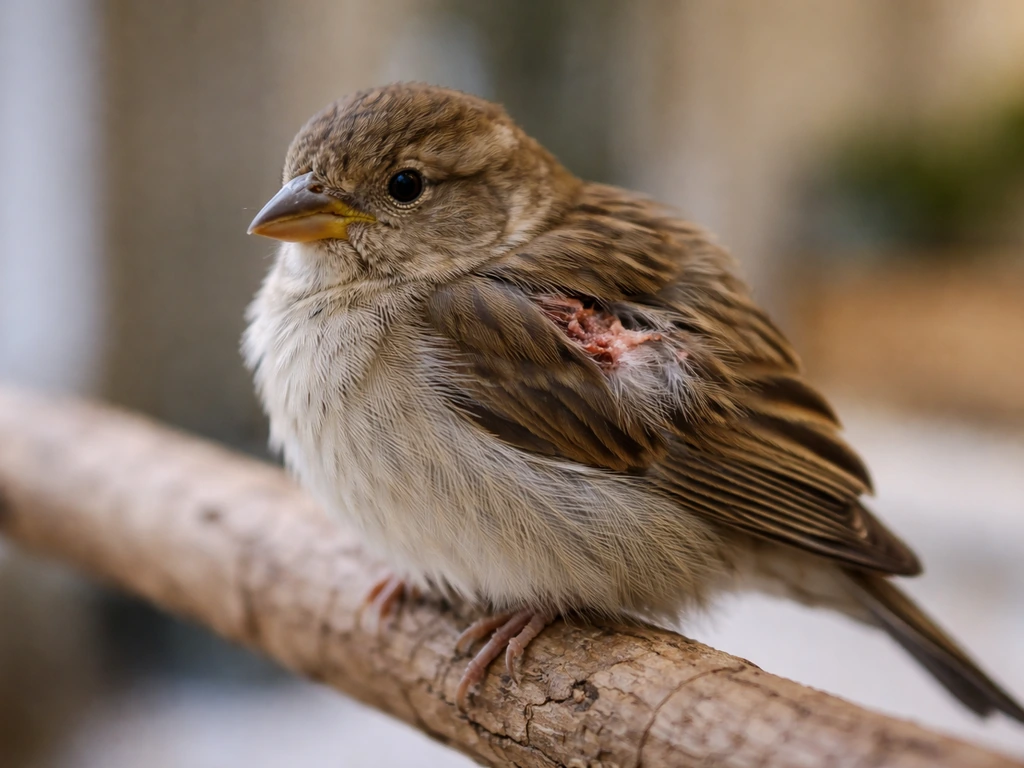
This is actually more urgent than it looks. Even a minor puncture wound from a cat's claw or tooth introduces bacteria that are almost always fatal to birds within 24 to 48 hours without antibiotic treatment. If a cat or dog has grabbed a bird, even briefly, treat it as a medical emergency. Contain the bird and call a wildlife rehab center or avian vet immediately. Do not wait to see if the bird 'seems okay.' It probably will seem okay right after the attack, and that's exactly when the clock starts.
Beak injuries
A cracked, broken, or bleeding beak is painful and can affect the bird's ability to eat and breathe. Light bleeding may slow on its own, but don't try to use household first-aid products like hydrogen peroxide or bandages. Keep the bird calm and warm, and get it to an avian vet. Beak repairs are possible but require a specialist.
Nest emergencies and baby birds
If you find a baby bird on the ground and the nest is visible and reachable, gently place it back. The parents will not reject it because you touched it. If the nest is destroyed or unreachable, keep the bird warm using something like a hand warmer wrapped in a towel (not direct contact), and get it to a licensed wildlife rehabilitator as quickly as possible. Do not attempt to feed it. Baby birds have very specific nutritional needs, and feeding the wrong thing even once can cause lasting harm. The Wild Bird Fund is explicit: keep the baby warm and get it to a rehabilitator fast, minimizing handling as much as you can.
When it's an emergency vs. when you can call later
Call or go now if the bird shows any of these signs:
- Visible bleeding or an open wound
- Labored or open-mouth breathing
- Unresponsive or unable to hold its head up
- Lying on its side
- Obvious broken bone (wing dragging, leg at wrong angle)
- Any contact with a cat or dog, even brief
- Stuck to a glue trap (do not try to remove it yourself; attempts by untrained people almost always worsen the injury)
You can call during regular hours (without rushing to an emergency clinic) if the bird appears stunned but alert after a window collision, is sitting quietly without visible injury, and is breathing normally. Give it 30 to 60 minutes in a dark, warm box. If it hasn't improved, escalate. Knowing when you should take your bird to the vet versus when it's safe to monitor at home is genuinely one of the most useful things to understand before an emergency happens.
Understanding the full picture of why a bird might need to go to the hospital can also help you explain the situation accurately when you do call, which speeds up the triage process on their end.
How to find a bird vet or wildlife rehabilitator near you
For a pet bird, search 'avian veterinarian near me' or 'avian vet [your city]'. You can also check the Association of Avian Veterinarians (AAV) directory online, which lists certified avian vets by location. When you call, ask directly: 'Do you see pet birds regularly?' A vet who sees one cockatiel a year is not the same as one who specializes in avian medicine.
For a wild bird, search 'wildlife rehabilitator near me' or 'wildlife rehabilitation center [your state]'. The Animal Help Now platform is one of the most reliable directories for finding local wildlife rehabbers quickly, and multiple wildlife organizations actively direct the public there when they're outside a rehab center's service area. The site WildlifeRehabber.com is another solid option. If you need guidance right away on where you can take your bird to the vet, that resource covers both avian clinics and wildlife rehab options in a way that's easy to navigate under pressure.
If you can't find a wildlife rehabilitator and have a seriously injured wild bird, call your state wildlife agency or local animal control. They can usually point you to a permitted rehabilitator in your area. Some humane societies and animal shelters also have contacts or can accept wild birds temporarily.
If you're wondering whether it's even allowed to bring a wild bird to a standard vet, the short answer is yes, any vet can see a wild bird in an emergency. Whether they're equipped to provide the right treatment is a different question, but taking an injured bird to the vet is always a reasonable first move when you have no other option nearby.
What to say when you call and how to prepare for the trip
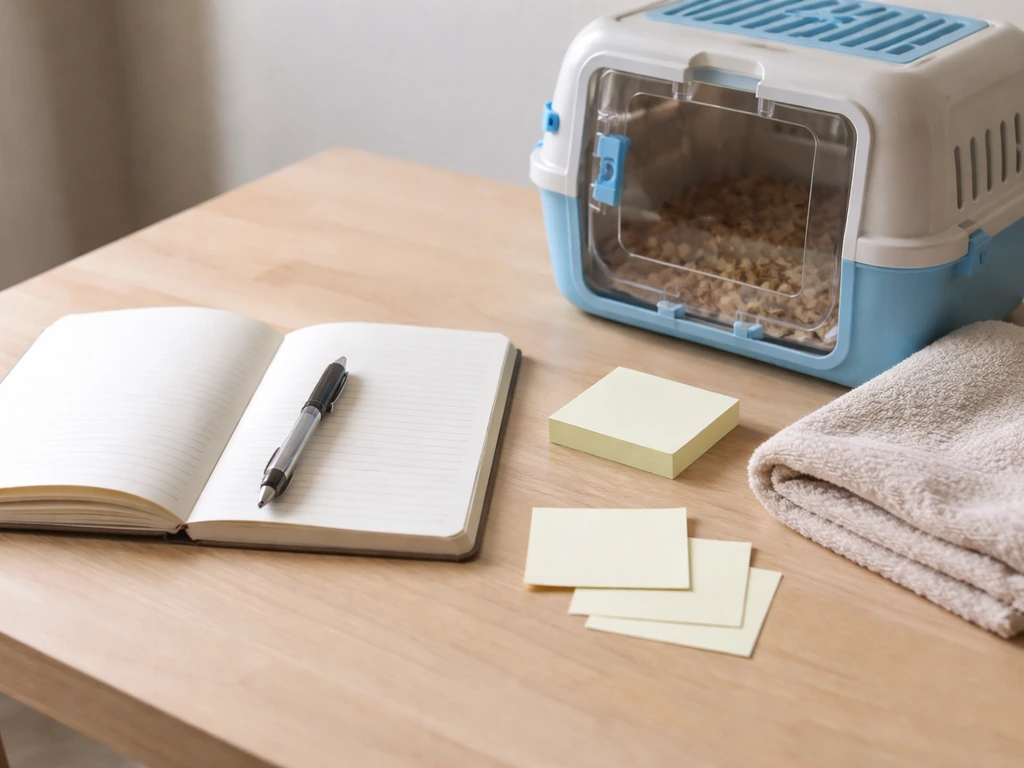
When you call a wildlife rehab center or avian vet, they need specific information quickly. Have this ready:
- Species if you know it (or a description: 'small brown songbird,' 'large black crow,' 'baby with no feathers')
- Whether it's a pet or a wild bird
- Where you found it (address or nearest cross street, especially for wild birds)
- What you observed (window collision, cat attack, found on ground, etc.)
- Current visible symptoms (bleeding, broken limb, not moving, breathing hard)
- How long ago you found it
- Whether you've already contained it and what it's in
Don't worry about not knowing the exact species. 'Small gray bird about the size of a fist, found under a window' gives the intake team enough to start triaging before you arrive. Be honest about what you've done so far, including if you offered food or water. They won't judge you; they just need accurate information.
Before you leave, make sure the container is secure so the bird can't escape in your car. If the trip is longer than 20 minutes, keep the heat on in the car but don't blast it directly at the box. There's specific guidance on how to transport a bird to the vet safely that covers the details of keeping the bird stable during the drive, which is worth a quick read before you head out.
For pet bird owners, it's also worth thinking about routine care, not just emergencies. Understanding how often you should take your bird to the vet for checkups helps you build a relationship with an avian vet before a crisis hits, which makes the whole process much smoother when you actually need urgent help. And if you've ever wondered about procedures like spaying or neutering, the answer to whether birds can be fixed is more nuanced than you'd expect and worth knowing ahead of time.
The bottom line: a bird vet is called an avian veterinarian for pet birds, and a wildlife rehabilitator for wild birds. Both are real professionals with real training. Getting the bird to the right one quickly is the single most important thing you can do.
FAQ
If I have a pet parrot, should I call an avian vet or a wildlife rehabber?
Yes. For pet birds, the right term to use when calling is “avian veterinarian” (or “avian vet”). If you call a regular clinic, ask explicitly whether they treat birds, and confirm they can handle common pet-bird issues like crop stasis, respiratory infections, or injury management.
What should I call if the bird is a baby I found outdoors, but I am not sure if it is a pet or wild?
Sometimes. Many avian veterinarians focus on companion birds, while wildlife rehabilitators focus on injured wild birds. If the bird is a juvenile found outdoors, ask the intake team whether they handle “wild fledglings” or “juvenile passerines” and what their acceptance criteria are.
How do I describe the problem to the vet so they can triage quickly, even if I do not know the species?
When a bird is bleeding or struggling to breathe, don’t wait for an exact diagnosis. Start triage by saying the bird’s condition, what happened (window, cat, dog, falling), and current symptoms (open-mouth breathing, inability to stand, eyes closed). Many centers can give quick containment guidance while you travel.
Is a wildlife rehabilitator always better than an avian vet for wild birds?
No, not in the way people often assume. Wildlife rehabilitators typically focus on stabilizing, treating, and releasing wild birds, and many can transport or advise what to do while you drive. An avian veterinarian may be able to help too, but if you are dealing with a wild bird and the center is permitted for wildlife, that is usually the fastest path.
What if the wildlife rehab center I found does not answer, or says they cannot take my bird?
Ask whether they are licensed to treat wildlife and whether they accept the type of bird you have. If their intake is limited, they may direct you to a nearby permitted facility or to emergency intake procedures they handle on certain hours.
What first-aid should I do if the beak or skin is bleeding (besides keeping it warm and calm)?
Do not use normal household “bird rescue” products. Avoid hydrogen peroxide, human antiseptics, bandages, and any medication unless instructed by the clinic. Even small puncture wounds can turn dangerous fast, so focus on containment, warmth, and getting professional help.
How long should I wait after a window strike before I call for help?
If a bird hit a window is fully alert, breathing normally, and improving within the first hour, home monitoring is sometimes reasonable. If there is any inability to stay upright, labored breathing, eyes staying closed, or no improvement, escalate immediately to a licensed wildlife rehabilitator or avian veterinarian.
Should I feed or give water to a stunned wild bird while I am waiting to be seen?
For a wild bird, avoid feeding, offering water, or trying to “give meds” unless a professional tells you to. Feeding the wrong food or giving water by mouth can cause aspiration or further injury. If you must transport, keep the bird warm and contained and let the intake team advise next steps.
Do I need to call ahead, or should I just drive the bird to the clinic?
Call first if you have time, especially for wild birds, because many facilities have intake rules and may need specific details. If the bird is actively bleeding, struggling to breathe, or worsening quickly, prioritize immediate transport and be ready to provide the “what happened” timeline when they answer.
What are safe-car-ride tips for keeping the bird stable without overheating or underheating it?
Have your bird secured so it cannot escape in the car, but also plan for ventilation. In warm weather, don’t overheat the container, and avoid leaving the bird in a parked car. If it is cold, keep the heat on gently without aiming hot air directly into the carrier.
If I cannot find an avian vet or wildlife rehabber nearby, what should I do with a seriously injured wild bird?
It depends on the emergency and what the bird needs. If you cannot reach a specialized avian clinic or a permitted wildlife rehabber, going to an available emergency vet for initial stabilization can be a reasonable first step, then transferring if specialized care is needed.