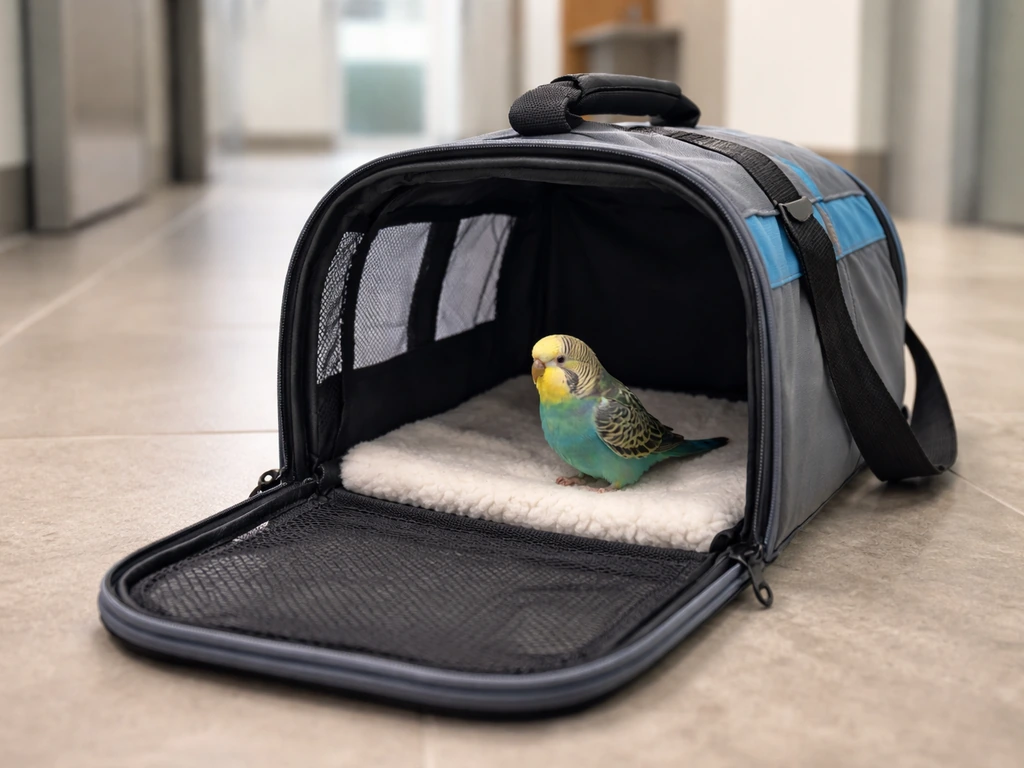
If your bird is bleeding that won't stop, struggling to breathe, was attacked by a cat or dog, has a visibly broken wing or leg, can't stand, or just had a hard collision with a window, take it to a vet or wildlife rescue today, right now if possible. These are not wait-and-see situations. A bird that looks "okay" after trauma can decline fast, so when in doubt, make the call.
When Should I Take My Bird to the Vet? Emergency Guide
Marcus Chen
3 May 2026
Go now vs. wait: a quick decision checklist
Use this as your first filter. If any item in the "go now" column applies, stop reading and get help on the phone or in the car. You can come back for the rest of the details later.
| Go to a vet or rescue NOW | Can monitor briefly (but still call today) |
|---|---|
| Bleeding that won't stop within 5 minutes | Very mild stunned behavior after window strike, improving steadily |
| Open-mouth breathing, tail bobbing, gasping | Slight lethargy after a stressful event with no other symptoms |
| Bird was attacked by a cat, dog, or other animal | Minor feather loss with no skin wounds |
| Visible broken wing or leg (drooping, bent wrong) | Mild puffing up in a warm bird that is still eating normally |
| Seizures, twitching, or collapse | Fledgling found on the ground but clearly hopping and alert |
| Severe laceration or gaping wound | |
| Complete inability to stand or perch | |
| Baby bird fallen from nest and injured or cold |
The "monitor briefly" column doesn't mean do nothing. It means observe closely for 30 to 60 minutes and call a wildlife rehabilitator or avian vet for advice during that window. If things stay the same or get worse, move to the "go now" column immediately.
Injuries that always mean a vet visit, no exceptions
Broken wings and broken legs are obvious ones, but it's worth saying clearly: birds hide pain extremely well. In the wild, showing weakness gets you eaten. So a bird with a broken bone may still be trying to move around and may not be screaming in distress. Look for a wing that droops lower than the other, a leg that's held at a strange angle, or a limb the bird refuses to put weight on. These need professional attention, and the sooner the better.
Bleeding is the other non-negotiable. If blood is flowing from anywhere, including a broken blood feather, a damaged nail, or a wound on the skin, and it doesn't fully stop within 5 minutes of gentle direct pressure, that's a vet situation. If bleeding does not stop within five minutes of gentle direct pressure, veterinary intervention is required blank" rel="noopener noreferrer">bleeding does not fully stop within 5 minutes of gentle direct pressure. Small birds don't have much blood to lose. If you’re wondering why did the bird go to the hospital, the short answer is that sudden injuries and breathing issues can worsen fast and need urgent evaluation. A wound that looks minor can be life-threatening very quickly.
Severe lacerations with gaping skin or exposed tissue are emergencies. Same with any penetrating wound, even a small puncture you're not sure about. This matters especially after animal attacks, which we'll cover in a moment.
Beak, breathing, and mobility red flags
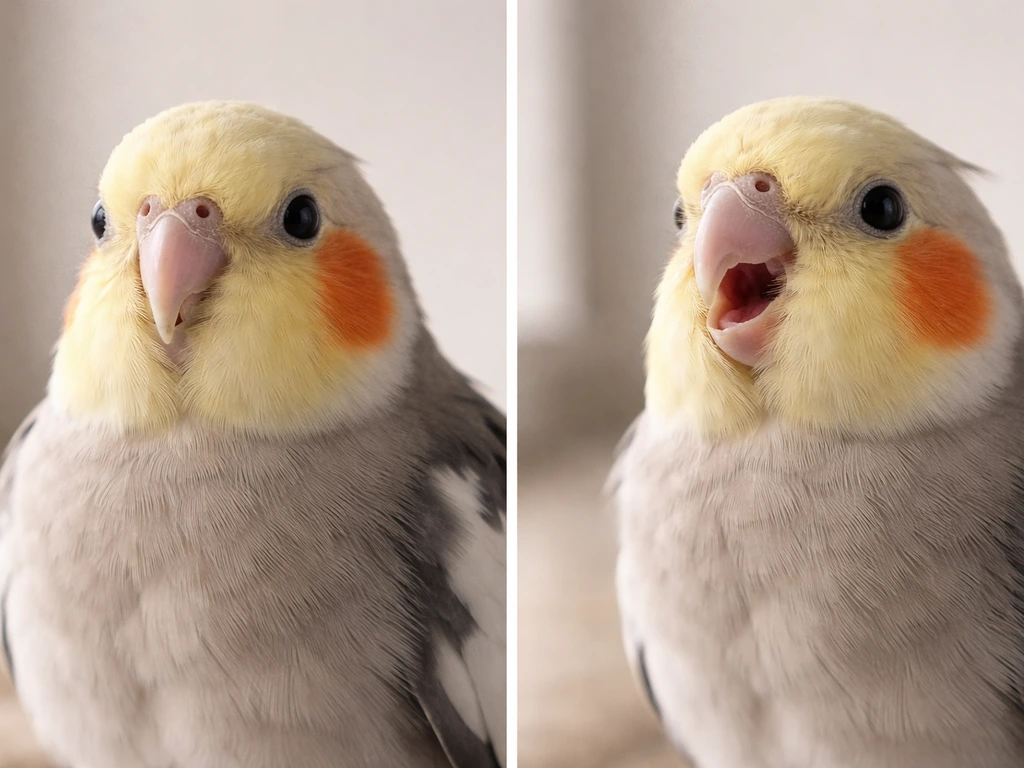
Breathing problems in birds are always urgent. Healthy birds breathe with their beaks closed and you barely notice it. The moment you see open-mouth breathing, that's a red flag. Pair it with tail bobbing (where the tail pumps up and down noticeably with each breath) or increased chest heaving, and you have a bird in respiratory distress. These signs, along with gasping, wheezing, or any strange clicking sounds, mean get to an avian vet as fast as you can. Respiratory emergencies can turn fatal within hours.
Beak injuries are tricky because they look alarming even when minor, but they can also be serious. A cracked or partially broken beak, visible misalignment, or swelling around the face or eye area all warrant a same-day vet call. A bird with a damaged beak may not be able to eat, which creates its own emergency on top of the injury itself.
Mobility red flags to watch for include an inability to perch, stumbling, walking in circles, head tilting to one side, twitching, or any seizure-like behavior. These are signs of neurological involvement, whether from head trauma, poisoning, or illness, and they need professional evaluation today.
Window strikes, cat attacks, and other trauma
Window strikes
Window collisions are one of the most common reasons people find an injured wild bird. The bird hits the glass, drops to the ground, and may look merely stunned. This is deceptive. Even a bird that seems to be recovering quietly may have a concussion, internal bleeding, or injuries that will worsen over the next few hours. If a bird is not clearly alert and flying away within 20 to 30 minutes of a window strike, treat it as injured and contact a wildlife rehabilitator. If it's still there after an hour, that's your answer: it needs help.
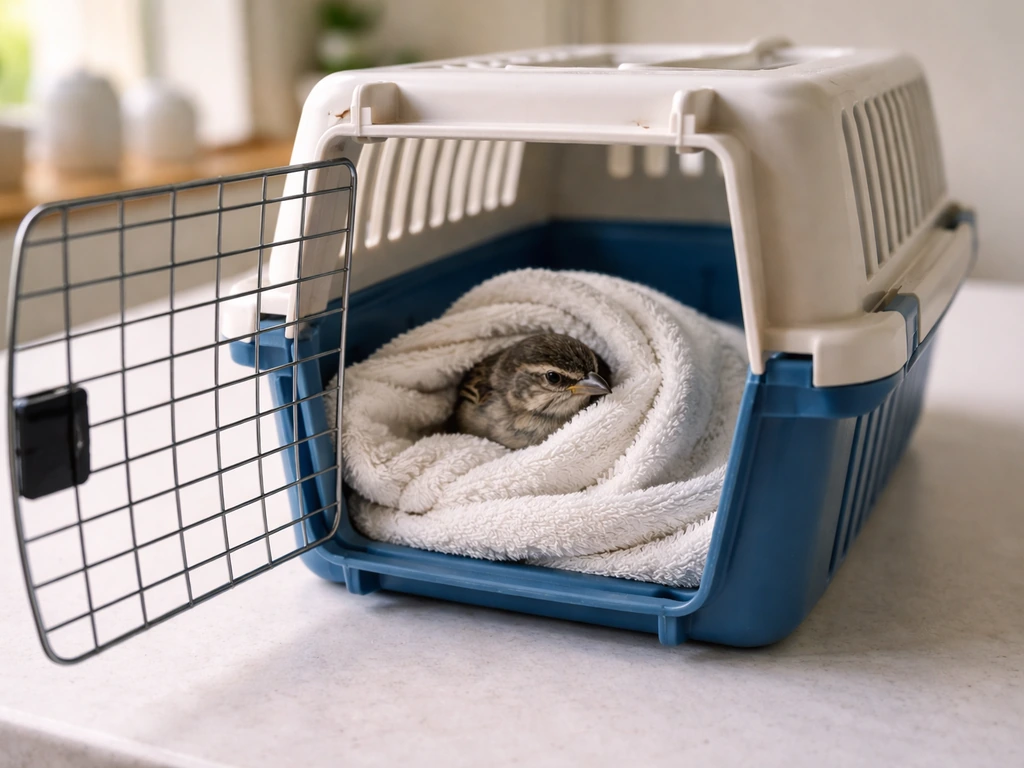
Don't just leave a stunned bird on the ground where a cat or predator can find it while it's vulnerable. Gently place it in a ventilated box in a quiet, dark, warm spot while you make calls. We'll cover the transport basics below.
Cat and dog attacks
Any bird that has been in a cat's mouth needs a vet, full stop, even if it looks completely fine. If you’re wondering whether you can get a bird fixed after a cat or dog attack, the safest move is to call a vet immediately can you get a bird fixed. Cat saliva carries bacteria (Pasteurella is a major one) that can cause a fatal systemic infection within 24 to 48 hours. USGS’s wildlife disease field manual also notes that clinical progression after Pasteurella multocida susceptibility or infection in birds commonly involves a 24 to 48 hour period blank" rel="noopener noreferrer">Pasteurella is a major one. The puncture wounds from cat claws and teeth are often tiny and easy to miss, but the damage underneath can be significant. Dogs can cause crush injuries that don't bleed externally but cause massive internal damage. If a pet got hold of your bird, don't wait to see if it seems okay. Call your avian vet immediately.
Nest and baby bird situations are a different category
Found a baby bird on the ground? The first thing to figure out is whether it's a nestling (no feathers or barely any, eyes may be closed, helpless-looking) or a fledgling (mostly feathered, hopping around, possibly short flights). Fledglings on the ground are often completely normal. Their parents are usually nearby and still feeding them. Unless the bird is clearly injured, visibly cold, or in immediate danger from a pet or predator, leave a fledgling where it is.
A nestling on the ground is a different story. If you can see or reach the nest, gently place the bird back in it. The myth that parent birds will reject a baby you've touched is just that: a myth. Birds have a limited sense of smell and will not abandon a chick because a human handled it. If the nest is gone or unreachable, contact a licensed wildlife rehabilitator right away.
The most important rule for baby birds while you're waiting to reach a rehabilitator: do not feed them and do not give them water. This is not optional. Feeding the wrong thing, or giving water incorrectly, can cause aspiration or fatal nutritional imbalances. Every major wildlife rescue organization says the same thing: call first, feed never (without specific instruction from a rehabber). Keep the baby warm, dark, and quiet, and get professional guidance before doing anything else.
What to do before you get in the car
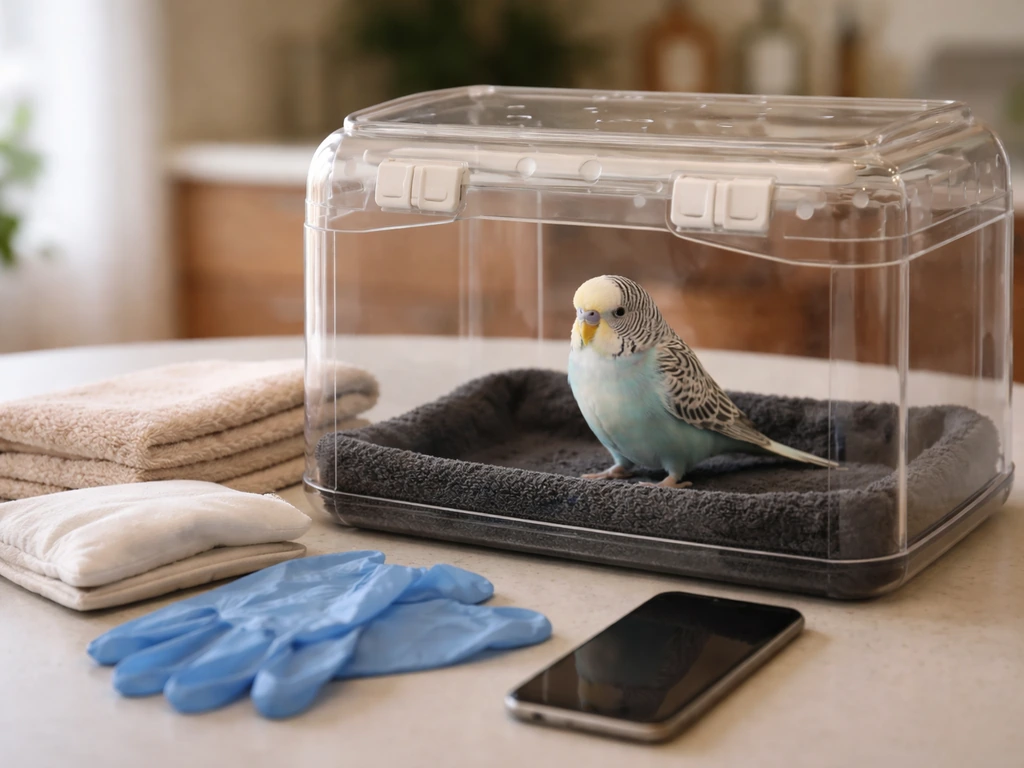
Good transport prep takes about 5 minutes and can genuinely make the difference between a bird that survives the trip and one that doesn't. Here's what to do:
- Find a small cardboard box with a lid, or a pet carrier. Poke a few air holes in the sides if it's a sealed box. Line the bottom with a soft cloth or paper towels so the bird has grip.
- Place the bird in gently, minimizing handling. Support the body, keep the wings against the sides, and avoid squeezing. If there's a head or neck injury suspected, minimize movement in that area.
- Keep it warm. Birds have a body temperature of roughly 103 to 106°F and lose heat fast when injured or in shock. Wrap a hot water bottle or hand warmer in a thin towel and place it against one side of the box, not directly under or touching the bird. This gives the bird a warm zone it can move toward or away from.
- Keep it dark and quiet. Cover the box with a cloth or close the lid. Darkness reduces panic and stress, which can genuinely kill an already compromised bird.
- Do not offer food or water before transport unless a vet or rehabber has specifically told you to.
- Do not apply any ointment, petroleum jelly, or salve to wounds. These can damage feathers, interfere with temperature regulation, and complicate treatment.
- Call ahead. Let the vet or rescue know you're coming and describe what you're seeing. They can give you specific instructions for your situation.
During transport, keep the box on the seat (not in a dark trunk), avoid loud music, and keep the car warm. Transport is easiest and safest when you follow a bird-specific plan for the trip to the vet, including a secure carrier and minimal handling transport a bird to the vet. If you have a heating pad available, you can set the carrier on top of it on a low setting for the drive.
Choosing the right help: avian vet vs. wildlife rehabilitator
The type of help you need depends mostly on whether your bird is a pet or a wild bird, and what kind of care is required. If you're wondering whether you can take an injured bird to the vet, the right choice depends on whether it's a pet or a wild bird and how urgent the injury is can i take an injured bird to the vet.
| Situation | Who to contact | Why |
|---|---|---|
| Pet bird (parrot, cockatiel, canary, etc.) that is injured or sick | Avian veterinarian | Your pet needs ongoing medical care, diagnosis, and treatment tailored to a companion bird |
| Wild bird that is injured, ill, or in distress | Licensed wildlife rehabilitator | Wild birds legally require licensed rehab care; rehabbers are trained for wild species release prep |
| Wild bird with severe trauma needing stabilization first | Emergency vet first, then wildlife rescue | Some injuries need immediate stabilization before a rehabber can take over |
| Baby wild bird found on ground, not injured | Wildlife rehabilitator | Rehabbers can assess whether intervention is truly needed and guide you |
| Injured bird of prey (hawk, owl, falcon) | Raptor-specific wildlife rehab center or avian vet | Raptors need specialist care and are protected under federal law |
To find an avian vet, search specifically for "avian veterinarian" or "bird vet" plus your city, because not every general vet is trained to treat birds. For routine care, you can also ask your avian vet how often you should take your bird in for checkups how often should you take your bird to the vet. If you are trying to decide where to take your bird, use the tips above to find an avian veterinarian near you. If you want to ask for the right kind of care, look for an avian veterinarian, often called a bird vet. The Association of Avian Veterinarians maintains a directory worth checking. For wild birds, search "wildlife rehabilitator near me" or call your local animal control, Humane Society, or state wildlife agency for a referral. Many areas also have 24-hour wildlife hotlines.
When you call, have this information ready: what species of bird (or your best guess), what happened or what you observed, how long ago it happened, and what symptoms you're currently seeing. When you arrive, tell the vet how it was injured and what symptoms you noticed, so they can triage and treat it quickly how to take a bird to the vet. Ask them directly: should I come in right now, or is this a few-hours window? A good avian vet or rehabber will give you a straight answer.
One more thing worth knowing: wild birds cannot legally be kept, even temporarily, without a rehabilitator's involvement in most countries. The goal for wild birds is always stabilization and release, not long-term care at home. If someone tells you to just keep a wild bird warm for a few days and see what happens, that's not the right guidance. Get a licensed professional involved as quickly as you can.
FAQ
What if my bird seems mostly okay after an incident, when should I still call or go in?
If your bird is upright, breathing normally (beak closed, no tail bobbing), and not bleeding, you can usually take a short period to decide, but avoid delaying if you suspect hidden injury. For example, a fall or collision plus “acting off” for more than 30 to 60 minutes should trigger a call to an avian vet or wildlife rehabber, because symptoms can worsen even when the bird looks steady at first.
What should I do if I cannot find an avian vet right away?
If you cannot reach an avian vet or wildlife rehabilitator immediately, call your nearest emergency vet and describe it as a bird with current symptoms. Even if they do not treat birds regularly, they can advise stabilization steps and whether you should transport to the closest avian-capable clinic. Keep the bird warm, dark, and quiet during the call.
Can a seemingly minor cut or puncture still be an emergency?
Yes, some situations are emergency regardless of how severe the wound looks externally. A puncture you cannot fully rule out, a wound caused by a bite, or any bleeding that does not stop within 5 minutes of gentle direct pressure should be treated as urgent. Small birds can crash quickly because even “minor” blood loss or infection can escalate fast.
If my bird is breathing oddly, how long is too long to wait for advice?
Do not wait for a “call back” if breathing is abnormal. When you see open-mouth breathing, tail bobbing, persistent heavy chest movement, wheezing, or clicking sounds, transport or seek urgent help immediately. Breathing distress can turn fatal within hours, so delays to troubleshoot or gather supplies are risky.
How does the 20 to 30 minute rule work for birds hit by a window?
For a window strike, you can reassess only briefly. If the bird is not clearly alert and flying away within 20 to 30 minutes, treat it as injured and contact a wildlife rehabilitator. If it is still there after an hour, assume it needs help and continue transport or calls rather than “hoping it revives.”
What is the safest way to contain a stunned wild bird while I make calls?
When placing a wounded wild bird in a box, use a ventilated container with a lid you can secure safely. Avoid crowding, no food is needed during the waiting period, and do not cover so tightly that airflow is restricted. Keep it warm and dim to reduce stress while you call.
Can I feed a baby bird if I cannot reach a wildlife rehabilitator immediately?
The “feed never” rule for nestlings applies until a licensed rehabilitator specifically instructs you. Even if you know the species, wrong formula, wrong temperature, or incorrect feeding technique can cause aspiration or fatal imbalance. If you are delayed, focus only on warmth, darkness, and quiet, and get professional guidance as soon as possible.
What signs besides obvious injuries mean I should treat it as urgent for a pet bird?
If a pet bird is lethargic but there are no obvious injuries, still consider an urgent call if you notice neurological signs (head tilt, seizures, stumbling), persistent difficulty perching, or any abnormal breathing. Birds hide illness, and “not eating” combined with weakness is a strong reason to seek guidance the same day.
My bird looks fine after a cat attack, do I still need to go to the vet?
Cat-related injuries should be handled as urgent even when you cannot see blood. The risk comes from tiny punctures and bacteria exposure that can progress to systemic infection. If a cat got hold of the bird, call an avian vet immediately and do not rely on a normal-looking beak, skin, or behavior to conclude it is safe.
What transport mistakes should I avoid when taking a bird to the vet?
If you are transporting, avoid using an open shoebox or anything that can collapse or dump bedding. A secure, ventilated carrier with minimal handling is the priority, keep it on the seat rather than in the trunk if possible, and reduce stimulation like loud music. If you use a heating source, use low heat and make sure the bird can move away if it wants to.
If I find a baby bird on the ground, how do I know whether to leave it or get help?
For fledglings, leaving them is often correct because parents usually keep feeding them nearby. Still, if the bird is clearly injured, visibly cold, or in immediate danger from pets, traffic, or predators, intervene and contact a wildlife rehabilitator. The key distinction is “injured or threatened” versus “simply grounded.”
What if I’m not sure whether the bird is wild or a pet, does that change when I should go to the vet?
If you are unsure whether the bird is pet or wild, follow the rule that matches the legal and safety risk. Wild birds generally should not be kept at home, so if it is likely wild and you cannot confirm it is truly a pet, contact a wildlife rehabilitator first. When in doubt about urgency, use the symptom-based emergencies to decide to seek help immediately.
Next Article
How Often Should You Take Your Bird to the Vet?
Vet visit schedule for birds: wellness check frequency, red-flag emergencies, and follow-up after injuries like collisio