
If you have a bird in front of you right now that's hurt, grounded, or clearly in distress, here's the short answer: for an injured pet bird, you need an avian veterinarian or an exotics-capable clinic. For an injured wild bird, you need a licensed wildlife rehabilitator. Both can be found within minutes using the steps below. Keep reading, because the details matter, especially when it comes to which phone number to call first and what to do with the bird in the meantime.
Where Can I Take My Bird to the Vet? Emergency Guide
Marcus Chen
17 Apr 2026
How to find an avian vet or bird-friendly clinic near you
Not every vet treats birds. Most general small-animal practices are set up for dogs and cats, and avian medicine is genuinely a different specialty with different equipment, drug protocols, and hospitalization setups. This means a quick Google search for 'vet near me' may send you somewhere that will politely turn you away. Start smarter.
The Association of Avian Veterinarians (AAV) runs an online Find-A-Vet directory specifically for locating qualified avian vets in your area. Go to the AAV website, use their search tool, and filter by your zip code or city. Use the Association of Avian Veterinarians' Find-A-Vet directory/search to locate qualified avian veterinarians by keyword and filters like location or zip. This is the most reliable starting point because every listing is a vet who has declared a focus on avian medicine. It takes about two minutes.
If the directory doesn't return results nearby, try these search terms in Google or Google Maps: 'avian vet [your city]', 'exotic animal vet near me', or 'bird vet [your zip code]'. When you find a clinic, call before you go. Ask directly: 'Do you treat birds?' and 'Do you have an avian vet on staff today?' Some exotics clinics see birds only on certain days or with certain vets present.
For wild birds specifically, each U.S. state maintains its own licensing system for wildlife rehabilitators, and many states publish searchable public databases. New York's Department of Environmental Conservation, for example, provides a searchable list of licensed rehabilitators that residents can contact directly. You can use the NYSDEC “Wildlife Rehabilitators” contact list to find licensed rehabilitators in New York. Your state's fish and wildlife agency website is the fastest place to find an equivalent list. Search '[your state] licensed wildlife rehabilitators' and you'll usually land on the right government page within one or two clicks.
When to go right now vs. when a regular appointment is fine
This is probably the most stressful part of the decision. The honest answer is: when in doubt, treat it as urgent. Birds are prey animals, which means they hide illness and injury instinctively. By the time a bird looks obviously sick or hurt to you, the situation is often more serious than it appears.
Go immediately, or call an emergency line right now, if you see any of the following:
- Active bleeding that hasn't stopped within a few minutes
- A wing, leg, or beak that is visibly broken, bent at an odd angle, or dragging
- The bird is unable to stand or keeps falling over
- Labored or open-mouth breathing
- A cat or dog bite, even if there are no visible wounds (more on this below)
- The bird is cold to the touch, limp, or unresponsive
- A window collision where the bird has not recovered after 30 to 60 minutes
Knowing when your bird needs urgent vet attention vs. a routine checkup can genuinely save its life. A regular scheduled appointment is appropriate if the bird is eating, alert, perching normally, and you're managing an ongoing condition that your vet is already aware of. The Merck Veterinary Manual is direct about this: seek veterinary advice promptly for any concerning signs, and have a backup emergency clinic number already saved before you ever need it. Don't wait until it's happening to search for after-hours care.
What to do before you leave the house
Transport the bird safely
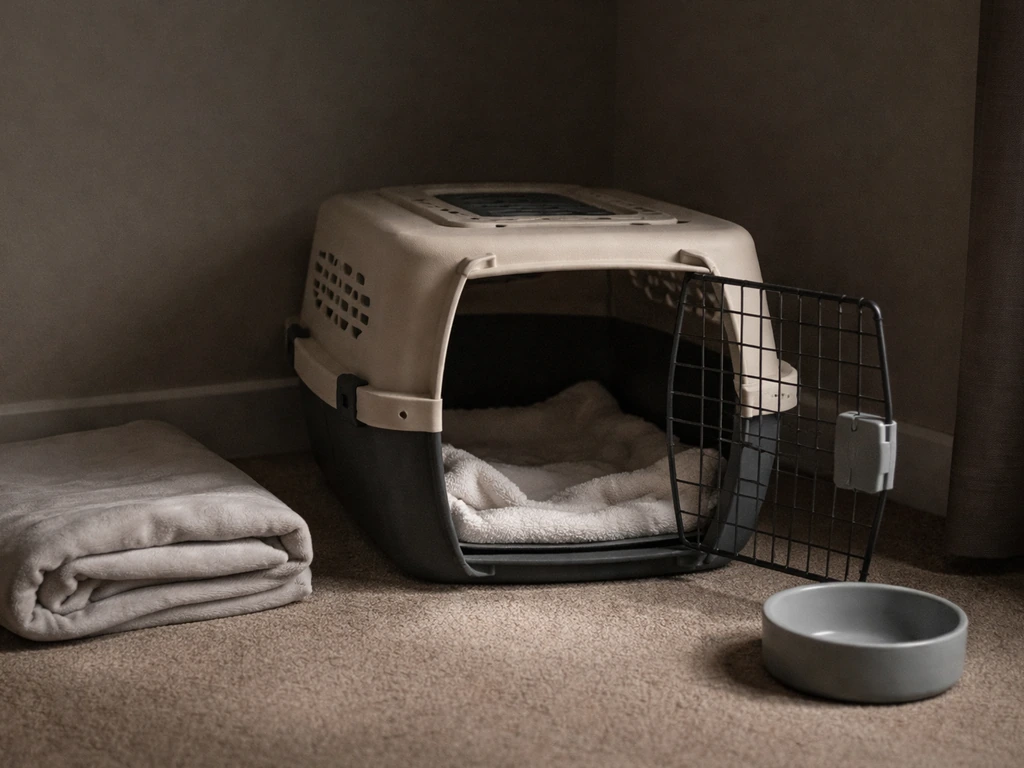
How you contain and carry the bird matters more than most people expect. Knowing how to transport a bird to the vet correctly can reduce additional injury during the trip. Use a cardboard box or a carrier with a secure lid. Line the bottom with a paper towel or light towel so the bird has something to grip or rest on. Make sure there are a few small air holes. Keep the box in the cabin of your car rather than the trunk, and avoid blasting heat or air conditioning directly at it.
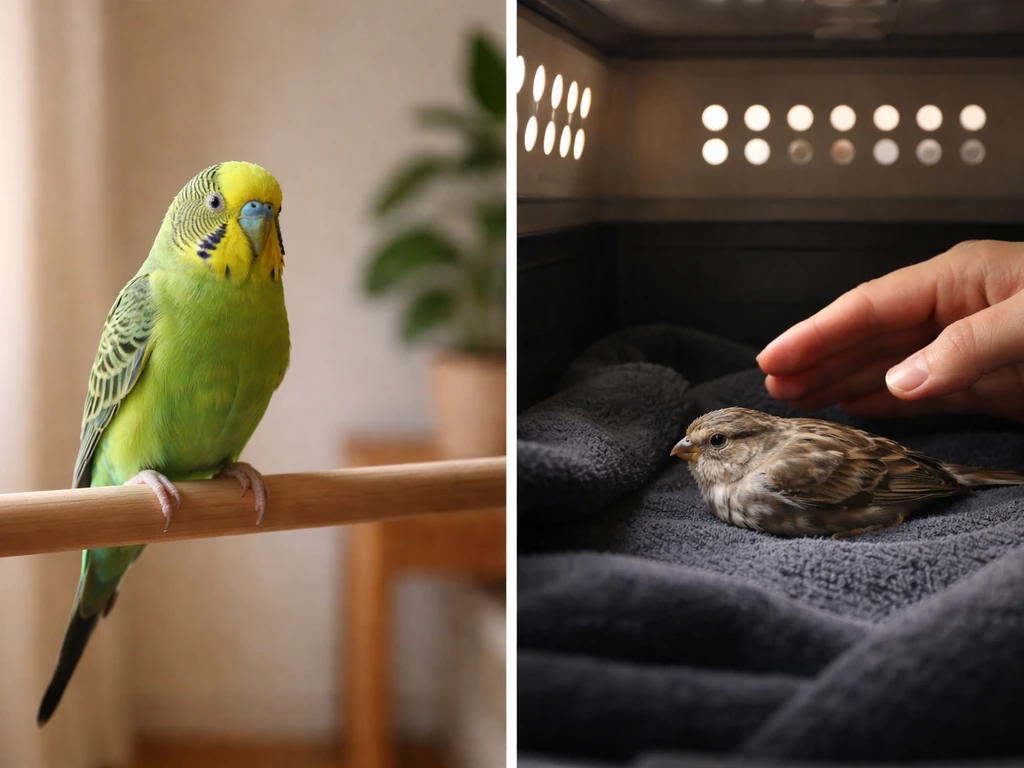
For wild birds especially, keep the environment dark and quiet. Multiple wildlife care organizations, including Wings of the Dawn and the Humane Society Veterinary Medical Association, give the same consistent advice: warm, dark, and quiet. Darkness reduces stress significantly, which can be the difference between a bird surviving transport and going into shock. Do not offer food or water unless a rehabber or vet specifically tells you to.
First-aid basics without overstepping
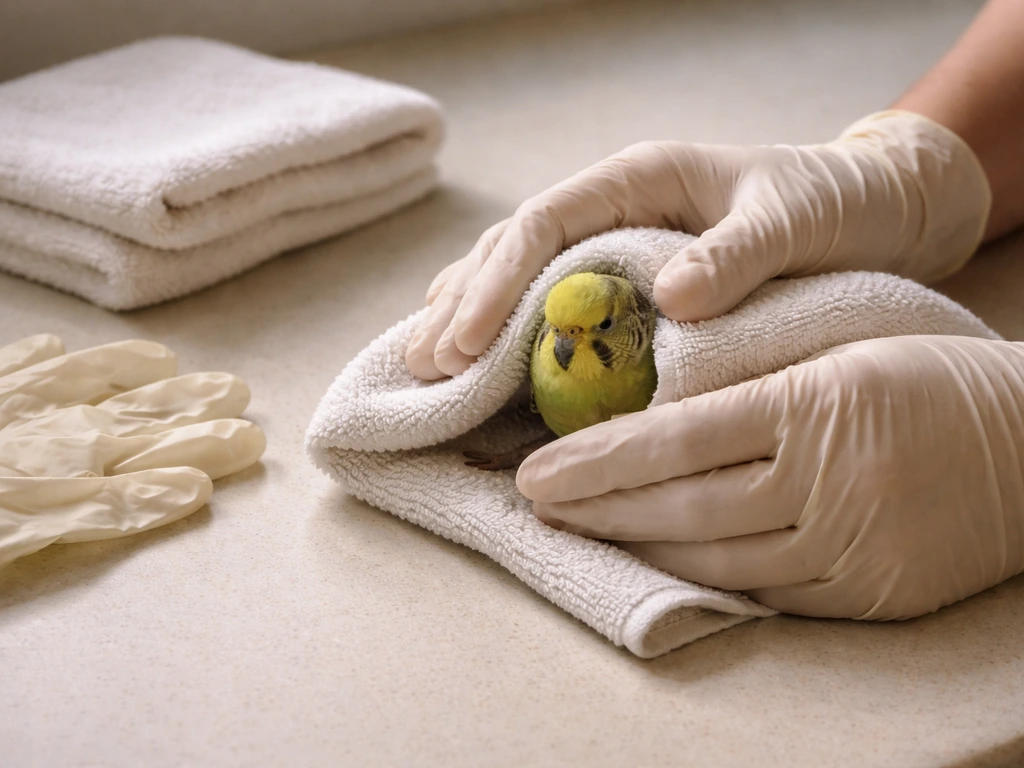
Your job before you reach a professional is containment and stabilization, not treatment. Do not try to splint a wing yourself, clean a deep wound, or force-feed the bird. If there is visible active bleeding, you can apply very gentle pressure with a clean cloth for a few minutes. If bleeding seems to have stopped, leave it alone. The Merck Veterinary Manual draws an important distinction between active bleeding and blood that appears without current bleeding, so look carefully before deciding it's a crisis.
Paperwork and information to bring
For a pet bird, bring any previous vet records if you have them, the bird's approximate age and species, its normal diet, and any medications it's currently on. If it's a wild bird, just note where and when you found it, what it was doing, and whether any pets were involved. That information helps the vet or rehabber triage quickly.
Who else can help when a vet isn't the right call
Wildlife rehabilitators are your primary resource for injured wild birds. These are licensed professionals, not just volunteers with good intentions. In the United States, state law requires a wildlife rehabilitation permit to legally possess and care for injured or sick wildlife, so the people on those state-published lists have real training and legal authorization. Under federal law, there's also a Good Samaritan provision (50 CFR 21.31(a)) that allows you to pick up and transport an injured migratory bird to a permitted rehabilitator without needing a permit yourself. You're legally protected to help, as long as you're taking it directly to a licensed person or facility.
Beyond rehabbers, the U.S. Fish and Wildlife Service recommends contacting your state wildlife agency if you're unsure where to go. Humane societies and shelters are another fallback. Not all of them take wild birds, but many have relationships with local rehabbers and can point you in the right direction even if they can't take the bird themselves. A local wildlife center, a nature conservancy, or even a university with a veterinary program are all worth a call if you're in a rural area with limited options.
What to ask when you call
When you get someone on the phone, be concise and lead with the most urgent information. Here's a practical script to follow:
- State the species if you know it ('It's a parakeet' or 'It looks like a house sparrow').
- Describe the visible symptoms clearly ('It has a drooping wing and can't stand').
- Mention if a cat or dog was involved, even if there are no visible wounds.
- Ask directly: 'Can you see this bird today?' and 'Do you have capacity right now?'
- Ask about intake hours and whether you need an appointment or can walk in.
- Ask for a rough cost estimate for an initial exam, so you're not blindsided at the desk.
- If they can't help, ask if they can refer you to someone who can.
If nobody answers, leave a voicemail with your callback number and the species and symptoms, then immediately try the next number on your list. Don't wait by the phone. Keep calling. Wildlife rehabbers especially often work alone and may be in the middle of feeding rounds.
Handling special cases the right way
Injured pet bird
An injured pet bird, whether it's a parrot, cockatiel, budgie, or canary, needs an avian vet, not a wildlife rehabber. Rehabbers are permitted and trained for wild species. If you're wondering whether you can take an injured bird to the vet, the answer for pet birds is yes, and that should always be your first call. Use the AAV directory, call ahead, and go. If your regular avian vet isn't available, have that backup emergency clinic number ready, exactly as Merck recommends.
Window collision injuries
Window strikes are one of the most common bird emergencies. The bird hits the glass, gets stunned, and ends up on the ground looking dazed but physically intact. The problem is that internal injuries from the collision can require specialized treatment that only a licensed wildlife rehabilitator can provide, including anti-inflammatory medication that you absolutely should not try to source yourself. Audubon's guidance is consistent: if the bird doesn't fly away on its own within a short time, get it into a box, make it dark and quiet, and call a licensed rehabber.
The Wildlife Trusts recommends letting a stunned bird rest in a dark, sheltered space for a few hours before assuming the worst, and advises against offering food or water during that time unless an expert tells you otherwise. Wisconsin Humane Society adds that once you've captured and boxed the bird, keep it in a warm, dark, quiet spot and call a local wildlife rehabilitator. The consistent theme across all these organizations is the same: dark, quiet, warm, and call a pro.
Cat or dog bite
This one is urgent even when the bird looks fine. A cat or dog bite, especially from a cat, introduces bacteria deep into the bird's tissues that cause rapid, life-threatening infection. The absence of visible wounds does not mean the bird is okay. If you know or suspect a cat or dog made contact, treat it as a medical emergency. For a wild bird, call a rehabber immediately and tell them upfront that a cat was involved. For a pet bird, go to an avian vet today, not tomorrow.
Broken wings, legs, and beaks
A visibly broken limb needs professional care. For a pet bird, an avian vet can assess whether surgical repair is possible. You might find yourself wondering whether a bird can be surgically repaired after a serious injury, and the honest answer is that it depends on the fracture type, the species, and how quickly you got help. For wild birds with broken limbs, a wildlife rehabber can triage and either treat or transfer to a vet partner. Do not try to wrap or splint anything yourself before speaking to a professional.
Nest emergencies
A baby bird on the ground is not automatically an emergency. If it has feathers and is hopping around, it's likely a fledgling learning to fly. The best thing you can do is leave it alone and keep pets away. If it's clearly a nestling (naked or barely feathered, eyes closed, unable to perch), it genuinely needs help. If you can find and safely reach the nest, you can put it back. Despite the old myth, parent birds will not reject a baby because you touched it. If the nest is destroyed or unreachable, call a wildlife rehabber. They are the right people for this scenario, not a general vet.
Pet bird vs. wild bird: a quick reference
| Situation | Best first call | Backup option |
|---|---|---|
| Injured pet bird (parrot, budgie, etc.) | Avian vet or exotics clinic | Emergency exotic animal hospital |
| Wild bird: window collision | Licensed wildlife rehabilitator | State wildlife agency for referral |
| Wild bird: cat or dog bite | Licensed wildlife rehabilitator (urgent) | Avian vet with wildlife experience |
| Wild bird: broken wing or leg | Licensed wildlife rehabilitator | Avian vet or state wildlife agency |
| Baby bird (nestling) out of nest | Licensed wildlife rehabilitator | Humane society for referral |
| Fledgling on the ground, looks healthy | Leave it alone, monitor | Call rehabber only if injured |
A few things worth knowing before you go
It helps to understand what you're walking into. If you've never had a bird treated before, you might be wondering what an avian vet is called or what to expect from the appointment. Avian veterinarians are the formal term for vets who specialize in birds, and they typically work in exotics practices or specialty clinics rather than general animal hospitals. Some general practices have one vet on staff with avian training, which can work in a pinch, so it's always worth asking who specifically will be treating your bird.
If your bird is a pet, it's also worth thinking ahead once this immediate crisis is resolved. How often a pet bird needs vet checkups depends on the species and age, but establishing a relationship with an avian vet before an emergency happens is one of the best things you can do for long-term bird care. If you have a pet bird, that same planning mindset also helps you decide how often should you take your bird to the vet, so routine care is already covered before emergencies long-term bird care. That way, you already have a number to call when something goes wrong at 9pm on a Saturday.
One more thing: if you've ever been curious about the bigger picture of why birds end up needing emergency hospital care in the first place, the most common causes are window collisions, cat interactions, and household accidents, all of which are at least partially preventable with some simple changes. But right now, focus on getting your bird where it needs to go. You can work on prevention once it's safe.
The most important thing you can do in this moment is act quickly and call ahead. Contain the bird safely, keep it calm and warm, pick up the phone, and use the resources above to find the right help. You don't need to have all the answers; you just need to get the bird to someone who does.
And if you're still figuring out the full picture of what actually happens when you take a bird to the vet, including what the exam involves and what to expect from the process, that's worth knowing so you're not caught off guard when you arrive.
FAQ
What if I can’t tell whether the bird is a pet or a wild bird?
Call an avian vet first if the bird is tame, hand-fed, ringed, or you believe it came from a home. If it was found outside, alone, injured, or acting wild, treat it as a wild bird and contact a licensed wildlife rehabilitator. If you truly cannot determine, describe exactly where you found it and whether it was tame, and ask the caller which type of facility can legally accept it.
Can I take my bird to an emergency hospital that does not list birds?
You can try calling, but do not assume they can treat birds. When you call, ask who would examine the bird that day and whether they have avian experience or the ability to hospitalize small prey animals. If they cannot, ask for their recommended exotics or avian referral partner, since transfer is often faster than arriving and being turned away.
What number should I call first if I suspect internal injury, but the bird looks “okay”?
Call an avian vet or urgent exotics clinic first, even if the bird looks stable. Prey animals can hide illness, so “not bleeding and breathing” does not rule out concussion, toxin exposure, or internal trauma. Tell them your bird’s behavior changes (hiding, sitting fluffed, decreased appetite, trouble breathing) and when the problem started.
Should I bring a sample (like vomit, droppings, or feathers) to the vet?
If you can do it without stressing the bird, bring a fresh droppings sample or any material that shows what you saw (for example, abnormal stool or debris) in a clean, sealed bag or container. Also bring packaging or product names if poisoning is possible. Avoid trying to collect large amounts or force the bird to produce samples.
Is it safe to give my bird pain medicine or antibiotics before the appointment?
No. Do not give human medications or leftover antibiotics, since birds can react unpredictably and dosing differs by species and weight. If there’s active bleeding, you can apply gentle pressure with a clean cloth for a few minutes, otherwise focus on containment and transport while you call for guidance.
How do I keep the bird warm without overheating it in the car?
Use gentle warmth, not direct heat. Place the carrier in a quiet area of the car and consider a warm towel nearby, but never set a heat source on the bird or close to the skin. Watch for panting, open-mouth breathing, or extreme lethargy, and stop if you suspect overheating.
What should I use for a carrier, and can I use a bag or towel instead?
A secure carrier or ventilated box with a lid is safest because it prevents escape and reduces injury during movement. Avoid plastic bags, loose towels as the only container, or anything without stable ventilation, since birds can overheat, panic, or become trapped.
Do I need to remove the bird from its cage immediately?
If the bird is already in a cage, you can often leave it there temporarily while you finish calling, but transfer to a smaller, secure carrier for transport is usually better. In a real emergency, prioritize safety and containment to prevent falls or wing injuries during the move.
If a bird is bleeding, do I stop it or just cover it?
For visible active bleeding, apply very gentle pressure with a clean cloth for a few minutes, then reassess. If bleeding appears to stop, do not keep repeatedly checking or removing and reapplying pressure. If blood soaks through quickly, call ahead while you keep the bird still and contained.
What do I tell the rehabber or vet when I call?
Give a tight summary: pet vs wild, species if known, what happened (impact, fall, cat contact, window strike, exposure), when it started, and current signs (breathing effort, posture, ability to perch, responsiveness, bleeding). Mention whether there was a cat or dog contact immediately, since that changes urgency and treatment approach.
Can I just release a wild bird once it looks better?
Usually no. Many window-strike and internal-injury cases look improved externally but deteriorate later. Only a licensed wildlife rehabilitator should decide if a wild bird is ready for release, based on exam findings and ability to fly or function normally.
What if my bird is a hatchling or nestling, and I can’t find the nest?
If it is clearly a nestling (naked, barely feathered, eyes closed, or unable to perch), contact a wildlife rehabilitator rather than guessing. If the nest is reachable and you can place it back safely, do so, but if the nest is destroyed or impossible to access, rehabbers need to take over.