
Yes, you can often help stabilize an injured bird and dramatically improve its chances of survival. But whether it can be fully 'fixed' depends on three things: the species, the type of injury, and how quickly you get professional help involved. Some injuries, like a mild window collision or a small cut, respond really well to calm, careful first aid followed by a trip to a wildlife rehabilitator or avian vet.
Can You Get a Bird Fixed? First Aid and When to Call Pros
Marcus Chen
22 Apr 2026
For minor issues, you can start with calm first aid and then follow up with a wildlife rehabilitator or avian vet, which is similar to how to take a bird to the vet. Others, like a severe broken wing or a cat attack, need urgent professional treatment that goes well beyond anything you can do at home.
If you are still unsure, a quick rule of thumb is to take your bird to the vet when should i take my bird to the vet for any red flags or serious injuries. The good news is that the steps you take in the next 30 minutes matter a lot.
First: figure out what you're actually dealing with
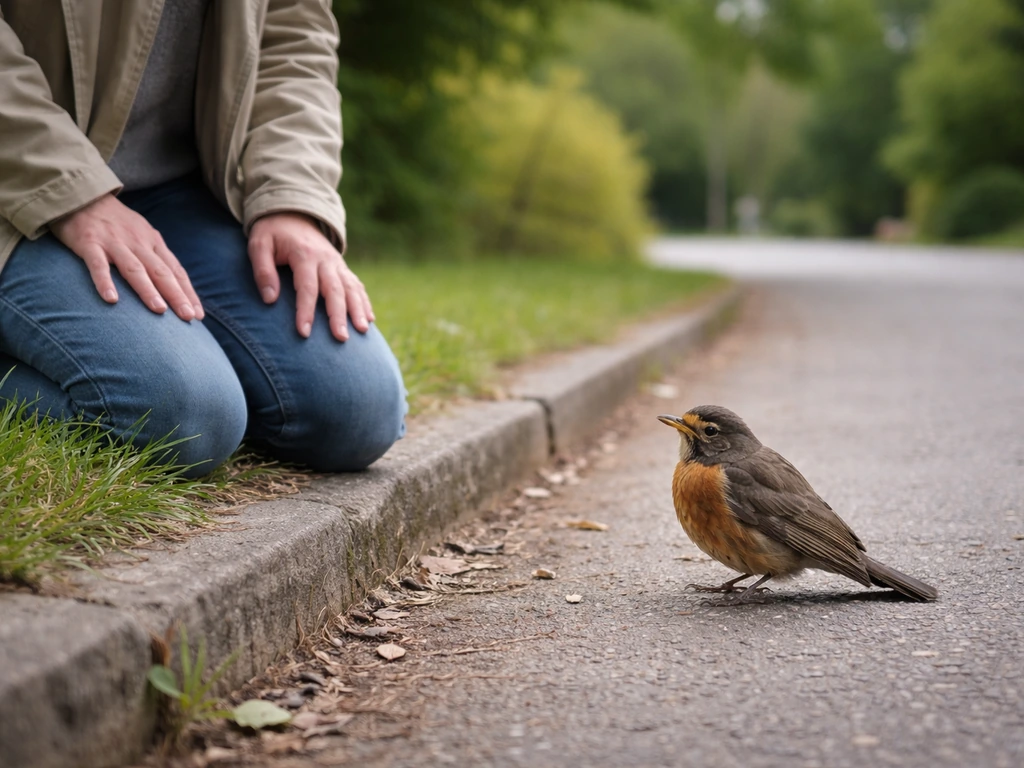
Before you touch the bird, slow down and observe from a few feet away for 60 seconds. This protects both of you. A frightened bird can injure itself further by thrashing, and some birds (especially raptors like hawks and owls) can seriously hurt you. What you're looking for in those first moments is whether the bird is actually in distress or just temporarily stunned.
Ask yourself these questions while you watch: Is the bird upright or is it on its side? Is it breathing visibly hard or rapidly? Are its feathers fluffed up and its eyes half-closed? Can it move its wings symmetrically, or is one drooping? Is there visible blood? These observations will guide every decision you make next, so take a breath and look before you act.
Also: keep pets and children back immediately. Cats and dogs circling a grounded bird will spike its stress hormones to dangerous levels, even if they never make contact. Stress alone can kill a bird in shock. Getting the area quiet is genuinely part of the first aid.
What 'getting it fixed' actually looks like for common injuries
Different injuries have very different outcomes, and it helps to be realistic about what you're working with. Here's a plain-language breakdown of the most common scenarios.
Window collisions (the most common one)
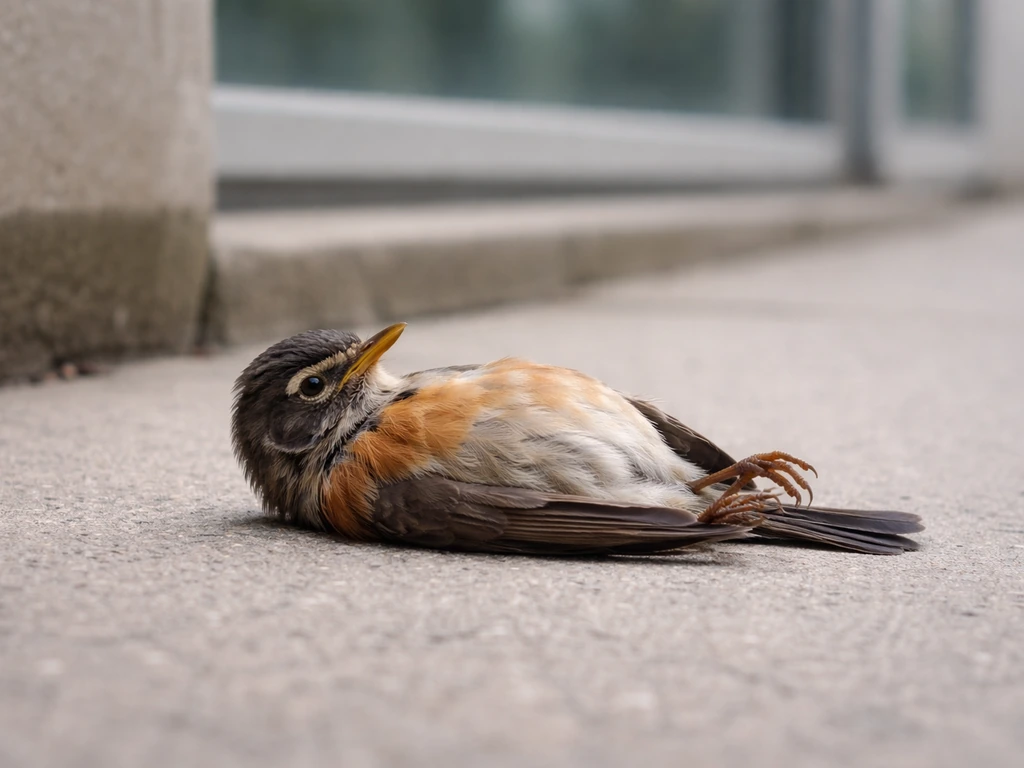
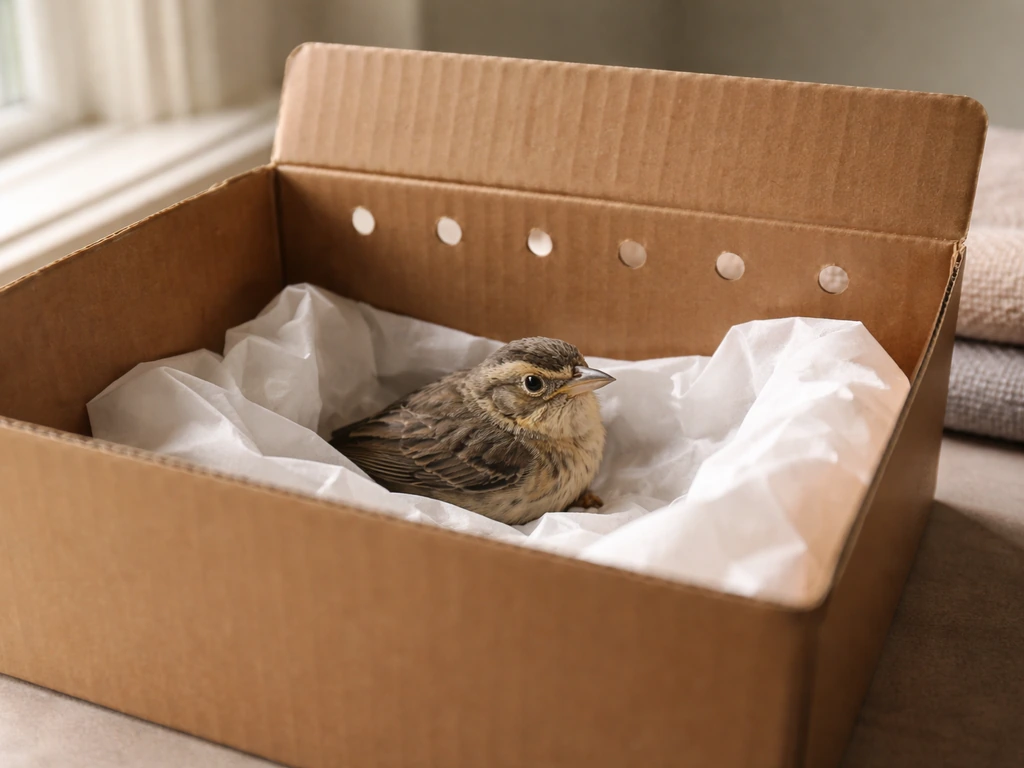
Window strikes often cause concussion-like trauma. The bird looks stunned, maybe lying on its back or sitting dazed on the ground. If there's no visible bleeding and the bird is upright and breathing normally, it may just need 30 to 60 minutes of quiet, dark rest in a secure container to recover on its own. Many birds do walk away from this. The key is containment and calm: a closed cardboard box in a warm, quiet indoor space. After the rest period, if it's alert and mobile, you can open the box outdoors and let it leave. If it's still dazed or shows any red flags (see below), treat it as a rescue situation.
Broken wings and legs
A drooping wing that hangs at an odd angle, or a leg that's clearly bent the wrong way, means a fracture. This is firmly in professional territory. A bird flapping on a fractured wing can tear soft tissue and turn a repairable break into something much worse. Do not attempt to splint it yourself. The priority here is gentle containment to stop the bird from moving the injured limb further, then getting it to a wildlife rehabilitator or avian vet as fast as possible. Fractures can be treated surgically or with proper splinting by a professional, and birds do recover, but only with correct care.
Beak injuries
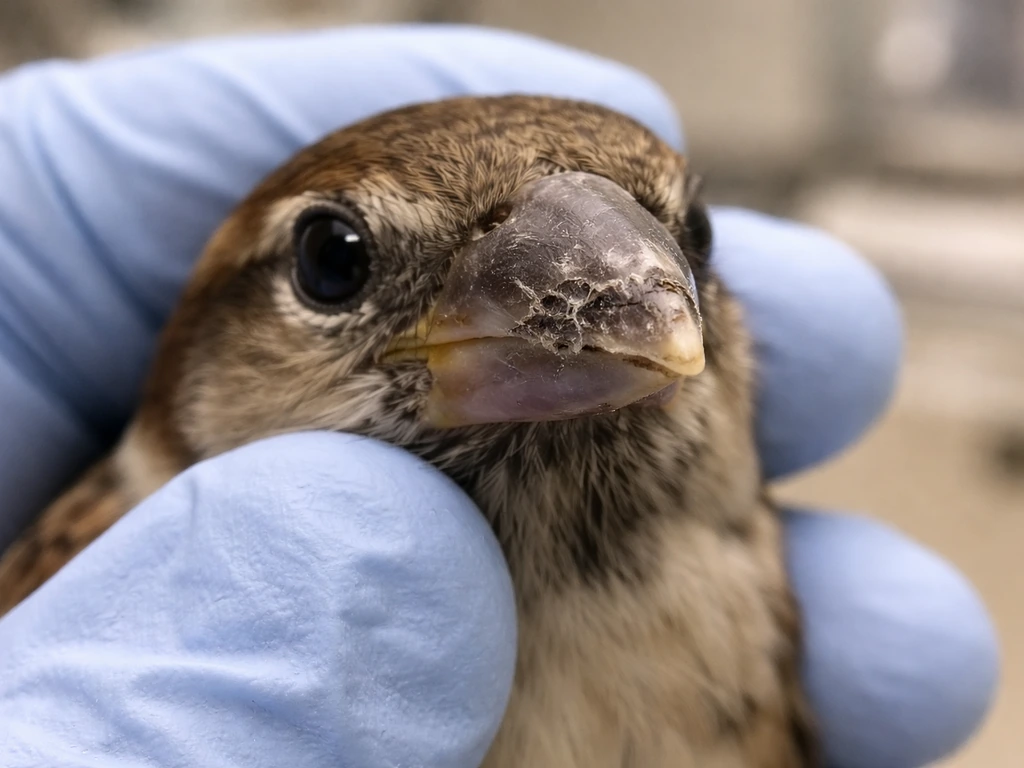
A cracked or damaged beak is serious because birds use their beaks for everything including eating, preening, and self-defense. A minor chip may heal with professional monitoring. A severely fractured or partially avulsed beak is an emergency. You'll notice the bird can't close its mouth properly, or there's active bleeding from the beak area. Contain it calmly, don't try to bandage the beak, and get to a wildlife clinic promptly.
Cat or dog attacks
This one is urgent even when the bird looks fine. Cat saliva carries bacteria that cause fatal infections in birds within hours, even from a single puncture wound too small to see. If a cat caught the bird, treat it as an emergency regardless of visible injury and get it to a wildlife rehabilitator or vet the same day. Do not wait to see if it gets better on its own.
Burns
Burns from wildfires, power lines, or hot surfaces are painful and prone to infection. Keep the bird calm and contained, do not apply any creams, ointments, or water to the burned area, and get professional help immediately. Do not disturb any clotted areas around burn wounds, as that can restart bleeding.
Baby birds and nest emergencies
Finding a baby bird on the ground doesn't automatically mean it needs rescuing. A fledgling, a bird that has most of its feathers and is hopping around, is often just in the normal process of learning to fly. Its parents are almost certainly nearby and still feeding it. The right move is usually to observe from a distance and leave it alone.
A Reddit discussion on r/Ornithology similarly notes that you should leave fledglings alone because their parents are often nearby, while nestlings that you cannot safely return should be referred to wildlife rehabilitators observe from a distance and leave it alone. If you can safely return a nestling (a featherless or barely-feathered bird) to its nest, do it.
If the baby bird is injured or you need guidance, Boston’s animal care guidance says to return it to its parents by first trying to reunite it with the nest or parents before taking it to a professional. The parent will not reject it because you touched it.
However, if the baby has its eyes closed, is featherless, appears injured, or the nest is destroyed and unreachable, contact a wildlife professional. This is one situation where U. S. Fish and Wildlife guidance is clear: always call a professional for baby birds that show injury signs.
A U. S. Fish & Wildlife Service guideline distinguishes nestlings from fledglings, and if you can’t locate the nest, you should leave a nestling where you found it or move it to a shaded area [U. S.
Fish and Wildlife guidance is clear](https://www. fws. gov/story/what-do-if-you-find-baby-bird-injured-or-orphaned-wildlife).
Immediate first aid steps you can do right now
These steps apply to most injured birds while you arrange professional care. They are about stabilizing, not treating. Think of it like keeping someone calm and still after a car accident while the ambulance comes. A big reason to get a bird to the hospital is to prevent shock from becoming fatal and to start the right treatment quickly.
- Clear the area: move pets and people back, reduce noise.
- Get a cardboard box with a lid or a paper bag with holes punched in it. Line the bottom with a soft cloth or paper towels.
- If you need to pick the bird up, drape a light towel or shirt over it first to cover its head and tuck its wings gently. Scoop it up from underneath and place it in the box. Minimal handling, minimal time.
- Close the box and keep it in a warm, dark, quiet indoor space. Darkness reduces panic significantly.
- For warmth: place the box on one half of a heating pad set on LOW, or rest a warm water bottle wrapped in a cloth near (not directly under) the bird. The goal temperature is around 85 to 90°F. Do not overheat the container.
- Do not put food or water in the box.
- Call a wildlife rehabilitator or avian vet now. While the bird is resting in the box, you should be on the phone arranging next steps.
One note on bleeding: if there is an open, actively bleeding wound, you can apply very gentle direct pressure with a clean cloth for a minute or two to slow it. Do not apply creams, antiseptics, or anything else to the wound. Then get to a professional fast.
Red flags that mean call for help right now
Some signs mean the bird is in serious danger and home stabilization is not enough on its own. If you're wondering where you can take your bird to the vet, use the same local resources like an avian vet or wildlife rehabilitator listed in the red-flag section where you can take my bird to the vet. If you see any of the following, treat it as urgent and contact a wildlife rehabilitator or emergency vet immediately, not tomorrow. If you’re wondering whether you can take an injured bird to the vet, the safest answer is to contact a wildlife rehabilitator or avian vet as soon as possible for guidance.
- Unconscious or completely unresponsive
- Rapid, labored, or open-mouth breathing
- Active bleeding that won't slow down
- Seizures or trembling
- Fluffed feathers combined with listlessness and cool feet or legs (signs of shock)
- Drooping wing at an obviously abnormal angle
- Caught by a cat, even with no visible wounds
- Eyes closed, crusty, or bleeding
- Unable to hold its head up
To find help near you, start with a web search for 'wildlife rehabilitator near me' or 'avian vet near me.' You can also contact your state or provincial wildlife agency, a local Audubon chapter, or animal control, as they often maintain referral lists. Some wildlife rescue centers have after-hours partnerships with emergency veterinary hospitals, so don't assume help is unavailable at night.
Things that feel helpful but actually make it worse
This section might be the most important one. Well-meaning actions cause a lot of preventable harm to injured birds every year. Please avoid all of the following.
| What to avoid | Why it's harmful |
|---|---|
| Giving food or water | Injured birds in shock can aspirate liquid into their lungs; force-feeding causes additional stress and can be fatal |
| DIY splinting with tape or sticks | Almost always applied incorrectly; restricts circulation and causes more soft tissue damage |
| Applying antiseptic, cream, or ointment | Can damage feathers, disrupt clotting, and introduce toxins through thin skin |
| Giving human or pet medications | Dosing for birds is extremely precise; common drugs like ibuprofen are toxic to birds |
| Keeping the bird in an open cage outdoors | Leaves it exposed to predators, temperature extremes, and ongoing stress |
| Handling it repeatedly to check on it | Every handling episode spikes stress hormones; less is more |
| Trying to nurse it at home long-term | Without a license, the right diet, and medical training, survival rates drop sharply |
Getting the bird to a pro: transport and what to tell them
Once you've got the bird stabilized in a dark, warm box, transport it as smoothly and directly as possible. A calm, careful trip is part of effective care, so plan how to transport a bird to the vet as safely as possible. Keep the car quiet (no loud music), keep the heat on if it's cold outside, and don't open the box to check on the bird during the trip. Every peek resets its stress response.
When you arrive or call ahead, be ready to share a few key pieces of information: where you found the bird (exact location matters for wildlife rehab intake), what you observed before and after you picked it up, how long it's been since the injury, and whether it was caught by an animal or hit a window. This context helps the rehabilitator or vet triage quickly and give the bird the right initial treatment.
After drop-off, most wildlife rehab centers won't give regular updates because their resources go to care, not communication. That's normal. Ask at intake whether they accept follow-up calls and how long typical recovery takes for the type of injury you described. For ongoing care, ask the vet how often you should bring your bird in for rechecks after the initial treatment how long typical recovery takes. For window strikes with no fracture, recovery can be a matter of days. For fractures or infections, it can be weeks to months, sometimes with a permanent outcome that prevents release into the wild.
The bottom line: you can absolutely make a real difference for an injured bird today. Contain it, keep it warm and dark and quiet, skip the food and water, and get it to someone qualified as fast as you can. That combination gives it the best possible shot.
FAQ
Can you get a bird fixed at home, or does it always need a vet?
In many cases you can stabilize a bird enough to improve survival, but “fixed” usually requires diagnosis and treatment. Window strikes without bleeding and with normal breathing can recover after quiet rest, while fractures, cat injuries, and beak damage generally need professional care.
What should I do if I’m not sure whether the bird is stunned or seriously injured?
Watch from a few feet away for about a minute and focus on breathing, posture (upright vs on its side), and limb movement symmetry. If breathing looks hard or the bird stays fluffed, drooping, or unable to stand normally, treat it as urgent and contact a wildlife rehabilitator or avian vet the same day.
Can I give an injured bird food or water to help it recover?
No, not during first aid. Food and water increase the risk of aspiration (breathing it into the lungs), especially if the bird is dazed, weak, or unable to sit upright. Skip food and water until a professional says otherwise.
Is it okay to give pain relief or antibiotics if I have them at home?
Do not administer human medications or antibiotics unless a vet specifically prescribes them. Many common painkillers are dangerous to birds, and incorrect antibiotics can delay proper treatment for infections or injuries.
If the bird has a minor cut, can I clean it with antiseptic?
Avoid antiseptics, creams, and wound sprays. The only exception described is gentle direct pressure with a clean cloth for a minute or two if there is active bleeding. Let the wildlife team clean and evaluate the wound.
What if the bird is bleeding but the wound is small, should I still treat it as urgent?
Yes, actively bleeding wounds should be addressed quickly, even if they look minor. Apply gentle direct pressure briefly, then get it to a professional promptly, because small wounds can become serious from shock or infection.
Can I splint a broken wing or legs to “hold it in place”?
No, do not splint. A bird flapping against a fracture can worsen tissue damage, and improper splinting can cause circulation problems or misalignments. Contain gently and arrange professional treatment instead.
What temperature should the bird be kept at while waiting for help?
Keep it warm and still, without overheating. A dark, secure container in a quiet indoor area is safer than heat sources that can burn the bird or cause rapid dehydration. If you use a warming pad, keep it low and positioned so the bird can move away.
How long can I wait before transporting an injured bird?
Act as fast as possible, because shock and complications can develop quickly. For injuries caused by cats, get help the same day, and for any red flags like abnormal breathing, inability to stand, or serious trauma, treat it as urgent rather than waiting overnight.
Should I keep the bird in the same place and check on it often?
Minimize handling and avoid frequent opening of the container. Repeated peeking and movement resets stress, which can worsen breathing and shock. Aim for a calm, direct trip to the care provider.
Can I put the bird back outside after it seems calmer?
Only consider release if the bird is fully alert, upright, mobile, and still within the scenario that commonly resolves with rest (for example, a window strike without fracture or bleeding). If there is any droop, impaired movement, continued fluffed posture, or breathing difficulty, do not release and contact a professional.
What if the bird is a fledgling that is hopping around, do I have to call a wildlife rehabilitator?
Often you should not. Many fledglings are learning to fly and parents are nearby. If the bird is injured, eyes are closed, featherless, or appears unable to hop or stand normally, then call a wildlife professional.
Is it safe to return a nestling to its nest after I pick it up?
If you can do it safely, yes. Parents typically do not reject nestlings due to human touch. If the nest is destroyed or the bird is injured in a way that affects its condition (for example, visible bleeding or inability to move), contact a professional instead.
What information should I have ready when I call the rehab center or avian vet?
Be ready with exact location where you found the bird, what you observed before and after you picked it up, how long it has been since the injury, and what likely caused it (window impact, cat contact, trauma). This helps triage faster and can guide immediate instructions.
Will the wildlife center call me back with updates after intake?
Often they do not provide frequent updates because their time goes to care. Ask at intake whether follow-up calls are allowed and how long recovery typically takes for the specific injury type you observed.
How can I prevent my pets and kids from making the situation worse?
Keep them away immediately, even if they do not touch the bird. Stress from circling can worsen shock and breathing, so use a separate room and keep the area quiet until the bird is in the container and transport is arranged.
Next Articles
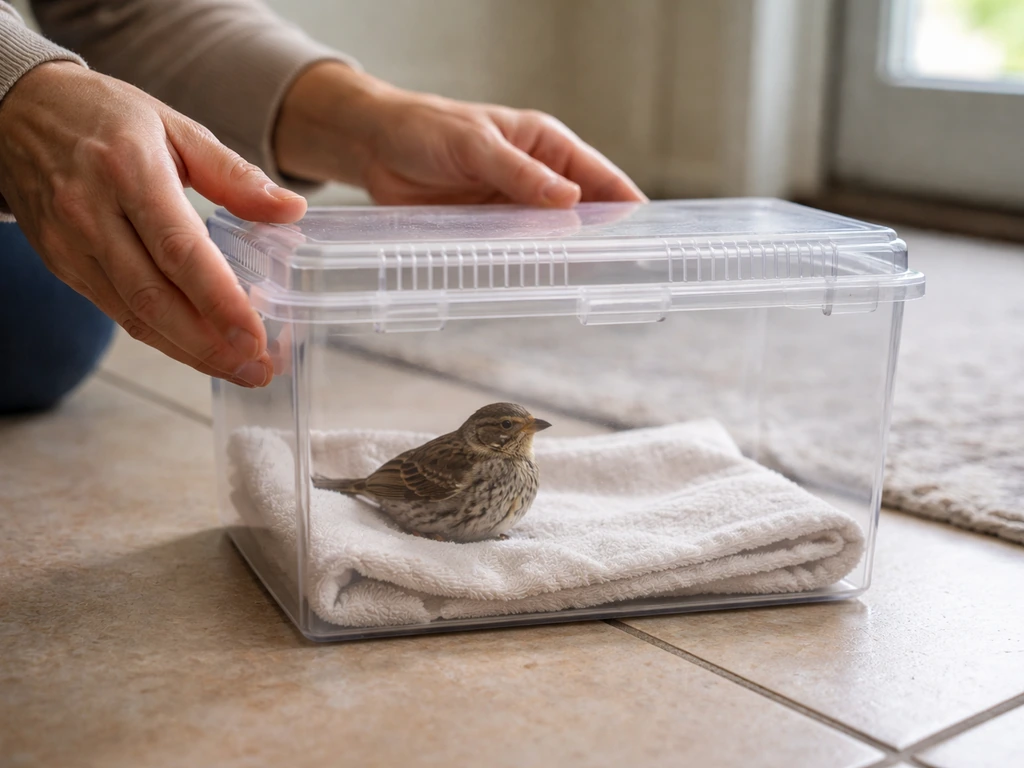
Can I Take an Injured Bird to the Vet? What to Do
Can you take an injured bird to the vet? Get safe transport, first aid steps, and when to call rescue.
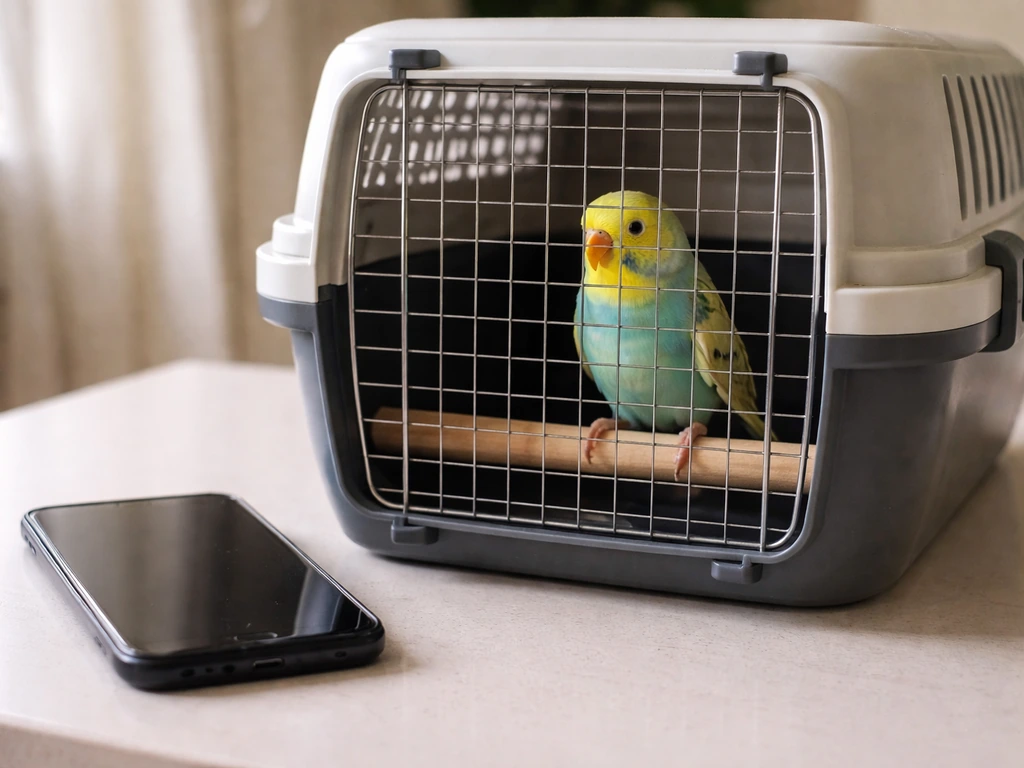
Where Can I Take My Bird to the Vet? Emergency Guide
Get urgent help fast: find an avian vet or wildlife rehab, what to ask, and how to transport your bird safely.
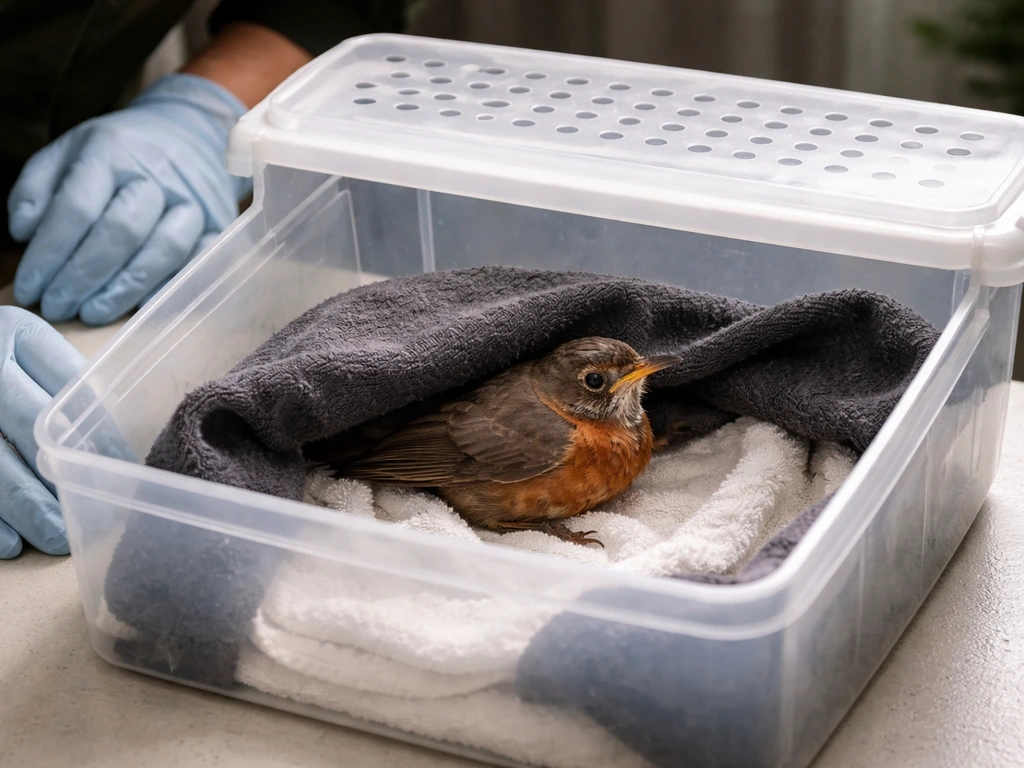
Why Did the Bird Go to the Hospital: First Aid Steps
Likely reasons an injured bird needs emergency care plus first aid steps, what not to do, and when to seek help.