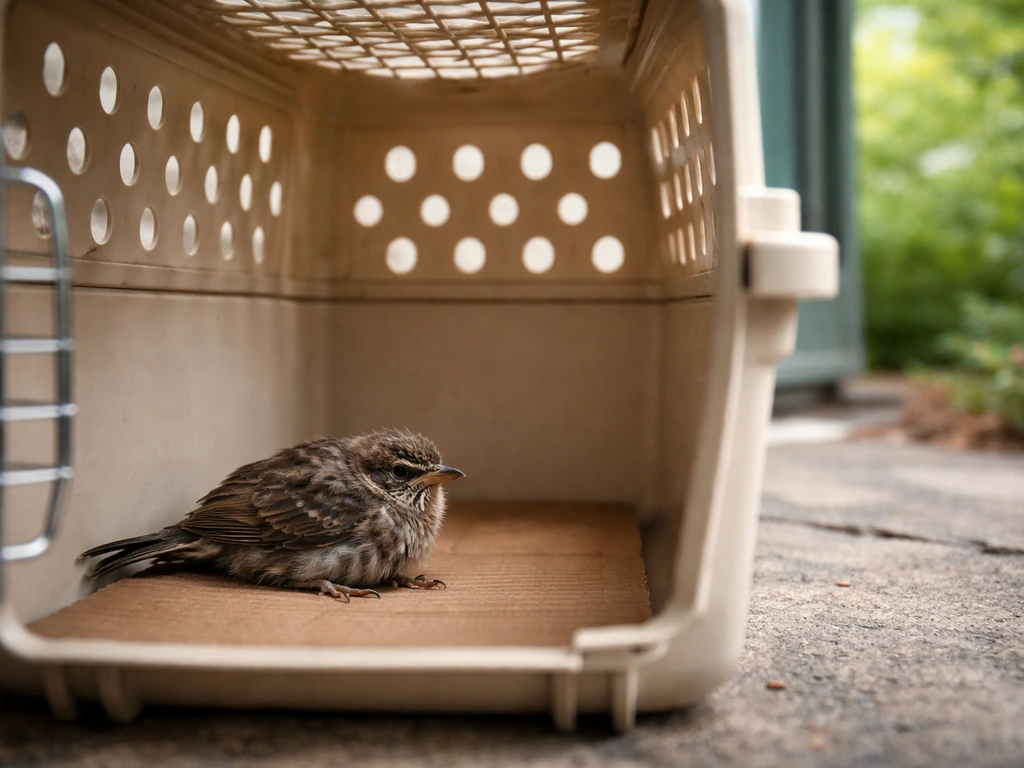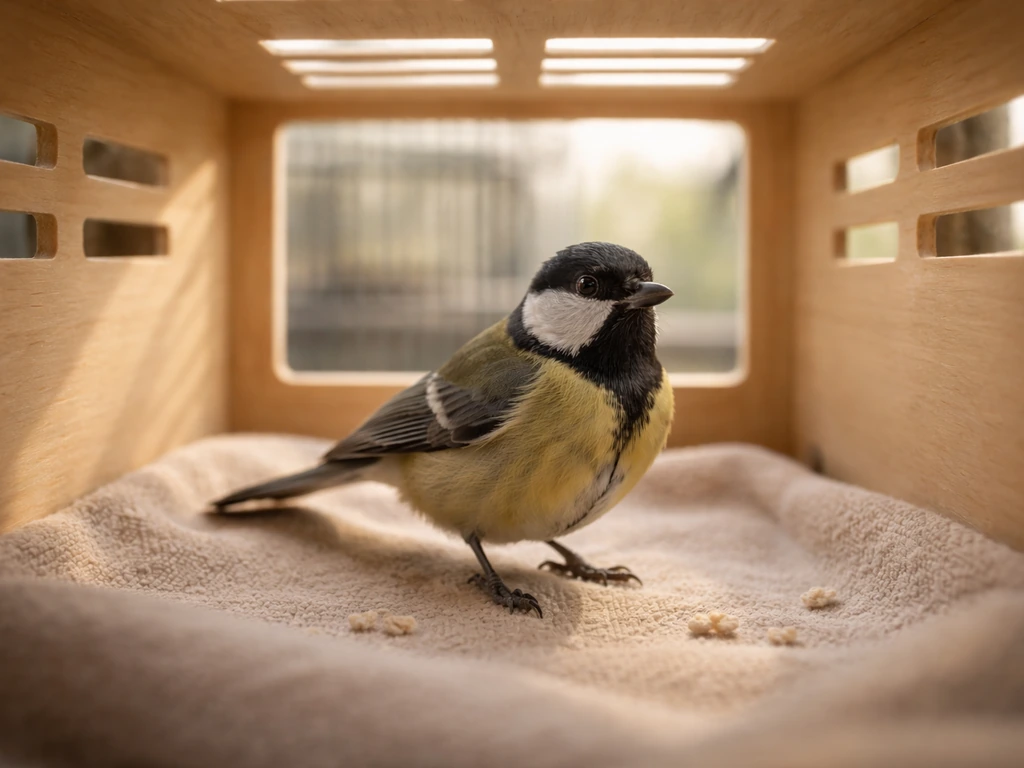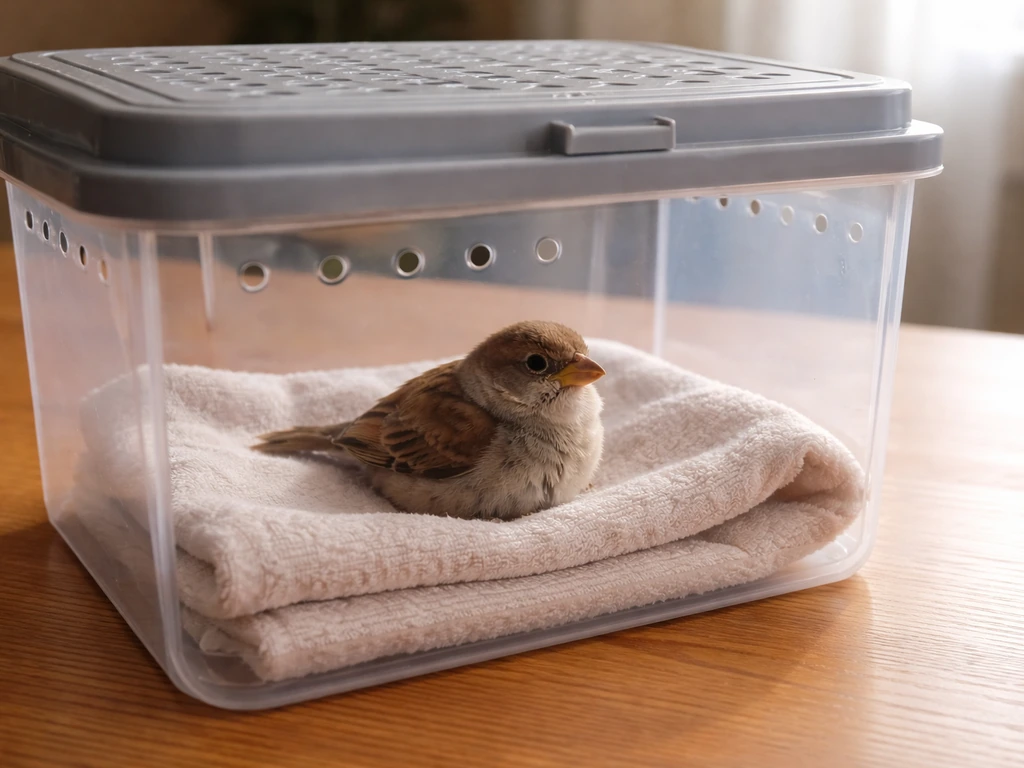
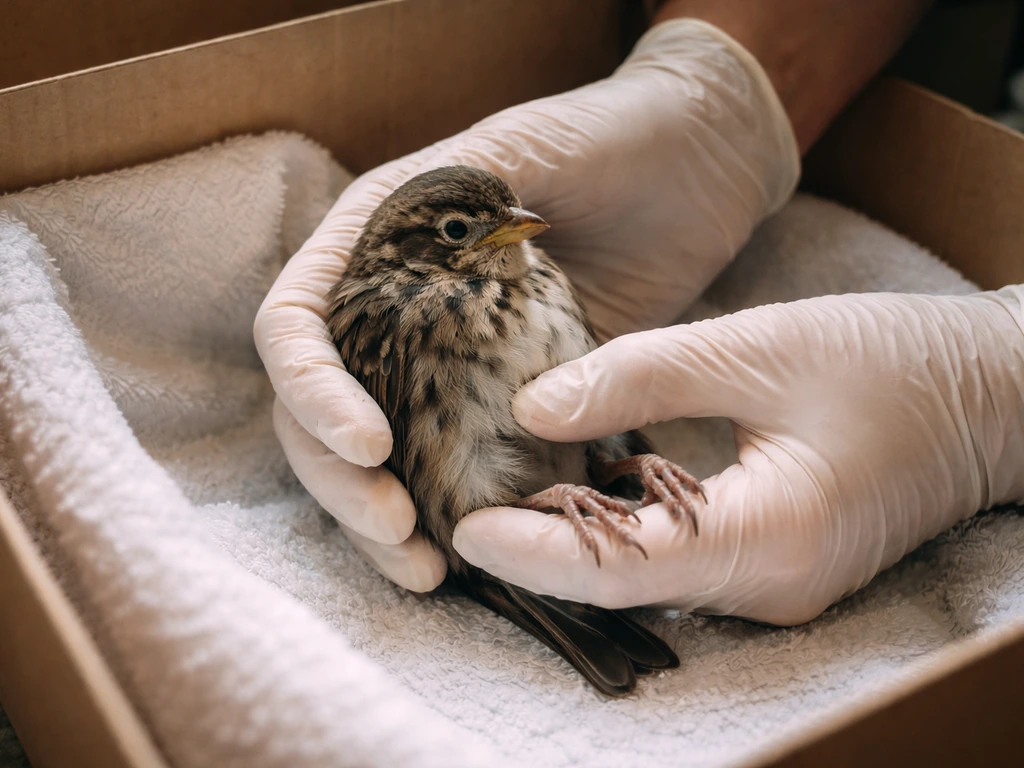
If you've found a bird that can't move its legs, put it in a small, dark, ventilated box lined with a soft cloth right now, keep it warm and quiet, and call a wildlife rehabilitator or avian vet as soon as possible. Leg immobility is almost always a medical emergency. The bird needs professional care today, not tomorrow.
Bird Can’t Move Legs: First Aid Steps and When to Get Help
Marcus Chen
31 May 2026
What "can't move legs" actually means
When a bird can't move its legs, you're likely looking at one of a handful of causes, and figuring out which one helps you act appropriately until you reach a professional. Trauma is the most common culprit: a fall, a window strike, a cat or dog attack, or a collision can fracture a leg bone, dislocate the hip, or damage the spinal cord and nerves. Spinal or nerve injury is especially serious because it can leave both legs completely limp even when the bones look fine.
Shock is another possibility that's easy to miss. A bird that just hit a window or survived a predator attack may go into a kind of stunned, frozen state where it doesn't respond normally. It may look dead or paralyzed but actually recover within an hour in a safe, warm, quiet space. That said, you shouldn't assume it's just shock and wait too long if the bird shows obvious injury or is getting worse.
Less obvious causes include toxin exposure. Lead and zinc poisoning, both real hazards for wild and pet birds, can cause progressive muscle weakness that starts in the legs and spreads. Avian botulism does the same thing: it begins as leg weakness and can advance to full flaccid paralysis, eventually involving the wings, neck, and breathing. If you found the bird near a stagnant pond, a landfill, or a heavily urban area with lots of old painted surfaces or metalwork, toxins are worth mentioning when you call for help.
Cold is worth mentioning too. A bird that's been out in cold weather or is very young may simply be too hypothermic to move properly. Warming it up correctly (more on that below) can make a visible difference quickly. If warmth doesn't help within 30 to 60 minutes, assume something more serious is going on.
Do these safety steps first
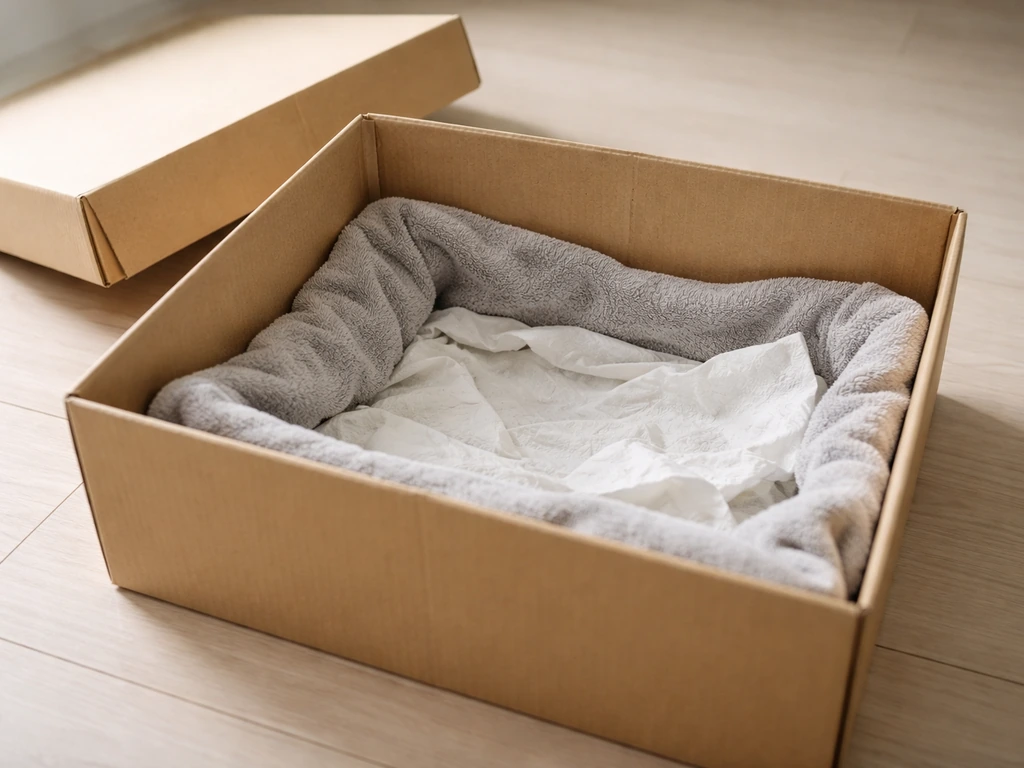
Before you do anything else, protect the bird from further harm. If it's outside, move it away from traffic, cats, dogs, and direct sun. Don't chase it around or handle it more than necessary. Every extra minute of stress makes things worse, especially if the bird is already in shock.
- Find a cardboard box or paper bag with a lid. Line the bottom with a soft cloth, paper towels, or a folded t-shirt. Avoid anything slippery like a plastic bag.
- Wearing gloves if you have them, gently drape a light cloth over the bird to calm it, then cup it carefully in both hands and lower it into the box. Don't squeeze.
- Close the box securely. Make small air holes with a pen if there aren't any. Place the box somewhere warm, dark, and quiet: away from pets, children, loud TVs, and air conditioning vents.
- Resist the urge to keep opening the box to check on it. Every time you look in, you reset its stress response.
Minimal handling is one of the most important things you can do. Birds in distress can die from the stress of too much human contact. Get it contained, then step back and make your calls.
Quick checks to help identify what you're dealing with
You don't need to be a vet to do a basic visual assessment. The goal is to gather information you can pass on to a professional, not to diagnose the bird yourself. Do this quickly and gently before you close the box.
- Visible bone or open wound: If you can see bone, a leg bent at an unnatural angle, or broken skin with bleeding, that's a fracture or dislocation. Note which leg and where.
- Can the toes move at all: Gently observe whether the toes curl or respond to light contact. Some toe movement suggests the nerve supply lower in the leg may still be intact, which is a slightly better sign than complete flaccidity.
- Both legs or just one: Both legs affected at once often points to a spinal injury, severe toxin exposure, or systemic illness rather than a simple fracture of one leg.
- Signs of a cat or dog attack: Puncture wounds are easy to miss under feathers. Part the feathers around the back, legs, and sides and look for small holes in the skin. Cat bites introduce bacteria rapidly and are always an emergency even if they look minor.
- Unusual droppings: Green, watery, or discolored droppings can suggest lead toxicosis. Note what you see.
- Where you found the bird: Near a window (collision), near a feeder (window collision risk is higher there), near a pond or wet area (possible botulism), or in a yard with cats or dogs (attack).
First aid you can safely do right now
Be honest with yourself about what first aid is: it's holding the line until a professional takes over. It is not treatment, and doing too much can cause more harm than doing nothing. Here's what's appropriate and safe for a typical rescuer.
Controlling bleeding
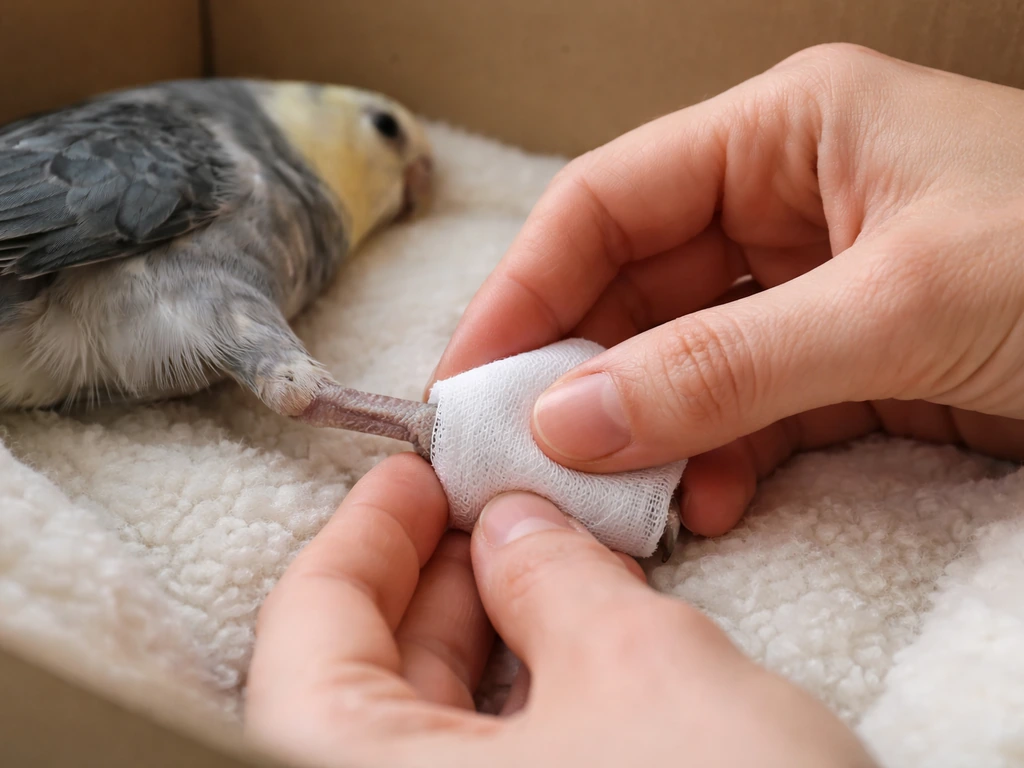
If there's active bleeding, apply very gentle, direct pressure with a clean cloth or gauze pad. Hold it in place for several minutes without lifting to check constantly. Don't use cotton balls, which can stick badly to wounds. If bleeding soaks through, add more material on top without removing what's already there. Uncontrolled bleeding is an immediate emergency: call for help while you apply pressure.
Keeping the bird off the ground and well-positioned
The soft bedding in your box does important work. It keeps the bird from lying on a hard surface that can cause pressure sores, and it prevents the injured leg from getting trapped at an awkward angle. If the bird is resting on its side, you can gently prop it upright with a loose ring of cloth or a donut-shaped nest made from a rolled towel. Don't force it into any position. If it won't stay upright comfortably, let it rest on its side.
Warmth
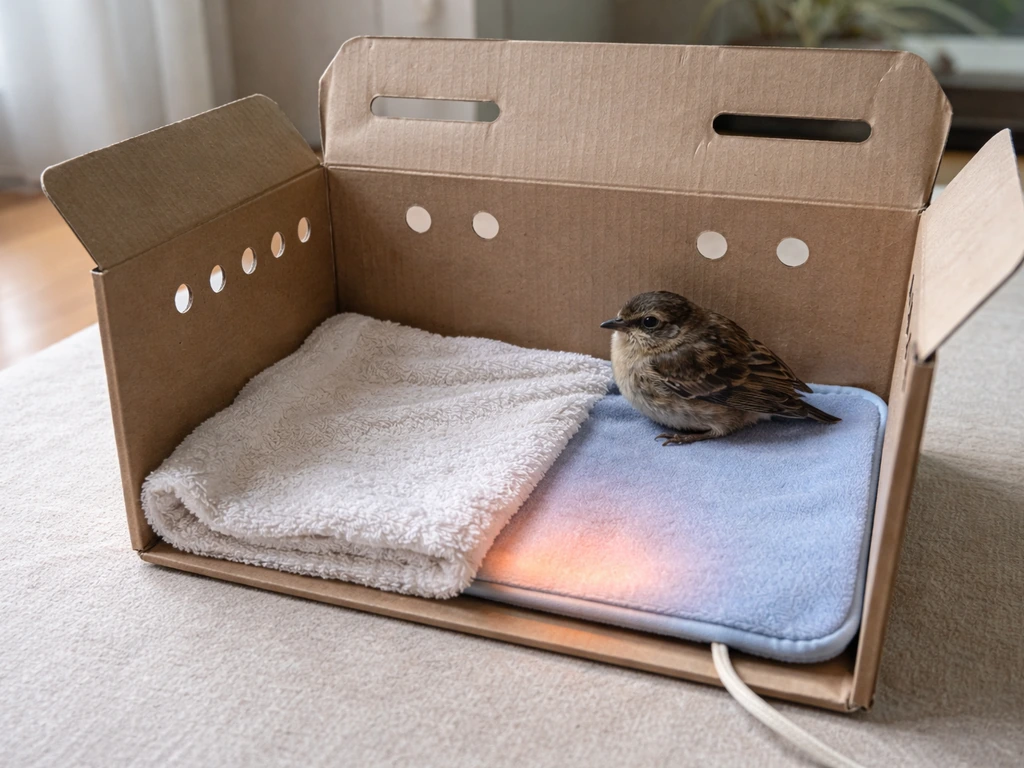
A cold bird cannot recover. Place a heating pad set on its lowest setting under one half of the box, never the whole bottom, so the bird can move away from heat if it needs to. A hot water bottle filled with warm tap water and wrapped in a towel works well too. Wedge it so it can't roll or spill, and keep it touching the outside of the box, not inside with the bird. The goal is gentle ambient warmth, not direct heat. Thermal burns are a real risk if heat is applied too directly.
Food and water: mostly leave it alone
Do not try to force food or water into the bird's mouth. An injured or stressed bird can easily inhale liquid into its lungs, which can be fatal. Most wildlife rescue organizations explicitly advise against offering food or water while you're waiting to hand the bird off. If the bird is conscious and alert and you've confirmed it's not injured around the head or neck, you might place a very shallow bottle cap of water near it in the box, but don't hold the bird and try to make it drink.
Splinting: don't attempt it without training
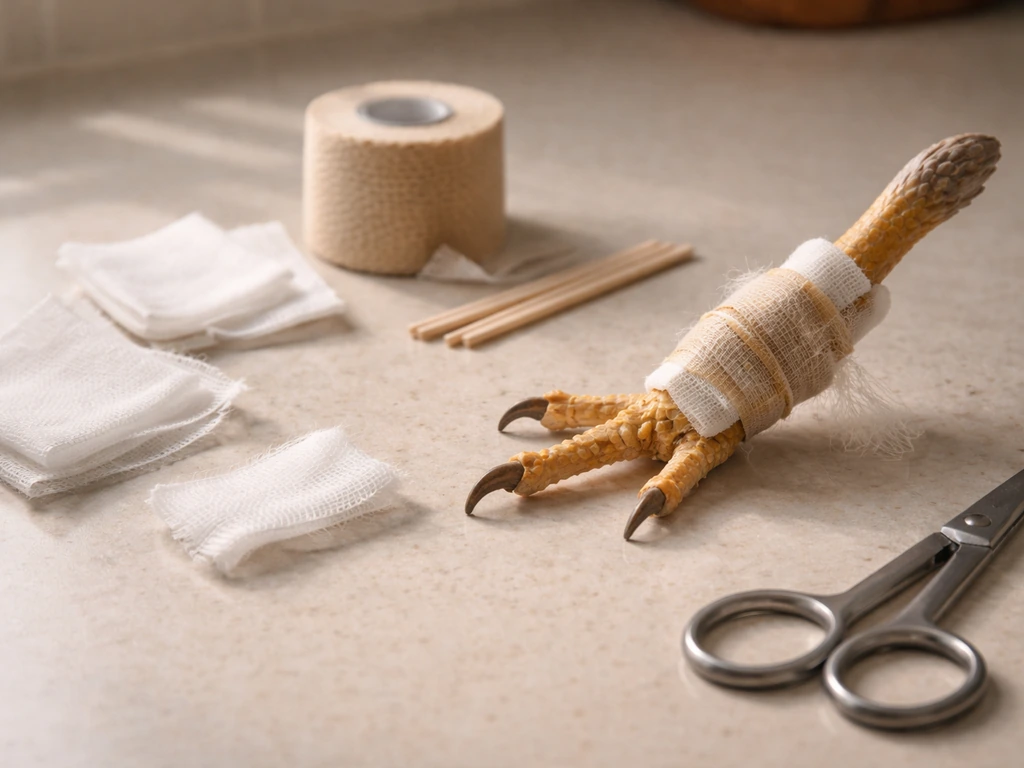
Splinting a bird's leg requires knowledge of bird anatomy, the right materials, and the right technique. An incorrectly applied splint cuts off circulation and causes more damage than the original injury. Leave this to the professionals. Your job is containment, warmth, calm, and getting the bird to someone qualified.
When to treat it as an emergency (and what to tell the pros)
Any bird with leg immobility deserves a call to a wildlife rehabilitator or avian vet today. If you notice the wild bird can't fly as well as not moving its legs, treat it as a serious medical emergency and contact an avian vet or wildlife rehabilitator right away. If your bird can't walk properly, treat it the same way and get it seen by a professional as soon as you can leg immobility. But treat it as an urgent, get-there-now emergency if you're seeing any of the following:
- Active, uncontrolled bleeding
- Visible bone or open wound
- Suspected cat or dog bite (even if the wound looks minor)
- Rapidly worsening weakness or the bird becoming completely unresponsive
- Difficulty breathing or open-mouth breathing
- Severe shock: the bird is limp, eyes closed, and not reacting to anything
- Both legs completely immobile with no toe movement at all
To find help, search for a licensed wildlife rehabilitator in your area through your state or national wildlife agency's website, or call a local animal control office and ask for a referral. In the US, the Migratory Bird Treaty Act means you're not legally allowed to keep or treat most wild birds yourself, so reaching out to a licensed rehabilitator isn't just the best option, it's the required one. An avian vet (not just a general vet) is your other option, particularly for pet birds.
When you call, be ready to share the following:
- The species if you know it, or a description (size, color, beak shape)
- Where you found it: city/town, type of location (yard, near a window, near water, roadside)
- What you observed: both legs or one, flaccid or rigid, any visible wounds, bleeding, or bite marks
- The suspected cause if you know it: window collision, cat attack, found near a pond, etc.
- How long ago you found it and whether it has gotten better or worse
- What you've already done: containment, warmth, any first aid
Housing and transport until help arrives
The box setup described earlier is your holding space. Keep the room quiet. If you have to transport the bird yourself, put the closed box on the seat next to you (or have a passenger hold it still), not in the trunk or truck bed. Keep the car warm but not hot. No radio, no AC blasting directly at the box.
Don't let children hold the box during transport. The jostling and tilting that happens when a child carries something is significant enough to cause further injury to a bird with a broken leg or spinal damage.
If you're waiting more than an hour, you can check on the bird briefly, but open the box only for a few seconds. Look for any change: more responsive, less responsive, change in breathing. Report all of this when you reach the rehabilitator.
One thing worth knowing: a bird that hit a window and seemed completely unable to move can sometimes recover well enough to stand within an hour if it's only stunned. Window strikes are a big source of the cases described in topics like bird can't walk or bird in backyard can't fly. If after an hour in a warm, dark, quiet box the bird is more alert and responsive but still not fully recovered, that's progress. But it still needs professional evaluation. A quick check is also useful if you suspect the bird forgot how to fly and is showing signs of trouble perching or coordination. Don't release a bird that can't perch on its own, even if it seems better.
How to prevent this from happening again
The most common causes of leg injuries and paralysis in wild birds are things we create in our own yards. A bird in your backyard that can't fly should still be treated as a possible leg injury or paralysis and handled the same cautious way bird in backyard can't fly. The good news is they're also preventable.
Cats and dogs
Outdoor and free-roaming cats are one of the leading causes of bird injuries. If you have cats, keeping them indoors is the single most effective step. If neighbors have cats or you have outdoor dogs, make sure your feeders and birdbaths are elevated and placed away from low cover where a cat could hide and ambush.
Window collisions
Homes with bird feeders are at roughly double the risk of window strikes compared to homes without them, because feeding activity concentrates birds near buildings. The situation is similar to famous caged bird stories, where confinement prevents natural flight even when the bird appears otherwise healthy caged bird from flying. The fix isn't to remove feeders, it's to place them either very close to a window (less than 3 feet, so a bird can't build up lethal speed) or more than 30 feet away. Window decals, external screens, and tape strips applied to the outside of glass all help birds see that there's a surface there.
Hazards around feeders and nests
Fishing line, netting, and loose wire around garden areas can trap birds by the leg and cause severe injury or paralysis from struggling. Check your yard regularly. Garden netting should be taut or replaced with solid barriers. Keep the area around feeders free of debris that small birds can tangle in. If you notice a bird can't hold its head up or seems weak around the head or neck, treat it as a serious medical sign and contact an avian vet or wildlife rehabilitator right away.
Toxin exposure
Lead sinkers, old paint, and galvanized metal all pose heavy metal risks to birds. If you feed birds or live near wildlife areas, avoid galvanized metal feeders and dishes that could leach zinc. For pet birds, keep them away from older painted surfaces, soldered jewelry, and any galvanized hardware. If a pet bird suddenly shows leg weakness, get it to an avian vet the same day.
After release or back-to-habitat
If you're ever involved in releasing a bird after rehabilitation, follow the rehabilitator's instructions exactly. Don't release a bird that can't perch, can't fly, or can't forage on its own. A bird released too soon often ends up back on the ground and in danger again. The best outcome for the bird is always patience now and a full recovery before release.
FAQ
What if my found bird still looks alert, but it can't move its legs? Is it less serious?
If both legs are immobile, treat it as an urgent emergency even if the bird looks “alert.” Use the same containment and warmth steps, then prioritize calling a wildlife rehabilitator or avian vet. Some nerve or spinal injuries can look outwardly mild at first but still worsen after stress or cooling.
How do I warm a bird safely without making things worse?
Warming too aggressively can burn the skin or overheat a bird that is already struggling, so use gentle, ambient heat only. Place a heating pad on the lowest setting under only half the box, or use a warm water bottle touching the outside of the box, so the bird can move away if needed.
Can I give water or food to a bird that can't move its legs while I wait?
Do not offer food or water if you are unsure whether there is head, mouth, or neck injury, if the bird is weak, or if it is struggling to breathe. If you do provide water, use a very shallow cap placed nearby (no holding the bird to drink) and stop if the bird coughs, gags, or seems to inhale.
Is it okay to gently examine the legs to see what’s wrong?
Do a quick check for signs of bleeding or obvious deformity, then stop. If you cannot do so without repeated handling, leave the bird in the box. For leg immobility, avoid testing range of motion, gripping the legs, or trying to “straighten” anything you see.
My bird seemed paralyzed after a window strike. How long should I wait to see if it recovers?
A bird that looks stiff or immobile can still be stunned, but the decision point is time plus trend. Keep it warm and quiet, then if it is not clearly improving within 30 to 60 minutes, assume a more serious cause and escalate to professional care, not more waiting.
What details should I tell the rehabilitator to help them figure out why it can't move its legs?
Yes, and many are preventable. Window strikes can cause leg immobility through trauma, and toxins can cause progressive weakness. When you call, mention where you found the bird (near roads, old painted surfaces, landfill/stagnant water, or a house with feeders) because it helps the professional narrow the likely cause faster.
Can I splint a bird’s leg myself if it can't move it?
Do not attempt splinting. Incorrect splints can cut off circulation, cause swelling, or worsen spinal and nerve injury. If the bird needs support, the licensed rehab or avian vet should determine whether splinting is appropriate and apply it correctly.
How should I transport a bird that can’t move its legs?
Since you might transport it, keep the box closed except brief check-ins, minimize jostling, and avoid temperature extremes. A trunk or truck bed is risky due to vibration and overheating or cooling; keep the vehicle warm but not hot, and keep the bird upright inside the box if possible without forcing position.
What warning signs mean I should treat the situation as worse than expected?
If the bird’s breathing looks labored, it keeps rolling or cannot hold an upright posture, or it deteriorates rather than improves, that is more than “wait and see.” Contact help immediately, and while waiting focus on warmth (only gentle heat), quiet, and preventing further injury.
When a bird starts moving its legs again, can it be released right away?
Releasing instructions are safety critical. Do not release any bird that cannot perch, cannot stand or coordinate stepping, or cannot forage normally, even if legs seem better. Follow the rehabilitator’s release criteria exactly, because premature release often leads to re-injury.
Citations
In animals, trauma and neoplasia are common causes of monoplegia (paralysis of one limb), and trauma is a common cause of acute monoplegia.
https://www.merckvetmanual.com/nervous-system/limb-paralysis/limb-paralysis-in-animals
Avian botulism classically causes progressive neurological signs that begin in the legs and progress to flaccid paralysis that can involve the legs, wings, neck, and nictitating membranes, culminating in respiratory and cardiac failure.
https://www.merckvetmanual.com/poultry/botulism/botulism-in-poultry
Lead and zinc are key heavy metals implicated in pet bird toxicosis; clinical signs of zinc toxicosis can include weakness, regurgitation, polydipsia, and polyuria.
https://www.merckvetmanual.com/exotic-and-laboratory-animals/pet-birds/toxicoses-of-pet-birds
Clinical signs of lead toxicosis in birds include incoordination, weakness, drooped wings, anorexia, reduced activity, and green watery diarrhea; diagnosis is made by assessing clinical signs and measuring lead levels in blood.
https://cwhl.vet.cornell.edu/disease/lead-toxicosis
Lead toxicosis can progress from progressive muscle weakness (including inability to fly) to inability to walk, coma, and death in affected birds.
https://www.pa.gov/agencies/pgc/wildlife/wildlife-health/wildlife-diseases/lead-toxicosis.html
Bird paralysis causes listed include trauma/spinal or nerve injury and toxicoses such as heavy metal poisoning (lead or zinc), botulism, severe infection, and nutritional problems/other neurologic disease.
https://spectrumcare.pet/birds/symptoms/bird-paralysis
In pet birds, lead and zinc toxicosis are described as involving supportive care and chelation therapy (drugs that bind metals).
https://www.merckvetmanual.com/bird-owners/disorders-and-diseases-of-birds/disorders-affecting-multiple-body-systems-of-pet-birds
Tufts advises preparing a container, covering the bird with a light cloth, and using gentle restriction; if the bird is cold, warm one end of the container on a heating pad set to low.
https://vet.tufts.edu/tufts-wildlife-clinic/found-wildlife/what-do-if-you-found-sick-or-injured-songbirds
Best Friends recommends placing the bird in a box, keeping it in a quiet and dark area away from pets/children, and using a heating pad set on low with a towel barrier over the pad.
https://bestfriends.org/pet-care-resources/how-help-injured-wild-bird
During rescue/transport, keep noise and conversation to a minimum; place the animal in a box, cover with a light sheet/towel, and put it in a warm, dark, quiet place away from pets and children.
https://www.cawildlife911.org/wildlife-first-aid/
The handbook emphasizes heat-safety: use great care with heat pads/lamps because animals can receive thermal injury; wrap the warm container with cloth and place it next to the animal.
https://www.humanevma.org/assets/pdfs/hsvma_wildlife_care_handbook.pdf
For window strike birds, Greenwood advises moving the bird indoors to a dark, warm, and quiet location away from predators; after an hour, check responsiveness.
https://www.greenwoodwildlife.org/bird-window-strikes/
Tufts advises that for a bird dazed from a window hit, place it in a dark container with a lid (e.g., shoebox) and leave it somewhere warm and quiet, out of reach of pets and other predators.
https://vet.tufts.edu/tufts-wildlife-clinic/resource-library/bird-strikes-and-windows
For window-collision victims, Golden Gate Bird Alliance recommends placing the bird in a warm, dark, quiet place (e.g., shoebox lined with cloth/paper towel) and waiting about an hour before re-checking; if not recovered, take to a wildlife rescue organization.
https://goldengatebirdalliance.org/birding-resources/birding-information/injured-birds/
Audubon advises placing the bird somewhere quiet and calling a local wildlife rehabilitator; for small adult birds that just hit a window, it may need time to regain its senses.
https://www.audubon.org/debs-park/about-us/what-do-if-you-find-injured-orphaned-bird
Golden Gate Bird Alliance advises not attempting to provide food, water, or first aid to a window-collision bird as a general guideline.
https://goldengatebirdalliance.org/birding-resources/birding-information/injured-birds/
Tufts states to prepare a container and to cover the bird with a light cloth and gently put it in the box/crate to restrict movement and reduce stress.
https://vet.tufts.edu/tufts-wildlife-clinic/found-wildlife/what-do-if-you-found-sick-or-injured-songbirds
MSD notes priorities in trauma/bleeding: treat for survival first; keep the bird warm for transport (e.g., heating pad/hot water bottle) and use a “warmth, darkness, carrier” approach.
https://www.msdvetmanual.com/bird-owners/disorders-and-diseases-of-birds/injuries-and-accidents-of-pet-birds
LafeberVet’s avian first aid guidance includes that bleeding control may involve direct pressure and that first aid is not a substitute for qualified avian medical care; it also emphasizes seeking veterinary attention for serious emergencies.
https://lafeber.com/vet/wp-content/uploads/Avian-First-Aid.pdf
LafeberVet frames first aid as initial treatment during an emergency and emphasizes it is not a replacement for qualified veterinary care.
https://lafeber.com/vet/dos-and-donts-of-avian-first-aid/
SpectrumCare notes that for traumatic injury with suspected fractures/animal bites/respiratory changes, active bleeding, or collapse/sudden weakness, immediate veterinary/wildlife rehab care is needed.
https://spectrumcare.pet/birds/symptoms/bird-trauma-or-bleeding
The manual advises public guidance priorities including avoiding harmful handling and placing birds in a warm, ventilated, dark, quiet box/pet carrier secured at the top until care is accessed.
https://wdfw.wa.gov/sites/default/files/publications/01651/wdfw01651.pdf
Minimum Standards include providing a warm, quiet, and dark place for animals awaiting exam/treatment.
https://www.nwrawildlife.org/resource/resmgr/min_standards/min_standards3rdedition.pdf
AZ Wildlife Resource advises keeping the animal warm, dark, and quiet and explicitly notes not to give food or water during transport/while waiting for care.
https://azwildliferesource.org/how-to-safely-transport/
Northwoods Wildlife Center instructs leaving the box in a quiet, warm, and predator-proof area for about an hour; if the bird doesn’t fly away, contact the center for further assistance.
https://northwoodswildlife.org/wildlife-rescue-rehabilitation/wildlife-emergencies/a-bird-flew-into-my-window/
The USFWS PDF notes that homes with bird feeders are at double the risk for bird-window collisions compared to those without feeders.
https://www.fws.gov/sites/default/files/documents/2025-01/01.29.2025-learn-more-about-bird-window-collisions-vyfwc.pdf
The Cornell CWHL lead fact sheet describes clinical signs of lead toxicosis including incoordination/weakness and that lead toxicosis is diagnosed using clinical signs plus blood lead measurements.
https://cwhl.vet.cornell.edu/system/files/public/cwhl-fact-sheets-lead.pdf
PetMD lists common heavy metals that poison birds as lead, zinc, and iron.
https://www.petmd.com/bird/emergency/poisoning-toxicity/c_bd_Heavy_Metal_Poisoning
Merck describes botulism as characterized by progressive neurological deficits from the legs to the nictitating membranes, ending in flaccid paralysis and cardiorespiratory failure.
https://www.merckvetmanual.com/poultry/botulism/botulism-in-poultry
The Injured Birds PDF instructs to keep the bird warm (given as a target range) and to not offer food or water; it also stresses following professionals and not trying to rehab a wild bird.
https://ccbirdalliance.org/wp-content/uploads/2025/08/How-to-Help-Injured-Birds.pdf
Golden Gate Bird Alliance advises: “Do not attempt to provide food, water or first aid” for injured birds from the window-collision context, instead contact a rescue group for instructions.
https://goldengatebirdalliance.org/birding-resources/birding-information/injured-birds/
For transport/holding, CWildlife911 recommends placing the bird in a box, covering the container, keeping it warm/dark/quiet, and placing a hot water bottle wrapped in a towel next to the animal (not directly contacting).
https://www.cawildlife911.org/wildlife-first-aid/
Gibsons recommends using a hot water bottle with hot tap water, wrapped in a towel, wedged so it will not roll/spill, and keeping the transport box closed with air holes and ventilated carrier setup.
https://www.gibsonswildliferehabcentre.org/what-to-do/if-you-need-to-transport-an-animal
Tufts advises transporting with warmth, darkness, and carrier, and suggests warming one end of the container when cold.
https://vet.tufts.edu/tufts-wildlife-clinic/found-wildlife/what-do-if-you-found-sick-or-injured-songbirds
Best Friends recommends transporting quickly while keeping the bird in a dark quiet container; it also notes young children shouldn’t hold the box because it risks further injury.
https://bestfriends.org/pet-care-resources/how-help-injured-wild-bird
Audubon advises keeping the bird quiet and calling a local wildlife rehabilitator; for window-hit adults, it may only need time initially, but obvious injuries should trigger contact with rehab agencies.
https://www.audubon.org/debs-park/about-us/what-do-if-you-find-injured-or-orphaned-bird
Eastside Audubon emphasizes that under the Migratory Bird Treaty Act, members of the public are not allowed to keep/raise/treat/release native birds as pets; they must contact a wildlife rehabilitator.
https://www.eastsideaudubon.org/bird-emergencies
Greenwood instructs that if you aren’t in the US, use an injured bird/wildlife rehabilitator search; if in Colorado, call Greenwood at the phone number listed for guidance.
https://www.greenwoodwildlife.org/bird-window-strikes/