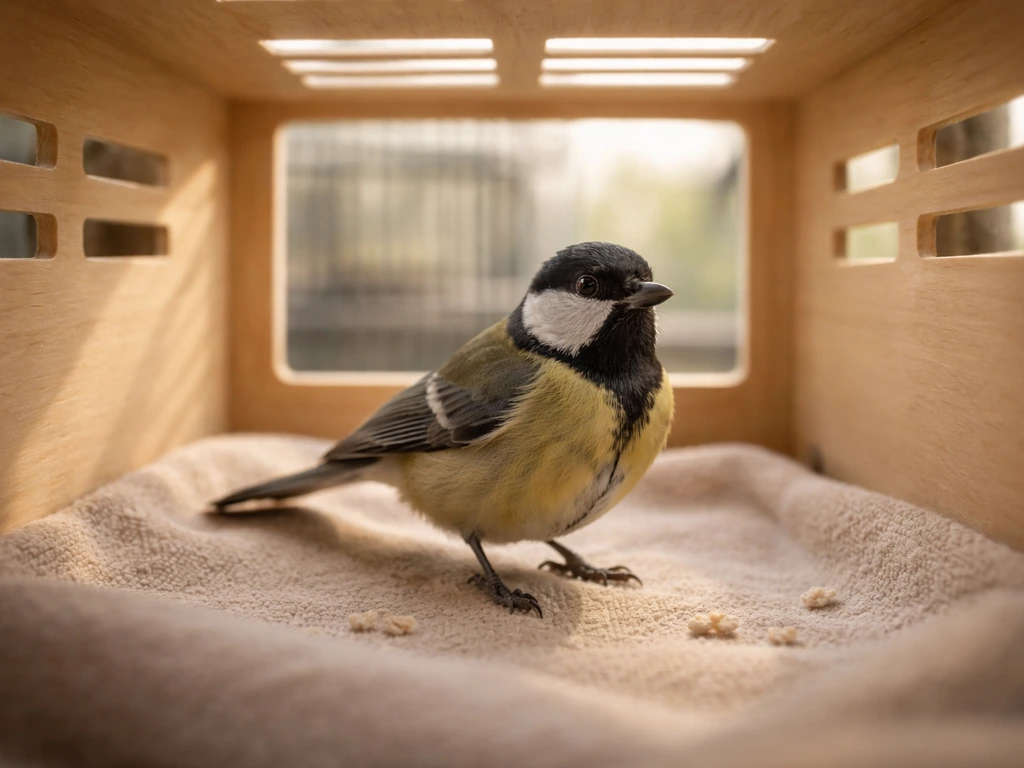
If you find a wild bird that can't fly, do these three things right now: don't chase it or pick it up bare-handed yet, get a cardboard box or paper bag ready with air holes and a paper towel lining, and call a licensed wildlife rehabilitator as soon as you can. Most grounded birds need professional help within hours, not days. What you do in the next 20 minutes matters a lot.
Wild Bird Can’t Fly: What to Do Step by Step
Marcus Chen
19 May 2026
Quick triage: figuring out what's wrong before you touch anything
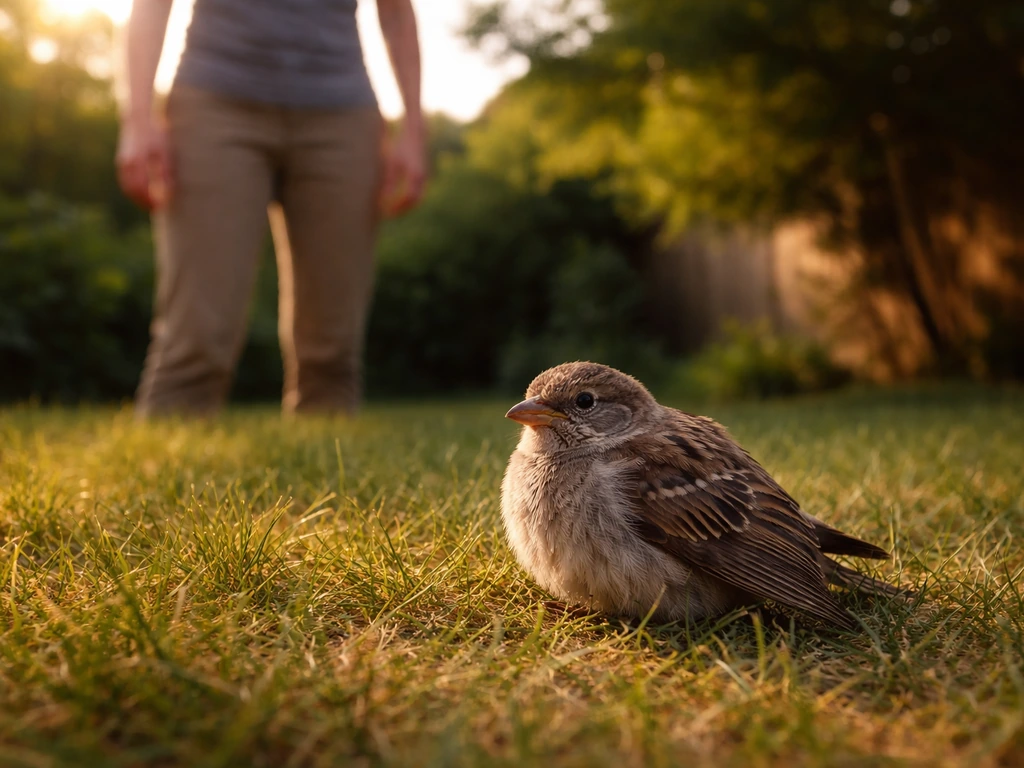
Before you approach the bird, stand back and just watch for 60 seconds. You're looking for specific clues that tell you what you're dealing with. A bird grounded for different reasons needs different handling, and rushing in without looking first can cause more harm.
Run through these five questions quickly:
- Is one wing drooping or held at a weird angle compared to the other? That's the number one sign of a broken or dislocated wing.
- Is the bird sitting on both feet, one foot, or lying flat? A bird lying on its side or unable to stand at all is in serious trouble.
- Are there visible wounds, blood, exposed bone, or feathers matted with blood or saliva? Any of these means get to a rehabilitator fast.
- Is the bird panting, breathing with its mouth open, or holding a wing away from its body in an obvious way? That's a distress sign, not just heat.
- Did you see what happened, or is there a context clue nearby? A dead cat nearby, a window with a fresh smear mark, or a nest above you all point to a specific cause.
If the bird is alert, upright, and trying to move away from you, that's actually a good sign. It means it has some fight left. If it's sitting completely still and letting you walk right up to it, that's a red flag. Wild birds that don't flee when approached are not being friendly. They're sick, injured, or in shock.
One thing worth noting: if the bird is small and has very short, fluffy feathers with a stubby tail, it may be a fledgling, which is a young bird that's supposed to be on the ground learning to fly. That's a different situation from an adult bird that genuinely can't fly due to injury. A common heartbreaking scenario is a bird that seems healthy but forgets how to fly forgets how to fly (grounded) bird forget how to fly/learn to fly. A fledgling that looks alert and has most of its feathers is usually fine. An adult bird that's grounded almost always isn't.
The most common reasons a wild bird can't fly
Knowing the likely cause helps you communicate clearly when you call for help, and it changes how urgently you need to act.
Broken or injured wing
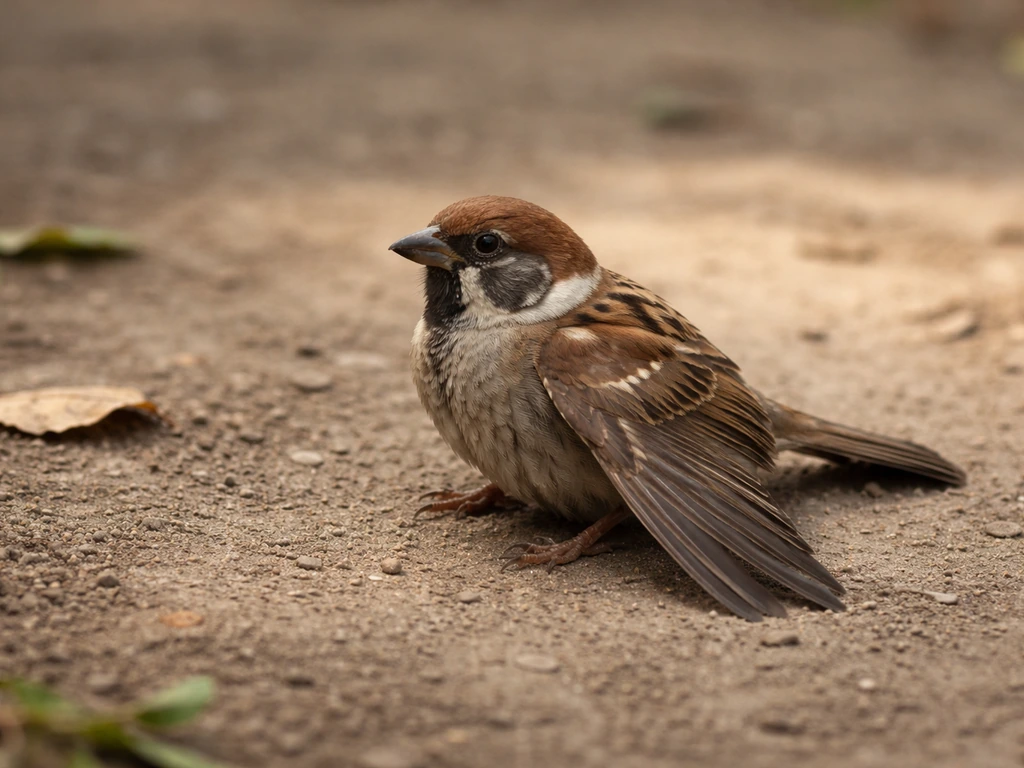
This is the most obvious cause. Look for one wing hanging lower than the other, dragging on the ground, or bent at an unnatural angle. The bird may flutter the good wing but can't get lift. Sometimes the break isn't visible but you'll see the bird actively holding one wing slightly away from its body or shaking it. Panting and holding the wing away from the body, as well as wind droop, lameness, bleeding, or other obvious signs of trauma, are listed as serious injury indicators in the Hawai‘i Division of Forestry and Wildlife wildlife rehabilitation protocol holding one wing slightly away from its body. Broken wings are genuine emergencies. They don't heal on their own correctly without professional splinting, and an improperly set fracture means a bird that will never fly again.
Leg or foot injury
A bird with a bad leg injury may still attempt to fly but struggles to launch from the ground, which requires pushing off with both feet. If a bird can't move its legs due to a leg or foot injury, it may struggle to push off and launch, so contact a wildlife rehabilitator right away. If your my bird can't walk properly is a pet or companion bird, it is still safest to have an avian veterinarian assess balance, leg injury, or neurological causes right away. You might see it hobbling, holding one leg up, or unable to grip a perch. Leg injuries are serious but sometimes slightly less immediately life-threatening than wing breaks, though they still require a rehabilitator. If you're curious about the full picture of how leg injuries affect birds, the overlap with birds that can't walk is significant.
Window collision
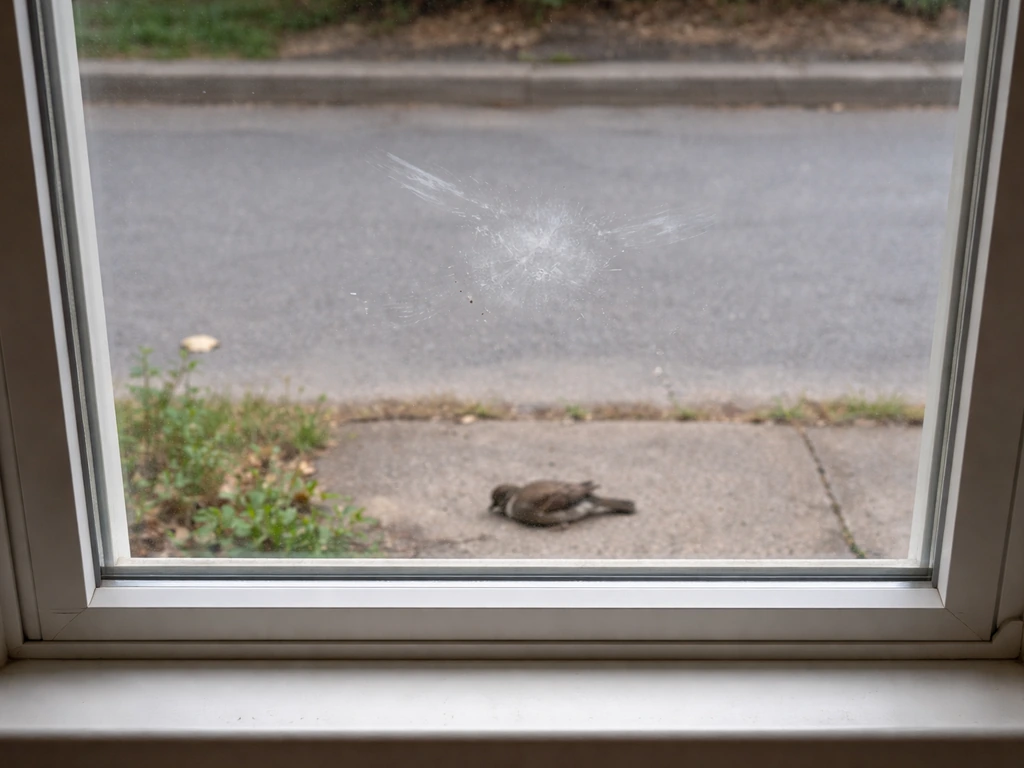
Window strikes are one of the most common reasons people find a grounded bird. The bird hits the glass at speed, suffers a concussion or internal trauma, and drops. It may look completely uninjured on the outside. Sometimes birds recover from mild strikes within an hour. But internal bleeding and brain swelling from the impact can kill a bird that looked fine at first. This scenario gets its own playbook below.
Cat or other predator attack
This one is deceptive. A bird that's been in a cat's mouth may look totally unharmed. No blood, no obvious wounds. But cat saliva carries bacteria that are rapidly fatal to birds. A cat bite can introduce bacteria deep into tissue through tiny puncture wounds that are almost invisible. The Wildlife Center of Virginia is explicit about this: any wild bird that has been caught by a cat needs to be brought to a wildlife rehabilitator immediately, even if it appears uninjured. This is not optional.
Shock and severe stress
A bird can be so severely shocked or stressed that it can't fly even without a physical injury. Signs include extreme stillness, eyes half-closed, feathers fluffed up tightly, and no attempt to move. Shock can follow any trauma, and it can be fatal on its own. Keeping the bird warm and dark and quiet is the most important thing you can do while getting help.
Illness, poisoning, or neurological problems
Sometimes there's no injury at all. If you suspect illness, poisoning, or a neurological problem, it still needs urgent professional help so the bird has the best chance of getting back to flight bird can't hold its head up. A bird that is sick with an infection, has ingested a toxin (like rat poison, which is devastatingly common), or has a neurological issue may be grounded for reasons you can't see. In other words, the reason it cannot fly is often the hidden injury or condition that has grounded it. Signs include head tilting, circling, seizure-like trembling, extreme weakness with no visible wound, or rapid labored breathing. If you see a bird holding its head at a weird angle or unable to lift its head at all, that's a neurological red flag. This overlaps with what people search for when a bird can't hold its head up, and it always warrants an immediate call for help.
Entanglement
Fishing line, plastic rings, wire, or even long threads can wrap around a wing, leg, or beak. Check around the bird carefully before assuming it's just injured. If you see something wrapped around the bird, do not try to cut or unwrap it yourself unless the bird is in immediate danger of being strangled right now. Entangled tissue swells, and what looks like a simple fix can cause serious damage. A rehabilitator has the tools and skill to remove it safely.
Immediate first aid: what to do right now
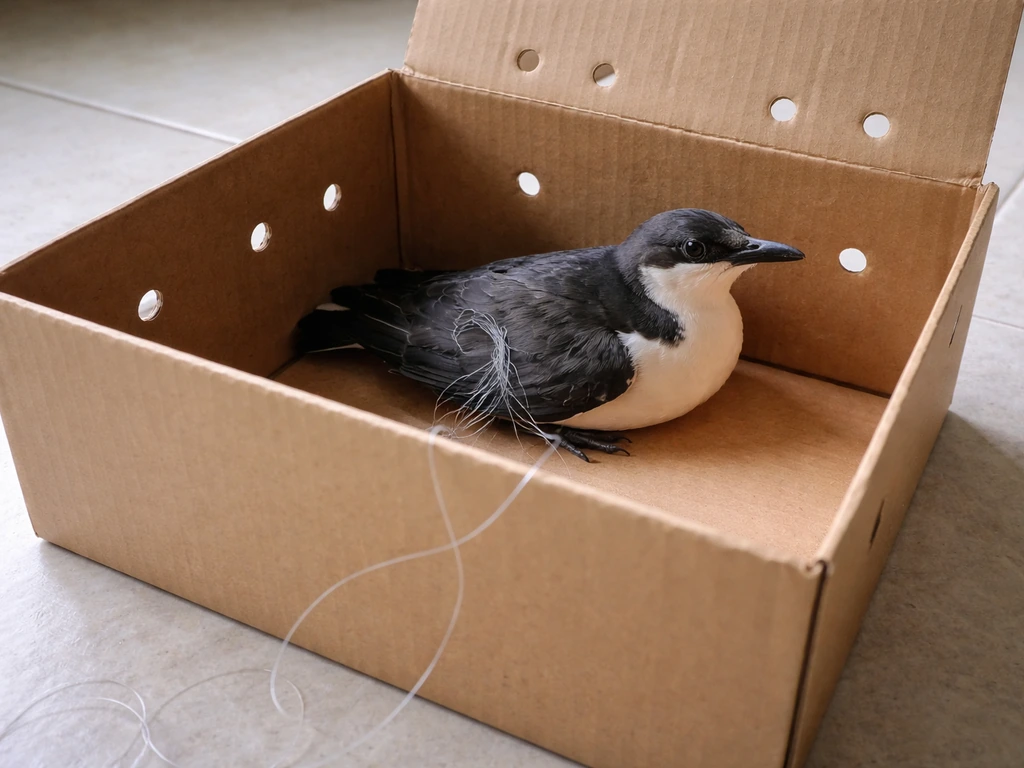
The goal of first aid here isn't to fix the bird. It's to stop things from getting worse while you get professional help. Think of yourself as stabilization, not treatment.
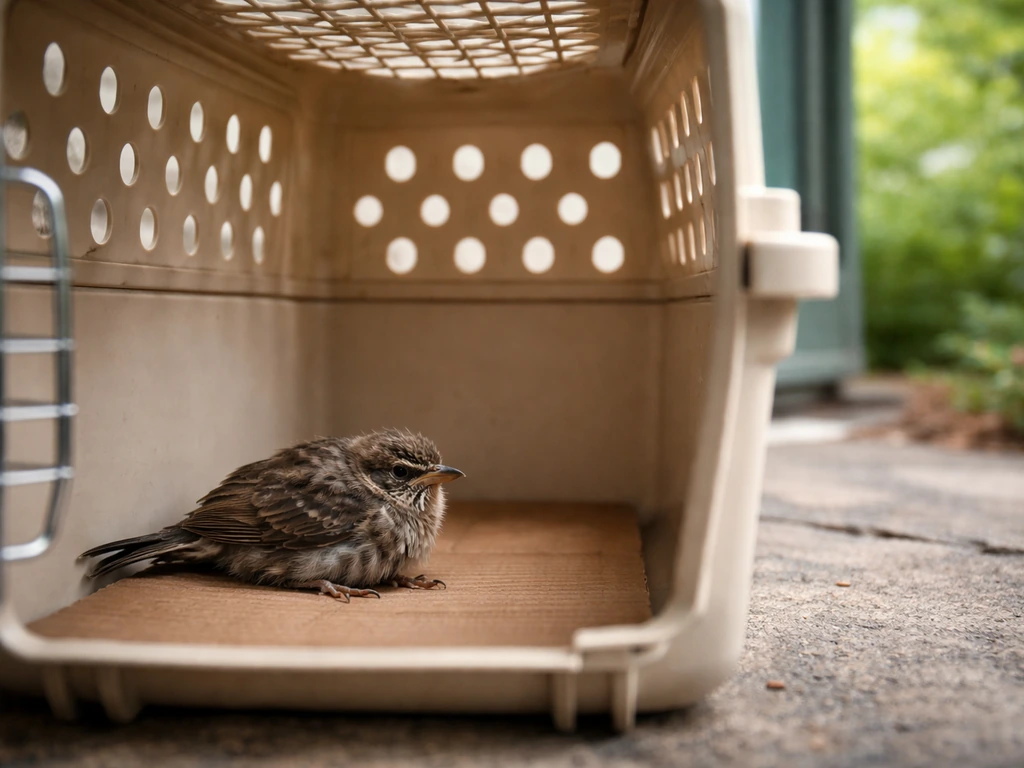
- Prepare a container before you approach: a cardboard box or paper bag with several air holes punched in, and crumpled paper towels or a folded cloth on the bottom. No perches, no open-top containers.
- Put on gloves if you have them. If not, use a light towel or cloth to pick up the bird. Birds can carry diseases, and the RSPCA specifically flags bird flu as a risk worth taking seriously. Covering the bird with a cloth also calms it immediately by blocking out visual stimuli.
- Pick the bird up gently but firmly, supporting its body from below. Don't squeeze the chest. Birds breathe by expanding their chest, and squeezing can suffocate them.
- Place the bird in the container and close it. Dark and quiet. No peeking every five minutes.
- Put the container somewhere at room temperature, away from pets, children, and noise. Not in direct sun, not in a cold garage.
- If there is active bleeding from a wound, you can apply very gentle pressure with a clean cloth for a few minutes. Do not wrap the wound with anything tight.
- Call a wildlife rehabilitator or avian vet immediately. Do not wait to see if it improves.
For warmth, especially for small birds or young birds, you can place the container on top of a heating pad set to low, with only half the box touching the pad. This lets the bird move away from the heat if it gets too warm. A warm water bottle wrapped in a towel tucked alongside (not under) the bird works too. Body temperature matters enormously in shock recovery.
What not to do (this list matters as much as the one above)
The mistakes people make with the best intentions can genuinely kill an injured bird. Every wildlife clinic I've ever spoken with brings these up unprompted.
- Do not give food or water. This is the biggest one. Giving water to a stressed or injured bird can cause aspiration pneumonia. Giving food to a bird with internal injuries can make surgery impossible and accelerate shock. Every major wildlife authority says the same thing: no food, no water, period.
- Do not try to force the bird to fly to see if it's really injured. You can make a fracture worse, cause internal bleeding to worsen, and exhaust an already compromised animal.
- Do not chase the bird if it's trying to move away. Let it tire itself out and approach calmly, or wait for it to settle.
- Do not try to splint a wing yourself. Improper splinting causes more damage than no splinting, and an incorrectly set wing means a bird that can never be released.
- Do not put the bird in a cage with a wire bottom or sides where it can injure itself further trying to escape.
- Do not try to remove fishing line, hooks, or other entanglement unless the bird is in immediate mortal danger from it right now.
- Do not keep the bird as a pet or delay calling for help to see if it gets better on its own. Wild birds deteriorate fast.
When this is a genuine emergency: call now, don't wait
Some situations go from bad to fatal in hours. If you see any of the following, make the call before you finish reading this article:
- Visible bone, open wound, or bleeding that won't stop
- Wing or leg hanging at a clearly abnormal angle
- Bird lying on its side and not responding to gentle movement nearby
- Labored or open-mouthed breathing when the bird isn't hot
- Head tilting severely, circling, or trembling (neurological signs)
- Evidence of cat or dog attack, even if no wounds are visible
- Maggots or fly eggs visible on the bird (this bird has been down for a while)
- Large bubbles or swelling under the skin
- Complete unresponsiveness or inability to move at all
To find help, search 'wildlife rehabilitator near me' or use the National Wildlife Rehabilitators Association directory online. In the US, you can also call your state's fish and wildlife agency for a referral. Your local animal control can often point you to wildlife resources too. In the UK, the RSPCA runs a 24-hour helpline. In Australia, WIRES does the same. Don't assume there's no help in your area until you've actually searched. Most regions have more wildlife resources than people realize.
Scenario playbooks: window strike, pet attack, nest emergency
Window collision
You hear a thump, you find a bird on the ground below a window. Here's what to do: First, check if there's a smear mark on the glass. That confirms the collision. Secure the bird in a dark, ventilated box (paper bag is fine too) and keep it in a quiet room at room temperature. Do not give water. Give it up to an hour in that dark, quiet container. Some birds with mild concussions do recover and will fly off when you open the box outside. But if after an hour it's still not alert and attempting to fly, or if you see any of the emergency signs above, call a rehabilitator. The fact that a bird looks uninjured after a window strike means nothing. Internal damage is common and not visible. Audubon is direct about this: if it doesn't fly away after observation, call a wildlife rehabber.
Cat or dog attack
Get the bird away from the animal immediately, prioritizing your own safety. Secure it in a container as described above. Call a wildlife rehabilitator right away, before you do anything else. Tell them it was in a cat's or dog's mouth. There is no 'wait and see' option with this scenario. Cat bacteria (Pasteurella) kills birds within 24 to 48 hours without antibiotic treatment. A bird that looks completely fine after a cat attack is still at high risk. This is a true emergency.
Nest emergency (baby bird on the ground)
If you find a very young bird with little to no feathers (a hatchling or nestling) on the ground, the best outcome is getting it back into its nest. The myth that touching a baby bird will make the parents reject it is false. Birds have a very limited sense of smell. If you can see the nest and safely reach it, place the bird back in. Then watch from a distance for at least two hours to see if the parents return. If they don't, or if the nest is destroyed, call a wildlife rehabilitator. Do not try to raise the nestling yourself. Baby birds need feeding every 15 to 30 minutes and the wrong food (bread, milk, water) can kill them quickly. Keep it warm in a small container while you make the call.
How to keep the bird safe until help arrives
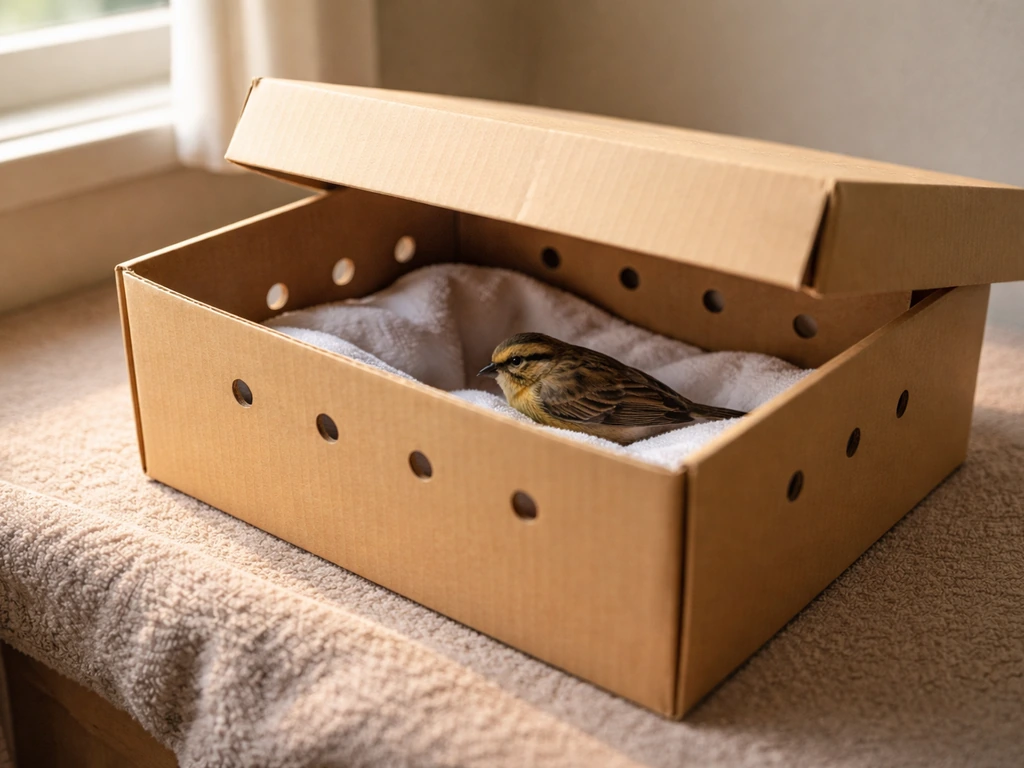
Once the bird is contained, your job is to do as little as possible. Seriously. The less interaction, the better. Here's the full setup:
| What you need | What to use | What to avoid |
|---|---|---|
| Container | Cardboard box or paper bag with air holes; paper towel or soft cloth on the bottom | Wire cages, open containers, clear plastic boxes |
| Temperature | Room temperature (around 70-75°F / 21-24°C); heating pad on low under half the box | Direct sunlight, cold garage, air conditioning vents nearby |
| Darkness | Closed box in a dim or dark room | Leaving the lid open, glass containers, bright lights |
| Quiet | Away from pets, children, TV, music | Car radio on during transport, busy household areas |
| Food and water | None unless a licensed rehabilitator instructs otherwise | Bread, water, fruit, seeds, worms, anything |
| Transport | Box on a stable surface in the car, heat on low, radio off | Holding the bird in your hands, loose in the car, windows down |
During transport to a rehab center or avian vet, keep the box on the seat or floor where it won't tip. Heat the car to a comfortable room temperature. Keep the radio off. Talk quietly if you need to. The bird can hear everything and stress compounds injury.
Honest expectations for recovery
It's worth being realistic. Some birds make full recoveries and are released. A window-stunned bird with no internal damage can be back in the wild within a day. A bird with a clean leg fracture that's treated quickly has a good prognosis. But birds with compound wing fractures, severe head trauma, or advanced illness have much lower odds of full release. A wildlife rehabilitator will be honest with you about this. The goal of professional wildlife rehabilitation is always release back into the wild. If a bird can't be released, it won't be kept alive just for the sake of it. That's the ethical standard most licensed rehabilitators follow.
What you can control is the next hour. A bird that gets into dark, quiet, warm containment quickly and reaches professional help the same day has a meaningfully better chance than one that spends hours being handled, offered water, and kept in a brightly lit room. The single most useful thing you can do is make that call right now.
FAQ
Should I give a wild bird that can’t fly water or food?
Don’t. Water can worsen shock and aspiration risk, and it may delay the call. For most grounded wild birds, the safest first step is dark, quiet containment and contacting a licensed wildlife rehabilitator, even if the bird seems alert.
What container size and ventilation do I need for a wild bird that can’t fly?
Use a box or paper bag lined with a paper towel, then poke enough air holes for ventilation. Avoid airflow that blows directly on the bird, and make sure the container is stable so it cannot tip during transport.
How long can I watch a wild bird that can’t fly before I pick it up?
Let the bird settle in the dark container before moving it. If it’s restless, keep handling to the minimum required to secure the container. If the bird is in an unsafe location (road, stairs, pets nearby), move it only to containment and then leave it alone.
Can I wrap or tape a grounded wild bird to keep it still?
No. You should not wrap the bird in towels directly to “restrain” it, unless you are actively securing it into the prepared container. Tight wrapping can increase stress and restrict breathing, and tape, elastic, or string should never be used on the bird.
What if the bird’s wing or leg looks broken, can I splint it myself?
Don’t try to “set” or splint wings or legs. Improvised splinting often leaves bones misaligned or restricts circulation, turning a treatable injury into a permanent problem. Containment and a rapid call are the correct first aid steps.
After a window collision, how do I know if it’s safe to release the bird?
If it’s a window strike, don’t release it immediately just because it looks okay. Follow the observation window in the article, and only consider release if it becomes alert and attempts to fly. If it remains grounded after that, contact a rehabilitator.
Where should I keep the bird in my home while waiting for help?
Generally, keep the bird where it cannot see activity, pets, or bright light. A quiet, dim room helps reduce stress-related shock. If you must transport, secure the container first so the bird is not jostled during movement.
I found a baby bird on the ground, should I assume the parents will take care of it?
If you hear chirping, see a parent bird, or notice movement nearby, do not assume the baby is fine. Hatchlings and nestlings may still be in danger due to cooling, dehydration, or injury. If the nest is reachable, replace it, then monitor, otherwise call a rehabilitator.
What should I do if I can’t reach a wildlife rehabilitator right away?
Yes for calling speed, but not for treatment. If you cannot reach a wildlife rehabilitator immediately, contact your local animal control or the appropriate state or national agency listed in your region to get the right triage instructions.
Can my dog or cat be around while I wait with a wild bird that can’t fly?
Absolutely avoid it. Pets and people can cause secondary injury, and a bird that is already shocked may panic and worsen a fracture or head injury. If you must keep distance while waiting for help, secure the area first and then return to quiet containment.
Next Article
What Prevents the Caged Bird From Flying and What to Do Now
Causes of a caged bird that won’t fly, quick safe checks, first aid steps, and red flags for urgent avian help.