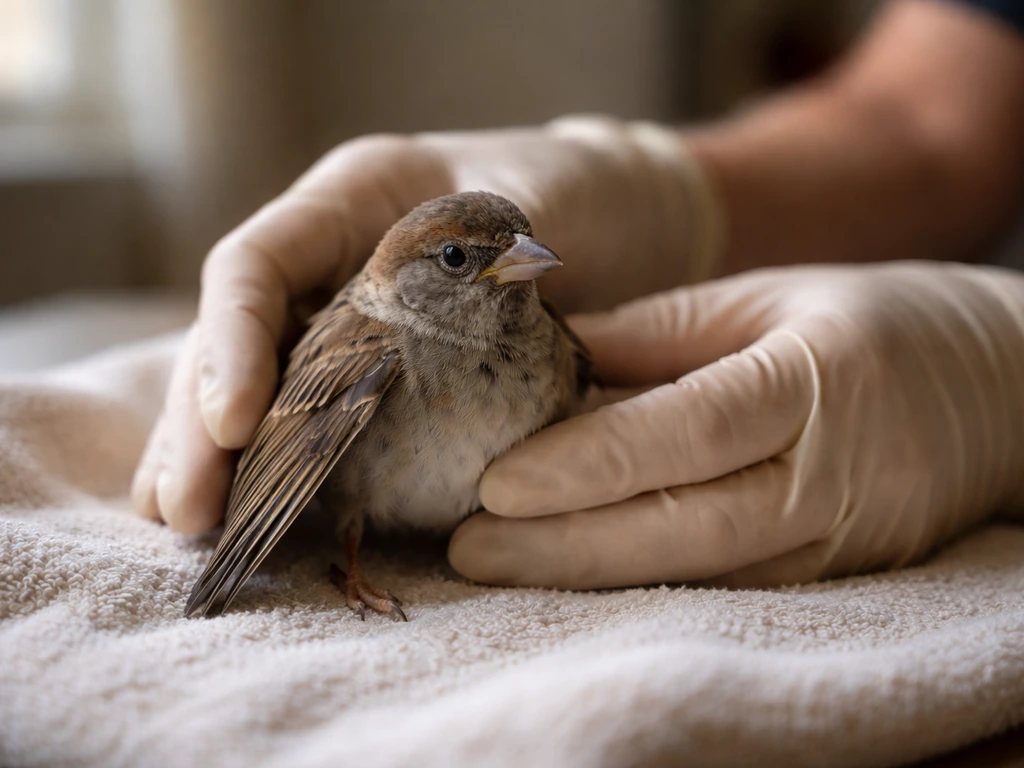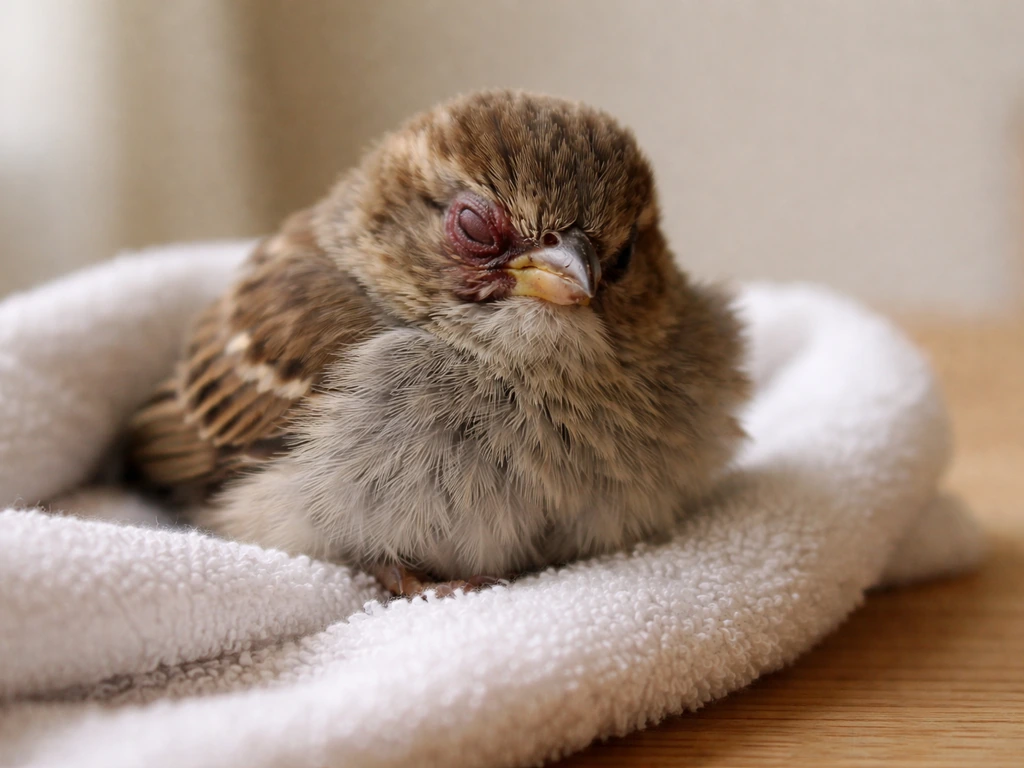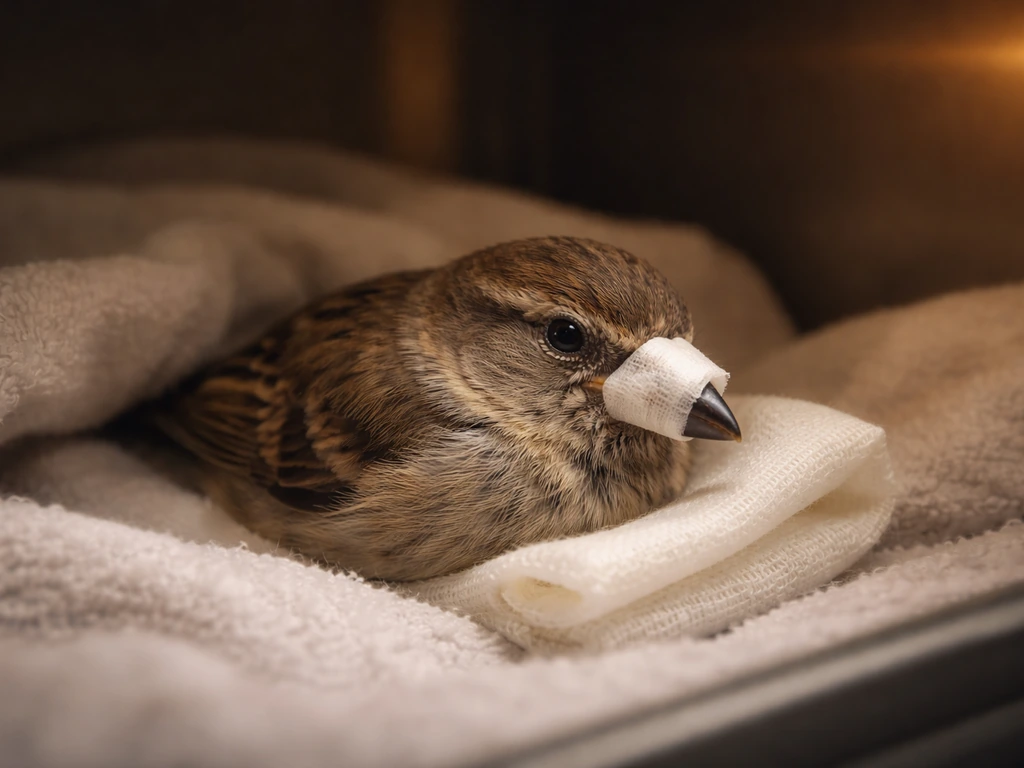
If you've found a bird that can't walk, stand, or use its legs normally, the most important thing you can do right now is stay calm and resist the urge to start manipulating its legs or feet. If the bird can't fly either, that may be another serious injury or shock sign and it should still be handled as urgent.
Bird Can’t Walk: What to Do Step by Step Today
Marcus Chen
21 Apr 2026
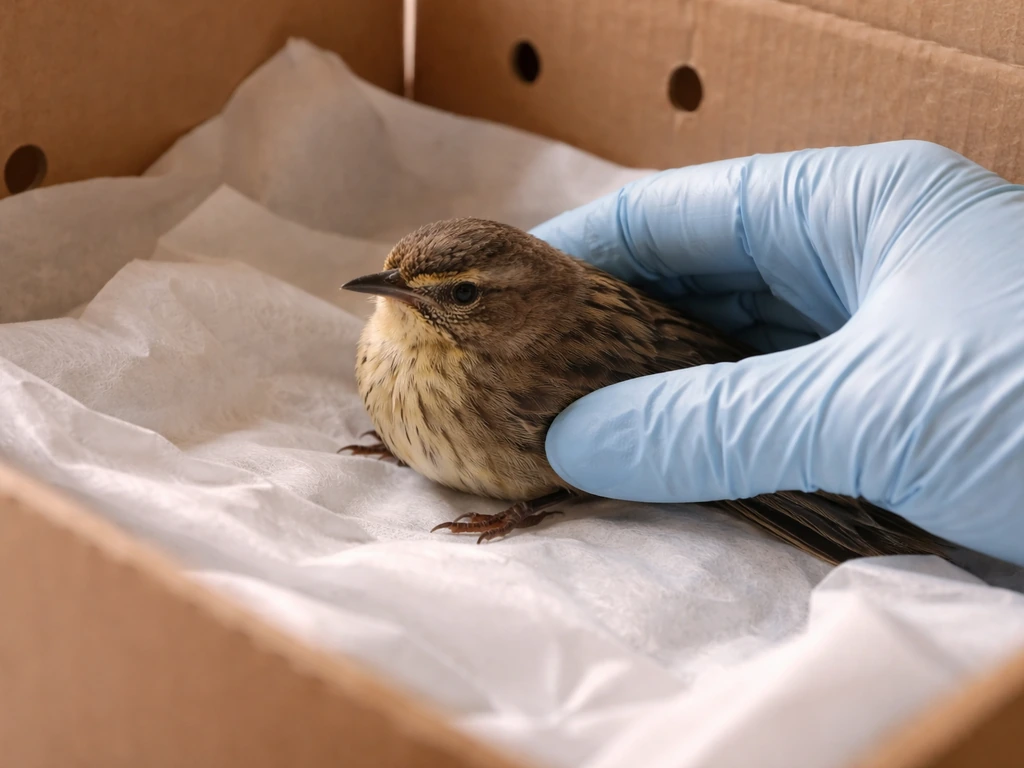
If the bird can't move its legs, focus on keeping it warm and minimizing handling until a rehabber or avian vet can assess the cause. Keep the bird still, get it somewhere warm and dark, and then work through the steps below to figure out what you're dealing with.
In most cases, the difference between a good outcome and a bad one comes down to two things: not making the injury worse in those first few minutes, and getting the right help quickly.
Quick triage: is it injury, entanglement, or shock?
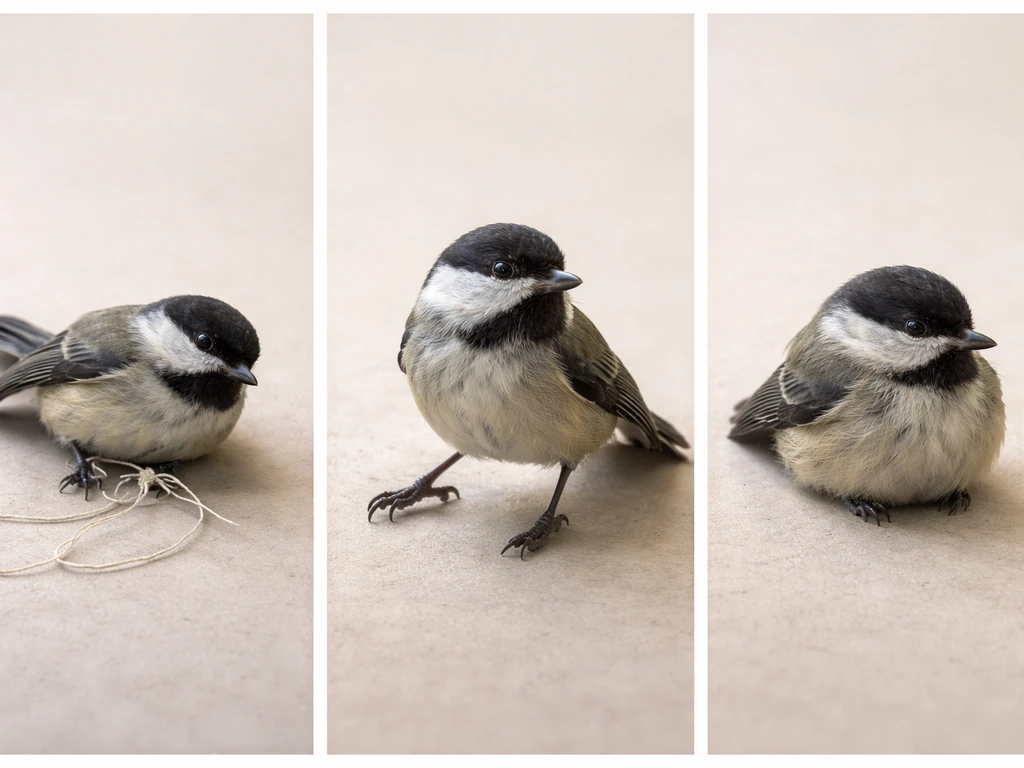
Before you do anything else, take 30 seconds to look at the bird without touching it. You're trying to answer one question: why can't it walk? The three most common reasons are physical injury (broken leg, foot wound, bite), entanglement (fishing line, string, thread, netting wrapped around legs or feet), or shock (the bird is stunned from a collision or extreme stress and simply hasn't recovered yet).
Shock looks like a bird that's sitting very still, not reacting much, and seems weak all over, not just in the legs. A collision with a window, for example, can leave a bird looking completely paralyzed for several minutes. If you place it in a dark, quiet, ventilated box, a bird in shock should start to show signs of alertness within a few minutes. If it doesn't improve at all after 15 to 20 minutes in that calm environment, assume something more serious is going on and escalate to professional help.
Entanglement is easy to miss at first glance. Look closely at the toes, ankles, and legs for thread, fishing line, hair, wire, or rubber bands. These can cut off circulation so completely that the legs look dead or paralyzed. If you see something wrapped around the leg, do not pull or cut at it yourself yet. Note it, get the bird contained, and let a rehabber or vet handle it, because improperly removing embedded line can cause serious additional damage.
Physical injury shows up as a visible deformity (the leg is bent the wrong way), a leg hanging at an odd angle, swelling, bleeding, a wound, or a foot that's clenched in an abnormal position. A bird dragging one leg is almost always dealing with an injury or nerve issue on that side. Both legs splaying outward, sometimes called 'splay leg,' can point to a fracture, a neurological problem, or metabolic issues in younger birds.
Immediate safe first aid you can do right now
The first-aid goal here is simple: reduce stress, maintain body temperature, and prevent additional injury. You are not trying to treat the bird, you are trying to stabilize it until a professional can take over.
- Find a cardboard box with ventilation holes (a few small holes punched in the sides or lid). Line the bottom with a folded paper towel or a smooth cloth without loose threads that toes can catch on.
- Place the bird gently inside, using a light towel or cloth to scoop it up so you're not grabbing it bare-handed (this protects both of you).
- Close or cover the box to make it dark. Darkness dramatically reduces a bird's stress response.
- Keep the box in a warm room, away from air conditioning vents, fans, direct sunlight, kids, and pets. Birds have a body temperature of around 103 to 106°F, so a cold environment will make things worse fast. Aim for a room temperature of at least 75 to 80°F. If the bird feels cold to the touch, place a heating pad on the lowest setting under half the box so the bird can move away from the heat if needed.
- Do not offer food or water. This is critical. Force-feeding or forcing water into a traumatized bird can cause aspiration and death. Even well-meaning water from a dropper or syringe can go into the lungs.
- Do not try to splint, bandage, or 'set' the leg yourself. Wrapping an individual limb incorrectly causes more harm. The only safe wrapping is gently securing the whole bird in a soft towel to restrict movement if it's thrashing and hurting itself.
While the bird is in the box, give it 15 minutes of quiet. Check on it gently by opening the box briefly. Is it more alert? Is it trying to stand? Improvement in that window is a good sign. No improvement, or any worsening, means you need to move faster toward professional care.
Check legs and feet: what to look for and how to inspect gently
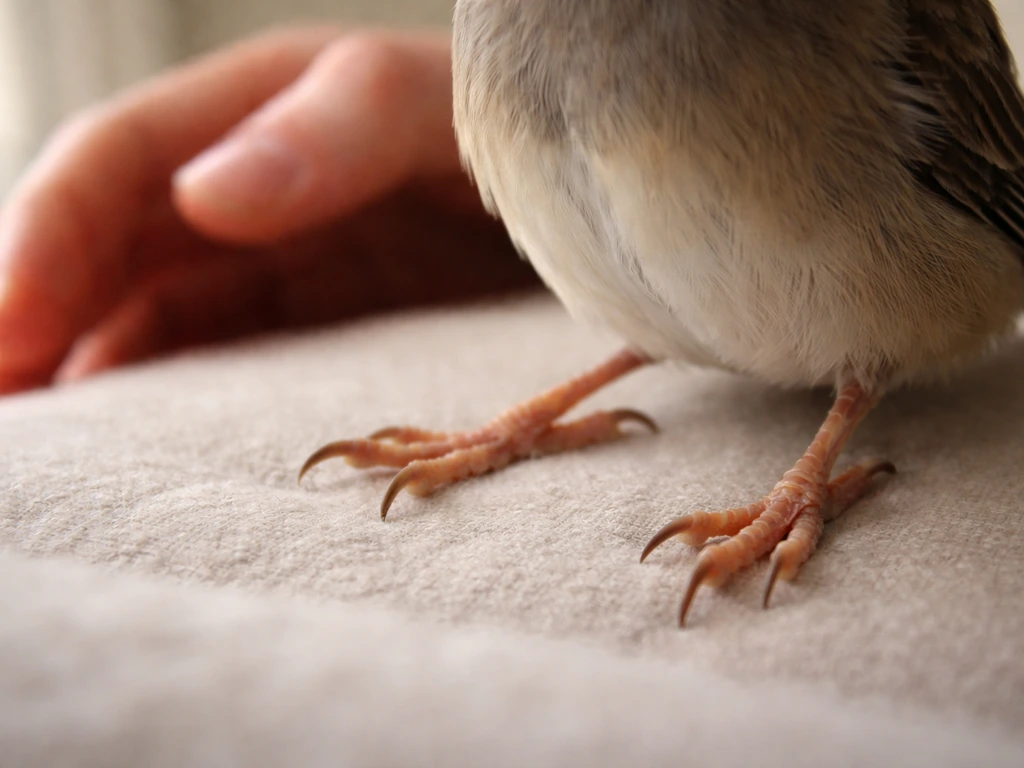
Once the bird is calm (or when you're placing it in the box), take a gentle look at its legs and feet. You don't need to do a full exam, you just need enough information to describe the injury clearly when you call a rehabber or vet.
- Visible deformity: Is one leg bent or angled differently from the other? Does it hang loosely instead of being held close to the body?
- Swelling: Is there any area on the leg or foot that looks puffy or enlarged compared to the other side?
- Bleeding or open wound: Any visible cut, puncture, or raw tissue on the leg, foot, or toes?
- Missing or damaged toes: Are all toes present and intact, or does one appear damaged, blackened, or missing?
- Entanglement signs: Any foreign material (thread, line, wire, plant fiber, hair) wrapped around the ankle, toes, or leg?
- Color: Legs or feet that are dark, bluish, or cold compared to the rest of the bird may have circulation issues, often from entanglement or prolonged exposure.
To inspect gently, hold the bird loosely in a towel and look, don't probe or poke. If you need a closer look at the foot, support the bird's body and allow the foot to be visible without pulling the leg outward or extending it. Never force the leg into a different position or try to test whether it's broken by applying pressure. A bird intake form used by wildlife rehabilitators evaluates for fractures, dislocations and joint injuries, tendon damage, and missing digits, so your job is just to observe and document, not diagnose.
Common causes of a bird that can't walk
Understanding what might be happening helps you give better information to the vet or rehabber, and helps you know how urgent the situation is. Here are the most common causes:
| Cause | What it looks like | Urgency level |
|---|---|---|
| Broken leg or fracture | Leg hanging, deformity, swelling, bird can't bear weight | High — needs vet care today |
| Foot injury or wound | Bleeding, wound, swelling on foot or toes, bird holds foot up | High — infection risk is fast |
| Entanglement (line, string, hair) | Thread or line visible on leg/toes, leg may look limp or dark | Very high — circulation loss is rapid |
| Window collision / shock | Sudden onset, bird was fine then couldn't move, may improve with rest | Moderate — monitor for 15–20 min |
| Cat or dog bite | Puncture wounds, feather loss, possible internal injury not visible | Very high — bacterial infection is life-threatening within hours |
| Nerve or spinal damage | Both legs affected, legs splayed, no movement even when alert | Very high — needs professional diagnosis |
| Poisoning | Weakness, tremors, seizures, unable to walk or stand, disoriented | Immediate emergency |
| Frost or heat stress | Cold/stiff legs, or overheated and collapsed, lethargy | High — temperature stabilization needed fast |
| Dislocation or joint injury | Leg moves at a wrong angle, joint appears out of place | High — needs imaging to confirm |
Cat and dog bites deserve special mention because they're one of the most underestimated emergencies in bird rescue. Even a single puncture wound from a cat's claw or tooth introduces bacteria (particularly Pasteurella) that can be fatal to a bird within 24 to 48 hours. If a cat or dog was involved at any point, treat it as an emergency regardless of how minor the visible injury looks. Similarly, if you suspect poisoning (the bird was in an area with pesticides, bait stations, or contaminated water), this is an immediate situation. If the bird is seizing, collapsed, or unresponsive, call an emergency vet or wildlife line right away.
It's also worth knowing that some walking problems overlap with other movement issues. If a bird can't fly normally, it can signal urgent injury, shock, or neurological effects and should be treated as an emergency what happens if a bird can't fly. If your wild bird can't fly, treat it as an emergency too, because it can overlap with urgent injury, shock, or neurological effects.
If a bird can't fly normally, it can signal urgent injury, shock, or neurological effects and you may also want to review what prevents the caged bird from flying as a related reference. A bird that can't walk might also be struggling to use its wings or hold its head up normally, which can point to a systemic problem like neurological damage from a collision, or a toxin affecting the whole nervous system.
If the bird also cannot fly normally, that can happen after a collision, shock, or neurological effects and should be treated as urgent. In some cases, the bird also cannot fly normally because of neurological effects, entanglement, or severe stress, all of which need urgent professional assessment what prevents the caged bird from flying. Sometimes that kind of sudden loss of normal flight is described as a bird forgetting how to fly, especially after stress or a collision cannot fly normally. If you're noticing multiple things wrong, not just the legs, escalate to professional care immediately.
When to seek urgent professional help (and why)
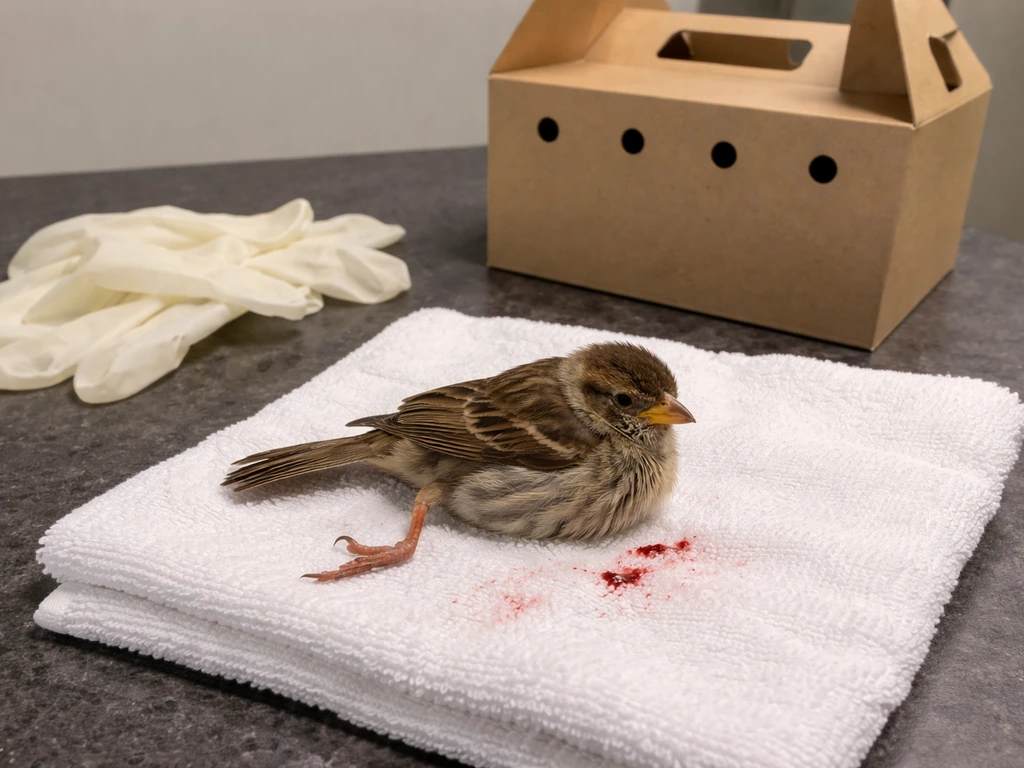
Honestly, for any bird that can't walk, contacting a wildlife rehabber or avian vet should be your goal from the start. The first aid steps above are about buying the bird time, not replacing professional care. But here are the situations where you should not wait at all and need to make that call right now: If your my bird can't walk properly situation seems to worsen over time, treat it as more urgent and follow the guidance on when to seek urgent professional help.
- Visible bleeding that won't stop
- Cat or dog bite was involved, even if the wound looks small
- The bird is seizing, trembling uncontrollably, or completely unresponsive
- Both legs are paralyzed or the bird has no reaction when you gently touch its feet
- The bird is breathing with its mouth open, pumping its tail to breathe, or making clicking/wheezing sounds
- There is visible entanglement that you cannot clearly see the extent of
- The bird shows no improvement after 15 to 20 minutes in a dark, quiet, warm box
- You suspect poisoning or exposure to chemicals
- The leg is visibly fractured (bone deformity, completely limp, or you can see tissue)
To find help near you right now, search 'wildlife rehabilitator near me' or use a directory like Animal Help Now (animalhelpnow. Michigan DNR also publishes a directory of licensed wildlife rehabilitators, which can help you find a permitted rehabber by location and permitted animal types directory like Animal Help Now. org) which can locate your nearest licensed rehabber based on your location. You can also call your nearest avian veterinary clinic or emergency animal hospital. When you call, tell them the species if you know it, where you found it, what you observed (leg issue, any visible wound, cause if known), and how long the bird has been down. The more specific you can be, the faster they can triage.
How to contain and transport for rehab or vet care
The box you already used for first aid is your transport container. Keep it simple and safe. Avoid using wire or barred cages for transport, as a panicking bird will injure itself further on the bars. A plain cardboard box with ventilation holes, a secure lid or tape to keep it closed, and a non-slip bottom lining is ideal.
- Keep the box closed and dark during transport. Darkness keeps the bird calmer and reduces the chance of it thrashing and worsening any injuries.
- Place the box on the floor of the back seat or secure it in the footwell so it doesn't slide. Avoid putting it in a hot trunk.
- Do not run the air conditioning directly at the box. Keep the car comfortably warm.
- Drive smoothly and avoid sudden stops if possible.
- Don't open the box to check on the bird repeatedly during transport. Every time you open it, you introduce stress.
- If you have to wait before transport, keep the box in a quiet indoor room away from pets, children, and noise.
When you arrive, let the rehabber or vet team open the box. Tell them everything you observed: where you found the bird, any known cause (window hit, cat involved, found near bait station, etc.), how long it's been unable to walk, and any changes you noticed during the time you had it. If you took photos or video of the bird and the area where you found it, share those too. That context genuinely helps with diagnosis and treatment.
Aftercare while you wait, and signs of improvement vs. emergency
If you're waiting for a rehabber to respond or waiting for an appointment, your job is to do as little as possible. In an r/Ornithology thread, commenters also emphasize keeping the bird warm and dark, minimizing handling, and not feeding or giving water while you wait for a wildlife rehabilitator. That sounds counterintuitive, but the number one thing that harms birds during this waiting period is over-handling. Every time you take the bird out to look at it or check on it, you trigger a stress response. Minimize that.
Keep the container in a warm (not hot), dark, quiet space. Check on the bird by briefly opening the box once every 30 to 60 minutes. You're looking for two things: signs that it's improving, and signs that it's getting worse.
| Signs of improvement | Signs of emergency — act immediately |
|---|---|
| Becoming more alert, head is up and tracking movement | Completely limp or unresponsive to touch |
| Trying to stand or hop, even unsuccessfully | Open-mouthed breathing, tail pumping, audible wheeze or click |
| Vocalizing (alarm calls, chirping) | Seizures or uncontrolled trembling |
| Reacting to light when box is opened | Eyes closed and sunken, bird feels cold even in warm box |
| Righting itself when placed on its feet briefly | No reaction to gentle touch on foot after 30+ minutes in warm box |
Recovery prognosis for leg injuries in birds varies widely depending on the cause. In some cases, the bird may also seem unable to fly, as if it forgot how to fly, which is another reason to involve an avian rehabber or vet right away bird forget how to fly. A bird in shock from a window collision that recovers alertness within an hour has a genuinely good chance if there's no other injury.
A clean fracture treated quickly by an avian vet can heal well, though the bird may need weeks in care. Nerve damage from a spinal injury is more uncertain and may result in permanent disability, which is why wildlife rehabbers evaluate each case individually. A bird with a badly infected cat bite wound that reached care after 24 hours faces a much harder battle than one brought in within a few hours. Time matters enormously.
Do not give the bird human medications, pain relievers, antibiotic ointments, or any supplements without explicit instruction from a wildlife rehabber or avian vet. Feeding a sick or injured songbird an incorrect diet can cause injury or death, so avoid offering food unless a wildlife rehabber or avian vet directs you. Even products that seem gentle can be toxic to birds at very low doses. The best thing you can do while waiting is keep the environment stable: warm, dark, quiet, and calm. You've already done the most important part by getting the bird safe and reaching out for help.
FAQ
How warm should the box be if a bird can't walk? Can I use a heating pad?
Yes, but only for warmth. Use a heat source like a heating pad set low under half the box, or a warm (not hot) water bottle wrapped in cloth placed next to the box, so the bird can move away if it gets too warm. Do not place the bird directly on a hot surface or use an open heating element that could burn delicate skin and feet.
Should I give water or food to a bird that can’t walk?
Do not offer water or food by hand. If the bird cannot sit and swallow normally, trying to feed it can lead to aspiration (fluid or food going into the lungs). If the rehabber advises fluids later, they will guide the safest method. For now, focus on keeping it calm and warm and getting professional care.
What should I do if the bird has bleeding wounds on its leg or foot?
If the bird is bleeding, apply gentle pressure with clean gauze only to control active bleeding, then stop. Do not pack wounds tightly, do not flush with tap water, and do not use antiseptics or ointments unless a vet or rehabber specifically tells you to. Any significant puncture wound, especially from a cat or dog, needs urgent evaluation even if bleeding seems minimal.
What if I see fishing line or string wrapped around the bird’s leg?
If you suspect entanglement, containment and documentation come first. Do not pull, cut, or tug on line that appears wrapped around toes, ankles, or higher up the leg. Instead, note where the material is, how it enters the wrap, and whether the toes look pale or cold, then call a rehabber for removal guidance.
Can I gently move or straighten the bird’s leg to check for a fracture?
No, you should not test the leg to see if it is broken by gently moving it or pressing on joints. Forcing a limb into a different position can worsen fractures or worsen nerve damage. Instead, observe the posture (bent angle, dragging, splay, clenched foot), note any wounds, and describe what you see when you call.
What counts as an emergency, and when should I call right away?
If the bird is still breathing normally, keep handling to a minimum and prioritize professional help. If the bird is cold, lethargic, or not responding, treat it as more urgent, keep it warm in the box, and contact an emergency wildlife line or avian vet immediately. A bird that collapses, seizes, or is unresponsive should not wait for a routine appointment.
The bird can stand but can’t walk normally, is that still urgent?
A bird that can stand but “can’t walk” is still potentially serious. Even if one leg appears functional, neurological injury, tendon damage, or joint dislocation can be missed without an exam. If the bird has any abnormal posture, dragging, splaying, or weakness on one side, escalate to rehab or an avian vet.
How should I set up the transport box to prevent further injury?
Keep it from climbing, slipping, or getting its feet tangled. Put a non-slip lining on the bottom (like a soft towel or safe paper that will not catch claws), avoid perches, and do not place the bird on a bare smooth surface. Using a small, secure box reduces frantic movements that can worsen the injury.
If a bird can't walk and also looks weak all over, what should I do?
Yes, and it changes urgency. Birds that show whole-body weakness, severe wobbliness, or very low responsiveness in addition to leg problems may be in shock or affected by a collision, toxin, or neurological injury. If the problem is paired with abnormal breathing, inability to stay upright, seizures, or sudden deterioration, treat it as an emergency.
Can I give human medicine or antibiotic ointment while waiting for a rehabber?
Do not use human pain relievers, antibiotics, or topical creams, and do not give supplements. Even common household products can be harmful in small doses, and some can affect breathing or the nervous system. If you already gave something, tell the vet or rehabber exactly what it was, how much, and when.
Is it okay to take photos or video of the bird’s legs, and what should I capture?
Photography and short video are helpful, but prioritize safety and calm. Capture clear views of both feet and legs, any wounds, the way toes sit (including whether they are curled or pale), and the area where you found the bird. Avoid repeated attempts to reposition the bird for a better angle, and limit checks to brief box openings every 30 to 60 minutes.