
If you're watching a killdeer drag itself across the ground with one wing flopped out, calling loudly and looking like it's in serious pain, there's a very good chance you're witnessing one of nature's best performances, not a real injury. The killdeer's broken-wing act is a deliberate, highly effective decoy behavior designed to pull you (or any other perceived threat) away from a nearby nest. But occasionally, a killdeer really is hurt. Knowing which situation you're dealing with changes everything about what you do next.
Killdeer Bird Broken Wing Act: Injury vs Decoy and What to Do
Marcus Chen
6 Apr 2026
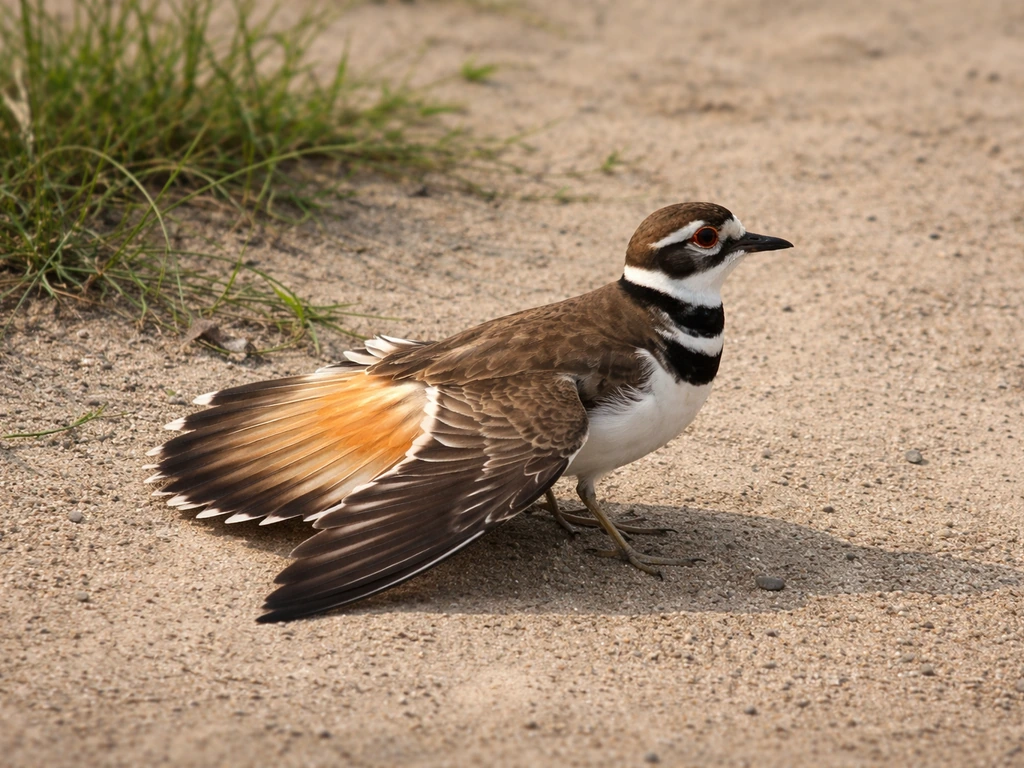
What the broken-wing act actually looks like
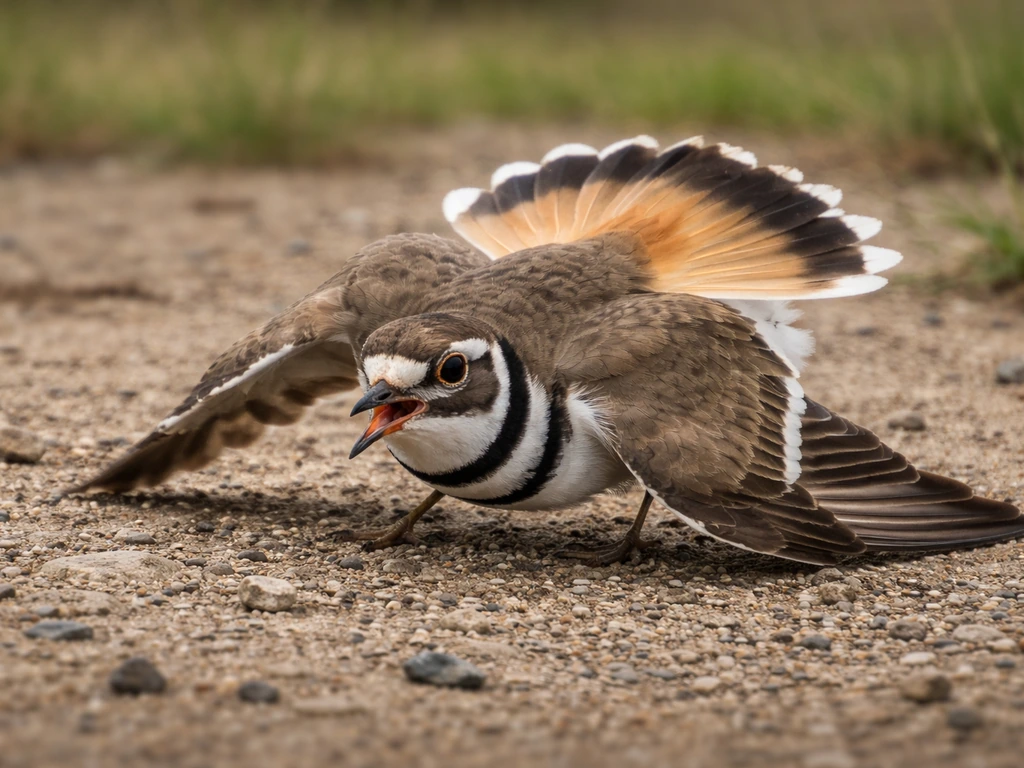
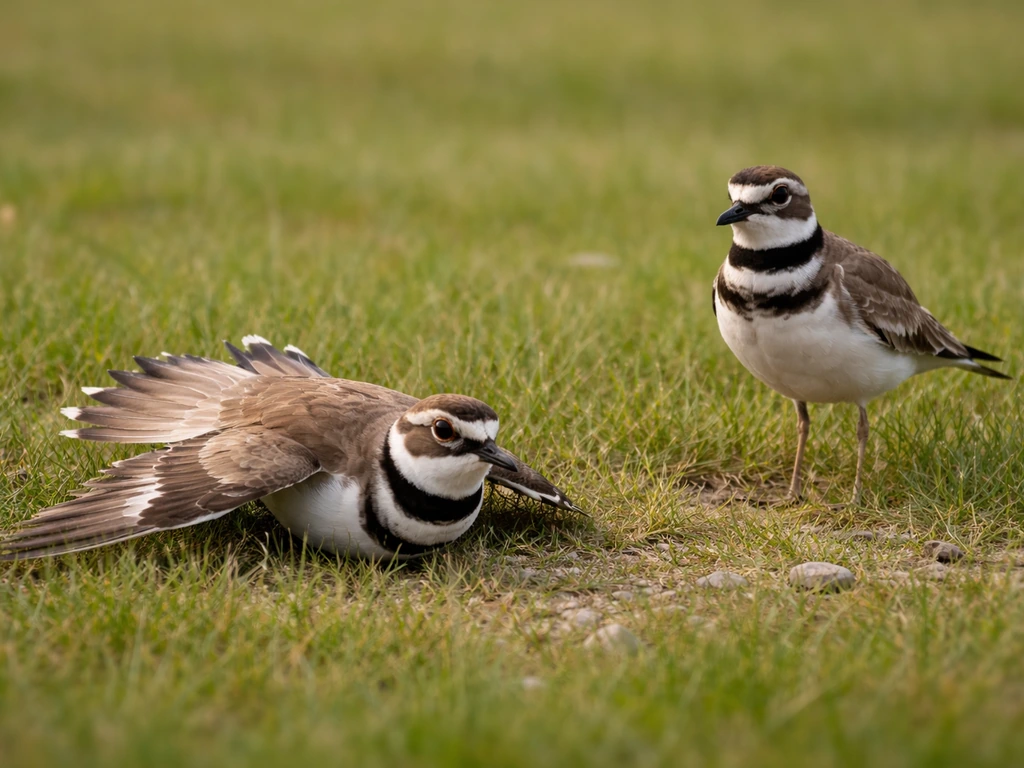
The display is surprisingly convincing. The killdeer will hold one or both wings low and quivering, drag them along the ground, and move away from you in an awkward, stumbling gait. It often fans its tail, exposes its bright orange rump, and lets out a loud, urgent call that sounds genuinely distressed. The whole performance is designed to make you think: easy target.
What you'll notice, if you watch carefully, is that the bird always moves away from you at roughly the same pace you approach. It stays just far enough ahead to keep your attention but never quite lets you catch it. That choreography is the tell. A truly injured bird doesn't have the coordination or the strategy to lead you on a chase. The broken-wing display also tends to ramp up in intensity the closer you get to the nest, then fade as you move further away.
Why killdeer do this (and why it works so well)
Killdeer nest on open ground: gravel, short grass, parking lot edges, athletic fields, rooftops. There's no tree cavity or dense shrub to hide eggs in. So evolution gave killdeer something else: a behavioral trick called injury feigning or a distraction display. When something approaches the nest, the parent killdeer (sometimes both parents take turns) performs the broken-wing act to redirect the threat. If simply flying around and calling loudly doesn't drive an intruder away, the display kicks in as a second-level defense.
Studies of distraction displays show the behavior is most intense in ground-nesting species, which makes sense since those nests are the most exposed. The display is calibrated, too: the closer you are to the nest, the more dramatic and urgent the act becomes. As you move away, the parent dials it back, and once you're far enough gone, it walks back to the nest calmly and resumes incubating.
This is pure instinct, not a conscious decision. The killdeer isn't "thinking" about tricking you. Its nervous system is wired to perform this act whenever the threat threshold is crossed. Understanding that helps you stay calm and make a clear-headed assessment instead of immediately scooping the bird up.
How to tell the difference from a distance
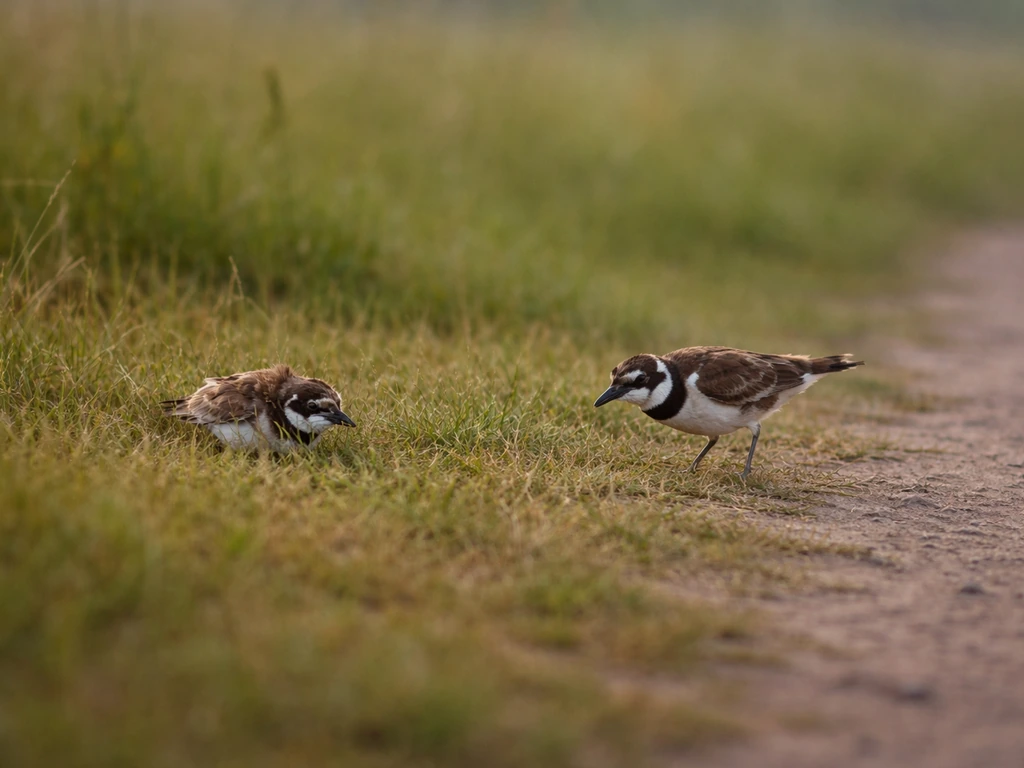
The most important rule: don't rush in. Step back about 30 to 50 feet, give the bird space, and watch for at least 5 to 10 minutes. Here's what to look for:
- Does the bird move away from you in a directed, deliberate path? Decoy behavior. A truly injured bird often sits still, moves erratically, or can't maintain a consistent direction.
- Does the display stop once you back away? If the bird rights itself, folds its wings normally, and walks off or flies once you retreat, that's the act ending. Job done.
- Can the bird fly at all? After a few minutes of observation, if the bird takes flight (even briefly), the wing is functional. Decoy birds almost always fly off once they feel the nest is no longer threatened.
- Is the wing visibly deformed, bent at an odd angle, or hanging at the wrong point on the body? A broken wing often droops from the shoulder or elbow joint in a way that looks structurally wrong, not just 'low and dramatic.'
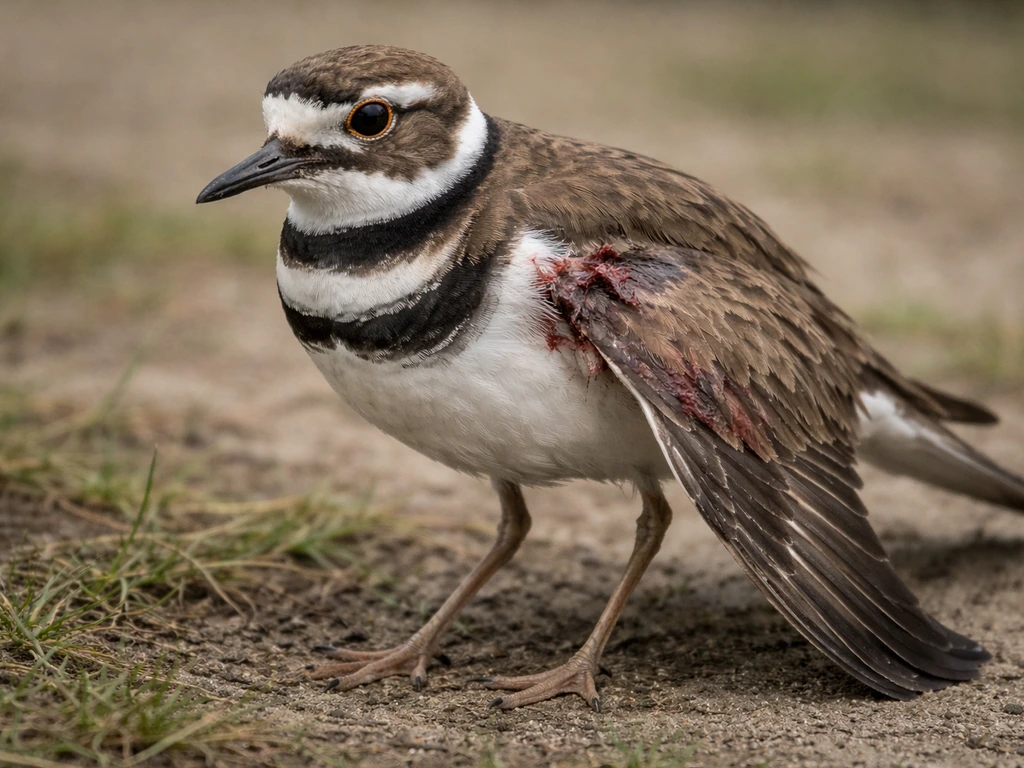
- Is there visible blood, raw tissue, or feathers missing in patches? These are injury signs, not display behaviors.
- Is the bird stationary and not responding to your presence after several minutes? A bird in true distress may be too compromised to run the normal decoy routine.
If you watch from a distance and the bird eventually flies or walks away normally, you almost certainly witnessed a healthy parent doing its job. Note where the nest is (usually within 30 feet of where the display started) and give the area a wide berth going forward.
What to do if the wing looks genuinely injured
If after careful observation you believe the bird has a real injury, not a display, the priority is containment with minimal stress. Do not attempt to splint the wing yourself or give the bird food or water. Here's the immediate process:
- Approach slowly and calmly. Drape a light towel or shirt over the bird to cover its eyes, which reduces panic. Scoop the bird gently into both hands, keeping the wings against the body.
- Place it in a cardboard box with small air holes punched in the lid. Line the bottom with a folded towel or paper towels. Do not use a wire cage or an open container.
- Keep the box in a warm, dark, quiet spot, away from pets, children, and noise. Room temperature (around 70-80°F) is fine for most killdeer. If using a heat source, place it under only one half of the box so the bird can move away from the heat if needed. Direct heat contact can cause burns.
- Do not offer food or water. An injured bird under stress can aspirate liquid, and feeding the wrong thing causes more harm. Wildlife rehabilitators will handle nutrition once the bird is in their care.
- Call a licensed wildlife rehabilitator or avian vet immediately. The clock matters. Keeping a wild bird in your home for more than 48 hours is illegal in most states, and home care is no substitute for professional treatment.
For a fuller walkthrough of handling an injured bird safely, bird with broken wing what to do covers the containment and first aid steps in detail. And if you're unsure whether what you're seeing even constitutes a wing injury, found bird with broken wing can help you work through the signs more carefully.
Signs that mean don't wait, call now
Some situations require immediate professional help, not a wait-and-see approach. Contact a wildlife rehabilitator or avian vet right away if you observe any of the following:
- Visible blood, open wounds, or exposed tissue anywhere on the body
- The wing is hanging at a completely wrong angle and the bird cannot fold it against its body
- The bird has not moved or flown after 60 minutes of observation from a distance
- The bird is on its side, unable to right itself, or showing a head tilt
- The bird was caught or struck by a cat or dog (even without visible wounds, puncture bacteria from cat claws is a medical emergency)
- Signs of shock: eyes partially closed, no reaction to movement nearby, cold to the touch, rapid or labored breathing
- The bird struck a window or was hit by a vehicle before you found it
If a cat or dog was involved, that situation is urgent regardless of how minor the injury looks on the surface. Bacteria from a cat's claws and teeth can cause fatal sepsis in birds within hours. Get the bird to a rehabilitator the same day.
Finding professional help near you
To find a licensed wildlife rehabilitator, search your state wildlife agency's website, call your local humane society or animal control, or look up the nearest avian vet. Note that anyone who cares for migratory birds (killdeer are a migratory species) blank" rel="noopener noreferrer">must hold a Federal Migratory Bird Rehabilitation permit, so confirm the person you're handing off to is properly permitted. Most state wildlife agencies maintain lists of licensed rehabilitators by county, which is the fastest way to find someone close. Where you can take a bird with a broken wing has practical guidance on locating the right facility.
Keeping the bird safe while you wait for help
Once the bird is contained, the most helpful thing you can do is leave it alone. Seriously. The dark, quiet box is doing the work. Every time you open the lid to check, you spike the bird's stress hormones, which can worsen shock and slow recovery. Set a timer and resist the urge.
Keep pets and children out of the room entirely. Place the box on a stable surface, not on top of a dryer or somewhere with vibration. If the room is drafty or very cold, move it somewhere warmer, but again, don't use a heat pad directly against the bird. If you're transporting the bird to a rehabilitator, put the box on the floor of the car (not the seat where it can shift), keep the car quiet, and drive without music or air conditioning blasting.
Understanding bird broken wing healing time can help set realistic expectations: even with professional care, wing injuries in small birds can take weeks to heal, and the outcome depends heavily on the type and severity of the fracture. The sooner a bird gets to a licensed rehabilitator, the better the prognosis.
Common real-world scenarios and what to do in each
You found a nest with eggs nearby
If a killdeer is doing the broken-wing act and you spot a nest of eggs nearby, the best thing you can do is back away slowly and leave the area. The parent will return to incubate once you're gone. Killdeer eggs are camouflaged and laid directly on the ground, often in gravel or sparse grass. Mark the location mentally (or with a small flag if it's in a high-traffic area like a parking lot) and give it a wide berth. If the nest is in a dangerous location, like the middle of a construction site, contact a local wildlife rehabilitator or your state wildlife agency for advice on what options are available. Do not move the eggs yourself.
A dog or cat got to the bird
This is a treat-it-as-an-emergency scenario every time. Even if the bird looks fine and is walking around, cat and dog mouths carry bacteria that penetrate feathers and skin without leaving obvious marks. Contain the bird as described above and get it to a wildlife rehabilitator the same day. Do not put food or water in the box. Bird broken leg symptoms is worth a quick read too, since pet attacks frequently cause leg and foot injuries alongside wing trauma, and these can be easy to miss if you're focused on the wing.
People tried to pick up a decoying bird
This happens a lot. Someone sees the display, thinks the bird is injured, and grabs it. If you or someone else has already picked up the bird and it's now in your hands or a box: check it over quickly for visible wounds, blood, or structural deformity. If you see none, take it back to exactly where you found it and release it. The parent will recover quickly from handling stress if there are no injuries. If you do see wounds, proceed with the containment steps above and call for help.
The bird is in a dangerous location (road, parking lot, construction zone)
If the killdeer is performing its display in a high-risk location and you're worried about the nest or the bird being hit, the first call is to your local wildlife rehabilitator or state wildlife agency. They can advise whether intervention is appropriate. In some cases, simple barriers or signage around a nest site are enough to protect it without disturbing the birds. Moving eggs or birds without professional guidance is not recommended and may be restricted under migratory bird protections.
Decoy vs. real injury: a quick comparison
| What you observe | Broken-wing act (decoy) | Real injury |
|---|---|---|
| Movement pattern | Moves away from you in a directed path, maintaining distance | Stationary, erratic, or unable to move consistently |
| Response when you back away | Display stops; bird rights itself and may fly off | No change; bird remains distressed or immobile |
| Wing position | Wing held low but structurally normal; folds correctly when display ends | Wing drooping at wrong angle, cannot fold against body |
| Visible wounds | None | Possible blood, exposed tissue, missing feathers |
| Flight ability | Can fly when display ends | Cannot fly or shows labored wing movement |
| Duration | Ends when threat leaves the area | Persists regardless of your distance |
| Response to observation period | Resolves within 5-20 minutes once you back off | No improvement after 60 minutes |
A note on treatment and recovery
If the injury is confirmed real, please don't try to treat it at home. Wing fractures in birds are complex: the bone type, fracture location, and bird's overall condition all determine what treatment is appropriate, and the wrong intervention can make things much worse. For context on what professional care involves, bird broken wing treatment explains the typical steps a rehabilitator or avian vet will take. It's also worth being aware that injuries aren't always limited to the wing: a bird that's been in an incident may also have a broken foot or other trauma that isn't immediately visible.
Your next steps right now
If you're reading this with a killdeer in front of you right now, here's the short version: step back at least 30 to 50 feet, watch for 10 minutes, and see if the display stops when you give the bird space. If it does, you've just watched a healthy killdeer being an excellent parent. Mark the nest location if you can, share it with anyone else who might walk through the area, and leave the family alone.
If the bird doesn't recover, shows any of the urgent signs listed above, or was involved in a pet attack or collision, contain it carefully and call a licensed wildlife rehabilitator today. Don't wait overnight. The faster an injured bird gets professional care, the better its odds of full recovery.
And if you're not sure whether what you're seeing is an injury, you can always call a wildlife rehabilitator just to describe what you're observing. They'd rather get a call about a bird that turns out to be fine than hear nothing about one that needed help.
FAQ
How can I tell quickly if the killdeer is doing the broken wing act versus having a true wing injury?
Watch the bird as you step back to about 30 to 50 feet. If the “injury” display stays tightly choreographed and the bird eventually walks or flies away normally within several minutes, it’s very likely a distraction display. A real injury often comes with uncoordinated movement, inability to right itself, or no clear pattern of ramping up as you approach and fading as you retreat.
What should I do if the display is happening in a place with constant foot traffic, like a parking lot or sidewalk?
Back away and limit activity immediately around the nest area, then mark the location mentally or with a simple visual reference from a safe distance. If people are likely to walk directly over the nest, contact your state wildlife agency or a licensed wildlife rehabilitator for guidance on temporary barriers or signage. Avoid moving eggs or relocating the nest without professional advice.
If I accidentally get too close and the killdeer’s display starts, do I need to leave right away?
You don’t need to panic, but you should increase distance until the behavior settles, then stay away. The goal is to reduce threat pressure so the bird can resume normal nesting. Repeated close approaches can keep the parent in high-alert behavior longer than necessary.
What if the killdeer doesn’t fly away after I step back, but it’s still walking around?
Don’t assume it’s fine. Continue watching for at least 10 minutes while keeping a consistent, safe distance. If the bird keeps one wing down with persistent impairment, shows signs of shock or inability to move normally, or you suspect a collision or pet contact, treat it as a potential real injury and contact a rehabilitator.
I found a killdeer on the ground that looks injured. Is it okay to offer food or water to “help it”?
No. Do not give food or water while it’s in the situation you found it, especially if you’re planning transport. In stressed birds, handling and feeding can worsen shock and delays professional care. Focus on containment and minimizing stress until you can get help.
Can I splint the wing or try to straighten it if the bird is in my hands?
Avoid at-home splinting or any attempts to manipulate the wing. Wing fractures and dislocations in small birds are sensitive to technique and handling, and incorrect stabilization can cause further damage. If the bird is likely injured, containment in a dark box and contacting a licensed rehabilitator is the safer path.
What if a cat or dog was involved, but the bird seems alert and not bleeding?
Treat it as urgent even if there are no obvious wounds. Bacteria from mouths can cause rapid, internal infection that may not be visible at first. Contact a wildlife rehabilitator the same day, and keep the bird contained and calm until transport.
How should I contain the bird, and what mistakes increase stress?
Use a dark, quiet, stable box and set it on the floor or a non-vibrating surface. Keep pets and children out of the room, minimize lid openings, and avoid heat pads pressed directly against the bird. Transport with the box secure so it cannot shift, and keep the vehicle calm and quiet.
Is it safe to release the bird where I found it if it looks okay after handling?
Yes, only if there are truly no visible injuries or structural deformities. If you see blood, swelling, an abnormal wing position, or the bird cannot move normally, don’t release it. For apparently uninjured birds, returning it to the exact spot you found it gives the parent the best chance of resuming care.
If I see eggs nearby, should I move the eggs to keep them safe?
No. Do not move eggs or reposition nests without guidance from a licensed wildlife professional. Killdeer eggs are camouflaged and ground-laid, and moving them can permanently disrupt nesting. If the nest is in a dangerous area, call the state wildlife agency or a rehabilitator to discuss practical protection options.
Who should I contact if I’m unsure whether the situation needs intervention?
Call a licensed wildlife rehabilitator and describe what you observed, including behavior pattern, location, and whether there was any pet contact or collision. They can advise whether to leave the area, monitor from a distance, or contain and bring the bird in.
What details should I provide when I call the rehabilitator (so they can triage faster)?
Share the exact location type (parking lot, rooftop, athletic field, yard), how close you were, what the bird’s behavior looks like (dragging wing, tail fanning, ability to fly or right itself), how long you observed it, and any suspected cause (cat or dog, car collision, mowing equipment). Also mention whether eggs are present nearby.