
If you've found a bird with a broken wing or broken leg, the most important thing you can do right now is this: get the bird into a safe, dark, quiet box, do not feed it or give it water, and contact a licensed wildlife rehabilitator or avian vet as quickly as possible. That's the core of it. Everything below explains how to do each of those steps safely, what to watch for, and what to avoid so you don't accidentally make things worse.
Bird With Broken Wing What to Do: Emergency First Aid
Marcus Chen
5 Apr 2026
Immediate first aid for a broken wing
A drooping wing, a wing held at an odd angle, or one that drags on the ground are the most common signs of a fracture. Before you do anything else, take a breath. Your calmness directly affects the bird's stress level, and stress alone can be life-threatening for a small wild bird.
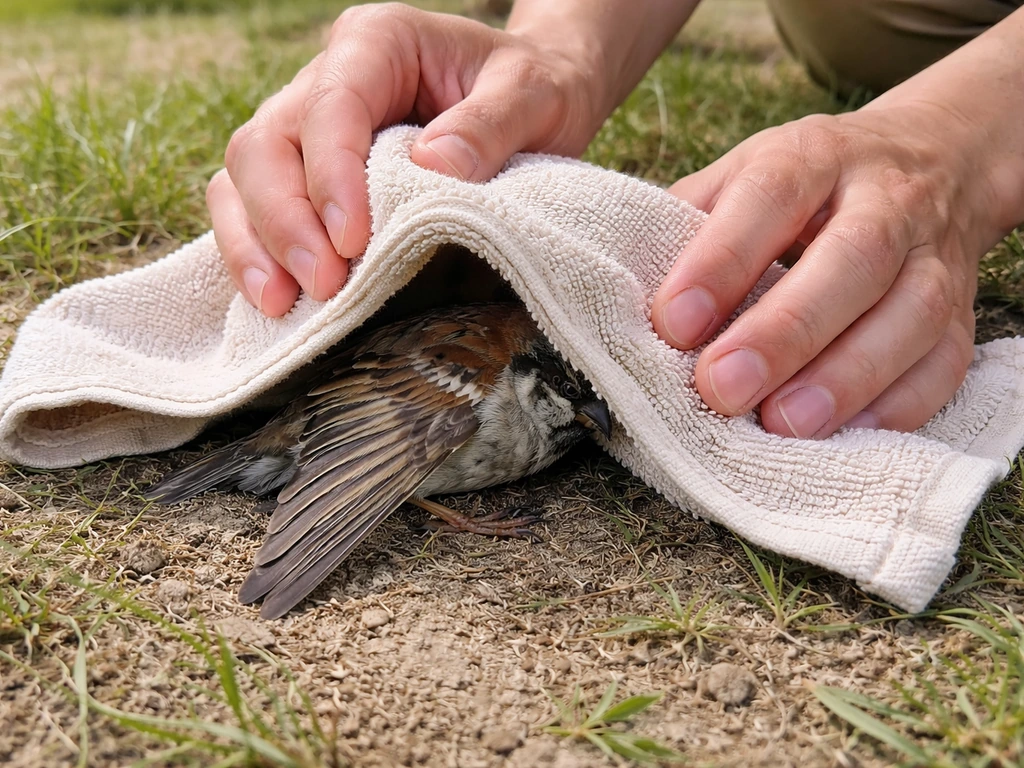
Here's what to do in order. Approach slowly and quietly from the side, not from above (birds see aerial threats from above). Drape a light towel or cloth over the bird to cover its eyes and gently scoop it up, supporting its body from underneath. Do not grab by the wings or try to hold the wings in place yourself. Once you have the bird in your hands, keep it upright and move it into your prepared container within about 30 seconds. Prolonged handling increases stress and can cause a bird to go into shock.
Do not attempt to splint or bandage the wing yourself. This is a hard rule, and it matters. Improper wrapping can cut off circulation, shift bone fragments, or compress the bird's chest and affect breathing. The only exception is if a licensed wildlife rehabilitator or avian vet walks you through it over the phone in real time. Otherwise, leave the wing alone. The goal right now is containment, warmth, and calm, not treatment. For a deeper look at what professional treatment actually involves, the guide on bird broken wing treatment explains what a rehabber or vet will do once the bird is in their care.
Immediate first aid for a broken leg
A broken leg in a bird can look like the leg is dangling, bent the wrong way, or the bird is unable to perch or stand. Sometimes you'll see swelling around the joint. The bird may be sitting flat on its belly instead of standing, or it may be hopping awkwardly on one leg. If you're not sure whether you're looking at a broken leg, a broken foot, or something else entirely, knowing the specific signs helps a lot. The article on bird broken leg symptoms covers what to look for in more detail.
The handling approach is the same as for a wing injury: use a towel, support the body, and get the bird into a container quickly. Do not try to straighten the leg or immobilize it with tape or sticks. For leg injuries especially, the bird needs to be able to shift its weight slightly during transport, and a poorly applied improvised splint can restrict blood flow fast. If you notice the foot is also affected, issues there can be just as serious as a leg fracture. You can read more about those specifics in the piece on bird broken foot injuries.
One thing worth noting: if a cat or dog was involved in the injury, even if the leg looks like the only problem, treat this as urgent. Cat scratches and bites introduce bacteria that cause severe systemic infections in birds within hours. The bird needs antibiotics from a vet or rehabber quickly, regardless of how stable it looks.
How to handle, keep warm, and reduce shock
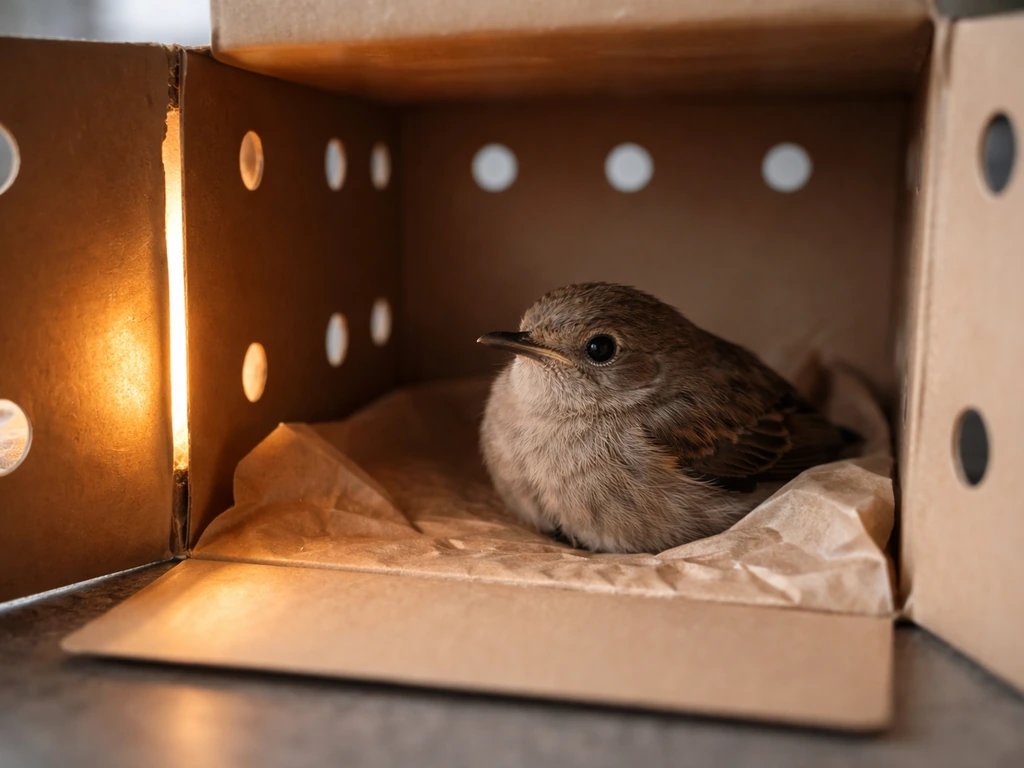
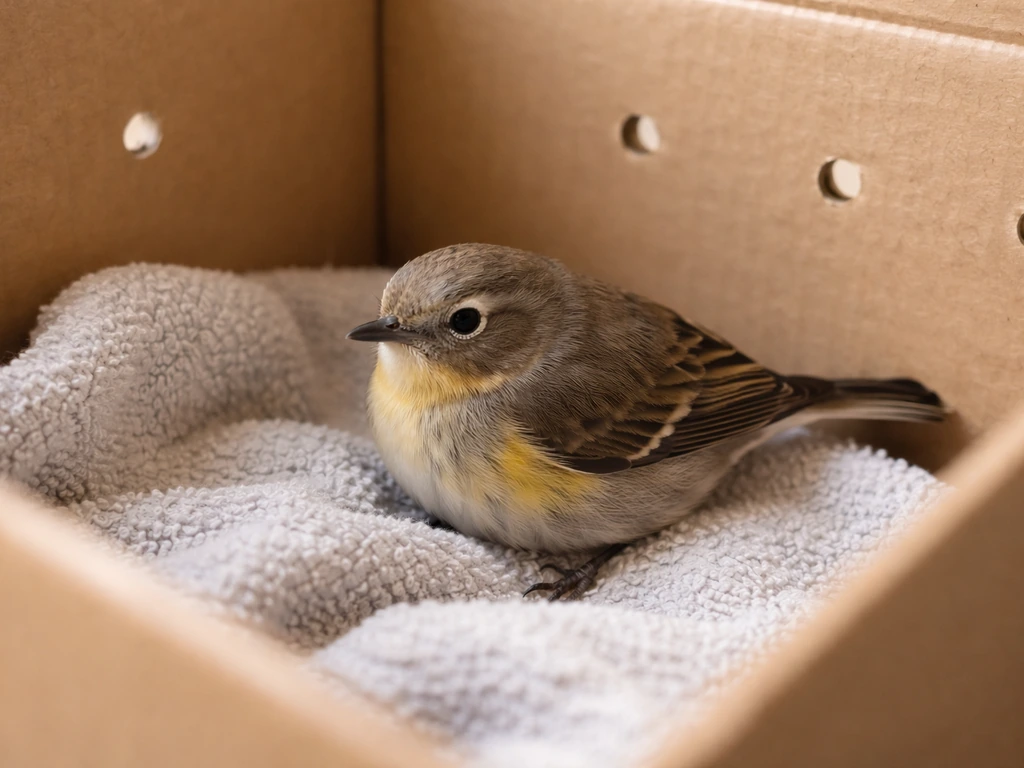
The box setup is everything at this stage. Get a cardboard box or a paper bag with ventilation holes punched in it. Place the injured bird in a well-ventilated cardboard box in a dark, quiet, warm place, and do not feed it. A shoebox with holes in the lid works well for smaller birds. Line the bottom with a soft cotton towel or crumpled paper towels to give the bird grip and cushioning and to absorb any moisture. Do not use slippery surfaces like plastic bags or bare cardboard alone, because the bird will struggle to stabilize itself and can cause further injury.
Place the bird gently into the box and close the lid. Cover the outside of the box with a light cloth or towel to further darken it, but make sure the ventilation holes are not blocked. Turn off any nearby radios or TVs, keep voices low, and put the box in a warm, quiet room away from pets and children. Darkness reduces panic, and quiet reduces stress hormones. Both of those things give the bird a fighting chance while you arrange help.
For warmth, if the bird seems cold, shivery, or puffed up, you can place a heating pad set to its lowest setting under one half of the box only, so the bird can move to the cooler side if it gets too warm. Alternatively, wrap a hand warmer or hot water bottle in a cloth and place it against the outside of one end of the box. Never place a heat source directly against the bird's skin. Overheating is just as dangerous as being too cold.
Do not feed the bird. Do not offer water. This is the instruction that surprises most people, but it's critical. A bird in shock or with internal injuries can aspirate liquid into its lungs, which is fatal. Even a bird that looks alert can be in more danger than it appears. Food and water are the rehabilitator's job, not yours, at this stage.
When to seek help: wildlife rehab vs. avian vet
The short answer is: always seek professional help for a wild bird with a suspected fracture. There is no scenario where you can safely rehabilitate a fractured bird at home without professional guidance. The question is really about urgency and which type of help to contact first.
A licensed wildlife rehabilitator is usually the right first call. They specialize in wild birds, they have the legal permits to treat them, and they often have established relationships with avian vets. You can find your nearest rehabber through resources like the National Wildlife Rehabilitators Association directory or your local animal control. If you've recently found a bird and aren't sure whether what you're seeing is a genuine injury, the overview in found bird with broken wing can help you assess the situation more clearly.
Go straight to an avian vet if you're seeing any of these warning signs, because these mean the bird needs medical intervention, not just rest:
- Active bleeding that isn't slowing down
- Labored or open-mouth breathing
- The bird cannot stand at all or keeps falling over
- A cat, dog, or fox was involved in the injury
- The bird has suffered a window or vehicle collision and is unconscious or semi-conscious
- Bone is visibly protruding through the skin
- The bird appears to be in severe pain (grinding beak, eyes half-closed, extreme lethargy)
If you can't immediately find a wildlife rehabber in your area, an avian vet can provide emergency stabilization and often knows local rehabbers who can take the bird afterward. Don't wait hours before making contact. The faster a bird with a fracture gets professional care, the better the outcome. If you're wondering where to take the bird, the article on where can I take a bird with a broken wing has specific guidance on locating the right facility.
One situation worth calling out specifically: some birds (killdeer are the most common example) perform a "broken wing act" as a distraction display to lure predators away from their nest. If the bird is running and leading you away from a spot, flopping dramatically but clearly able to move well, it may not be injured at all. The article on the killdeer bird broken wing act explains how to tell the difference between a real injury and a decoy display.
What not to do and common mistakes during rescue
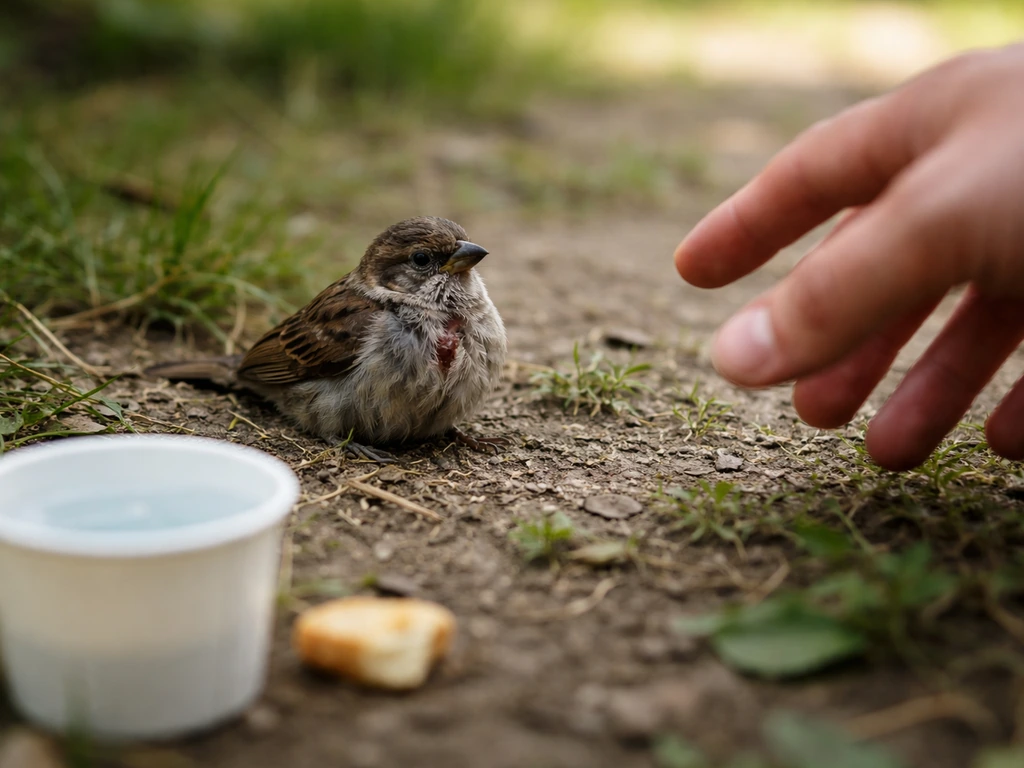
Most well-meaning mistakes happen in the first five minutes. Here's what to avoid:
- Don't feed or give water to the bird under any circumstances unless a professional has specifically told you to
- Don't handle the bird longer than necessary to get it into the container
- Don't attempt to splint, wrap, or bandage the broken limb yourself
- Don't place the bird in a container with a smooth bottom (slipping causes panic and injury)
- Don't keep the container in a sunny window or near a heat vent, which can overheat the bird rapidly
- Don't let children or other pets near the box
- Don't put the bird in a cage with perches if it has a leg or foot injury
- Don't assume a bird that appears calm is fine: birds hide pain instinctively and a calm bird can be in serious distress
- Don't decide to rehabilitate the bird yourself long-term; wild birds have very specific dietary and environmental needs that are extremely difficult to meet without training and permits
Also be aware of your own safety. Even small songbirds can deliver a surprisingly strong bite, and raptors (hawks, owls, eagles) can cause serious puncture wounds with their talons. Use a thick towel when handling, and wear gloves if you have them. If a raptor is involved and you're not comfortable handling it, call animal control or a rehabber and wait for them to assist.
Next steps after initial care
Getting the bird to help
Once the bird is safely contained, your job is to get it to professional hands as quickly as possible, ideally within a few hours. During transport, keep the box in the passenger footwell or secured on the seat, not in the trunk. Maintain a steady, comfortable temperature in the car. Drive smoothly. The box should stay dark, so resist the urge to open it and check on the bird repeatedly, because every time you do, you reset the bird's stress response.
When you call ahead to a rehabber or vet, be ready to give them: your name and location, the exact place and time you found the bird, a description of the bird (species if you know it, size, coloring), what you observed (wing drooping, unable to stand, what happened before you found it), and any incident details like a window collision or predator involvement. Photos taken at the scene are helpful if you have them. This information helps the receiving team triage the bird before it even arrives.
If you have to wait overnight
If you genuinely cannot get the bird to help until morning, keep it in the warm, dark, quiet box with supplemental heat on one side only. Do not feed or water it. Check on it as infrequently as possible. Keep it away from pets. Call a local wildlife hotline or emergency vet for after-hours guidance if you're concerned about the bird's condition overnight.
What happens when the bird gets professional care
A wildlife rehabber or avian vet will assess the fracture, decide whether it can heal with rest and immobilization or whether surgery is needed, and provide pain management, antibiotics if needed, and appropriate nutrition. Recovery time varies widely depending on the species and the location of the fracture. If you're curious about what the recovery process looks like and how long it typically takes, the article on bird broken wing healing time gives a realistic picture of the timeline and what influences it.
A quick reference for the whole process
| Step | What to do | What to avoid |
|---|---|---|
| Approach | Move slowly, use a towel to cover the bird | Grabbing from above, making sudden movements |
| Handling | Support body from underneath, minimize contact time | Holding by wings or legs, prolonged holding |
| Container | Ventilated box, soft towel or paper towels on floor | Smooth surfaces, open containers, cages with perches |
| Warmth | Heating pad on low under one side of box only | Direct heat contact, sunny windows, hot vents |
| Food/water | None until a professional instructs you | Offering water, seeds, bread, or any food |
| Treatment | None; leave injury alone | DIY splinting, bandaging, or wrapping |
| Environment | Dark, quiet, away from pets and children | Noise, bright light, other animals nearby |
| Transport | Steady drive, box secured, dark and quiet | Opening box repeatedly, trunk storage, temperature extremes |
| Professional help | Call rehabber or avian vet immediately | Waiting to see if the bird improves on its own |
You've already done something good by looking this up. Finding and safely containing an injured bird in the first few minutes genuinely improves its odds. The rest is getting it to someone who can do what you can't, and that part is just a phone call and a drive away.
FAQ
What if the bird with a broken wing is bleeding or has visible wounds?
If the bird is bleeding, the priority is still containment and getting to help. Place it in the dark, ventilated box you prepared, avoid applying pressure to the wound yourself, and do not clean it with water or antiseptic (this can increase stress and aspiration risk). Bleeding combined with signs like weakness or labored breathing is an emergency, so call an avian vet or wildlife rehabilitator immediately, even if it’s late.
Can I give the injured bird water or a little food to prevent dehydration?
Do not use food or water to “calm it down” or to keep it from panicking. Even small amounts can be aspirated if the bird is in shock or has internal injuries, and aspiration can be fatal. Instead, keep the box dark and quiet, and arrange professional care.
My bird hit a window, and its wing looks broken, what should I do differently?
If the injury was caused by a window collision, treat it as urgent even if the wing looks only slightly off. Window strikes can include internal bleeding, concussion, or lung injury, so do not assume “it will recover.” Use the same containment steps, then contact an avian vet or rehabber for triage.
How do I know whether this is a real fracture or a distraction display?
If the bird is flapping or breathing rapidly but still appears able to move, it may be in shock or may be performing a distraction display (some species do this). The safe choice is to contain it and call for professional guidance. If it is a species known for distraction behavior, ask the rehabber specifically how to tell a true fracture from a display based on what you observed (ability to hop and general alertness).
When should I treat it as an emergency versus waiting to transport later?
A rule of thumb is that if you suspect a fracture, assume it needs medical care, but urgency increases if the bird can’t stand or is unable to perch, has an obvious deformity, is dragging a wing, has mouth breathing, open-mouth gasping, or appears lethargic. Those warning signs warrant a fast call to an avian vet, not waiting to see if it improves.
What’s the safest way to care for a fractured bird overnight if I can’t reach help?
If you must wait for the next available appointment or after-hours guidance, keep the bird in the warm, dark box with supplemental heat only on one side (lowest setting). Check it infrequently, just to ensure it isn’t overheating or the box is still warm enough. Keep it unhandled, do not feed or water, and arrange the earliest morning transfer.
What should I do with the bird’s box during a car ride, especially on a longer drive?
During transport, keep the container secured and do not place it in the trunk where temperatures fluctuate and movement can jostle the bird. Keep the box covered for darkness and avoid opening it to “check.” If you have to drive a long distance, call ahead to the rehabber or vet to coordinate drop-off timing.
What if I find multiple birds with injuries at the same time?
If you find more than one injured bird, prioritize each one’s safety and do not house them together in the same container. Use separate ventilated boxes, keep them dark and quiet, and contact a wildlife rehabber for instructions on intake and transport, since stress and aggression can worsen injuries.
A cat was nearby and the bird’s wing looks injured. How urgent is that?
If a cat or dog was involved, consider it urgent even when the bird seems to have only a wing issue. Bites and scratches can cause fast-onset infection that isn’t always obvious at first. Keep the bird contained and contact an avian vet or wildlife rehabber right away so they can determine whether antibiotics or wound treatment are needed.
Is it ever acceptable to splint or bandage a broken wing if I have medical tape or supplies?
Yes, if the bird is fully wild and you don’t have a permit, you should not attempt treatment like splinting, bandaging, or administering medication. The one exception is if a licensed rehabber or avian vet gives live, specific instructions for a rare situation. Otherwise, stick to containment, warmth on one side only, and immediate professional contact.
Next Articles
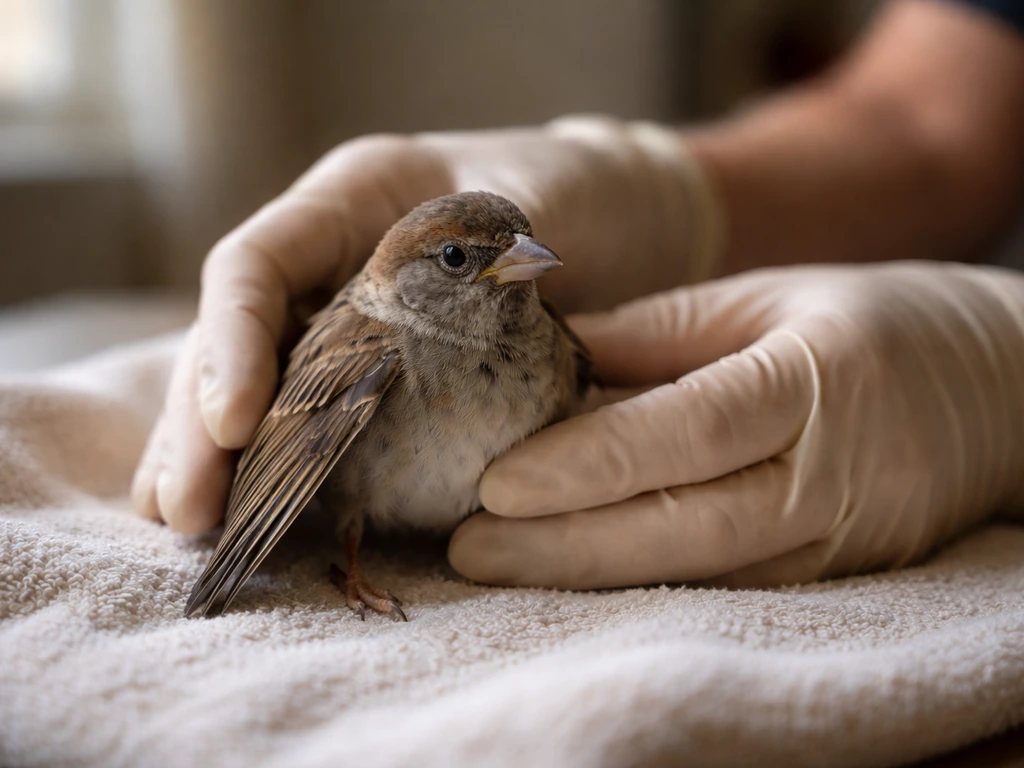
Can a Bird Live With One Wing? Survival and First Aid
Can a bird live with one wing? Injury outcomes and step-by-step first aid, plus when to get urgent help.
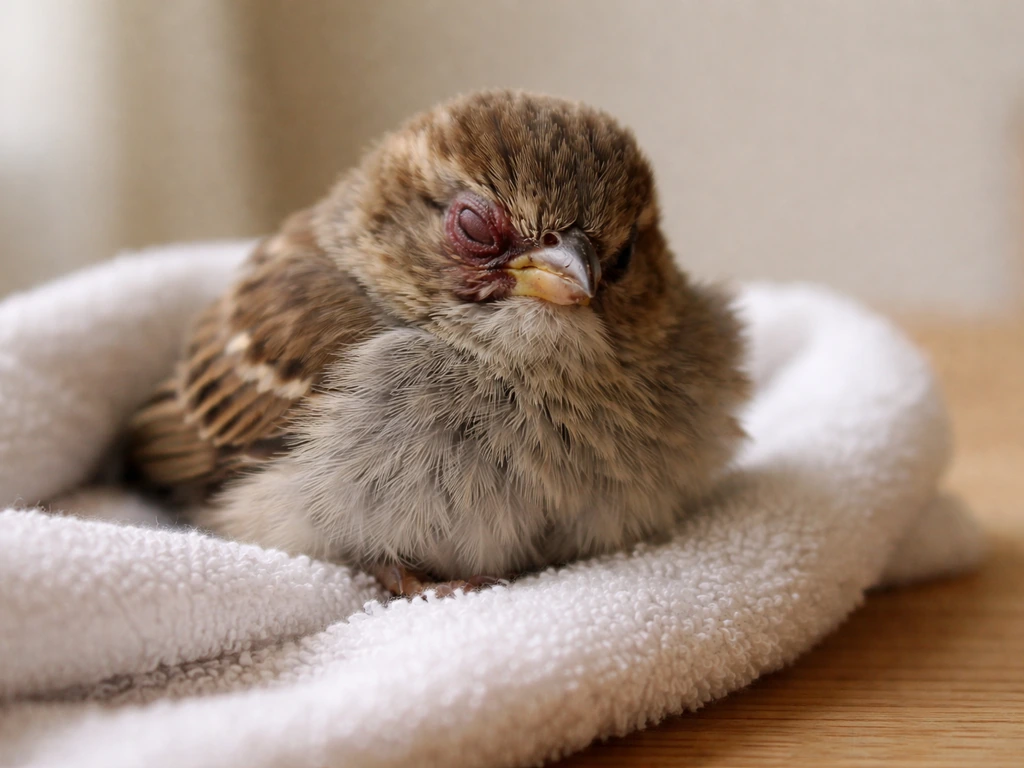
Can a Bird Survive With One Eye? What to Do Now
Learn if birds can cope with one eye and what to do now for an injured bird’s eye safely and urgently.
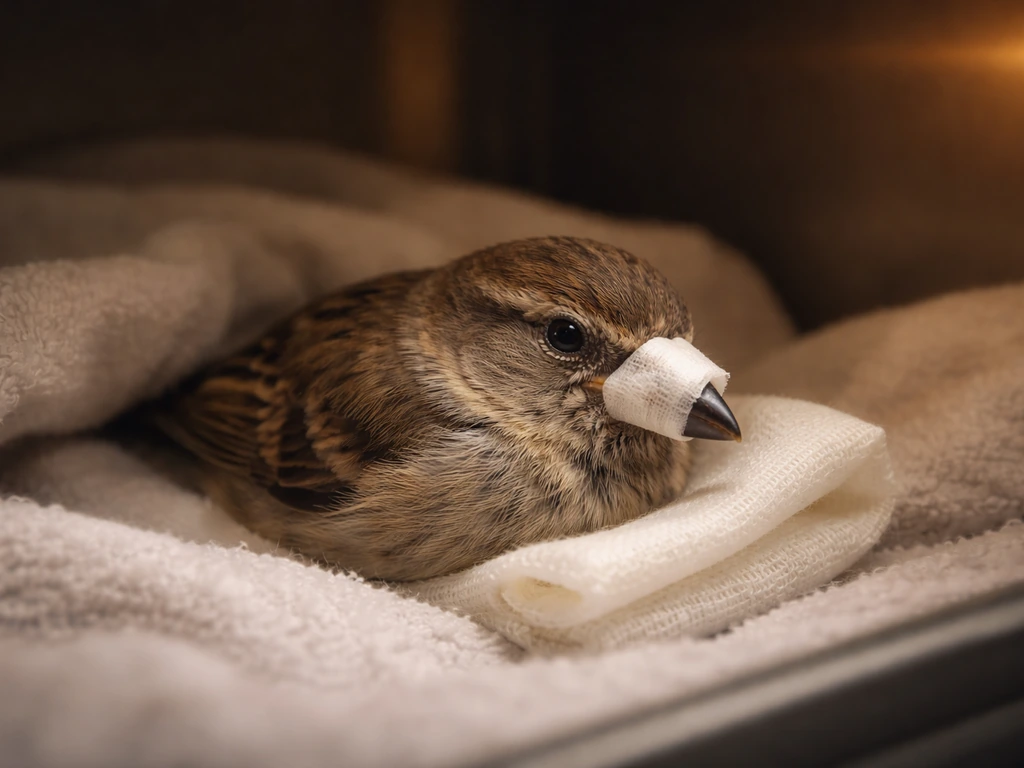
Can a Bird Survive With a Broken Beak? What to Do Now
Learn if a bird with a broken beak can survive, spot danger signs, and do safe first aid until a vet rescues it.