
A bird's broken wing or broken leg can heal, but the timeline depends heavily on how severe the fracture is, whether it gets proper care, and how quickly you act. For most small birds with a clean break that gets properly splinted by a professional, a leg fracture can be clinically stable within 2 to 3 weeks, while a wing fracture may take 3 to 6 weeks or longer to reach full union. That said, healing without a vet's help is a real gamble, and the first 30 minutes after you find the bird matter more than almost anything else. If you found bird with broken wing, the sooner you get professional help, the better the odds for proper healing.
Bird Broken Wing Healing Time: Care Steps and Timelines
Marcus Chen
23 Apr 2026
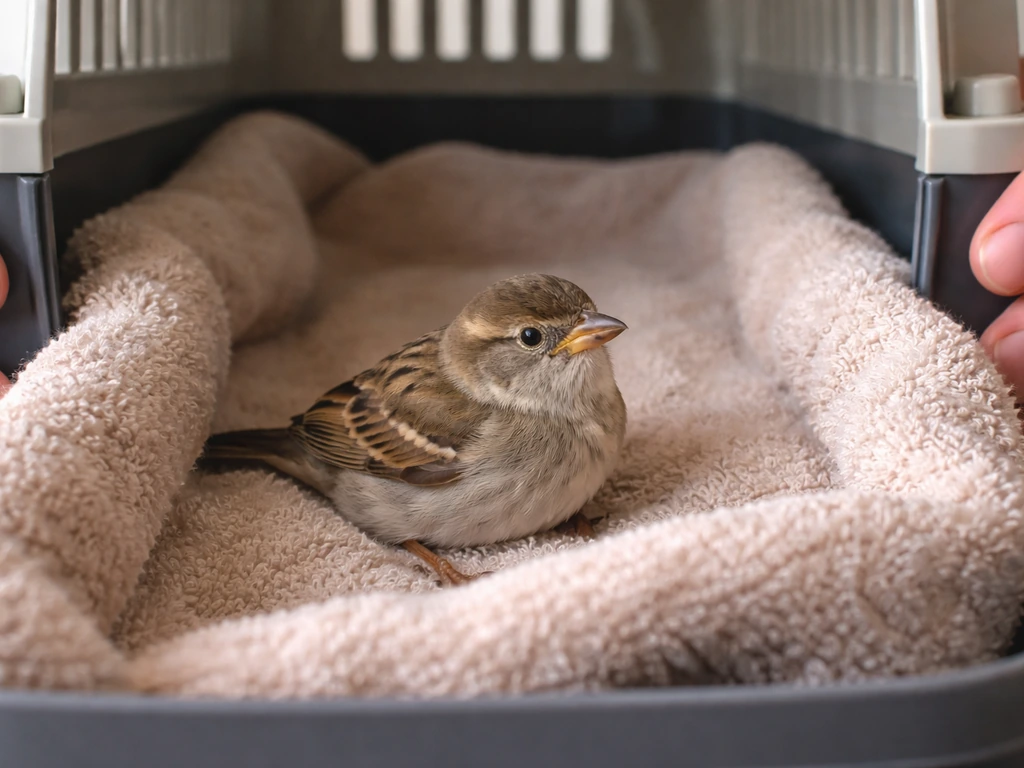
Broken wing or leg vs. sprain: how to tell the difference
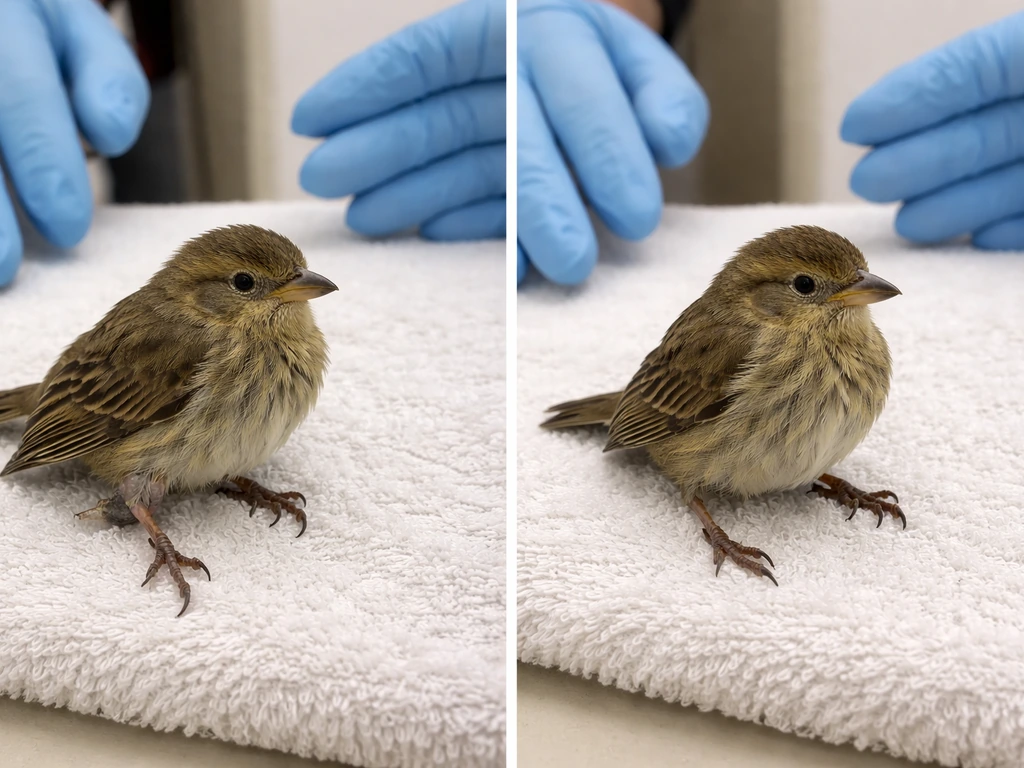
Before you do anything else, try to get a calm, close look at the bird without touching it yet. A true fracture usually looks different from a soft-tissue injury, and knowing which you're dealing with helps you make smarter decisions about urgency. If you are unsure whether you are dealing with a fracture or a sprain, it helps to compare symptoms, like those explained in bird with broken wing what to do.
Signs that point strongly to a fracture rather than a sprain or bruise:
- One wing droops noticeably lower than the other, and the bird can't lift it at all
- The wing or leg hangs at an obviously wrong angle, or you can see a visible deformity in the limb
- The bird drags a leg along the ground instead of tucking it up
- There's bone visible through the skin (an open fracture, which is a genuine emergency)
- The limb looks twisted or shorter than the opposite side
- The bird is completely unable to perch or bear weight on the affected leg
A sprain or soft-tissue injury tends to look less dramatic. The bird may still move the limb partially, hold the wing slightly out from the body rather than fully dropped, or favor one leg while still being able to grip. Swelling and bruising can show up in both sprains and fractures, so those signs alone don't tell you which you have. If you're unsure, treat it as a fracture and get professional help. Erring on the side of caution costs nothing; missing a fracture costs the bird its chance at recovery.
What to do right now: first aid before the vet
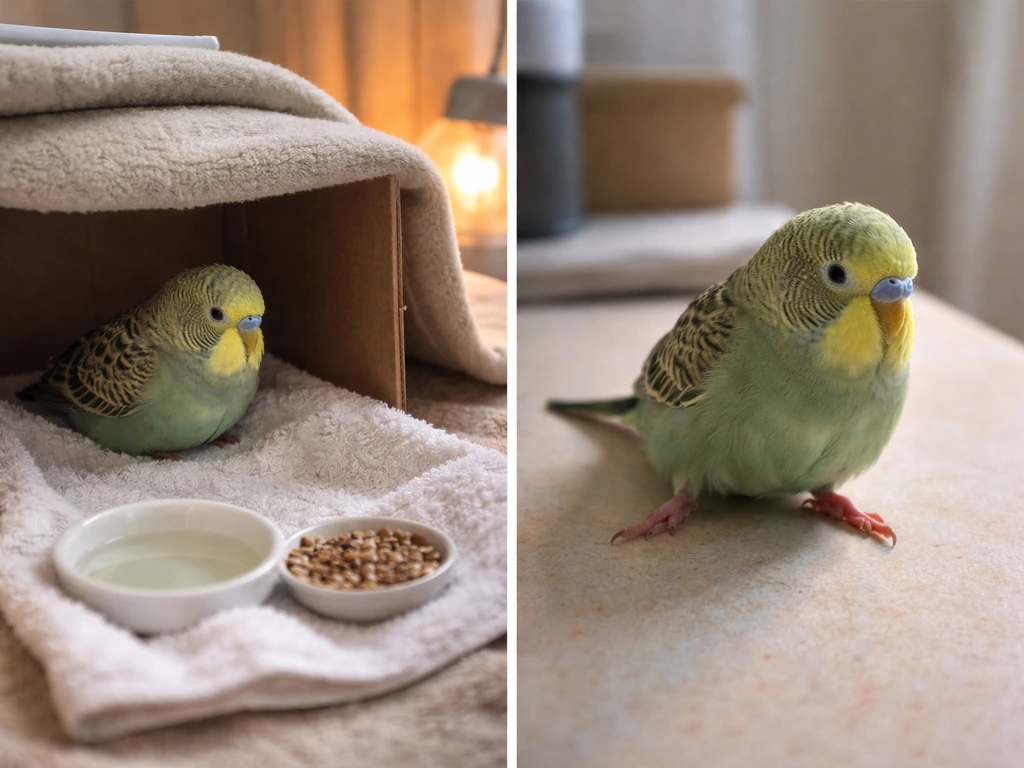
The single most important thing you can do for a bird with a suspected fracture is keep it still, warm, and as calm as possible. Wildlife rehabilitation guidance emphasizes blank" rel="noopener noreferrer">basic care starting with warmth, dark, and quiet as foundational first aid for injured birds. That's it. I know it feels like you should be doing more, but birds in trauma are already stressed and often cold, and the stress of prolonged handling can be just as dangerous as the fracture itself. blank" rel="noopener noreferrer">The goal right now is stabilization, not treatment.
Step-by-step stabilization
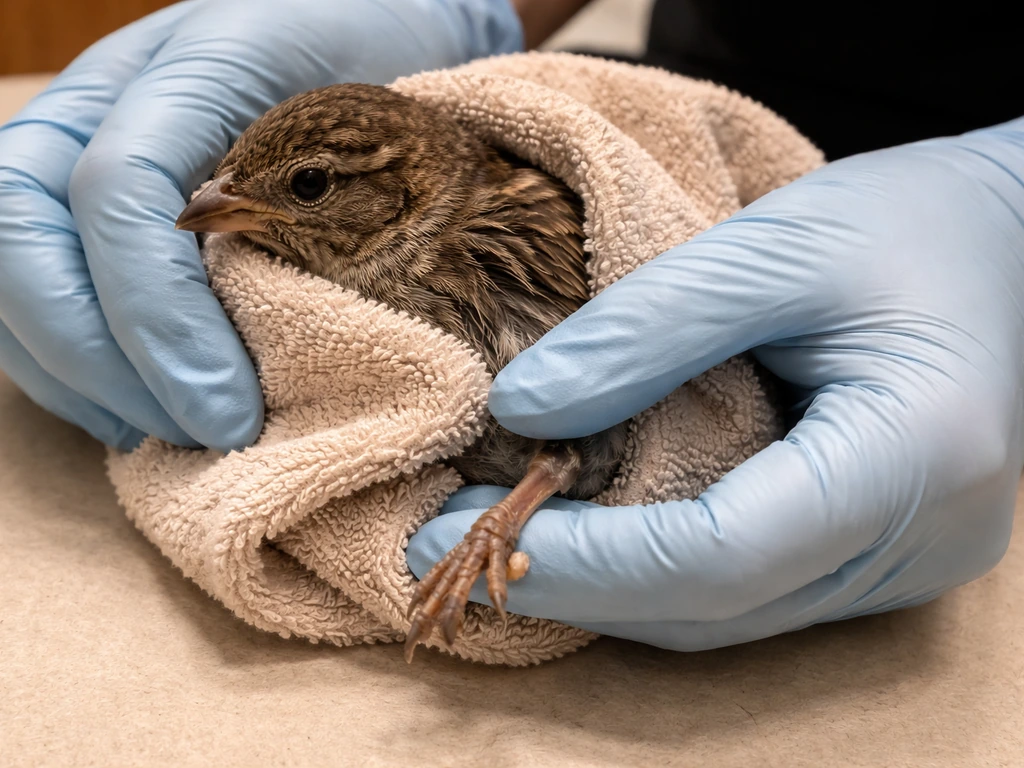
- Protect yourself first: use gloves or a folded towel when picking the bird up, since even small birds can scratch, and larger birds (hawks, herons) can cause real injury.
- Wrap the bird loosely but firmly in a soft towel or cloth, covering the wings gently against the body. This limits movement without squeezing. Do not try to straighten, set, or manipulate the injured limb yourself.
- Place the bird in a small, dark, well-ventilated box with air holes. Darkness reduces visual stimulation and calms the bird significantly.
- Keep it warm: aim for 75 to 85°F (24 to 29°C) inside the container. A heating pad set to low placed under half the box (so the bird can move away from heat if needed) works well. Don't use a hot pad directly under the bird with no barrier.
- Put the box somewhere quiet, away from pets, children, and noise.
- Do not offer food or water right now, especially not water via dropper or syringe. Aspiration is a real risk in a stressed, injured bird.
- Call a wildlife rehabilitator or avian vet as soon as the bird is contained. Don't wait until tomorrow.
One thing that's worth repeating: do not attempt to splint or bandage the wing or leg yourself. It's tempting, but improper bandaging can cut off circulation, worsen the fracture, or cause irreversible damage. Wildlife rehabilitation guidelines are clear on this: if you're not trained, immobilize the whole bird (via the towel wrap), not the individual limb.
Realistic healing timelines for broken wings and broken legs
Healing time varies depending on the species, age of the bird, location and severity of the fracture, and whether the bird gets proper treatment. Younger birds generally heal faster than adults. Here's a practical breakdown:
| Injury type | With proper treatment | Notes |
|---|---|---|
| Leg fracture (closed, splinted) | 2 to 3 weeks to clinical stability; callus may not show on X-ray for 3 to 6 weeks | Removing the splint before 14 days post-fixation significantly increases complication risk |
| Wing fracture (closed, splinted) | Approximately 3 to 6 weeks for small songbirds; up to 6 weeks or more for larger birds | Kestrel humeral fractures have achieved functional union in under 6 weeks in documented cases |
| Wing fracture (internal fixation/surgery) | Radiographic union in roughly 5 weeks in experimental settings | Faster than external splinting alone (~8 weeks with coaptation only) |
| Open or severely displaced fracture | Longer, often 6 to 8+ weeks; prognosis varies widely | These almost always require surgery; release for wild birds is uncertain |
| Sprain or soft-tissue injury | Days to 2 weeks with rest | Usually doesn't require splinting; still benefits from quiet, restricted movement |
In a study of 86 birds with leg fractures, the median time to fracture stabilization confirmed by palpation was 19 days, with a range of 7 to 49 days depending on the case. That wide range is a good reminder that there's no single answer for every bird. What you do in the first hours still shapes where on that spectrum the bird lands.
Treatment options: what you can do at home vs. what needs a vet
This is where a lot of people get into trouble, usually with the best intentions. Let me be direct about what's actually helpful and what causes harm.
What you can do at home (and what you absolutely shouldn't)
| Do | Don't |
|---|---|
| Keep the bird warm, dark, and quiet | Try to set, straighten, or manipulate the broken limb |
| Wrap the whole bird loosely in a towel to restrict movement | Apply a homemade splint or tape directly to the wing or leg |
| Use a small, snug box to prevent the bird from thrashing | Give food or water by syringe or dropper to a stressed bird |
| Monitor breathing and alertness from a distance | Leave the bird in a large open space where it can injure itself further |
| Keep pets and children away | Assume the bird is 'resting fine' and delay calling for help |
| Call a wildlife rehabilitator or avian vet within the hour | Administer any human pain medications (aspirin, ibuprofen, acetaminophen are toxic to birds) |
What a licensed wildlife rehabilitator or avian vet can do that you genuinely cannot: take X-rays to confirm the fracture location and severity, apply a proper figure-eight wing wrap or leg splint using the right tension and materials, administer safe pain relief, manage shock and dehydration with fluids, and surgically fix complex fractures with pins or plates. These aren't luxury upgrades. Pain control alone makes a massive difference to survival and recovery speed.
For pet birds, seek immediate veterinary care if you notice a drooping wing, bleeding, trouble breathing, or inability to perch normally. Those signs mean now, not tomorrow morning. Wild birds need the same urgency; the only difference is that you'll be calling a wildlife rehabilitator rather than a personal avian vet. Wild birds need the same urgency; if you want a step-by-step guide that matches broken wing treatment specifically, see bird broken wing treatment for what to do next.
Caring for the bird during recovery
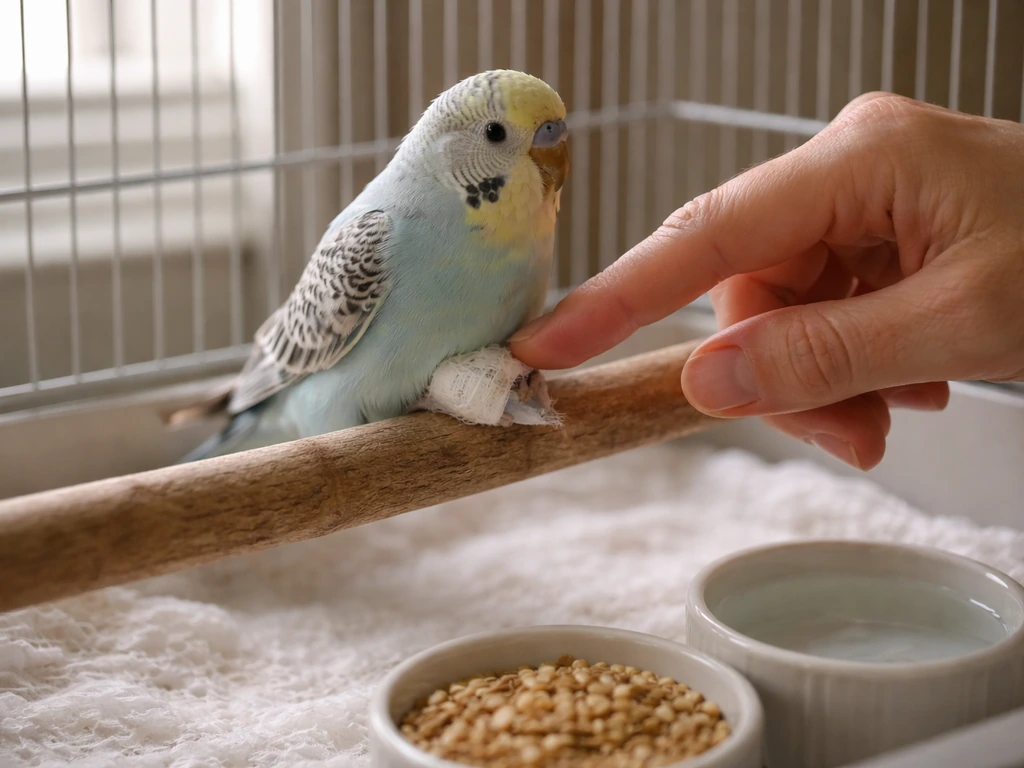
If a professional has treated the bird and sent it home with you for ongoing care (which happens more often with pet birds than wild ones), the rehabilitation phase is where you have real work to do. Here's what that looks like day to day.
Housing and space
Keep the bird in a small, low cage or enclosure during recovery. You don't want it attempting to fly or jump while the fracture is consolidating. For birds with a wing injury, remove high perches so there's no temptation or risk of falling. For leg injuries, low, soft perches or a padded floor surface reduce pressure on the healing limb. Bedding matters: paper towels or soft cloth work better than wood shavings, which can snag a bandage or get under a splint.
Feeding and hydration
Once the bird is past the immediate shock phase and has been assessed by a professional, offer food and water appropriate to the species. Place food and water containers at a level the bird can access without straining the injured side. For birds with leg injuries, floor-level dishes are often easier. For wing injuries, make sure the bird doesn't have to stretch or reach in ways that stress the bandage. Follow any feeding instructions your vet or rehabilitator gives you exactly; nutritional support is part of healing.
Preventing pressure sores and re-injury
Check the bandage or splint area daily for any signs of rubbing, redness, or raw skin underneath. Pressure sores develop quickly on birds and can become infected. If a bandage looks wet, dirty, shifted, or if the limb below it looks swollen or discolored, contact your vet or rehabilitator the same day. Do not try to rewrap it yourself unless you've been specifically trained and instructed to do so. A splint that's been removed too early (before 14 days post-fixation in most cases) significantly increases the chance of the fracture failing to heal properly.
How to know if things are going well (or badly)
During recovery, you're watching for progress and for complications. A bird that's healing well will gradually become more alert, start eating and drinking voluntarily, and show more interest in its surroundings. If you found a bird with a broken wing, these are the signs that suggest healing is going in the right direction. It may still be reluctant to use the injured limb for a while, which is normal, but it shouldn't look like it's getting worse.
Signs that something is wrong and you need to call your vet or rehabilitator immediately:
- Increasing swelling around the fracture site or under the bandage
- The bird is still not eating or drinking after 24 to 48 hours of being stable and warm
- Visible discharge, odor, or discoloration around the wound (signs of infection)
- The bird seems to be in active pain: labored breathing, fluffed feathers combined with lethargy, grinding the beak constantly
- The limb below the bandage appears cold, blue, or extremely swollen (possible circulation problem from the bandage)
- The bird is losing weight visibly or losing the ability to support itself
- A wild bird shows no improvement after the first week of proper care
One important note about legs specifically: birds with broken leg symptoms can sometimes look like they have a neurological problem rather than a fracture, especially if the leg is dragging or completely non-functional. One important note about legs specifically: birds with bird broken leg symptoms can sometimes look like they have a neurological problem rather than a fracture, especially if the leg is dragging or completely non-functional.
If the bird is showing bird broken foot signs, an immediate assessment can help rule out a fracture versus a different kind of problem. If you're not sure whether you're looking at a fracture or something else, that uncertainty is itself a reason to get the bird assessed. You can read more about distinguishing leg problems in depth in a dedicated look at bird broken leg symptoms.
Finding help fast: wildlife rehab and avian vets
The fastest way to find a licensed wildlife rehabilitator in the US is to call your state's fish and wildlife agency directly, or use the National Wildlife Rehabilitators Association (NWRA) or Wildlife Rehabber directory online. If you are wondering where you can take a bird with a broken wing, these directories can quickly point you to the nearest licensed wildlife rehab option where can i take a bird with a broken wing.
The same guidance on the killdeer bird broken wing act helps many rescuers understand what to expect and how to respond lawfully and safely. The Humane Society and ASPCA websites also maintain rescue search tools. In Canada, look for local wildlife rescue organizations through provincial wildlife offices. In the UK, the RSPCA and local wildlife hospitals (like St Tiggywinkles or the RSPB helpline) are your first call.
For pet birds, an avian-specialist vet is always preferable to a general small animal vet for fracture cases, though any vet is better than no vet in a true emergency. Search for "avian vet" plus your city name, or use the Association of Avian Veterinarians (AAV) member directory at aav.org to find a board-certified specialist near you.
What to say when you call
Keep it short and specific. Tell them: the species if you know it (wild songbird, pigeon, parrot, etc.), what you observed (drooping wing, dragging leg, visible injury), when it happened, and the current condition of the bird (alert, breathing, bleeding or not). Ask whether they can take the bird immediately, what you should do in the meantime, and whether you should bring it in or if they'll guide you to a drop-off point. If you're dealing with a wild bird and the first rehabilitator can't help, ask for a referral to someone who can.
If you're seeing open bone, heavy bleeding, the bird is completely unresponsive, or it's struggling to breathe, those are red flags that mean emergency care today, not tomorrow. Don't wait to see if it improves on its own. In an after-hours situation, commenters on a wildlife rehab discussion recommended keeping the bird in a blank" rel="noopener noreferrer">dark, ventilated containment and providing warming and support until a rehabilitator is available. A bird in that condition needs intervention within hours, not days.
Once professional care is underway, your role shifts to supportive caregiver: keeping things quiet, warm, and consistent while the healing does its work. That's genuinely enough, and it makes a real difference.
FAQ
Bird broken wing healing time, when should I worry that it is not progressing? (How long is too long to wait)?
Stop the wait time and call the vet or wildlife rehabilitator the same day if the bird is not starting to eat or become more alert by about day 3 after stabilization. Lack of voluntary eating, persistent heavy drooling, or worsening weakness can indicate shock, pain control failure, infection, or a problem that is not a fracture.
Can I loosen or remove the splint early because my bird seems comfortable?
Do not remove the wrap or splint early even if the bird seems calm. A splint that comes off too soon (before the usual post-fixation window, often around 14 days in many cases) can cause re-injury or a failure to properly unite, especially with wing fractures.
What should I do if the bandage or splint gets wet or starts rubbing the skin?
If the bandage gets wet, dirty, smells foul, shifts, or you see redness and raw skin under it, contact your vet or rehabilitator the same day. Wetness can break down skin and increase risk of pressure sores and infection, and rewrapping without training can worsen circulation or alignment.
My bird feels cold, does that change the broken wing healing time or what I should do right now?
If the injured limb is cold or the bird is shivering, focus on gentle warmth and stress reduction, not active movement. Use a quiet, warm enclosure (not hot), and seek professional guidance urgently if the bird remains chilled, lethargic, or has slowed breathing.
Is it normal for my bird to still not use the wing or leg after a week?
Mild decrease in use can be normal at first, but you should still see gradual improvement in appetite, alertness, and comfort. If the bird’s condition is clearly getting worse, the injured limb suddenly starts looking more swollen, or breathing changes appear, treat it as a new emergency rather than normal healing.
How can I tell if a broken leg is actually a fracture or something neurological?
If you suspect a fracture and the bird also shows neurologic-looking signs, like dragging or inability to grip or stand, it may be something other than a simple fracture. This is a key reason to get assessed promptly, because treatments and timelines differ if the underlying issue is nerve, spinal, or severe trauma.
Can I give pain relief at home for faster healing time?
If your vet or rehabilitator did not instruct otherwise, do not give over-the-counter human pain medicine or leftover prescription meds. Many common meds are unsafe for birds (including several NSAIDs and acetaminophen), and the wrong dose can cause organ damage even if the fracture is improving.
How should I set up food and water during a wing fracture recovery?
When feeding, aim for easy access that does not force stretching toward the injured side. For wing injuries, avoid setups that require reaching or climbing, and keep food and water at a height the bird can access without straining the wrapped area.
What are the emergency signs that mean I should not wait for normal bird broken wing healing time?
If the bird is bleeding through the wrap, has exposed bone, is unresponsive, or is struggling to breathe, treat it as emergency care. Healing time will not be the main issue then, immediate stabilization and pain control are.
Does the healing time change for pet birds versus wild birds, and who should manage recovery?
Yes, pets and wildlife differ mainly in who you involve and how follow-up works. Pet birds are often treated and then returned with a rehab plan, while wild birds typically go to a rehabilitator for fracture confirmation, pain management, and a controlled recovery before release.
If I am not sure it is a fracture, should I still act like it is broken?
If you are unsure whether it is a fracture or a sprain, the safest approach is to treat it as a fracture until a professional confirms it. That means full bird stabilization (warm, quiet, minimal handling) and getting assessed promptly, since sprains can look similar early.
Can my bird test the wing or leg during recovery if it seems better?
No, do not let the bird “practice” movement to test comfort. Any climbing, flapping, or jumping risk can dislodge the alignment and reset healing, especially for wings where re-injury can cause delayed or incomplete union.