Treating bird feather loss starts with finding the cause, because the right action for a trauma injury is completely different from what you do for mites, a skin infection, or stress-related plucking. For any wild bird you've just found, the first move is always the same: contain the bird gently in a warm, dark, quiet box and call a wildlife rehabber or avian vet before doing anything else. For a pet bird showing feather loss, get an avian vet appointment booked today, especially if you see bare skin, bleeding, or the bird is actively pulling its own feathers out. Don't try to treat feather loss without knowing what's causing it.
How Do You Treat Bird Feather Loss Safely and Effectively
Marcus Chen
10 Jun 2026
How to assess feather loss safely
Before you touch the bird, look first. How you handle an injured or stressed bird matters enormously, and even a few seconds of calm observation can tell you a lot. You're trying to figure out which of four main categories you're dealing with: trauma or injury, external parasites, a skin or infection issue, or stress-related plucking.
Signs it's trauma or a physical injury
If the bird has been hit by a car, struck a window, been caught by a cat or dog, or got tangled in something, feather loss will usually come with other obvious clues: patches of missing feathers right at the point of impact, visible skin underneath, blood, a dragging wing, or a bird that simply can't fly or stand. Cat bites and puncture wounds are particularly serious, even when they look minor, because the bacteria in a cat's mouth can be fatal to birds within 24 to 48 hours. If there's any chance of a cat or dog attack, treat it as an emergency regardless of how the bird looks.
Signs it's external parasites (mites or lice)
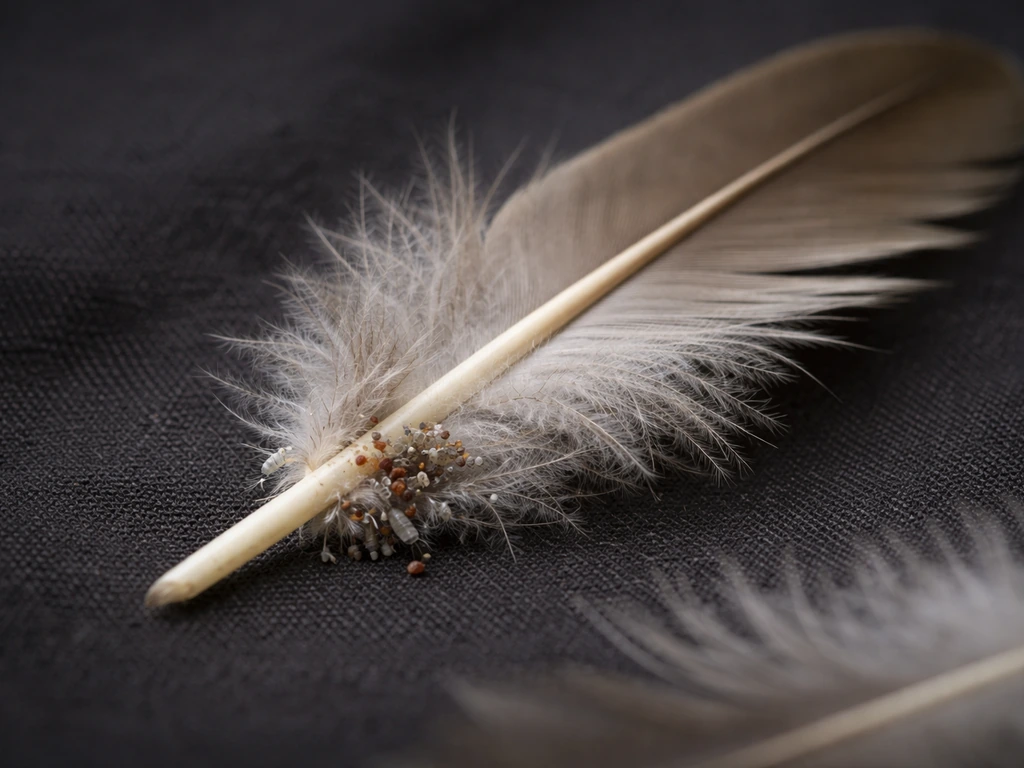
Mites and lice do occasionally cause feather damage, though they are less commonly the primary cause of significant feather loss than most people think. Red mites are nocturnal, so the easiest way to check is to put a small white cloth near the bird's perch or housing overnight and look for tiny red or dark moving dots in the morning. Feather mites and lice are often visible during the day as small specks moving through the feathers, particularly around the head, neck, and vent area. The bird may scratch more than usual or seem restless.
Signs it's a skin or infection issue
Bacterial or fungal skin infections and conditions like dermatitis can cause feather loss with no sign of the bird pulling feathers itself. Look for redness, flaking, crusty skin, unusual discharge, or feathers that look malformed as they grow back. A bird whose feathers are coming in looking twisted, stunted, or discolored may have an underlying health issue rather than a behavioral or environmental one.
Signs it's stress plucking or feather destructive behavior
Feather plucking (sometimes called feather destructive behavior) is one of the most complex problems in pet bird care. You'll typically see a bird actively chewing, pulling, or barbering its own feathers, with the damage most obvious on areas the bird can reach: the chest, abdomen, inner wings, and flanks. The head feathers are usually intact because the bird can't reach them. Causes range from boredom, loneliness, and anxiety to pain, internal illness, hormonal changes, toxin exposure, and nutritional deficiencies. Do not assume it's purely behavioral without a vet ruling out medical causes first.
Immediate first aid and stabilization
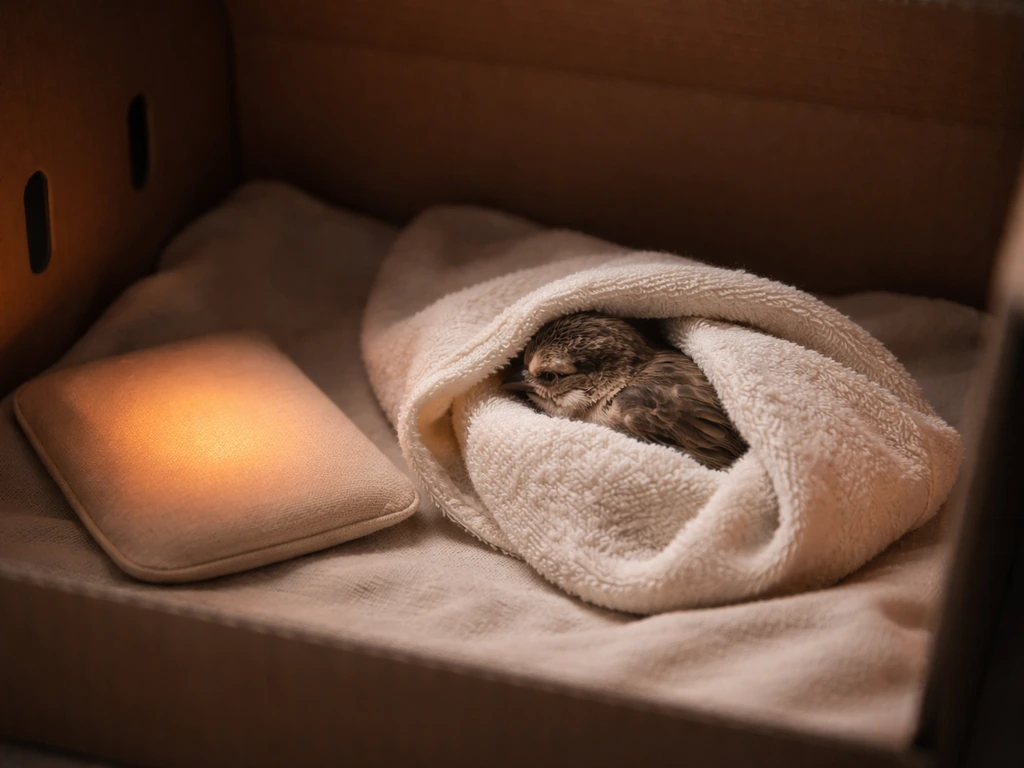
Whether you're dealing with a wild bird or a pet bird in obvious distress, the immediate priority is reducing stress and preventing further harm. Stressed or injured birds can go into shock quickly, and well-meaning handling often makes things worse.
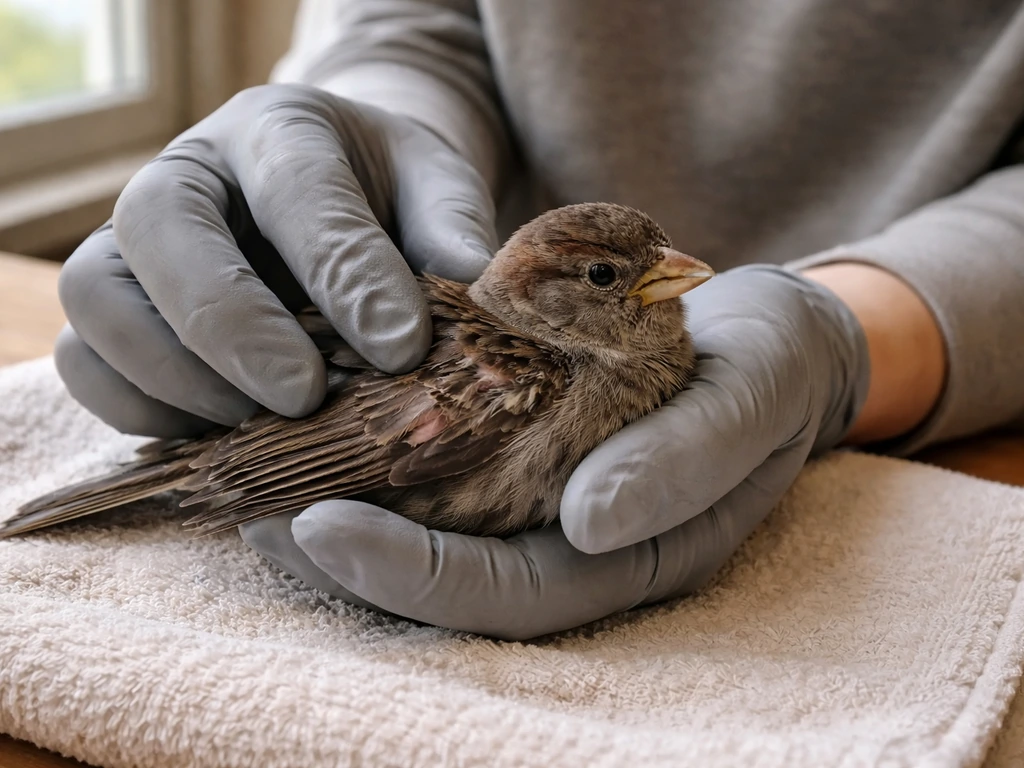
- Contain the bird carefully using a lightweight cloth or towel to avoid being bitten or scratched. Don't squeeze.
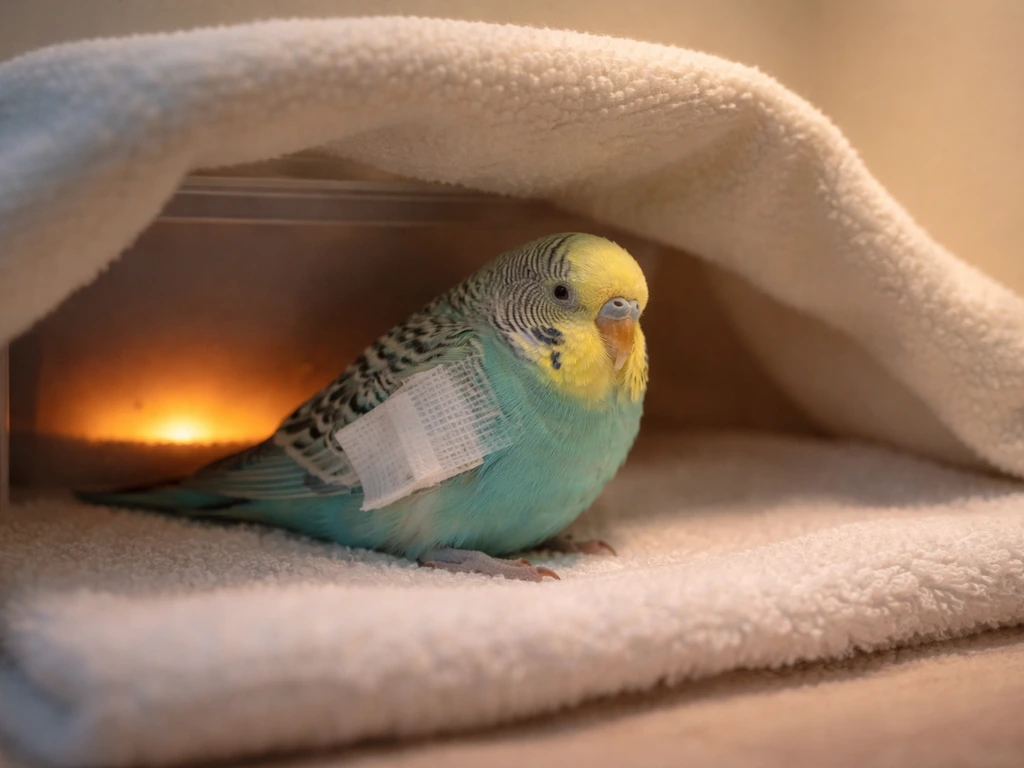
- Place the bird in a cardboard box or container with ventilation holes. Line it with a cloth or paper towel. Keep it dark and quiet.
- Keep it warm. Room temperature (around 70 to 80°F) is usually enough, but if the bird seems cold or lethargic, a heating pad on the lowest setting placed under half the box (so the bird can move away from the heat) helps. Never place heat directly on the bird.
- Do not offer food or water. Injured and stressed birds often cannot swallow safely, and forcing liquids can cause aspiration. Tufts Wildlife Clinic, the Audubon Society, and Golden Gate Bird Alliance all advise against feeding or watering injured wild birds.
- Keep the environment as quiet as possible. Put the box somewhere away from pets, children, loud TVs, and strong smells.
- Call a licensed wildlife rehabilitator or avian vet as soon as the bird is contained. Do this before taking any further action.
If there is active bleeding alongside the feather loss, that changes things. If the bird is actively bleeding, follow the specific steps in how to treat a bleeding bird to keep it stable until professional help is available. If you’re dealing with a bleeding bird, check the injury gently, keep the bird warm and contained, and contact a vet or wildlife rehabber as soon as possible treating a bleeding bird. Bleeding from a broken blood feather or a wound needs to be addressed, but the approach depends on the source. Bleeding feathers and wounds are covered in more detail in the companion guides on blood feathers and treating a bleeding bird, but the core rule applies here too: contain, keep warm, minimize handling, and get professional help quickly.
Treating the most common causes
Trauma, collisions, and physical injury
If the feather loss is from a window strike, a cat attack, or another physical trauma, at-home treatment is mostly supportive. Your job is stabilization, not repair. Keep the bird warm, dark, and quiet. Don't try to splint a wing or clean wounds unless you've been directed to do so by a rehabber or vet. Window collision birds often recover with rest if the injury is mild (a concussion-level impact), but they need monitoring. If the bird isn't flying normally within a few hours, it needs professional evaluation. For cat and dog attacks, get the bird to an avian vet or wildlife rehabber the same day even if it looks okay on the outside, because puncture wounds that aren't treated with antibiotics are nearly always fatal.
External parasites (mites and lice)
If you've confirmed mites or lice (using the white cloth overnight test or visible inspection), treatment for pet birds should be handled by an avian vet who can prescribe the right anti-parasitic medication. Over-the-counter bird mite sprays vary widely in both safety and effectiveness, and some products marketed for birds are actually unsafe for certain species. For wild birds with a suspected mite or lice problem, the best approach is still to contact a wildlife rehabber, who will have the appropriate treatments on hand. Make sure to also treat the bird's housing or cage thoroughly, because mites and lice can live in the environment and reinfest the bird.
Skin infections and dermatitis
Bacterial infections, fungal conditions, and dermatitis require a diagnosis to treat properly. There's no safe home remedy for a skin infection in a bird. Signs like redness, scaling, crusting, or weeping skin need to be seen by an avian vet, who can take swabs or do a skin scrape to identify the cause. Treating with the wrong product (or the right product at the wrong dose) can cause serious harm. Keep the bird calm and in a clean environment while you arrange the vet visit.
Stress plucking and feather destructive behavior
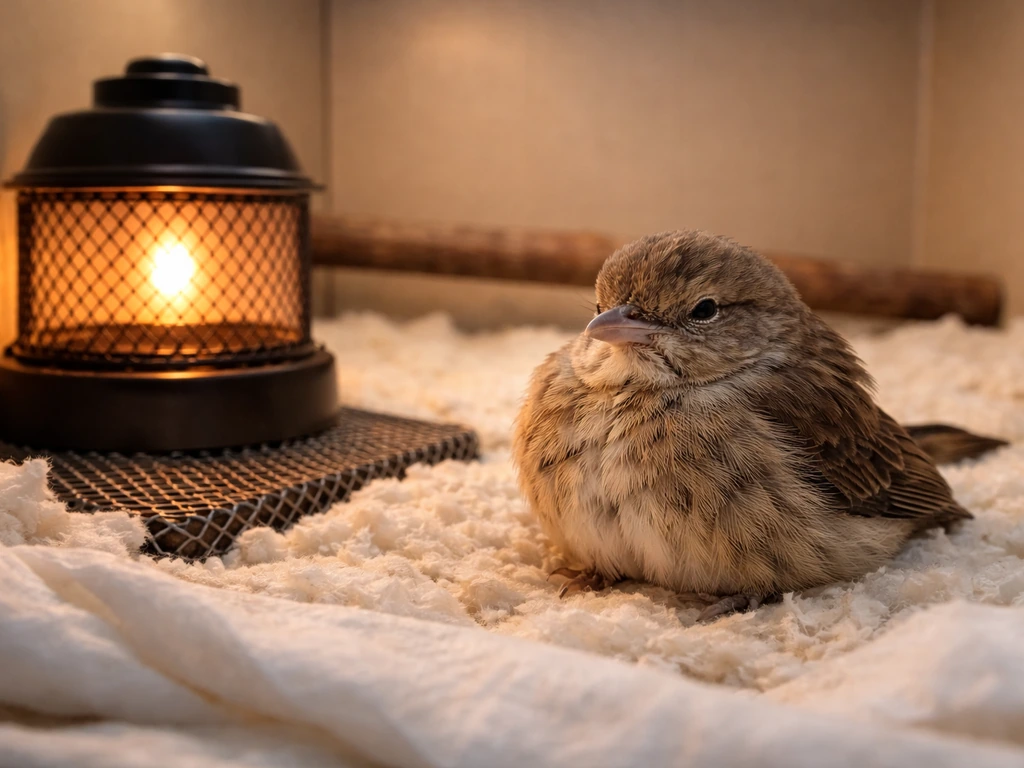
This is the category where people most often try to manage things at home without a vet, and it's also the category where that approach most frequently fails. Feather destructive behavior has both medical and behavioral roots, and the two are frequently tangled together. A bird in pain from an internal issue will pluck. A bird with a nutritional deficiency will pluck. A bird that's bored, lonely, anxious, or hormonally dysregulated will also pluck. The Merck Veterinary Manual and Lafeber's educational materials both emphasize that a full medical workup should come before any behavioral modification plan. Once medical causes are ruled out or treated, your avian vet can help build a behavioral support plan, which often includes environmental enrichment, improved social interaction, dietary changes, and sometimes anti-anxiety support.
When to call an avian vet or wildlife rehab urgently
Some situations require professional help immediately, not tomorrow. Call now if you're seeing any of the following:
- Bleeding that won't stop, or a wound that's visibly open
- Any confirmed or suspected cat or dog bite, even without visible injury
- The bird can't stand, is falling over, or is having seizure-like movements
- Labored breathing, open-mouth breathing, tail bobbing with each breath, or clicking/wheezing sounds
- The bird is completely unresponsive or barely moving
- You can see maggots, large swellings, or unusual masses on or under the skin
- The bird is actively bleeding from a feather follicle and it won't stop
- A wild bird that hasn't recovered after a window strike within 1 to 2 hours
- Feather loss combined with weight loss, lethargy, or droppings that have changed color or consistency
To find help, search for a licensed wildlife rehabilitator in your area through your state or provincial wildlife agency, or use the National Wildlife Rehabilitators Association directory. For pet birds, look specifically for an avian vet rather than a general small animal clinic, as birds require specialized knowledge and equipment. If it's after hours, many emergency veterinary clinics will at least stabilize a bird and refer you on.
Caring for a bird during feather recovery
Once the immediate cause is being addressed, feather regrowth takes time. Most feathers regrow during the next molt cycle, which can take weeks to months depending on the bird species and severity of the loss. Your job during this period is to keep conditions as supportive as possible.
Housing and warmth
A bird with significant feather loss has reduced insulation and is more vulnerable to cold. Keep the environment comfortably warm, around 75 to 85°F for most pet bird species, and away from drafts, air conditioning vents, and open windows. For wild birds in temporary care, the dark, quiet, warm box approach remains appropriate until the bird is transferred to a rehabber.
Nutrition
Feathers are made largely of protein, so nutrition matters a lot during regrowth. For pet birds, an avian vet can guide you on whether a dietary change is needed, but in general, a species-appropriate varied diet (not just seeds) supports healthy feather condition. Many seed-only diets are deficient in the amino acids, vitamins, and minerals birds need. Fresh vegetables, quality pellets appropriate for the species, and protein sources recommended by your vet can all support recovery. Do not supplement blindly with vitamins or minerals without vet guidance, as over-supplementation can cause harm.
Minimizing stress
Stress slows recovery and can trigger or worsen feather destructive behavior. Keep the bird's environment stable and predictable. Reduce loud noises, sudden changes in lighting, and exposure to other pets that may frighten the bird. If the bird is a social species (like most parrots), companionship and gentle, consistent interaction from a trusted person can help. Avoid handling more than necessary during the recovery phase.
How to prevent feather loss from happening again
Window collision prevention
Window strikes are one of the leading causes of feather loss (and death) in wild birds, and they're largely preventable. Applying window decals or tape in a tight grid pattern works, but only if the spacing is right: the Minnesota Bird Coalition recommends no more than 2 inches apart horizontally and 4 inches apart vertically, because birds can misread larger gaps as flyable space. External insect screens and films that block reflections on the outside of the glass are also effective. Moving bird feeders either to within 3 feet of a window (so birds can't build up speed) or more than 30 feet away (so they recognize the glass as a barrier) can also reduce strikes significantly.
Parasite prevention
For pet birds, routine avian vet checkups (at least annually) are the best way to catch mite and lice infestations early. Keep the cage or enclosure clean and dry, as moisture and organic debris make ideal conditions for mites. New birds should be quarantined before being introduced to existing birds. For birds with access to an outdoor aviary, check regularly for signs of mites, particularly in the warmer months.
Environmental and handling changes
For pet birds prone to stress plucking, long-term prevention means addressing the environment. Provide adequate cage size, rotating toys and foraging opportunities, species-appropriate social interaction, and a consistent daily routine. Avoid exposing the bird to household chemicals, scented candles, non-stick cookware fumes, and cigarette smoke, all of which can cause internal irritation and trigger plucking. Handle the bird gently and consistently, and limit stressful interactions like being passed between strangers.
Your checklist for right now
Here's what to do today based on what you're seeing:
| Situation | Action today | Urgent vet/rehabber needed? |
|---|---|---|
| Wild bird found on ground, feathers missing, can't fly | Box, warm, dark, quiet. Call wildlife rehabber immediately. | Yes, same day |
| Bird hit a window, lost feathers, seems dazed | Box, warm, dark, quiet. Monitor. Call rehabber if not recovered in 1–2 hours. | Yes if not improving |
| Cat or dog attack with feather loss | Box, warm. Call avian vet or rehabber immediately. | Yes, same day (critical) |
| Pet bird pulling out own feathers | Book avian vet appointment. Do not assume behavioral cause. | Yes, within days (sooner if bleeding) |
| Feather loss with redness, crust, or skin changes | Isolate from other birds. Book avian vet appointment. | Yes, within days |
| Suspected mites or lice | White cloth test overnight. Book avian vet for treatment guidance. | Yes, within days |
| Feather loss during normal season, bird acting well | Monitor for other symptoms. Could be a normal molt. | Not urgent unless symptoms worsen |
Feather loss is temporary in many cases, especially when it follows a molt, a one-off physical incident, or a quickly resolved infection. But it becomes a red flag when it's accompanied by bare skin that isn't filling back in, active self-trauma, weight loss, lethargy, or behavioral changes. When in doubt, treat it as urgent. Does it hurt when a bird loses a feather? In many cases the feather loss itself may not hurt much, but the underlying cause can be painful or distressing, so it is still important to assess the reason and act accordingly. If you notice feather loss, it can help to understand what happens during and after the regrowth process so you know what to expect next what happens if a bird loses its tail feathers. A qualified avian vet or wildlife rehabber can assess the bird far more accurately than any checklist, and getting help early almost always leads to better outcomes.
FAQ
Can I trim or pull off the remaining damaged feathers when my bird starts losing them?
Avoid pulling or trimming in most cases, because it can tear skin or reopen fragile areas, and it may mask progression of the underlying problem. If feathers are stuck or crusted from discharge, only remove debris around the area under a vet or rehabber's direction. Focus on containment and arranging an avian appointment instead of manipulating feathers.
What should I do if I suspect mites or lice but I cannot confirm it with the cloth test or inspection?
Do not start treating with random anti-parasitic sprays, because incorrect products or dosing can irritate skin and make symptoms worse. If you cannot confirm mites or lice, treat it as an undiagnosed feather-loss case, book an avian vet visit, and meanwhile keep the environment clean and dry and reduce dust and clutter that can worsen irritation.
Is it safe to bathe or mist a bird with feather loss to “soothe” the skin?
Not without knowing the cause. For suspected infection or dermatitis, adding moisture can worsen fungal or bacterial conditions. Instead, keep the bird in a warm, clean, dry area, and only use cleaning methods specifically recommended by an avian vet after diagnosis.
My pet bird is losing feathers after I switched seed or supplements, could it be food related?
A diet change can contribute, especially if it reduced protein or key nutrients, but sudden feather loss can also signal illness or stress. If the change was recent, revert to the prior balanced diet and call the avian vet for guidance rather than adding extra vitamins or minerals on your own, because oversupplementation can be harmful.
How can I tell molting from a problem like plucking or infection?
Molting usually looks gradual, with new feather growth over time and no increasing bare, raw, or bleeding areas. Feather destructive behavior often shows patchy areas the bird can reach and may progress alongside chewing or restless behavior. Infection or dermatitis tends to bring visible skin changes, scaling, crusting, or abnormal discharge, which is not typical for normal molt.
Should I separate my bird from other birds if feather loss is suspected to be contagious?
If you suspect parasites, infection, or an overall illness, isolate the feather-loss bird in a separate enclosure until it is evaluated. Use separate food and water dishes and wash hands between handling birds. Even when mites are not confirmed, separation helps prevent spread while you arrange an avian vet workup.
What housing changes help most while waiting for the vet appointment?
Keep the bird warm (avoid drafts), reduce stressors (quiet room, stable lighting), and use a clean, easy-to-grip setup like a perching area that prevents falls. Avoid scented products, non-stick cookware fumes, and air fresheners because irritants can worsen skin and trigger plucking. Provide water access and maintain a species-appropriate routine without frequent handling.
If my wild bird seems okay, can I still release it after temporary care?
Usually no, unless a licensed wildlife rehabber or veterinarian confirms it can survive and fly safely. Window strike and cat-related injuries can have internal damage or delayed complications even when the bird looks stable. Early professional assessment reduces the risk of hidden trauma and helps ensure the bird is ready for release.
When should I treat feather loss as an emergency versus “book soon”?
Treat it as an emergency if you see bleeding, signs of cat or dog puncture, inability to fly or stand normally, rapid worsening, severe lethargy, or active self-trauma that you cannot interrupt safely. Feather loss without those signs is still worth prompt evaluation, but the urgency is higher when there are systemic signs or a likely bite or strike history.
Next Article
How to Treat a Bird Bite: First Aid and What to Do Next
Step-by-step first aid for a bird bite and how to check the bird, watch for infection, and get urgent help.