
If a bird loses its tail feathers, it's often just a normal molt, and the feathers will grow back on their own. But if the bird is also struggling to perch, breathing with its mouth open, sitting on the floor, or you can see blood or broken skin where the feathers were, that's an emergency that needs professional help today, not tomorrow. If you are wondering whether it hurts when a bird loses a feather, focus on pain and distress signals and treat it as urgent if the bird seems uncomfortable. The tail feathers are steering and balance feathers, and losing them suddenly from trauma leaves a bird genuinely vulnerable, even if it looks calm on the outside.
What Happens If a Bird Loses Its Tail Feathers
Marcus Chen
16 May 2026
Why tail-feather loss happens
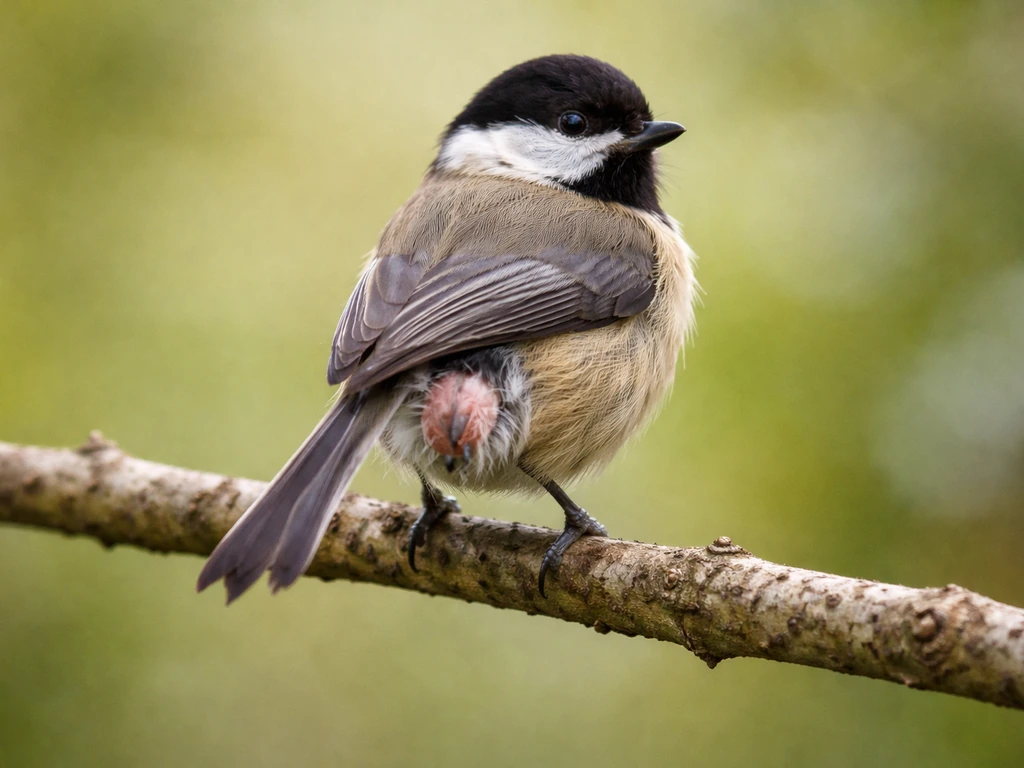
Tail feathers (called rectrices) fall out for a handful of reasons, ranging from completely normal to genuinely serious. Understanding which category you're dealing with is the first and most important step.
The most common reason is plain old molting. Birds shed and replace their feathers on a regular cycle. Budgerigars typically start their first molt around 12 to 14 weeks old and can blank" rel="noopener noreferrer">molt two to four times a year after that. Cockatiels usually molt one to two times per year, and a single molt can last anywhere from two weeks to three months. blank" rel="noopener noreferrer">Canaries often molt once a year, typically in late summer, and one of the first signs a canary owner notices is a tail or wing feather on the cage floor. So finding a feather or two is not automatically a crisis.
Trauma is the other big cause, and it's the one that needs urgent attention. A bird that was grabbed by a cat or dog, hit a window, got caught on something, or was handled roughly can lose several tail feathers at once with damaged or bleeding skin underneath. Stress and feather-destructive behavior can also cause abnormal feather loss, especially in captive birds, but those situations tend to develop gradually rather than all at once.
What to check right now after you notice missing tail feathers
Before anything else, look at the bird's overall behavior and posture. This tells you more than the missing feathers themselves. Here's what to check, in order:
- Breathing: Is the bird breathing with its mouth open, or working visibly hard to breathe? Any labored, rapid, or open-mouth breathing is a red flag.
- Posture and balance: Is the bird able to grip the perch and hold itself upright? A bird sitting low, leaning, or lying on the cage floor is in serious trouble.
- Activity level: Is it alert and reactive, or dull, fluffed up, and not responding to movement around it?
- The skin where the feathers were: Part the surrounding feathers gently and look. Is the skin intact? Is there blood, a wound, or broken pin feathers still partially attached?
- Wing position: Are both wings held normally, or is one drooping? A drooping wing alongside missing tail feathers suggests trauma, not molt.
- Other feathers: Is the feather loss patchy and only on one side, or does it look roughly symmetrical? Molt tends to mirror itself on both sides of the body. Focal, one-sided loss with skin damage points to injury.
If you're looking at a wild bird you found outside, also note where it was (on the ground, unable to move, near a window?) and whether there are cat or dog tracks or other predator signs nearby. That context matters when you call for help.
Potential health causes: molting, feather damage, injury, or stress
Not all feather loss looks the same, and the pattern gives you real clues about what's going on.
Normal molt
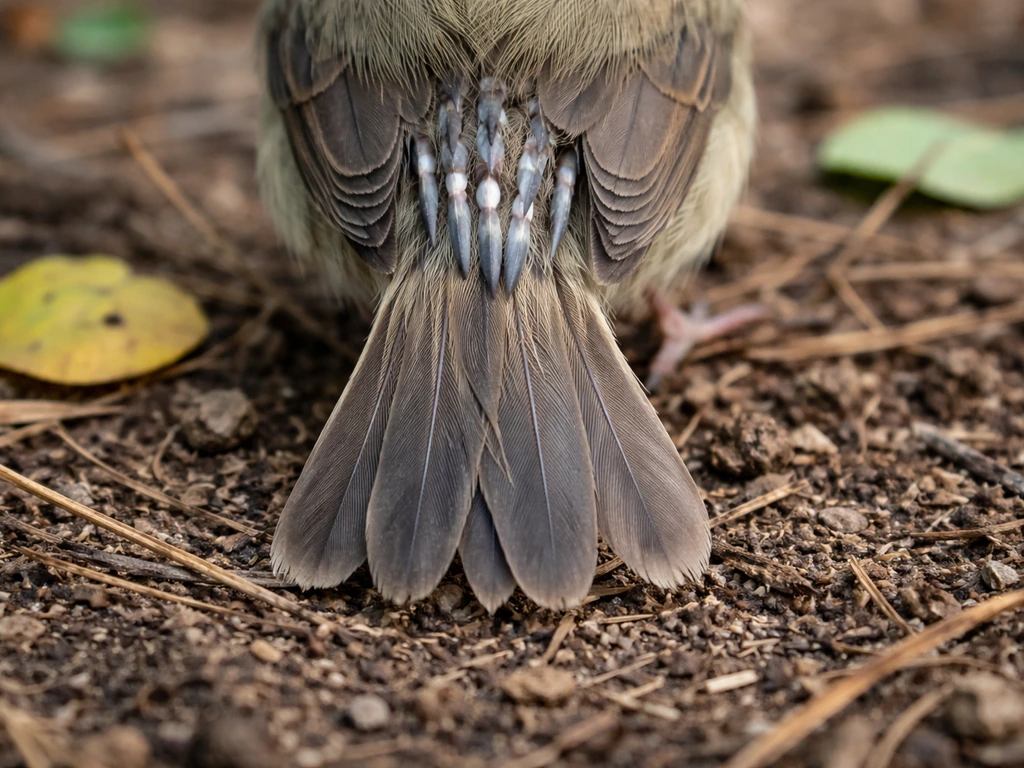
In a healthy molt, you'll usually see new feathers already coming in alongside the ones being shed. These are called pin feathers or blood feathers: short, waxy-looking quills that are still connected to a blood supply as they grow in. The loss is gradual and roughly symmetrical. The bird behaves normally, eats, and holds its perch without trouble. If you see pin feathers in the tail area and the bird is acting completely normal, you're most likely looking at a routine molt.
Trauma and injury
Trauma causes sudden, often dramatic feather loss. If a cat grabbed the bird, the feathers pull out as an escape reflex, which can leave several tail feathers gone at once. Window strikes can do the same. You'll often see asymmetrical loss, damaged or raw skin underneath, and a bird that is visibly shaken or in shock. Cats and dogs are a particularly serious concern because their mouths carry bacteria that cause life-threatening infections in birds within hours, even when the wound looks minor.
Stress-related and behavioral feather loss
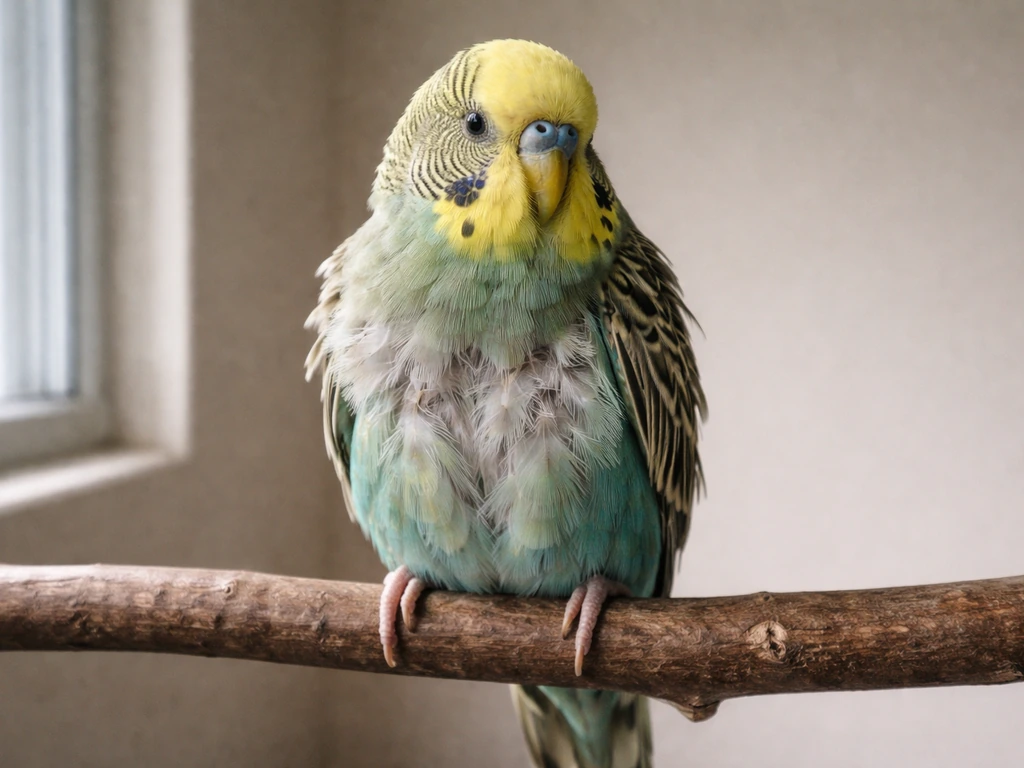
Some captive birds overpreen or pluck their own feathers in response to stress, boredom, or underlying illness. This tends to show up gradually, often on the chest or back, and the feathers don't just vanish overnight. If you're noticing this pattern in a pet bird over days or weeks, an avian vet appointment is a good idea even if there's no emergency right now.
Broken or damaged feathers
Sometimes feathers break rather than fall out cleanly. A broken blood feather is its own issue that can cause ongoing bleeding and needs immediate attention. If you see a snapped feather with a dark, blood-filled shaft still sitting in the follicle, treat it as urgent. If you suspect the bite was from another bird, you should also know how to treat a bird bite and get the right medical advice quickly treat it as urgent.
Signs it's an emergency vs normal feather loss
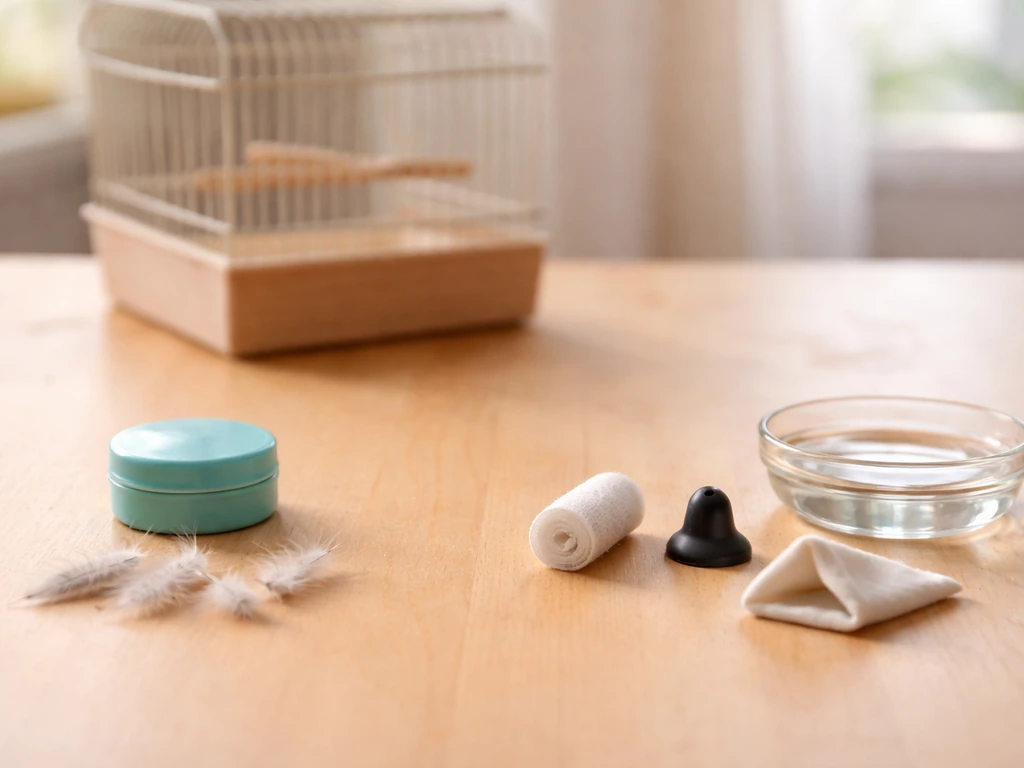
This is the most important distinction you'll make. Use this table to sort what you're seeing:
| What you're seeing | What it likely means | What to do |
|---|---|---|
| A feather or two on the cage floor, bird is active and eating normally | Normal molt | Monitor; no action needed |
| Symmetrical feather thinning, new pin feathers visible, normal behavior | Normal molt with active regrowth | Monitor; keep stress low |
| Several tail feathers gone at once, skin exposed but intact, bird is alert | Possible trauma or stress; monitor closely | Watch for 1 to 2 hours; contact a vet if behavior changes |
| Open mouth breathing or rapid labored breathing | Emergency: possible shock or internal injury | Get to an avian vet immediately |
| Bird sitting on cage floor or unable to perch | Emergency: shock, severe injury, or neurological issue | Get to an avian vet immediately |
| Active bleeding at the tail base or broken blood feather | Emergency: blood loss risk | Apply gentle pressure, contact vet now |
| Visible wound, torn skin, or puncture at tail area | Emergency: possible bite wound or penetrating trauma | Get to an avian vet immediately |
| Bird is dull, fluffed, and unresponsive to movement around it | Emergency: shock or severe illness | Get to an avian vet immediately |
| Wing drooping alongside tail feather loss | Emergency: trauma affecting multiple structures | Get to an avian vet immediately |
One thing I always tell people: birds are wired to hide weakness. By the time a bird looks obviously sick or injured to you, it's often been struggling for a while. If something feels off, trust that instinct and call for professional guidance rather than waiting to be sure.
What tail feathers actually do, and why losing them suddenly matters
Tail feathers act like a rudder and a brake. They help a bird steer in flight, slow down for landing, and stay balanced on a perch. A bird that loses tail feathers gradually through molt handles this fine because its body compensates. A bird that loses most of its tail feathers suddenly from trauma doesn't have that adjustment period. Flight becomes unpredictable, landing is harder, and perch stability can be affected. That's a real welfare concern, especially for wild birds that need to escape predators or find food. It also means a bird with sudden tail loss from trauma is more vulnerable even if it can still technically fly, because its maneuverability is significantly reduced.
Immediate first-aid and at-home care steps
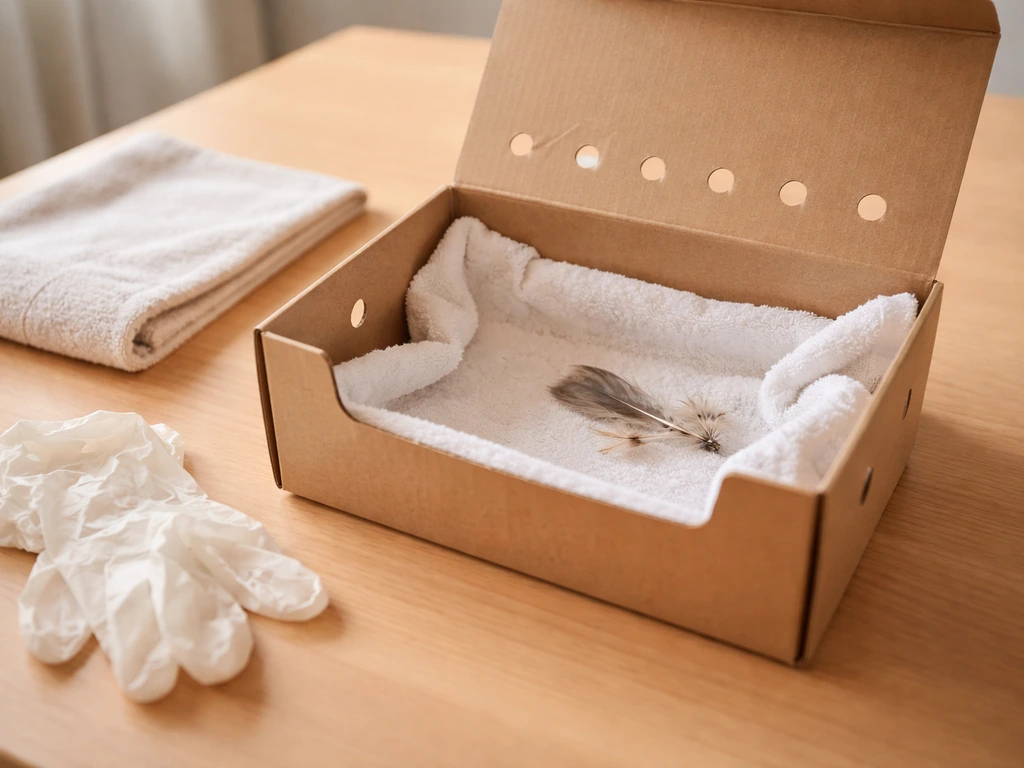
If the bird shows any emergency signs from the table above, your first move is to contact an avian vet or wildlife rehabber while you do the steps below simultaneously. If you’re wondering how to treat a poisoned bird, the safest approach is to follow the same emergency logic and get professional help right away. These steps are stabilization, not treatment. They buy time while you get professional help, and they apply to both pet birds and wild birds you've contained.
- Contain the bird in a small, quiet box or cage. A cardboard box with air holes works for a wild bird. Smaller space reduces the risk of the bird thrashing and injuring itself further.
- Keep the environment warm. The target range is 75°F to 85°F (24°C to 29°C). If the room is cooler than that, a heating pad set to low can be placed under half the box with a towel between the pad and the box floor so the bird can move away from the heat if needed. Never put a bird directly on a heating pad.
- Minimize handling and noise. Cover the box with a light cloth to reduce visual stimulation. Stress is a genuine physical danger for an injured bird and can accelerate shock.
- If there's active bleeding at the tail base, apply very gentle, direct pressure with a clean cloth or piece of gauze for a few minutes. Do not probe the wound or try to remove feather fragments.
- Do not offer food or water to a bird that is weak, in shock, or unable to stand. An unresponsive bird can aspirate liquid and make things worse.
- Do not apply antiseptics, creams, or home remedies to any wound. They can be toxic to birds or make professional assessment harder.
- Take a photo if you can do so without causing more stress. It helps the vet or rehabber assess before you arrive.
If the bird is a pet and appears alert with no bleeding and no behavioral changes, and you suspect routine molt, you can monitor it at home. If you’re trying to figure out how do you treat bird feather loss in your specific situation, start by deciding whether it’s a normal molt or a trauma or health issue. Keep the cage in a calm, draft-free location and watch for any changes in eating, droppings, or energy level over the next 24 to 48 hours.
When to contact a wildlife rehabber or avian vet, and how to find help
Contact a professional right away if the bird has any of the emergency signs listed above. Don't wait to see if it improves. For a wild bird, you want a licensed wildlife rehabilitator, not a regular veterinarian, because they have the legal permits and species-specific experience to handle wild birds. For a pet bird, an avian vet (not just any vet) is the right call.
To find an avian vet in the U.S., the Association of Avian Veterinarians (AAV) runs a Find-a-Vet search tool on their website. For wildlife rescuers, a quick search for your state's wildlife rehabilitator directory or your local wildlife rescue center will give you a phone number. If you're in New Jersey, for example, the Avian Wildlife Center lists an emergency contact number on their website. Many areas also have general wildlife hotlines that can direct you to a bird-specific rehabber.
When you call, have this information ready:
- The species, if you know it (or your best description: size, color, beak shape)
- Where you found the bird or how long you've had the pet
- What you think happened, and when you first noticed the problem
- What the bird is doing right now: perching, on the floor, breathing pattern, alert or dull
- Whether there's visible blood or a wound
- Any photos you've taken
Having that information organized saves time and helps the professional on the other end give you better guidance immediately. If you're waiting for a callback or driving to the vet, keep the bird in its warm, quiet container and resist the urge to keep checking on it. The best thing you can do between now and professional care is keep the environment calm and stable.
One last thing worth knowing: if you spot a blood feather (a pin feather that's bleeding) in the tail area, that's a specific first-aid situation with its own steps, and it's more urgent than general feather loss. Similarly, if the bird has any wound that's actively bleeding, the priority is controlling that bleeding while you arrange care.
If you’re wondering how to treat a bleeding bird at home, start by controlling the bleeding and keeping the bird warm and calm while you contact a professional. If your bird is bleeding, focus on stopping the bleeding and contacting an avian vet or wildlife rehabber as soon as possible actively bleeding.
These are connected problems that often come together after trauma, and all of them point to the same answer: get professional eyes on the bird as quickly as you can. For a bird bite, focus on prompt wound cleaning and immediate medical advice, since infection can escalate quickly. If your bird is bleeding, treat it as urgent and get immediate veterinary advice.
FAQ
What happens if a bird loses its tail feathers gradually versus all at once?
Not necessarily. Molting can cause tail gaps without harm, but sudden loss from trauma can quickly change how the bird balances and lands. If the bird is sitting on the floor, breathing with its mouth open, or looks weak on a perch, treat it as urgent even if it still flies.
If I only find a couple tail feathers, how do I know whether to monitor or seek help?
Replace “feather loss” with “what is the bird doing.” Watch appetite, droppings, and grip strength on the perch for 24 to 48 hours. A routine molt usually comes with new pin feathers and normal droppings, while rapid change in energy, balance, or breathing suggests something more serious.
What should I do if the tail feather loss includes a blood feather?
If you see a blood feather, where the shaft looks dark and wet with active bleeding, that is its own emergency. The bird can lose blood fast and infection risk rises, especially after bites or claw injuries, so contact an avian vet or wildlife rehabber immediately.
How should I handle a bird while I’m waiting for a vet or rehabber?
Avoid wrapping the bird in a way that presses the tail or loosens more feathers. Use a warm, quiet container for transport, minimize handling, and keep the environment draft-free. Frequent checking can stress the bird and worsen feather-destructive behavior.
Can a minor-looking cat or dog injury cause serious problems even if feathers are the main issue?
Yes, especially in cats and dogs. Even when a wound seems small, bacteria in the mouth can cause infection within hours, so any bite-related tail loss or visible skin damage should be treated as urgent.
What behavior changes are more important than the missing feathers themselves?
Often, yes. Birds can hide illness, but mouth breathing, staying on the floor, obvious shock, blood or broken skin, and inability to grip the perch are stronger indicators than how calm the bird appears.
What if my pet bird is pulling feathers out over several days?
In captivity, stress plucking or overpreening usually looks gradual and often targets areas like the chest or back, not just a clean, sudden tail dump. If it’s developing over days to weeks, schedule an avian vet visit to rule out underlying illness and adjust the environment.
How can I tell if a feather is broken versus it fell out cleanly?
A broken blood feather can mean ongoing bleeding from the follicle even if the bird is still eating. Look for a snapped quill with blood inside the shaft, and treat it as urgent rather than “just a broken feather.”
Who should I contact for a wild bird, and why is it different from a regular veterinarian?
For a wild bird, the call should go to a licensed wildlife rehabilitator, not a general practice clinic. They have the permits and species-specific handling knowledge, which matters for shock, infection risk, and release requirements.
Does losing most tail feathers affect flight and perch safety?
Severely reduced tail feathers can make landing and flight unpredictable, which raises the risk of falls and failure to escape predators. Don’t assume “it can still fly” equals “it’s fine,” because maneuverability and perch stability can be significantly compromised after trauma.