
If your bird is bleeding from a damaged blood feather right now, apply styptic powder or cornstarch directly to the broken end of the feather, hold gentle pressure for 60 to 90 seconds, and do not pull the feather out.
What to Do If Your Bird Has a Blood Feather: First Aid
Marcus Chen
7 May 2026
If the bleeding doesn't stop within 5 minutes, or if the bird looks weak, is sitting on the cage floor, or is breathing rapidly, blank" rel="noopener noreferrer">treat it as an emergency and contact an avian vet or wildlife rehab immediately. If you are looking for the full step-by-step guide on how to treat a bleeding bird safely, follow the at-home instructions below and escalate when needed treat it as an emergency and contact an avian vet or wildlife rehab immediately.
If you need more help right now, call an avian vet or wildlife rehab and describe what you see.
What a blood feather actually is (and why it bleeds so much)
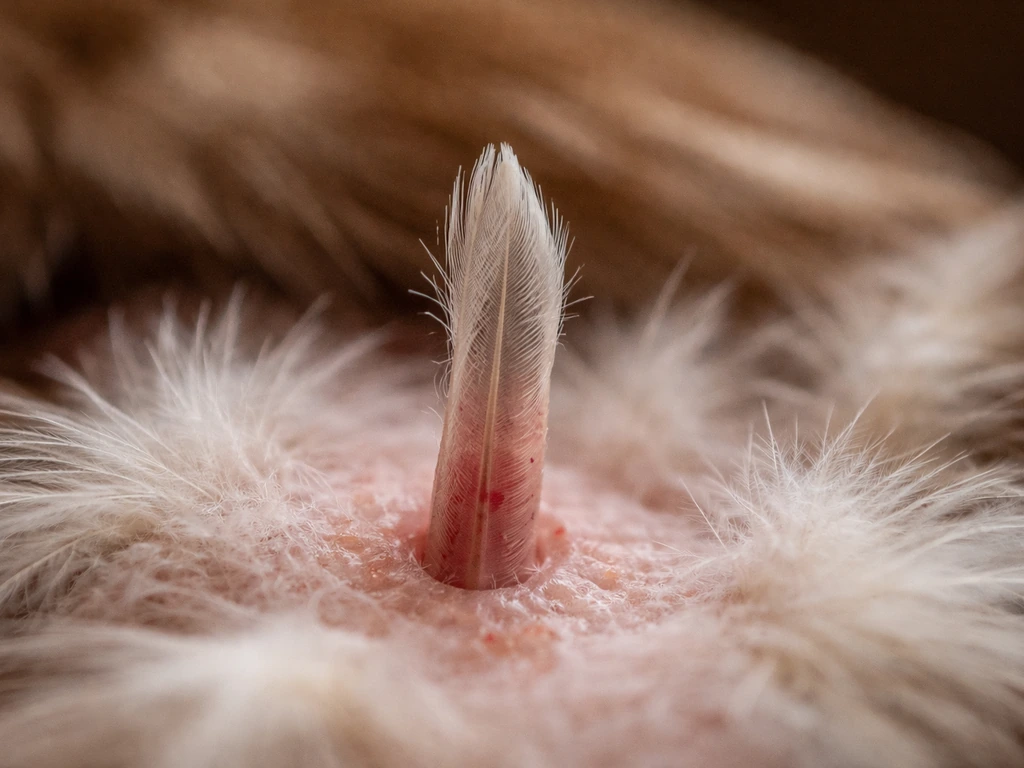
A blood feather, also called a pin feather, is a new feather that's still actively growing. While it's developing, the feather has its own blood supply running through a central core inside the sheath. That's why it looks dark or purplish at the base and why it bleeds when it breaks or gets damaged. Once a feather finishes growing, the blood supply dries up and it becomes the normal, non-bleeding feather you're used to. But while it's still a blood feather, even a small crack or break can cause surprising, and sometimes alarming, blood loss.
Blood feathers appear during molting cycles, when a bird replaces old feathers with new ones. You'll often see them clustered on the head, wings, or tail. They're fragile because the protective keratin sheath around them is thin, and the vascularized tissue inside is very close to the surface. A snag on a cage bar, a rough handling moment, or even vigorous preening can break one open.
A bird can lose a significant amount of blood from a single damaged blood feather in a short period of time, so this isn't something to watch and wait on. It can also help to understand whether a feather loss hurts, since birds may show discomfort or stress even after bleeding stops does it hurt when a bird loses a feather.
Stop the bleeding: what to do right now
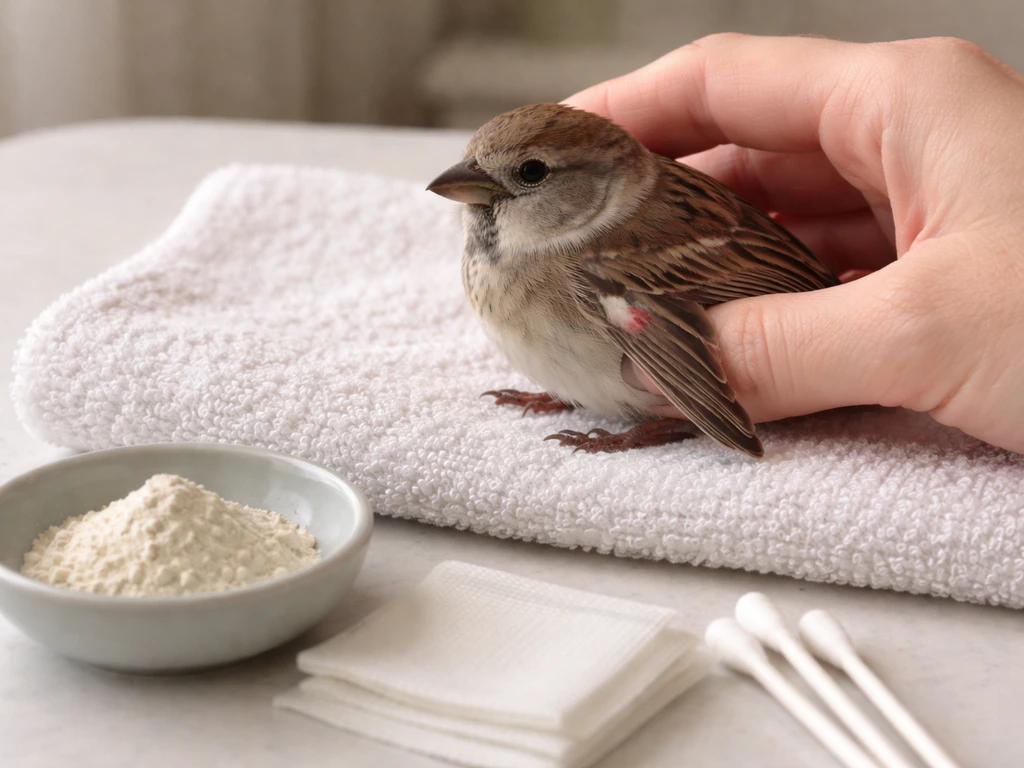
Stay calm, because a stressed bird moves more, and movement makes bleeding worse. If you are dealing with any sort of bird bite instead of a blood feather injury, use the separate guidance for how to treat a bird bite and watch for infection signs. Wrap the bird loosely in a clean, light-colored towel to gently restrain it without squeezing its chest (birds breathe through their chest wall, so pressure there can suffocate them). Use the towel to expose just the area with the broken feather.
- Locate the broken blood feather. Look for the specific feather the blood is coming from rather than just wiping at the blood generally.
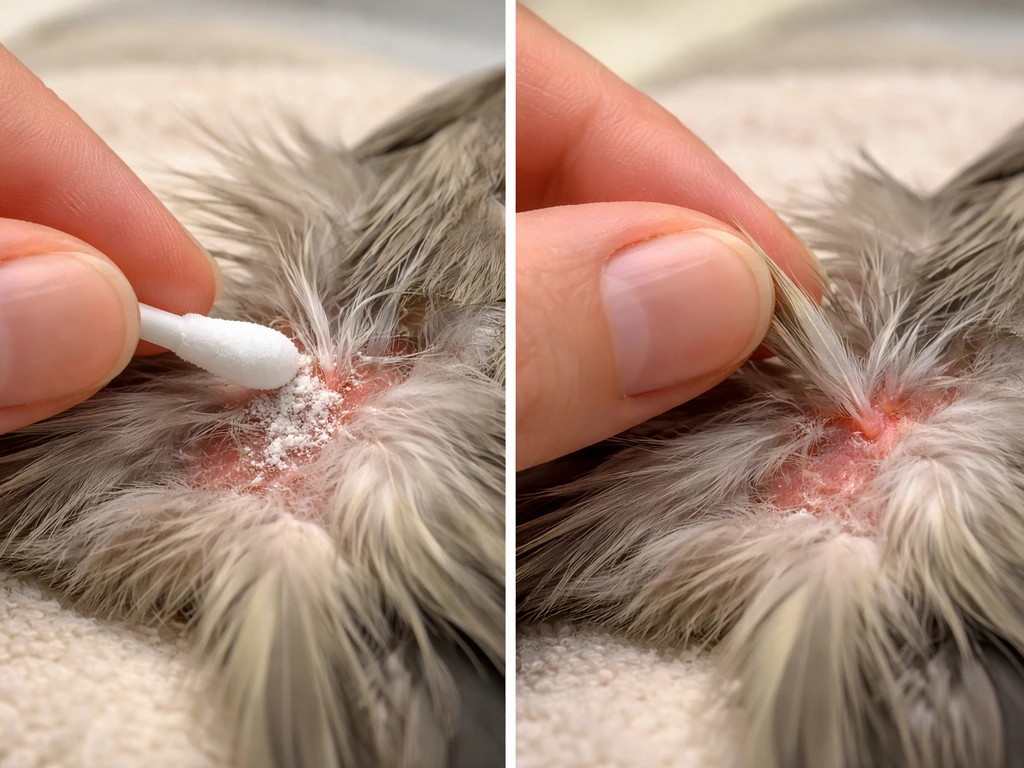
- Apply styptic powder, styptic gel, or plain cornstarch (flour works too in a pinch) directly onto the broken tip of the feather. Commercial products like Kwik-Stop or Remedy+Recovery Stop Bleeding powder work well. Cornstarch from your kitchen is a solid backup.
- Hold gentle, firm pressure on the site for 60 to 90 seconds without lifting to check. Constant peeking restarts the clotting process. If using loose powder, pack it in and hold.
- After 90 seconds, carefully check if bleeding has stopped. If it has, release the bird gently back into a quiet, warm space and monitor closely.
- If bleeding continues, reapply the powder and hold pressure again. Set a timer for 5 minutes total from when you started. If blood is still flowing at that point, contact an avian vet or wildlife rehab now.
One important note: styptic powder should go onto the feather itself or the broken tip, not directly onto exposed skin or an open wound. Avian Health Services’ emergency-first-aid guidance recommends pressing cautery powder, or cornstarch or flour, into the end of a broken blood feather and using pressure as immediate first aid. It can cause chemical irritation to raw tissue. If the feather has broken at the base and there's an open follicle visible, apply cornstarch instead, which is gentler.
How to handle the feather itself: what helps vs. what makes it worse
The single most important rule: do not pull the blood feather out. I know it seems logical, like removing the source of the bleeding, but it almost always makes things worse. Pulling a blood feather is painful, it can permanently damage the feather follicle, and if the feather breaks during removal rather than pulling out cleanly, you can end up with a jagged bleeding stub that's harder to manage. The "do not pull" rule is in nearly every reputable avian first-aid guide for good reason.
| Do this | Avoid this |
|---|---|
| Apply styptic powder or cornstarch to the broken feather tip | Pulling or twisting the blood feather out |
| Hold gentle pressure for 60–90 seconds without lifting | Repeatedly checking the wound (it restarts clotting) |
| Wrap bird loosely in a towel to minimize movement | Squeezing the bird's chest or body tightly |
| Keep the bird warm and quiet after bleeding stops | Putting the bird back in a busy, stimulating environment right away |
| Apply powder to the feather, not bare skin | Using undiluted styptic products directly on open wounds or skin |
Even after bleeding stops, the broken feather tip can brush against a perch or cage bar and reopen. That's worth knowing because many people think the problem is solved after the initial bleed stops. It isn't fully resolved until the feather either finishes growing and the blood supply retreats, or the bird is seen by a vet who can properly evaluate whether removal is warranted and do it safely.
When it becomes an emergency
Some blood feather situations can be managed briefly at home with first aid, but others need professional help right now. The following signs mean you should stop the at-home approach and call for help immediately.
- Bleeding that won't stop after 5 minutes of correct pressure and styptic powder application
- A constant drip of fresh blood rather than slow oozing
- The bird is sitting on the cage floor or ground and not trying to perch
- Rapid, shallow, or open-mouthed breathing
- The bird is unusually still, limp, or unresponsive to stimulation
- Pale or grayish color around the beak, eyes, or mouth area
- A wing or leg is drooping, at an odd angle, or not bearing weight
- The injury happened alongside a collision (window strike, cat/dog attack, fall) that could have caused internal injuries or broken bones
- The blood feather is broken at the base, inside or near the follicle, making external control very difficult
The first four signs on that list are classic indicators of shock in birds: rapid shallow breathing, pale mucous membranes, weakness, and subnormal body temperature. Shock in birds develops quickly after significant blood loss, and a bird in shock needs warming and veterinary support without delay. If you're seeing any of those signs, don't wait to see if things improve.
If the blood feather injury happened because of a window strike, a cat or dog grab, or any kind of collision or attack, the feather bleed may actually be the least of the problems. Those scenarios carry a high risk of internal injury, broken bones, or infection from puncture wounds that aren't visible. Treat them as emergencies from the start.
Aftercare at home: keeping the bird safe while it recovers
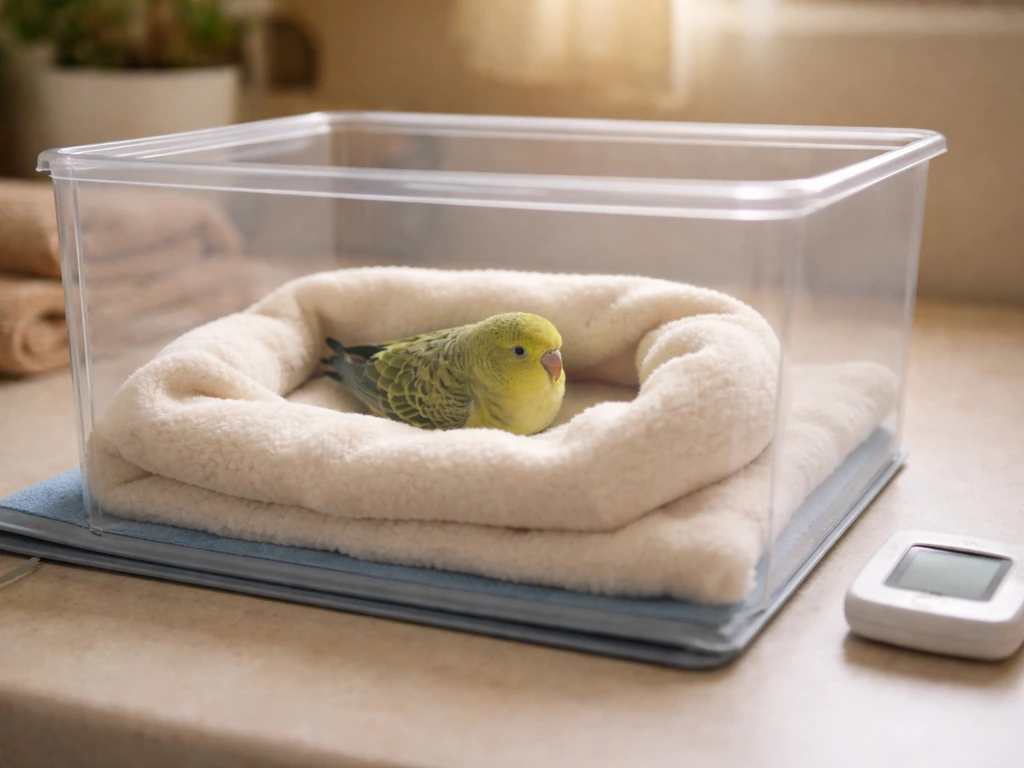
Once bleeding has stopped and the bird isn't showing emergency signs, your job shifts to keeping it calm, warm, and protected from anything that could reopen the injury or cause new stress. Set up what's sometimes called a hospital cage: a smaller, secure enclosure (or a carrier with ventilation) where the bird can rest without flying around or climbing aggressively.
- Keep the temperature between 80 and 85°F (27 to 29°C). A heating pad set to low placed under one half of the carrier (not the whole base, so the bird can move away from heat if needed) works well. Make sure the bird isn't directly on the heating pad.
- Cover three sides of the enclosure with a light cloth to reduce visual stimulation and help the bird feel less exposed and stressed.
- Remove perches temporarily if the bird seems unsteady. A towel on the floor of the carrier gives a safe, soft surface.
- Keep the area around the injured feather clean but don't pick at it, scrub it, or repeatedly apply products. One clean application of styptic powder or cornstarch is enough for first aid.
- Watch for re-bleeding. If the bird preens the area or bumps the feather, it can reopen. Separate the bird from cagemates temporarily, as other birds may peck at the injury site.
- Don't offer food immediately if the bird is in obvious distress, but once it settles, fresh water and its normal food should be available.
Minimize handling for the next several hours. Every time you pick the bird up, its stress hormones spike, its heart rate rises, and if there's any fragility in the clot, movement can dislodge it. Observation from a short distance is better than constant checking. If the bleeding stays stopped and the bird is alert and interested in food and water within an hour or two, that's a good sign. Still worth a vet call, but not a sprint-to-the-emergency-room situation. If you notice a bird has lost its tail feathers, the same principles apply: contact an avian vet or wildlife rehab to check for injury, bleeding, or an ongoing feather-growth problem.
When to call an avian vet or wildlife rehab (and what to say)
Even when first aid appears to work, a broken blood feather that's bled significantly should be evaluated by a professional, especially for pet birds. A vet can assess whether the feather needs to be properly removed under controlled conditions, check the follicle for damage, and make sure no secondary infection is starting. For wild birds, the goal is always to get the bird to a licensed wildlife rehabilitator as quickly as possible after stabilizing the immediate bleed.
When you call, be ready to tell them the following. Having this information ready speeds up triage considerably.
- What species the bird is (or your best description if it's a wild bird)
- Where on the body the blood feather is located
- How long the bird has been bleeding and whether it's stopped
- What first aid you've already given (products used, how long pressure was held)
- Whether there was a triggering event like a collision, fall, or predator attack
- Current behavior: Is the bird alert? Perching? Breathing normally? On the floor?
To transport the bird safely, place it in a well-ventilated carrier or cardboard box with air holes. A small towel on the floor gives grip and warmth. Keep the environment dark (cover the carrier) and as quiet as possible during transport. Darkness reduces stress significantly in most birds. Keep the car warm, 75 to 85°F is a reasonable target, and drive smoothly. Don't stop to check on the bird every few minutes; the less disturbance, the better.
How to prevent blood feather injuries in the future

Most blood feather injuries happen in a few predictable ways: snagging on cage hardware, rough handling during molt, or contact with another bird that pecks at a developing feather. Knowing that makes prevention pretty straightforward.
- Inspect cage bars, perch attachments, toys, and any hardware regularly for sharp edges, rust, or gaps that a growing feather could catch on. Replace or file anything rough.
- Handle birds more gently during active molt periods. If you can see visible pin feathers (dark, waxy-looking feather stubs) especially on the head or wings, slow down and be extra careful.
- Avoid grabbing a bird by or near the wings when blood feathers are present. If you need to restrain the bird, use a towel and keep the wing area supported rather than compressed.
- Separate birds if one is showing signs of over-preening another, particularly around pin feathers. Even well-bonded birds can cause injury to blood feathers inadvertently.
- Don't let birds fly free in spaces with ceiling fans, narrow gaps between furniture, or reflective windows during molting periods when blood feathers are present. Collision risk is already dangerous, and it's compounded when feathers are fragile.
- If you're a first-time bird owner, ask your avian vet to show you what blood feathers look and feel like on your specific bird during a routine checkup, so you can identify them confidently in the future.
Having a small first-aid kit on hand before you need it makes a big difference in those first stressful minutes. Keep styptic powder or Kwik-Stop, plain cornstarch, a few gauze pads, and a small clean towel together in one accessible spot. You don't need much, but having it ready means you're not searching cabinets while a bird is bleeding.
Blood feather injuries look scary because birds bleed visibly and quickly, but with fast, calm first aid most cases can be stabilized. The key is knowing what to do (pressure, styptic powder, warmth, quiet) and what not to do (pulling, squeezing, over-handling). When bleeding stops and the bird is alert, you have a little breathing room. When it doesn't, or when anything looks like shock or additional injury, that's when you escalate immediately. Trust your gut: if something feels wrong beyond just a bleeding feather, call a professional.
FAQ
What should I do after the bleeding from a blood feather stops?
After bleeding stops, keep the bird in a low-climb, low-activity setup for several hours, and briefly check from a distance. If the feather end reopens, resumes bleeding, or the bird becomes less responsive, reapply the pressure and contact an avian vet, even if the first bleed looked controlled.
What’s the correct product to use if the blood feather is broken at the base?
Do not put styptic powder on exposed tissue if you can see an open follicle at the feather base. In that case, cornstarch is usually gentler. If you are unsure whether skin is raw, err on the side of cornstarch at the broken tip area and avoid rubbing.
How long is it safe to try first aid before I call for help?
If bleeding continues after 5 minutes, or the bird shows rapid breathing, weakness, pale membranes, or feels unusually cool, treat it as an emergency. Also treat it as urgent if the bird is vomiting, collapsing, or cannot perch normally, because these can indicate trauma beyond the feather.
Can I hold my bird down while applying pressure?
Yes, but keep the restraint gentle and controlled. Use a towel to stabilize the body while exposing only the injured feather area, avoid any squeezing around the chest, and keep handling time short. If you need pressure longer than you can apply comfortably, ask someone else to help or switch to contacting a professional right away.
What if the towel becomes soaked with blood, do I need to start over?
If blood soaks through the towel, you can replace the outer layer without fully unwrapping and exposing the bird to more handling. Use a clean, dry towel section under the bird, keep it warm, and focus on the feather area for any additional styptic powder or cornstarch.
Is it okay to bandage the feather after it stops bleeding?
Don’t attempt to cap the feather with glue, bandage tape, or cotton. Those can pull on the feather tip when the bird moves and can trap moisture against fragile tissue, increasing reopening and irritation. If needed, you can cover the area with a very lightweight, non-sticky barrier while you arrange vet care, but avoid adhesives on skin.
Why does my bird bleed again later even though I stopped it at first?
A blood feather can still bleed again later if it brushes against a perch or cage bar, or if clotting gets disturbed. Once you see it is stable, reduce friction by using a lower perch, covering sharp cage edges, and temporarily switching to a safer, simpler layout while the feather finishes its cycle.
Should a vet examine the bird even if it seems fine after first aid?
It depends on the bird and the injury, but significant bleeding generally warrants professional evaluation, especially for pet birds. A vet can check the follicle for damage and determine whether removal is needed safely, rather than relying on how it looks after home first aid.
What if I suspect the bleeding is from an attack or collision, not just molt?
If the injury occurred due to a cat or dog grip, a window strike, or another collision, don’t focus only on the feather. These events raise the risk of internal injury and puncture wounds that you cannot see, so contact an avian vet or wildlife rehab immediately and keep transport calm and warm.
What other symptoms should make me treat this as more than a feather problem?
Yes. If the feather injury happens alongside other symptoms like open-mouth breathing, being unable to perch, trembling that won’t settle, or a rapidly worsening appearance, call for help right away. Birds can hide illness until shock progresses, so treat any “something feels off” change as an escalation trigger.
Next Articles
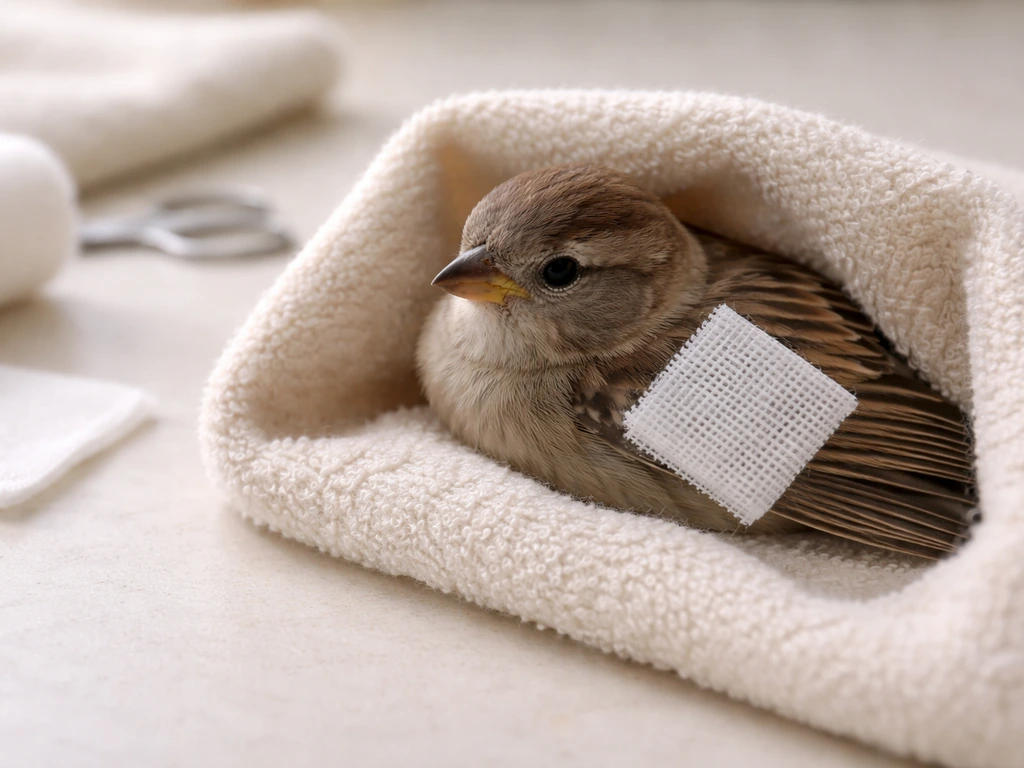
What Do I Do If My Bird Is Bleeding Right Now
Immediate first aid for bleeding birds, including wing and nail injuries, shock signs, and next steps for safe recovery.
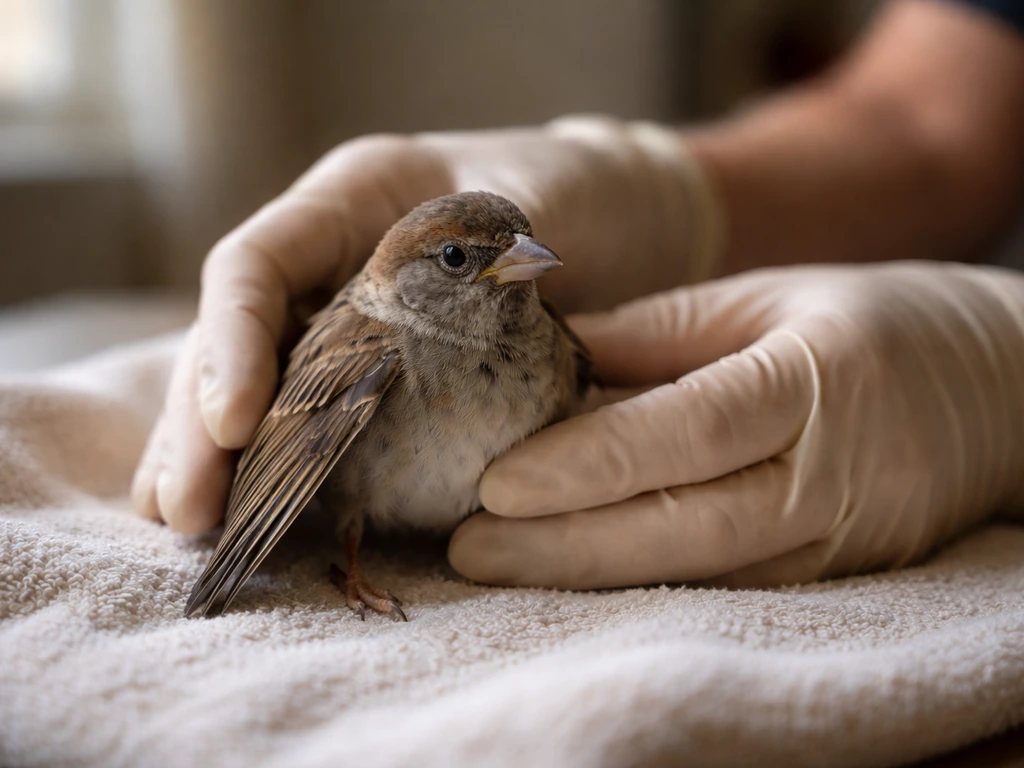
Can a Bird Live With One Wing? Survival and First Aid
Can a bird live with one wing? Injury outcomes and step-by-step first aid, plus when to get urgent help.
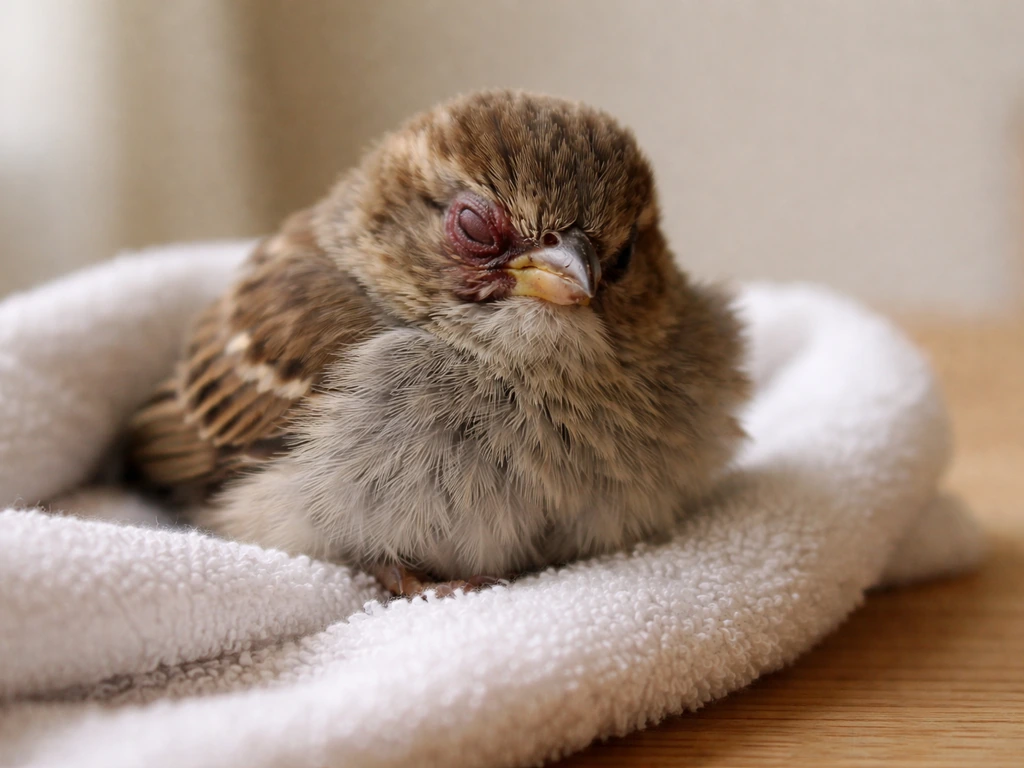
Can a Bird Survive With One Eye? What to Do Now
Learn if birds can cope with one eye and what to do now for an injured bird’s eye safely and urgently.