
If you've found a bleeding bird, the most important thing you can do right now is contain it gently in a dark, quiet box, apply light pressure to any actively bleeding wound with a clean cloth, and get it to a wildlife rehabilitator or avian vet as fast as possible. Birds hide pain and deteriorate quickly, so every minute matters. Here's exactly what to do, in order.
How to Treat a Bleeding Bird: First Aid Step by Step
Marcus Chen
12 May 2026
First: Keep You and the Bird Safe
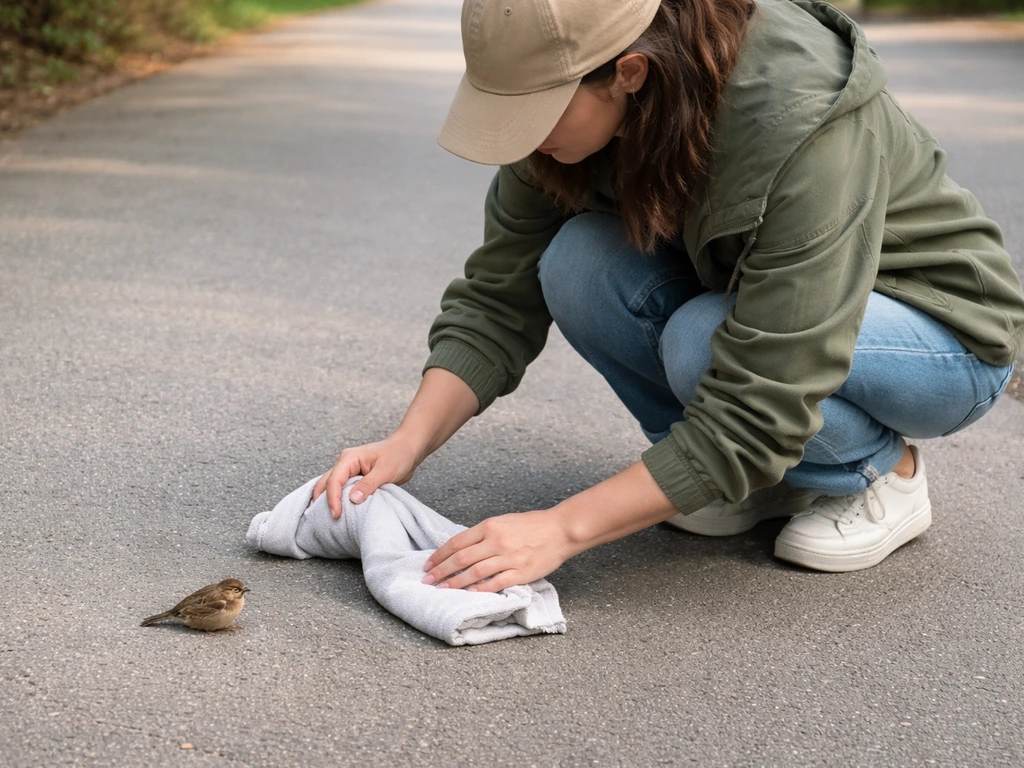
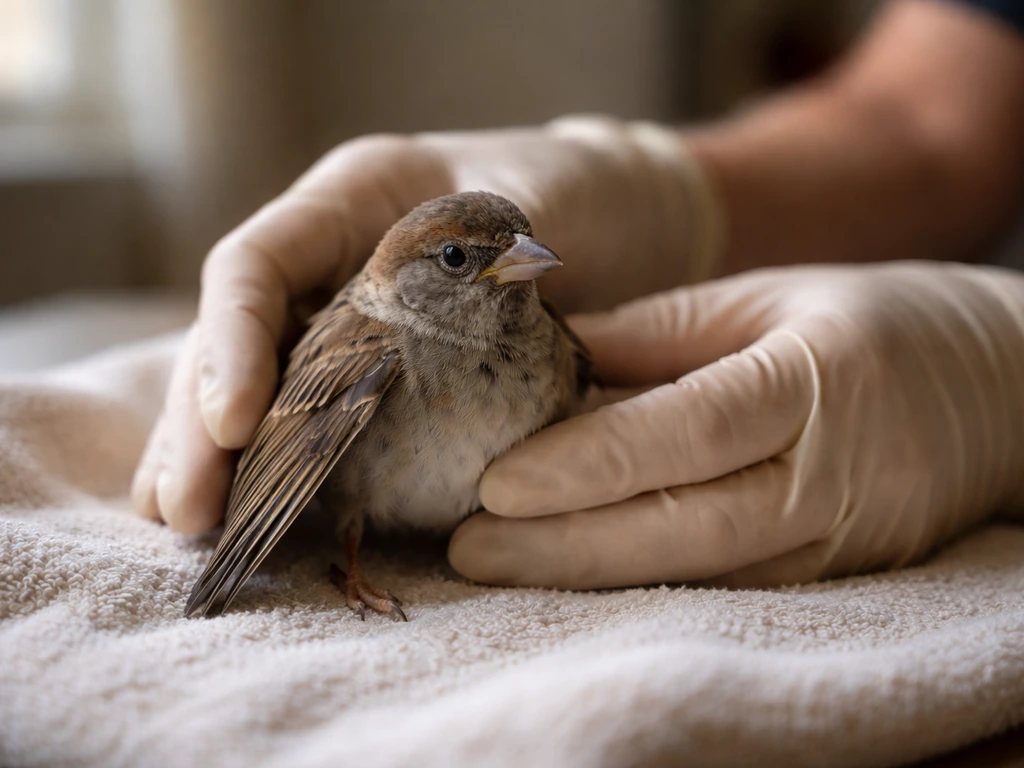
Before you touch the bird, protect yourself. Even a small, injured bird can scratch, peck, or bite hard enough to break skin, and that reaction is pure instinct, not aggression. Wear gloves if you have them, or wrap your hands in a folded towel. Protect your face if you're dealing with a larger bird like a heron or hawk. The RSPCA specifically recommends covering your arms and face when handling injured wildlife.
Approach the bird slowly and calmly. Loud voices, sudden movements, and hovering over the bird from above all trigger panic, which raises its heart rate and makes blood loss worse. Crouch down to its level, move in from the side, and cover it gently with a lightweight towel or cloth before picking it up. Darkness immediately reduces stress, so draping something over the bird the moment you reach it makes a real difference.
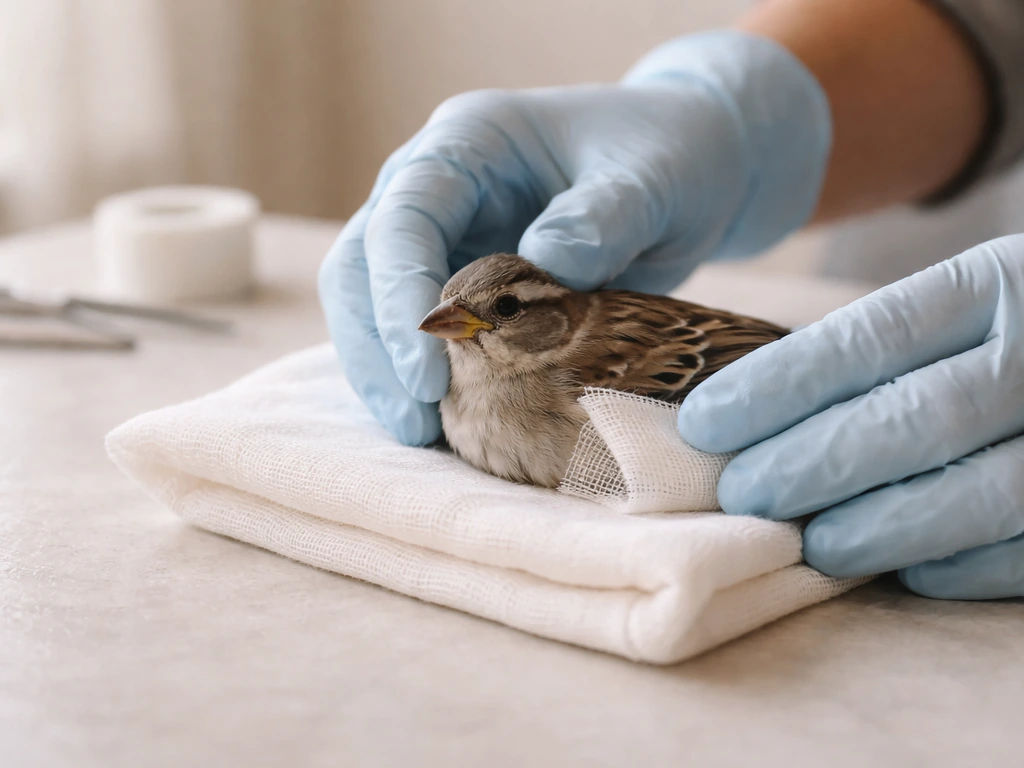
Once you have the bird wrapped, place it in a well-ventilated box, like a shoebox with small holes punched in the lid, lined with a paper towel or soft cloth. Close the lid and set it somewhere warm and quiet away from pets, kids, and noise. That dark, contained space is actually the single most helpful thing you can do for the bird's immediate wellbeing while you figure out the next steps.
Quick Assessment: What to Check Besides the Bleeding
Take thirty seconds to look the bird over before you box it up. You need to know two things: where the blood is coming from, and whether the bird is in shock. This information is also what a wildlife rehabilitator or vet will ask you about, so it's worth noting.
First, distinguish active bleeding from old blood. Active bleeding means blood is still flowing or pooling. Dried blood on feathers without any fresh bleeding is a different situation and less immediately urgent, though the bird still needs professional evaluation. Active bleeding from a wound on the body, wing, or leg needs pressure applied before boxing.
Then look at the bird's breathing. Rapid panting, open-mouth breathing, or tail bobbing with every breath are all signs of significant distress or respiratory injury. Check whether the bird is responsive: does it try to move or react when you approach, or is it completely limp and unresponsive? A limp, unresponsive bird that isn't breathing normally is in critical condition. Also scan quickly for other obvious injuries: a wing held at an unusual angle, a leg that won't bear weight, swelling around the head or eye. Note what you see.
- Active vs. dried blood: is it still bleeding right now?
- Breathing: fast, labored, open-mouthed, or tail-bobbing?
- Responsiveness: does it react to your presence?
- Visible trauma: wing angle, leg position, head injury, eye swelling
- Condition of feathers: missing patches can indicate a cat or dog attack
How to Control Bleeding and Protect the Wound
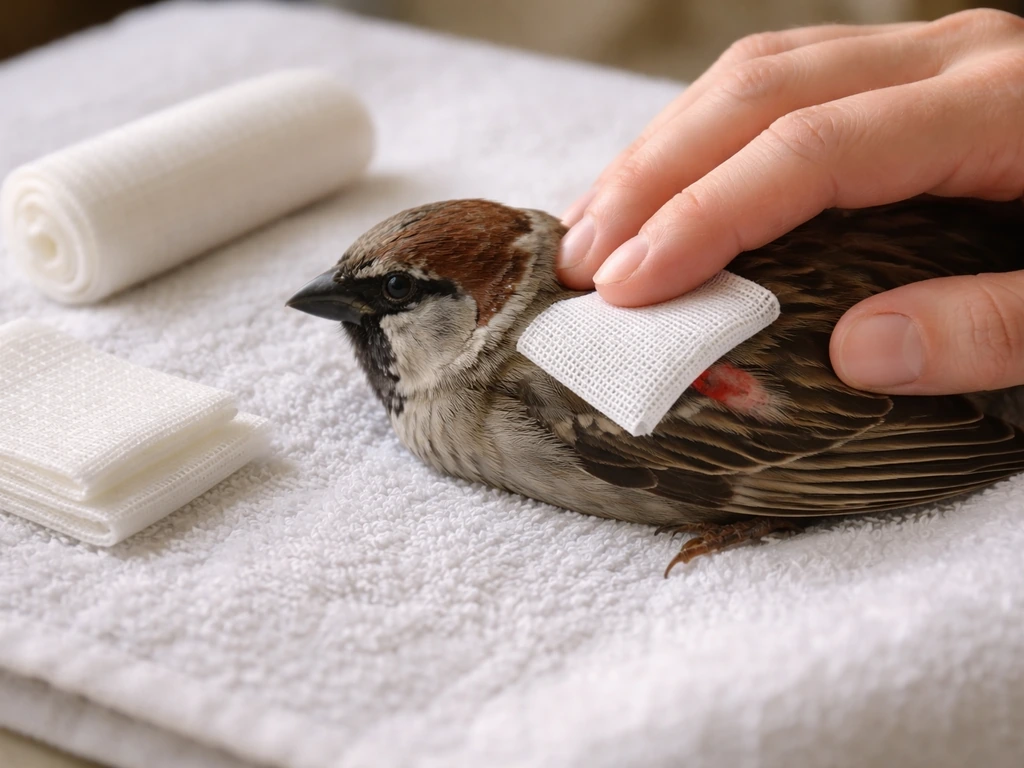
If the bird is actively bleeding from a cut or abrasion, apply gentle, direct pressure with a clean dry cloth or folded gauze. Hold steady pressure for two to three minutes without lifting the cloth to peek. If the cloth soaks through, do not remove it. Lay another layer of cloth on top and keep pressing. Removing the first layer pulls off any clotting that's started to form.
If you need to loosely bandage the area to maintain pressure during transport, use something soft and non-sticky, like vet wrap, roll gauze, or even a strip of clean cotton fabric. Wrap it snugly but not tightly. You should be able to slip a finger underneath. Never use adhesive tape directly on feathers, and avoid anything that will stick to the plumage and tear it away when removed.
If you want to clean around the wound edges before applying pressure, use saline solution (0.9% sodium chloride), which you can make by dissolving a quarter teaspoon of salt in a cup of clean water, or use sterile saline from a first-aid kit. Saline is the least damaging option for wound tissue. Do not use hydrogen peroxide. It feels effective but actively destroys the healthy tissue you're trying to protect, and the same applies to alcohol. Also skip any ointments, petroleum jelly, or salves. Thick, oily substances mat the feathers, interfere with the bird's ability to thermoregulate, and have no proven benefit in this situation.
One specific case worth knowing about: a broken blood feather. A related question is whether it hurts when a bird loses a feather, since feather injuries can involve the same kind of sensitive tissue broken blood feather. After tail feathers are lost or damaged, a bird may also be vulnerable to stress and impaired flight, so professional evaluation is still important broken blood feather.
Blood feathers are actively growing feathers with a live blood supply running through the shaft. If one is cracked or broken, it can bleed persistently because the blood supply doesn't close on its own the way a cut does.
If you can see a clearly broken feather shaft that is bleeding, gentle pressure around its base can slow things down, but this is a situation where a vet or rehabilitator may need to remove the shaft entirely to stop the bleeding. Don't attempt that yourself. For treatable cases of feather loss, such as broken blood feathers, follow a rehabilitator's guidance rather than trying to remove or repair feather tissue yourself.
Match the Likely Cause to Your Situation
Knowing what likely caused the bleeding helps you anticipate what injuries might not be immediately visible and how urgent the situation is.
Window or building strike
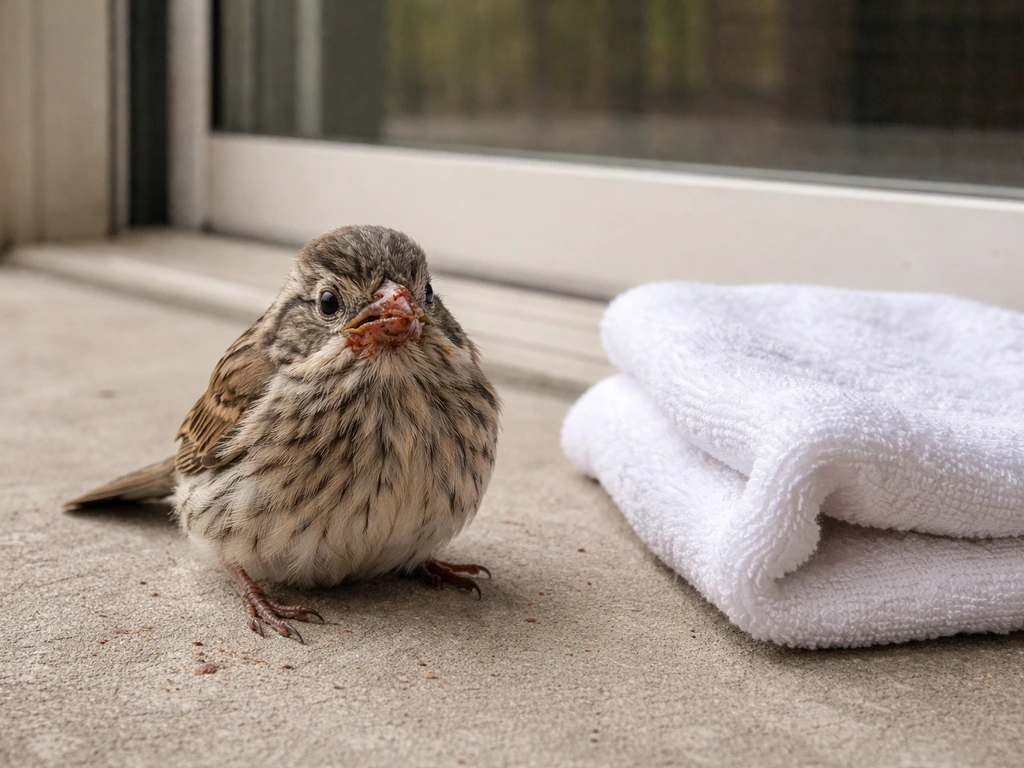
Window strikes are one of the most common reasons people find a bleeding or stunned bird. The bird hits the glass at speed, and you might see blood around the beak or nostrils, or a small cut on the head. Internal injuries, concussion, and spinal trauma are all possible even when the external bleeding looks minor. A bird that seems to recover and fly off after a window strike should still be monitored if possible, but one that is still grounded after fifteen to twenty minutes needs to go to a rehabilitator.
Cat or dog attack
This is one of the most deceptive situations, and I can't stress this enough: if a cat caught the bird, assume it's in danger even if it looks fine. Cat saliva contains bacteria that cause rapid, fatal infection in birds, often within hours of a puncture wound so small you can't see it with the naked eye. The BC SPCA is clear on this point: do not try to treat this bird yourself. It needs antibiotics from a vet, fast. Dog attacks tend to cause more visible trauma: crushing injuries, broken bones, and lacerations. Either way, this bird goes to a professional.
Entanglement
Fishing line, netting, hair, or string wound around a wing or leg can cut off circulation and cause bleeding where the material has dug into the skin. The instinct is to cut or pull it free, but if the material is embedded in the tissue or wrapped tightly, do not try to remove it yourself. You risk damaging the tissue further, and there may be injuries underneath that you can't see. Contain the bird, keep the entangled limb as still as possible, and get to a rehabilitator. The Chicago Bird Collision Monitors and Hawaii Wildlife Center both give the same guidance here.
Nestling or fledgling injury
Young birds found on the ground with blood on them may have fallen from a nest, been pushed out by a sibling, or been grabbed by a predator and dropped. Their bones are fragile and their skin tears easily. Handle them with even more care than an adult bird, support the whole body rather than gripping, and get them contained and warm quickly. Do not attempt to return an injured, bleeding nestling to the nest.
When Bleeding Is an Emergency and When to Call a Pro
There is no bleeding scenario where you should skip contacting a wildlife rehabilitator or avian vet. If you still need guidance, see what do i do if my bird is bleeding for a quick checklist of next steps. The question is just how fast you need to move. Call or go immediately if you observe any of the following.
- Bleeding that doesn't slow down after three to five minutes of steady pressure
- Blood coming from the mouth, nostrils, or vent
- The bird is limp, unresponsive, or unconscious
- Rapid, open-mouthed, or labored breathing that continues after the bird is contained
- A visibly broken bone (wing or leg at a wrong angle)
- Any cat attack, regardless of how minor the injury looks
- A bird that was entangled and has material embedded in or around its limb
If the bleeding has stopped, the bird is alert and responsive, and the injury appears minor (a small cut or single broken feather), you have a little more time to arrange transport, but the bird still needs professional evaluation today. Wild birds mask pain and deteriorate faster than most people expect. What looks stable can shift quickly.
To find help, search for a licensed wildlife rehabilitator in your area through your local wildlife agency, humane society, or an online wildlife rescue directory. In the US, the National Wildlife Rehabilitators Association and the Wildlife Center of Virginia both maintain finder tools. In the UK, the RSPCA and SSPCA take injured wildlife calls. In Canada, each province has regional wildlife contacts. If you're unsure who to call, your nearest veterinary clinic can often point you to the right resource even if they don't treat wild birds themselves.
Safe Transport and Keeping the Bird Calm
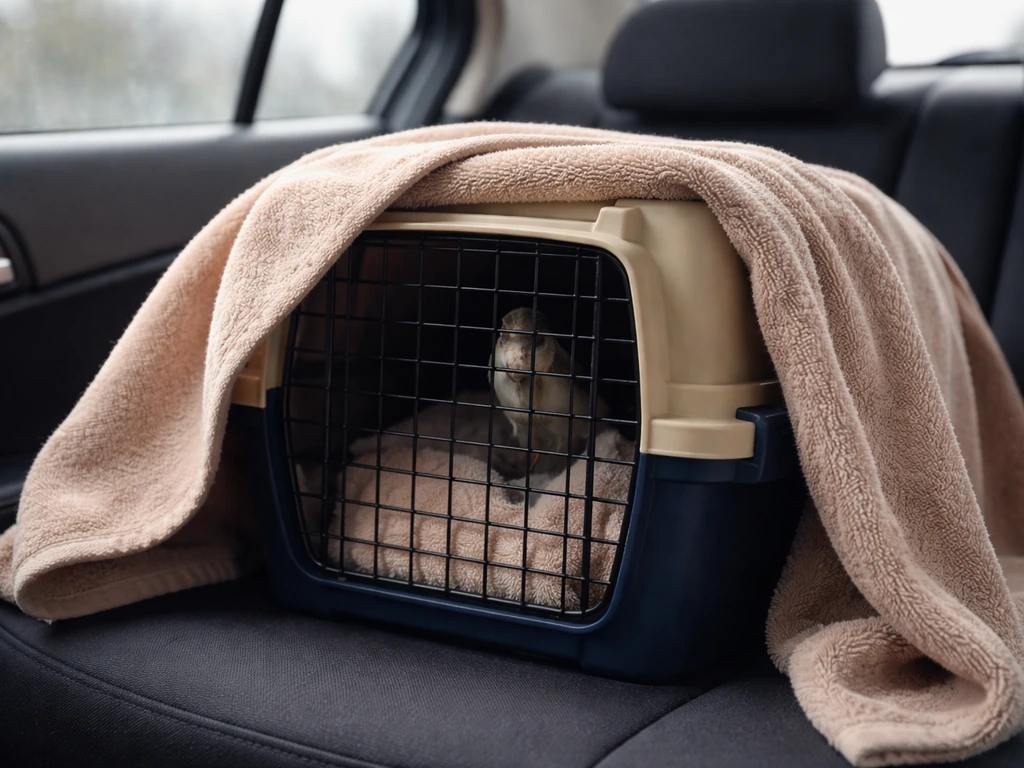
Transport matters almost as much as first aid. A bird that is well contained and warm during a twenty-minute car ride has a much better chance than one that was handled repeatedly or got cold. Once the bird is in its ventilated box, your job is to keep it dark, quiet, and warm until it reaches professional care.
Warmth is especially important for small birds and nestlings, which lose body heat very quickly. Fill a plastic water bottle with warm (not hot) water, wrap it in a thin towel, and place it to one side of the box so the bird can move away from it if it gets too warm. Do not place the heat source under the bird or directly against its body. Room temperature is roughly what you're aiming for: around 85 to 90 degrees Fahrenheit for a small songbird in distress.
In the car, keep the box on the seat (or secured so it won't slide), turn off the radio, and keep conversation quiet. Tufts Wildlife Clinic specifically recommends a silent car during transport because noise adds measurable stress. Don't open the box to check on the bird during the drive. Darkness is calming, and the more you peek, the more you undo the good the containment is doing.
When you arrive, tell the rehabilitator or vet exactly where you found the bird, what you observed (active bleeding, breathing rate, responsiveness), what caused or likely caused the injury, and anything you did, including any pressure or bandaging applied. This information saves time and helps them prioritize treatment.
What Not to Do While You Wait for Help
This list is just as important as the steps above. If the injury is from a bite, avoid trying home remedies and instead focus on gentle first aid, then get the bird to a wildlife rehabilitator for proper treatment What Not to Do While You Wait for Help. Well-meaning actions can cause serious harm to an injured bird, and knowing what to avoid is part of genuinely helping.
- Do not give food or water. A bird in shock cannot swallow safely, and feeding the wrong diet can be fatal. Even if it seems hungry, hold off.
- Do not use hydrogen peroxide, alcohol, or antiseptic sprays on wounds. They damage healing tissue.
- Do not apply ointments, petroleum jelly, or thick creams to the bird or its feathers.
- Do not try to splint a broken wing or set a broken bone yourself.
- Do not attempt to remove embedded fishing line, wire, or netting from skin or tissue.
- Do not keep the bird in a warm, brightly lit room. Warmth yes, but light and noise increase stress significantly.
- Do not leave the box near pets, children, or anything that creates vibration or noise.
- Do not handle the bird more than necessary. Each time you open the box, you undo some of the calming effect.
- Do not attempt to release the bird prematurely. A bird that is bleeding or has been attacked by a cat must be seen by a professional before release.
While you wait for transport or for a rehabilitator to open, check the box every thirty minutes or so by listening rather than looking. If you hear frantic movement, the bird may need to be repositioned or the box may be too hot. If you hear nothing, that's generally a good sign. A bird resting quietly in a dark space is conserving energy, which is exactly what you want.
If the bird came from your yard or a specific location (near a window, a garden net, a fence), take steps to secure that hazard while you deal with the immediate situation. Remove or mark the window, cut the net, check for other trapped animals. Bleeding from entanglement and window strikes are often preventable, and a bird you help today may be a species that comes back to that same spot.
Finally, trust the process. You don't need to be an expert to help a bleeding bird. Contain it, keep it warm and dark and quiet, stop the bleeding with gentle pressure, skip the things on the list above, and get it to someone licensed to continue its care. Tufts Wildlife Clinic also advises keeping a sick or injured songbird warm, dark, and quiet while you avoid feeding it an incorrect diet blank" rel="noopener noreferrer">keep it warm and dark and quiet. If you suspect poisoning, tell the vet right away about any possible exposure to pesticides, chemicals, bait, or contaminated food. That combination alone gives it a genuine chance.
FAQ
How can I tell if the bird’s bleeding is truly active or just old blood?
Look for fresh blood that is still flowing, pooling, or spreading to new feathers. Dried blood usually looks crusted and does not add new wet areas over the next few minutes. If you are unsure, treat it as active and apply gentle pressure before boxing.
Should I keep the bird in a ventilated box or can I use a towel wrap?
Use a breathable, lidded, ventilated box for containment. A loose towel wrap can work temporarily to reduce stress while you place the bird into the box, but do not keep the bird wrapped for the whole wait, since you may reduce airflow and make overheating more likely.
What if the bleeding is coming from the beak, nostrils, or head after a window strike?
Do not focus only on the external cut. With head or airway bleeding, internal injury is a major concern even if the bird looks calmer. Keep the box dark and warm and contact a rehabilitator immediately, especially if breathing looks open-mouth, rapid, or labored.
The bird is bleeding but seems alert, do I still need urgent professional help?
Yes. Even when bleeding appears minor, wild birds can deteriorate quickly, and hidden injuries like punctures, fractures, or shock can worsen after stress or cooling. Arrange same-day evaluation, and call back sooner if you notice renewed bleeding or abnormal breathing.
How long should I apply pressure to a bleeding wound before I stop and re-check?
Hold steady pressure for about two to three minutes without lifting to peek. If the cloth soaks through, add a new layer on top and keep pressing. After that initial period, reassess for ongoing flow, but avoid repeated “checking,” since it can disrupt clotting.
Can I use styptic powder or a human bleeding product on a wild bird?
Avoid products meant for people. Human antiseptics and clotting agents can irritate tissue or be harmful if the bird ingests residue while preening. Stick to clean, direct pressure with a non-sticky covering, then get professional care.
What if the bird is bleeding and also stuck in something, like fishing line or netting?
Do not pull or cut embedded material if it is clearly wrapped tightly or sunk into tissue. Keep the entangled limb as still as possible, contain the bird, and get to a rehabilitator. If you must cut something, cut only free slack, not parts that look embedded.
Do I need to stop bleeding from a “blood feather” by removing the feather myself?
No. Even though gentle pressure around the base can slow persistent bleeding, do not attempt to remove a feather shaft or repair feather tissue yourself. A vet or rehabilitator may need to remove the damaged shaft to fully stop bleeding safely.
Is it safe to give a bleeding bird food or water while I’m waiting?
Usually no. Keep the bird in a dark box and focus on warmth, containment, and transport. Offer nothing by mouth, because swallowing can be unsafe if the bird has head, airway, or shock-related issues.
What temperature should I aim for, and how do I prevent overheating?
For many small birds in distress, use a warm (not hot) water bottle wrapped in a thin towel placed to one side of the box. Never place the heat source under the bird or directly against it. Check roughly every 30 minutes by listening, if the bird becomes frantic or you hear distress, cool the setup or reduce heat.
What should I listen for while the bird is in the box, and how often should I check?
Listen rather than open the lid frequently. About every 30 minutes, look for calming, quiet rest. If you hear frantic movement or constant struggling, the bird may be too warm, too cramped, or in worsening distress, and you should adjust conditions and contact help.
How should I transport a bird if I can’t get a rehabilitator immediately?
Transport still matters. Keep the bird dark, warm, and ventilated, minimize handling, and avoid frequent box openings. If you cannot reach a rehabilitator quickly, call the nearest avian-capable veterinary clinic or emergency vet for direction while you head out.
If a cat or dog injured the bird, what first aid can I do before antibiotics are possible?
Do gentle pressure for visible bleeding, then contain and keep it warm and quiet. Do not attempt to clean deep punctures with harsh antiseptics, and do not delay contacting a professional. Bite-related infections can become rapidly fatal even with tiny wounds.
Can I release the bird after bleeding stops?
Not right away. A bird can be alert and still have internal injury, concussion, or shock. The safest next step is professional evaluation today, and only release if the rehabilitator confirms recovery and survival readiness.
Next Articles
What to Do If Your Bird Has a Blood Feather: First Aid
Step-by-step first aid for a bird’s blood feather: stop bleeding, reduce stress, know when to seek urgent vet care.
What Do I Do If My Bird Is Bleeding Right Now
Immediate first aid for bleeding birds, including wing and nail injuries, shock signs, and next steps for safe recovery.
Can a Bird Live With One Wing? Survival and First Aid
Can a bird live with one wing? Injury outcomes and step-by-step first aid, plus when to get urgent help.