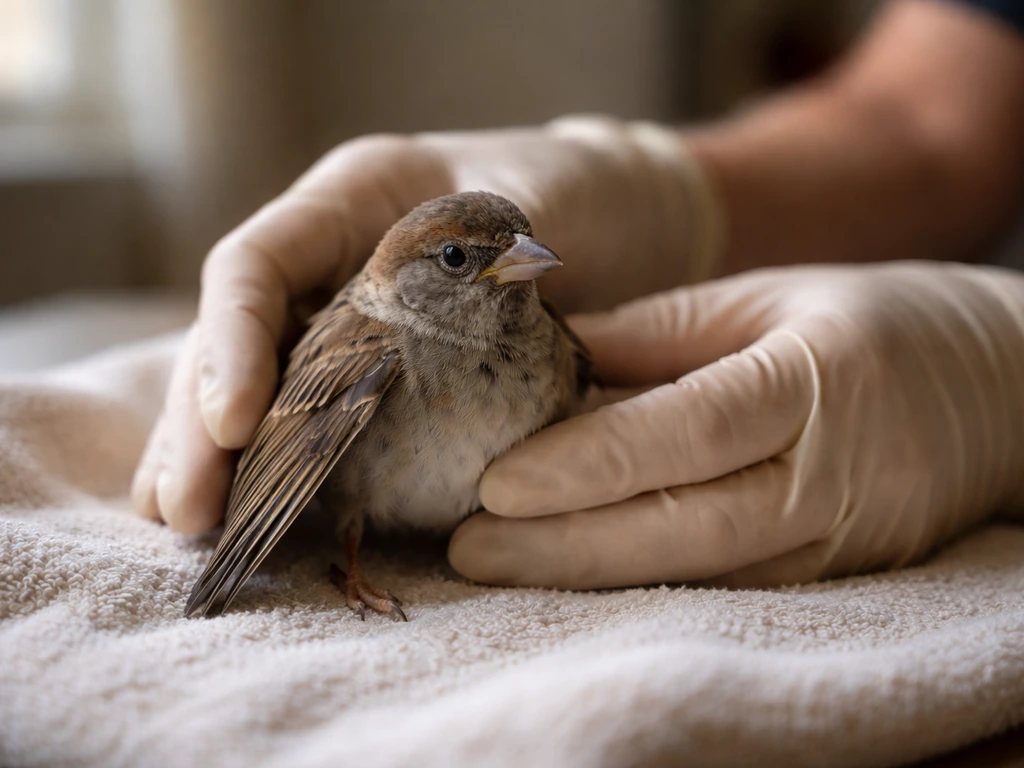
If you've just found a sick or injured bird, here's the short version: don't pick it up yet, don't try to feed it, and don't assume it's fine just because it's sitting still. Take a breath, assess from a few feet away, then follow the steps below. This guide will walk you through exactly what to do in the next few minutes and hours, whether you're dealing with a window collision, a broken wing, a cat attack, or something less obvious.
What to Do If You Find a Sick Bird: Step-by-Step
Marcus Chen
22 Apr 2026
First check: safety for you and the bird
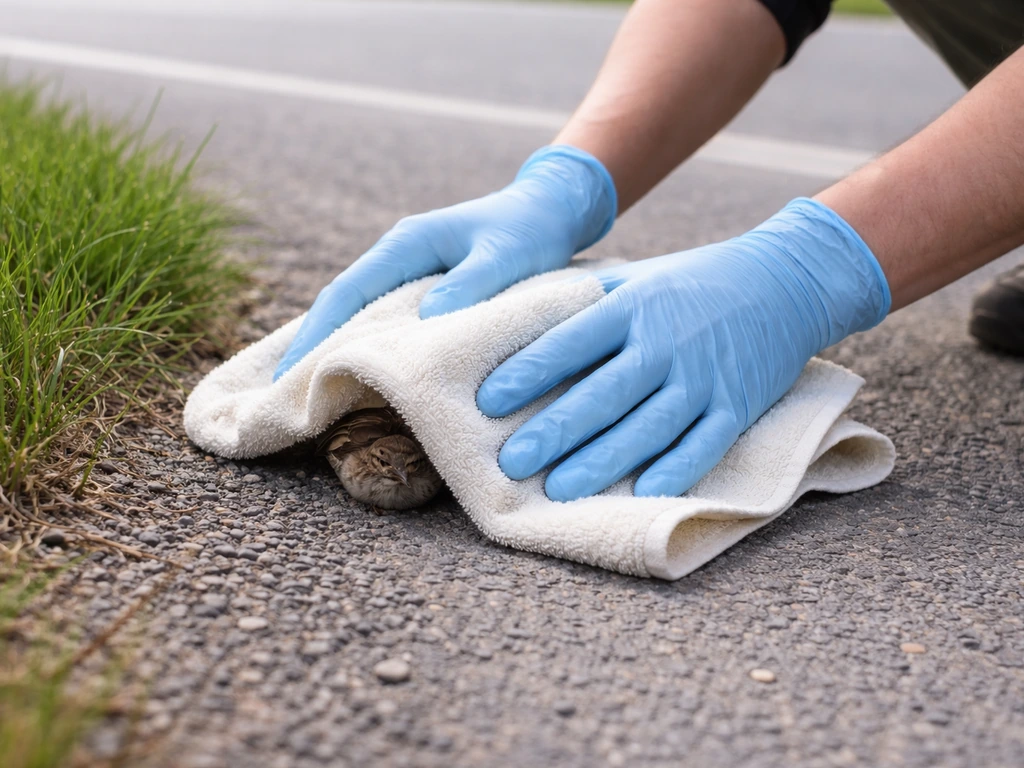
Before you touch anything, think about your own safety. Wild birds, even small songbirds, can scratch and bite hard enough to break skin when they're scared. Larger birds like hawks, owls, and herons can cause serious injury and should not be approached at all until you've spoken with a licensed wildlife rescuer. For any bird you do approach, wear disposable gloves if you have them, or use a thick folded towel to create a barrier. If you have neither, at minimum wash your hands thoroughly with soap and water immediately after any contact.
There's also a real disease consideration. Sick wild birds can carry zoonotic pathogens, including avian influenza, which spreads through infected bird saliva, nasal secretions, and droppings. This doesn't mean you should panic, but it does mean wearing gloves and a face mask when handling any bird of unknown origin is genuinely good practice, not just overcautious. Treat it like handling any unknown wildlife and keep children and other pets away from the bird until it's secured.
Once you've protected yourself, your next job is to reduce the bird's stress, not comfort it. A bird that appears calm in your hands is almost certainly in shock, not relaxed. The goal from the moment you find it is to limit handling, limit noise, and limit exposure to anything unfamiliar. Less is more.
Quick triage: signs it needs urgent help vs. a chance to recover on its own
The most important question right now is: does this bird need immediate professional help, or could it recover with a short period of rest? Here's how to read the situation from a safe distance before you get closer.
Signs that the bird needs help right now, not later:
- An adult bird that cannot or will not fly off when you approach (healthy adult birds almost always flee)
- Visible wounds, blood, or broken bones
- The bird is lying on its side or on its back and cannot right itself
- Labored breathing, open-mouth breathing, or the chest is visibly heaving
- The bird is limp, unresponsive, or extremely weak
- The eyes are closed or partially closed in daylight
- The bird was in contact with a cat or dog
Signs that suggest the bird may just need a short rest before it recovers:
- It just hit a window and is sitting upright but appears dazed
- It's alert, watching you, and trying to move away from you
- No visible wounds or blood
- Eyes are open and tracking movement
Even in the "might recover" category, keep an eye on the bird. A window collision bird that looks fine can still have internal injuries, and Audubon recommends getting all collision victims to a wildlife rehabilitator regardless of how they appear afterward. If the bird hasn't flown off within an hour of the collision and shown no other distress signs, it needs professional assessment.
Immediate next steps at the scene
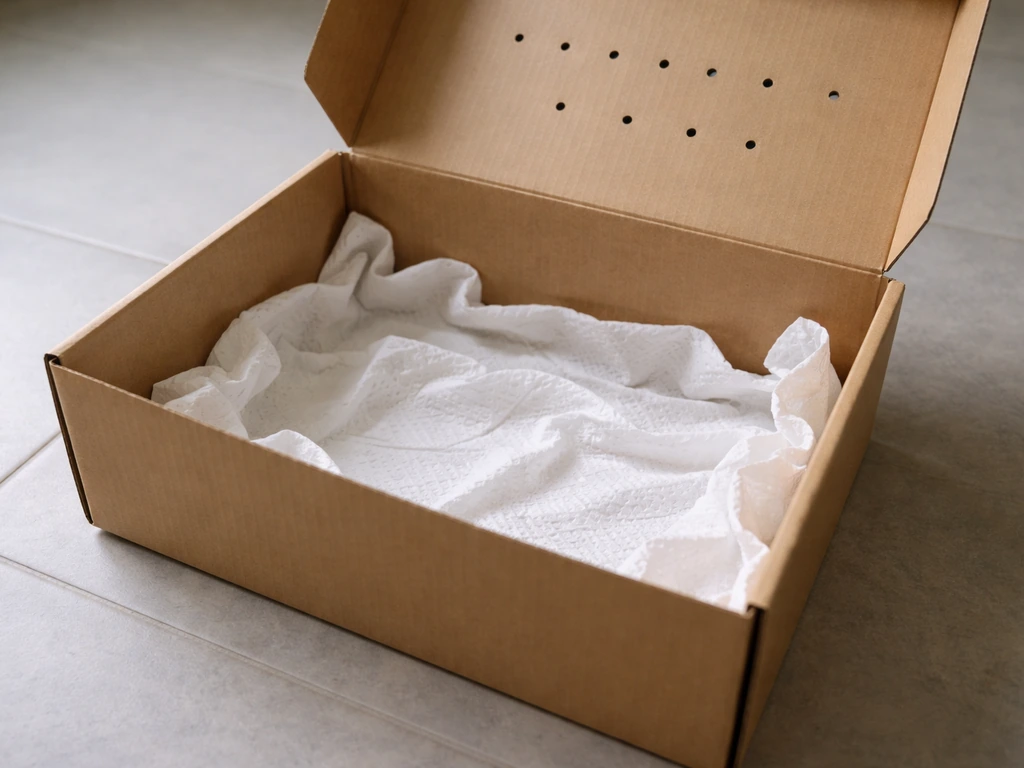
Whether you're waiting for a callback from a wildlife rehabilitator or preparing to transport the bird, these are the three things to do right now.
Contain it safely
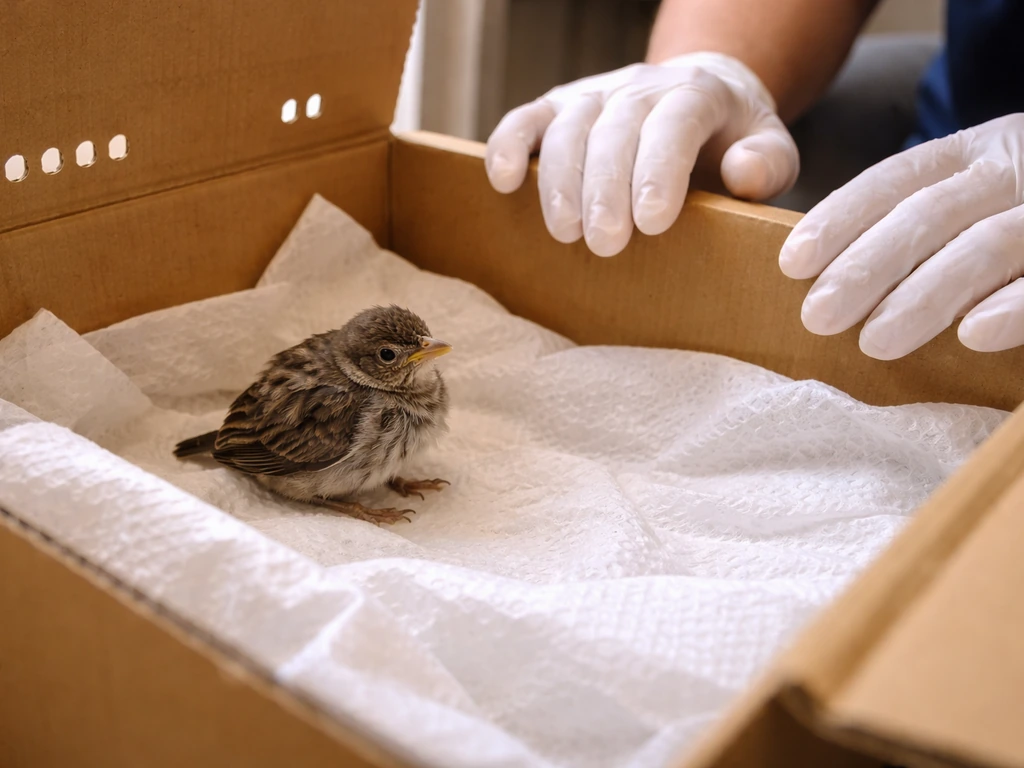
Find a cardboard box, a paper bag with air holes poked in it, or any clean container with a lid you can punch ventilation holes into. Line the bottom with crumpled paper towels arranged loosely to form a small nest shape so the bird has something to grip. If you're using a box, make sure the lid can close securely. Gently scoop the bird up using gloved hands or a towel, place it inside, and close the container. Do not use a wire cage or anything the bird can easily escape from or injure itself on.
Keep it warm
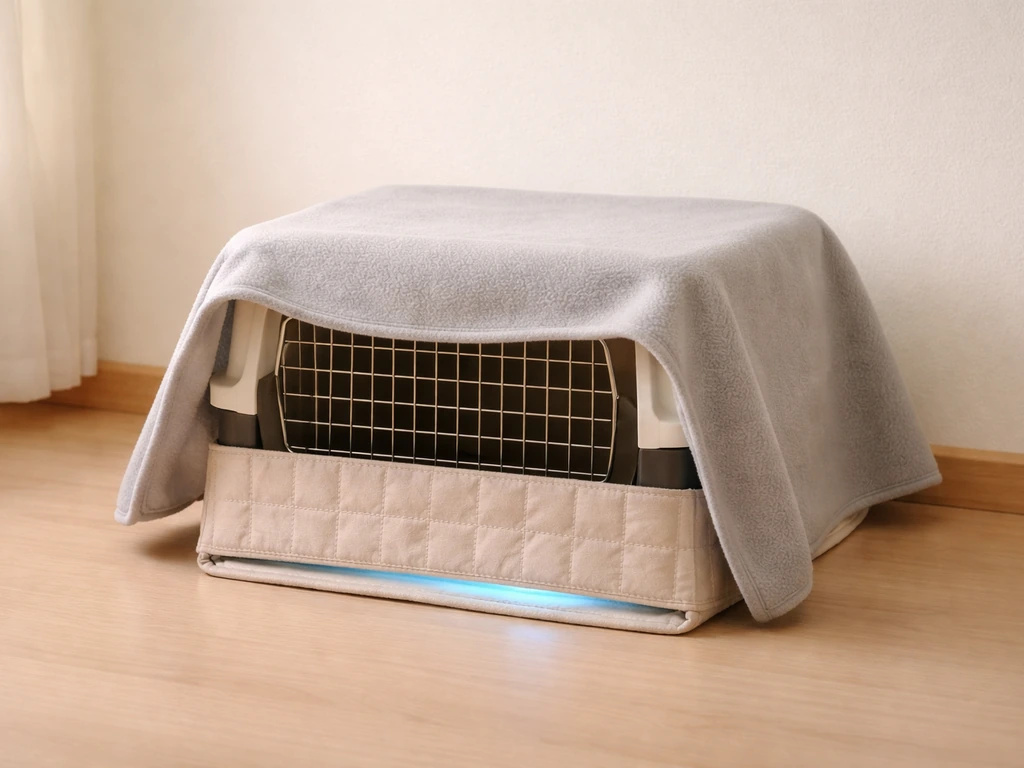
Birds have a significantly higher normal body temperature than humans, and an injured or shocked bird loses heat fast. Place the box somewhere warm, ideally between 80 and 85 degrees Fahrenheit if you can manage it. A heating pad set to low placed under half the box (not the whole box, so the bird can move away if it gets too warm) works well. Tufts Wildlife Clinic also advises not to give food or water to a cold songbird while you warm and contain it do not give food or water. A warm room is fine if you don't have a heating pad. Do not use a heat lamp directly on the bird.
Reduce stress completely
Put the box in a quiet room, away from household pets, loud TVs, and curious children. Keep the space dark. Darkness is genuinely calming for birds and reduces the panic response that burns their already-depleted energy reserves. Do not open the box repeatedly to check on it. Do not talk to the bird or try to comfort it. The best thing you can do for a distressed bird is leave it completely alone while you make calls.
Common injury scenarios and what to do for each
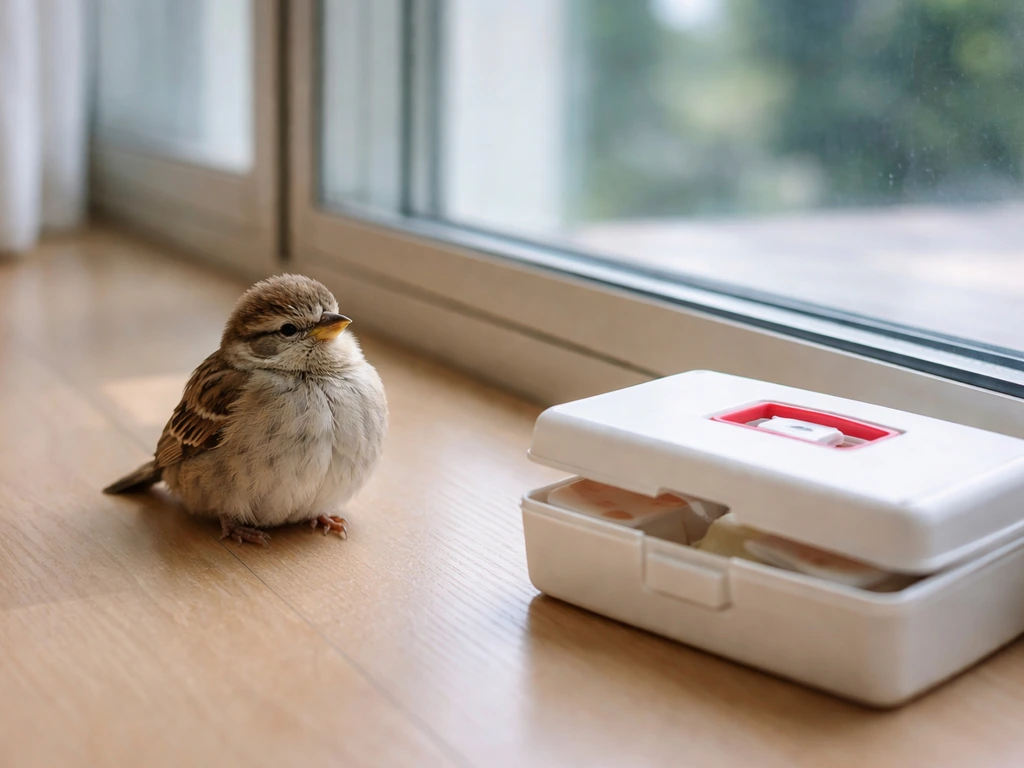
Window collisions
Window collisions are one of the most common reasons people find dazed birds on the ground. The bird may be sitting upright and blinking, which can look like recovery but is often shock. Follow the containment steps above, place the box in a dark quiet space, and give the bird about an hour undisturbed. If it hasn't shown clear signs of recovery (becoming more alert, flapping, trying to escape the container) within that hour, contact a wildlife rehabilitator. Even birds that seem to recover and fly off can have internal bleeding or brain injuries that catch up with them later, so a check-in with a rehab center is always worth doing.
Broken wings or legs
If a wing is drooping at an unnatural angle, or the bird is dragging a leg, do not try to splint or straighten it yourself. You will cause more pain and damage. Your only job here is gentle containment. Use the towel method to scoop the bird, place it in a ventilated box, keep it warm and dark, and call a wildlife rehabilitator or avian vet immediately. Broken bones in birds need professional treatment within hours, not days.
Beak injuries
A damaged or misaligned beak is a serious problem because birds can't eat or drink properly without one. Don't try to push it back into place. Contain the bird carefully (a damaged beak doesn't mean the bird can't bite, and the instinct is still there), keep it warm and quiet, and get it to a professional as soon as possible. Beak injuries almost always require veterinary intervention.
Cat or dog contact
This is a "call now, don't wait" situation even if the bird looks completely fine. Cat and dog bites and scratches introduce bacteria deep into tissue, and birds can develop fatal infections within hours of contact that show no outward signs initially. If any pet has been in contact with the bird, even briefly, treat it as a medical emergency and get the bird to a wildlife rehabilitator or avian vet the same day. Do not hold off to see if it improves.
Exhaustion or dehydration (no obvious injury)
Sometimes a bird appears sick but has no visible injuries. It may be exhausted from migration, or dehydrated during a heat event. The approach is the same: contain, warm, quiet, and call for guidance. If your bird seems sick in general, the same basics apply: keep it contained, minimize stress, and contact an avian vet or wildlife rehabilitator for next steps contain, warm, quiet, and call for guidance.
Do not try to give it water, no matter how dehydrated it seems. If the bird still refuses to eat, you can’t force food or guess the cause, so follow guidance on what to do if bird is not eating. Birds can inhale liquid very easily, and water forced into the mouth can cause aspiration and death faster than dehydration would.
What not to do
This list might be the most important part of this guide. Well-meaning interventions are responsible for a surprising number of bird deaths. Keep this in mind: If you notice symptoms that don't fit the common scenarios above, such as what to do if your bird is choking, use the choking steps right away and then proceed with containment and professional guidance.
- Do not give the bird food or water. Even a dropper of water can be inhaled and cause aspiration pneumonia. Unless a licensed rehabilitator tells you to feed it, don't.
- Do not force the bird to drink by opening its beak.
- Do not give it any medication, including human or pet medications.
- Do not try to "throw it into the air" to see if it can fly. This causes trauma and stress and tells you nothing useful.
- Do not keep the bird in an open space where it can escape or be exposed to other animals.
- Do not handle it repeatedly or unnecessarily. Every time you pick it up, you're depleting its already limited energy reserves.
- Do not put it in a cage with perches it can fall from if it's too weak to grip.
- Do not assume a bird that "seems fine" after a window hit or cat contact is actually fine.
When to call a professional and how urgently
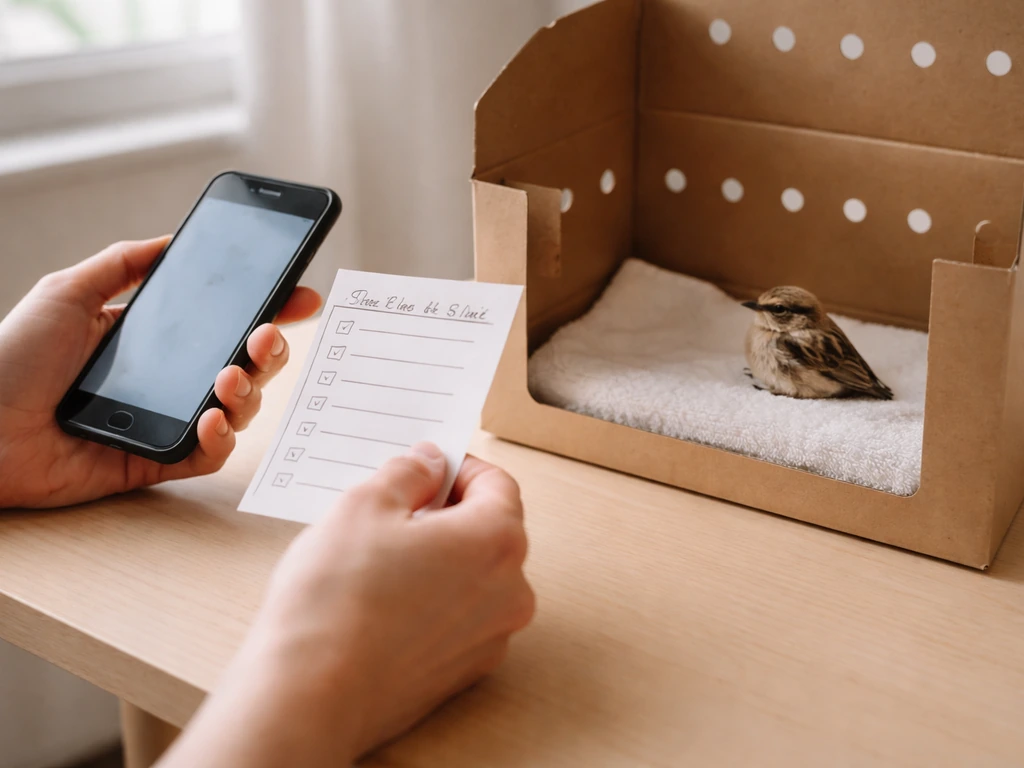
Call immediately (same hour) if:
- The bird has been in contact with a cat or dog
- There is visible bleeding or an open wound
- The bird is unable to stand or is lying on its side
- The bird is breathing with difficulty or open-mouthed
- You're dealing with a large bird of prey (hawk, owl, heron, vulture)
Call within the hour if:
- The bird hit a window and has not improved after 30 to 60 minutes of quiet rest
- The bird has a drooping or visibly broken wing or leg
- The bird shows signs of weakness with no obvious cause
- The bird has a beak injury
You can monitor briefly (up to one hour) if the bird is alert, upright, and clearly improving after a window collision with no other concerns. But if there's any doubt, call anyway. Wildlife rehabilitators and hotlines are there to help you make that call, not to judge you for asking.
It's also worth noting that the signs covered here overlap with other specific scenarios. A bird lying completely still might be a different kind of emergency than one that is simply sitting with eyes closed, and a bird breathing rapidly is its own cause for concern. If a bird is breathing fast, contact a wildlife rehabilitator right away and follow their containment and warming instructions what to do if a bird is breathing fast.
If the bird is not moving, treat it as an urgent situation and follow the containment and professional-assessment steps in this guide an injured bird that is not moving. If the bird is not moving, treat it as an urgent situation and follow the containment and professional-assessment steps in this guide an injured bird that is not moving what to do if a bird is on its back.
The common thread in all of these situations is: contain, keep calm, and get professional input quickly.
How to find an avian vet or wildlife rescue and what to tell them
In the United States, your fastest options for finding help are:
- Animal Help Now (animalhelpnow.org): an emergency wildlife rehabilitator search tool where you enter your location and get nearby contacts immediately
- Your state wildlife agency website: most states maintain a "Find a Wildlife Rehabilitator" directory
- A local avian vet or exotic animal vet: search for "avian veterinarian near me" or "exotic animal vet near me" and call to ask if they treat wild birds
- Local Audubon chapters or bird clubs: many maintain active contact lists for regional rehabbers
- Your local animal control or humane society: they often know who to direct you to even if they don't handle wildlife themselves
Outside the US, search for "wildlife rehabilitation" or "wildlife rescue" combined with your city or region. Many countries have national wildlife charity hotlines (the RSPCA in England, for example) that provide real-time phone guidance.
When you call, be ready to give them the following information:
- What species the bird appears to be (or your best guess: "small brown songbird," "large black crow," "bird of prey")
- Where you found it (your address or a nearby landmark)
- What you observed: how it was behaving, whether it can stand, any visible injuries, whether it was in a cat or dog's mouth
- What you've already done (contained it, kept it warm, etc.)
- How long ago you found it
If you can safely take a photo of the bird before you contain it, do that. Sending a photo along with your message or showing it during the call helps the rehabilitator assess the situation faster and give you better guidance. Don't delay containment just to get the perfect shot, though.
Once you've made contact, follow their instructions exactly. A licensed wildlife rehabilitator knows what that bird needs far better than any online guide can, including this one. Your job at this point is to keep the bird contained, warm, and quiet until you can get it to them.
FAQ
What if I found the sick bird after a cat or dog may have touched it, but I did not see the bite?
Use the bird-handler barrier you already planned (gloves or a thick towel) and treat the situation as urgent. Do not try to “clean” the wound or apply ointment. Instead, contain and keep it warm and quiet, and contact a wildlife rehabilitator or avian vet as a same-day priority, because infected bite injuries can worsen quickly even if the bird looks stable at first.
What should I do if the bird is in a dangerous spot like a road or balcony? Can I move it before calling?
If you can safely move it to avoid more danger, use containment as described, then continue warm, quiet rest. If the bird is on a road, near stairs, or exposed to cats, you can relocate it briefly into your ventilated container, then place it inside a dark quiet room and call for guidance.
Can I offer water to a dehydrated bird to help it, even if I will call someone afterward?
No. The bird may be dehydrated or in shock, but giving water or food at home increases the risk of aspiration (breathing fluid into the lungs) and can make certain conditions worse. Contain, keep it warm, and follow professional instructions, especially if the bird is not swallowing normally.
I have experience with animals, is it okay to give the bird a quick supplement or medicine while I wait?
Do not give vitamins, supplements, or medications. Even “bird-safe” products can be harmful if the cause is infectious, toxic, or neurologic. If you suspect poisoning, keep the bird warm and contained and tell the rehabilitator what you think it may have been exposed to.
How often should I open the box to check if the bird is breathing or alert?
Towel or container handling is fine, but avoid repeated lid openings and avoid letting the bird see your face. If you need to check, do it with minimal disturbance (for example, a brief look through the ventilation holes) and then close it again. The key is to reduce handling time and noise until professionals advise otherwise.
What if the bird feels cold, can I warm it by holding it close or using a heat lamp?
If it is truly cool to the touch, keep the bird warm using a low heating pad under half the container and allow it to move away if it gets too warm. Do not use a heat lamp, do not place the bird directly on the pad, and do not try to force recovery with extra heat if the bird is not improving.
How should I transport the bird in the car so it stays calm and warm?
If you must transport it and the bird is inside a ventilated container, keep the container in a quiet, secure position where it cannot tip. Minimize vibration and sudden temperature swings, keep it dark if possible, and avoid driving with the container loose in the car.
If the bird looks much better after an hour, is it safe to let it go?
Do not release it immediately based on “looks better” signs unless a wildlife rehabilitator tells you to. Even window-collision birds can have internal injuries that show up later. If it improves within an hour, it still warrants professional assessment, and you should keep it contained while you arrange that help.
What if the bird’s wing or leg looks broken, can I straighten it or splint it myself?
Use the containment approach immediately and do not attempt splinting, repositioning, or forced feeding. Broken bones and dislocated joints require time-sensitive professional care. Keep it warm, dark, and quiet, and call an avian vet or wildlife rehabilitator as soon as possible.
After I help the bird, what hygiene steps should I take to avoid spreading germs to my home?
Yes, even if you never opened the box, you should wash your hands after handling and avoid touching your face during and after. If you used gloves, remove them without touching the outside, then wash hands with soap and water. Keep pets away until you are done.
If the bird is in my house and there are droppings nearby, should I clean right away?
If it is in or near your home, contain it and keep it isolated in a quiet room away from other animals. For your peace of mind, avoid cleaning the immediate area until you can contain and move the bird, then wipe droppings or secretions later with appropriate precautions as advised by the rehabilitator or local guidance.
What if I think the bird is choking, but I’m not sure?
If the bird is actively choking or you see obvious obstruction, follow specific choking steps from your chosen guidance immediately, then return to containment, warmth, and professional contact. If you are unsure whether it is choking versus respiratory distress, still call a rehabilitator and do not attempt feeding or pouring fluids.
The bird seems sick but I cannot see any injuries, what is the best next step when the cause is unclear?
If you cannot identify symptoms, use the default plan: contain, keep warm and dark, minimize stress, and contact a wildlife rehabilitator. “No visible injury” does not mean “no danger,” and refusal to eat or abnormal breathing should be treated as a reason to get professional input quickly.
Next Article
Can a Bird Live With One Wing? Survival and First Aid
Can a bird live with one wing? Injury outcomes and step-by-step first aid, plus when to get urgent help.