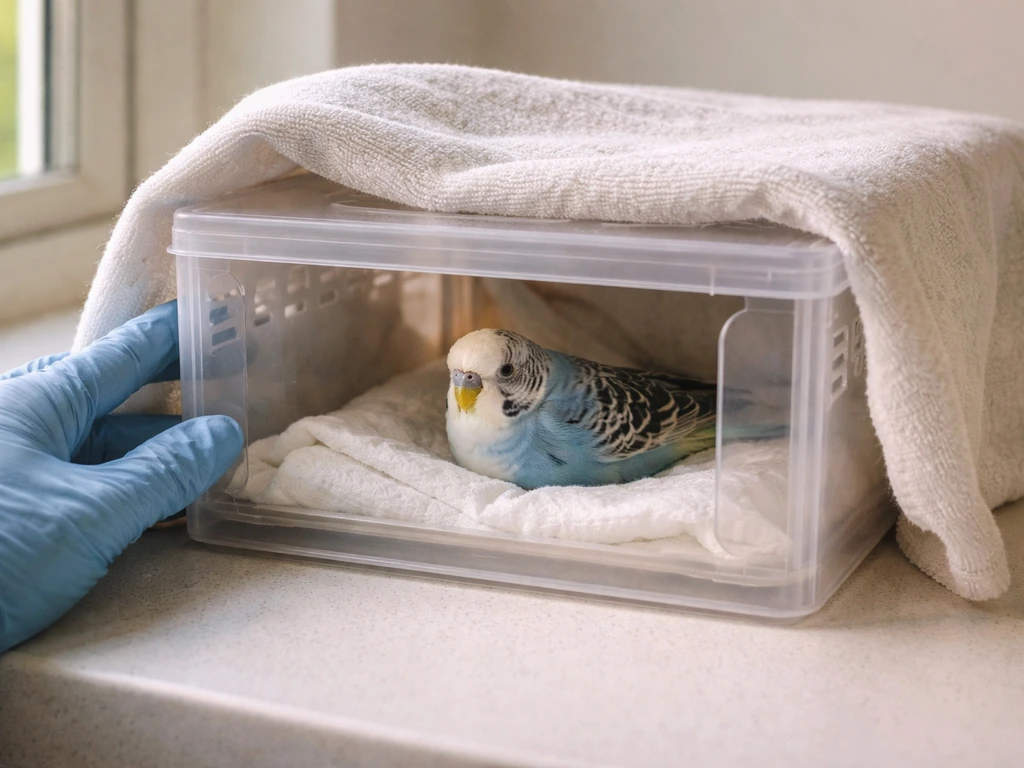
A bird breathing fast, gasping with its beak open, or bobbing its tail with every breath is in respiratory distress, and that is a genuine emergency. Get it into a quiet, dark, warm box right now, stop handling it, and start making calls to an avian vet or wildlife rescue while it rests. That combination of immediate containment plus urgent professional contact is the right move in almost every scenario you are likely to face.
What to Do If a Bird Is Breathing Fast: First Aid
Marcus Chen
24 May 2026
How to tell if fast breathing is an emergency
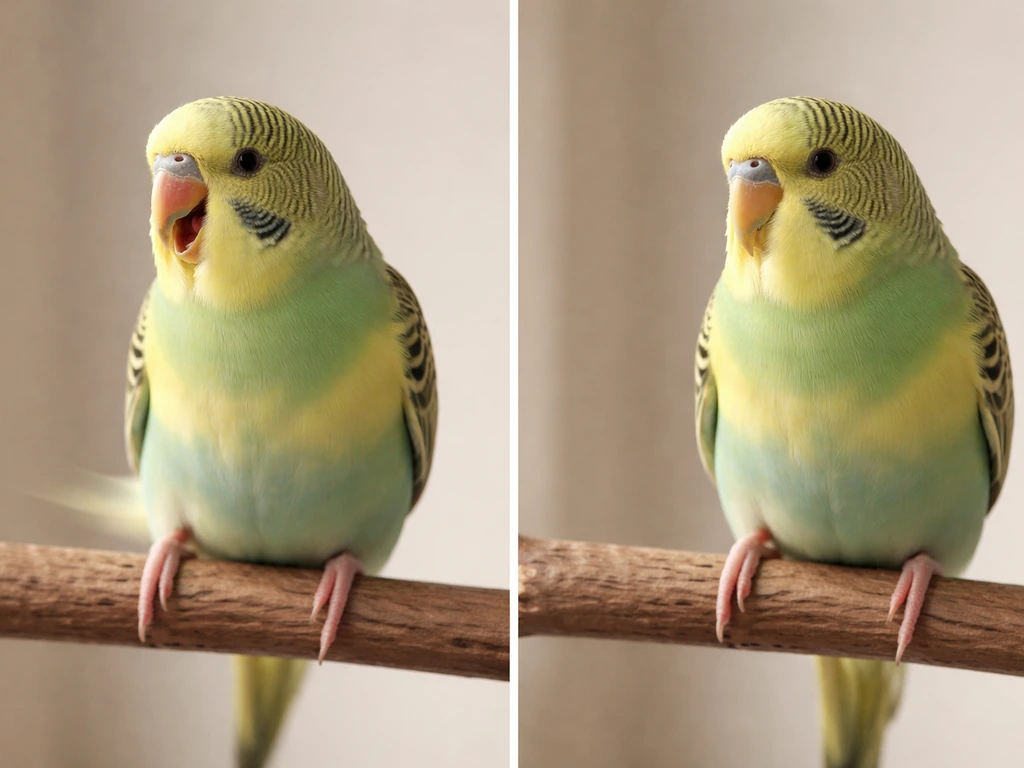
Normal birds breathe quickly compared to mammals, so the question is not just speed but the pattern and posture around it. Here are the signs that tell you this is beyond "keep an eye on it" territory.
- Open-mouth breathing or gasping: a healthy bird at rest never breathes through its beak
- Tail bobbing with every single breath: the whole rear of the bird pumps up and down as it works to pull air in
- Audible breathing: wheezing, clicking, gurgling, or rattling sounds
- Neck stretched forward or upward, as if trying to open the airway
- Labored sternal (chest) movement you can see from a distance
- Blue or pale tissue around the beak or feet (sign of oxygen deprivation)
- Weakness, inability to stand or grip, or sudden collapse alongside any breathing change
- Breathing distress that is not improving after a few minutes of calm and quiet
Any one of these signs, especially open-mouth breathing or tail bobbing, means the bird is struggling to get enough oxygen. Birds hide illness extremely well as a survival instinct, so by the time symptoms are visible, the situation is often more advanced than it looks. Treat it as urgent from the start.
One exception worth knowing: a bird that is very hot may pant with its beak slightly open and flutter the throat rapidly. This is called gular flutter, and it is a cooling mechanism similar to how a dog pants. If the bird is alert, upright, and gripping normally, and was just in direct sun or a hot car, overheating is plausible. Even then, move it to a cool, shaded space and watch closely. If it does not settle down within a few minutes, treat it as an emergency.
Immediate do's and don'ts (safe first aid right now)
Your goal in the first few minutes is to reduce the bird's stress, keep it warm, and stop anything that might make breathing harder. You are not trying to treat it. You are buying time until a professional can. If you suspect choking, focus on keeping the bird calm and getting urgent avian help right away.
Do these things now
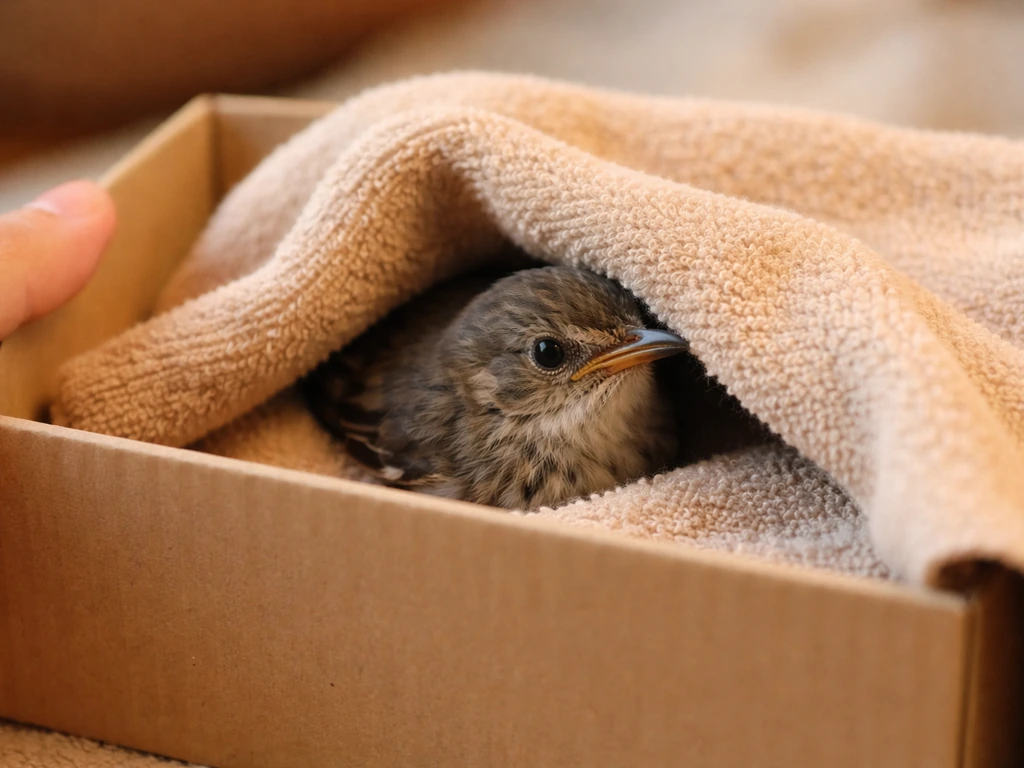
- Place the bird gently in a cardboard box or plastic tote lined with a soft cloth or paper towel. The container should be big enough that the bird is not crushed but small enough that it cannot thrash around and hurt itself.
- Poke or cut several ventilation holes in the lid or sides so air can circulate.
- Put the lid on and keep it dark inside. Darkness genuinely calms birds and reduces stress hormones that make breathing worse.
- Keep the box warm. Aim for around 85 to 90 degrees Fahrenheit for a distressed bird. A heating pad on low under half the box, or a warm water bottle wrapped in a towel wedged against one side (so the bird can move away from it if needed), works well. Never make the entire container hot with no cool escape.
- Move the box to a quiet room away from pets, children, loud noise, and vibration.
- Call an avian vet or wildlife rescue line immediately while the bird rests.
- Wash your hands before and after handling.
Do not do these things
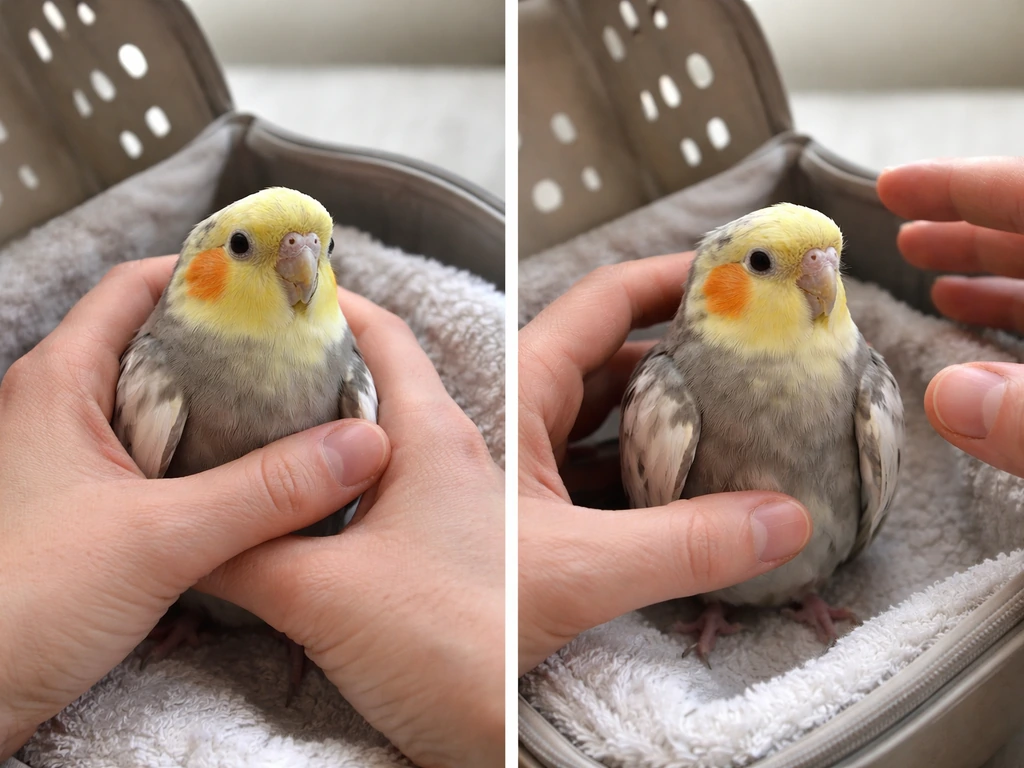
- Do not squeeze or press on the bird's chest. Birds breathe using the movement of their whole body wall, and pressure on the chest makes breathing physically harder.
- Do not try to give food or water. Force-feeding or syringe use without veterinary guidance can cause aspiration (fluid in the lungs), which is life-threatening in an already distressed bird.
- Do not keep opening the box to check on it. Every peek adds stress.
- Do not place it near a heat lamp, direct sunlight, or a fully enclosed heating setup where it cannot escape the heat.
- Do not leave it with household pets or in a space where other animals can access it.
- Do not try to splint wings, clean wounds, or administer any medication unless directed by a vet.
- Do not assume it will "just recover on its own" if it has any of the red-flag breathing signs listed above.
Common causes of rapid breathing in birds
Knowing why a bird might be breathing fast helps you give better information to the vet or wildlife rehabilitator when you call, and it helps you understand how urgent the situation actually is.
| Cause | Key signs alongside fast breathing | Urgency level |
|---|---|---|
| Shock (from injury, collision, or fright) | Fluffed feathers, stillness, unresponsive to movement nearby | Urgent — act immediately |
| Window collision / blunt trauma | Found near a window, stunned or dazed, possibly one-sided weakness | Urgent — monitor closely, vet if not recovering fast |
| Cat or dog attack / bite wound | Puncture wounds may be invisible under feathers, possible bleeding | Emergency — infection risk is serious even if bird seems okay |
| Respiratory infection or illness | Discharge from nares/eyes, wheezing, clicking, voice changes | Urgent — vet same day if possible |
| Overheating / heat stress | Found in direct sun or hot enclosed space, panting, alert but weak | Urgent — cool environment first, vet if not improving in minutes |
| Smoke, fume, or irritant inhalation | Sudden onset, possible exposure to fumes, cooking smoke, aerosols | Emergency — call vet immediately |
| Air sac or internal injury | No obvious external wound, labored breathing after trauma | Emergency — internal injuries are not visible to you |
| Airway obstruction | Distressed, neck stretched, no improvement with calm and quiet | Emergency — do not delay |
What to do based on your specific situation
After a window collision
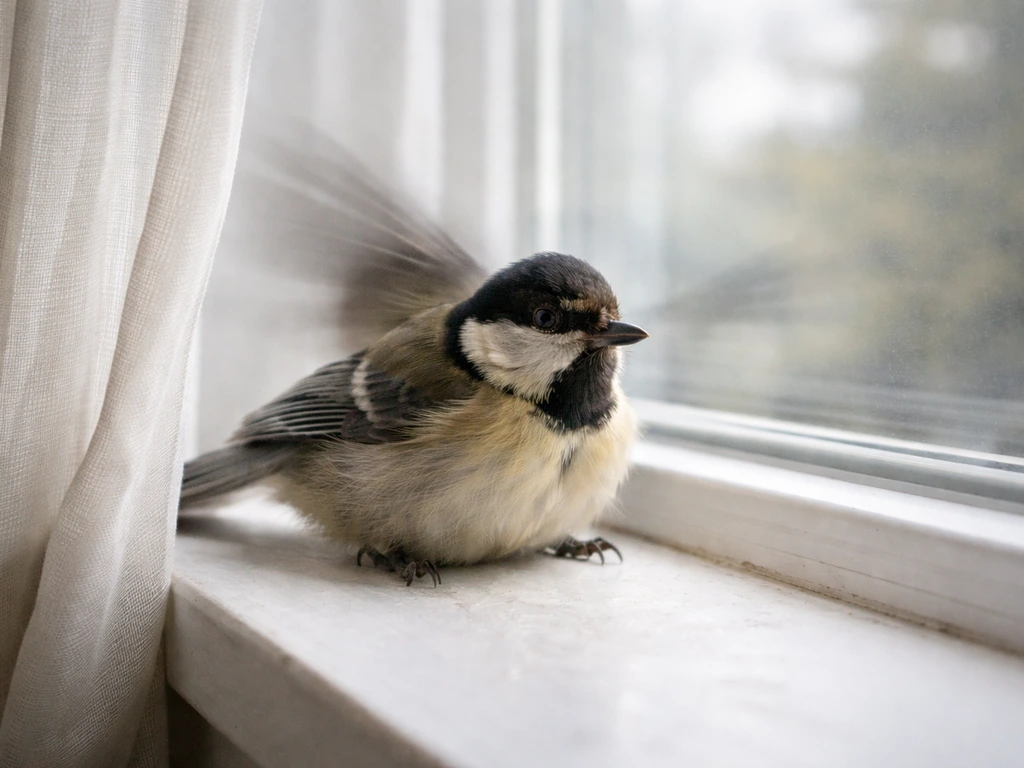
Window strikes are one of the most common reasons people find a breathing-distressed bird. The bird hits the glass at speed and sustains a concussion or internal injury. Place it in a dark, warm, quiet box immediately. Do not give food or water. If the bird is only mildly stunned, it may recover within a few minutes and be alert enough to fly away. If it is still breathing fast, still dazed, or showing any weakness after about 20 to 30 minutes, do not wait. Get it to a wildlife rehabilitator or avian vet. Internal injuries from window strikes are not visible and can be fatal without treatment. Even a bird that seems to recover on its own is worth a professional evaluation if the breathing was labored.
After a cat or dog attack
This is the scenario where you absolutely cannot wait and see. Cat saliva carries bacteria that cause rapid, severe infection in birds, and puncture wounds from a beak or claw are often hidden under feathers. A bird that was grabbed by a cat may look fine outwardly within 30 minutes and still die from sepsis within 24 to 48 hours if it does not get antibiotics. Rapid breathing after a pet interaction is a red flag that internal injury or early shock is already present. Contain the bird carefully, avoid any unnecessary handling, and call for veterinary help right away. Do not assume the breathing will calm down and everything will be fine.
Overheating or exposure to heat
If you found a bird panting in direct sunlight on a hot day, in a parked car, or in a poorly ventilated greenhouse or garage, move it immediately to a cool, shaded, quiet space. Offer a very shallow dish of cool (not cold) water nearby, but do not force it to drink. If the bird is alert and upright, gular flutter panting may stop within a few minutes once it is cool. If the breathing stays labored, the bird is weak or unresponsive, or it seems disoriented, treat it as an emergency and get professional help. Heat stress can progress to organ damage quickly.
Smoke, fumes, or chemical irritants
Birds' respiratory systems are extraordinarily sensitive. Non-stick cookware fumes (from overheated PTFE coatings), aerosol sprays, scented candles, cleaning products, wildfire smoke, and even cigarette smoke can cause acute respiratory distress in birds, sometimes within minutes of exposure. If there is any possibility of irritant inhalation, get the bird to fresh air immediately, then into a clean, well-ventilated container, and call a vet right away. Tell the vet exactly what the bird may have been exposed to, how long, and whether it was in an enclosed space. This information changes how the case is triaged and treated.
Sick or injured bird found on the ground
A bird that is on the ground, not flying away when approached, and breathing fast is almost certainly in serious trouble. Look briefly for obvious signs like a drooping wing, visible wound, or inability to stand, but do not handle it more than necessary to get it into a box. Fast breathing in a grounded bird alongside any weakness, fluffed feathers, or inability to right itself warrants immediate contact with a wildlife rehabilitator. This overlaps with what you might read about what to do if you find a sick bird or if a bird is not moving, and the same rule applies: box it, warm it, keep it quiet, and make the call.
When and where to get urgent help
Call for professional help immediately if the bird shows any of the following: open-mouth breathing, audible breathing sounds, pronounced tail bobbing, blue or pale tissues, collapse, inability to stand, seizures, uncontrolled bleeding, or known exposure to a toxin, fumes, or a cat or dog. These are same-hour situations, not wait-until-tomorrow ones.
For wild birds, your best contacts are a licensed wildlife rehabilitator or a wildlife rescue organization in your area. In the United States, the National Wildlife Rehabilitators Association (NWRA) and the Wildlife Center of Virginia both have online directories. Your local animal control or humane society can often refer you to the nearest wildlife rehabilitator even if they cannot help directly. For pet birds, call an avian-certified veterinarian (not just a general practice vet, if you can help it). If it is after hours, look for an emergency exotic or avian vet clinic in your area.
When you call, have this information ready: what the bird looks like and what species you think it is, exactly what symptoms you are seeing (open-mouth breathing, tail bobbing, sounds), when you first noticed the symptoms, what you think may have caused it (window strike, cat, heat, fumes), and what you have done so far. The more specific you can be, the faster the professional on the other end can triage the situation and advise you.
Safe containment and transport while you wait
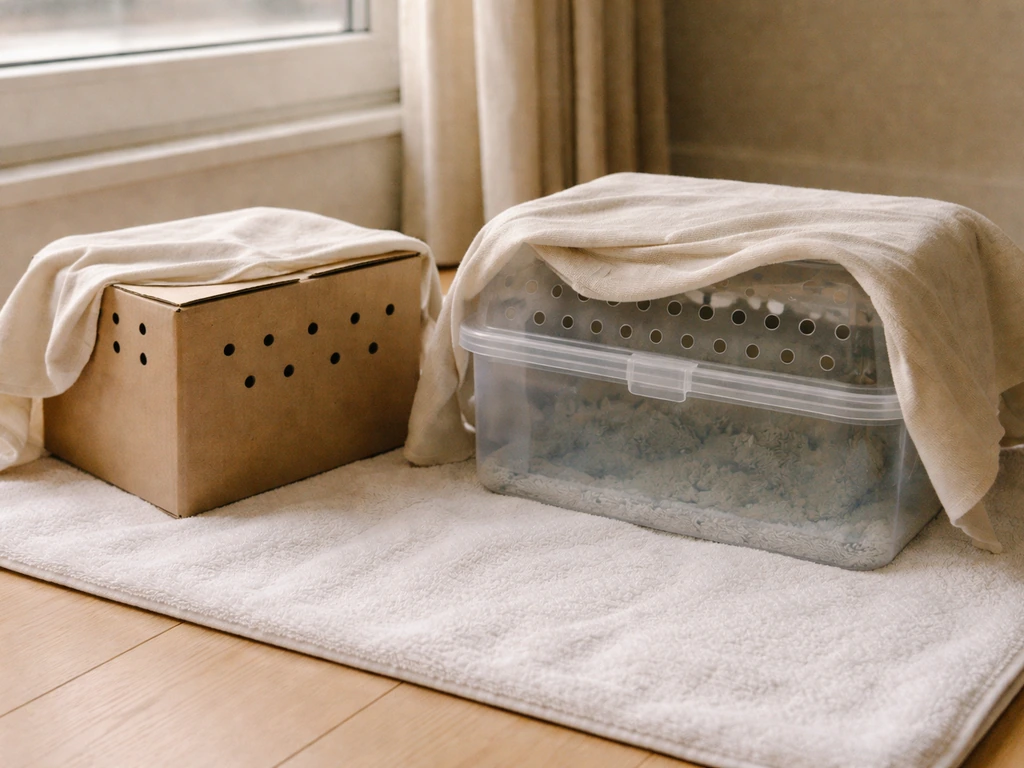
Getting the containment right is genuinely one of the most useful things you can do for a bird in respiratory distress. Here is how to do it properly. Give Shelter also emphasizes using adequate ventilation holes in the container, lining it appropriately, and keeping the bird in a quiet, dark setting until transport.
- Choose a cardboard box, plastic tote, or pet carrier that is large enough for the bird to sit upright without being crushed, but not so large that it can throw itself around.
- Line the bottom with a non-slip surface: a folded cloth towel, paper towels, or a piece of fabric. Avoid anything with loops or threads the bird's feet could catch on.
- Poke multiple ventilation holes in the lid and upper sides. If you are using a plastic tote, a screened section provides both airflow and a visual barrier.
- Place a warm water bottle (wrapped in a towel so it is not directly against the bird's skin) along one interior side so the bird can choose to be near the warmth or move away from it.
- Put the lid on securely. Cover the outside of the box with a towel or blanket to block light and muffle sound further.
- Keep the box level and stable during transport. Avoid loud music, sudden braking, and having other passengers interact with the box.
- Do not put the box in a hot car trunk or in direct sun through the car windows.
- Keep the car quiet and at a comfortable temperature, around 70 to 75 degrees Fahrenheit ambient, while the bird's immediate environment is kept warmer inside the box.
If you cannot transport the bird immediately, keep it in the dark, warm, quiet box and check on it minimally. A brief visual check every 20 to 30 minutes is enough. You are looking for whether it has become more alert, remained stable, or gotten worse. Report those observations when you speak to the vet or rehabilitator. Do not be tempted to offer food or water during this wait. A bird in respiratory distress cannot safely swallow, and forcing fluids risks aspiration, which will make everything worse.
Rapid breathing is one of the clearest signals a bird can give you that something is seriously wrong. If the bird is not moving or seems weak, treat it as urgent and get professional help right away. The good news is that the right first-aid steps are simple, accessible to anyone, and genuinely effective at keeping the bird stable while professionals take over. Contain, warm, darken, quiet, and call. That sequence has saved a lot of birds, and it is the best thing you can do right now. If your bird is also not eating, treat it as a serious additional sign and follow the guidance on what to do if bird is not eating alongside these steps. If you are wondering what to do if my bird is sick, start by treating rapid or labored breathing as an urgent problem and follow the steps for safe containment and immediate professional help.
FAQ
My bird seems alert, but it is breathing fast. Can I monitor it at home for a bit? (When is it still too risky?)
If the bird is breathing fast but not open-mouth and still alert, the safest approach is the same containment steps (dark, warm, quiet box, minimal handling) plus a prompt call for guidance. Use your judgement based on posture and responsiveness. If it is panting with the beak open, tail bobbing, audible distress sounds, or looks weak or disoriented, treat it as an immediate emergency rather than “watch and wait.”
What should I avoid doing while I’m waiting to contact a vet or wildlife rehabilitator?
Do not try to “check its breathing” by holding it upright or bringing it close to your face, and do not offer water by mouth. Birds in respiratory distress may aspirate, and extra handling increases stress and can worsen breathing. Limit contact to getting it into the box, then observe through the outside without fussing with feathers or opening the beak.
If I suspect choking, can I try to clear the airway myself?
Do not attempt CPR, chest compressions, or any kind of assisted ventilation. If you suspect choking, the body-focused panic response (handling, turning it, shaking it) is more likely to cause injury. Instead, keep the bird calm and contained, and seek urgent avian or wildlife help, because the underlying cause may be airway inflammation, fluid, or internal trauma that you cannot safely correct at home.
How do I tell the difference between heat stress panting and an emergency that needs urgent medical care?
At first, prioritize warmth and calm over “cooling down” unless you are confident it is heat stress. If the bird was in direct sun or a hot car, move it to shade and offer only a shallow dish of cool (not icy) water nearby, but do not force drinking. If it is still gasping or not settling within a few minutes, or it is weak or unresponsive, treat it as emergency and get professional help immediately.
What if the bird is on the ground and breathing fast, but I do not see obvious blood or wounds?
A key distinction is whether it can right itself, grip normally, and remain upright. A grounded bird that is breathing fast, fluffed, unable to stand, or not flying away when approached should be boxed and treated as urgent even if external injuries are not obvious. Window strikes and internal injuries can be invisible, and rapid breathing can be an early sign of shock or concussion.
What is the right kind of box or container setup for fast breathing, and how should I manage temperature safely?
Use a ventilated container that prevents escape, lined with something soft, and keep it away from direct light and drafts. Avoid strong odors and avoid the bird inhaling fumes while you prepare. If the bird seems overheated, place the box in a shaded area and you can place a cool pack outside the box (not in contact with the bird) to help gently lower temperature.
How should I transport the bird and manage it while waiting for help?
During transport or waiting, handle it as little as possible, keep the box stable, and minimize loud noise and bright light. If you must move it, do so quickly and smoothly. Do not let other pets, especially cats and dogs, be near the container.
What should I do if this happens at night or during a holiday when no one is answering?
If there is an after-hours situation, contact an emergency exotic or avian clinic if available. If the bird is wild and you cannot find an immediate clinic, call a wildlife rehabilitator or rescue organization for next steps. Animal control or a humane society can sometimes route you to a rehabilitator even if they cannot take the bird themselves.
What details should I gather before I call a vet or wildlife rehabilitator to speed up triage?
When you call, include the bird’s species (or best guess), exact breathing signs (open-mouth, tail bobbing, audible wheeze or crackles), when symptoms started, and any likely cause (window strike, cat interaction, heat exposure, smoke or aerosol exposure, toxin concerns). Also tell them whether the bird is upright and gripping normally, can stand, and whether it is responding normally to your presence.
If a bird recovers briefly after a window strike, do I still need to get it checked?
Yes, even if you think it “just seems stunned,” a breathing-distressed bird can worsen later. Window strike victims may look temporarily better, but internal injury is not visible and can become fatal without treatment. If breathing stays labored, or the bird remains dazed, weak, or unable to right itself after about 20 to 30 minutes, treat it as emergency and get it evaluated.
Could everyday household fumes cause this, and what should I do about the environment right away?
If your household includes potential irritants, move the bird to fresh air immediately before you do anything else, then place it into a clean, well-ventilated container. Do not use aerosols or scented products around the bird while you are trying to stabilize it, because rapid respiratory distress can occur within minutes.
Which other symptoms mean “fast breathing” is even more dangerous?
Treat rapid breathing as urgent, but consider it an even higher risk if the bird is also not moving, is weak, cannot stand, is collapsing, has blue or pale tissues, has seizures, or has uncontrolled bleeding, especially after known exposure to a cat, dog, toxin, or smoke. Those combinations are not for “next day” delays.
Next Article
What to Do If My Bird Is Sick: First Aid Steps
Step by step first aid for a sick or injured bird: triage, warmth, containment, hazards, and when to get urgent vet care