
If you find a bird that isn't moving, don't panic. Pick it up gently using a towel, place it in a small cardboard box lined with a cloth or paper towel, keep the box warm and dark and quiet, and do not give it food or water. Then contact a licensed wildlife rehabilitator or avian vet as soon as possible. That's the core of it. The rest of this guide will help you figure out what's actually going on with the bird and what to do next.
What to Do If a Bird Is Not Moving: Emergency Steps
Marcus Chen
5 May 2026
Your first moves: keeping you and the bird safe
Before you touch anything, take a breath. A still bird is alarming, but rushing in without thinking can hurt the bird more. Wild birds in distress can bite or scratch, and stressed birds can injure themselves further if startled. Here's how to approach safely.
- Keep pets and children away from the bird immediately. A curious dog or cat can kill a stunned bird in seconds.
- Grab a small towel or cloth. You'll use this to scoop the bird up gently without direct skin-to-hand contact, which reduces stress for the bird and protects you from bites or potential parasites.
- Approach slowly and quietly. Loud movements or voices will add to the bird's fear response even if it looks unconscious.
- Scoop the bird by placing the towel over it and cupping it gently in both hands, keeping the wings against its body. Do not squeeze.
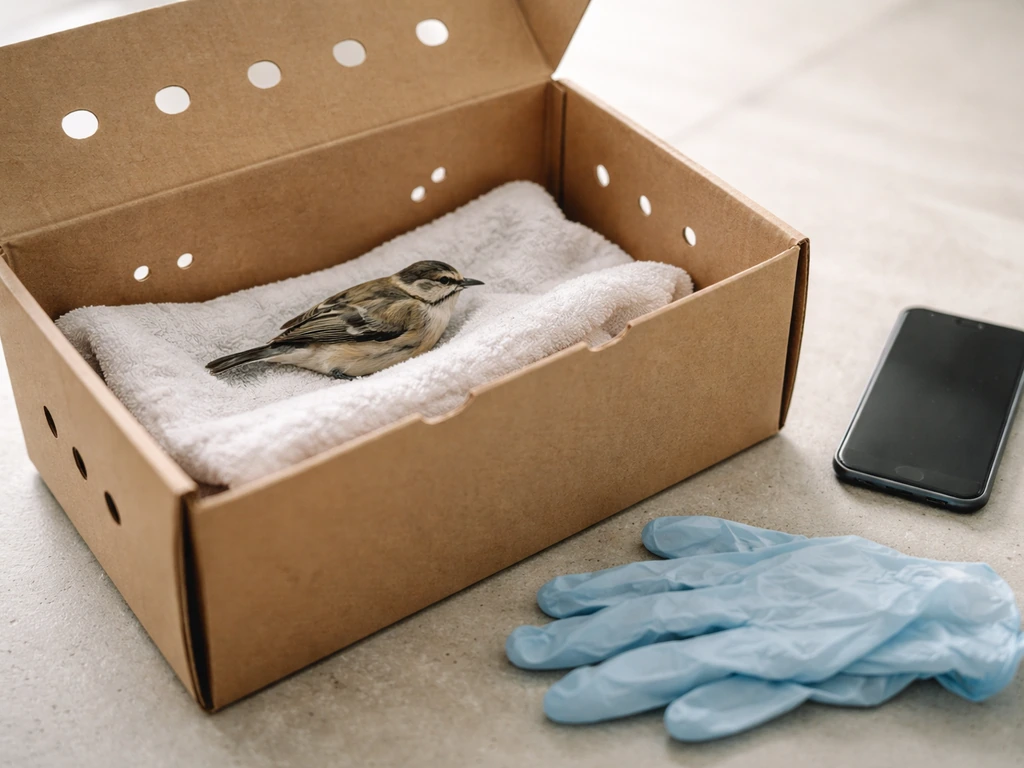
- Place the bird in a shoebox or small cardboard box with a few air holes punched in the lid and a cloth or paper towel at the bottom. A small, snug space is better than a large one because it keeps the bird from thrashing around.
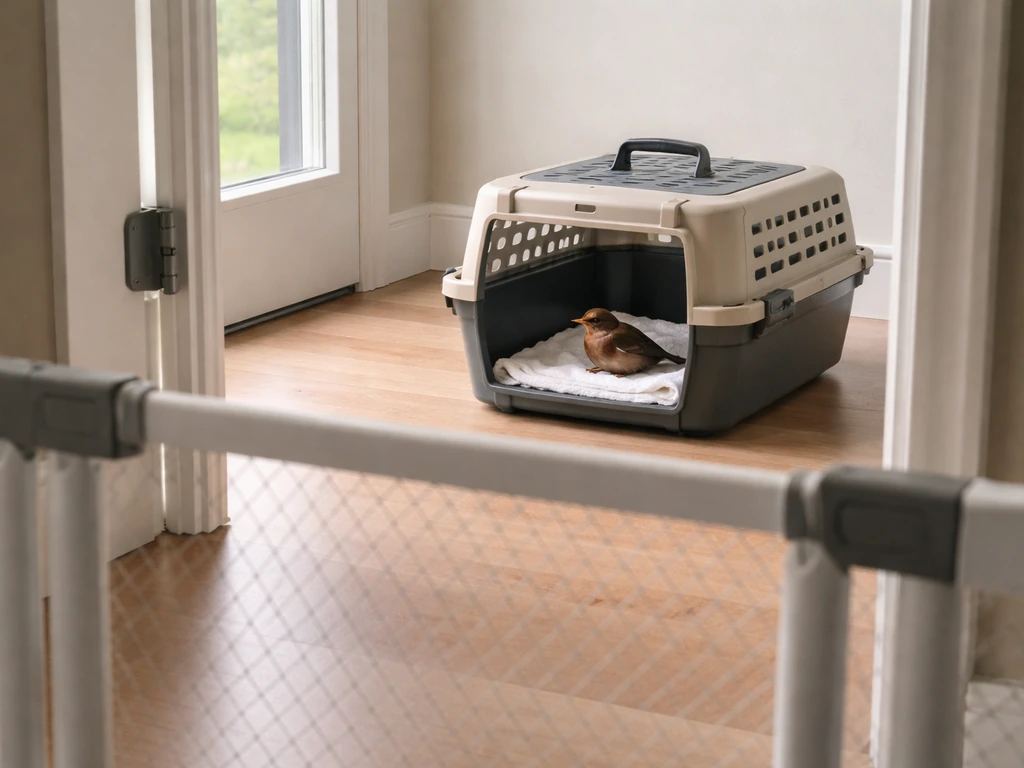
- Put the lid on and set the box somewhere warm, dark, and quiet away from household noise, pets, and direct sunlight.
The goal at this stage is simple: minimize stress, minimize handling, and give the bird a calm environment while you figure out what's going on and who to call. Human eye contact, noise, and touch are genuinely stressful to wild birds, so the darker and quieter you can keep things, the better.
Shock, injury, or death: how to tell quickly
Not every still bird is dying, and not every still bird is going to recover on its own. Before you do anything else, take a quick look to get a sense of what you're dealing with. If you notice the bird with its breast up, meaning the bird is on its back, treat it as an urgent distress situation and follow the same warm, dark box and professional-callback steps.
Signs the bird is likely in shock or stunned
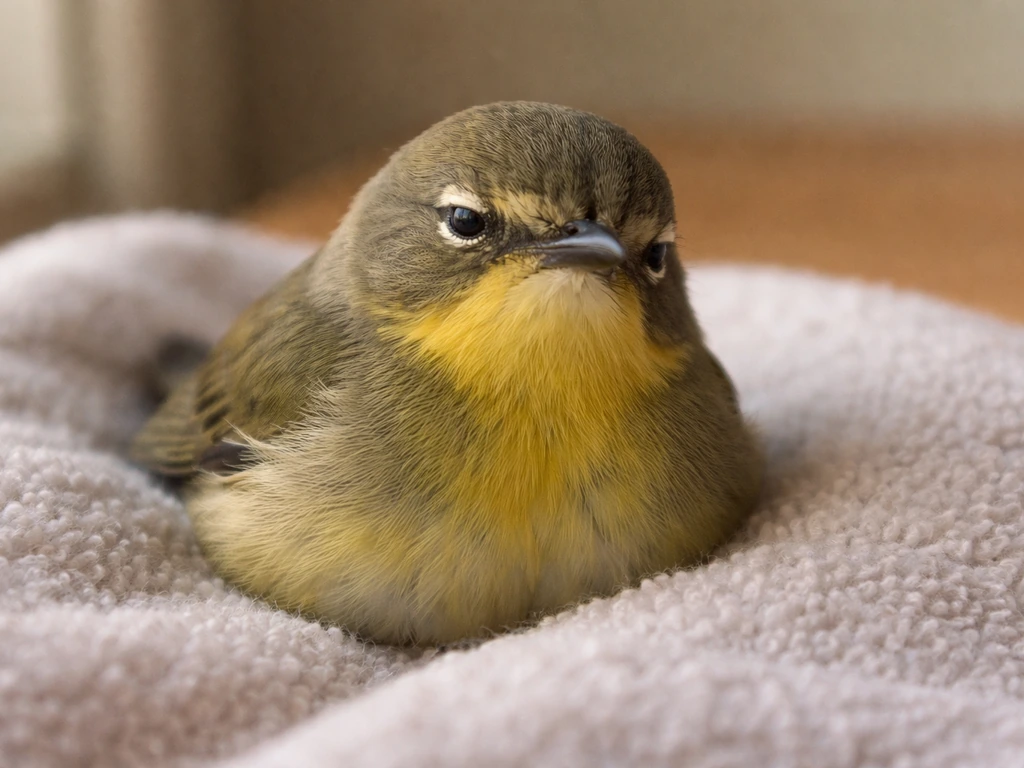
- Eyes are open or blinking slowly
- You can see the chest rising and falling
- The bird responds slightly to your presence (a small movement, a blink) even if it can't stand
- No visible wounds or blood
- The bird is upright or mostly upright, just very still
A stunned bird, especially one that has hit a window, often looks dead but isn't. It may just need 30 minutes to a couple of hours in a warm, dark box to recover. But even if it does perk up, it still needs to be assessed by a rehabilitator because window collisions can cause internal bleeding that isn't visible from the outside.
Signs of serious injury that need urgent help
- Visible bleeding or wounds
- A wing or leg that is hanging at a wrong angle
- The head is tilted to one side or the bird is circling (possible head trauma)
- The bird is breathing very rapidly or with its beak open and struggling
- Eyes are swollen, cloudy, or the bird can't open them
- The bird has been in a cat's or dog's mouth, even briefly
Any of these signs means you should not wait to see if the bird improves on its own. Get it to professional help the same day. A Virginia Department of Wildlife Resources injured-bird guidance list includes fractures, bleeding, deformities, cat bites or other puncture wounds, maggots or warbles, head tilting, or large bubbles under the skin as reasons to take the bird to a wildlife veterinarian or wildlife rehabilitator Get it to professional help the same day..
Signs the bird may have died
- No visible breathing movement in the chest
- Eyes are partially open but fixed and not responding to movement near them
- The body is limp and cold throughout, including the feet
- Flies or insects are already present on the bird
If you're not sure whether the bird is alive, place it in the box anyway and give it 10 to 15 minutes in a warm, dark space. Sometimes birds that appear dead are deeply shocked and can rally with warmth and quiet. If there's no change after that time and you see no signs of breathing, it has likely passed.
Why the bird might not be moving: the most common causes
Knowing what caused the bird to stop moving helps you make better decisions about how urgent the situation is. Here are the most common reasons you might find a bird like this.
| Cause | What it looks like | How urgent |
|---|---|---|
| Window or glass collision | Bird near a window, eyes closed or glazed, no obvious wounds | Urgent: internal injuries possible even if the bird looks okay |
| Predator attack (cat, dog) | Wounds, missing feathers, puncture marks, or the bird was in an animal's mouth | Emergency: bacteria from cat bites are life-threatening within hours |
| Cold or exposure | Bird feels cold to the touch, found outdoors in cold weather, possibly a young bird | Urgent: needs warmth immediately |
| Poisoning | Bird near a treated lawn, bait station, or dead rodent; may show tremors or strange movements | Emergency: contact a vet or rehabilitator immediately |
| Broken wing or leg | Limb hanging at wrong angle, bird can't stand or can't use one wing | Urgent: needs professional splinting and pain relief |
| Head or beak trauma | Head tilt, circling, seizure-like movement, blood near head or beak | Emergency: possible brain bleed |
| Nest fall or fledgling exhaustion | Small, fluffy bird with limited feathers found on ground | Assess first: may be a normal fledgling learning to fly |
One thing that surprises a lot of people: a cat attack is one of the most time-sensitive emergencies on this list. Even a brief contact with a cat's mouth introduces bacteria that can cause fatal infection within 24 to 48 hours. If a cat had this bird, call a rehabilitator or vet right now, even if the bird looks fine.
Poisoning is another scenario where the bird may not show obvious wounds but is clearly struggling. If you find a bird near a recently treated lawn, a bait station, or next to a dead rat or mouse, assume poisoning and get professional help without delay. Do not try to treat this at home.
Basic first aid while you wait for help
You are not expected to be a vet. Your job right now is to keep the bird stable and as stress-free as possible until a professional can take over. Here's what that actually looks like.
Warmth
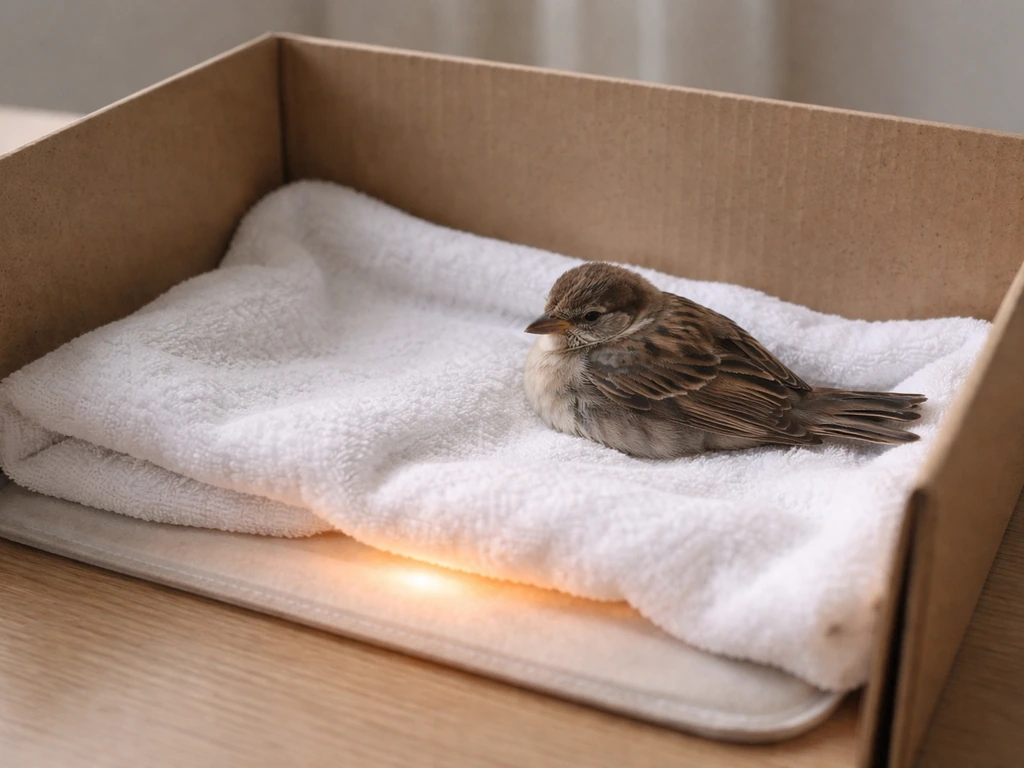
Warmth is the single most important thing you can provide. A cold, injured bird loses energy fast and can go into deeper shock. Place a heating pad on its lowest setting under half of the box, with a towel between the heating pad and the box. Alternatively, fill a zip-lock bag or water bottle with warm (not hot) water, wrap it in a cloth, and set it next to the bird inside the box. The bird needs to be able to move away from the heat source if it gets too warm, which is why you only heat one side. Room temperature alone is usually not enough.
Handling
Once the bird is in the box, leave it alone. This is hard when you're worried about it, but opening the box repeatedly to check adds stress that actively works against recovery. Keep the lid closed and the room quiet. If you must check, do so once and briefly. Do not hold or cuddle the bird; even gentle holding stresses wild birds significantly.
Airway
If the bird is breathing with its beak open, is making unusual sounds, or you can see something in or around its beak, do not try to clear the airway yourself unless there is something obviously external you can gently remove. If you notice the bird breathing fast, treat it as a distress sign and contact a wildlife rehabilitator or avian vet right away. If your bird seems to be choking, focus on keeping it calm and seek urgent guidance from an avian vet or wildlife rehabilitator clear the airway yourself. Attempting to manipulate the throat or beak of a bird can cause more harm. Note what you see and report it to the rehabilitator or vet when you call.
Visible bleeding
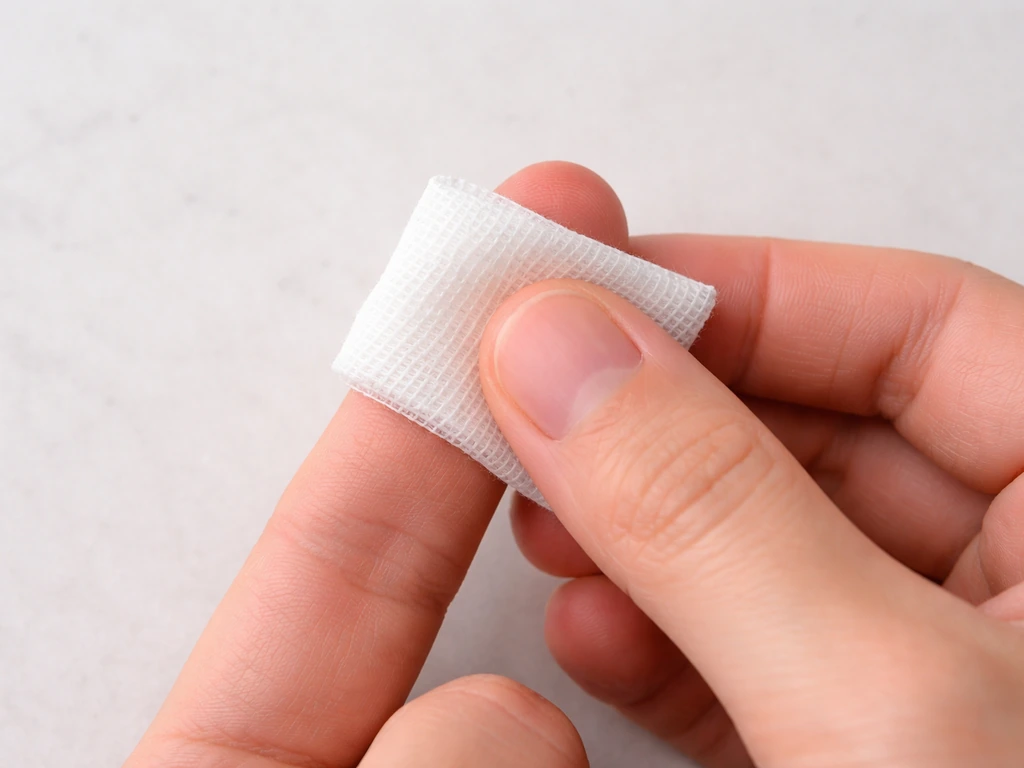
If you see active bleeding, you can apply very gentle pressure with a clean cloth or piece of gauze. Do not use cotton wool, which can stick to wounds. Do not apply any creams, antiseptics, or human medications. A small amount of bleeding that has already stopped does not need intervention from you, but it does need to be seen by a professional.
What to do and what to never do
| Do this | Never do this |
|---|---|
| Use a towel to pick up the bird | Pick up the bird with bare hands and hold it tightly |
| Place in a small, dark, ventilated box | Put the bird in a large cage where it can thrash around |
| Provide gentle warmth on one side of the box | Place the bird directly on a heating pad or under a heat lamp |
| Keep the area quiet and away from pets | Let children or pets near the bird |
| Call a rehabilitator or vet as soon as possible | Wait days to see if the bird gets better on its own |
| Note what you saw (location, cause, behavior) | Give the bird food, water, milk, or any medication |
| Leave the bird in the box once it's settled | Keep opening the box to check on it or show others |
The food and water rule is one people push back on most, but it's critical. Giving an injured bird the wrong food or the wrong amount of water can cause aspiration, choking, or further damage to an already compromised system. A bird that seems conscious and is looking around might appear hungry, but even then, feeding is the rehabilitator's job, not yours. Just keep the bird warm and still.
When to call for help and how to find the right person
The honest answer is: call sooner than you think you need to. If you're dealing with a sick bird right now, the same quick, calm steps and timely professional help can make a big difference what to do if my bird is sick. Most wildlife rehabilitators and avian vets would rather hear from you too early than too late. If the bird has any of the serious injury signs listed above, or if it was in a cat's mouth, or if it isn't showing any improvement after two hours in a warm, dark box, it needs professional help today.
Wildlife rehabilitator vs. avian vet: which do you need?
For wild birds, a licensed wildlife rehabilitator is usually your best first call. They are specifically trained and permitted to handle and treat wild birds, and many operate free of charge. An avian vet is the right choice for a pet bird or in an emergency where a rehabilitator isn't available quickly. For a cat-attack injury or obvious fracture, an avian vet or emergency animal hospital can provide faster medical intervention while you arrange longer-term rehab care.
How to find help near you
- The National Wildlife Rehabilitators Association (NWRA) has a searchable directory at nwrawildlife.org to find licensed rehabilitators near you.
- In the US, you can also search the Wildlife Center of Virginia's resources or call your state's wildlife agency, which often maintains a list of permitted rehabilitators.
- In Virginia specifically, the Department of Wildlife Resources runs a toll-free helpline at 1-855-571-9003 for wildlife emergencies.
- In Australia, the RSPCA and WIRES maintain 24-hour hotlines for injured wildlife.
- In New Zealand, the SPCA provides wildlife guidance and can connect you with a rehabilitator.
- Search 'wildlife rehabilitator near me' or 'bird rescue [your city]' for local resources.
- Your local humane society or animal shelter can often refer you to the right contact even if they don't handle wild birds themselves.
What to tell them when you call
- What kind of bird it is, or your best guess (small songbird, crow, pigeon, large bird of prey)
- Where you found it and what you think happened (near a window, in the yard, after the cat had it)
- What it's doing right now (eyes open or closed, breathing, any movement)
- What you've already done (placed in a box, provided warmth)
- Your location so they can guide you to the nearest help
Most rehabilitators are genuinely glad you called. They deal with people who waited too long far more often than people who called too quickly. If the first number you try doesn't answer, leave a message and try the next one on the list.
After the immediate crisis: care, recovery, and stopping it from happening again
If the bird recovers on its own
Sometimes a stunned bird will perk up in the box within an hour or two, and you'll hear it moving around or even trying to hop or flutter. If that happens, take the closed box outside, open it somewhere safe (away from roads, cats, and windows), and let the bird leave on its own terms. Don't toss it into the air. If it flies off strongly, that's a great outcome. If it hops out but seems unsteady, call a rehabilitator before letting it go.
Fledgling and nest situations
If you find a small, fuzzy bird with short feathers that seems healthy but can't fly, it may simply be a fledgling learning to navigate the ground. Fledglings are supposed to be out of the nest and on the ground for a few days while their parents continue to feed them. Unless it is featherless, has its eyes closed, is clearly injured, or you can see that its parents are dead or absent for a long period, the best thing you can do is leave it where it is and keep pets away. Contrary to popular belief, touching the bird will not cause its parents to reject it.
Window collisions: making your home safer
Window strikes are the most common reason people find injured adult birds. The American Bird Conservancy estimates hundreds of millions of birds die from window collisions in the US each year. You can significantly reduce this with a few practical changes. Applying window alert decals, UV-reflective tape in a grid pattern (spaced no more than 2 inches horizontally and 4 inches vertically), or external window screens breaks up the reflective surface that birds mistake for open sky. Moving bird feeders either very close to the window (within 3 feet, so birds don't build up speed) or far away (more than 30 feet) also helps reduce strike frequency.
Pet precautions
If a cat is responsible for the bird you found today, keeping cats indoors or using a supervised outdoor enclosure (sometimes called a 'catio') is the most effective prevention. A well-fed cat will still hunt, so diet is not the solution. Bell collars reduce hunting success to some degree but are not as effective as keeping the cat inside. If you have outdoor cats and backyard feeders, consider moving the feeders to a location where the cat can't easily reach birds feeding at ground level.
It's also worth knowing that if a bird isn't eating, is breathing rapidly, is lying on its back, or is showing other signs of distress beyond just not moving, those situations each come with their own specific considerations. The core approach, warmth, dark box, no food or water, call a professional, stays the same, but the urgency and context can differ. Trust your instincts: if something feels wrong, make the call.
FAQ
If the bird looks dead, should I still put it in a box?
Keep the bird warm first, then check breathing and responsiveness. If it is not moving at all, place it in the box anyway and wait 10 to 15 minutes in a warm, dark space, but if you still see no breathing or the beak remains closed with no signs of life, treat it as deceased and stop further handling, then contact local wildlife services if you need confirmation or guidance on next steps.
Can I give the bird water or a little food to help it recover?
Do not give water, even small amounts. Injured birds can aspirate, and the wrong water temperature can worsen shock. If the bird is conscious enough to swallow, feeding and watering should wait for a wildlife rehabilitator or avian vet to control the type and amount safely.
What is the safest way to warm the box, and can I use hot water or a heat pad?
Yes, but do it conservatively. Apply a heat source to only one side of the box so the bird can move away if overheated, and keep the heating pad on its lowest setting with a barrier towel between the pad and the box. Avoid placing a heat source directly under the whole box or using hot water that could burn the bird.
What container should I use if a bird is not moving, and how should I secure it?
Do not use a cage, and avoid anything that could snag feathers. A small cardboard box with ventilation holes is ideal, lined with cloth or paper towel. Keep the box closed, and if you need to move it, carry the box rather than opening it to reposition the bird.
How can I tell if a bird that is not moving is actually breathing?
Look for breathing cues like rhythmic chest movement, open-mouth breathing, or rapid breaths. If the bird is breathing fast, making distress sounds, or has an obvious problem around the beak, contact a rehabilitator or avian vet immediately, and do not attempt to probe the airway unless there is something clearly external you can gently remove.
If warming it does not help within a certain time, when should I call an emergency professional?
If the bird is likely in shock from being chilled, warmth is the priority, but do not wait for warmth to change your plan. If there is a cat bite or exposure, window strike, active bleeding, or no improvement after two hours in a warm, dark box, you should call for professional help the same day.
What details should I tell the wildlife rehabilitator or vet when I call?
If you must make a call, be ready to describe what you observed: location (indoors or outdoors), whether it was a window strike, any cat contact, whether it was on its back, breathing pattern (normal, fast, open-mouth), and any visible injuries like bleeding or something stuck near the beak. This helps triage urgency and the right type of intake.
Should I try to hold the bird upright or make it stand up?
No. Do not hold, cuddle, or try to force the bird to stand. Even “gentle” handling increases stress and can worsen breathing or injuries. If the bird begins to regain strength later, move the closed box to a safe outdoor area and open it so it can leave on its own.
Does the same guidance apply to fledglings and baby birds that cannot fly yet?
With fledglings, the rule changes. If it is featherless or its eyes are closed, appears injured, or you suspect parents are gone for a long period, that is not a “leave it alone” situation. In all other cases where it looks healthy enough, reduce risk by keeping pets away and watching from a distance rather than picking it up.
If the bird is on its back and not moving, what should I do differently?
If it was on its back, that is an urgent distress indicator and you should use the same warm, dark box steps, contact a professional, and treat it as time-sensitive. Also watch for quick recovery signs, if it perks up within an hour or two, let it exit on its own terms rather than trying to assist its takeoff.
What should I do if I see blood, and what not to apply to the injury?
For bleeding, use only gentle pressure with clean gauze or a clean cloth and avoid cotton fibers that can adhere. Do not apply antiseptics, creams, or any human medications. If bleeding does not stop quickly, or if there are multiple injuries, call professional help promptly.