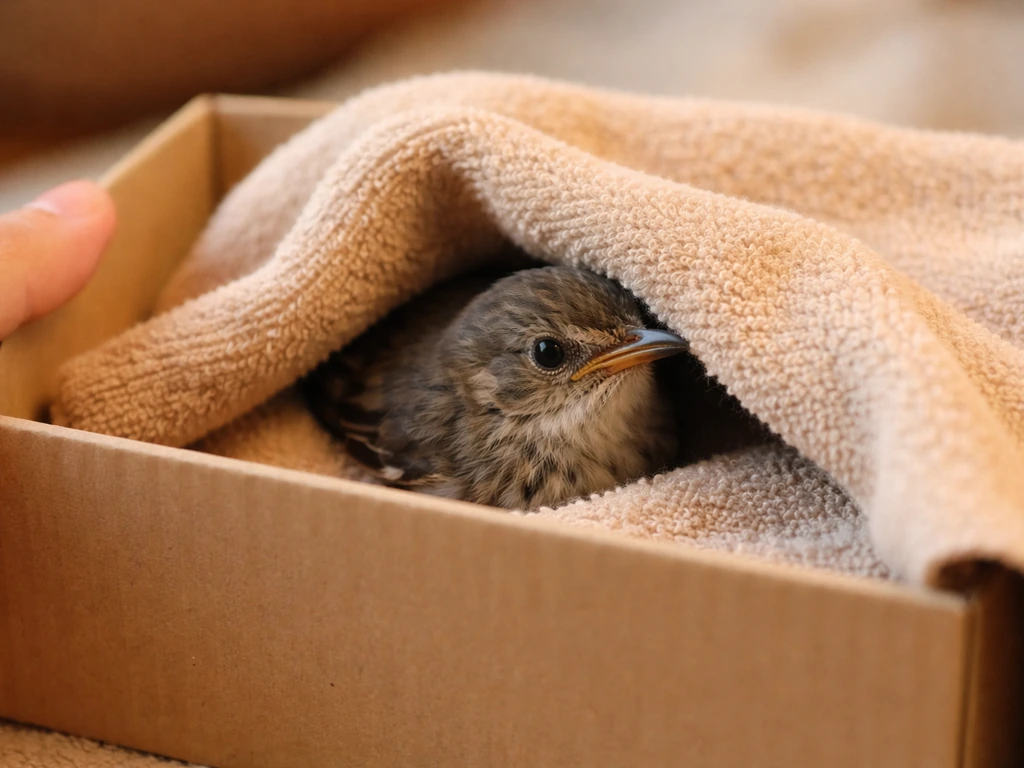
Pick up a towel, keep calm, and don't try to force the bird upright. A bird on its back is almost always either stunned from a window collision, injured from a predator attack, or a baby that's fallen from a nest. Each situation needs a slightly different response, but the first few minutes look the same: minimize handling, reduce stress, keep the bird warm and quiet, and figure out which category you're dealing with before doing anything else.
What to Do If a Bird Is on Its Back: Step-By-Step
Marcus Chen
29 May 2026
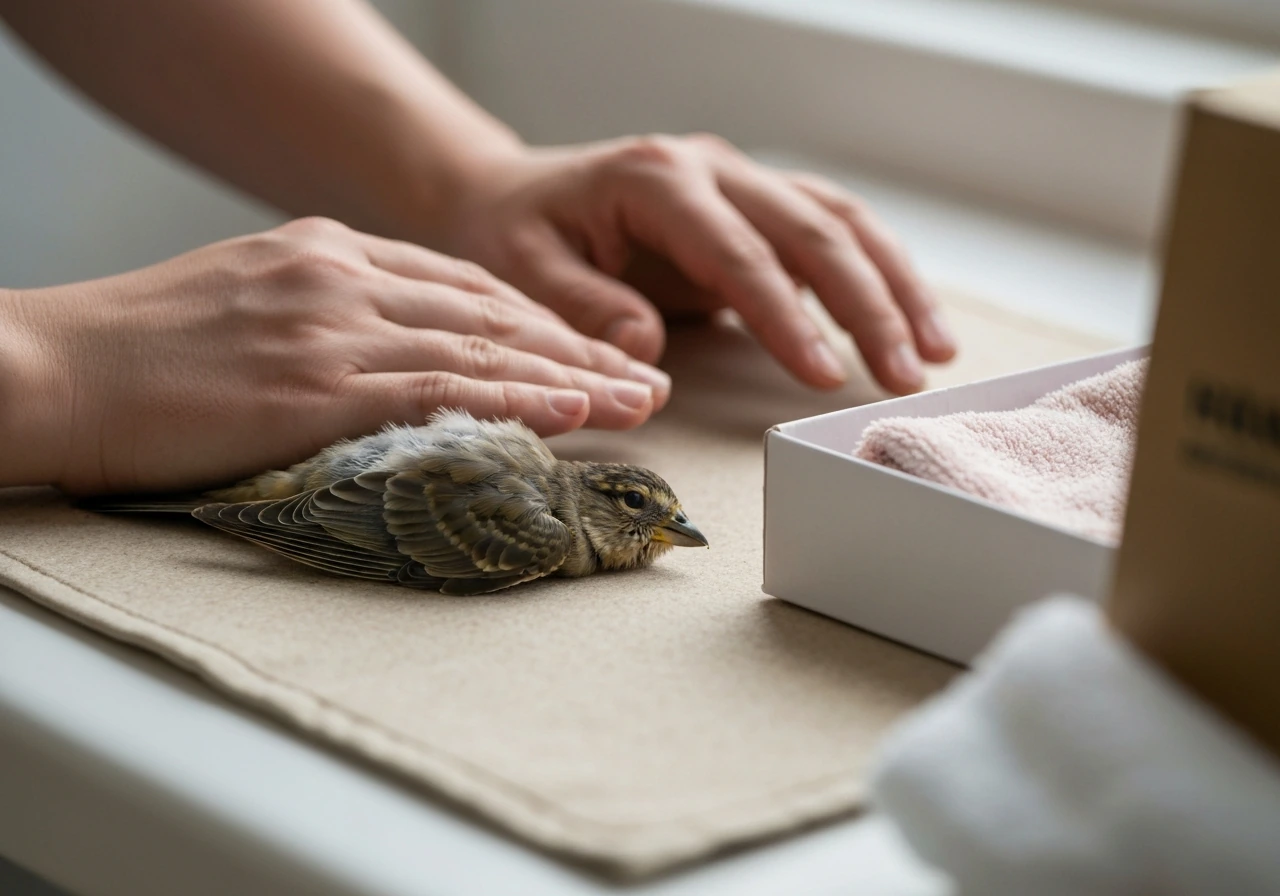
First check: is the bird injured, stunned, or just trapped in that position?
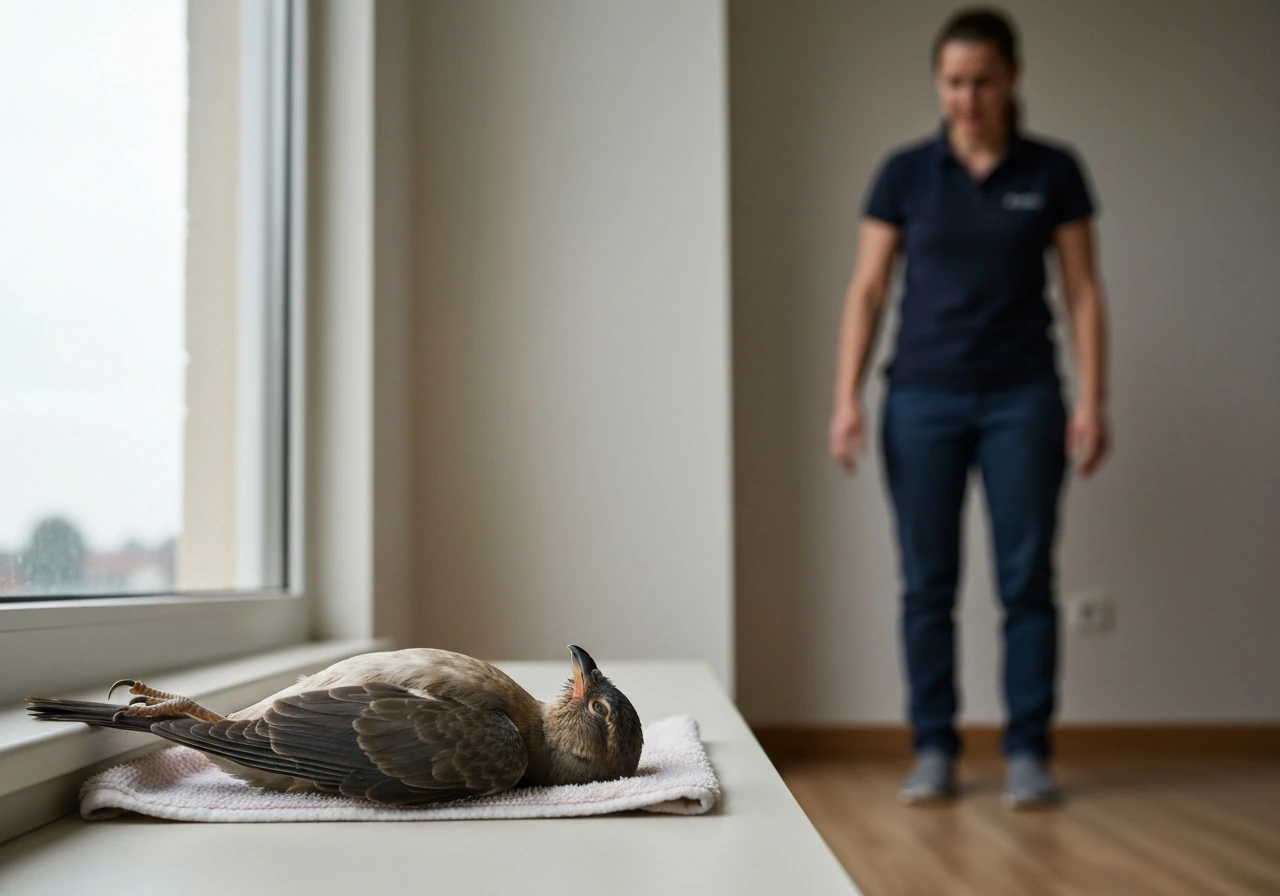
Before you touch anything, stand back and watch the bird for 30 to 60 seconds. This short pause tells you a lot. A stunned bird (usually from a window hit) will often be breathing visibly, blinking, or making small movements with its feet. It just can't coordinate itself well enough to get upright yet. An injured bird might be completely still, breathing fast or with visible effort, or have a wing or leg positioned at a clearly wrong angle. A trapped or tangled bird might be flapping irregularly but unable to right itself due to something physically blocking it.
The RSPCA's guidance is a useful benchmark here: a healthy adult bird that's just resting will try to walk or fly away when approached. If a bird flat-out refuses to move when you come close, something is genuinely wrong and it needs your help. On the flip side, if the bird is flapping and trying to escape but just can't get upright, it's likely stunned and may recover on its own with a quiet, safe space.
- Stunned: breathing, blinking, small movements, no visible wounds, recent window collision nearby
- Injured: still or limp, fast or labored breathing, blood visible, limb at wrong angle, attacked by a pet
- Trapped: active flapping but physically unable to right itself, possibly tangled in netting or debris
- Baby/nestling: covered in fluffy down rather than smooth feathers, eyes possibly still closed, tiny and fragile
How to safely approach and handle a bird on its back
Move slowly and quietly. Sudden movements spike the bird's stress hormones and can actually make a stunned bird harder to stabilize. Approach from the side rather than looming directly over it, which mimics a predator attack and causes panic.
For small songbirds (sparrows, finches, warblers), drape a light towel or cloth over the bird first, then gently scoop both the towel and the bird into a cupped two-handed hold. Keep your grip loose enough that the bird can breathe but firm enough that it can't escape and injure itself further. Never squeeze the chest: birds breathe with their whole body, and chest compression can suffocate them within seconds.
For larger birds like pigeons, doves, or waterfowl, use a larger towel and wrap the wings gently against the body before lifting. The Raptor Trust makes a point worth repeating here: if the bird is a hawk, owl, heron, or any large bird with sharp talons or a hooked beak, do not attempt to pick it up yourself. Call a licensed wildlife rehabilitator or local animal control. Those talons can pierce your hand before you even register what happened.
Always wash your hands thoroughly with soap and water after handling any wild bird, even briefly. This protects you from bacteria and potential zoonotic pathogens carried in feathers and droppings.
Immediate first aid steps once you have the bird
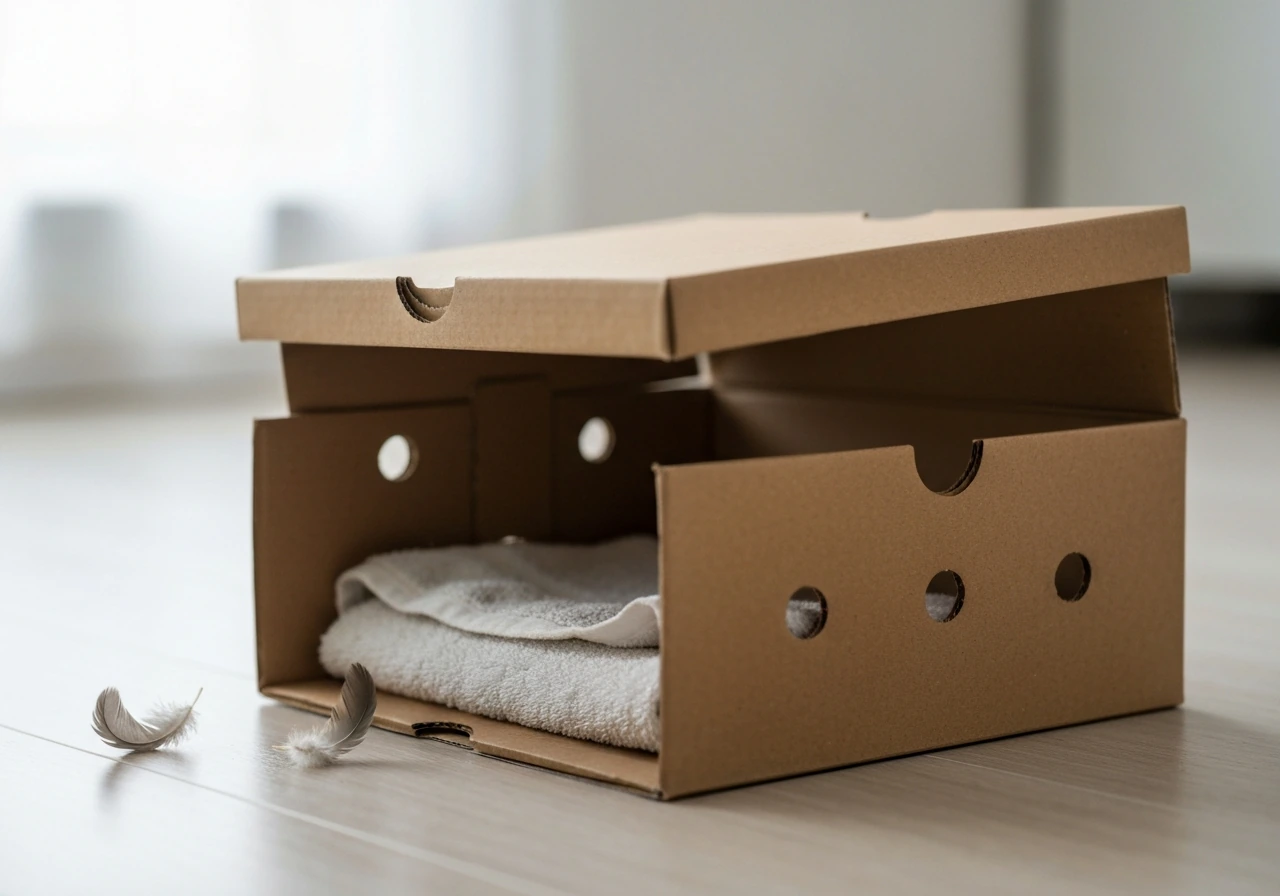
Your goal in these first few minutes is not to fix the bird. If you suspect choking, the right first aid is different from a bird on its back, so look for signs of blockage and act quickly to get professional help not to fix the bird. It's to stop things from getting worse. Here's what to do in order: Golden Gate Bird Alliance recommends placing a stunned bird in a blank" rel="noopener noreferrer">warm, dark, quiet place such as a shoebox lined with cloth or paper towel.
- Get a cardboard box with a lid, like a shoebox. Poke several small air holes in the sides for ventilation before you put the bird inside.
- Line the bottom with paper towels or a folded cloth. Small birds need traction underfoot; a smooth surface makes them use energy constantly trying to grip.
- Place the bird gently inside, right-side up if it will tolerate that position. Close the lid.
- Add warmth: set a heating pad on its lowest setting, cover it with a folded towel, and rest the box on top of that. Target temperature is around 85°F (29.4°C). If you don't have a heating pad, a warm (not hot) water bottle wrapped in cloth works. Keep it on one half of the box only so the bird can move away from the heat if needed.
- Put the box somewhere dark, quiet, and away from pets, children, and loud noise. A bathroom, closet, or garage corner works well.
- Check for bleeding. If you see active bleeding, apply firm, gentle, continuous pressure to the wound using a clean cloth for at least one to two minutes. If bleeding hasn't stopped within five minutes, that bird needs a vet urgently. Do not apply styptic powder or hydrogen peroxide unless specifically instructed by a wildlife professional.
Do not give the bird food or water. If your bird is not eating, do not try to force food or water; contact a wildlife rehabilitator for the right next steps what to do if a bird is not eating. This applies almost universally, even when the bird looks like it needs it. The wrong food or water forced into a stressed bird can cause aspiration (inhaling liquid into the lungs), which can kill it faster than the original injury. Leave feeding to the professionals.
Stabilizing the most common causes of 'bird on its back'
Window collisions
This is the most common reason you'll find a bird flipped over. Birds can't see glass and fly into it at full speed. The impact causes a temporary neurological stun that looks a lot worse than it often is. If you find a bird on its back near a window and it has no visible wounds or bleeding, follow the box-and-warmth setup above and monitor for up to two hours. Tufts Wildlife Clinic notes that many window-strike birds recover fully in that window and just need a safe place to rest. Once the bird is upright, alert, and gripping its perch normally, take it outside and open the box near low vegetation. Let it leave on its own timeline. If it still hasn't recovered after two hours, call a wildlife rehabilitator.
Predator or pet attacks
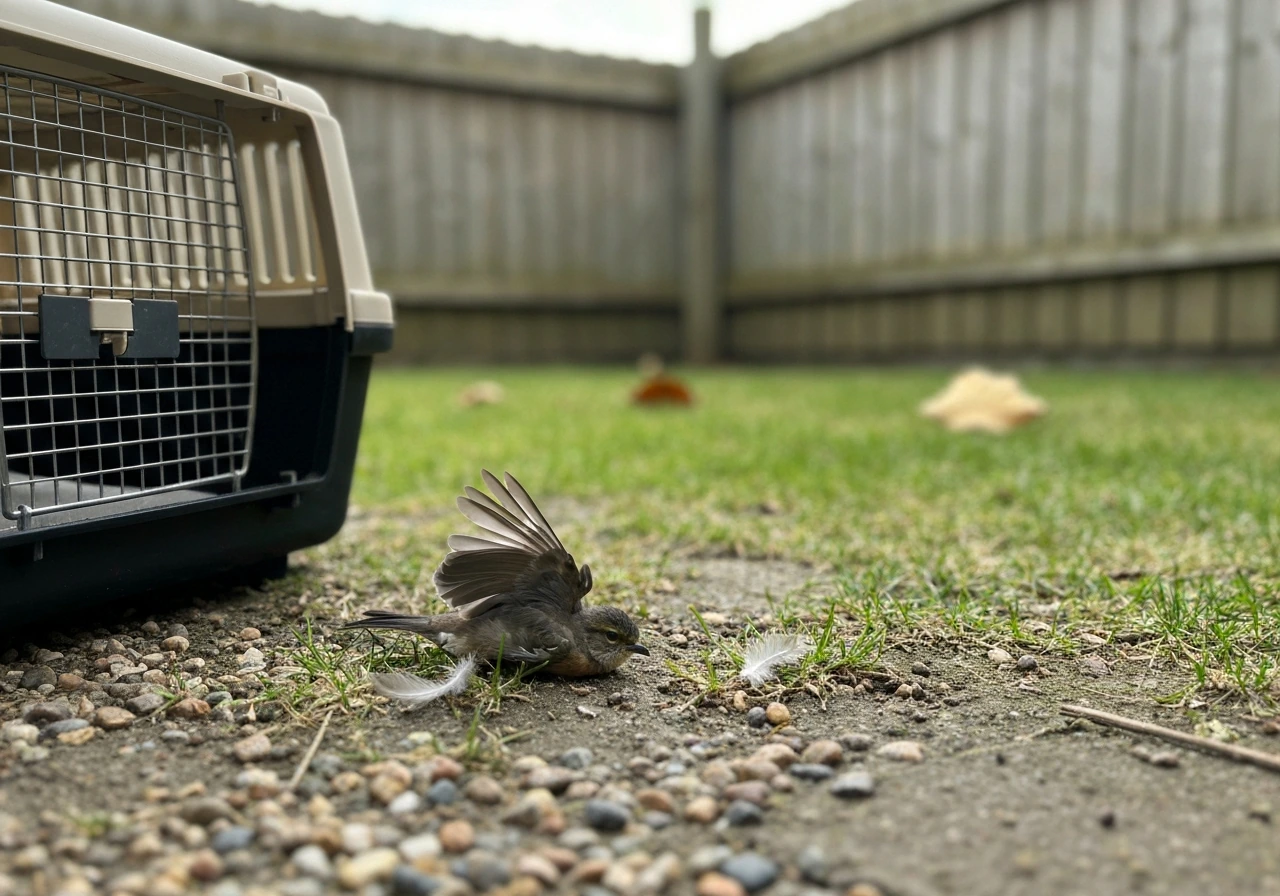
Cat and dog saliva contains bacteria (including Pasteurella) that are rapidly fatal to birds, often within 24 to 48 hours even from puncture wounds so small you can't see them. If a cat or dog has had the bird in its mouth, even briefly, that bird needs antibiotics from a vet or wildlife rehabilitator. Do not wait to see if it recovers on its own. Get it into a box using the steps above and make the phone call immediately. Check carefully for puncture wounds on the breast, back, and under the wings.
Broken wing or leg
A wing or leg at a visibly wrong angle means the bird cannot right itself or balance properly, which is why it ends up on its back. Do not try to splint or straighten the limb yourself. Improper splinting causes additional injury and pain. Your only job here is to contain the bird safely (a smaller box limits how much it can thrash), keep it warm and quiet, and get it to a vet or wildlife rehabilitator as quickly as possible. Broken bones in birds can heal well when treated early but deteriorate quickly without proper care.
When NOT to try to help: signs you need to call a professional right now
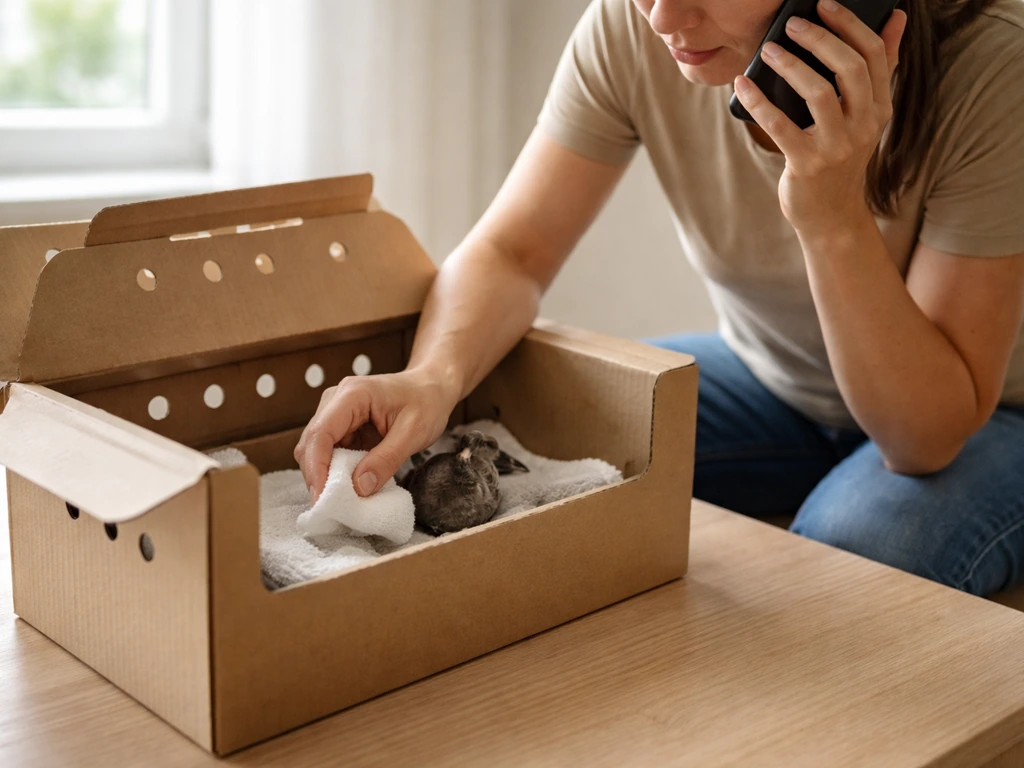
There are situations where amateur first aid isn't enough and every minute you spend trying to handle things yourself delays care that could save the bird's life. Call a licensed wildlife rehabilitator or avian veterinarian immediately if you see any of the following: If you need quick guidance on what to do if you find a sick bird, call a licensed wildlife rehabilitator or avian veterinarian right away.
- Bleeding that won't stop after five minutes of steady pressure
- Labored, open-mouthed breathing or the bird's tail is pumping with every breath
- Trembling, convulsing, walking in circles, or holding its head at a tilted or twisted angle
- A visibly broken bone with bone protruding through the skin
- Complete limpness or unresponsiveness (not just stillness)
- The bird is a hawk, owl, eagle, heron, or any large raptor
- The bird was caught by a cat or dog
- The bird has been on its back for more than 30 minutes with no improvement
To find help near you, search Wildlife Rehabilitators in [your state/country] or use the NWRA (National Wildlife Rehabilitators Association) directory online. In the US, you can also call your local animal control or humane society and ask for a wildlife referral. In the UK, the RSPCA and Scottish SPCA both run helplines for exactly this kind of call. Keep the bird in its box, warm and quiet, while you make the call.
Baby bird or adult? What to do changes depending on the answer
Nestlings (very young babies)
Nestlings have sparse or no feathers, closed or barely open eyes, and look completely helpless. They belong in a nest. If you can see the nest nearby, put on a pair of gloves and gently place the baby back in it. The old myth that parent birds will reject a baby that's been touched by humans is false. Parents recognize their young by sound and sight, not smell. The US Fish and Wildlife Service is explicit on this: if you can locate the nest, put the baby back. Then step well away and watch from a distance for 30 to 60 minutes to confirm a parent returns.
If the nest is destroyed, out of reach, or you genuinely cannot find it, make a substitute nest: a small plastic container lined with dry grass or paper towels works well. Attach it to a nearby tree or shrub at roughly the height where you found the bird, out of direct sun. Watch for parents. If no parent appears within an hour, or if the baby is visibly injured, call a wildlife rehabilitator. Do not try to raise a nestling yourself. They need feeding every 15 to 30 minutes and specific food that most people don't have on hand.
Fledglings (older babies learning to fly)
Fledglings look like small, fluffy versions of the adult bird. They hop around on the ground, can't fly well yet, and often look like they need rescuing when they actually don't. This is normal bird development. Their parents are almost certainly nearby and still feeding them. The best thing you can do for an uninjured fledgling on the ground is leave it alone, keep pets and children away, and let the parents continue their work. Only intervene if the bird is visibly injured (bleeding, broken limb), is in immediate danger from a predator or road, or has been on its back for more than a few minutes. If your bird seems sick, keep it warm and quiet, avoid feeding it, and contact a vet or wildlife rehabilitator for advice right away what to do if my bird is sick.
Keeping the bird safe until help arrives
The box you set up earlier is exactly right for transport too. When it's time to move the bird, keep the box level and minimize vibration as much as possible. In a car, put the box on the floor of the back seat rather than on the seat itself, where it might slide. Keep the car quiet (no loud music) and avoid sudden braking. Heat and stress are the two biggest killers during transport.
A quick checklist of what to avoid while waiting:
- Do not try to force the bird to stand, walk, or fly to 'test' it
- Do not offer bread, seeds, worms, water, or any food or drink
- Do not keep opening the box to check on the bird (once every 30 minutes is plenty)
- Do not place the box in direct sunlight or on a surface that gets hot
- Do not handle the bird more than necessary or let children or pets near it
- Do not attempt to treat wounds beyond basic pressure for bleeding
- Do not leave the bird outside in the box unattended where other predators can reach it
A bird that's quiet in the box isn't necessarily improving or declining. It's conserving energy. That's exactly what you want. Darkness triggers a calming response in most birds, which is why the covered box works so well. If you've also noticed the bird is breathing unusually fast, this connects closely to stress levels and potentially something more serious, and fast breathing alongside the back-lying posture is one of the clearest signals to stop waiting and make the call to a professional.
Once the bird is in the hands of a rehabilitator or avian vet, the hard part is done. Most stunned window-strike birds that get proper care recover completely. Even genuinely injured birds have good outcomes when they reach care quickly. You've done the right thing by acting carefully rather than rushing.
FAQ
How long should I wait before calling for help if the bird is on its back?
If it is a small, window-strike bird with no obvious bleeding or deformities, monitor in the covered box for up to two hours. If you see fast or labored breathing, a wing or leg held at a wrong angle, no response to your approach after a minute, or it has been on its back longer than a few minutes, call a wildlife rehabilitator or avian vet sooner.
Should I try to “wake up” a stunned bird by moving it or blowing on it?
No. Don’t shake, reposition repeatedly, or apply air blows. Keep the bird warm and quiet, reduce stress, and allow it time to regain coordination. Unnecessary handling can worsen shock and make stabilization harder.
What temperature should I keep the bird’s box at?
Aim for warmth without heat. Use a towel-lined, covered box and provide gentle warmth (for example, a warm not hot heat source near the outside of the box, not directly touching the bird). If you can comfortably hold your hand near the heat source without discomfort, it’s usually in the right range.
Do I need to cover the entire box, and should I keep it dark the whole time?
Covering helps most birds stay calm. Keep the box mostly covered so the bird has darkness and quiet, but ensure air flow and visibility for you to monitor breathing and leg or wing position.
Can I give an injured bird water if it looks dehydrated?
Generally no. Avoid food and water for birds on their back, especially if they are stunned, stressed, or may have breathing issues. Forced fluids can lead to aspiration. Offer fluids only if an avian professional instructs you.
What if the bird starts flapping hard or tries to escape while I’m waiting?
If it is flapping but cannot right itself, that still often fits a stunned window-strike scenario. Keep the bird contained in the box, reduce vibration, and do not force it upright. Call if breathing looks fast or difficult, or if it is clearly bleeding or has a misaligned limb.
How do I tell the difference between a baby that fell and a fledgling that should be left alone?
Nestlings are usually mostly bare or sparsely feathered with closed or barely open eyes, and they belong in a nest. Fledglings have more developed feathers, can hop and flutter, and often look ready but are not fully flying yet, so the default is to leave them alone unless they are injured or in immediate danger.
If I can’t find the nest for a nestling, where should I put the substitute container?
Place the substitute nest at about the height where you found the baby, in dry, sheltered conditions, away from direct sun. Attach it so it won’t tip, then watch from a distance for about an hour. If no parent shows up within that time or the baby is visibly injured, contact a wildlife rehabilitator.
My cat or dog was nearby and the bird had time in its mouth, what should I do?
Assume bacterial infection risk even if there are no obvious puncture marks. Put the bird in the covered box, keep it warm and quiet, and call immediately for vet or wildlife rehab care. Don’t wait for symptoms later.
What should I do if the bird seems to have an injured wing or leg?
Do not straighten, splint, or massage the limb. Keep the bird in a smaller covered box to limit thrashing, handle as little as possible, and get professional care quickly. Misalignment often prevents the bird from righting itself, and improper attempts can worsen damage.
Is it safe to place the bird back outside after it “looks better”?
Only after it is alert, upright, and can grip normally, and ideally after the monitoring window for typical stunned window-strike cases. Move it outside near low vegetation and open the box so it can leave on its own, but if it still can’t right itself or seems disoriented, call for help again.
What’s the safest way to clean up after handling the bird?
Wash hands thoroughly with soap and water immediately after handling, including after removing gloves or touching the towel. Also wash any towel or fabric used for containment, and avoid touching your face until hands are cleaned.
Next Article
What to Do If a Bird Is Breathing Fast: First Aid
Step-by-step first aid for a bird breathing fast: assess urgency, keep warm, reduce stress, avoid harm, and get help.