If a bird has stopped eating, the most important thing you can do right now is keep it warm, quiet, and safe while you figure out why. Do not try to force food or water into its beak. If you suspect choking, follow the choking steps immediately and contact a vet or rehabber for guidance what to do if your bird is choking. Get it into a dark, calm space at around 85 to 90 degrees Fahrenheit and then work through the steps below to decide whether this is a wait-and-watch situation or a call-a-professional-immediately situation. If you find a sick bird, contact a wildlife rehabilitator or avian vet right away for guidance and next steps call-a-professional-immediately. In most cases involving wild birds, the answer is: call a wildlife rehabber today.
What to Do If a Bird Is Not Eating: Step-by-Step
Quick triage: why the bird may not be eating
Birds stop eating for a handful of reasons, and the cause shapes everything you do next. Running through this list quickly will help you prioritize.
- Shock or stress: A bird that has just experienced a window strike, a cat attack, or any sudden trauma often goes into shock. It will sit still, look dazed, and refuse food. This is a survival response, not stubbornness.
- Injury: A broken wing, fractured leg, or damaged beak can physically prevent a bird from eating or perching to eat. Even if the injury looks minor from the outside, internal damage may be present.
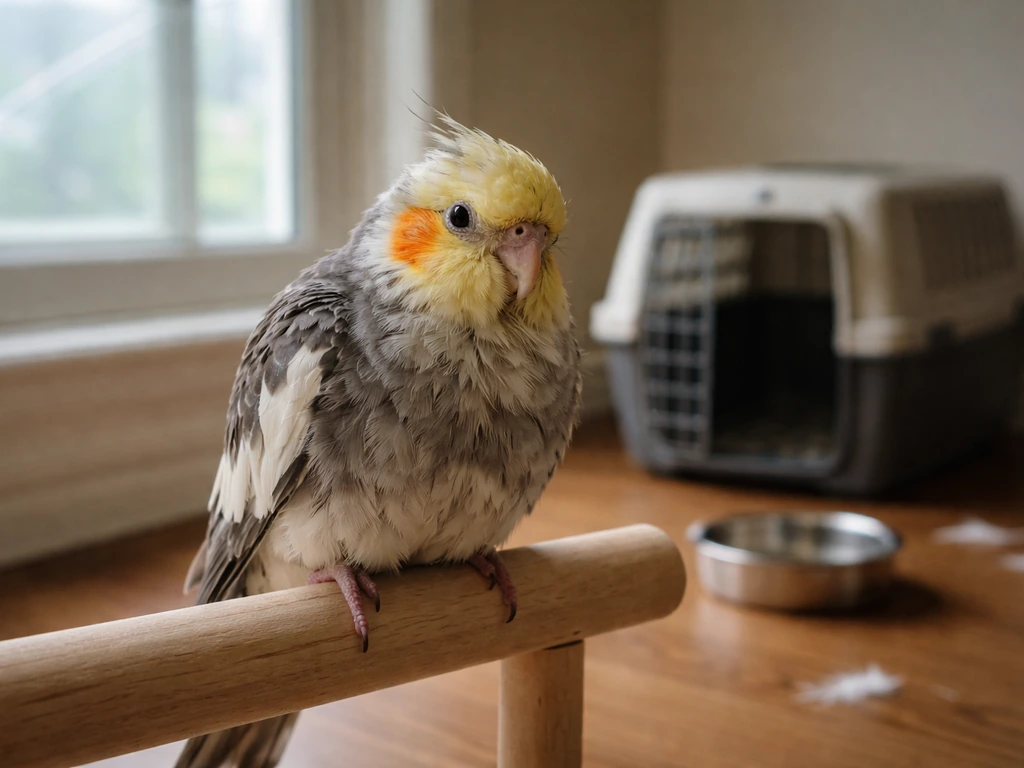
- Dehydration: A dehydrated bird often looks fluffed up, has sunken eyes, and lacks the energy to eat. Dehydration and refusal to eat usually spiral together quickly.
- Illness: Sick birds mask symptoms until they are seriously unwell. A bird sitting on the ground or at the bottom of its cage, fluffed up and quiet, is almost always more ill than it looks.
- Nestling or fledgling confusion: Young birds that have left the nest may appear to be starving and abandoned when they are actually being fed intermittently by parents nearby.
- Environmental stressor (pet birds): A change in location, a new person in the home, a different food brand, or even moving the cage can cause a pet bird to stop eating temporarily.
The biggest mistake I see people make is assuming the bird just needs food. A bird in shock or with a head injury that swallows food or water can aspirate it into its lungs, which can be fatal. Triage first, feed later if at all.
Immediate steps at home: warmth, quiet, and safe support
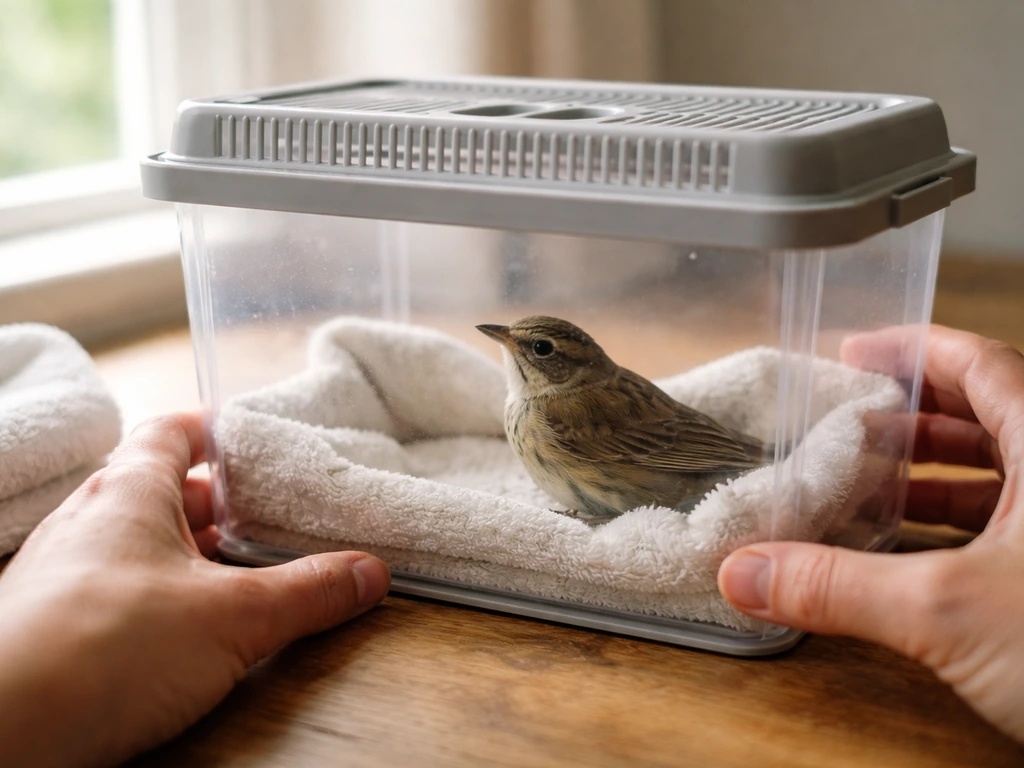
Before you do anything else, get the bird into a safe, contained space. For a wild bird, a cardboard box with a few small air holes punched in the sides and some crumpled paper towels on the bottom works well. Keep the box in a dark, quiet room away from pets, children, and noise. For a pet bird, cover the cage with a light cloth and move it to a calm part of the house.
Warmth is critical. A sick or injured bird burns enormous energy just trying to stay warm, and that energy is needed for healing. Aim for an enclosure temperature of around 85 to 90 degrees Fahrenheit. You can achieve this by placing a heating pad on the lowest setting under one half of the box (not the whole bottom, so the bird can move away if it gets too warm), or by positioning a warm water bottle wrapped in a cloth against one side. A PetMD guideline specifically recommends keeping an unwell bird close to 90°F during transport and supportive care.
One important exception: if the bird has just had a significant head injury, such as a hard window strike with signs of neurological symptoms like head tilting, circling, or seizures, do not apply supplemental heat. Heat can increase brain swelling in these cases. Keep the bird in a quiet, room-temperature environment and contact a rehabber or vet immediately.
Minimize handling as much as possible. Every time you pick up the bird, its stress hormones spike. Use a soft cloth or light gloves if you need to move it, support its body fully, and put it down as soon as it is in its safe space. Then leave it alone. Seriously, check on it every 30 minutes at most, and do it quietly.
Food and water: what to offer and what to avoid

This section may surprise you: for most injured or distressed wild birds, the correct answer is to offer nothing right now. Audubon and most wildlife rehabilitation guidelines are explicit that you should not attempt to feed or give water to a wild bird, especially a young one. A bird in shock, with a head injury, or with a respiratory problem can aspirate liquid directly into its lungs if you try to give water. That aspiration can kill it faster than hunger.
If you have a pet bird that has stopped eating and is otherwise alert, perching normally, and showing no emergency signs (more on those below), you can try offering its usual food in its usual dish. Do not switch foods during a stressful period. Do not offer new treats, human food, dairy products, avocado, chocolate, onion, or anything from the toxic list. Fresh water in a shallow dish is fine to leave available, but do not try to drip water into its beak or use a syringe to give fluids unless a vet has specifically told you to.
The Merck Veterinary Manual is very clear on this point: do not force-feed a bird unless you have been specifically instructed to do so by an avian veterinarian. Forced feeding without the right technique causes aspiration, stress injuries, and can rupture the crop. When in doubt, leave food available and let the bird choose.
| Item | Safe to offer? | Notes |
|---|---|---|
| Fresh water in a shallow dish | Yes, for alert pet birds | Do not force or syringe-feed |
| The bird's usual seed/pellet diet | Yes, for alert pet birds | Only if bird is stable and perching |
| Mealworms or insects (wild songbirds) | Only if instructed by rehabber | Not appropriate for birds in shock |
| Bread, crackers, or human food | No | Low nutrition and potentially harmful |
| Milk or dairy products | No | Birds cannot digest lactose |
| Avocado, chocolate, onion, garlic | No | Toxic to birds |
| Water via dropper or syringe | No, unless vet-instructed | High aspiration risk in distressed birds |
| Electrolyte solutions | Only if vet-instructed | Do not improvise at home |
What's likely happening based on your specific situation
You found a wild bird that isn't eating
If the bird is sitting on the ground and can't fly away, something is wrong. Box it up, keep it warm and quiet, and call a wildlife rehabber. Do not attempt to feed it. The rehabber will assess it properly and provide species-appropriate care that you simply cannot replicate at home.
Window strike
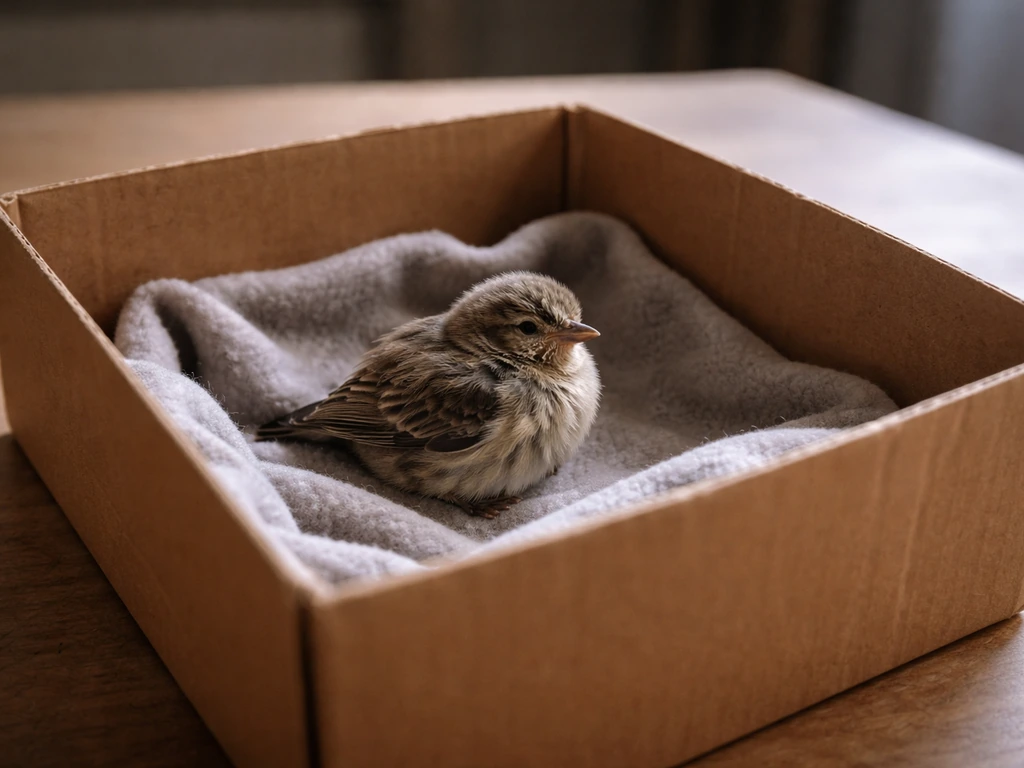
After a window strike, a bird may sit stunned for 20 to 30 minutes and then recover and fly away on its own. Place it in a dark box in a quiet space and wait. Do not offer food or water. Check after 30 minutes. If it is alert and upright, you can take it outside and open the box to allow it to leave. If it is still dazed, lethargic, or showing neurological signs after an hour, treat it as an emergency and contact a rehabber. Related symptoms like fast breathing after a strike are a serious warning sign.
Pet attack (cat, dog)
Even if you see no visible wounds, a bird that has been grabbed by a cat or dog needs veterinary care within hours, not days. Cat saliva contains bacteria that cause fatal septicemia in birds very quickly, often within 24 to 48 hours. Do not wait to see if the bird starts eating again. Box it up and get it to a wildlife rehabber or avian vet today.
Injured wing, leg, or beak
A bird with a visibly broken or damaged wing, a dangling leg, or a cracked beak cannot eat normally and may be in significant pain. Do not try to splint or bandage anything at home unless you have been trained to do so. Improper wrapping can cut off circulation and cause permanent damage. Keep the bird contained, warm, and still, and get it to a professional as soon as possible. If you notice the bird is not moving at all, that may indicate a more serious condition worth investigating further alongside this situation. In that case, treat it as a potential emergency and use the steps for an unresponsive bird to keep it warm and safe If you notice the bird is not moving at all.
Nestling or very young bird
First, figure out what you actually have. A featherless or barely feathered nestling with closed eyes is genuinely vulnerable and needs help. A fully feathered fledgling that is hopping around is almost certainly fine and is likely being fed by its parents nearby even when you do not see them. The U.S. Fish and Wildlife Service advises that a baby bird likely does not need intervention unless it is featherless and its eyes are closed. If you have a true nestling, try to locate the nest and return it. If that is not possible, contact a wildlife rehabber. Do not attempt to feed it.
Your pet bird stopped eating
Pet birds hide illness extremely well. By the time a companion bird shows obvious signs of not eating, it has often been unwell for longer than you realize. Check for environmental causes first: was anything changed recently in its routine, food, location, or household? If nothing obvious is different and the bird has been off food for more than 24 to 48 hours, contact an avian vet. If your bird is sick and you are not sure what emergency option fits best, also review what to do if my bird is sick and when you should call for help call a vet. Do not wait a week to see if it picks back up.
Warning signs that mean get help right now
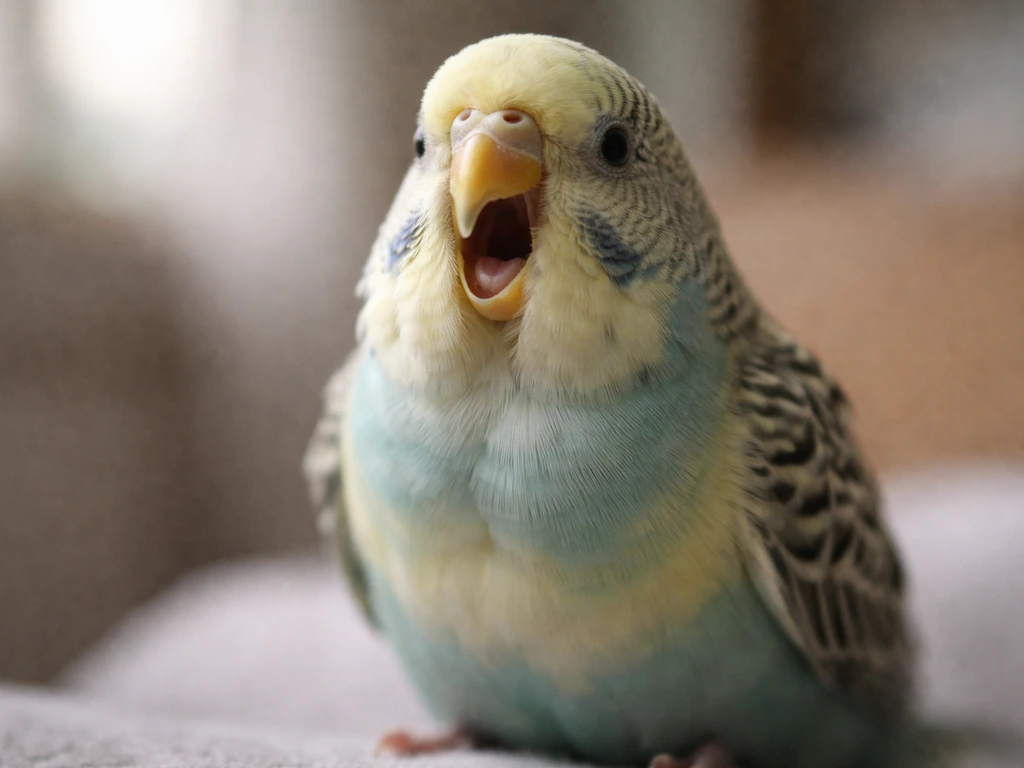
Some signs mean you skip the home-care steps and go directly to professional help. Do not wait to see if the bird improves on its own if you observe any of these.
- Open-mouth breathing at rest: This is a very serious sign. Healthy birds do not breathe with their mouths open unless they are extremely hot. If a bird is doing this at room temperature, it is in respiratory distress.
- Labored or rapid breathing: Fast, visible movement of the chest or tail bobbing with each breath signals a potential respiratory emergency.
- Unable to stand, perch, or grip: A bird sitting flat on the cage floor or on the ground unable to right itself is critically unwell.
- Bleeding that does not stop: Any active bleeding needs professional attention immediately.
- Neurological signs: Head tilting, circling, falling over, or seizure-like movements indicate a serious brain or nervous system problem.
- Extreme lethargy or unresponsiveness: A bird that does not respond to gentle nearby movement or sound is critically ill.
- Sunken eyes or skin that stays tented when gently pinched: These are signs of severe dehydration.
- Any symptom in a bird that has been grabbed by a cat: As above, this is always an emergency regardless of how the bird looks.
If you notice the bird is also on its back or barely moving, those are additional red flags worth treating as urgent alongside the refusal to eat.
How to find the right help and what to tell them
For wild birds, your first call should be to a licensed wildlife rehabilitator. The fastest ways to find one near you are: blank" rel="noopener noreferrer">searching the Animal Help Now app or website (animalhelpnow.blank" rel="noopener noreferrer">org), which locates the nearest wildlife emergency resources in the U.S. in real time; calling your local Audubon Society chapter; or contacting your local animal control or animal services department if you cannot reach a rehabber directly. Many rehabbers can give you phone guidance while you wait for transport.
For pet birds, you need an avian veterinarian, not a general practice vet if you can help it. The Association of Avian Veterinarians maintains a searchable directory at aav.org to help you find a board-certified or avian-experienced vet near you. If it is after hours and your regular avian vet is unavailable, look for an emergency exotic animal clinic in your area.
When you call, be ready to provide the following information clearly and quickly:
- What species the bird is, or your best description if you do not know (size, color, markings)
- Where and when you found it, or how long your pet has been off food
- What happened, as best you know (window strike, cat attack, gradual decline, etc.)
- What symptoms you are seeing right now (breathing, posture, responsiveness, visible injuries)
- What you have done so far (boxed it, applied heat, offered food or water)
- Your location and how quickly you can transport the bird
The more specific you are, the faster they can help you. Do not downplay symptoms to avoid seeming dramatic. Rehabbers and avian vets hear it all, and accurate information gets the bird better care.
Aftercare, recovery timelines, and thinking about release
Once a professional is involved, follow their instructions precisely. Do not add supplemental foods, supplements, or home remedies without checking first. Even well-meaning additions can interfere with treatment.
If you are caring for a pet bird at home while awaiting a vet appointment, keep it warm, quiet, and in a reduced-space enclosure so it does not injure itself trying to climb or fly. Lower perches or remove them temporarily if the bird cannot grip safely. Check food and water availability twice a day without disturbing the bird more than necessary. Keep a simple log of what it eats and drinks, its droppings (color, consistency, volume), and any behavioral changes. This information is genuinely useful to the vet.
Recovery timelines vary enormously. A stunned bird after a window strike that shows no serious injury may be ready to release within two hours. A bird with a fractured wing may need six to eight weeks of care at a rehabilitation facility before it can be released. A pet bird recovering from illness may take days to weeks to resume normal eating patterns even after the underlying cause is treated.
For wild birds, the goal is always release back to the appropriate habitat. Release decisions should be made by the rehabber, not by you, even if the bird seems fine at home. A bird that cannot forage, fly properly, or defend itself will not survive in the wild no matter how recovered it appears in a box in your living room. Trust the professionals on this one.
To prevent repeat problems: if a window strike brought the bird to you, apply window collision deterrents such as external screens, decals, or UV-reflective tape to the glass. If a pet cat or dog was involved, review your outdoor supervision practices. For pet birds that repeatedly go off food, schedule a full wellness exam with an avian vet to rule out underlying conditions rather than waiting for the next crisis to appear.
FAQ
If I’m not sure whether the bird is wild or a pet, what should I do while deciding what to do next?
Start with triage steps that fit both situations: keep the bird warm (around 85 to 90°F), quiet, and contained, avoid handling, and do not try to force food or water. Then treat it as “needs a professional now” if it is grounded, very lethargic, on its back, or you suspect injury, cat or dog contact, or neurological signs.
Can I offer seeds or favorite food because it feels safer than giving water?
Offer only the bird’s usual diet if it is a pet and otherwise alert, perched normally, and without emergency signs. For wild birds, do not feed at home. Avoid switching foods or adding treats, and do not crumble food directly into the beak, that increases aspiration risk if the bird is not swallowing normally.
How long should I wait for a bird to start eating again before I consider it an emergency?
For a pet bird, do not wait a week, and in general contact an avian vet if it has been off food for more than 24 to 48 hours, sooner if other symptoms are present. For wild birds, especially grounded or injured ones, the expectation is to contact a rehabber immediately rather than waiting for appetite to return.
What if the bird is eating a little but still seems off?
Do not assume “some eating” means it is fine. Track droppings, breathing, posture, and activity, and contact a professional if you see continued lethargy, fluffed or hunched posture, discharge, labored or fast breathing, or abnormal droppings (very reduced volume, drastic color change, or watery runny droppings).
Is it ever safe to give water by syringe or by dripping into the beak?
Only if an avian vet has specifically instructed you for that bird. Otherwise, avoid any attempts to drip or syringe water, because liquid can enter the airway if the bird cannot coordinate swallowing, leading to aspiration.
The bird won’t swallow or seems to cough when I offer food, what should I do?
Stop offering food immediately and keep the bird warm and quiet. Coughing or gurgling can indicate airway trouble. Treat it as a professional case the same day, because aspiration can worsen after the initial event.
My pet bird is refusing food but looks otherwise normal. Should I change its diet to something more appealing?
Do not switch foods during the stressful period. Keep the bird’s usual food available in its normal dish, and focus on supportive care (warmth, quiet, reduced space). If it still does not eat reliably, contact an avian vet rather than experimenting with new foods.
What emergency signs mean I should call for help right away, even before the bird eats?
Call for help immediately if you see seizures, circling or head tilting with abnormal coordination, severe weakness or inability to stand, the bird is on its back or barely moving, obvious breathing difficulty or persistent fast breathing, a suspected cat or dog bite or scratch, or inability to grip and maintain posture.
If a wild bird looks like it might be a fledgling, should I still place it in a box and wait?
Do a quick check first: if it is fully feathered and hopping around, it is often a fledgling and usually does not need rescue. If it is grounded, cannot fly away, or seems injured, then box it for warmth and quiet and contact a rehabber, and do not feed it.
What should I do if I suspect crop problems or constipation because it isn’t eating?
Do not try home treatments, massage, or forced feeding. Keep the bird warm and contained and contact an avian vet promptly, because crop stasis and obstructions can become dangerous quickly and require assessment and specific management.
The bird is breathing fast or has noisy breathing, should I change temperature or provide oxygen?
Keep the bird warm and calm, do not add medications, and do not attempt DIY oxygen. Fast or noisy breathing is a serious sign, for pet birds contact an avian vet urgently, and for wild birds contact a wildlife rehabber immediately for transport guidance.
How can I help a rehabber or vet faster when I call? What details matter most?
Bring together timing (when it was found, when it stopped eating), suspected cause (window strike, fall, cat or dog contact, chemical exposure, unknown), current behavior (alert vs lethargic, able to perch or stand), breathing (normal or fast), and elimination (dropping color and consistency, if you have it). A short log with timestamps is more useful than general statements.
What should I avoid doing at home while waiting for a professional?
Avoid force-feeding, syringing water, changing diets, applying heat to a significant head injury, using bandages or splints without training, letting it roam around for “exercise,” and adding supplements or home remedies unless the professional told you to. Also keep it away from pets and children to prevent additional stress or injury.