If your bird is choking right now, stay calm and act fast: hold the bird gently upright, check whether you can see the obstruction at the very tip of the beak or in the front of the mouth, and if it's visible and reachable, carefully remove it with your fingers or blunt tweezers. If you can't see or safely reach it within a minute or two, call an avian vet or wildlife rescue immediately while keeping the bird warm, quiet, and upright. Don't try to flush the throat with water, don't shake the bird violently, and don't waste more than a few minutes attempting home removal before getting professional help on the phone.
What to Do If Your Bird Is Choking: Emergency First Aid
Marcus Chen
2 May 2026
Is your bird actually choking? Telling it apart from other breathing emergencies
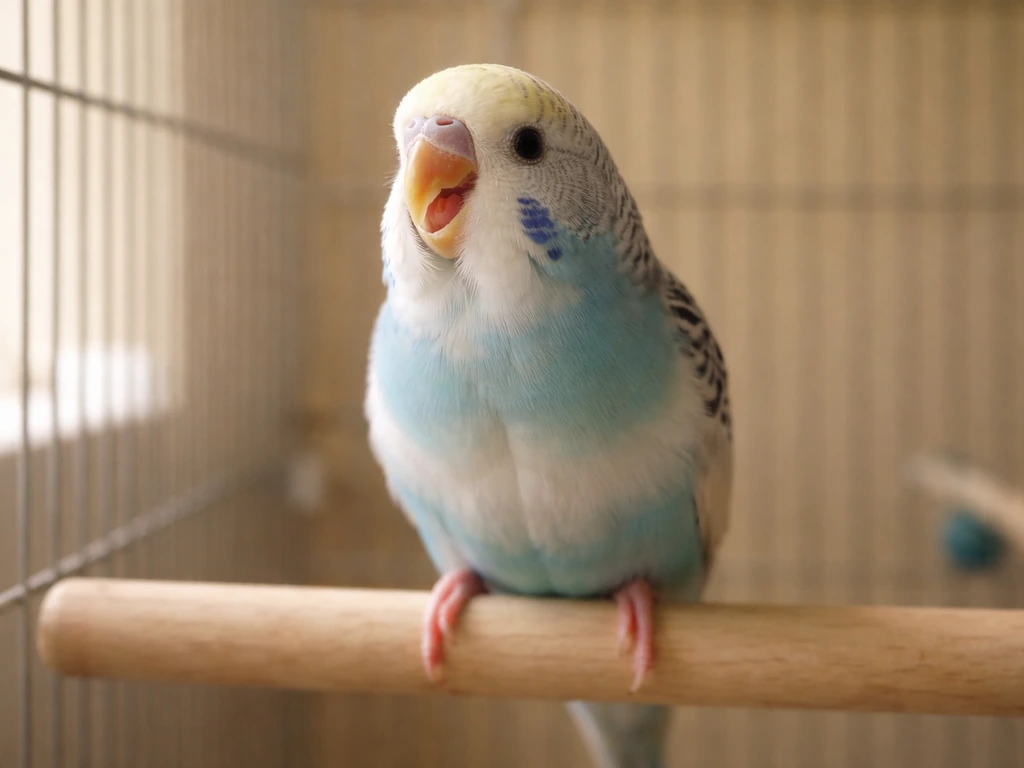
This matters because the right response depends on what's actually happening. Choking means there's a physical object or food blocking the airway or throat. Other breathing emergencies, like a respiratory infection, air sac damage, smoke inhalation, or heart trouble, can look very similar at a glance but need completely different care. Treating the wrong problem can make things worse.
Signs that point toward a true obstruction (choking) include: the problem came on suddenly, especially right after eating or playing with an object; the bird is stretching its neck forward and opening its mouth repeatedly as if trying to dislodge something; you might see gagging, head-shaking, or pawing at the beak; and the distress started quickly rather than building over hours or days.
Signs that suggest a different kind of breathing emergency, not choking, include blank" rel="noopener noreferrer">open-mouth breathing that's been going on for a while, a clicking or wheezing sound with each breath, tail bobbing with every breath (a classic sign vets call increased sternal motion), discharge from the nostrils, or a bird that looks sick and lethargic rather than suddenly panicked. Those signs point more toward respiratory infection, air sac disease, or another illness. If your bird is breathing fast with a bobbing tail but hasn't recently eaten or mouthed an object, the situation is still urgent but the cause is probably not a blockage.
When in doubt, treat it as an emergency either way. If your bird is not moving, treat it as an emergency and call an avian vet or wildlife rescue right away. Both situations need professional evaluation quickly. The distinction helps you decide whether to spend 60 seconds attempting to help or to go straight to the phone.
Immediate first aid steps for a choking bird
Work through these steps calmly and quickly. Every second counts, but panic causes you to squeeze too hard or fumble, which can injure the bird further.
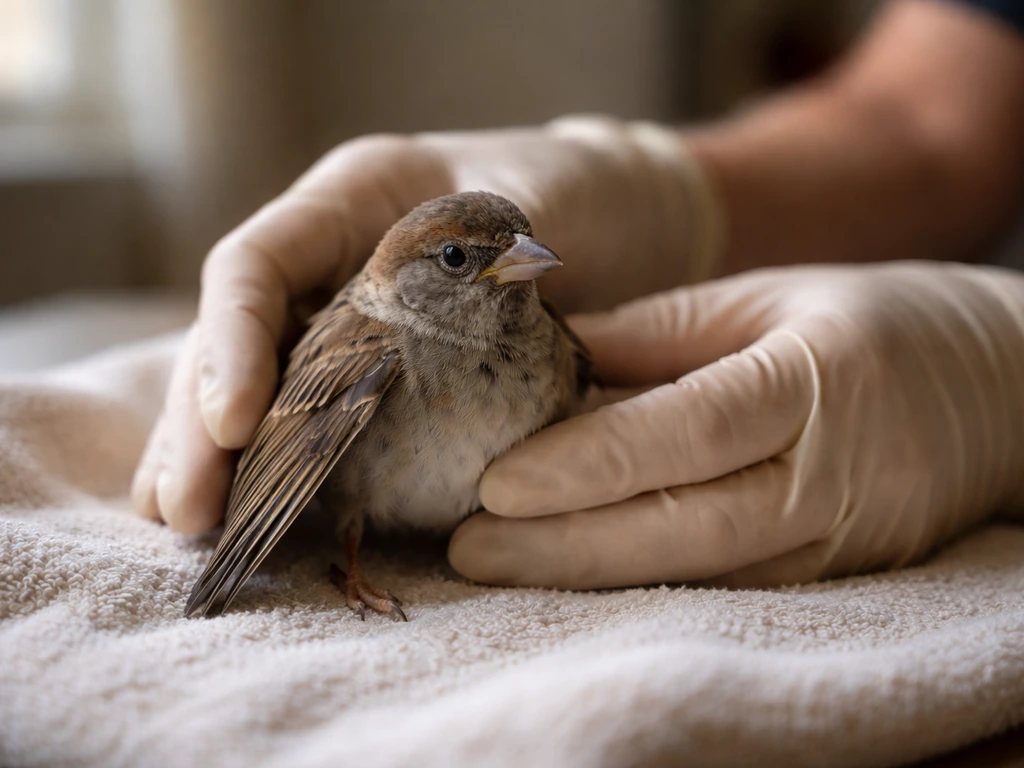
- Secure the bird gently. Cup the bird in both hands with its head facing up and its body supported. Don't squeeze the chest, as birds breathe by expanding their body wall and compression can stop breathing entirely.
- Keep the bird upright. Gravity helps. Tilting the head very slightly forward (not backward) may help a loose object shift.
- Look in the mouth. Open the beak gently (see the next section on how to do this safely) and look for a visible obstruction. Use a flashlight if you have one nearby.
- Remove only what you can clearly see. If a piece of food, seed, or small object is sitting right at the entrance of the throat or mouth, use a clean finger or the blunt end of a smooth tweezer to gently scoop it toward you and out. Do not push anything further in.
- If nothing is visible but the bird is still struggling, try one firm, controlled back pat. Hold the bird face-down at roughly a 45-degree angle and give one or two firm but not violent taps between the shoulder blades with a finger. This is a bird-adapted version of the Heimlich principle: a sudden compression to dislodge the object. Do this only once or twice.
- Check again. After the pat, look in the mouth again. If the object has moved into view, remove it carefully.
- If the bird still can't breathe after two to three minutes of attempts, stop home first aid and call a vet or wildlife rescue right now. You are not giving up — you are getting real help.
A reminder from the field: first aid for birds is stabilization, not treatment. The goal is to buy time and keep the bird safe until a professional can help. You are not expected to perform surgery with your fingers.
How to check the beak and throat safely (and what to absolutely avoid)
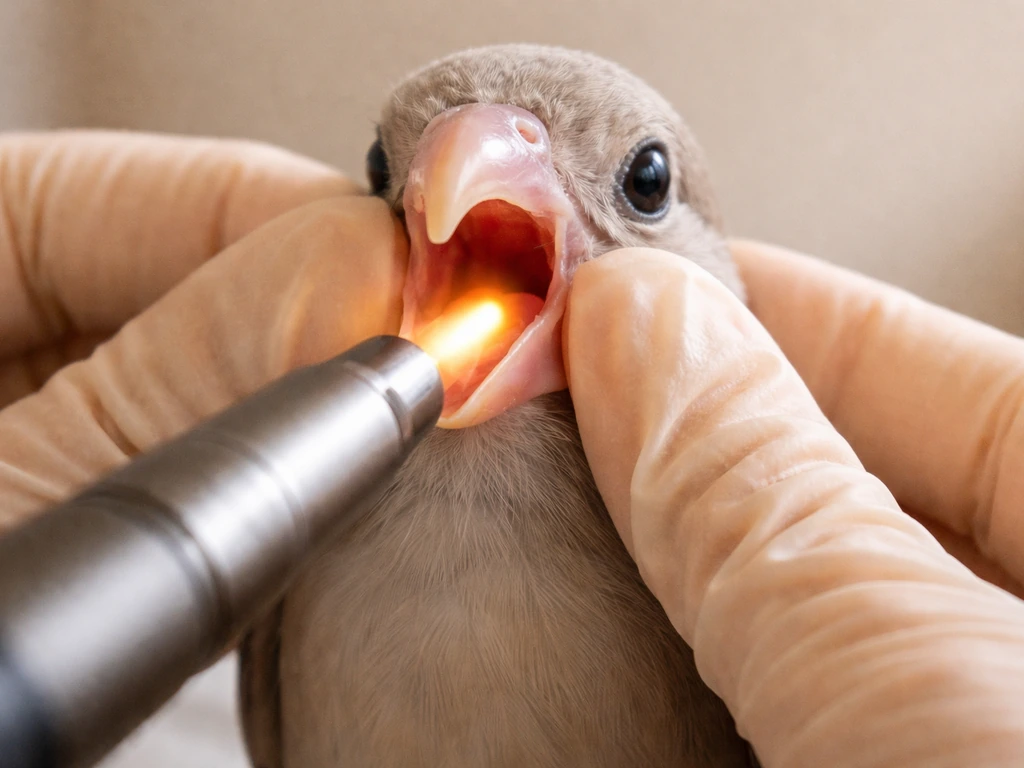
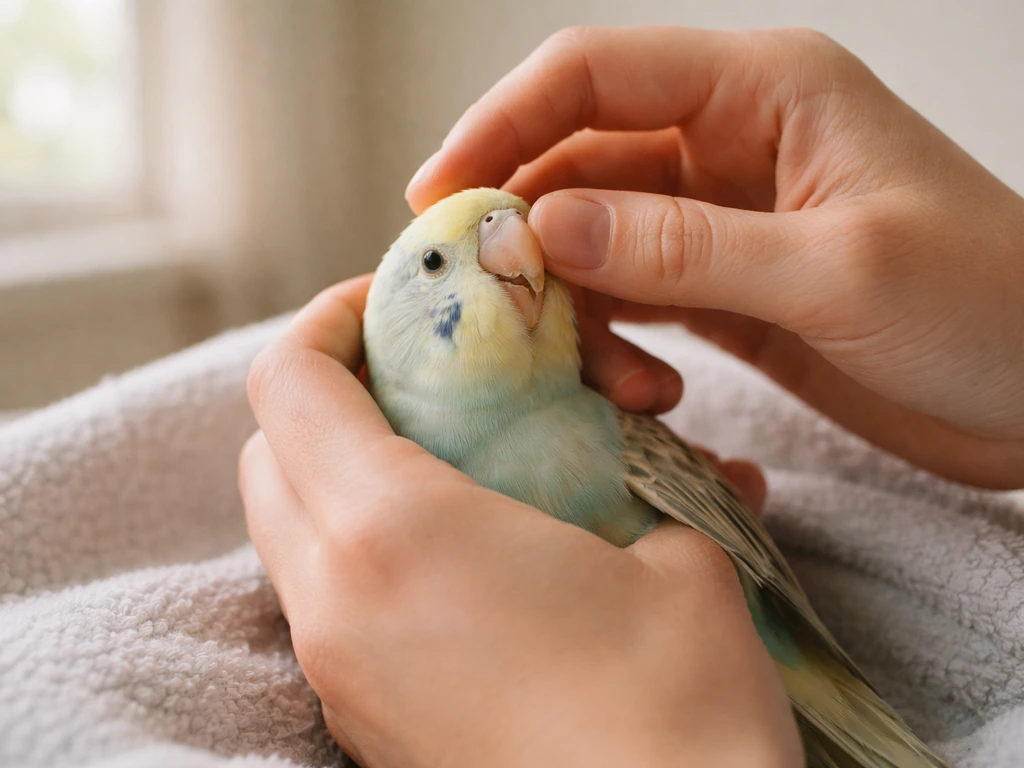
Opening a bird's beak without hurting it takes a light touch. For small pet birds like budgies or cockatiels, place a thumb and forefinger on either side of the upper beak and apply very gentle, even pressure. For larger parrots, use a thin, smooth object like the flat handle of a spoon placed at the corner of the beak to gently lever it open. For wild birds, wrap the bird in a cloth to reduce struggling, then follow the same approach. Never force the beak open by prying hard, as the beak joint can dislocate.
Once the beak is open, shine a light inside. The bird's throat is small and you won't be able to see deep into it. Only attempt to remove something that is clearly visible in the mouth or just inside the entrance to the throat. Use a clean fingertip or smooth, blunt tweezers (not sharp-tipped) to scoop gently outward. Move slowly and in one direction: toward you, not deeper.
What not to do
- Don't push anything deeper into the throat trying to grab it from the wrong angle.
- Don't use water, oil, or any liquid to try to 'flush' the blockage — this can cause aspiration and make things dramatically worse.
- Don't shake the bird hard or swing it by the feet (this is sometimes suggested online and is genuinely dangerous for small birds).
- Don't squeeze the bird's chest repeatedly — one or two controlled back pats is the limit.
- Don't probe blindly into the throat with fingers or tools if you cannot see the obstruction.
- Don't give any food or water while the bird is in distress.
- Don't leave the bird alone and unmonitored once you've started helping.
When to call an avian vet or wildlife rescue right now
Call immediately if: the bird is unconscious or collapsed; the bird's skin or beak looks bluish or very pale; you've attempted the steps above for two to three minutes with no improvement; the bird is a wild bird rather than a pet (wild birds need wildlife rehabilitation); or you are unsure what happened and the bird is clearly in serious distress.
When you call, be specific and quick. Tell them: the species if you know it, how long the bird has been in distress, what it was doing immediately before this started, what signs you're seeing right now (open mouth, neck stretching, color changes, collapse), and what you've already tried. This helps the vet or rehabilitator give you accurate phone guidance fast rather than starting from scratch.
If you don't have an avian vet's number saved, search 'avian vet near me' or 'wildlife rehabilitator [your city or county]' right now. Mass.gov also provides a way to find a licensed wildlife rehabilitator and notes that rehabilitators require a Federal Migratory Bird Rehabilitation permit to care for migratory birds Mass.gov provides a way to find a licensed wildlife rehabilitator. The Wildlife Center of Virginia and the National Wildlife Rehabilitators Association both maintain online directories. In the US, the Wildlife Rehabilitation Information Directory (WRID) can connect you to licensed rehabilitators quickly. Don't wait until you're certain it's a full emergency, call when you're worried, because phone triage is fast and free.
How to keep the bird calm while you wait for help
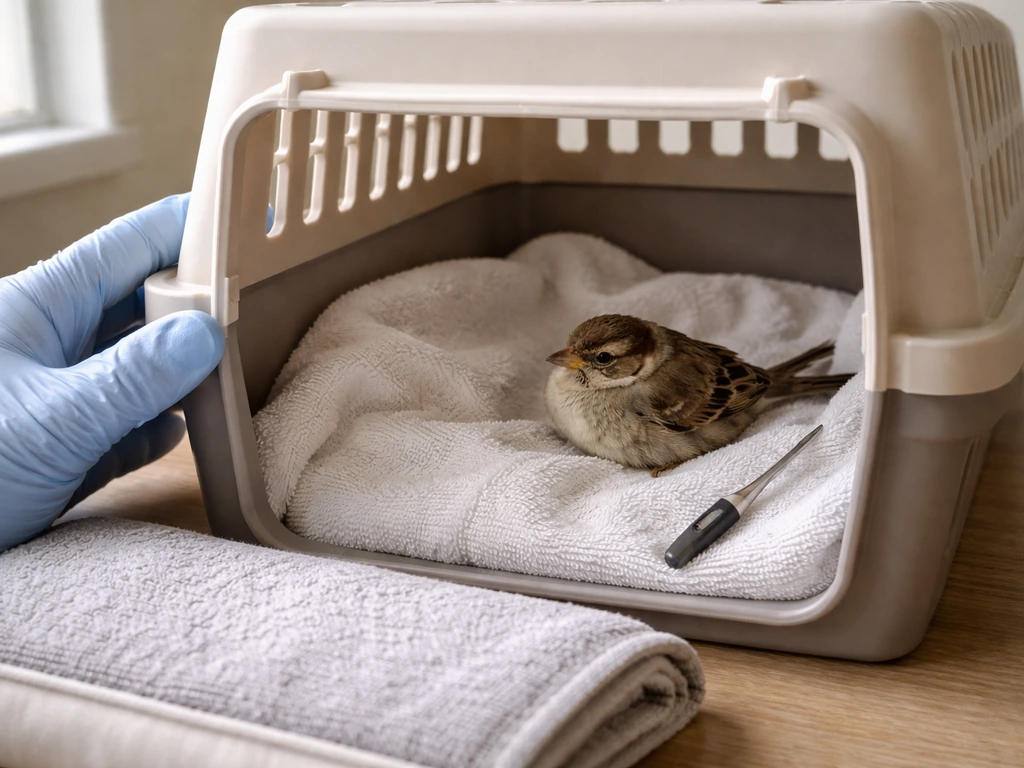
While waiting for a callback or preparing to transport, keep the bird warm, quiet, and contained. An ill or distressed bird should be kept at around 80 to 90 degrees Fahrenheit (27 to 32 degrees Celsius). You can achieve this by placing the bird in a small cardboard box with air holes, lined with a soft cloth, and setting it next to (not on top of) a warm water bottle wrapped in a towel. Keep the environment dark and quiet, as darkness reduces panic and stress in birds significantly. Do not offer food or water unless a rehabilitator or vet specifically instructs you to.
Once the bird is breathing normally: aftercare
If you successfully cleared the obstruction and the bird is breathing comfortably again, that's genuinely great news. But don't assume the emergency is completely over. Even a brief episode of choking can cause tissue irritation, minor trauma to the throat, or stress-related complications. Still get the bird seen by a vet, ideally within 24 hours, to rule out any secondary issues.
In the short term, keep the bird resting quietly in a calm, slightly warm environment. Offer water once the bird appears stable and alert, but skip solid food for a few hours to let any throat irritation settle. Monitor closely for the next several hours: watch for labored breathing returning, excessive head shaking, refusal to eat, lethargy, or any discharge from the mouth or nose. If your bird is refusing food, focus on safety and get veterinary advice, since lack of appetite can signal an underlying problem beyond choking refusal to eat. Any of those signs means the situation is not actually resolved and veterinary care is needed urgently.
If the bird is a wild bird that you helped through a choking episode, contact a wildlife rehabilitator before releasing it. Even if it looks fine, a quick assessment ensures it's genuinely healthy enough to survive on its own.
Preventing choking and keeping birds safe going forward
Most choking incidents in pet birds are preventable with a few straightforward adjustments to their environment and diet.
- Food size matters: cut or break food into small, bird-appropriate pieces. Large chunks of fruit, vegetable, or treats are common culprits. For smaller birds like budgies and finches, ensure seeds and pellets are the correct size for the species.
- Supervise foraging play with new foods, especially anything sticky, fibrous, or that could clump (like some soft fruits, bread, or cooked grains).
- Audit the environment for small objects: bottle caps, beads, jewelry, small toy parts, rubber pieces, and hair ties are all choking hazards. Birds explore with their beaks constantly.
- Be cautious with toys that have fraying rope, loose threads, or parts that can be chewed off and swallowed. Inspect toys regularly.
- Keep birds away from areas where they could access unsafe materials: workshop areas, craft supplies, hardware, or anywhere with small hardware like screws and staples.
- Don't offer foods that are inherently risky: stringy vegetables (like celery strings), large seeds not appropriate for the species, or anything slippery enough to slide down the throat whole.
- For wild birds visiting feeders, use fresh, dry seed free of mold clumps. Wet or moldy seed can clump and create hazards, and it can also cause respiratory illness.
Choking is frightening in the moment, but knowing what to look for and what to do first means you're already in a much better position than most people. Keep your avian vet's number somewhere easy to find, and don't hesitate to call early when something feels wrong. Quick action, even just picking up the phone, is almost always the right move. If the bird is on its back, focus on keeping it upright and calling for guidance so you don't waste time with the wrong approach what to do if a bird is on its back.
FAQ
What if my bird is still struggling after the first attempt to remove the obstruction? Should I keep trying?
If your bird starts choking while you are already holding it or you already called for help, stop trying new methods. Keep it upright and warm, check only the front of the beak for something you can clearly see, then pause. Spend no more than a couple of minutes on any one attempt, because delays increase swelling and make later removal harder.
When is choking no longer a “wait and see” problem, and I should escalate right away?
Yes. If the bird goes limp, collapses, becomes very pale or bluish around the beak or skin, or you cannot tell what is blocking the airway, treat it as life-threatening and contact an avian vet or wildlife rescue immediately. In these situations, prioritize getting guidance quickly over further inspection.
Can I flush the throat with water to help clear a blockage?
Do not. Water can cause aspiration and make the obstruction worse or push debris deeper. Instead, keep the bird upright and focused, and only remove what is visibly in the mouth or at the entrance to the throat.
Is it safe to force the beak open if the bird won’t open it easily?
No. Use only gentle pressure, and never pry hard or force the jaw open. If the beak will not open with a light, controlled approach, stop and switch to calling for professional guidance, since forced opening can dislocate the joint and worsen breathing.
How far should I reach inside the beak when removing something?
If you see a visible object you can reach, remove it once it is clearly in front of the entrance, using a clean fingertip or blunt tweezers. Avoid probing deeper, because you can push food or material farther down or scrape the throat.
How can I tell choking from other breathing emergencies like infection or air sac problems while I’m on the phone?
There are two common “looks alike” scenarios: fast breathing with tail bobbing or wheezing can reflect respiratory disease rather than a true blockage. Also, a bird that is suddenly distressed after eating or handling an object is more suspicious for obstruction. If you are unsure, follow the emergency approach and call for triage guidance.
If I clear the obstruction and my bird seems fine, do I still need to get it checked?
After the bird clears and breathes comfortably, still plan on veterinary evaluation within 24 hours. Even when the object comes out, minor throat irritation, swelling, or micro-injury can lead to delayed breathing trouble later.
When and what should I feed or give water after a choking episode?
Offer liquids only after the bird is stable and alert, and only if the vet or rehabilitator has not advised otherwise. Skip solid food for several hours to reduce irritation risk, and watch for repeat symptoms like head shaking, refusal to eat, or labored breathing.
What should I do if my bird becomes unconscious during the choking emergency?
If the bird is unconscious, collapsed, or not responding, keep it warm and upright and call immediately for emergency instructions. Do not waste time attempting repeated sweeps of the throat if the bird is not improving.
What’s different about first aid if the bird is wild instead of a pet?
For wild birds, do not attempt to release or “let it rest outside.” Transport to a wildlife rehabilitator as advised by the phone triage, since choking injuries and underlying illness are often not obvious after the bird looks calm.
What information should I prepare when calling a vet or wildlife rehabilitator for phone triage?
Time matters. Do one check and one careful removal attempt if the obstruction is visible and reachable, then call. Have your species, estimated time of onset, what it was doing right before symptoms, and what you have already tried ready so the responder can guide you faster.
How can I reduce the chance of choking happening again at home?
Common prevention steps are removing small, chewable parts that can break into pieces, avoiding foods that can form large sticky clumps, and supervising play with any toys that shed or can be swallowed. Also keep the bird away from loose string and other thin materials that can entangle and be mistaken for “just breathing weird.”
Next Articles
What to Do If a Bird Is Not Eating: Step-by-Step
Step-by-step triage and safe first aid for a bird not eating, including what to offer, what to avoid, and when to rush t
What to Do If You Find a Sick Bird: Step-by-Step
Immediate steps for a sick bird: assess safely, provide warmth and containment, know red flags, and contact a pro fast.
Can a Bird Live With One Wing? Survival and First Aid
Can a bird live with one wing? Injury outcomes and step-by-step first aid, plus when to get urgent help.