
Put the bird in a small cardboard box lined with a paper towel or cloth, close the lid, and set it somewhere warm, dark, and quiet. Do not offer food or water. That single sequence of actions is the most important thing you can do in the first few minutes, and it buys the bird time while you figure out next steps.
Bird in Shock What to Do Immediately and When to Call a Pro
Marcus Chen
5 Jun 2026
What shock actually looks like in a bird you just found
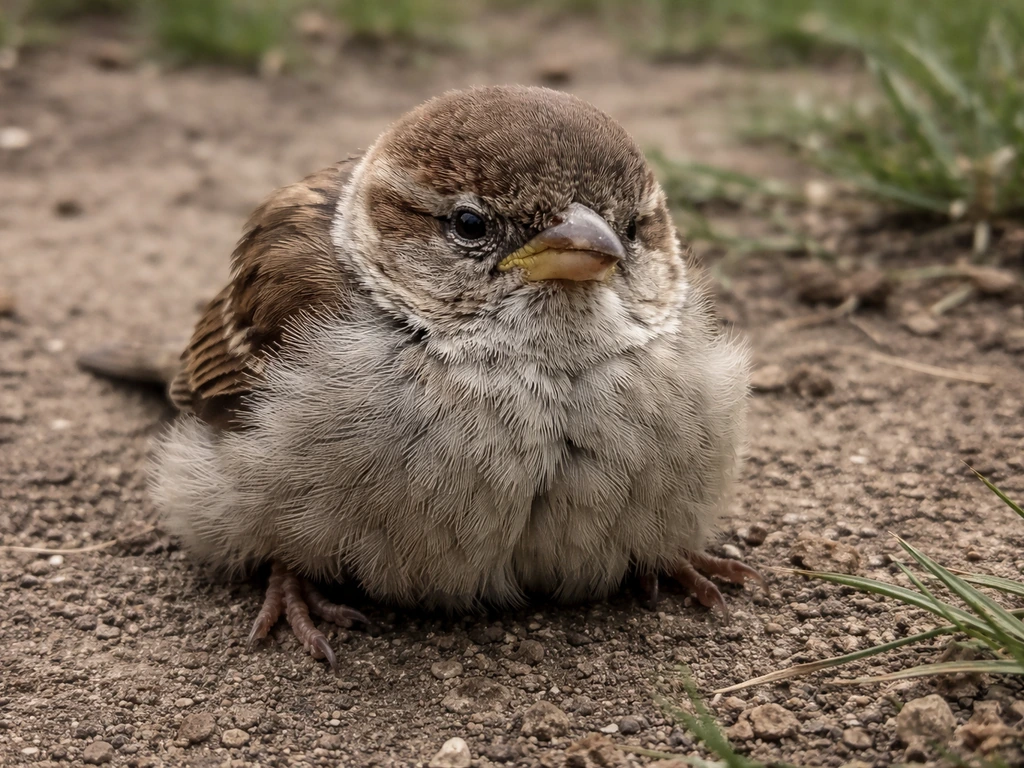
A bird in shock often looks like it is dying, but it is not necessarily. It may be sitting completely still on the ground, puffed up, eyes half-closed, and unresponsive to your approach. It might be upright but unable to fly, or it might be lying on its side with labored breathing. Sometimes it looks almost peaceful. What you are seeing is the bird's nervous system going into a protective state after a traumatic event, flooding the body with stress hormones and shutting down non-essential functions.
Shock is not the same as being mildly stunned. A stunned bird (often after a window strike) is typically alert, gripping normally, and just sitting quietly for a short period before recovering. A bird in shock is genuinely compromised: its breathing may be shallow or irregular, it may feel cold to the touch, and it will not react the way a healthy bird would. It may also appear dead but still be alive. If you are unsure, treat it as shock and follow the steps below. If you are feeling unsure right now about what to do, treat the bird as being in shock and call a wildlife rehabber as soon as you can treat it as shock.
- Sitting on the ground, unable or unwilling to fly
- Eyes partially or fully closed, unresponsive to movement nearby
- Puffed feathers, body low to the ground
- Weak or no grip if you cup it in your hands
- Rapid, shallow, or open-mouth breathing
- Bleeding, drooping wing, or visible injury alongside the above
- Cold to the touch, especially feet and legs
Do these things immediately, and stop yourself from doing these others
Your first move is to limit the bird's stress, not to examine or comfort it. Stress kills birds in shock faster than almost anything else. Pick it up gently using a light towel or cloth (or your bare hands if that is all you have), place it in a box, and close the lid. That is step one. Everything else comes after.
Do not offer water. Audubon also advises against offering food or water when you find an injured bird, since the bird may be unable to safely handle liquids [Do not offer water. ](https://www. audubon.
org/debs-park/about-us/what-do-if-you-find-injured-or-orphaned-bird). It sounds kind, but an already-compromised bird can easily aspirate liquid into its lungs, which is fatal. Do not offer food for the same reason, and because the wrong food can cause serious harm. Do not hold the bird against your body for warmth or carry it around uncovered.
Do not place it in a wire cage or a glass tank where it can see you and feel exposed. If you suspect the bird was electrocuted, treat it as a medical emergency and contact a wildlife rehabber or avian vet right away electric shock. If the bird seems unresponsive or its breathing is off, use the shock-first-aid steps above and get a wildlife rehabber involved as soon as possible help a bird in shock.
Do not check on it every few minutes by opening the box.
- Do not give food or water under any circumstances until you have spoken to a wildlife rehabilitator or avian vet
- Do not place the bird near a cat, dog, or other pet even briefly
- Do not try to splint or treat injuries yourself
- Do not attempt to force the bird to fly or 'test' if it can
- Do not use a microwave-heated pad directly against the bird's body
- Do not keep it in a noisy, lit, or busy area of your home
- Do not delay calling for help while waiting to see if it improves
How to stabilize the bird: warmth, darkness, and airflow
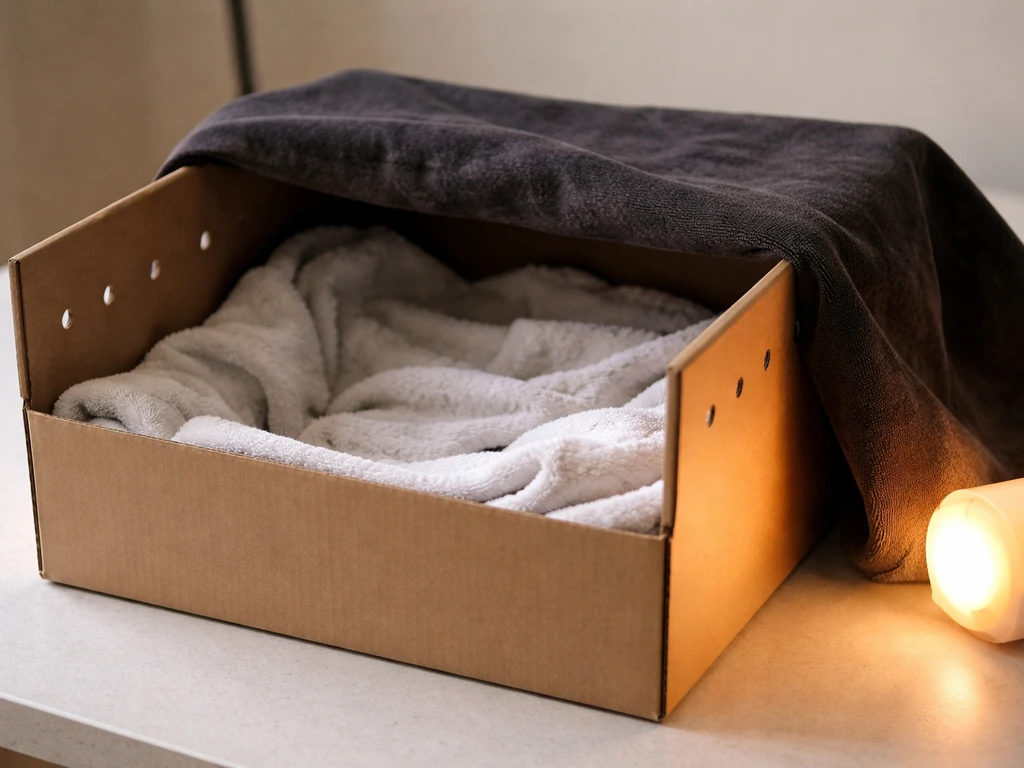
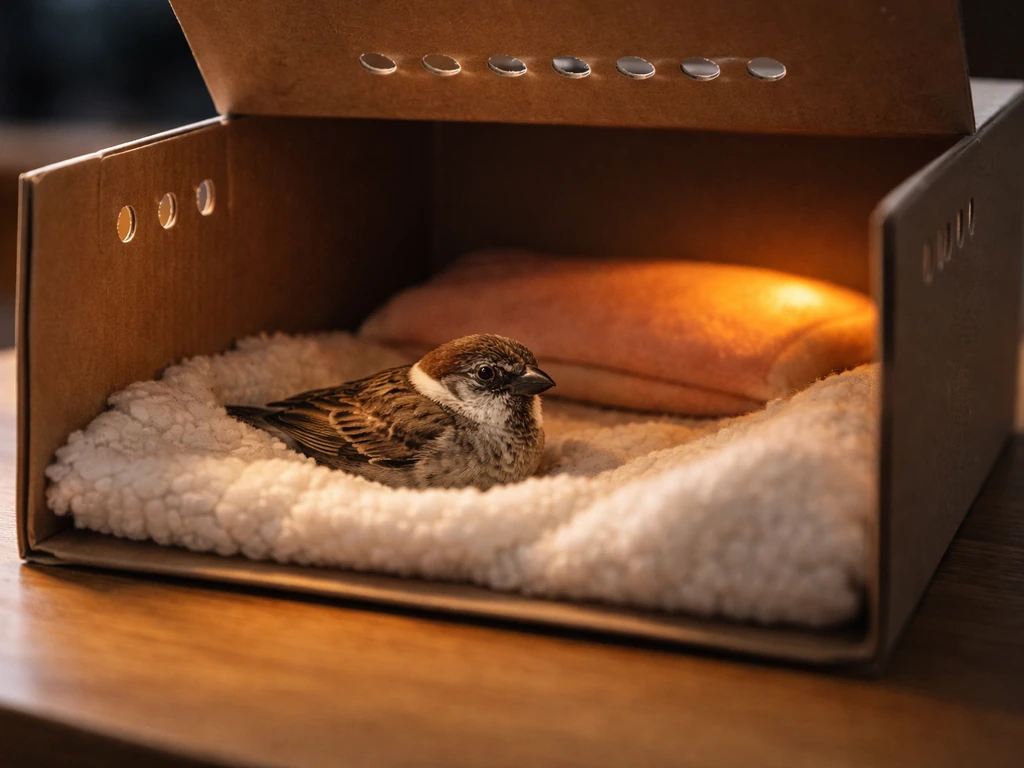
Once the bird is in a box, your job is to maintain three things: warmth, darkness, and gentle ventilation. Use a cardboard shoebox or a similar small box with a lid. Line the bottom with a paper towel or a soft cloth (nothing fluffy that toes can get caught in). Poke a few small holes in the lid or sides for airflow, but keep them small enough that the interior stays dim.
For warmth, you want the environment to be around 85 to 90 degrees Fahrenheit for most wild songbirds and small birds. You do not need a thermometer. A practical method is to place a warm (not hot) water bottle wrapped in a cloth under half of the box's floor, or position the box near a gentle heat source like a lamp with a 75-watt bulb set a safe distance away. The key word is half: you want the bird to be able to move away from the heat source if it gets too warm. Never place a heating pad directly under the full box, and never put anything warm directly against the bird's skin.
Put the box in the quietest room you have. Bathroom counters or a spare bedroom work well. Keep lights low in the room if possible. Resist the urge to check inside more than once every 30 to 60 minutes, and when you do check, do it quickly and calmly.
A quick injury check before you close that box
You do not need to do a full examination, but a 30-second look before you close the lid can tell you important things. Hold the bird gently but firmly in a towel, and briefly check for the following. This is not treatment, it is information gathering for when you call a rehabber.
- Bleeding: Look for active blood on feathers, around the beak, or on the feet. If you see active bleeding, apply very gentle pressure with a clean cloth for 30 seconds. Do not use cotton wool, which can stick to wounds.
- Wing position: Is one wing drooping lower than the other? Does one look bent at a strange angle? Note which wing and where the droop starts.
- Leg and foot injuries: Are both feet gripping? Are the toes present and intact? A limp or dangling leg is worth reporting.
- Breathing: Watch the chest for a few seconds. Is it moving at all? Is the beak open (a sign of respiratory distress)? Are there any clicking or wheezing sounds?
- Head and eye symmetry: Are both eyes the same size? Head tilting to one side can indicate a head injury.
Write down what you observe. Rehabbers will ask you these questions on the phone, and having answers ready speeds up the triage process and improves outcomes for the bird.
The most common reasons a bird ends up in shock
Window collisions
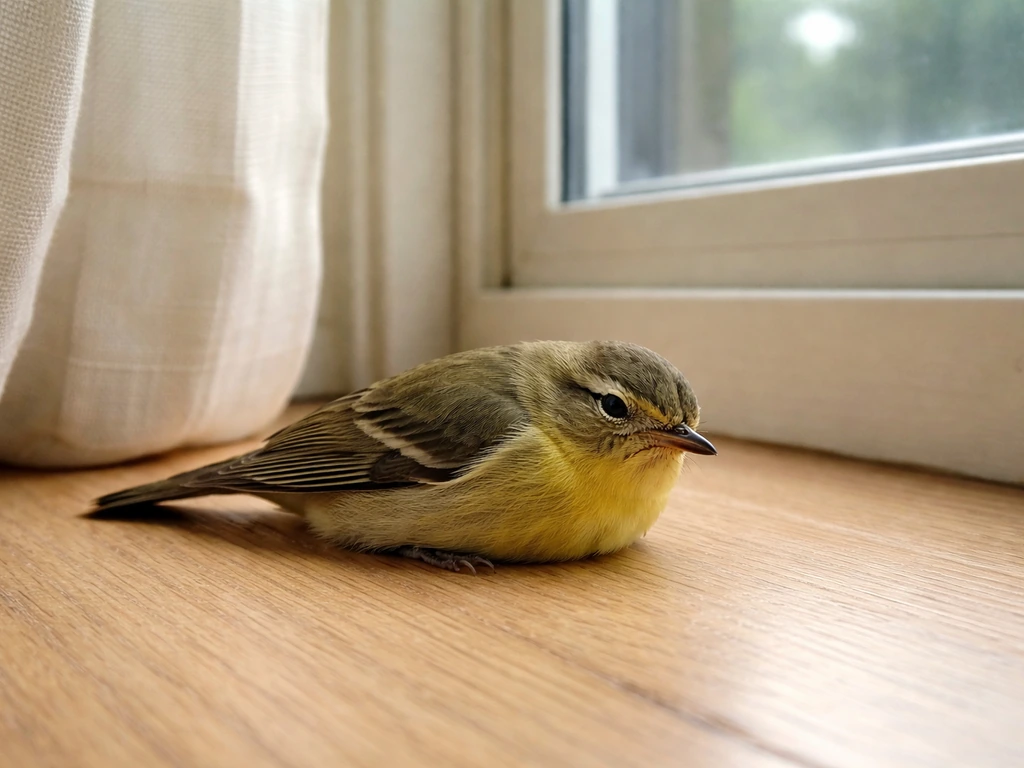
This is far and away the most common scenario. A bird hits a window at speed, hits the ground, and sits there looking dazed. Some of these birds are only stunned and will recover within an hour or two. Others have internal bleeding, brain injuries, or spinal damage that is not visible from the outside. Even if the bird appears to recover on its own, a window strike hard enough to knock a bird senseless can cause internal inflammation that kills the bird hours or days later. Anti-inflammatory medication from a wildlife rehabber can make a real difference for window-strike cases, so do not just assume a bird that starts looking better is fine.
Cat or dog attacks
A cat bite or even a brief mouthing by a dog is a veterinary emergency every single time, even if the bird looks completely unharmed on the outside. Cat saliva contains bacteria, particularly Pasteurella, that cause rapidly progressing infection in birds. A bird that was grabbed by a cat and seems fine can be dead within 24 to 48 hours without antibiotics. Do not wait and watch with a cat-attack bird. Call a wildlife rehabber or avian vet immediately and tell them it was a cat attack. That phrase changes the urgency of the response.
Nest and fledgling emergencies
A bird on the ground is not always in shock. Fledglings (young birds with most of their feathers but short tails) are supposed to be on the ground. They are learning to fly and their parents are almost certainly nearby. The best thing you can do for a fledgling that does not appear injured is leave it alone and keep pets and children away.
If you find a naked or partly feathered nestling on the ground, try to locate the nest and return it if you safely can. Birds do not abandon young because a human touched them. If the nest is destroyed or the nestling is cold and limp, then follow the shock stabilization steps above and call for help.
When to call a wildlife rehabber or avian vet right now
The honest answer is that you should contact a licensed wildlife rehabilitator or avian vet for almost any bird that cannot fly away from you on its own. But some situations are more urgent than others. These red flags mean you should be on the phone while the bird is still in your hands:
- The bird was attacked by a cat (any cat attack, regardless of visible injury)
- There is active or heavy bleeding that is not stopping
- The bird is breathing with its beak open or making audible sounds while breathing
- The bird is seizing, trembling uncontrollably, or unable to hold its head up
- One eye is closed, sunken, or a different size than the other
- A wing or leg is visibly broken or hanging at a wrong angle
- The bird has been in shock for more than two hours with no improvement
- The bird is a bird of prey (hawk, owl, falcon): these require specialized handling
For a bird that seems to be only mildly stunned (alert, gripping, just sitting quietly), you can monitor for up to two hours in the stabilized box. If after two hours the bird is noticeably more alert and responsive, you can open the box outdoors in a safe location and see if it flies. If it does not, or if it falls back to the ground, call for help. Do not give it more time than that hoping it will sort itself out.
To find help in your area, search online for 'wildlife rehabilitator near me' or 'bird rescue (your city/state).' In the US, the Wildlife Center of Virginia's national directory and the National Wildlife Rehabilitators Association both maintain searchable databases. In the UK, the RSPCA operates a 24-hour helpline. Many areas also have local Audubon chapter contacts who can point you to the nearest resource even if they cannot take the bird themselves.
How to transport the bird and what to say when you get there
Use the same box the bird has been resting in for transport. Do not transfer it to a new container unless the original box is falling apart. Keep the box on a flat, stable surface in your vehicle, not on a seat where it can slide. Turn off the radio or keep it very low. Do not leave the bird in a hot car, even for a few minutes.
When you speak to the rehabber or vet, be ready to tell them the following: where and when you found it, what species you think it is (even a rough description helps), what you think happened (window strike, cat attack, fell from nest, found in yard, etc.), what injuries you observed, how long it has been in your care, and whether it has shown any change in behavior. You do not need to know the exact species. 'Small brown bird, found under my kitchen window, drooping right wing, hit the glass about an hour ago' is completely sufficient.
Keep in mind that in most parts of the US, Canada, and the UK it is illegal to keep wild birds in your possession without a permit, even with the best intentions. The goal is always to get the bird into licensed hands as quickly as possible, not to rehabilitate it yourself.
What to do while you wait, and mistakes that cost birds their lives
While you are waiting for transport or a callback from a rehabber, keep doing what you are already doing: warm, dark, quiet, undisturbed. If you can, also look up bird in distress what to do so you are ready for the next steps right after the initial setup. Check on the bird no more than once per hour. If the bird becomes suddenly much more active, that is a good sign, but it does not mean it is ready for release. A bird can appear recovered and still have internal injuries or infection developing.
The mistakes that most often reduce a bird's chance of survival are surprisingly consistent across every case I have seen. Overhandling is the biggest one: well-meaning people pick the bird up repeatedly to check on it, show family members, or try to comfort it, and every single interaction is a massive stress event for a tiny animal in crisis. Offering water is the second most common error, and it causes aspiration deaths.
Giving food (especially bread, seeds meant for feeders, or worms dug from the garden) can also cause direct harm depending on the species and the bird's condition. Delaying the call to a professional while 'waiting to see if it gets better' is the third, and it is the one that causes the most heartbreak because the window for effective treatment is often short.
| Mistake | Why it's harmful | What to do instead |
|---|---|---|
| Offering water | Can cause aspiration and death in a compromised bird | Do not give water; contact a rehabber first |
| Offering food | Wrong foods cause harm; force-feeding risks aspiration | No food until a rehabber advises otherwise |
| Overhandling | Stress hormones worsen shock and can be fatal | Place in box and leave it alone |
| Using direct heat sources | Hot pads or heat lamps too close can cause burns | Warm water bottle under half the box, wrapped in cloth |
| Delaying professional contact | Treatment windows close quickly for infections, internal injuries | Call a rehabber as soon as the bird is stabilized |
| Assuming recovery = safe | Internal injuries and infections develop hours later | Still get the bird assessed even if it seems better |
| Keeping it in a wire cage | Bird can see out, panics, injures itself on bars | Use a closed cardboard box with ventilation holes |
Finding a bird in shock is stressful, and the urge to do more is completely natural. The hardest part of this whole process is accepting that doing less is often the most helpful thing. A warm, dark, quiet box and a quick phone call to a professional gives most birds a genuinely good chance. That is what matters.
FAQ
How can I tell if this bird is really in shock versus just briefly stunned?
If the bird is fluffed, cold, or breathing looks shallow or irregular, keep it in the warm, dark, quiet box and call a wildlife rehabber, do not try to “test” it by moving it around. If it is only mildly stunned and fully alert and gripping, you can monitor in the box for up to two hours, then attempt a safe outdoor release only if it looks coordinated enough to fly.
Is it okay to keep checking on the bird every few minutes to see if it’s better?
Stop any lid checks that require you to open the box repeatedly. Instead, do one quick glance (about 30 seconds) and then close it, then check again no more than once every 30 to 60 minutes until you can speak to a professional. Constant checking can raise stress and lower breathing efficiency.
What type of container should I use if I do not have a cardboard shoebox?
Use a covered cardboard box with small ventilation holes so the bird stays dim, secure, and calmer. Avoid a wire cage or anything clear-sided because the bird can panic and exhaust itself trying to escape. Also keep the box on a stable surface so it cannot slide or jostle during transport.
The bird looks thirsty, can I offer water with a spoon or dropper?
Do not force the bird to drink or swallow, and do not place water in or near the beak. If the bird is breathing oddly, giving any liquid increases the risk of aspiration into the lungs. Let the rehabber handle fluids or medications if needed.
If a window-strike bird starts acting normal after an hour, should I still call for help?
No. Many window-strike birds can look “normal” after a short time while still having internal inflammation, bleeding, or head and neck injury. Even if it perks up, call a rehabber because time-sensitive treatment like anti-inflammatory medication may be required.
What if the bird was attacked but shows no obvious wounds?
For a bird that was attacked by a cat or even mouthed by a dog, treat it as urgent every time and call immediately, antibiotics can be needed quickly because infections can progress fast. Tell the responder it was a cat attack, since that detail changes triage.
My bird seems to be breathing fast, should I cover it completely to calm it down?
Do not try to “re-inflate” breathing by covering the bird with a towel or creating a tightly sealed box with poor airflow. You should maintain gentle ventilation via small holes and keep warmth moderate so the bird can breathe comfortably without overheating.
What’s the safest way to warm the bird if it feels cold to the touch?
If the bird is cold and limp or unresponsive, do not warm it rapidly. Use the warm water bottle under half the box floor or a safe-distance lamp so the bird can move away if it gets too warm. Avoid heating pads directly under the bird or direct contact with anything hot.
What if I need to take the bird somewhere and cannot warm it immediately?
If you cannot place the bird in a warm spot right away, prioritize darkness and minimal handling. Get it into the box as the first step, then move it to warmth as soon as possible, while avoiding direct heat that prevents the bird from escaping warmth.
I found a baby bird on the ground, is it always in shock?
If it is a fledgling or nestling, the right response depends on appearance and injury. A fledgling with mostly feathers and short tail often should be left alone with pets and kids kept away, unless it is injured or cold and limp. If it is naked or partly feathered, try to locate the nest if it can be done safely, and if the bird is cold/limp follow the shock steps and call for help.
What if the bird looks dead, how do I decide what to do next?
If the bird appears dead but is still warm or shows any movement, treat it as alive and in shock until you can get professional guidance. Many birds can seem motionless during shock, and premature “confirmation” leads to delays.
When is it safe to try releasing the bird outdoors?
Do not open the box outdoors “to see if it flies” unless the bird was only mildly stunned, has been monitored for up to two hours, and looks coordinated. If it falls, cannot get its balance, or cannot fly away, call a rehabber rather than repeating the outdoor attempt.
What information should I have ready when I call a wildlife rehabber?
Yes, prepare details before calling to speed triage, including exactly when you found it, where (yard, window location, road), your best guess at species, what happened, any visible injuries (drooping wing, blood, inability to stand), and whether its behavior has changed. You do not need an exact species ID to be helpful.
What should I do if I suspect the bird was electrocuted?
If you suspect an electrical incident, treat it as a medical emergency. Keep the bird isolated in the box to reduce handling, contact a rehabber or avian vet right away, and do not assume it will recover without professional care.
How should I transport the bird in my car while waiting for help?
If transport will take time, keep the box stable in the car, radio off or low, and avoid temperature extremes. Do not leave the bird in a hot car even briefly, and prevent the box from shifting so the bird is not jostled during your drive.
Am I allowed to keep the bird temporarily if the rehabber is not available right away?
In most places it can be illegal to keep wild birds, so the safest next step is to focus on stabilization and fast transfer to licensed care. If the bird cannot be released immediately, continue warmth, darkness, quiet, and minimal checks until a rehabber confirms instructions.