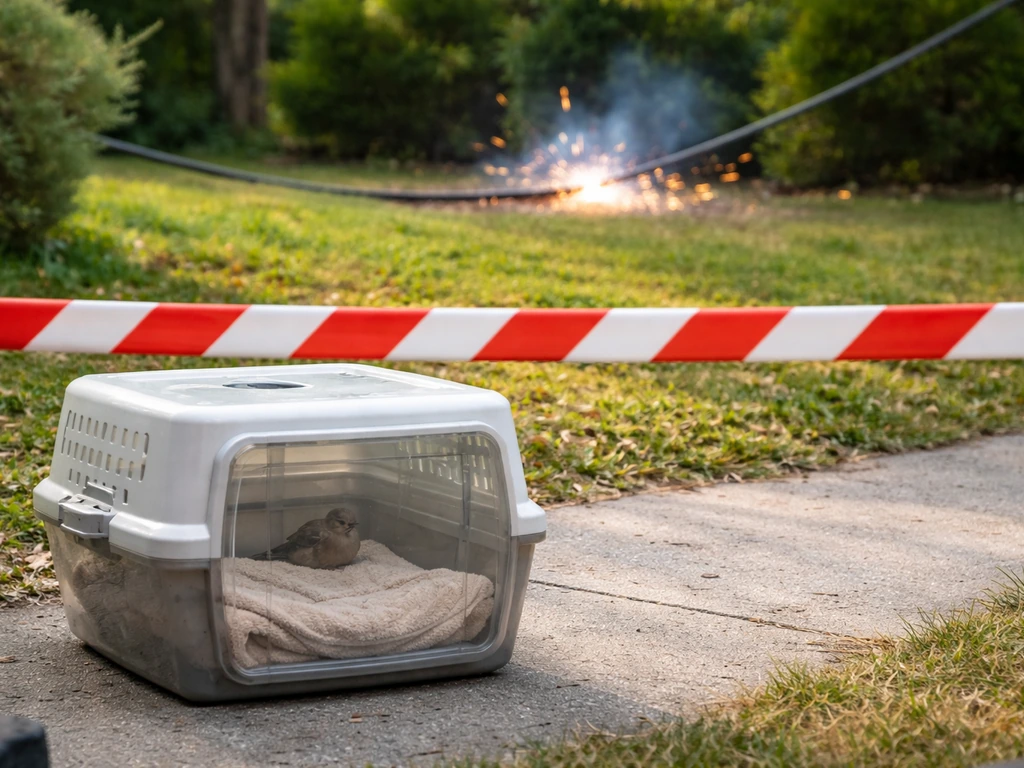
Pick the bird up gently with both hands, put it in a small box lined with a soft cloth, cover the box, and place it somewhere warm and quiet. That's your first 10 minutes sorted. Don't offer food or water yet, don't keep checking on it, and don't let kids or pets near it. Once it's contained and calm, you can take a breath and figure out your next step, which is usually calling a wildlife rehabilitator.
Weak Bird What Do I Do Now A Step by Step Guide
Marcus Chen
2 May 2026
How to tell if a bird is truly weak (not just resting)
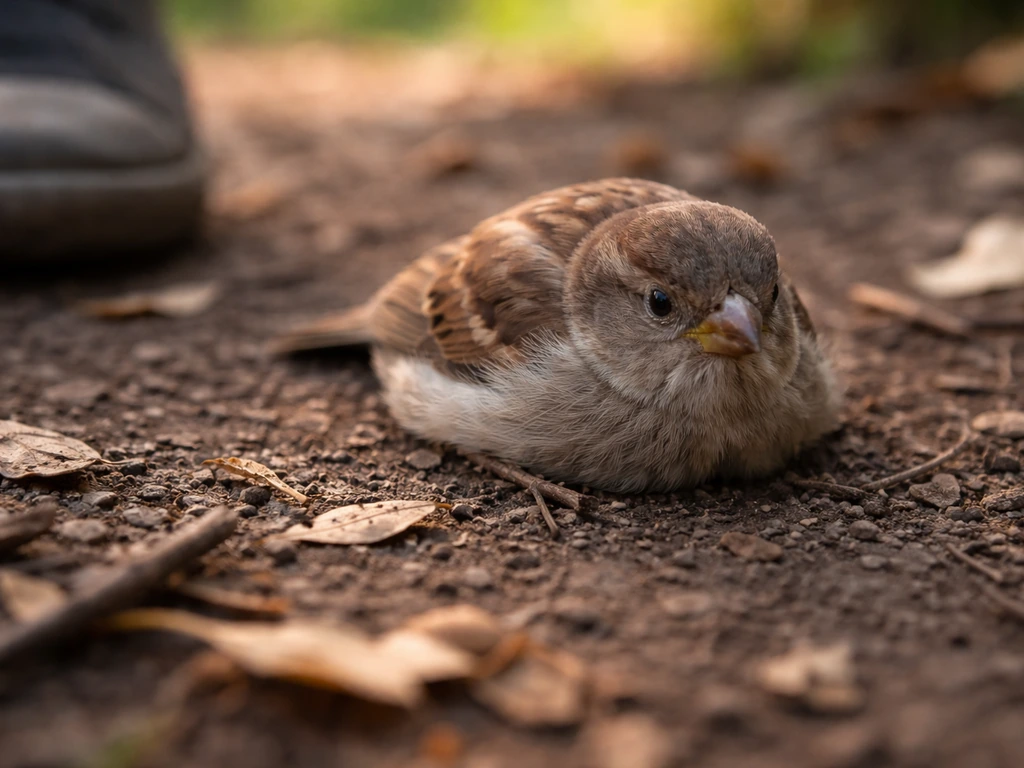
A healthy wild bird will fly away the moment you get within a few feet. If you're close enough to pick one up without it moving, something is wrong. That's your clearest sign right there. But there are a few other things worth checking quickly before you do anything else.
- It doesn't attempt to fly or hop away when you approach
- It's lying on its side or can't hold itself upright
- One or both wings are drooping or held at an odd angle
- It's breathing with its beak open or its tail pumping with each breath
- Its eyes are half-closed, glazed, or it looks 'staring'
- It feels cold to the touch, especially the feet and breast
- There's visible bleeding, a wound, or matted feathers
One thing that trips people up: fluffed feathers don't automatically mean a bird is in trouble. Birds fluff up when they're cold or sleeping, so fluffing alone isn't a reliable distress signal. But fluffed feathers combined with any of the signs above is a different story. If the bird is fluffed, on the ground, and not reacting to you, treat it as a bird that needs help.
There's also the question of baby birds, which is a separate situation entirely. If the bird has fluffy down or stubby wing feathers and no tail, it's likely a nestling that fell out of its nest rather than a sick adult. That situation has its own set of steps. This guide focuses on adult or juvenile birds that appear weak, injured, or in distress.
Immediate first aid: the first 10 minutes
Speed and calm matter here. The goal of these first steps isn't to treat the bird, it's to stabilize it and reduce its stress while you arrange real help. A bird that's already weak can die from the additional shock of being handled repeatedly or kept in a chaotic environment.
Step 1: Contain it safely
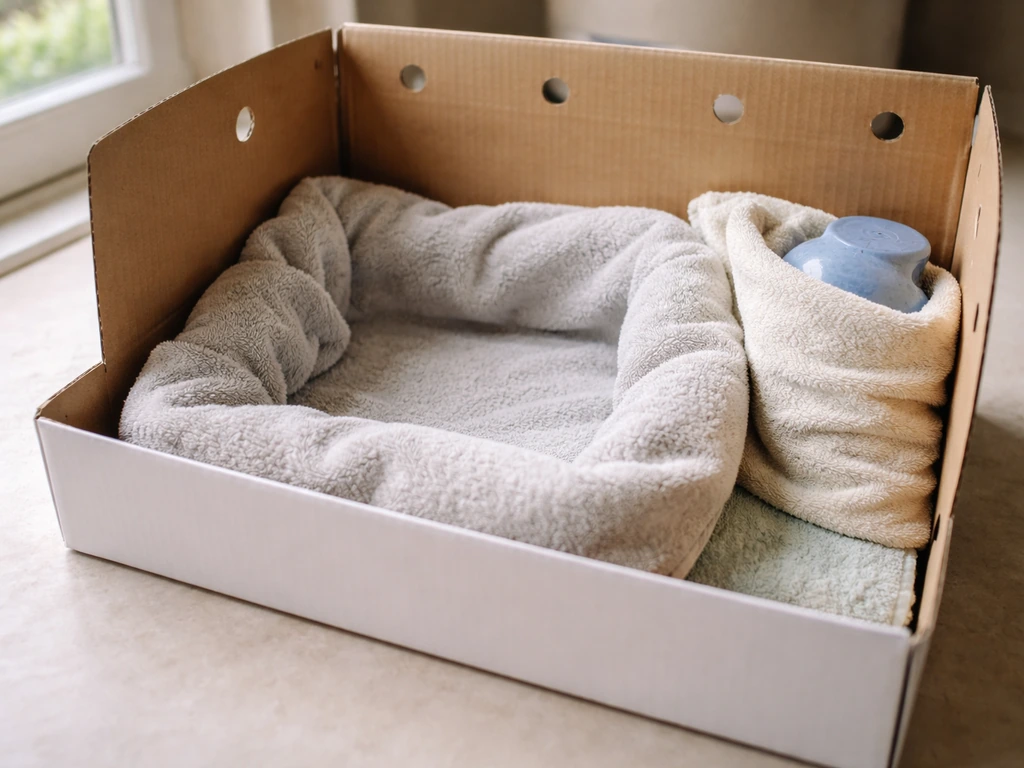
Grab a shoebox, a small cardboard box, or even a paper bag with air holes. Line the bottom with a folded towel or some paper towels so the bird has something to grip. Gently scoop the bird up using both hands (or wrap it loosely in a light towel first if it's trying to flap), place it in the box, and close the lid or fold the top over. Smooth-sided containers work best because the bird can't catch its claws or injure itself trying to climb the walls.
Step 2: Add warmth
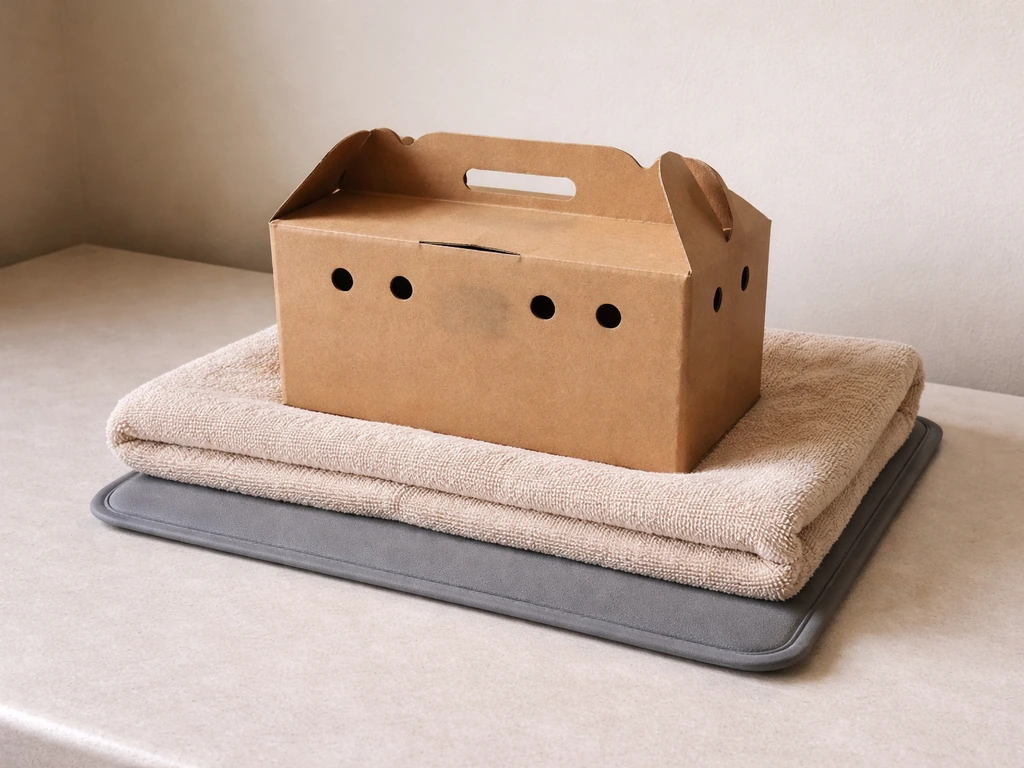
Weak birds lose body heat fast, especially if they've been on cold ground. Set a heating pad on its lowest setting, put a folded towel on top of it, and place the box on the towel so only one half of the box sits over the heat. This gives the bird the option to move away from the warmth if it gets too hot. Aim for a comfortable 85°F or so inside the box if you can gauge it, but even just getting the bird off a cold floor and into a warm room is a meaningful improvement. Never put a heat source directly under the entire box or inside the box.
Step 3: Keep it dark and quiet
Put the closed box in a quiet room away from TVs, pets, children, and foot traffic. Darkness reduces stress significantly in birds. A bird that's in shock or recovering from a collision can actually die from fear if it's kept in a bright, loud, busy area. Check on it as little as possible. This is one of the hardest things to ask people to do, especially kids who want to help, but resist the urge to peek.
Step 4: Do not offer food or water
This surprises most people, but almost every wildlife rescue organization says the same thing: do not give a weak wild bird food, water, or any medication unless a licensed wildlife rehabilitator has told you to. ASPCA’s guidance similarly emphasizes that weak or injured animals should not be put into human food systems and that you should rely on local wildlife rescue resources rather than DIY feeding blank" rel="noopener noreferrer">do not give a weak wild bird food, water, or any medication unless a licensed wildlife rehabilitator has told you to. Birds that are in shock or have internal injuries can aspirate liquid into their lungs if it's dribbled into their mouths. On r/WildlifeRehab, people report that searching for “injured crow water” often turns up the warning not to give food or water because liquids can be aspirated into the lungs, creating a real risk blank" rel="noopener noreferrer">aspirate liquid into their lungs. Wrong foods can cause serious harm. Even seemingly safe options like bread or seeds can cause problems depending on the bird's condition and species. The best thing you can give it right now is warmth, quiet, and fast access to professional help.
What probably made the bird weak in the first place
Understanding the likely cause helps you communicate clearly with a rehabilitator and spot any additional warning signs. Here are the most common reasons you'd find a weak bird.
Window strikes
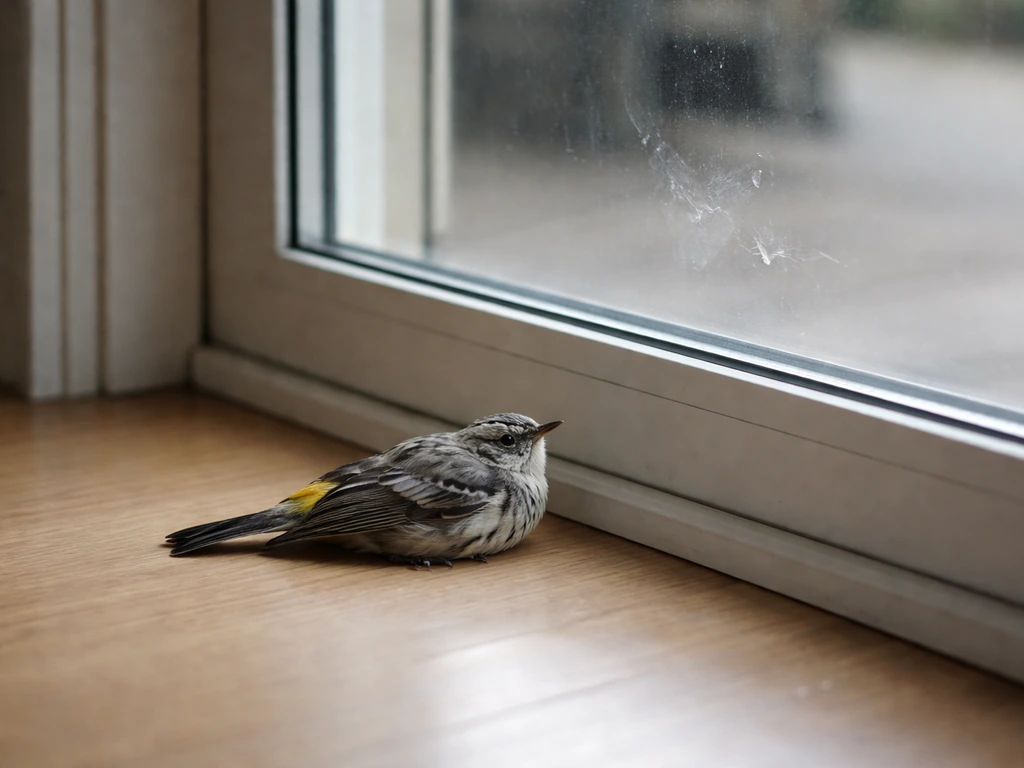
This is the most common cause by a wide margin. Birds can't perceive glass as a barrier, so they fly into windows at full speed and sustain brain injuries, internal bleeding, or broken bones. A bird sitting stunned near a window is the classic presentation. Some birds recover from mild strikes within 20 to 30 minutes if left undisturbed in a dark, quiet container, but others have serious injuries that aren't visible from the outside. If the bird hasn't regained the ability to fly on its own after that window of time, it needs professional evaluation.
Cat or dog attacks
This one is critical: even if a cat or dog has touched a bird and there's no visible wound, the bird still needs professional care. Cat saliva contains bacteria (Pasteurella in particular) that causes fatal sepsis in birds within 24 to 48 hours if not treated with antibiotics. A bird that 'looks fine' after being in a cat's mouth is not fine. Contact a wildlife rehabilitator immediately in this scenario.
Visible injuries: broken wings, legs, or beaks
A drooping wing that the bird holds away from its body, a leg that's turned at a strange angle, or a beak that's clearly misaligned are all signs of fractures or dislocations. These injuries look frightening, but they're often treatable by a trained rehabber or avian vet. Your job is not to splint or wrap anything. Just contain the bird carefully and get it to professional help quickly.
Illness or poisoning
Sick birds often look weak without any obvious physical injury. Signs include discharge from the eyes or nostrils, labored breathing, neurological twitching or head tilting, or extreme lethargy. Rodenticide (rat poison) exposure is also a real possibility if the bird is a hawk or owl found near suburban areas. These cases need a vet, not just a rehabber.
Shock
Birds can go into shock after almost any traumatic event. If you’re dealing with a bird in shock, follow the first aid steps above and contact a wildlife rehabilitator as soon as possible. A bird in shock will often look stunned, cold, barely responsive, and may have a rapid or irregular breathing rate. If you suspect shock, follow the full guidance on how to help a bird in shock before doing anything else. Shock is what makes the warmth-and-dark protocol so important. It stabilizes the bird's system while you arrange professional help. This overlaps closely with the handling advice for a stunned bird after a window strike or other collision.
What to do based on what you're seeing right now
Once the bird is in its box, take a quick mental note of its condition so you can describe it accurately when you call for help. Here's how to read the most common scenarios.
| What you see | What it likely means | Your next step |
|---|---|---|
| Stunned but upright, no obvious wounds | Window strike or mild collision | Box, warmth, dark. Reassess in 20–30 min. Call rehabber if it doesn't improve. |
| Drooping wing, can't fly | Possible fracture or dislocation | Box carefully (don't wrap the wing). Call a rehabber or avian vet today. |
| Active bleeding | Open wound from predator or sharp impact | Do not attempt to treat. Call for help immediately. Keep bird still and warm. |
| Open-beak breathing, tail pumping | Respiratory distress, possible internal injury | Urgent. Call a wildlife rehabilitator or avian vet right now. |
| Cold, barely moving, eyes closing | Shock or severe hypothermia | Warmth and dark immediately. Call for help — do not delay. |
| Was in a cat's mouth (any condition) | Invisible bacterial infection risk | Call a rehabber or vet today even if the bird looks okay. |
| Twitching, tilting head, circling | Neurological injury or poisoning | Urgent. Call a wildlife rehabilitator or avian emergency vet. |
If you're seeing bleeding or severe breathing problems, don't wait to make calls. Those situations are urgent, and the difference between calling now versus in an hour can determine whether the bird survives.
When to call for help and who to contact
The honest answer is: call sooner than you think you need to. Most wildlife rehabilitators would rather get a call about a bird that turns out to be fine than receive one too late. Here's how to think about who to contact.
Wildlife rehabilitator vs. avian vet
For most wild birds, a licensed wildlife rehabilitator is your best first call. They're trained specifically in wild bird care, they have the permits to legally hold and treat wildlife, and they usually don't charge fees. An avian vet is the better choice when the bird has obvious severe injuries, is bleeding heavily, or you can't reach a rehabber quickly. Many avian vets will see injured wildlife in emergencies, especially after hours when rehabbers may be harder to reach.
How to find help near you
- Animal Help Now (ahnow.org): Enter your location and it connects you to the nearest wildlife emergency contacts and rehabilitators in real time
- Wildlife Center of Virginia: Call them with your location and species and they'll refer you to a rehabilitator closer to you
- Wisconsin DNR Wildlife Rehabilitation Directory: A searchable map for Wisconsin-based callers
- Your state's fish and wildlife agency website usually maintains a rehabilitator directory
- Search 'wildlife rehabilitator near me' or 'injured bird rescue [your city]' for local options
- Local animal shelters and humane societies often have referrals even if they don't handle wildlife directly
When you call, be ready to describe: the species if you know it (or just 'small brown songbird' or 'large hawk'), where you found it, what it's doing, and whether there's any visible injury. The more detail you give, the faster they can advise you.
After-hours emergencies
If it's late at night and you can't reach anyone, keep the bird contained, warm, and dark overnight and call first thing in the morning. Many wildlife centers have an on-call vet for true emergencies. Animal Help Now also operates outside of business hours. A bird that's stable in a warm, dark box overnight generally does better than one that's been handled repeatedly or left outside.
Things that seem helpful but can actually cause harm
Some of the most well-intentioned responses to a weak bird can make things significantly worse. Here's what to avoid.
- Don't offer food or water: Not bread, seeds, worms, or water dripped into the beak. A bird in distress can aspirate liquid and wrong foods can worsen its condition.
- Don't force-feed with a syringe or dropper: This is one of the most dangerous things an untrained person can do to a weak bird.
- Don't keep handling the bird to check on it: Every time you open the box, you're adding stress. Check once every 30 minutes at most.
- Don't leave it outside in an open container: Exposure to the elements or predators will make things worse fast.
- Don't try to splint a wing or leg yourself: Improper splinting can cause permanent damage. Leave this to a professional.
- Don't attempt to clean wounds: This can introduce bacteria and cause additional trauma.
- Don't keep a wild bird long-term without permits: In most countries and US states, it's illegal to keep a wild bird without a wildlife rehabilitation license. This applies even with the best intentions.
- Don't release a bird before it can fly: A bird that can't fly will be caught immediately by a predator. If it's not flying freely on its own when you open the box, it's not ready.
A note on timing
After a window strike, it's reasonable to give a stunned bird up to 30 minutes in a dark, quiet box to recover on its own. If it's fully alert and flying normally when you open the box outside, great, let it go. But if it's been more than 30 minutes and it's still not right, that's your signal to call for help. Don't talk yourself into waiting longer because it 'seems like it's improving.' Birds that have internal injuries can appear to stabilize briefly before declining rapidly.
The bottom line is that your role in this situation is stabilizer and transporter, not healer. If you find a bird in distress, focus on stabilizing it and getting professional help rather than trying to treat it yourself. The warmth, the quiet, the dark box, those things are genuinely lifesaving. But the actual medical care belongs with the professionals. Getting the bird into a box and making a phone call are the two most important things you can do, and you're already capable of both. ASPCA’s “Downed Animals” position emphasizes that animals too sick or injured to stand or walk need appropriate care and that well-run systems and practices affect animal welfare blank" rel="noopener noreferrer">Downed Animals position emphasizes that animals too sick or injured to stand or walk need appropriate care.
FAQ
I can’t identify the species. What should I tell the rehabilitator on the phone?
If you do not know the species, describe size (sparrow-sized, pigeon-sized, hawk-sized), color patterns, beak shape, and where you found it (on the sidewalk, near a window, in a yard). Also note its behavior (standing, fluffed, drooping wing, wheezing, dragging one leg) and how long it has been like that.
Can I put the bird outside in a box so it can “rest in the wild”?
Not right away. Keep it indoors warm and dark until it is stable, because cold, noise, and repeated checks increase stress and heat loss. If you need to move it outdoors temporarily, do it only when it is contained, protected from pets and people, and not exposed to temperature drops.
Should I keep the box ventilated, and how do I do that safely?
Yes. Use a small box with air holes (like a paper bag with holes or a lid with small vents) so the bird can breathe comfortably. Avoid oversized holes that let claws get stuck, and do not place the heating pad directly under the whole box or near vents.
What if the bird is bleeding, but it isn’t struggling much?
Treat bleeding as urgent even if the bird looks calm. Bleeding can mean internal injury or shock, and the risk increases with time. Keep it warm, dark, and contained, and call immediately for an avian vet or wildlife rehabilitator rather than waiting for “signs of improvement.”
How do I know the bird is overheating from the heating pad?
Watch for panting, extreme restlessness, or the bird repeatedly moving away from the warm side. The setup you described should allow one-half of the box to stay cooler, so the bird can regulate. If you suspect overheating, turn the pad down or remove it and keep the bird in a consistently warm room.
The bird seems to be breathing oddly. Do I still not give water?
Correct, do not offer water by mouth. Even small amounts can be aspirated into the lungs if the bird is weak or in shock. Focus on warmth and quiet, and get professional guidance right away for any labored breathing, bubbling, or nasal discharge.
Can I drive the bird to help without calling first?
Calling first is preferred because some places have emergency protocols and may advise whether to go to a vet, which location to use, and what to bring. If you cannot reach anyone and you must travel, keep the bird contained, warm, and dark, minimize stops and loud interaction, and do not handle it more than necessary.
What if a cat or dog touched the bird and I’m worried about infection, but there is no visible wound?
Still contact professional care immediately. In many cases, infection can develop even when the skin looks intact. Do not “wait and see,” and do not clean wounds with random antiseptics unless a professional instructs you, because stress and aspiration risk are concerns too.
Is it ever okay to wrap the bird in a towel and hold it while I wait?
No, not for extended waiting. Brief, gentle handling to place it into the box is fine, but holding it or repeatedly checking raises stress and can worsen shock. Once contained, keep it mostly undisturbed and limit checks to what you need to confirm it remains warm and breathing.
What should I do if the bird is cold but still alert?
Even if it seems responsive, cold can trigger weakness and shock. Warm it in the dark, contained box using the low heating pad setup so it can choose warmer and cooler sides. Call for guidance if it is grounded, unusually sluggish, or unable to fly normally when given a chance.
After the bird recovers, can I release it right away outdoors?
Only once it can fly and act normally. If the bird was involved in a window strike or other trauma, a “brief improvement” can happen before internal issues worsen. If it still cannot fly properly, it needs professional evaluation, even if it looks better than before.
What if I accidentally fed the bird something already?
Stop giving anything immediately and place it in the warm, quiet, dark container. Then tell the rehabilitator exactly what you offered and how much. Do not induce vomiting or give medication, because incorrect treatments can make things worse.
How long should I keep it overnight if I can’t reach anyone?
Follow the stabilize-first approach: keep it contained, warm, and dark, and call the first available help in the morning. If the bird worsens at any point, especially breathing trouble or no responsiveness, treat it as an emergency and seek on-call veterinary or emergency wildlife care if you can.
Next Article
What to Do If a Bird Gets Electric Shock: First Aid Steps
Step-by-step first aid for birds after an electric shock: stay safe, turn off power, warm container, urgent vet signs