
If you've found a bird that may have been shocked by electricity, do not touch it yet. Your first job is making sure the electrical hazard is gone before you get anywhere near the bird. Once the area is confirmed safe, you can pick the bird up carefully, place it in a warm, dark, ventilated box, and get it to an avian vet or wildlife rehabilitator as fast as possible. Even if the bird looks okay right now, electric shock causes internal injuries that aren't always visible, and things can get worse quickly without professional care.
What to Do If a Bird Gets Electric Shock: First Aid Steps

Marcus Chen
28 Apr 2026
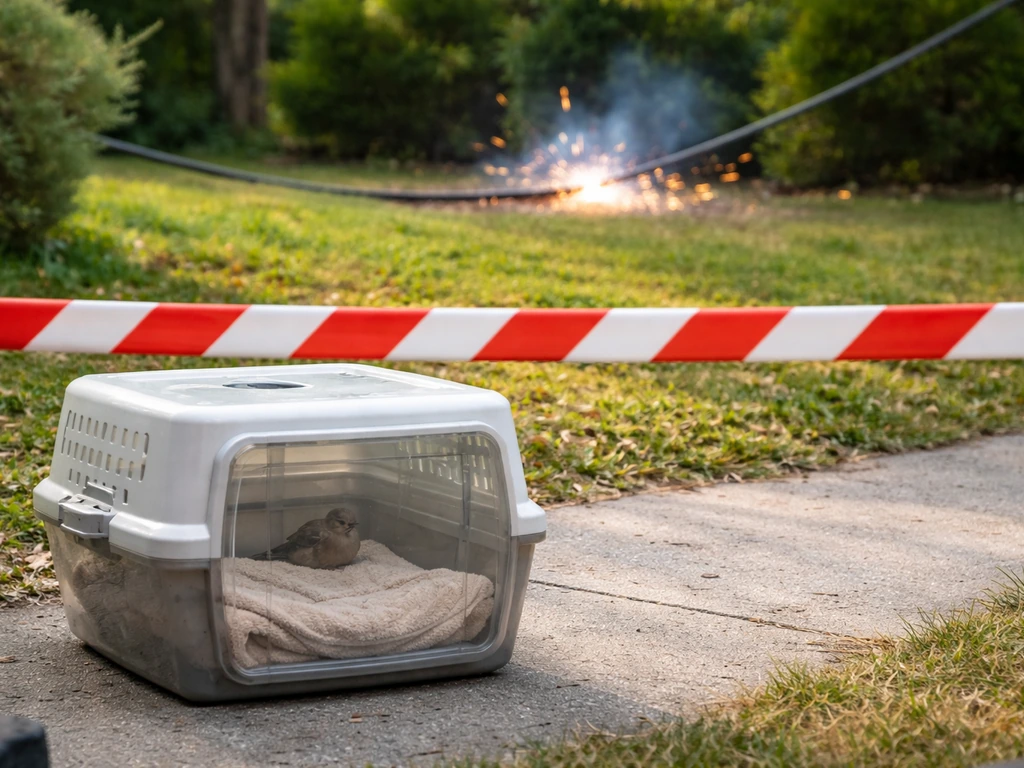
Make the area safe first, before anything else
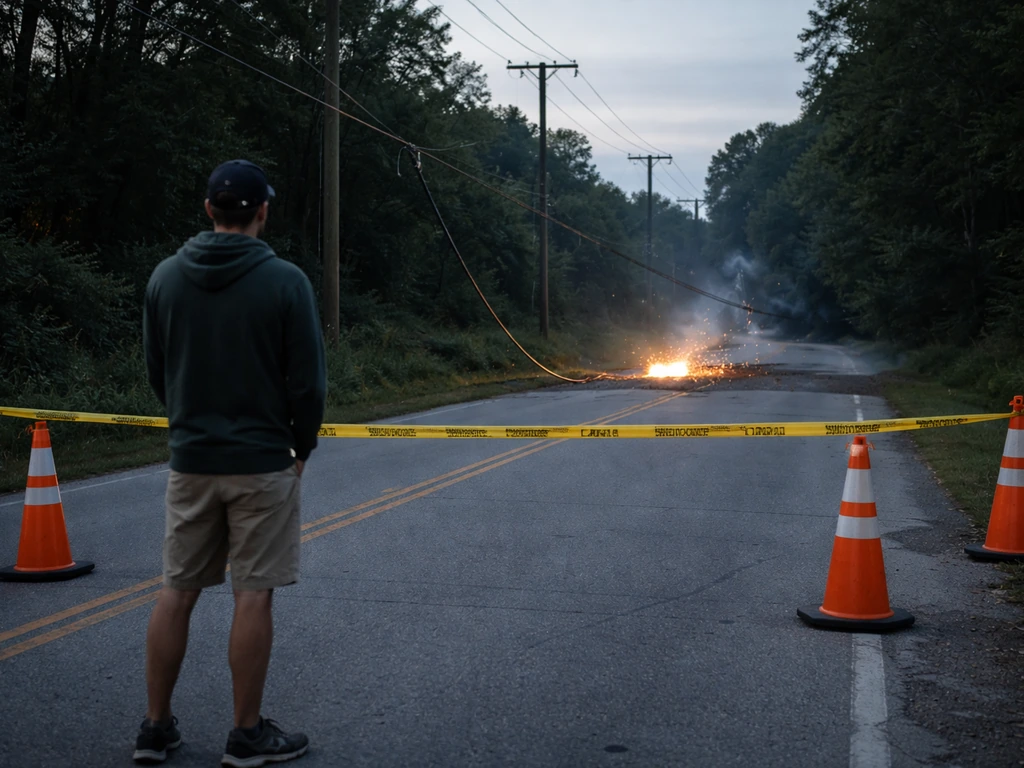
This is non-negotiable. A bird near a downed power line, a sparking wire, or a faulty appliance is still in a live electrical environment, and so are you the moment you step close. Your safety comes first, not because the bird doesn't matter, but because two casualties don't help either of you.
For downed power lines outdoors, stay at least 30 feet away from the wire and from anything it might be touching, including the bird, fences, puddles, or wet grass. Electricity can travel through the ground in a radius around a downed line, a phenomenon called step voltage, and you won't necessarily see or hear any warning. Call 911 immediately and report the situation to your local utility's outage center. Do not approach until the fire department, police, or utility crew confirms the line is de-energized.
For indoor situations, like a bird that chewed through an appliance cord or touched a faulty wire, switch off the power at the circuit breaker before approaching. Don't just unplug the device from the same outlet the bird may have been touching. Cut power to the whole circuit if you're unsure which outlet or wire is involved.
For electric fences in a garden or farm setting, locate the energizer unit and switch it off completely before going near the bird. Electric fence energizers are often in a shed or on a wall nearby and have a clearly marked on/off switch.
How to tell if the electrical risk is still active
Before you move toward the bird, run through this quick mental checklist. If any of these apply, stop and deal with the hazard first.
- There is a downed or hanging power line anywhere near the bird's location
- You can hear buzzing, crackling, or popping near the bird
- You see sparking, smoke, or scorched material close by
- The bird is on or directly next to a wire, metal fence post, or appliance that could still be energized
- The ground or surface around the bird is wet and near a potential electrical source
- You haven't yet confirmed the power is off at the breaker or the utility has cleared the line
If none of those are present, the area is probably safe to approach. Move in carefully and watch for anything unexpected. Dry rubber-soled shoes and dry hands lower your personal risk further. Never use metal tools or wet cloth to move the bird in any situation where you have even a small doubt about the electrical status of the area.
First aid steps as soon as it's safe to help
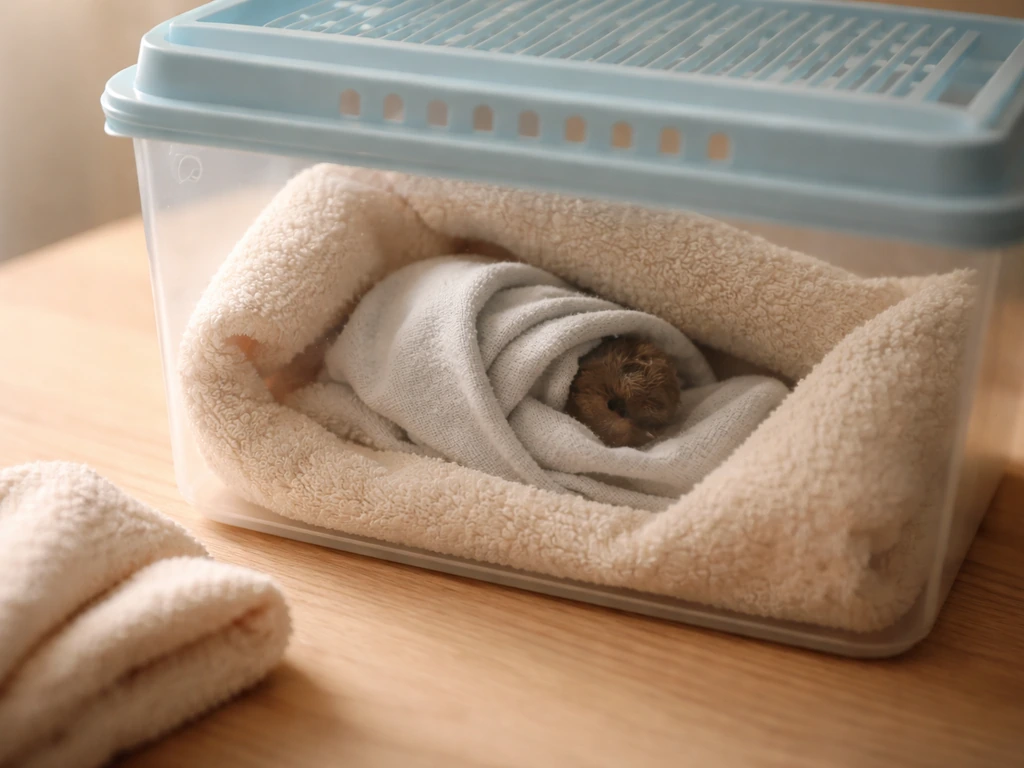
Once you know the electrical hazard is gone, move quickly but calmly. The goal right now is warmth, darkness, and minimal handling. Birds go into shock very easily after a traumatic event, and the stress of being handled by a human can make things worse. Less is more.
- Gently pick up the bird using a dry towel or cloth, wrapping it loosely so the wings are held against the body but it can still breathe. Avoid gripping the chest tightly — birds breathe by expanding their chest, and squeezing can suffocate them.
- Place the bird in a cardboard box or paper bag with ventilation holes punched in the sides and lid. The container should be just big enough for the bird to stand or lie down, not so large it can flop around and injure itself further.
- Put a folded dry towel or paper towels on the bottom of the box for traction and a little cushioning. Do not add water bowls, food, or perches right now.
- Close the box to keep it dark and quiet. Darkness reduces stress significantly. If you're using a cardboard box, make sure air can flow through the holes you've made.
- Place the box somewhere warm: around 80 to 85°F is ideal. A warm room works. You can set the box on a heating pad on its lowest setting, but only place the pad under one half of the box so the bird can move away from the heat if it gets too warm. Never put the bird directly on the heating pad.
- Keep the box away from noise, pets, children, and direct sunlight while you arrange transport to a vet or wildlife rehabilitator.
This warm, dark, quiet setup is your most powerful tool right now. It won't fix the underlying injuries, but it gives the bird the best possible chance of surviving until it gets professional care. If you're familiar with the guidance around helping a bird in shock, this approach is the same core principle applied here.
What injuries to look for after an electric shock
Electric shock causes more than just a visible burn. It sends a current through the body that can affect the heart, muscles, nervous system, and respiratory system all at once. The injury you can see on the outside often doesn't tell you the full story of what's happening inside.
Burns
Look at the beak, feet, and any exposed skin around the face or legs. Burns may appear as blackened or charred areas, raw reddish patches, or places where feathers are singed or missing. Electrical burns are tricky because they have an entry and exit point, and the tissue damage runs deeper than the surface wound suggests. A small scorch mark on the beak can mean serious internal damage to the mouth and throat. Any burn on the beak or feet is a reason for urgent vet care, full stop.
Breathing problems
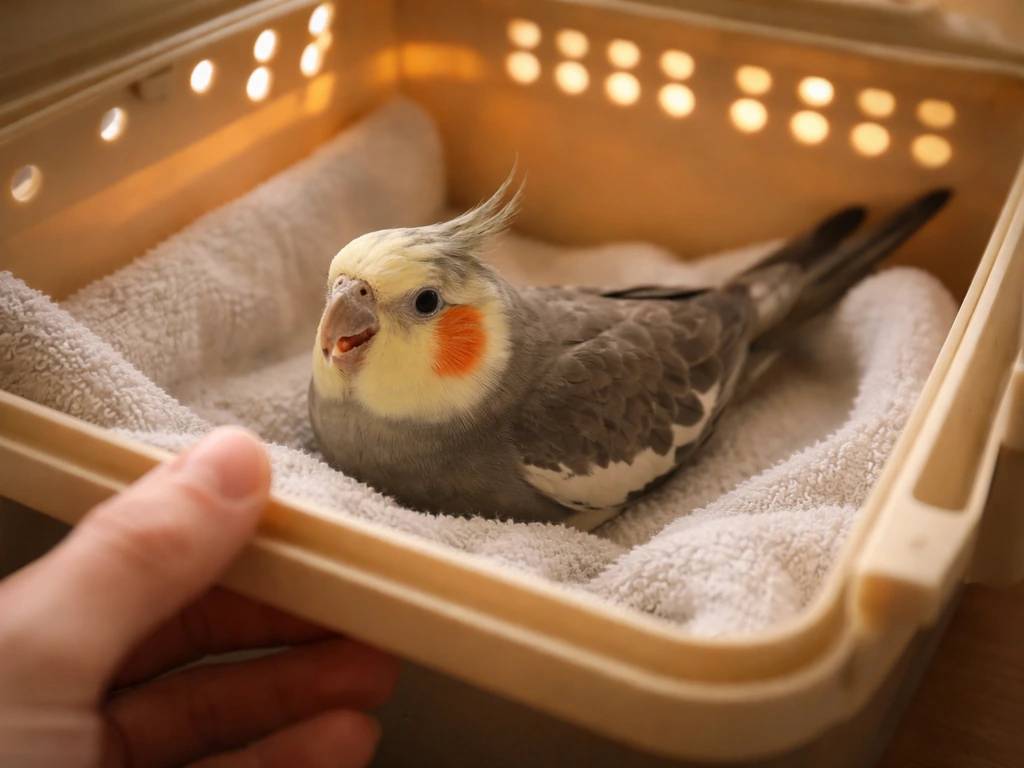
Watch the bird's breathing closely. Signs of respiratory distress include open-mouth breathing, tail bobbing with each breath, labored or rapid breathing, clicking or wheezing sounds, or the bird holding its wings slightly away from its body. Respiratory damage after electrical shock can develop or worsen over hours as tissues swell. A bird that seems to be breathing normally at first can deteriorate. This is one of the main reasons electric shock cases always need professional evaluation, even when the bird looks stable.
Neurological signs
Electric shock can cause seizures, tremors, muscle spasms, disorientation, or loss of consciousness. If the bird is twitching involuntarily, falling over repeatedly, circling, or seems completely unresponsive, those are neurological warning signs. Keep it in the dark, quiet box and get to a vet immediately. Do not try to restrain a bird that is actively seizing, let it be in a padded, enclosed space where it can't injure itself further.
Weakness and collapse
The bird may be unable to stand, grip, or hold its wings in a normal position. One or both legs may appear paralyzed or limp. This can come from the shock itself, from a fall after being shocked (birds often fall from height after a shock), or from cardiac involvement. A bird that cannot perch, stand, or hold its head up is in a serious state and needs emergency care.
Fractures from the fall
If the bird was perched on a power line or elevated wire when it was shocked, it almost certainly fell. Check for a drooping wing, an odd leg angle, or visible swelling in the limbs. Don't try to splint or manipulate anything yourself. Just keep the bird still and contained, and let the vet handle it.
What NOT to do during an electric shock rescue
Some instincts are genuinely dangerous here. Run through this list quickly so you don't accidentally make things worse.
- Do not touch the bird while any electrical hazard is still active. Not with a stick, not with rubber gloves, not at all. Call the utility or 911 and wait.
- Do not use water or wet cloth to handle the bird near any possible live source. Water conducts electricity.
- Do not attempt mouth-to-beak resuscitation. Birds have a completely different respiratory system to humans, and this is not effective first aid for birds.
- Do not try to remove anything embedded in the bird's skin or beak, such as melted wire or burned material. You risk causing more bleeding and injury. Leave it for the vet.
- Do not give the bird food or water. A bird in shock or respiratory distress can aspirate liquids and choke. No feeding until a vet clears it.
- Do not warm the bird with a hair dryer, heat lamp placed too close, or anything that could overheat it quickly. Overheating is just as dangerous as being too cold.
- Do not keep checking on the bird by opening the box repeatedly. Every time you open it, you add stress. Set it up right once, then leave it alone until transport.
When to get urgent professional help, and how to do it
The honest answer is: every electric shock case needs professional evaluation, even if the bird looks like it's recovering. Electric shock causes cardiac and respiratory complications that can appear hours after the initial incident. A bird that seems alert and stable can crash quickly. This is not a wait-and-see situation.
Get help immediately if the bird shows any of the following:
- Open-mouth breathing, tail bobbing, or any sign of labored breathing
- Seizures, tremors, or muscle spasms
- Unconsciousness or completely unresponsive state
- Visible burns on the beak, feet, or skin
- Bleeding that hasn't slowed after five minutes of gentle pressure with a dry cloth
- Inability to stand, hold its head up, or grip with either foot
- A drooping or oddly angled wing or leg
To find help, search for an avian veterinarian or wildlife rehabilitator near you. You can find nearby wildlife rehabilitators, wildlife centers, and related resources through the National Wildlife Rehabilitators Association (NWRA) Find a Rehabilitator directory blank" rel="noopener noreferrer">National Wildlife Rehabilitators Association (NWRA) and the Wildlife Rehabilitator Directory at NWRA. The National Wildlife Rehabilitators Association and the Wildlife Rehabilitator Directory at NWRA or the Animal Help Now app (ahnow.org) can locate licensed rehabilitators by your zip code. blank" rel="noopener noreferrer">Your state's fish and wildlife agency website will also have a list of permitted wildlife rehabilitators. In the US, it is generally illegal to keep wild birds without proper permits, so getting them to a licensed rehabilitator is both the right thing to do and the legal path.
When you call, be direct. Tell them it's an electric shock case, which will communicate urgency. Most avian vets and rehabbers will prioritize it. If the vet cannot see the bird immediately and the bird is in respiratory distress or unconscious, go to the nearest emergency animal clinic and explain the situation. Some general emergency vets can stabilize a bird well enough to keep it alive until a specialist is available.
Transport and what to tell the professional
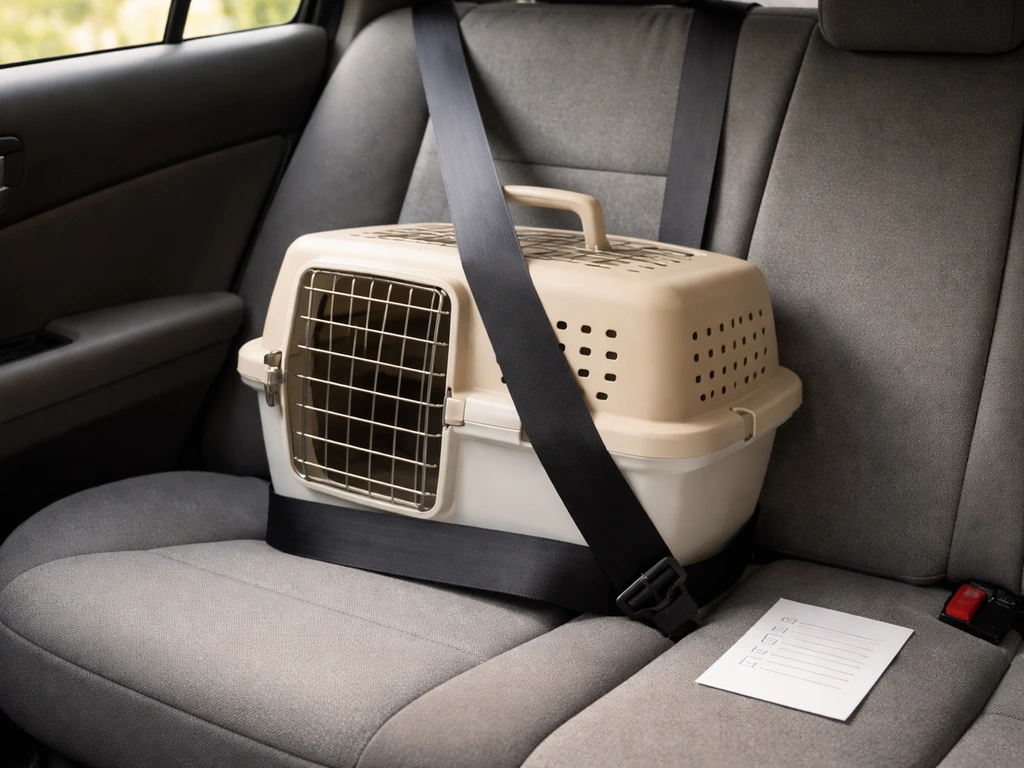
Transport the bird in the ventilated box you've already set up. Keep the car warm and drive as smoothly as you can. Minimize loud music, air conditioning blasting, or anything that adds stress and noise.
When you get to the vet or rehabber, give them as much of this information as possible:
- Where you found the bird (specific location, type of environment)
- What you think happened (downed power line, chewed appliance cord, electric fence, power line perch, etc.)
- Roughly what time you found it and how long ago the incident may have occurred
- What the bird was doing when you found it (unconscious, seizing, weak, walking, etc.)
- Any visible injuries you noticed (burns, bleeding, drooping wing, abnormal leg position)
- What first aid you provided and when
- Whether the bird's condition has changed since you found it (improved, worsened, or stayed the same)
This information helps the vet triage correctly and prioritize the right diagnostics. Electric shock injuries often need blood work, imaging, and cardiac monitoring to fully assess, and giving a clear timeline helps the professional understand whether internal injury may have had time to develop.
What to expect while you wait for the appointment
Keep the bird in the warm, dark, quiet box. Do not offer food or water. Check on it as little as possible. If you notice it becoming more distressed, breathing harder, or going limp, treat that as an escalation and move faster to get professional care. If the bird appears in distress after the shock, follow these steps and seek professional help right away bird in distress what to do. If the bird appears in distress after the shock, follow these steps and seek professional help right away, including “bird in shock what to do” guidance. Some birds that seem weak and dazed after shock do stabilize with warmth and quiet rest, similar to what you'd do for a stunned bird after a window collision. If you are unsure whether the bird is stunned or injured from an electrical shock, treat it as an urgent electric shock case and seek professional help stunned bird. If you are dealing with a weak bird right after an electric shock, get professional help urgently and focus on keeping it warm, dark, and calm while you arrange transport. But with electric shock, the risk of hidden internal damage means you cannot assume improvement equals safety without a vet confirming it.
Recovery timelines for electric shock injuries in birds vary widely depending on the severity of exposure and the injuries involved. Your job at home is simply to provide a safe, calm holding environment and get the bird into professional hands as quickly as possible. You've already done the hardest part by keeping both yourself and the bird safe. Let the experts take it from here.
FAQ
Can I revive the bird with mouth-to-beak or CPR if it is not breathing?
Do not attempt mouth-to-beak. Keep the bird in the warm, dark, quiet box and get to emergency avian care immediately, especially if breathing is open-mouth, labored, or irregular. If the bird loses consciousness, prioritize rapid transport over home techniques.
What if the bird is alert and hopping around after the shock? Do I still need a vet?
Yes. Electrical injuries can worsen over hours, even when the bird seems stable. If there is any sign of a burn on the beak or feet, unusual breathing, weakness, or odd behavior, treat it as an urgent electric shock case and arrange professional evaluation.
Is it safe to put the bird outside to “recover,” like in a quiet box outdoors?
No. Outdoor conditions can cool the bird quickly and add stress, and you may also be near the original hazard again. Use a warm, dark, ventilated container indoors (or inside your vehicle en route) until you can hand it off to a vet or licensed rehabilitator.
What should I do if I can’t tell whether the bird was shocked by a wire, a power line, or just a minor burn?
When you are uncertain, default to the electric shock protocol. Keep the area safe first, contain the bird, avoid metal tools and wet handling, and seek professional care. A small visible burn can still be an entry or exit point for deeper tissue damage.
Should I check the bird’s mouth or pull off any stuck feathers or debris?
Avoid additional handling. Do not pry at the beak, remove charred tissue, or manipulate feet or wings. Burns near the beak or on the feet warrant urgent care, but the safest approach is containment and professional assessment.
What if the bird regains movement and starts fluttering in the box during transport?
If it becomes more distressed, keep the container covered to maintain darkness and minimize movement, then drive steadily and reach care sooner rather than waiting for it to settle. Mild calming can happen with warmth and quiet, but increased activity does not prove recovery from shock injuries.
Can I give food or water to reduce stress while I arrange help?
Do not offer food or water. Shock can impair swallowing and breathing coordination, and giving anything increases the risk of choking or aspiration. Focus on warmth, darkness, and minimal handling until a clinician advises otherwise.
How should I package the bird to prevent further injury?
Use a ventilated, secure box and reduce perching options. Keep it lined with something soft and non-slip so it cannot slide around, and avoid loose towels that could tangle in legs or wings. Handle the container gently to prevent falls, especially since shock can leave the bird unsteady.
If the bird was on an outdoor power line, how close is “30 feet” in real life?
Keep well beyond the minimum and assume electricity can be present in the surrounding area. Do not approach the wire, the bird, or anything connected to it (wet ground, puddles, fences, or wet grass). Wait for utility or emergency personnel to confirm de-energization.
What information should I gather before calling the vet or rehabilitator?
Be ready to share the time you found the bird, the suspected source (downed line, appliance cord, electric fence, unknown), whether there were visible sparks or a burn location, and current symptoms (breathing pattern, responsiveness, seizures or tremors). If you witnessed a fall from height, mention that too, since it changes what clinicians will look for.
Are there any common mistakes that cause additional harm?
Yes, common ones include grabbing the bird before the area is confirmed safe, using metal tools, moving the bird with wet cloth, assuming “it looks fine” means it is safe, giving water or food, or delaying a vet visit while waiting for improvement. Electric shock cases need professional evaluation regardless of appearance.