
If you've found a bird that can't fly, the most important things you can do right now are: contain it safely in a dark, quiet box, keep it warm, and do not offer food or water. Then contact a wildlife rehabilitator or avian vet as quickly as possible, ideally within 4 hours. The bird is almost certainly stressed, possibly in pain, and at serious risk from predators, dehydration, and shock the longer it stays grounded. You can make a real difference just by acting calmly and quickly.
What Happens If a Bird Can’t Fly and What to Do Now
Marcus Chen
1 Jun 2026
What "can't fly" usually means
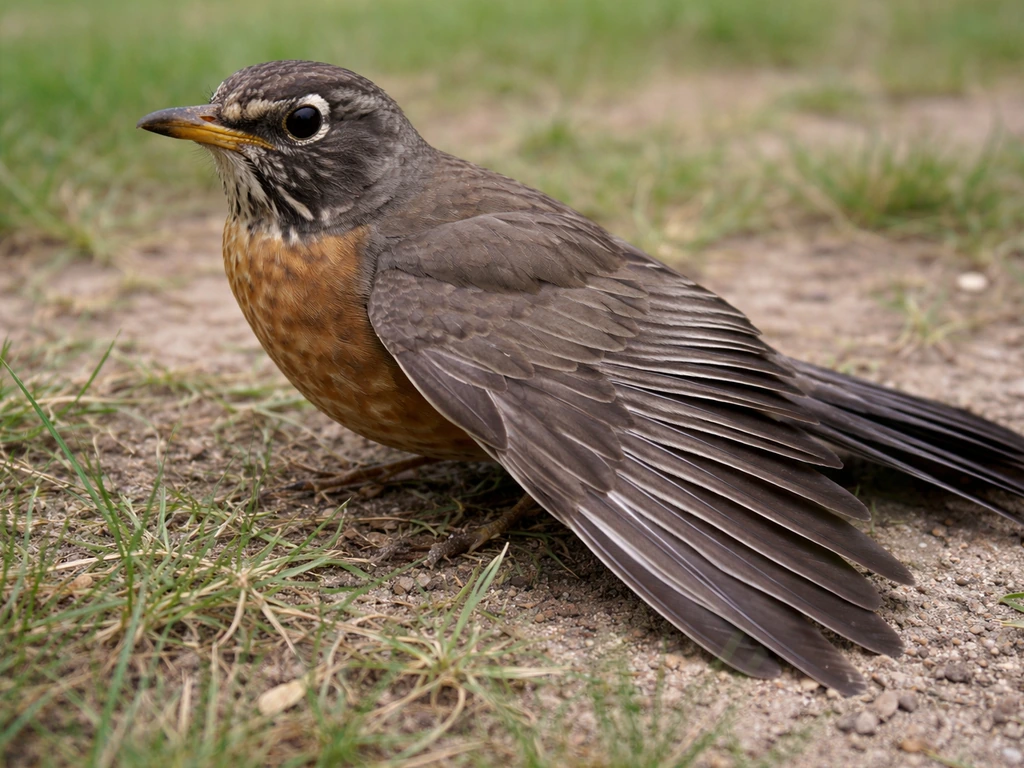
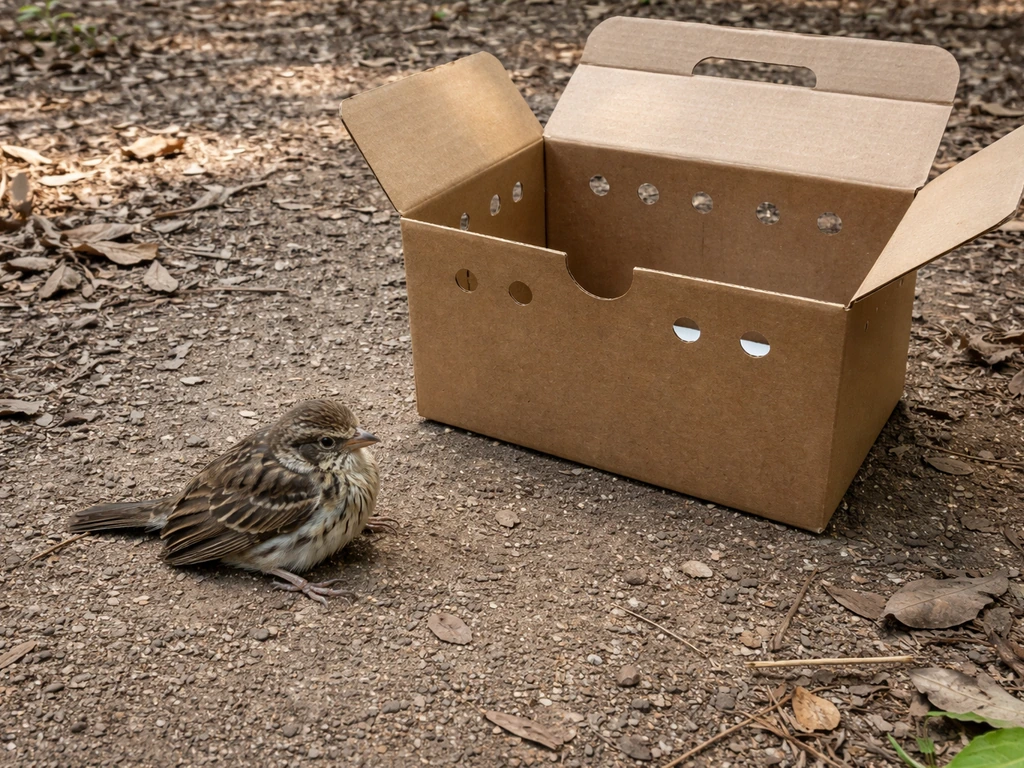
A grounded bird isn't always injured in the obvious sense. There are several reasons a bird might not be able to get airborne, and figuring out the rough category helps you respond correctly.
- Wing injury: a broken or dislocated wing, torn feathers, or soft tissue damage from a collision, cat attack, or impact. The wing may droop noticeably or look asymmetrical.
- Leg injury: a broken or sprained leg can prevent a bird from getting the push-off it needs to launch, even if the wing itself is fine.
- Collision shock/concussion: after hitting a window or car, a bird may be temporarily stunned and grounded even with no visible injury. This is extremely common.
- Exhaustion or illness: a bird that is starving, severely ill, or has been fighting strong weather may simply lack the energy to fly. It may look fluffed up, eyes half-closed, and generally unresponsive.
- Beak or internal injury: sometimes the damage isn't visible at all. Internal injuries from impacts can be just as serious as broken bones.
- It's a fledgling, not an injured adult: young birds learning to fly spend time on the ground. This is normal and doesn't mean they need rescuing.
The trickiest category is the stunned bird after a window strike. It might look totally fine but be badly concussed. Don't assume it just needs a moment; get it to safety and monitor it. Internal injuries can worsen over the next few hours even when the bird initially seems okay.
Make it safe first: handling dos and don'ts
Before you do anything else, you need to get the bird somewhere safe. A grounded bird is prey. Cats, dogs, foxes, and even curious kids can cause serious additional harm in seconds. Here's how to handle the situation without making things worse.
Do this
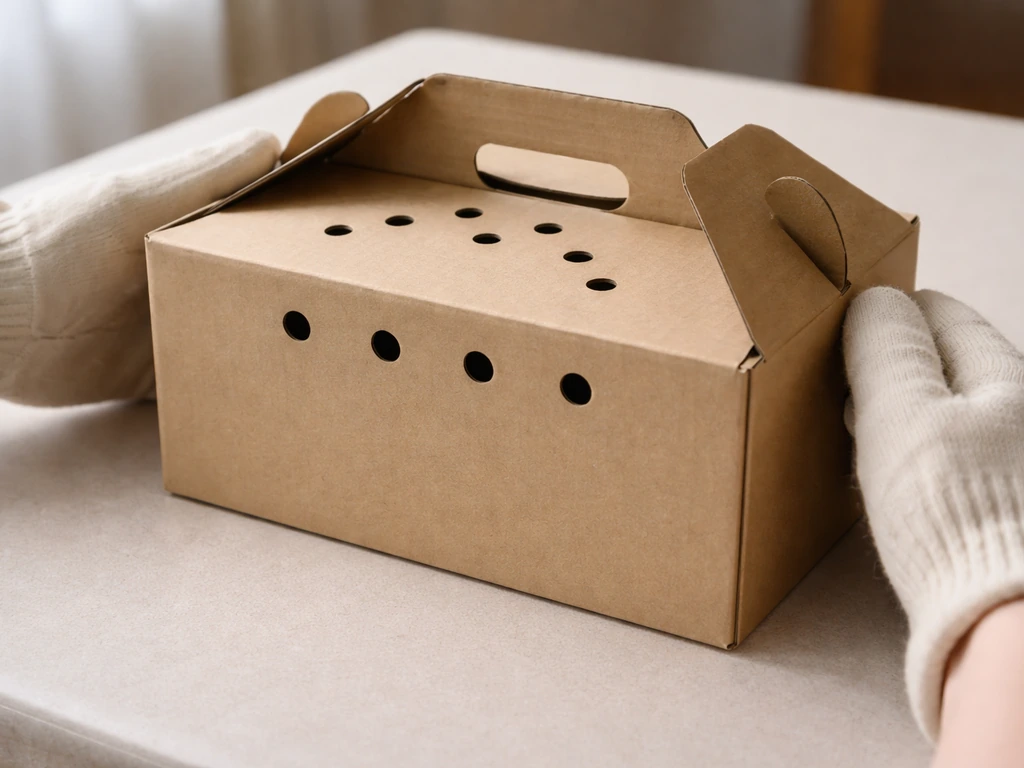
- Use a towel, cloth, or light gloves to gently scoop or wrap the bird. This protects both you and the bird.
- Place it in a cardboard box or pet carrier lined with paper towels or a soft cloth. A shoebox works perfectly for smaller birds.
- Punch a few small air holes in the box if it doesn't already have ventilation, then close it.
- Put the box somewhere warm, dark, and quiet indoors. A bathroom or laundry room away from household noise is ideal.
- Keep children and pets completely away from the box.
- Wash your hands thoroughly after handling the bird.
Don't do this
- Do not try to give the bird food or water. This is one of the most important rules. Incorrect diets and improper feeding techniques can cause serious injury or death in wild birds.
- Do not place water inside the box either: a weak or disoriented bird can drown in even a shallow dish.
- Do not keep opening the box to check on it. Every peek adds stress.
- Do not try to throw the bird into the air to 'help it fly.' If it's injured, it will fall and sustain further injury.
- Do not attempt to splint or bandage unless you have been specifically instructed by a rehabilitator.
- Do not keep the bird as a pet or attempt to raise it yourself. In most countries and US states, keeping wild birds without a permit is illegal.
Quick triage: what kind of injury are you looking at?
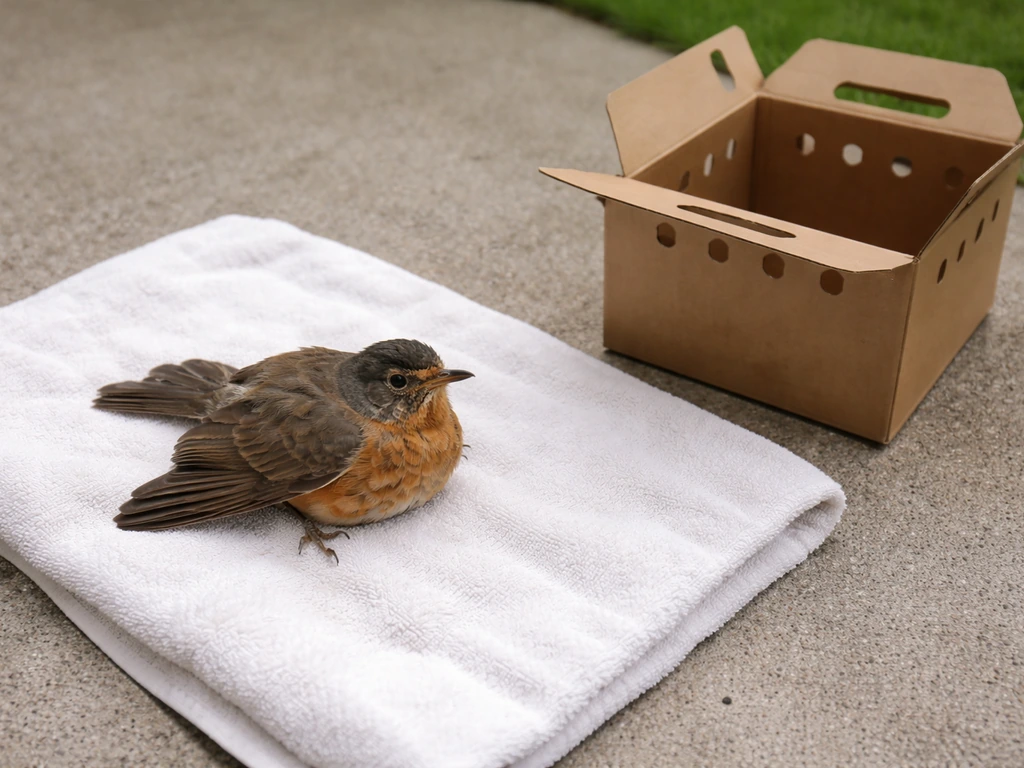
You don't need to be a vet to do a basic visual check before you box the bird. Spend 30 to 60 seconds observing from a short distance before you touch it. Look for these patterns:
| What you see | Likely issue | Urgency |
|---|---|---|
| One wing drooping, held lower than the other, or at an odd angle | Broken or dislocated wing | High: needs professional care today |
| Hopping or unable to stand, one leg held up or twisted | Broken or injured leg | High: needs professional care today |
| Sitting upright but not moving when approached; may have hit a window recently | Concussion/shock from collision | Medium-high: monitor closely, get help within 4 hours |
| Fluffed feathers, eyes half-closed, lethargic, not reacting normally | Illness, starvation, or severe exhaustion | High: needs professional assessment |
| Visible bleeding, open wound, or exposed bone | Trauma injury | Urgent: contact a vet or rehab immediately |
| Beak visibly misaligned, cracked, or the bird can't close it properly | Beak injury | High: bird cannot feed; needs professional care |
| Bird looks alert, bright-eyed, and hops away when approached | May be a fledgling or temporarily resting | Lower: assess age and context before intervening |
One important behavioral cue: a healthy adult bird will move away when you approach. An injured or seriously ill bird often won't. If you can walk right up to a wild bird and it just sits there, that's a sign something is wrong. Related problems like a bird that can't walk or can't hold its head up fall into similar categories and may point to neurological issues or internal injury in addition to a wing problem.
What happens if a bird stays grounded and doesn't get help
This is worth being direct about, because it helps explain why the clock matters. A bird that can't fly is in immediate danger on multiple fronts at once.
- Predation: grounded birds are extremely easy targets for cats, dogs, foxes, raccoons, and birds of prey. This can happen within minutes.
- Stress and shock: the physical and psychological stress of being handled, exposed, and unable to escape can push a bird into fatal shock even when the original injury wasn't life-threatening on its own.
- Dehydration and starvation: a bird that can't fly can't forage or access water. Depending on the species and conditions, this becomes critical within hours.
- Worsening injury: internal injuries from window strikes or impact trauma can deteriorate rapidly. A bird that seems stable can decline fast.
- Exposure: ground-level birds are more vulnerable to heat, cold, wind, and rain, especially if they're already weakened.
The good news is that with quick action on your part, a lot of these risks are manageable. Getting the bird into a warm, enclosed, dark box removes nearly all of them while you arrange professional help.
First aid you can actually do while you wait
The honest truth about bird first aid is that most of what you should do involves doing less, not more. But there are a few genuinely helpful things.
Warmth
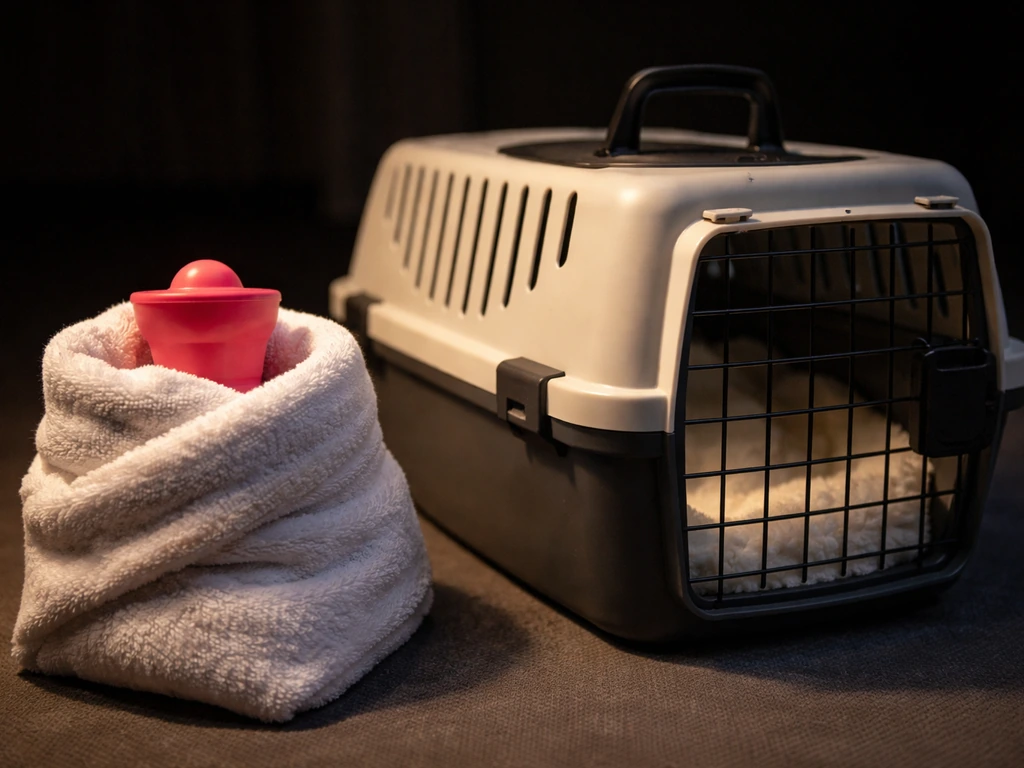
Warmth is probably the single most useful thing you can provide. If the bird feels cold to the touch or is shivering, place a hot water bottle wrapped in a towel next to (not inside) the box, or put a heating pad set to low under half the box. Critically, make sure the bird can move away from the heat source if it gets too warm. If the bird starts panting, remove the heat immediately. Overheating is just as dangerous as being too cold.
Darkness and quiet
A dark, quiet environment reduces stress hormones dramatically in birds. Keep the box closed, put it in a room away from TV noise and foot traffic, and ask everyone in the household to leave it alone. During transport to a vet or rehab center, keep the car radio off and drive smoothly. During transport, keep handling to a minimum and avoid unnecessary stress or delays while awaiting permitted care During transport to a vet or rehab center, keep the car radio off and drive smoothly..
Food and water: the rule is don't
I know it feels wrong not to offer food or water to a bird that looks like it's struggling. But every major wildlife veterinary organization, from Tufts Wildlife Clinic to the RSPCA to Mass Audubon, says the same thing: do not attempt to give food or water. The wrong diet can kill a wild bird. Trying to drip water into a weak bird's mouth can cause it to aspirate. Do not place any water container inside the box either. Just leave this to the professionals.
What about bandaging?
Unless a wildlife rehabilitator or vet has specifically walked you through it over the phone, don't attempt to splint or bandage a wing or leg. A bird can't move legs is a strong sign of serious injury or shock and should be assessed by a wildlife rehabilitator or avian vet as soon as possible. Improper wrapping can cut off circulation, cause additional pain, and make the injury worse. The best immobilization you can provide is a snug (not tight) box with minimal room for the bird to thrash around.
When to get professional help, and where to find it
Any bird with visible injuries needs professional care. That's not a grey area. But even without visible injuries, get help within 4 hours if the bird is still grounded and showing any signs of distress. Here's how to decide who to call:
Wildlife rehabilitator vs. avian vet
For wild birds, a licensed wildlife rehabilitator is usually your best first call. They are trained specifically in wild bird handling, have the legal permits to keep and treat wild animals, and often provide their services for free or low cost. Tufts’ Wildlife Clinic notes that keeping or raising a wild bird in captivity is illegal unless you have the proper state or federal permit, so contacting a licensed rehabber or avian vet is the right next step. Avian vets are excellent for owned pet birds (parrots, cockatiels, etc.) and can also provide emergency stabilization for wild birds, but they may not be licensed to hold wild animals long-term.
| Situation | Best contact |
|---|---|
| Wild bird (songbird, waterfowl, raptor, pigeon, etc.) | Licensed wildlife rehabilitator |
| Pet bird (parrot, cockatiel, canary, etc.) | Avian veterinarian |
| Wild bird after hours with no rehab available | Keep in dark box overnight; contact rehab first thing in the morning |
| Obvious emergency (heavy bleeding, open wound, can't breathe) | Avian vet or emergency animal hospital right now |
How to find help near you
- In the US: search the National Wildlife Rehabilitators Association (NWRA) directory or call your state's fish and wildlife agency.
- In the UK: contact the RSPCA (England and Wales), SSPCA (Scotland), or the Wildlife Trusts' local branches.
- In Australia/NZ: WIRES (Australia) or SPCA New Zealand operate nationwide rescue hotlines.
- Globally: a search for 'wildlife rehabilitator near me' or 'bird rescue [your city]' will usually surface local options quickly.
- Your local animal shelter or humane society can often provide a referral even if they don't handle wildlife directly.
What to do in the most common situations
Window or glass collision
This is probably the most common reason people find a grounded bird. Place the bird in a ventilated, closed box in a warm, dark, quiet spot and give it up to a couple of hours to recover from the stun. Do not open the box to check repeatedly. Do not offer food or water.
Even if it seems fine after an hour and flies off when you release it, understand that internal injuries from window strikes can still worsen after the bird leaves, which is why getting a professional assessment is always the better choice if you can manage it. Even if it seems fine after an hour, a wild bird can't fly can still have internal injuries, so getting a professional assessment is the better choice when you can manage it.
If it's still grounded after an hour or two, it needs professional care.
Pet attack (cat or dog)
Pet attacks are medical emergencies even when the bird looks physically okay. Cat saliva in particular contains bacteria that are rapidly fatal to birds, and puncture wounds from teeth or claws may not be visible under feathers. If a cat or dog has had the bird in its mouth or struck it with a paw, treat it as an urgent case and get it to a wildlife rehabilitator or avian vet the same day. Don't wait to see if it improves.
Nestlings and fledglings
This one trips a lot of people up. A small bird on the ground isn't automatically orphaned or injured. First, figure out which type you're dealing with. A nestling is featherless or has only patchy fuzz and closed or barely open eyes.
It genuinely needs help and should be placed back in its nest if you can safely reach it, or given to a rehabilitator. A fledgling, on the other hand, is fully feathered, has a short tail, and hops around on the ground. This is completely normal. Fledglings spend days on the ground while their parents continue to feed them and encourage them to fly.
The best thing you can do for a fledgling is leave it alone and keep cats and dogs away from the area. Only intervene if it's clearly injured or if you know the parents are dead.
Trapped or cornered by a predator
If you find a bird that has been cornered by a predator (or has been hiding under a bush after an attack) and won't or can't fly away, treat it the same way: box it, warm it, keep it dark and quiet, and get professional help. The stress response alone from a near-predator encounter can cause a bird to go into shock. A bird that can't hold its head up may be dealing with serious shock, weakness, or a neurologic injury, so it needs prompt professional assessment bird can't hold head up. Even if it wasn't physically touched, it may need assessment. Check for any puncture wounds or broken feathers that might suggest contact.
Nighttime finds
If you find an injured bird at night and can't reach any wildlife rescue or vet, keep it safely boxed in a warm, dark, quiet room overnight. Don't feed it, don't keep checking on it, and call a rehabilitator first thing in the morning. Most birds will tolerate overnight rest in a secure box well, and getting them to professional care early the next day is far better than any well-intentioned but potentially harmful overnight intervention.
Can the bird fly again?
It depends entirely on the injury and how quickly it receives proper care. This question is closely tied to the underlying injury or shock that prevents the caged bird from flying what prevents the caged bird from flying. Many birds, especially those that are simply stunned from a window strike, recover fully with rest and minimal intervention.
Birds that seem to forget how to fly may have conditions like concussion, shock, or other injuries that require a professional assessment stunned from a window strike. Birds with clean fractures, when treated quickly by a skilled rehabilitator, can sometimes be successfully splinted and released after weeks of care. Birds with severe wing breaks, internal injuries, or injuries left untreated for too long have a harder road.
The honest answer is: you can't know until a professional evaluates the bird. What you can control is how fast it gets to that professional, and how safely and calmly you handle it in the meantime. That's where your effort is best spent.
FAQ
How long can I wait before taking action if the bird can't fly?
Treat it as time-critical, aim to contact a wildlife rehabilitator or avian vet within 4 hours, and sooner if it is bleeding, breathing oddly, can’t hold its head up, or came from a cat or window strike. If you cannot reach anyone quickly, keep it contained, warm, and dark, and keep the phone line open for intake instructions.
Should I release the bird right away if it looks better after I box it?
Do not rely on a quick “looks fine” recovery. For window strikes in particular, internal injuries can worsen after the bird flies off. If it remains grounded for an hour or two, it needs professional care even if it later seems alert.
Can I give sugar water, bread, or a seed mix to help a weak bird?
No. Do not offer any food or water unless a rehabilitator or vet specifically tells you to. Wild birds have specialized diets, and a wrong diet, even in small amounts, can cause fatal complications. Also avoid forcing liquids into the beak, aspiration can occur even if the bird seems calm.
What if the bird won’t move away from me when I approach, but there are no visible injuries?
That behavior still suggests distress or a serious condition (neurologic impairment, concussion, shock, or internal damage). The absence of visible trauma does not mean it is healthy, so prioritize professional evaluation rather than assuming it will self-recover.
Is it okay to put the bird in an open carrier or a towel on the couch?
Usually not. The goal is a closed, dark, quiet, ventilated container that limits thrashing. An open environment increases stress and predation risk (even indoors from household pets), and a loose towel can snag feathers or make repositioning harder.
How warm should the bird be, and how do I avoid overheating?
Provide gentle warmth that allows the bird to move away. A practical check is watching for panting, if it starts panting, remove the heat immediately. Do not use direct hot surfaces or place the bird inside a water bottle; the risk of burns is real.
Should I give it water by dropping a few drops near the beak?
No. Droplets can still be aspirated, and forcing fluids increases risk. Keep any liquid containers out of the box, and let the rehabilitator decide whether fluids or supportive care are needed.
Can I splint the wing if I can see it looks bent?
Only if you have been instructed by a wildlife rehabilitator or avian vet. Incorrect immobilization can worsen circulation problems and increase pain, plus some fractures cannot be assessed accurately by sight alone. Use containment as your main intervention.
What is the safest way to handle a bird that can’t fly if I have to pick it up?
Minimize handling time and keep movements calm and deliberate. Contain first with the least effort, then avoid repeated checking or frequent opening. If you must move it, support the body and avoid pulling on the wings or legs.
If I find a fledgling that can’t fly, should I call for help?
Often you should not intervene if it matches fledgling signs (fully feathered, short tail, hopping) and is not clearly injured. The key is to keep cats and dogs away and watch from a distance. Call a rehabilitator if it is visibly injured, bleeding, chilled, or you suspect parents are gone.
What if the bird is on the ground and I’m not sure if it’s a nestling or a fledgling?
Check for feather development and eye status. Nestlings are typically featherless or have patchy fuzz with closed or barely open eyes and need return to the nest if it is safe. If fully feathered with a short tail and active hopping, treat it as a fledgling and leave it alone.
Does a bird stuck after a cat or dog attack always need urgent help?
Yes, same-day action is warranted. Cat saliva can be rapidly fatal, and tooth punctures or claw injuries can be hidden by feathers. Even if the bird seems okay, get it to a rehabilitator or avian vet urgently for assessment and possible treatment.
What should I do if I find the bird at night and no rescue is available?
Keep it boxed in a warm, dark, quiet room overnight, do not feed or offer water, and do not keep opening the box to check repeatedly. Plan to contact a rehabilitator first thing in the morning for intake guidance.
If the bird can’t fly because of weakness or concussion, what recovery should I expect?
Some stunned birds improve with rest, especially after window strikes, but you cannot know whether internal injury is present. A professional evaluation is the safest decision when the bird stays grounded beyond an hour or two or shows any distress, abnormal breathing, or neurologic signs.
If I suspect the bird is hurt but I can’t find any wounds, how do I decide who to call?
If it is a wild bird, start with a licensed wildlife rehabilitator. Choose an avian vet if the bird is a pet species (like a parrot) or if you need emergency stabilization and the clinic is equipped for avian cases. When in doubt for wild birds, rehabilitators are typically the better fit.