
If you find a bird in your backyard that can't fly, do this first: watch it from a distance for a few minutes before touching anything. The bird might be a fledgling (a young bird learning to fly that's supposed to be on the ground), or it might be genuinely injured and in need of help. Those two situations call for completely different responses, and rushing in too fast can cause real harm either way.
Bird in Backyard Can’t Fly: What to Do Right Now
Marcus Chen
7 Jun 2026
First quick check: injury, fledgling, or illness?
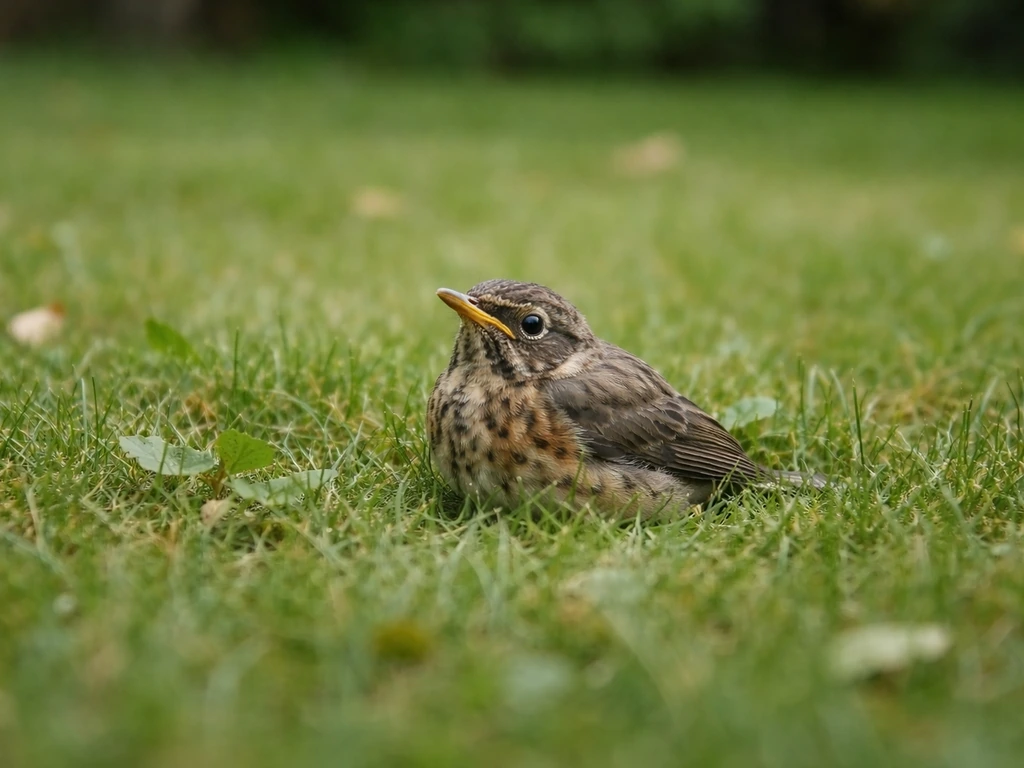
Before you do anything, spend two to five minutes watching quietly from a distance. This one step will answer most of your questions. You're looking for three things: what the bird looks like, what it's doing, and whether any adult birds are nearby.
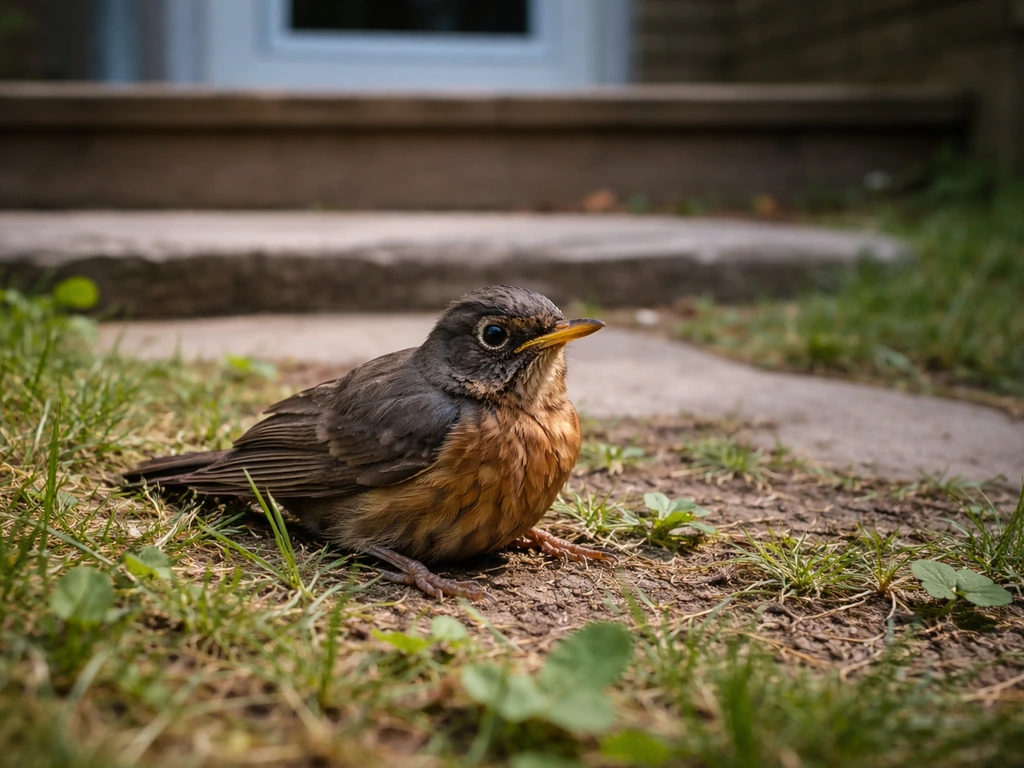
Fledglings are young birds that have left the nest but haven't fully mastered flight yet. They hop around on the ground, may flutter a few inches, and look a little scruffy with short tail feathers. This is completely normal. Their parents are almost always close by and will continue to feed them on the ground for several more days. If the bird looks alert, is holding its wings symmetrically, is moving around (even if clumsily), and you can see or hear adult birds in the nearby trees or shrubs, there's a very good chance this bird does not need your help. Leave it alone, keep pets and kids back, and check again in an hour.
An injured or sick bird looks and behaves differently. Watch for these warning signs:
- One wing drooping lower than the other, or held out at an odd angle
- A leg sticking out to the side or unable to support weight
- The bird is sitting completely still and not reacting to your approach
- Feathers puffed up and the bird looks dull or hunched
- Visible bleeding, an open wound, or a deformed limb
- Fast or labored breathing, or the beak is open and panting
- Twisted or tilted head or neck
- The bird is lying on its side
If you see any of those signs, the bird needs help. Also think about what might have happened: did you hear a loud thud against your window recently? Window strikes are one of the most common reasons backyard birds can't fly, and they cause everything from brief stunning to serious head trauma. One common cause of birds that cannot fly is a window strike, which can injure them even when they look mostly okay window strikes. A bird that hit a window may look uninjured on the outside but is in real trouble inside.
Immediate safety and first aid at home
If the bird shows injury signs, you need to contain it safely and get it somewhere warm, dark, and quiet as quickly as possible. Stress alone can kill an injured bird, so the less handling the better.
How to contain the bird
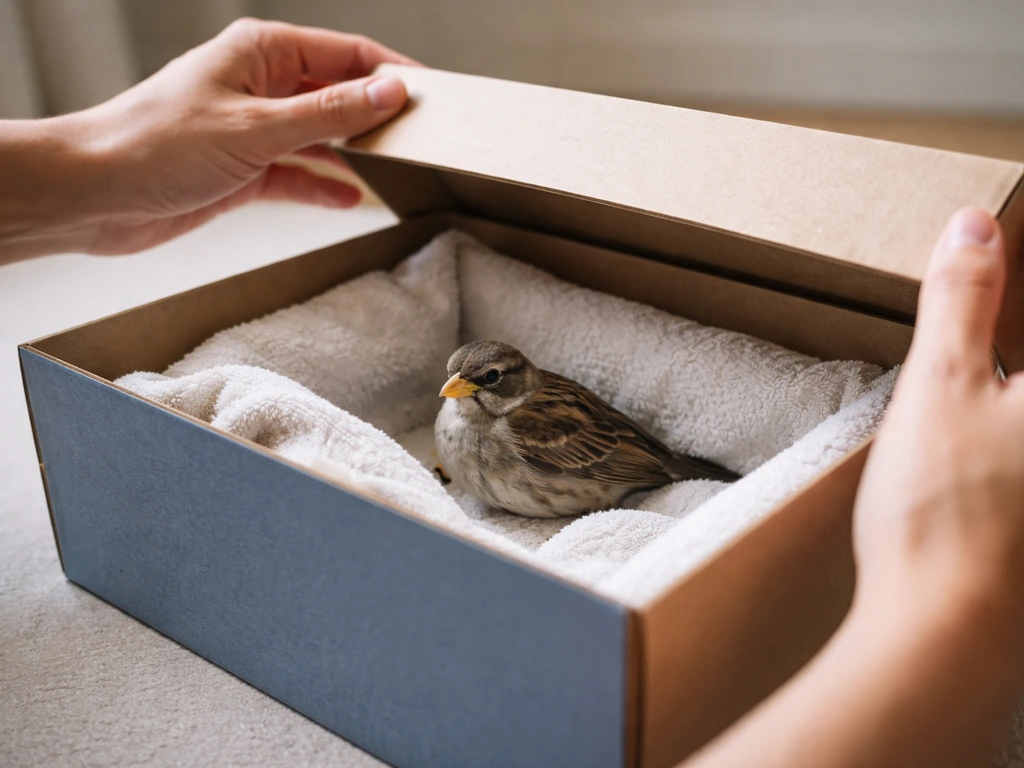
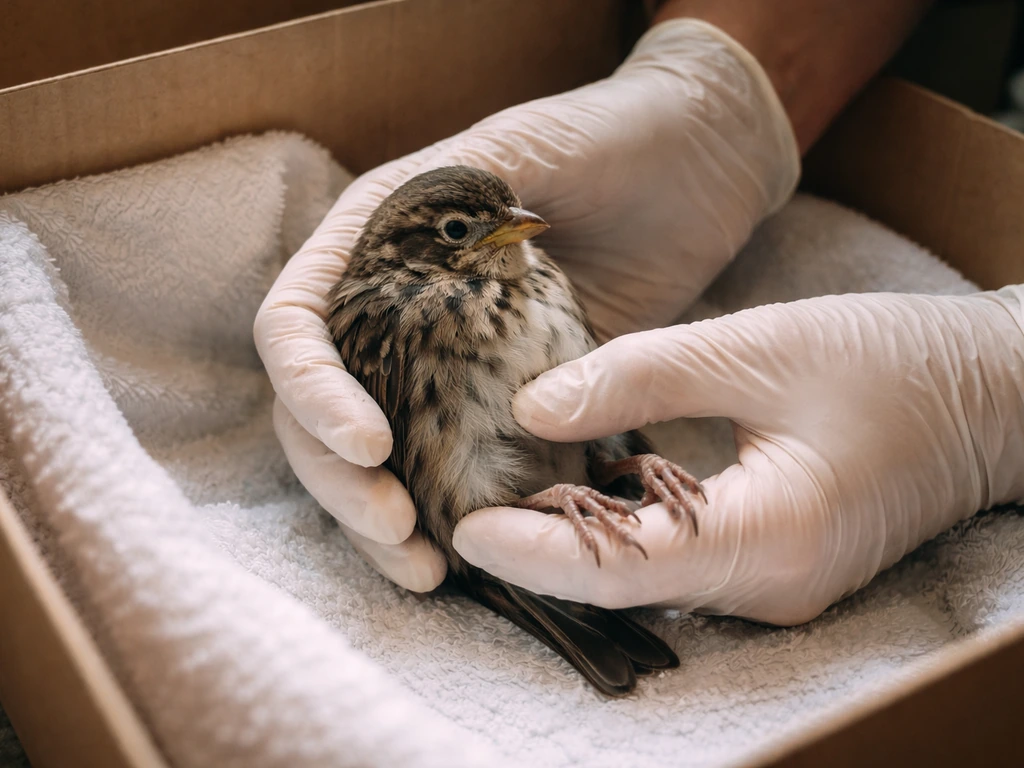
Grab a cardboard box (something like a shoebox or a medium moving box works well) and line the bottom with a small towel, old t-shirt, or pillowcase. Approach the bird calmly and slowly, then gently place it in the box. You can drape a lightweight cloth over your hands for protection if you're worried about being pecked. Close the top of the box, or cut a few small ventilation holes if it's airtight. The goal is a snug, dark space. Less room to flap around means less chance the bird injures itself further.
Warmth
If the bird feels cold or is shivering, it needs gentle heat right away. A few safe methods: set one end of the box on a heating pad turned to its lowest setting (never directly under the whole box, so the bird can move away from the heat if needed). Or fill a water bottle with warm water, wrap it in a towel, and place it next to the bird inside the box. Another option: fill a sock with uncooked rice, microwave it for about one minute, wrap it in a light cloth, and tuck it alongside the bird. Always put something between the bird and any heat source. Direct heat can burn.
Keep it calm
Once the bird is boxed up, put it in the quietest room you have. No talking near it, no peeking, no letting children or pets near the box. Eye contact, loud noises, and constant handling all spike the bird's stress levels and can make an already fragile situation much worse. Treat it the same way you'd treat someone in shock: quiet, still, and warm.
How to assess the most common problem areas
You don't need to do a full physical examination, and honestly you shouldn't. But a quick visual check while you're placing the bird in the box can help you describe what you're seeing when you call for help.
Wings
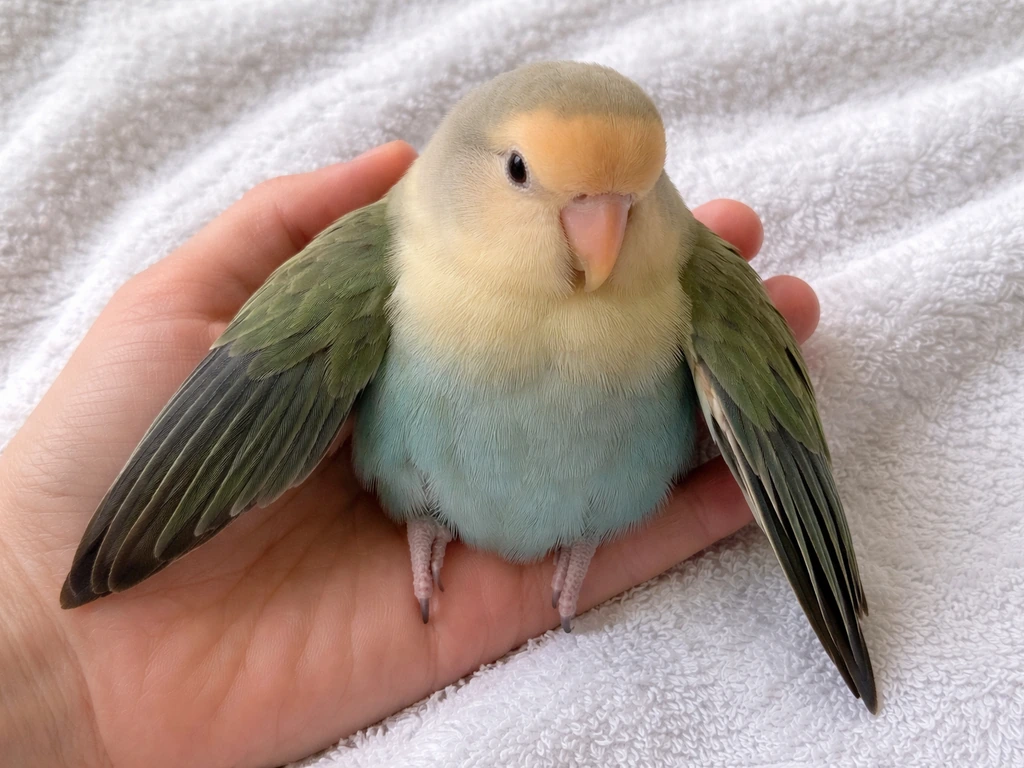
Look at both wings at the same time. Are they sitting symmetrically against the body, or is one drooping lower or held out to the side? A drooping wing is a classic sign of a fracture or dislocation. Even if you can't see broken bone, asymmetry usually means something is wrong.
Legs
Can the bird stand? If your bird can't walk properly, it may have a leg, spine, or neurological problem, so treat it as urgent and get help from a wildlife rehabilitator or avian vet can't stand. Is [one leg sticking out at an angle or dangling](https://www. torontowildlifecentre.
com/wildlife-emergency-rescue-hotline/sick-injured-wild-animal/small-bird/bird-hit-window/)? Leg injuries often prevent the bird from gripping the ground or a perch. If it can't stand at all, that's a red flag that could point to a leg fracture, a spinal issue, or neurological damage. If a bird cannot move its legs, it can be a sign of a serious injury and needs urgent help from a wildlife rehabilitator or avian vet can point to a leg fracture.
A bird that can't walk may have a leg, spine, or neurological problem that needs a professional assessment.
Beak and head
Check whether the beak looks normal or is cracked, misaligned, or bleeding. Also look at the head and neck: is the bird holding its head straight, or is it tilting, twisting, or rolling? A twisted or tilted head after a window strike is a sign of head trauma and should be treated as an emergency.
Breathing and neurological signs
Watch the bird's chest and beak. Normal breathing is calm and barely visible. If the bird is panting with an open beak, breathing rapidly, or making clicking or wheezing sounds, those are serious signs. The same goes for any loss of balance, circling, seizure-like movements, or an inability to hold the head up. These neurological signs often follow a window collision and need professional attention fast.
Bleeding
If you see active bleeding, you can apply very gentle pressure with a clean cloth or piece of gauze. Do not use cotton balls (the fibers can stick to wounds). Do not try to clean deep wounds or apply ointments. Control the bleeding minimally and get the bird to a rehabilitator as quickly as possible.
What NOT to do
This section matters as much as anything else in this guide. Well-meaning mistakes cause real harm to injured birds every day.
- Do not feed the bird. Not bread, not water, not worms, not anything unless a licensed rehabilitator specifically tells you to. Trying to force food or water into a bird's beak is one of the most dangerous things you can do: liquid can enter the lungs (aspiration), which is often fatal. This applies to baby birds and adult birds equally.
- Do not give milk. Ever. Birds cannot digest it and it will make things worse.
- Do not try to make the bird fly. Tossing it into the air or encouraging flight does not help. If the wing or leg is injured, forcing movement makes the injury worse and adds trauma.
- Do not handle the bird more than necessary. Every minute of handling is stressful. Pick it up once, put it in the box, and leave it alone.
- Do not let pets or children near the bird. Even an animal sitting close to the box creates stress. A cat or dog can kill an injured bird in seconds.
- Do not keep a wild bird as a pet or try to rehabilitate it yourself long-term. Wild birds have very specific dietary and care needs, and in most places it's actually illegal to keep them without a rehabilitation license.
- Do not assume a bird near a window is fine just because it flew away briefly. Head trauma symptoms can be delayed by hours.
When to call a wildlife rescue or avian vet right now
Some situations need professional help immediately, not after a wait-and-see period. Call a wildlife rehabilitator or avian vet right now if the bird:
- Cannot stand or use one of its legs
- Has a visibly drooping, broken, or deformed wing
- Is bleeding from any area
- Hit a window (head trauma is time-sensitive and gets worse without treatment)
- Has a twisted or tilted head or neck
- Is breathing rapidly or panting, especially for more than two hours
- Is completely still, unresponsive, or lying on its side
- Has an open wound or visible broken bone
- Is extremely lethargic and not reacting to nearby movement or sound
If you're not sure whether the situation is urgent, take a short video or a couple of photos and contact a local wildlife rehabilitator for advice. Many organizations can assess severity from photos and tell you what to do next without you needing to bring the bird in right away.
To find help near you, search for 'wildlife rehabilitator' plus your city or state, or try the National Wildlife Rehabilitators Association directory or the Wildlife Rehabilitator Locator at animalhelpnow.org. If those don't turn up results quickly, call your local animal control office, humane society, or nature center: they almost always know who to refer you to. When you call, have your location ready, a description of the bird species (or your best guess), and what you've observed so far.
If it's after hours and you can't reach anyone immediately, keep the bird contained, warm, dark, and quiet overnight. Most healthy injured birds can survive this way until morning. Leave a message with whatever organization you reached so they can call you back when they open.
Transporting the bird and what happens after
Getting the bird to help safely
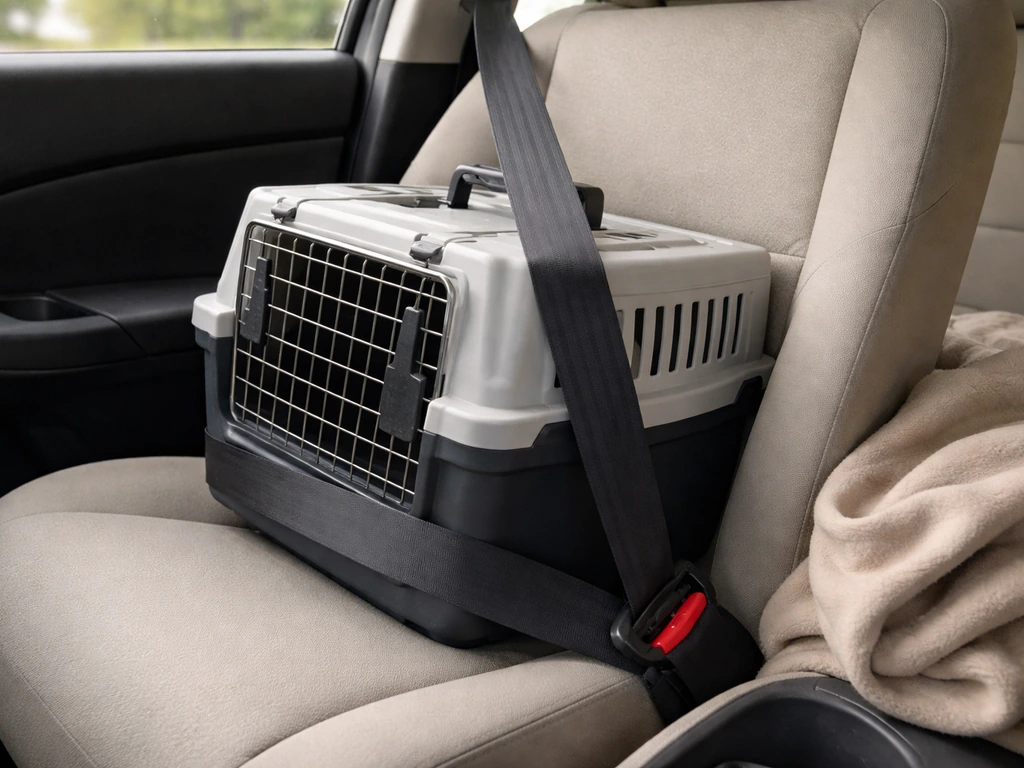
Transport the bird in the same closed box you used for containment. Place it on the seat next to you (not in a trunk or hot area), and keep the car quiet: no loud music, no talking loudly near the box. The drive itself is stressful, so make it as short and calm as possible. Do not open the box to check on the bird during transport.
If you're transporting a larger bird like a hawk, crow, or pigeon, use a sturdier container: a plastic pet kennel with the door secured works well. Smaller birds do fine in a ventilated cardboard box. In both cases, keep the space snug enough that the bird can't thrash around and injure itself further, but with enough room to breathe comfortably.
If it's a fledgling situation
If you've watched from a distance and confirmed the bird is a fledgling (alert, moving around, parents attending, no visible injury), the best thing you can do is leave it alone. Keep your yard as quiet as possible. If you have cats or dogs, keep them inside. The fledgling period typically lasts only a few days before the bird can fly well enough to get out of harm's way. If you stop seeing the parents after several hours or the bird seems to be deteriorating (getting quieter, puffier, less responsive), that changes the equation: contact a rehabilitator.
After the bird goes to a rehabilitator
Once you've handed the bird off, the rehabilitation process begins: rest, proper nutrition, and treatment for whatever the underlying injury is. If the bird recovers fully, most rehabilitators aim to release it back near where it was found. You likely won't get regular updates (wildlife rehab centers are busy and it's often not possible), but that's normal. The best outcome for a wild bird is always a successful release back to the wild.
Making your backyard safer going forward
Once you've handled the immediate situation, it's worth thinking about why it happened. Window strikes are the number one cause of backyard bird injuries: in the US alone, up to a billion birds die from window collisions every year. Window alert decals, exterior screens, or UV-reflective tape applied to the outside of your windows at 2-inch intervals can dramatically reduce strikes. Bird feeders placed either within 3 feet of a window (so birds can't build up enough speed) or more than 30 feet away (so they have time to react) are much safer than feeders placed at the typical mid-distance of 10 to 20 feet.
If cats are a factor in your yard (yours or a neighbor's), keeping them indoors or in a supervised enclosure is the single most effective thing you can do for backyard bird safety. Free-roaming cats are responsible for billions of bird deaths each year in North America. Even a well-fed, indoor-outdoor cat will hunt birds instinctively.
Also check your yard for other hazards: uncovered water features where birds might land and get trapped, pest control poisons that can sicken birds through a contaminated food chain, and loose netting or garden mesh that birds can get tangled in. A few small changes make a real difference, especially during breeding season when fledglings are on the ground and most vulnerable.
| Situation | What you're seeing | What to do |
|---|---|---|
| Healthy fledgling | Alert, moving around, scruffy short tail feathers, parents nearby | Leave it alone, keep pets inside, watch from a distance |
| Window strike (mild) | Bird is stunned, sitting near window, upright and breathing normally | Box it up, keep warm and dark, observe 1 to 2 hours, release if it recovers fully |
| Window strike (serious) | Tilted head, can't stand, panting, unresponsive | Box it up immediately and call wildlife rehab right now |
| Injured wing | Drooping wing, asymmetrical posture, can't fly | Contain safely, call wildlife rehabilitator today |
| Injured leg | Leg at odd angle, can't stand or grip | Contain safely, call wildlife rehabilitator today |
| Bleeding or open wound | Visible blood, exposed tissue | Gentle pressure with clean cloth, call wildlife rehab urgently |
| Sick or lethargic bird | Puffed feathers, dull eyes, not reacting, breathing fast for 2+ hours | Contain, keep warm and dark, call wildlife rehab today |
Finding a bird that can't fly is scary, especially if you've never dealt with it before. In many cases, a bird that forgets how to fly needs a quick check for injury or window strike, then professional help bird forget how to fly. But the steps are manageable: watch first, contain carefully if needed, keep it warm and quiet, don't feed it, and get professional help on the phone as soon as you recognize a real injury.
HelpWildBirds says not to feed the bird any food, water, or other liquids, and to leave it alone rather than bothering it or feeding it by force don't feed it. If a wild bird can't fly, it may be injured or experiencing a problem with its wings, legs, or balance, so professional care is important. You don't have to know exactly what's wrong to help.
You just have to get it to someone who does.
FAQ
How can I tell if a “can’t fly” bird is actually a fledgling vs. something injured, from just a quick look?
Use the “parents nearby” test. If the bird is alert, hopping and moving, and you can see or hear adult birds in nearby trees or shrubs, it is more likely a fledgling. If there is no adult activity, the bird looks hunched, unusually quiet, one wing sits lower, or it cannot stand, treat it as injured even if the outside looks mostly normal.
Should I try to force the bird to move, flap its wings, or check for broken bones?
No. Avoid physical testing, wing stretching, or probing. Even gentle handling can worsen fractures, dislocations, or internal injuries. A safe approach is only a brief visual check while placing it in the container, then get it warm, quiet, and professional help if injury signs are present.
Is it okay to feed or give water to a wild bird that can’t fly?
Do not offer food or drink. Fluids or food can be inhaled into the lungs (aspiration), especially if the bird is stressed or has balance issues. Focus on containment, warmth if needed, and contacting a wildlife rehabilitator. If you must hold it before help arrives, keep the box closed and undisturbed.
What should I do if the bird is in a risky spot, like under a grill, in a shed, or near a busy driveway?
Prioritize safety and minimize chase time. If it is immediate danger, gently move it into a box using slow, calm contact rather than trying to scare it into flying. Keep the handling brief, then warm, dark, quiet, and contact a rehabilitator. If it is only a short distance away and seems uninjured, you can also block access and monitor from a distance.
Can I use a towel to pick it up, and how do I keep it from injuring itself?
Yes, you can use a towel as a barrier when you need to pick it up, but avoid grabbing the body or squeezing. The best injury prevention is a snug container with soft lining, limited headroom, and no repeated checks. Keep the bird away from drafts and keep pets and kids out of the room.
Should I put the bird outside in a box or bring it indoors?
Indoors is usually safer if it is injured or you are not sure. A warm, quiet indoor room reduces stress and protects it from weather, predators, and more window exposure. If it is clearly a healthy fledgling with parents actively nearby, leaving it outside where you found it is often appropriate, but keep hazards like pets and lawn tools away.
What if the bird is breathing oddly, but I am not sure it is an emergency?
If you notice open-mouth panting, rapid breathing, wheezing or clicking, constant wobbling, seizures, or the head cannot be held up normally, treat it as urgent. When in doubt, take a short video or two photos and contact a wildlife rehabilitator for immediate guidance, since breathing and neurological signs can deteriorate quickly.
How long can I wait before calling for help if the bird seems quiet?
If it shows injury or neurological warning signs, do not delay. For a potentially healthy fledgling, watching for an hour is reasonable if parents are present and the bird is moving normally. If the bird becomes quieter, puffier, less responsive, or you stop seeing adult birds after several hours, contact a rehabilitator.
What should I do overnight if I cannot reach anyone?
Keep it contained, warm if it feels cold or shivering, and in the darkest, quietest room you have. Do not open the box to check repeatedly. If possible, leave a message or text to the organization you contacted so they can follow up in the morning with next steps.
Is a window strike always obvious, and what if the bird looks okay but keeps staring or acting “off”?
Window strikes can leave little outward damage while still causing internal trauma or concussion. Signs like a tilted head, wobbling, circling, clicking breathing, or inability to hold balance warrant professional care even if the bird can perch briefly. Err on the side of contacting a rehabilitator and keep the bird warm and undisturbed until you can get advice.
When should I choose a sturdier carrier, and what size is “snug but breathable”?
Sturdier containers are for larger birds that can thrash hard (for example, pigeons, crows, and hawks), while small birds can be in a ventilated cardboard box. “Snug but breathable” means the bird cannot spin or repeatedly slam into the sides, but there is enough space to breathe comfortably without being compressed.
Next Articles
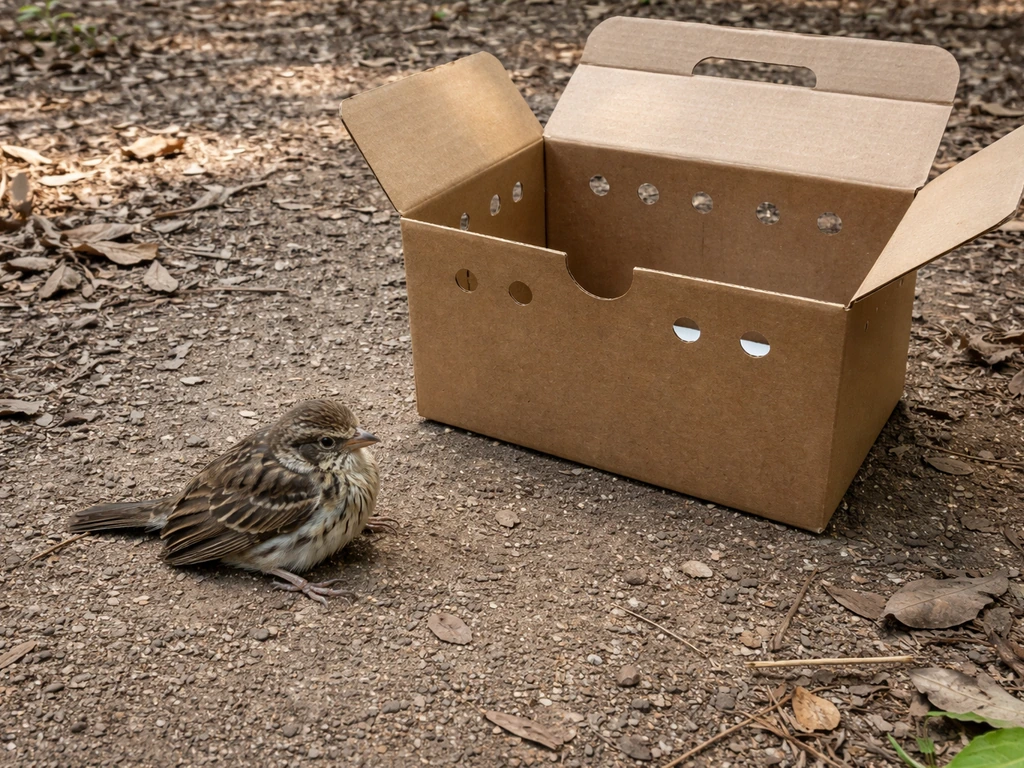
What Happens If a Bird Can’t Fly and What to Do Now
Immediate risks when a bird can’t fly and step-by-step triage, first aid, and when to call a wildlife vet.
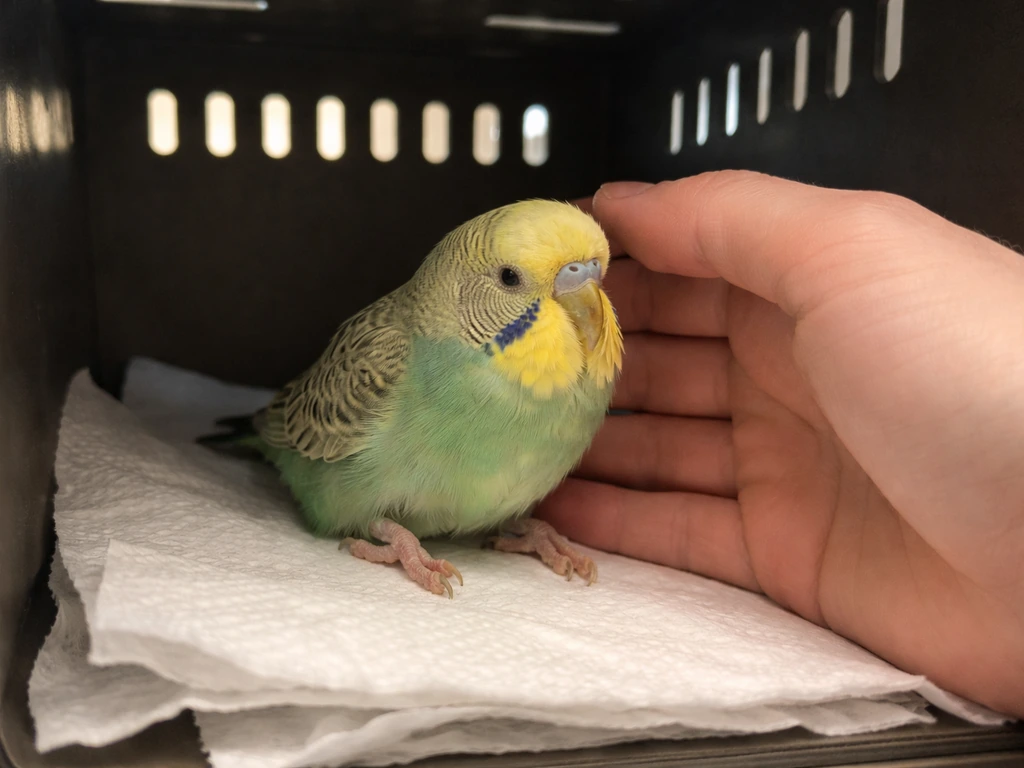
My Bird Can’t Walk Properly: First Aid and Triage Guide
Step-by-step first aid to triage a bird that can’t walk properly, control bleeding, avoid harms, and know vet red flags.
Bird Can’t Move Legs: First Aid Steps and When to Get Help
Step-by-step first aid for a bird with immobile legs, plus urgent signs, handling tips, and how to get help fast.