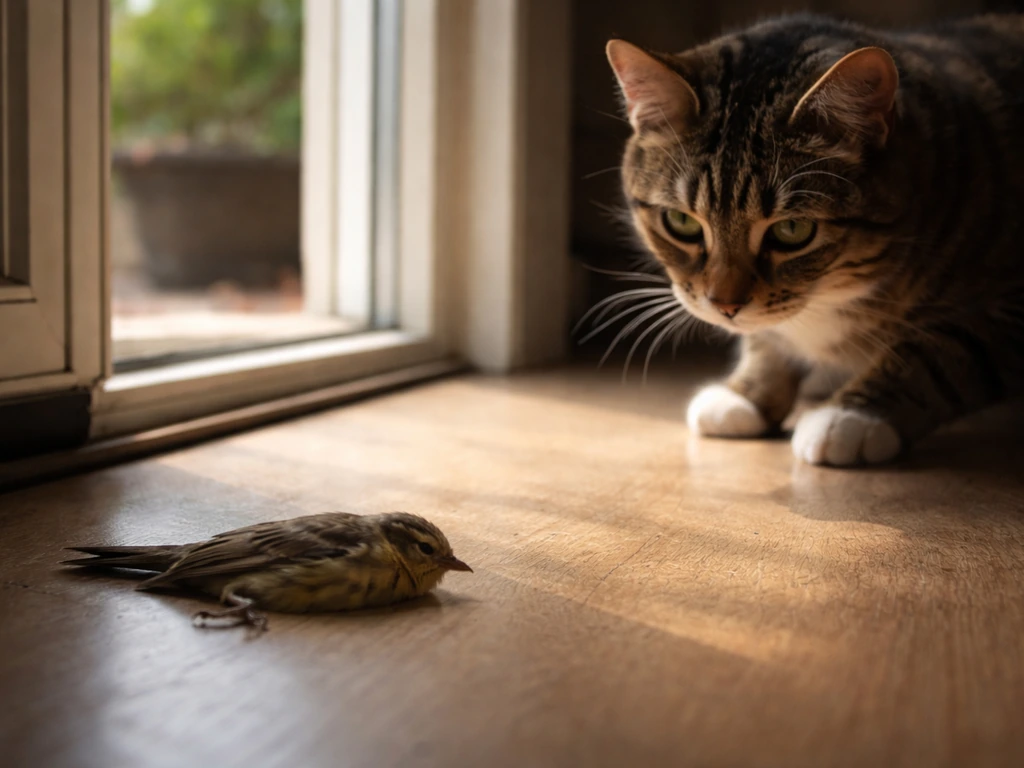
If your cat just caught a bird, the most important thing you can do right now is get the cat away from the bird immediately, then take a breath. Even if the bird looks okay, it probably needs professional attention. Cat bites and scratches introduce bacteria deep into a bird's body, and injuries that look minor on the outside can be fatal within hours. Here is exactly what to do, step by step.
My Cat Caught a Bird What Should I Do Now
Marcus Chen
18 Apr 2026
Step one: separate the cat and bird without making things worse
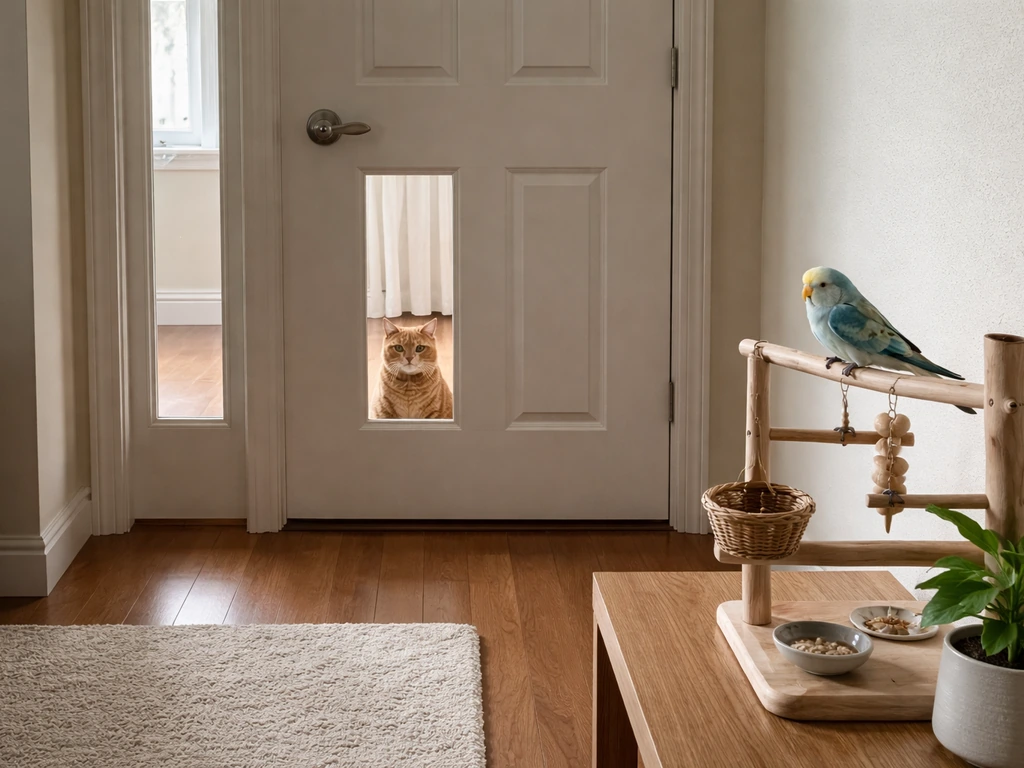
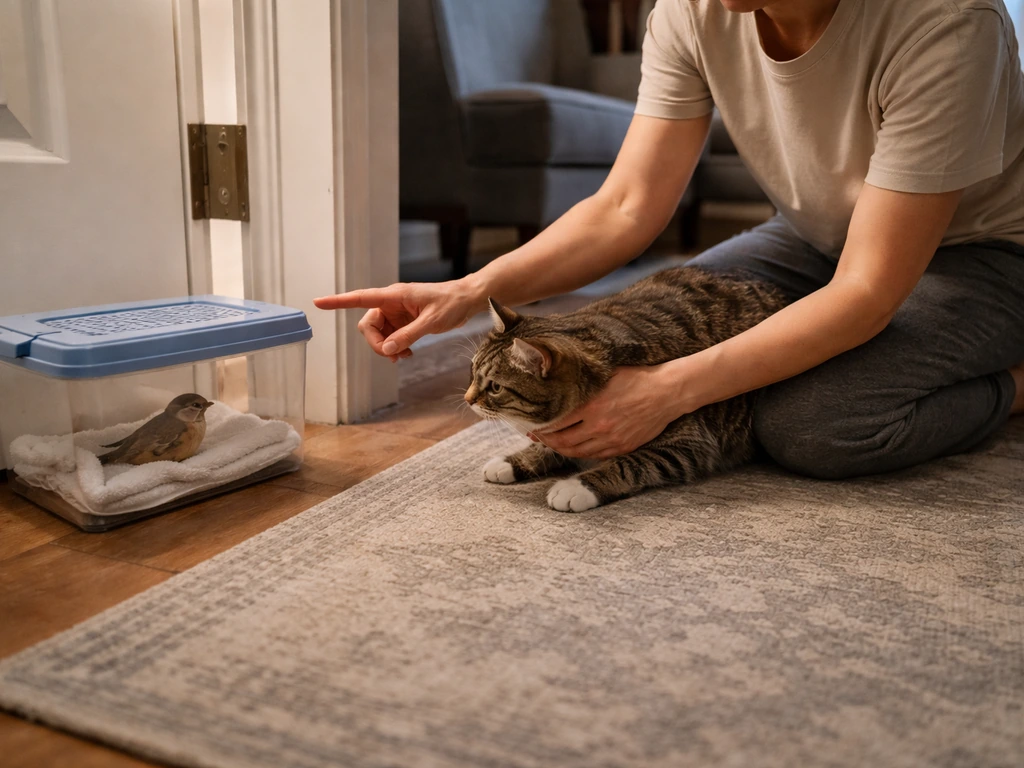
Your first move is containment, not rescue. Do not try to grab the bird while the cat still has it or is still nearby. Put the cat in another room and close the door. If the bird is outside, keep the cat indoors while you deal with the situation. This protects both animals: a bird in panic will flap and injure itself further, and a cat that feels its "prey" is being taken away can bite or scratch you.
Once the cat is secured, approach the bird slowly and calmly. Crouch down to its level rather than looming over it. If the bird is mobile and tries to fly away, let it land somewhere safe before you attempt to contain it. Drape a light cloth or small towel gently over the bird to calm it down before picking it up. Most small birds will stop struggling once they cannot see.
Check the bird's condition before you do anything else
Once the bird is away from the cat, do a quick visual check. You are not diagnosing it; you are just figuring out how urgent this is. Look for these things:
- Is it breathing? Watch for chest movement. Labored or open-mouth breathing is an emergency.
- Is it bleeding? Even a small wound on a bird is serious. Profuse bleeding needs immediate help.
- Can it hold its head up? A bird lying on its side or unable to hold its head upright is in serious distress.
- Are its wings held symmetrically? A drooping or oddly angled wing suggests a break or dislocation.
- Can it perch or stand? A bird that cannot grip or balance has a leg, foot, or neurological problem.
- Is it responsive? Tap near it gently. A bird that does not react is in shock or severely injured.
- Is it shivering or puffed up? Both are signs of shock or significant stress, even without visible wounds.
Here is the critical rule that catches most people off guard: even if the bird looks completely fine, it should still be treated as injured if it was in your cat's mouth. Cat saliva carries Pasteurella bacteria that can cause fatal infection within 24 to 48 hours. The Wildlife Center of Virginia is direct about this: any bird that has been in a cat's mouth needs treatment, even with no obvious injuries. Call a wildlife rehabilitator for advice regardless of what you see.
Basic first aid and how to contain the bird safely
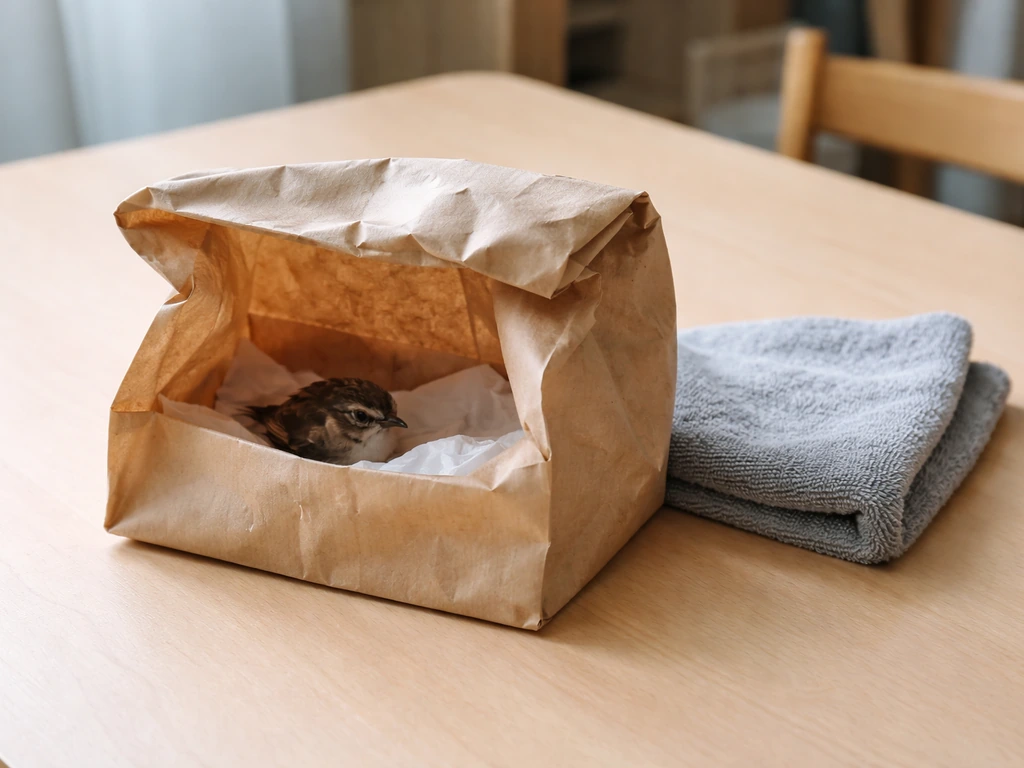
Your job here is not to treat the bird. It is to keep it alive and calm until a professional can take over. The best container for a small injured bird is an unwaxed paper bag according to the American Bird Conservancy, though a cardboard box with small air holes punched in the sides works just as well for most situations. Line the bottom with a paper towel or a thin cloth so the bird has something to grip.
Place the bird in the container and close it. Keep the container somewhere dark, quiet, and warm: around 85°F is a good target for an injured songbird. Away from kids, pets, loud TVs, and air conditioning vents. Warmth matters a lot because injured birds go into shock quickly and cannot regulate their body temperature the way a healthy bird can.
Do not handle the bird more than necessary to get it into the box. Every time you pick it up, you are adding stress, and stress alone can kill a bird that is already struggling. Once it is in the container, leave it alone. Think Wild (a licensed wildlife hospital) puts it plainly: keep the animal in a quiet, dark, warm location without food or water, and transport it to a licensed rehabilitator as soon as possible.
When to call for professional help (and when to call right now)
The short answer: call a wildlife rehabilitator or avian vet for any bird a cat has touched. The longer answer is that some situations are more urgent than others. These are the signs that mean you should be making that call while you are reading this:
- The bird is bleeding or has visible wounds
- It is not responsive or is lying on its side
- It has trouble breathing or is breathing with its mouth open
- A wing or leg appears broken or is held at an odd angle
- It cannot stand, perch, or grip
- It was in the cat's mouth for any amount of time, even briefly
To find help near you, go to AnimalHelpNow.org. The Animal Help Now platform has a live database of wildlife rehabilitators and rescue hotlines organized by location, and there is a phone app too. If you need an avian vet specifically (for a pet bird or if no wildlife rehab is available), the Association of Avian Veterinarians has a searchable directory at their website under "Find a Vet." Cornell University's Janet L. Swanson Wildlife Hospital is another excellent resource if you are in the northeast: they accept injured native wild animals and will talk you through the situation over the phone before you come in.
What not to do (these mistakes are easy to make)
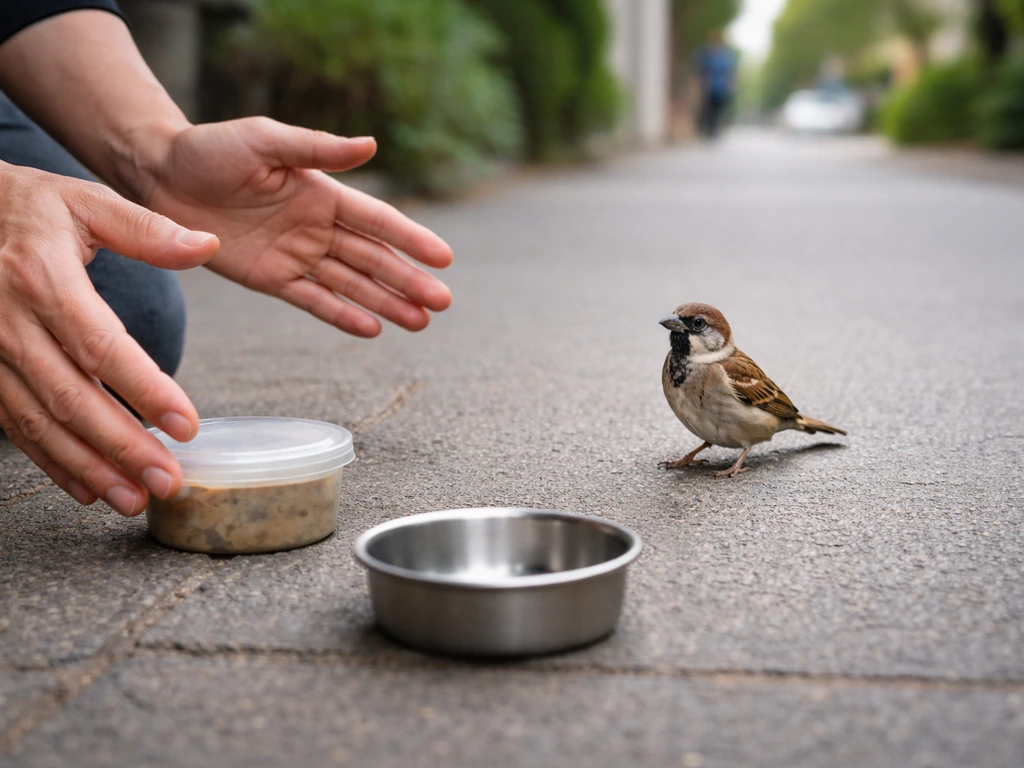
The instinct to help is good, but some of the most natural impulses can actually harm the bird. Here is what to avoid:
- Do not give the bird food or water. This is the most common mistake. A stressed or injured bird cannot digest properly, and giving water to an unresponsive bird can cause it to aspirate. The American Eagle Foundation, the NYC Bird Alliance, and nearly every wildlife rescue say the same thing: no food, no water.
- Do not keep handling the bird to check on it. Once it is in the box, leave it there.
- Do not put it in a wire cage or a glass tank. Both allow too much light and visual stimulation. Darkness is calming.
- Do not assume it is fine because it flew a few feet. Birds in shock often rally briefly before crashing.
- Do not try to splint or bandage anything yourself unless you have wildlife rehab training. You can do more damage than good.
- Do not release it outside thinking it will recover on its own. A bird from a cat encounter that cannot fly well is extremely vulnerable to predators.
It is also worth knowing the line between this situation and a related but different one. If the cat actually ate part of the bird rather than just catching it, that raises a separate set of concerns for your cat's health. You can read more about whether you should worry if your cat ate a bird to understand the risks on that side of the equation.
How to prepare for transport and what happens next
Once you have contacted a wildlife rehabilitator or vet and confirmed they can take the bird, here is how to transport it safely. Keep the box upright and secured so it cannot tip over in the car. Do not put the heater blowing directly on the box, and do not crank up the AC. A normal comfortable car temperature is fine for the short trip. Minimize stops and keep the radio low.
When you arrive, let the staff handle the bird. Give them as much information as you can: what time your cat caught it, whether you saw any injuries, how long it was in the cat's mouth, and what the bird's behavior has been like since you contained it. This helps the rehabber triage faster.
If the bird was only stunned and does appear to fully recover on its own (it is alert, perching normally, flying strongly), you can release it outside once you are sure it can fly well. But keep your cat indoors for the rest of the day. Do not release the bird anywhere near where the cat can access it again.
And if you are dealing with a different but related scenario, such as a bird that got away from your cat and you are not sure where it went, it helps to know whether a bird that flies off will come back and what that might mean for whether it is okay. If you are wondering about a missing bird, that same guidance can help you decide what to do next while you keep your cat separated bird that flies off will come back.
Preventing this from happening again
Cats are incredibly effective hunters, and even well-fed, indoor cats will catch birds given the opportunity. The American Bird Conservancy estimates that cats kill between 1.3 and 4 billion birds in the U.S. every year. If your cat has outdoor access, a few changes can significantly cut that number.
Keep cats indoors or use a contained outdoor space
The most effective solution is keeping your cat indoors or giving it access to a catio (an outdoor enclosure). The American Bird Conservancy describes a range of options including catios, leashes, cat strollers, and backpacks that let cats enjoy outside time without being able to hunt. If your cat has always been an outdoor cat, the transition takes patience, but it is very doable with enrichment indoors.
Use a bell collar
If keeping the cat fully indoors is not realistic right now, a bell collar is the next best step. Research has shown that cats wearing bell collars return fewer birds compared to cats wearing plain collars. It does not eliminate hunting entirely, but it gives birds a better chance to hear the cat coming and escape. Some studies have also looked at sonic deterrent collars like the CatAlert device with similar findings.
Watch for window collision risks too
If you have birds in your yard, windows are an added hazard. A bird that hits a window and is stunned on the ground is easy prey for a cat nearby. Applying markers or deterrent patterns on the outside of glass can reduce collisions significantly, which in turn reduces the number of vulnerable birds landing near your home. If you ever find a bird on the ground near a window with no cat involved, that is a window strike, not a cat catch, and the care steps are very similar.
A quick comparison: what to do based on what you're seeing
| What you observe | Urgency level | What to do |
|---|---|---|
| Bird was in cat's mouth, looks fine | High | Contain bird, call wildlife rehab now, do not release |
| Bird is bleeding or has visible wounds | Emergency | Contain immediately, call for emergency help |
| Bird cannot stand, perch, or fly | Emergency | Contain, keep warm, transport to rehab or avian vet ASAP |
| Bird is unresponsive or lying on side | Emergency | Handle minimally, contain, get help immediately |
| Bird is alert and flying well | Moderate | Release away from cat; monitor; still consider calling rehab if cat contact confirmed |
| Bird appears stunned but responsive | High | Dark, warm box; call rehab for advice; do not release until flying strongly |
The bigger picture for cat owners
If your cat killed the bird rather than just catching it, that situation carries its own set of next steps worth reading through separately. You can find specific guidance on what to do when a cat kills a bird, including how to handle it safely and what it means for your yard's bird population.
There is also a less obvious concern worth flagging: if your cat catches birds regularly, you may wonder at some point about risks from ingestion. The question of what to do if your cat ate a bird covers that scenario in detail, including when to call your vet about your cat rather than a wildlife rehab about the bird.
The bottom line is this: when your cat catches a bird, the bird needs professional help almost every time. Wildlife Center of Virginia provides help and advice resources, and its staff is available seven days a week from 9:00 am to 5:00 pm to assist with wildlife issues blank" rel="noopener noreferrer">needs professional help almost every time. Your job is to keep it warm, dark, calm, and contained, blank" rel="noopener noreferrer">skip the food and water, and get it to someone qualified as quickly as possible. The steps above are everything you need to do that well.
And if you keep birds as pets yourself and are ever worried about what they get into, situations like a pet bird eating something toxic like avocado follow a similar principle: do not wait to see if symptoms develop, and contact a professional right away rather than trying to manage it at home.
FAQ
Should I give the bird water or food once I’ve put it in a box?
No. Keep it warm, dark, and quiet, and do not offer water or food. Injured or stressed birds can aspirate fluid, and food can worsen shock. Food and hydration decisions should be made by the wildlife rehabilitator or avian vet.
How warm should the box be, and how can I warm it safely at home?
Aim for about 85°F for small songbirds, but warm the environment, not the bird directly. Use a warm pad or heating source outside the container, and never place the heater or a hot object directly against the box, since overheating and burns can happen quickly.
What if the bird is bleeding or has a visible wound?
Still skip attempts to treat it yourself. Put it in the container and keep handling to a minimum. Do not apply ointments, powders, or bandages unless a professional tells you to, because incorrect materials or pressure can worsen infection or breathing issues.
Do I need to clean my hands or disinfect after handling the bird or after it was in the cat’s mouth?
Yes. Wash your hands thoroughly right away, and disinfect any surfaces the cat saliva or the bird contacted. Avoid touching your face while handling the situation, since cat saliva can carry bacteria that can be harmful to people and pets.
The bird flew away before I could box it. What should I do now?
If it flew off, keep your cat indoors immediately and check the area from a safe distance for the next hour. If you can find it injured (lying on the ground, unable to fly, acting disoriented), treat it as if it was cat-exposed and contact a wildlife rehabilitator.
What if the bird seems fully fine and I don’t see injuries after it’s been in the cat’s mouth?
Treat it as needing professional care anyway. Cat saliva bacteria can cause serious infection even when the bird looks normal. Call a wildlife rehabilitator or avian vet for guidance as soon as possible.
Can I release the bird right away if it looks alert?
Only if you are certain it can fly strongly and is behaving normally. Even then, confirm the cat cannot access the release area. If there is any doubt about stamina, balance, or posture, keep it contained and wait for professional advice.
What container is safest if I don’t have a paper bag or cardboard box?
A ventilated cardboard box with air holes is usually fine. Avoid plastic containers, and avoid anything lined with loose fabric that can snag a wing. Line the bottom with paper towel or a thin cloth so the bird can grip without sliding.
How long can the bird stay in the box before it must be seen?
As short as you can manage. Even though immediate triage at home is for warmth, darkness, and calm, delays can increase the risk of shock or infection. Contact the rehabilitator first, then transport promptly.
How should I transport the bird if the trip is longer than 30 minutes?
Keep the container upright and secured so it cannot tip, and keep it out of direct airflow from vents. Minimize stops and avoid extreme temperature changes. If the weather is very cold or hot, ask the rehabilitator how to adjust warmth during transport.
Should I sedate or restrain the bird to make it easier to manage?
Do not restrain beyond what’s necessary to get it into the container. Attempts to calm it by force increase stress and can cause injury. Gentle, minimal handling is best until a professional takes over.
My cat also has scratches on its mouth or face. Do I need to treat anything for my cat?
Check your cat for puncture wounds, swelling, or bleeding, especially around the mouth and lips. If you see any punctures or your cat seems painful, contact a veterinarian, since cat bite and scratch infections are common. Keep your cat away from the bird area to prevent re-exposure.
If my cat catches birds often, are bell collars enough?
Bell collars can reduce success by improving a bird’s chance to hear the cat, but they don’t eliminate hunting. The most reliable options are keeping your cat indoors or using a catio or supervised outdoor setup, plus reducing window collisions.
Next Article
My Cat Ate a Bird: Should I Be Worried and What to Do Now
What to do now after your cat eats a bird, red flags for urgent vet care, and safe first aid for the bird.