
If your bird just flew away or escaped, the short answer is: it depends, but you have a real window of opportunity right now to get it back. Don't panic, but do move quickly. The first hour matters more than anything else. This guide walks you through what to do today, how to judge whether your bird is likely to return on its own, and what to do if it comes back hurt or doesn't come back at all.
My Bird Flew Away Will It Come Back? What to Do Now
Marcus Chen
9 Apr 2026
Will your bird come back? What affects the odds
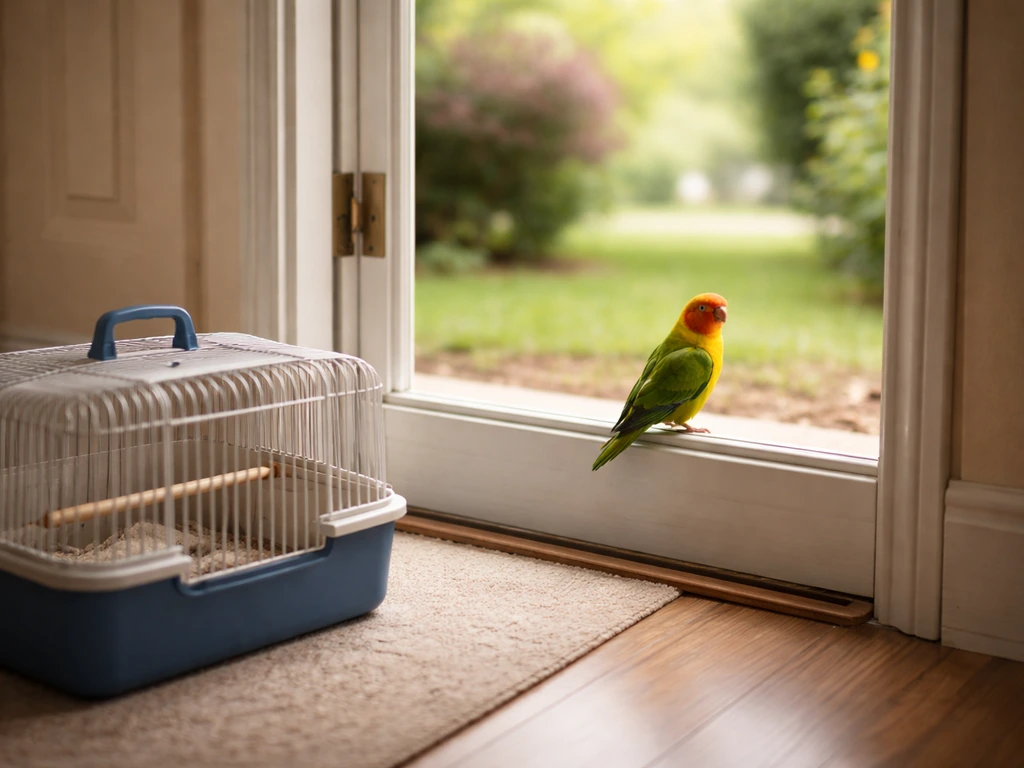
Honestly, the odds vary a lot depending on your specific bird and situation. Some birds circle back within minutes. Others keep flying and never return. Knowing which category your bird is more likely to fall into helps you decide how urgently and how aggressively to act.
Bond strength is probably the biggest factor. A bird that has been handled daily, talks to you, or has strong recall training is much more likely to return to a familiar person than one that's semi-wild or rarely socialized. Research on free-flight trained parrots shows that birds with a genuine trust relationship and positive reinforcement history with their handler will often fly back when cued, because returning to you is something they actually want to do. If your bird has never been recall-trained, that safety net doesn't exist.
Species and flight ability matter too. A bird that's had its wings clipped recently may not fly far. A fully flighted cockatiel or conure can cover serious ground in minutes. Small birds like budgies and parakeets are a tougher case: one honest assessment from avian behavioral researchers is that escaped budgies are often unlikely to return on their own, partly because they don't have a built-in sense of 'home' the way a dog might. That doesn't mean yours won't come back, but it does mean you shouldn't wait and hope. Act now.
- How recently it escaped: birds noticed missing in the first hour are far more likely to still be close by
- Whether it escaped indoors or outdoors: an indoor escape (to a garage or another room) is much easier to resolve than a full outdoor escape
- The presence of a mate or flock companion nearby: hearing a familiar bird call can be a powerful lure
- Weather conditions: cold, wind, or rain reduce a bird's ability and willingness to fly back
- Nearby threats: cats, hawks, or traffic dramatically lower the chances of a safe return
- Whether it has ever been outside before: a bird with zero outdoor experience may freeze in place, which is actually helpful for recapture
If you want a deeper dive into the specific question of return probability, whether your bird will come back depends heavily on all of these factors together, not just one. The rest of this article focuses on what you can do to tip the odds in your favor.
Immediate steps in the first hour (what to do right now)
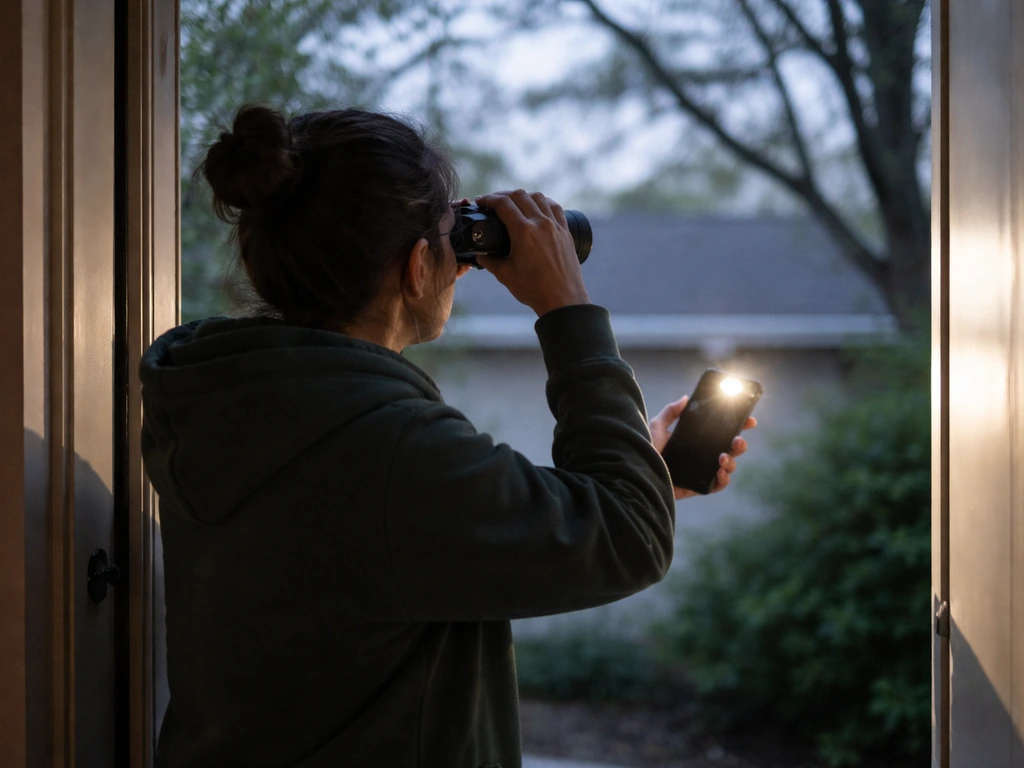
Stop what you're doing and go look. Birds that have just escaped often land somewhere close, sometimes just a few feet away on a branch, a ledge, or a nearby roof. They're disoriented and not yet in full 'flight mode.' This is your best window.
- Go outside immediately and scan at eye level and above: rooflines, fences, nearby trees, gutters, and windowsills
- Call your bird by name in a calm, familiar voice, or use a phrase it recognizes (like a word it says itself)
- Play a recording of its own voice, its favorite music, or the sound of its companion bird if you have one
- Do not chase or lunge if you spot it — approach slowly and let your voice do the work
- Grab its favorite treat or food and hold it out visibly; familiar smells and visuals can help trigger return behavior
- Ask someone else to watch a second exit point while you search, so the bird doesn't re-escape from another direction
- Note exactly where it lands if you see it fly — that spot is your starting point for the next attempt
Keep your own body language calm and low. Frantic waving and loud noise will push a frightened bird further away. Think of it like approaching a skittish animal: slow, familiar, and non-threatening works every time better than urgent.
How to search effectively (where to look, timing, and who to ask)
Search in a line-of-sight pattern first. Birds tend to follow the path of least resistance and highest visibility, which usually means they land somewhere with a clear sightline back toward where they came from. Start directly outside the window or door the bird escaped from, then expand outward in a spiral.
Timing is critical. Early morning (just after sunrise) and late afternoon (the hour before sunset) are when birds are most active and most vocal. These are also the times your bird is most likely to call out, making it easier to locate by sound. If your first search fails, go back out at these peak times. Midday searches in full sun and wind are the least productive.
Knock on neighbors' doors immediately. The ASPCA also recommends sharing flyers in good locations like veterinary offices and other pet-related businesses or shelters, in addition to checking with neighbors posting flyers at veterinary offices and other pet-related businesses or shelters. This sounds obvious, but people skip it. Your neighbors may have already seen or heard your bird in their yard or tree. Ask them to check their sheds, garages, and garden furniture. Leave your phone number with everyone in at least a two-block radius. A bird that lands in someone's garden and starts climbing around will often get noticed.
Listen as much as you look. A stressed or curious escaped bird will often call out, especially if it hears familiar sounds. If you have another bird at home, bring it outside in its cage (securely) so its calls can carry. The lost bird may call back, giving you a directional fix.
How to lure your bird back safely (cage, familiar sounds, food, and setup)
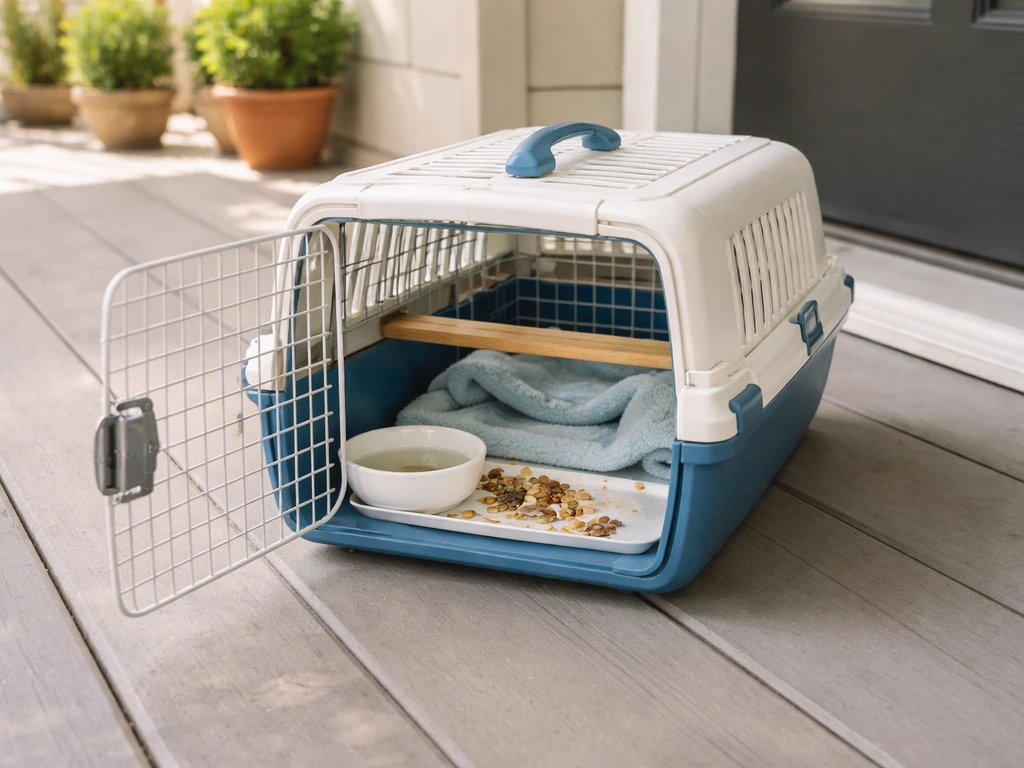
Place your bird's own cage or carrier outside near the escape point, with the door open and food and water clearly visible inside. Familiar objects, smells, and food create a comfort anchor that can pull a nearby bird back. If your bird can see or hear its own cage from where it's perched, returning to it becomes the path of least resistance.
Load the cage with its absolute favorite foods: millet sprays for parakeets and budgies, a favored fruit slice, whatever your bird goes crazy for at home. Fresh water is also important, especially on a warm day when a bird that's been flying is thirsty. Don't leave the setup and go inside; stay nearby, quietly, where the bird can see you but doesn't feel cornered.
Keep playing familiar audio. A recording of your voice, a song it knows, or the chattering of its companion bird playing from your phone near the open cage has brought escaped birds back within minutes in many cases. Keep the volume moderate, not blasting, and let it loop while you wait quietly.
If you have a second bird, placing it in its cage outdoors can be one of your most effective tools. The social pull of a flock companion is strong in social species like cockatiels, conures, and budgies. Be careful to ensure the companion is secure in a locked cage so you don't end up with two lost birds.
Once the bird lands on or near the cage, don't rush. Let it eat, drink, and settle. Give it a moment before you gently close the door or attempt to pick it up. Rushing this step is the most common mistake people make when recapture is finally within reach.
If it doesn't come back: next-day escalation and community help
If your bird hasn't returned by evening or the next morning, it's time to escalate. Don't give up, but do shift from passive waiting to active community mobilization.
- Post to 911 Parrot Alert's lost bird database, which is specifically designed to match lost and found birds across regions
- Post in local Facebook groups, Nextdoor, and neighborhood apps with a clear photo, your bird's species, color, and any identifying markings
- Print and post physical flyers within a 4 to 6 block radius of the escape point, with a photo and your phone number
- Contact local avian vets and wildlife rescues and ask them to watch for your bird if anyone brings it in
- Check back at the escape location every morning and evening for at least a week — birds sometimes return to a familiar spot days later
- If your bird has a leg band, have the number ready: rescuers and vets can use it to identify your bird if it's found
- Ask neighbors to check sheds, garages, and covered outdoor areas where a bird might shelter overnight
If someone reports a sighting, go immediately and bring the cage setup. Don't send someone else unless you have no choice: your bird is most likely to respond to your specific voice and presence. If the bird is confirmed to be in a specific tree or area, consider asking an avian or wildlife rescue group whether a humane trap is appropriate for your situation. Don't attempt improvised trapping without guidance, as you risk injuring the bird or driving it off permanently.
If you find it hurt: signs of injury and basic first aid
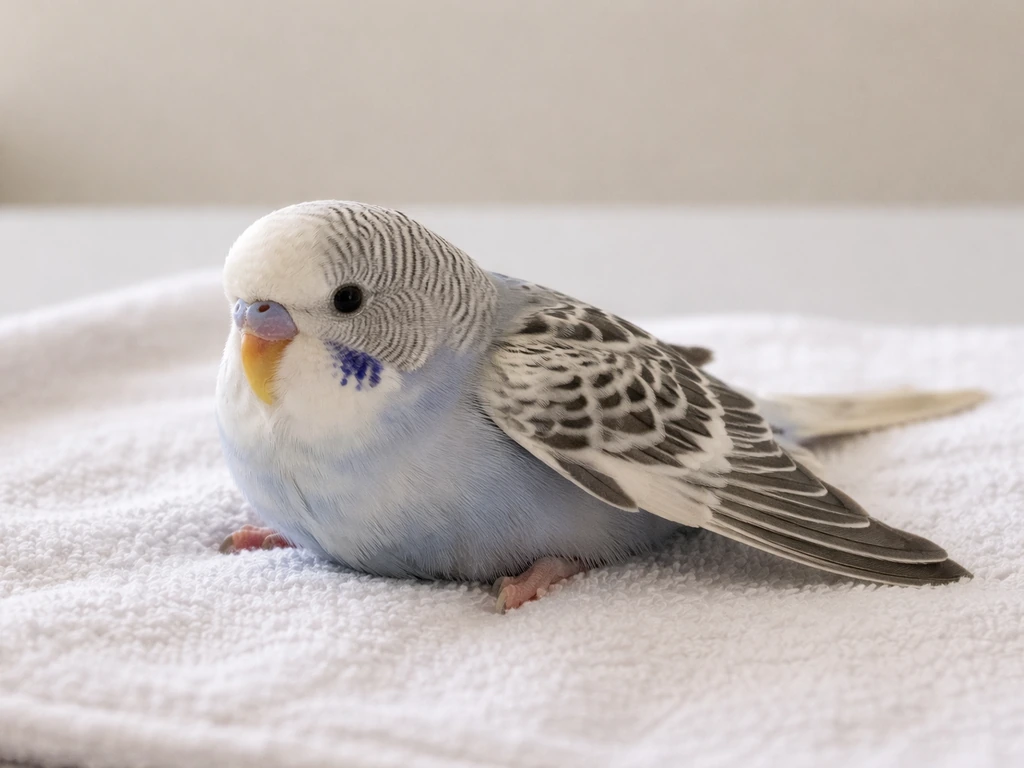
When an escaped bird is finally found, it isn't always unharmed. Window collisions, encounters with cats or other predators, or even just the stress of being outside overnight can leave a bird injured or in serious distress. Knowing what to look for matters.
Signs that your bird may be injured
- Visible wounds, blood, or feathers matted with debris
- A drooping or obviously asymmetrical wing
- Inability to grip with feet or stand upright
- Sitting on the ground and not attempting to fly when approached
- Very rapid, very shallow, or labored breathing
- Fluffed feathers with eyes partially closed (a classic sign of a bird in shock or serious distress)
- Uncoordinated movements or obvious disorientation
If your bird shows any of these signs, treat it as an emergency. Don't try to examine or treat injuries yourself beyond the basics. Your job right now is stabilization and getting it to a professional.
Basic stabilization before you get to a vet
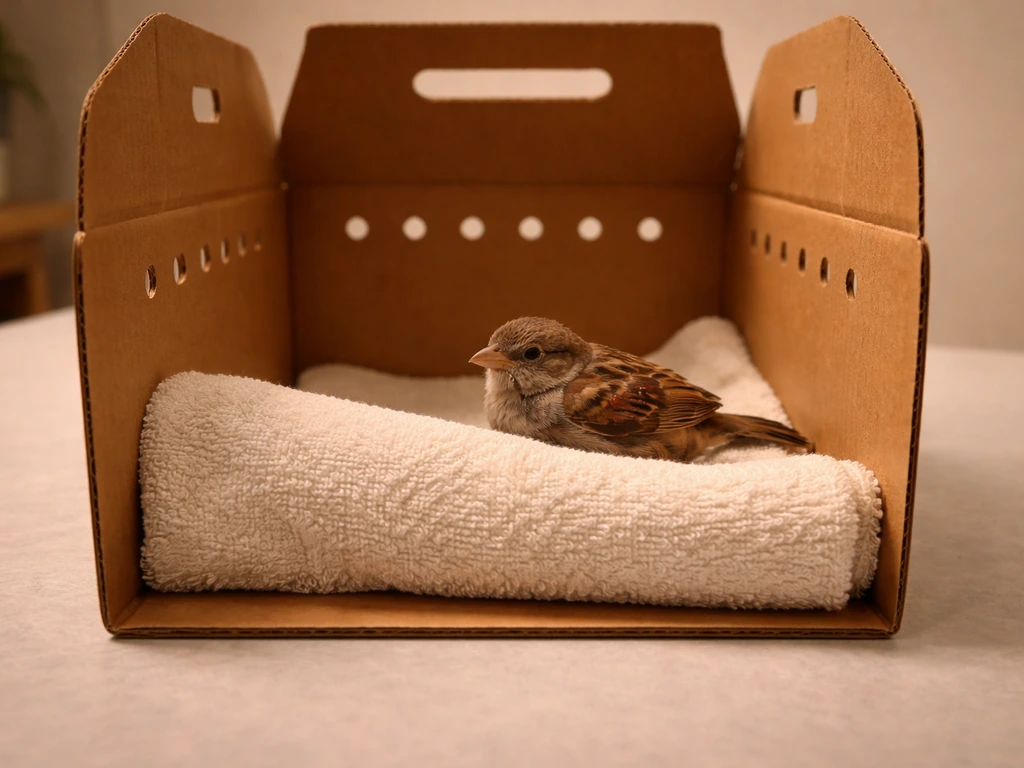
Gently pick the bird up using a light towel to avoid being bitten and to reduce its stress response. Place it in a small, secure carrier or cardboard box with ventilation holes. Keep it warm, dark, and quiet. Birds have a high metabolic rate and a body temperature between roughly 103 and 106°F, meaning they lose heat fast when stressed or injured. A warm (not hot) environment is genuinely life-saving while you arrange transport. Do not offer food or water to a bird that is unconscious or severely disoriented, as it can aspirate.
If you're unsure whether what you're looking at is an injury or just shock, the safest move is to call a wildlife rescue or avian vet hotline before doing anything else. Getting guidance from someone who knows birds before you handle or move your bird can prevent you from accidentally making things worse. One useful principle from wildlife rescue work: if you're not sure, call first and describe what you see.
It's also worth noting that if your escaped bird had any contact with a cat or other predator during its time outside, it needs a vet visit even if it looks fine. In the Merck Veterinary Manual, Pasteurella spp are noted as possible septicemic agents in birds attacked by cats or rats blank" rel="noopener noreferrer">Pasteurella spp in birds attacked by cats or rats. Cat saliva contains bacteria that can cause fatal infections in birds within 24 to 48 hours of even a minor puncture wound, which may not be visible to you. This applies to any bird that a cat catches or even bats around. If you're ever in a situation where a cat got hold of your bird and you need to know what to do next, the guidance on what to do when your cat caught a bird covers exactly that scenario.
Similarly, if a cat in your neighborhood was involved in catching your escaped bird (or if you're finding pieces of evidence), the steps in what to do if your cat killed a bird can help you figure out your next move. And if your bird was found and consumed any food outside while it was loose, including things like avocado from a neighbor's garden, read up on what to do if your bird ate avocado, since it's toxic to most bird species and requires immediate vet contact.
When to contact an avian vet or wildlife rescue (and how to locate one nearby)
Contact a professional immediately if your bird is showing any of the injury signs listed above, if it was caught by a predator, if it was outside overnight in cold weather and is lethargic, or if you simply don't know what you're looking at and the bird seems 'off.' Don't wait to see if it improves on its own.
For locating an avian vet, the Association of Avian Veterinarians (AAV) runs a Find-A-Vet directory that lets you search by location. It's worth finding your nearest avian vet now, before you have an emergency, so you're not scrambling during a crisis. General practice vets vary widely in their experience with birds, so an avian specialist is always the better call when possible.
If your bird is a wild bird (or if your escaped pet is now too injured and distressed to handle safely), a licensed wildlife rehabilitation center is the right call. Organizations like the Avian Welfare Coalition serve as a broader support and referral network if you need help finding the right rescue pathway. You can also search for local wildlife rescues and rehabilitation centers by your ZIP code through most state wildlife agency websites.
When you call, be ready to describe: the species (if known), the bird's approximate size and coloring, how long it's been loose, what symptoms you're seeing, and whether it's currently contained or still free. The more specific you are, the faster they can help you.
Escaped vs. injured: a quick reference for triage
| Situation | What to do | Urgency level |
|---|---|---|
| Bird just escaped, still visible nearby | Use voice, food, and open cage to lure back immediately | Act now, but stay calm |
| Bird missing less than 1 hour | Search local area, call out, enlist neighbors | High priority, act within minutes |
| Bird missing overnight or longer | Post online, contact rescues and vets, post flyers | Escalate today |
| Bird found but sitting on ground, not flying | Contain gently, keep warm and dark, call vet or rescue | Urgent, same-day vet contact |
| Visible wound, blood, or broken limb | Stabilize in carrier, call avian vet immediately | Emergency |
| Bird caught or touched by a cat | Vet visit required even if it looks fine | Urgent, within hours |
| Bird found but acting normal | Reintroduce slowly, monitor for 24-48 hours | Monitor closely |
The most important thing to take away from all of this: your first hour is your best hour. Move fast, stay calm, and get neighbors involved. If your bird doesn't come back today, don't assume the worst. Escalate your search systematically, keep the cage outside with food and water, and keep posting online. Birds have been found days and even weeks after escaping. But if there's any chance your bird is hurt, treat it as an emergency and get a professional on the phone right away.
One last note: escaped birds sometimes turn up at other people's homes, looking for food and shelter. If someone in your area finds a stray bird and wonders what happened to it, resources like what to do when a cat catches and eats a found bird or guidance around whether to be worried if a cat ate a bird can help them assess what they're dealing with. Sharing these resources with neighbors who might find your bird can help ensure it gets the right care if it ends up in someone else's hands before it gets back to you.
FAQ
How long should I wait before assuming my bird won’t come back on its own?
Give it at least one full day of active searching, especially during early morning and late afternoon. If it’s not back by evening, switch from passive waiting to daily, structured search with neighbors, the outdoor cage setup, and repeated local posts. Some birds return after being startled into staying put for hours, then calling when conditions calm down.
Should I keep my bird’s cage outside all night?
Yes if it’s safe to do so, but only if you can leave it secure from predators and weather (shade and, if cold, shelter). Keep food and water available and place it near the original escape route so it stays a clear visual target. If predators like cats are active in your area, you may need to adapt the setup rather than leaving it unattended.
What if my bird is calling but I can’t see it?
Do a slow “sound triangulation” search by moving to different spots in the yard, driveway, and around the building while watching the direction the calls seem to come from. Avoid standing directly under loud branches for long periods, as birds may move between perches. If you have a second bird, keep its cage outside so its voice carries toward the lost bird.
Can I lure my bird using a spray bottle, treats, or chasing?
Avoid spraying or chasing, it usually increases fear and drives the bird farther away. Treats are helpful only when the bird is near you or the open cage, and any approach should be low and calm. If you want to “cue” it with training, use the same calm signal you used before (song cue, word, or hand motion), not new behaviors in panic.
What should I do if I find my bird on the ground?
If it’s alert and responsive, gently offer your hand or a perch, then move it toward the carrier calmly rather than grabbing immediately. If it’s weak, collapsed, or bleeding, treat it as an emergency, use a towel to stabilize without squeezing, and get it to an avian vet or wildlife rehab quickly. Ground-level birds often have hidden injuries or shock.
Is it better to have one person searching or multiple people?
A small team is best, with clear roles. One person should stay near the escape point with the cage and calm voice, while others search outward in a line-of-sight pattern and check likely landing spots. Too many people moving and talking loudly can make the bird relocate farther away.
Do window collisions count as an emergency even if my bird seems okay?
Yes, window impact can cause internal injury even when the bird looks “mostly fine.” If there was a crash or you saw it fly into glass, contact an avian vet. Monitor closely for open-mouth breathing, persistent weakness, inability to grip normally, or sudden lethargy.
My bird was probably taken by a cat, do I still have to go to the vet if it comes back?
Yes. Even if there are no visible wounds, cat saliva bacteria can lead to serious infections within 24 to 48 hours. If a cat likely had contact, arrange a vet visit as soon as possible after safe containment.
What if my bird is a wild bird now, not a pet?
Do not handle it unless you have guidance from wildlife professionals. Use a carrier or box only if the bird is already contained or can be calmly guided in with minimal stress. If it looks injured, lethargic, or it cannot fly, contact a licensed wildlife rehabilitation center right away.
Should I remove mirrors or reflective surfaces while I’m trying to get my bird back?
If you have windows, mirrors, or shiny décor visible from the outdoor cage area, consider covering or temporarily removing the most reflective ones. Reflections can distract a disoriented bird or cause repeated attempts to land near the wrong “target,” especially when the bird is calling but not clearly approaching you.
What’s the safest way to update neighbors and online posts without spreading wrong info?
Share a simple, consistent description: species, approximate size, key color markers, and the last known location. Include the phone number for confirmations and specify your outdoor cage setup location so people don’t take the bird to the wrong place. Avoid encouraging others to chase, grab, or make loud noises to attract the bird.