If you've found a bird that seems dazed, wobbly, or just "off" after hitting a window or some other impact, there's a good chance it has head trauma. The most reliable signs of a concussion in birds are: loss of balance or falling over, head tilting to one side, tremors or twitching, disorientation, inability to perch or stand, and rapid side-to-side eye movements. If you're seeing any of those, treat it as a head injury until a vet or wildlife rehabilitator tells you otherwise. Here's exactly what to do.
How to Tell If a Bird Has a Concussion and What to Do
Marcus Chen
24 May 2026
Quick reality check: concussion vs. other injuries
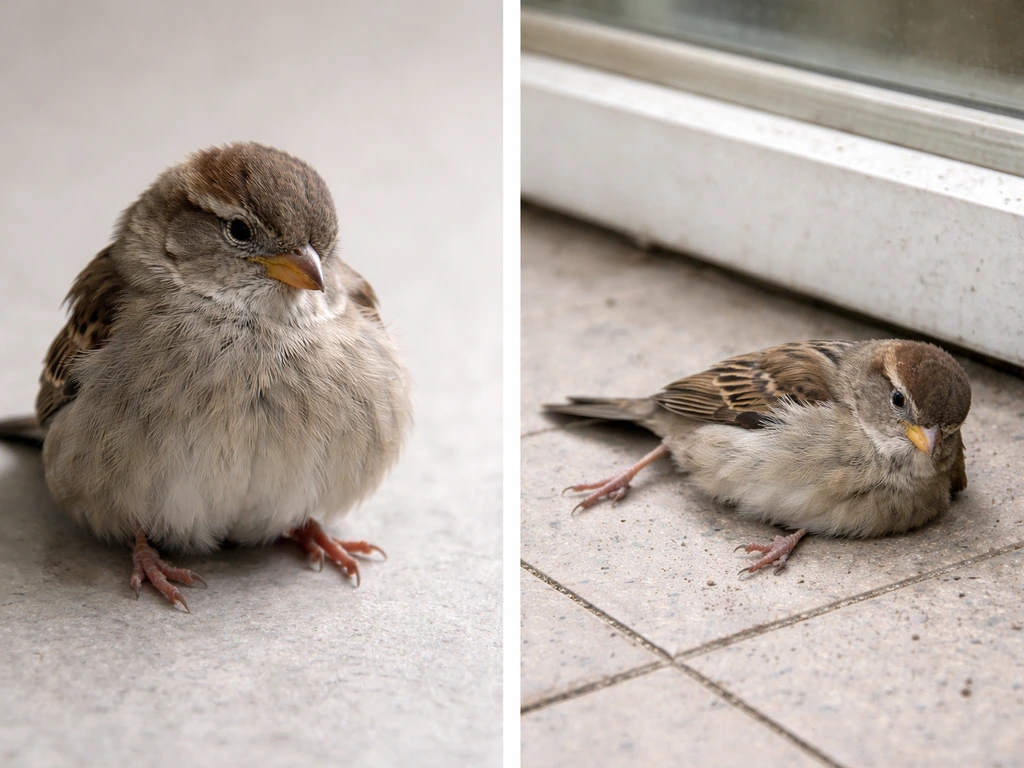
This is the trickiest part, and it's worth being honest about upfront: you often cannot tell the difference between a concussion, internal bleeding, shock, or a fracture just by looking. A bird can have all of them at the same time after a single impact. What you can do is look for signs that point toward the head and nervous system specifically, while keeping in mind that other injuries are almost always on the table too.
A window strike is the most common cause of bird concussions. A bird flies into glass, hits hard, and lands stunned on the ground. That same impact can also cause a broken wing, a broken leg, internal bleeding, or eye injury, even when the bird looks completely fine on the outside. If a bird appears unable to use one wing or it hangs at an odd angle, use the wing-injury checklist and contact an avian vet broken wing. So when you're assessing a bird, you're not choosing between "concussion" or "broken bone", you're looking for whichever signs are most obvious and acting from there.
The clues that specifically suggest head trauma are neurological: balance problems, abnormal posture, twitching, altered responsiveness, and eye irregularities. If the bird is holding one wing lower than the other or has an obviously deformed leg, that points more toward a fracture. If you suspect a broken leg, look for limping, swelling, abnormal leg position, or inability to bear weight, and get veterinary or wildlife rehab help promptly.
If the bird has hurt its left wing, treat it as a limb injury at the same time as the head injury and seek veterinary or rehab advice. If it's gasping or breathing with its mouth open, the lungs or airways are a concern. But a bird that's conscious, has no obvious limb injury, and is just sitting there looking confused and tilted?
If your bird is limping or seems weak in one leg, check for a fracture or soft-tissue injury too, and use the guidance in what do i do if my bird is limping as a next step. That's a head injury until proven otherwise.
Common signs of head injury in birds
Not every concussed bird will show every symptom. A mildly concussed bird might just look stunned and sit still for a while. A more serious head injury will show several of these signs at once, or signs that get worse over time rather than improving.
- Head tilt: the head is held noticeably to one side, or the neck looks twisted or stiff
- Loss of balance or coordination: stumbling, falling over, unable to hold itself upright
- Tremors or twitching: small repetitive shaking movements, especially in the head or wings
- Seizure-like episodes: flapping wings while lying on the ground or cage bottom, uncontrolled movement
- Nystagmus: rapid side-to-side or up-down eye movements (the eyes seem to flicker or dart)
- Disorientation: the bird doesn't respond normally to movement nearby, seems completely "out of it"
- Inability to perch or stand: sitting flat on the ground, unable to grip a branch or perch
- Lethargy or depression: extremely still, unresponsive, eyes closing or half-closed
- Circling behavior: walking or flapping in repeated circles rather than moving purposefully
- Abnormal pupil response: one pupil larger than the other, or pupils not responding to light
A bird that can still flutter a short distance but seems uncoordinated or confused still needs medical attention. Some mildly concussed birds can move a little, but that doesn't mean the brain injury is minor or that no treatment is needed. Brain swelling can develop over hours, making a bird that seemed "okay" much worse without warning.
What to do right now: safe handling and immediate first aid
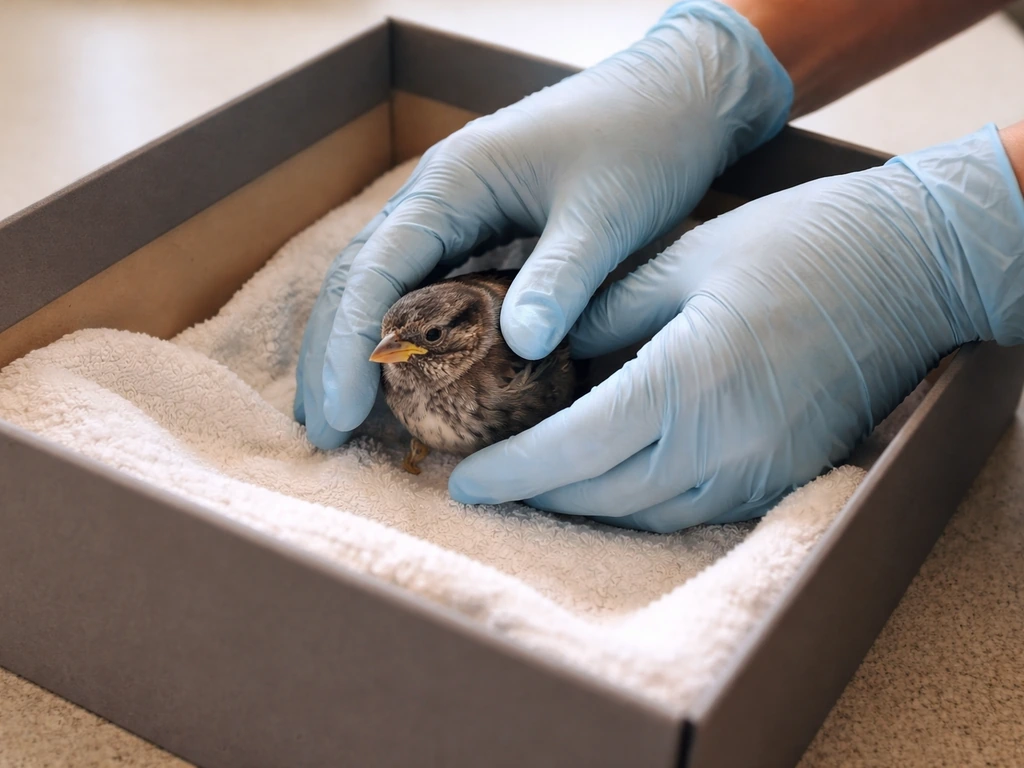
The most important thing you can do in the first few minutes is reduce stress and keep the bird warm and contained. Stress makes neurological symptoms worse and can push a compromised bird into shock. Go slow, stay calm, and limit handling as much as possible.
Step 1: Contain the bird safely
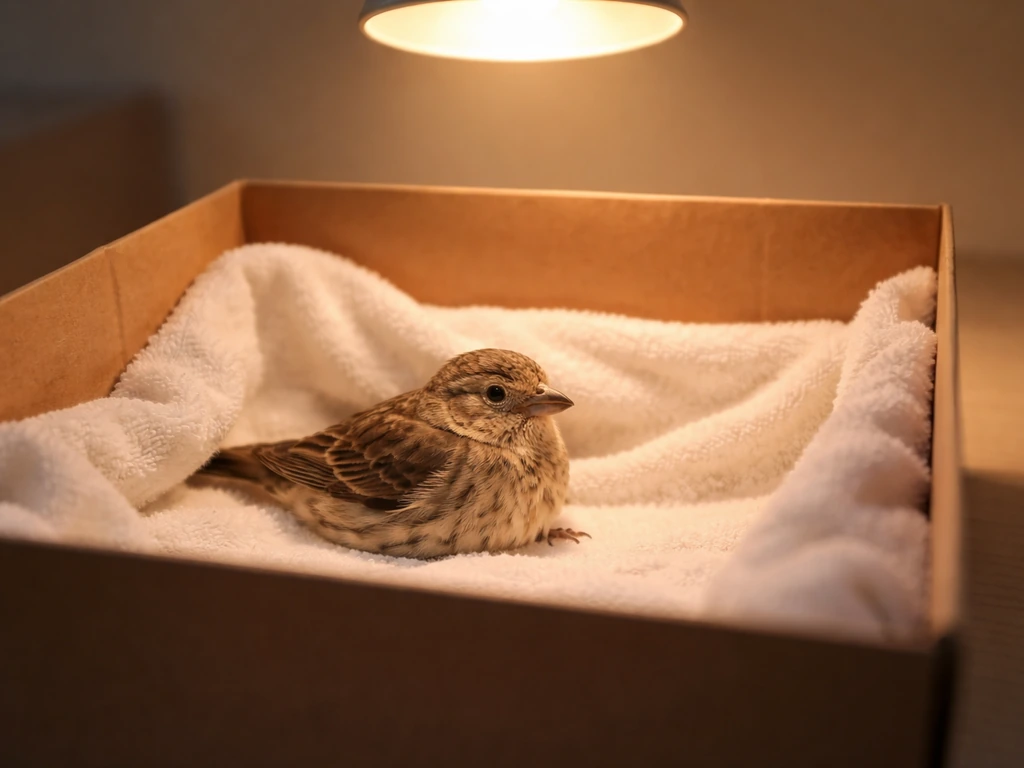
Grab a shoebox, a small cardboard box, or any container with a lid. Line the bottom with a soft cloth or a folded paper towel. Gently scoop the bird up using both hands or guide it into the box without squeezing. Poke a few small air holes in the lid if it's fully enclosed, then close it. Darkness calms birds significantly, and it reduces the visual stimulation that makes disorientation worse.
Step 2: Keep it warm

Birds run hot, with a normal body temperature between 103 and 106°F. An injured bird loses heat fast, especially when it's in shock or unable to move normally. Place the box in a warm room, and if you can, set one end of the box on a heating pad on its lowest setting, or tuck a small water bottle filled with warm (not hot) water and wrapped in a towel alongside the bird. The goal is ambient warmth around 85°F inside the box. Don't overheat it: if the bird is panting, it's too warm.
Step 3: Leave it alone
Put the box somewhere quiet, away from pets, children, loud noise, and direct sunlight. Then leave it alone. Resist the urge to keep checking on it every few minutes. Every time you open the box, you're adding stress. Set a timer for 30 to 60 minutes and let the bird rest undisturbed. Set a timer for about an hour, as Northwoods Wildlife Center recommends for window-strike care, while keeping the bird in a covered box in a quiet, warm, predator-proof area Set a timer for 30 to 60 minutes.
What not to do
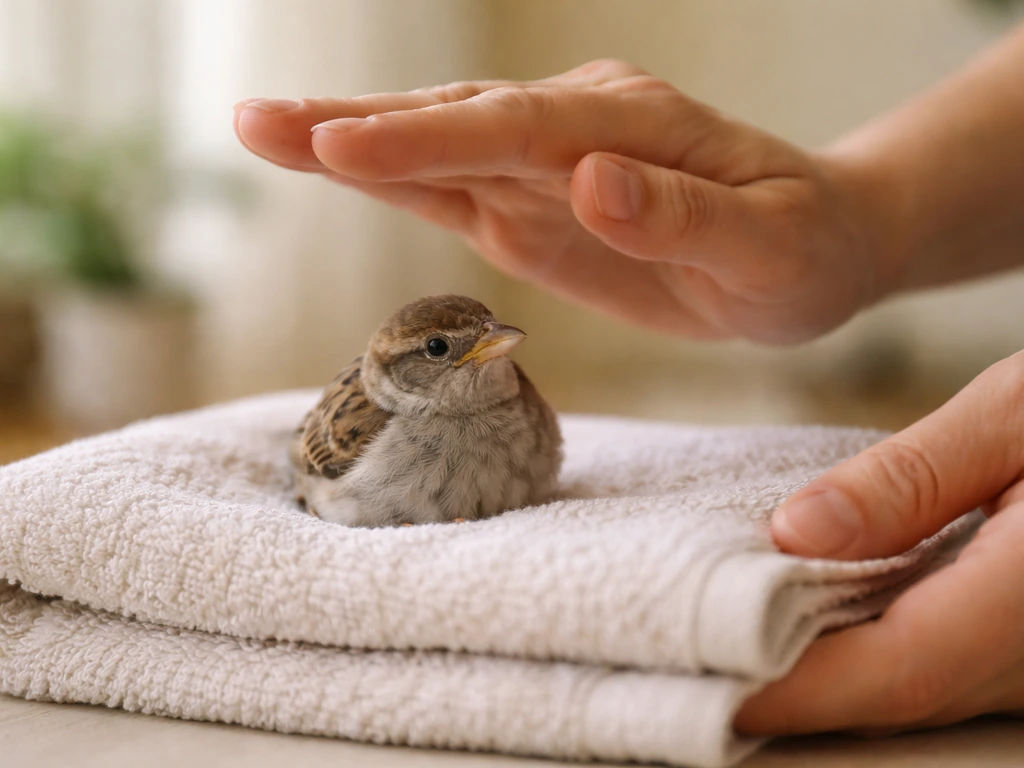
- Do not offer food or try to force water into the bird's beak — a disoriented bird can aspirate liquid into its lungs
- Do not handle it more than necessary — excessive handling causes severe stress
- Do not place it in a wire cage where it can injure itself trying to flap or climb
- Do not leave it outdoors unprotected, even for a short time — cats, dogs, and other predators move fast
- Do not assume it's fine because it looks calm — stillness in an injured bird often means shock, not recovery
Red flags that mean get help right now
Some situations cannot wait for a couple of hours of observation. These are your "go now" signs. If you see any of the following, contact an avian vet or wildlife rehabilitator immediately rather than waiting:
- Seizures or repeated convulsions (uncontrolled flapping or tremoring while on the ground)
- Open-mouth breathing, wheezing, or pronounced tail bobbing with each breath
- Visible wound to the head, bleeding from the mouth, nose, or eye area
- Complete inability to stand, move, or hold its head up
- Blue or very pale tissue color around the beak or gums
- Rapid deterioration: the bird seemed okay, then got suddenly much worse
- Nystagmus that isn't improving after 30 to 60 minutes
- Neurological signs that are worsening rather than staying the same or improving
- Any bleeding that doesn't slow significantly within 5 minutes of gentle pressure
Even a bird that "seems okay" after a head impact can have brain swelling or internal bleeding developing under the surface. Learn BST also notes that head trauma from a window strike can lead to head injury, broken bones, and internal injuries that may not be obvious from external signs alone. If you're unsure, it's always safer to call a wildlife rehabilitator or avian vet and describe what you're seeing. They can help you decide over the phone whether the bird needs to come in immediately.
To find help near you: search "wildlife rehabilitator near me" or "avian vet near me," or contact your local humane society, animal control, or nature center. In the US, the National Wildlife Rehabilitators Association (NWRA) and the Wildlife Center of Virginia both maintain searchable directories. The Tufts Wildlife Clinic is another well-known resource if you're in the Northeast.
What to expect during recovery and how to monitor at home
For a mildly concussed bird, the Tufts window-strike protocol is a good benchmark: expect some improvement within a few minutes to an hour, and meaningful recovery within a couple of hours at most. If the bird hit a window and had no other obvious injuries, here's roughly what a positive trajectory looks like:
- First 15 to 30 minutes: The bird is still, possibly slightly tilted, eyes may be half-closed. This is normal. Keep it warm and dark.
- 30 to 60 minutes: The bird becomes more alert, head position improves, eyes open more fully, and it may begin to right itself when the box is gently shifted.
- 1 to 2 hours: The bird is standing on its own, responsive to sound, and attempting to move around the box.
- After 2 hours: A recovering bird can typically be taken outside and released from the box in a quiet, sheltered area away from predators. Watch it for a few minutes to make sure it flies off steadily.
If the bird is not showing clear improvement after 2 hours, do not keep waiting. Take it to a vet or wildlife rehabilitator. The window for effective treatment of brain swelling is not unlimited, and waiting too long can make outcomes significantly worse.
While you're monitoring, check on it gently every 30 to 60 minutes by listening at the box (you should hear it moving around if it's improving) rather than opening it repeatedly. Signs that things are going in the right direction: the bird is more responsive, holding its head normally, gripping your finger or a perch placed in the box, and its eyes are clear and tracking movement. Signs that escalation is needed: symptoms are the same or worse, it's having seizures, its breathing is labored, or it's completely limp. If the symptoms are the same or worse, it has seizures, or it is completely limp, refer to how to tell if a bird is injured so you can spot whether this is truly an emergency.
It's also worth knowing that head injuries sometimes look similar to other neurological events. In severe cases, a bird may have neck trauma, so knowing how to tell if a bird broke its neck can help you decide how urgently it needs care. If you're seeing some of these signs in a pet bird that didn't have a known collision, it's possible something else is happening, and that warrants a vet visit regardless. Similar neurological signs can appear with other conditions, so a vet exam is the only way to know for certain what you're dealing with.
How to reduce future head injuries and collisions
Window strikes are by far the most common cause of bird concussions, and most of them are preventable. Glass reflects sky and trees, and birds can't tell it apart from open air. A few targeted changes make a significant difference.
Window strike prevention
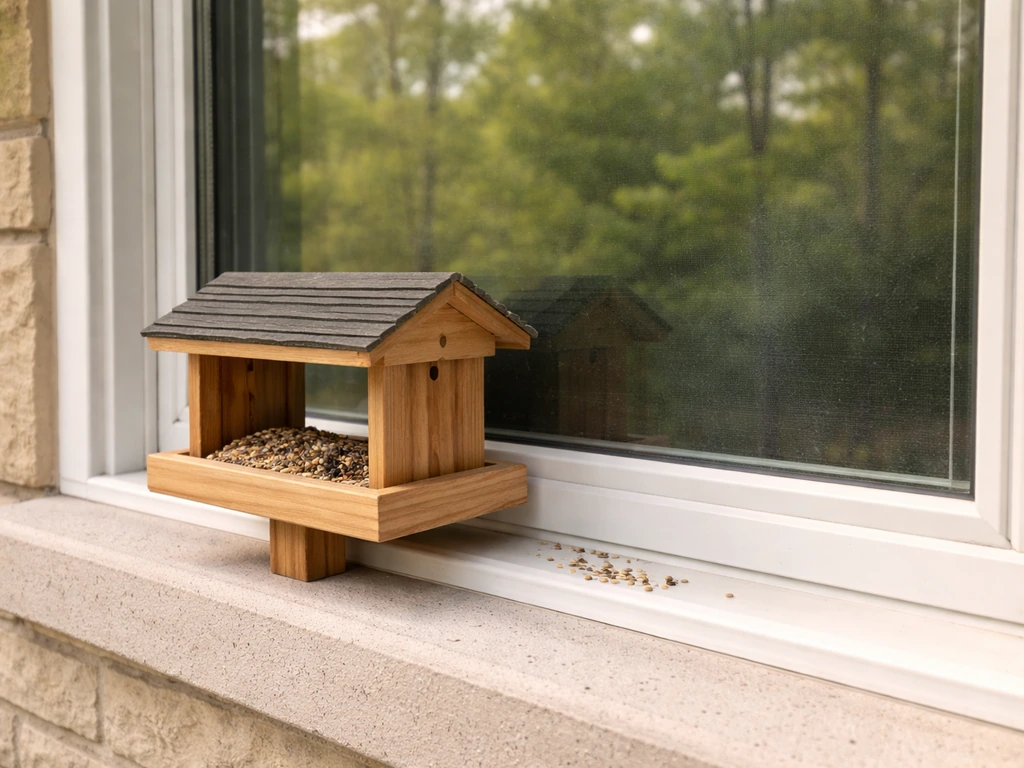
- Move bird feeders to within 3 feet of your windows. At that distance, birds don't have enough room to build up speed before impact, which greatly reduces injury severity.
- Apply window decals or tape strips on the outside of the glass in a pattern no wider than 4 inches apart, covering the whole pane rather than just one or two spots.
- Use window collision prevention tape or film, which is visible to birds (often UV-reflective) but nearly invisible to people.
- Hang movable, shiny objects or netting in front of problem windows to break up the reflection.
- Keep indoor lighting lower in the evenings so your windows don't act as bright beacons from the outside.
- During migration seasons (spring and fall), be especially alert, as more birds are moving through unfamiliar areas.
Pet bird safety and indoor hazards
For pet birds, head injuries often come from flying into ceiling fans, mirrors, or walls during free-flight time. Always turn off ceiling fans before letting a bird out of its cage. Cover mirrors or close doors to rooms with large glass surfaces. Supervise free-flight time until you know exactly how your bird navigates the space and whether there are any problem zones.
Falls from high perches are also a concern, especially for birds that are older, unwell, or clipped. Clipped wings can also lead to imbalance and unusual posture after a fall or impact, so it helps to check the wing condition right away. Make sure perches are at an appropriate height and that the cage layout gives a bird that loses its balance somewhere safe to land.
If your bird shares a home with a cat or dog, even a brief unsupervised encounter can result in head trauma. Cats in particular carry bacteria that can cause serious infections from even a minor scratch, so any bird that's been grabbed by a cat needs veterinary attention, even if it looks fine.
FAQ
How long after a window strike can concussion symptoms show up or worsen?
Symptoms can escalate over hours, even if the bird seems to improve at first. That is why you should watch the bird in a warm, quiet box for at least 2 hours, and call for help immediately if you see any “go now” signs or if the bird becomes worse instead of better.
Should I offer food or water to a concussed bird while I’m waiting for help?
Do not force-feed or offer food by hand. If the bird is disoriented, swallowing may be unsafe, and it can worsen stress. Keep it warm and contained, and only allow access to water/food if the bird is fully alert and upright, otherwise let a vet or rehab specialist guide you.
What is the safest way to move the bird to a carrier or get it into a box?
Use both hands or gently guide it with a barrier so you are not pinching wings or pressing on the chest. Avoid chasing it around, avoid grabbing by the legs or wings, and do not shake it. Use a dark, small container with soft lining to reduce further stress.
Is it possible for a bird to have a concussion if it is still perching or walking?
Yes. A bird may still stand or flutter a short distance but still have neurological impairment, including disorientation, abnormal eye movements, or poor coordination. If there was a head impact, treat it as head trauma until it clearly improves or a professional rules out brain injury.
How can I tell if the problem is more like a fracture than a concussion?
Look for patterns. Concussion clues are neurological, such as balance loss, twitching, head tilting, altered responsiveness, and rapid side-to-side eye movements. Fracture or limb injury clues include limping, swelling around a limb, inability to bear weight, or an obvious abnormal limb position or wing hanging low.
What should I do if the bird is having seizures or is actively thrashing?
Keep the bird warm, reduce light and noise, and do not try to restrain it during convulsions. Contact an avian vet or wildlife rehabilitator immediately, since seizures after a head injury can indicate severe brain trauma.
Can I bathe or spray a concussed bird to calm it?
No. Avoid bathing, spraying, or misting. These actions increase stress, can chill the bird quickly, and may interfere with breathing if the bird is already compromised. Focus on warmth, darkness, and minimal handling instead.
What if I do not know the impact happened, but my pet bird suddenly looks wobbly or tilted?
If neurological signs appear without a clear collision, still treat it as urgent. Other conditions can mimic concussion, including toxins, stroke-like events, metabolic problems, or neck trauma. A vet exam is the only way to know, so contact an avian veterinarian as soon as possible.
Is it safe to put a concussed bird in a cage with perches?
Usually no, at least initially. Perches can increase the chance of falls if balance is impaired. Use a small, lined container with a stable bottom for the early recovery period, then only transition to a cage once the bird is coordinated and improving clearly.
If the bird improves within an hour, do I still need to get it checked?
If it is the window-strike scenario and it is clearly improving within the expected timeframe, you can monitor closely. However, if there are any lingering neurological signs, if improvement is slow, or if it hits the 2-hour mark without clear progress, contact a vet or wildlife rehabilitator rather than assuming it is safe.