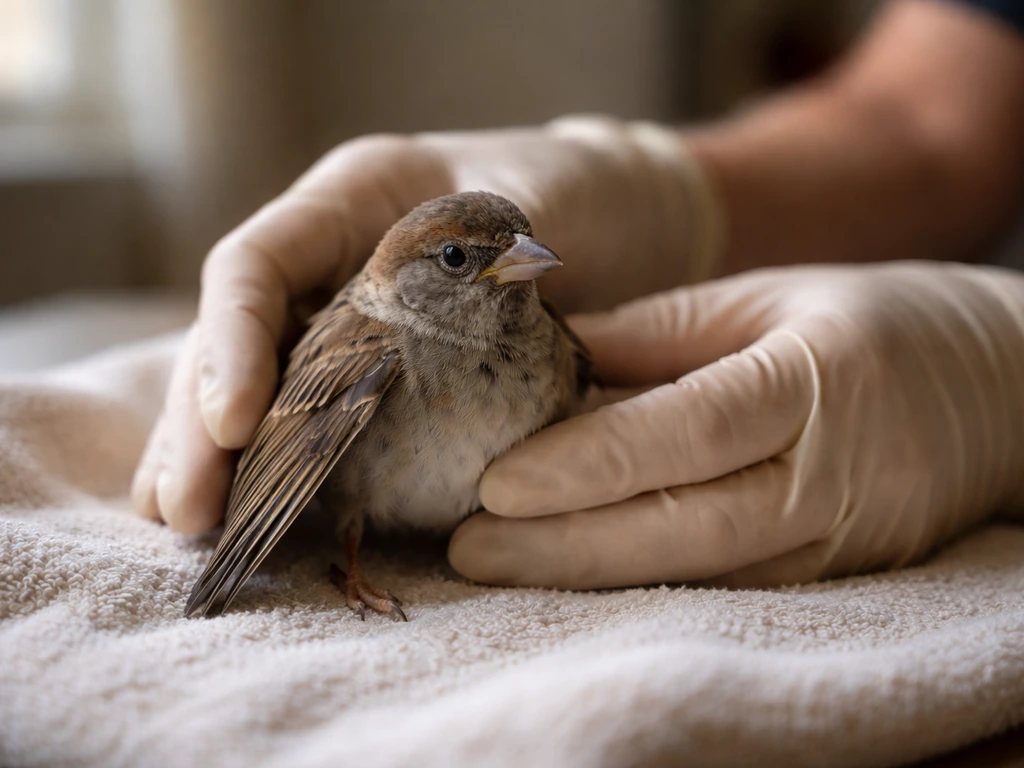
If a bird near you has one wing hanging lower than the other, can't fly, or is holding itself oddly, there's a real chance that wing is broken. The most reliable sign is a drooping or dragging wing, especially when only one side is affected. That said, you can't confirm a fracture without an x-ray, and the difference between a break, a dislocation, and a bad sprain isn't something you can reliably work out by poking around. What you can do right now is observe carefully, keep the bird calm, and get it to the right help. This guide walks you through exactly that.
How to Tell If a Bird Has a Broken Wing: Signs and First Aid
Marcus Chen
4 Apr 2026
Quick safety steps before you check the wing
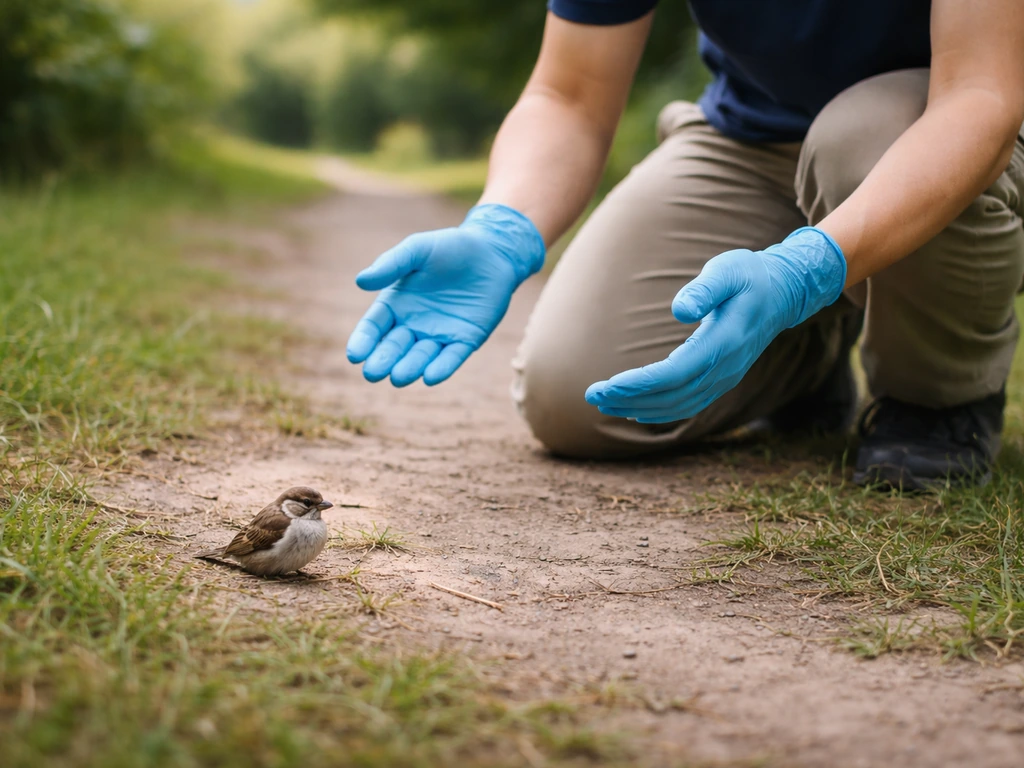
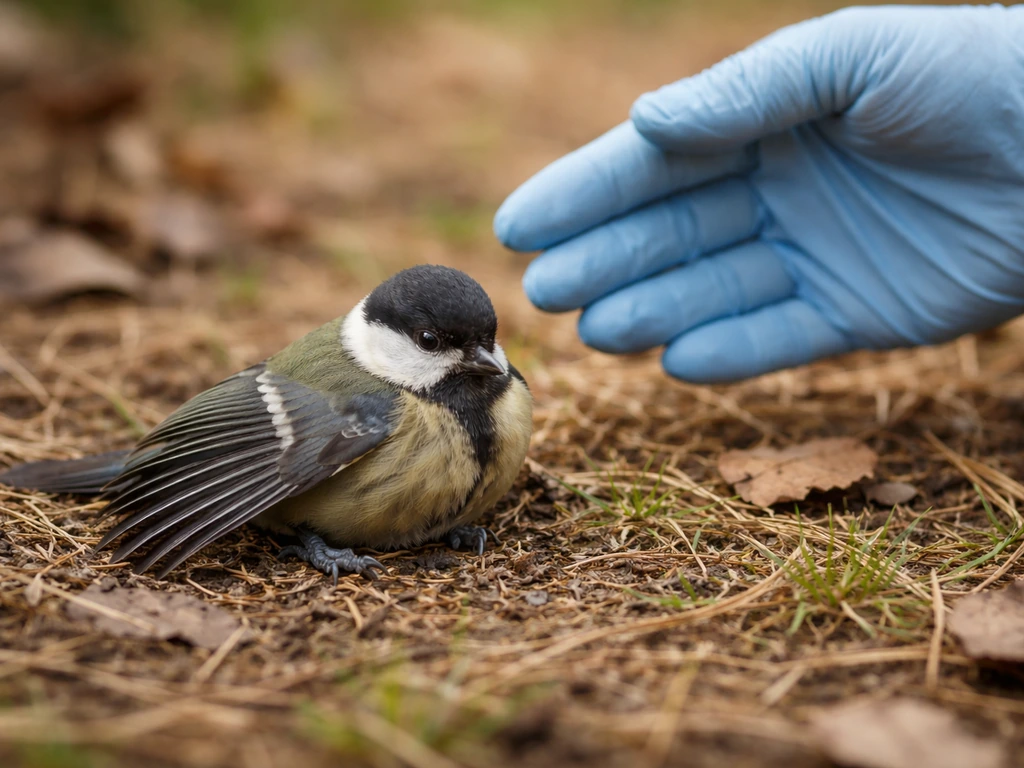
Before you even approach the bird, protect yourself. Even a small injured bird can scratch or bite hard when it's scared and in pain. Use gloves if you have them, and always wash your hands thoroughly after any contact with a wild bird. This isn't optional, it's basic safety for both of you.
Don't rush at the bird. Move slowly and keep noise to a minimum. If you're with other people, ask them to step back and stay quiet. Loud voices and sudden movements spike the bird's stress level dramatically, and stress alone can be fatal for an already injured bird. Keep pets and children away from the area immediately.
If the bird is in an actively dangerous spot (on a road, near a cat, in direct sun with no shelter), you may need to gently move it before you assess. Use a light towel or cloth to loosely cover it, then cup it gently in both hands with the wings held against its body. Don't squeeze. Just contain. Once it's somewhere quieter and safer, you can look more carefully.
Signs a bird's wing is likely broken vs other injuries
The single strongest indicator of a broken wing is one wing hanging or drooping noticeably lower than the other. Wildlife rehabilitators use this as a primary triage signal: if one wing is droopy and the other is held normally against the body, it's very likely broken. That's not a guess, it's pattern recognition from thousands of injured bird assessments. A bird with both wings hanging down may have other problems, but an uneven droop is the classic fracture presentation.
Beyond the droop, look for a wing held at an abnormal angle, like it's pointing the wrong direction or sitting further out from the body than it should. You might also see the bird dragging the wingtip on the ground when it tries to walk. Swelling, bruising, or visible blood under or around the wing are also significant findings. In serious cases, you may see bone protruding through the skin. That's an open fracture, and it's an emergency.
Other injuries can look similar to a break, and it helps to know the difference, even roughly. A sprain or bruise might cause some drooping and reluctance to move the wing, but there's usually less structural abnormality. A dislocation can cause a wing to sit oddly, but without the swelling and pain response you'd expect from a fracture. Feather damage alone, even dramatic-looking damage, won't cause a true droop unless the underlying bone or joint is also involved. Learning how to tell if a bird is injured more broadly helps you catch signs that go beyond just the wing.
There's also a condition called angel wing syndrome, sometimes seen in waterfowl like ducks and geese. It causes the carpal joint (the bird's wrist) to rotate outward and downward, creating a drooping appearance. The key difference is that angel wing typically affects young birds, develops gradually, and shows a specific outward valgus rotation at the wrist rather than the limp, painful collapse you see with acute trauma. If the bird you're looking at is a wild adult that was recently in some kind of incident, angel wing isn't what's happening.
Broken wing vs other wing issues: a quick comparison
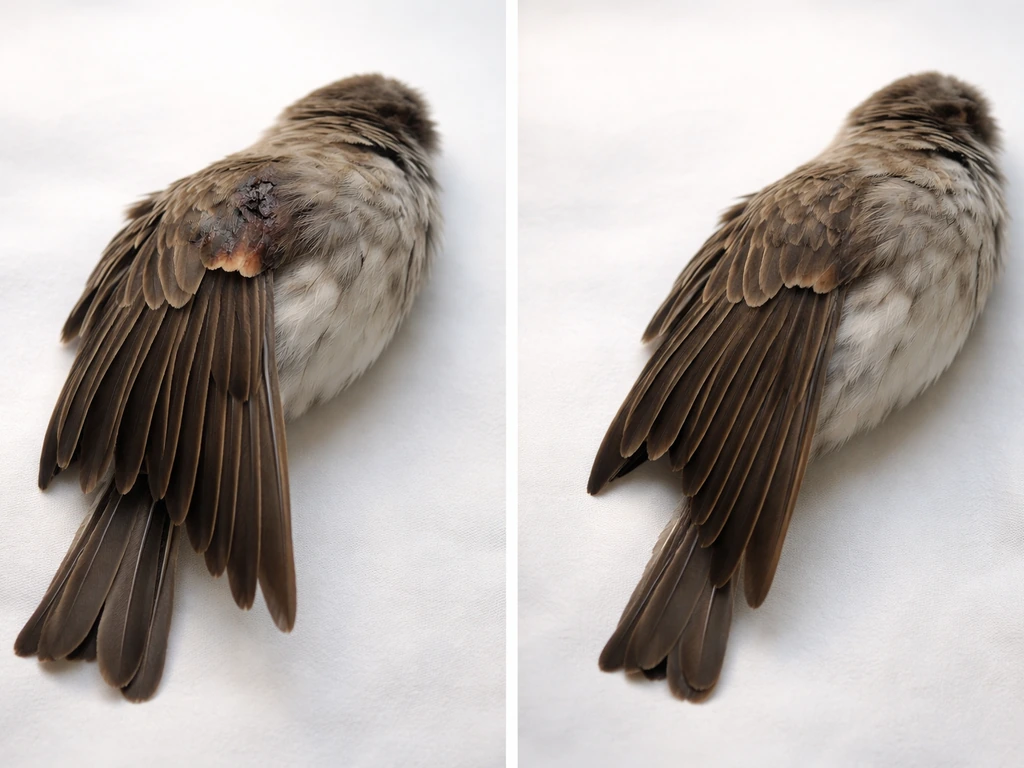
| Condition | Wing position | Swelling/bruising | Pain response | Other signs |
|---|---|---|---|---|
| Fracture (broken bone) | One wing drooping or dragging, abnormal angle | Often present | Yes, bird may flinch or vocalise | May show bone, bleeding, open wound |
| Dislocation | Wing may sit out from body oddly | Possible | Yes | No exposed bone; joint feels displaced |
| Sprain or soft-tissue injury | Mild droop or reluctance to extend wing | Mild or none | Mild | Bird may still bear some weight on it |
| Angel wing syndrome | Outward rotation at wrist/carpal joint | Absent | Usually none | Gradual onset, common in young waterfowl |
| Feather damage only | Wing held normally or nearly so | None | None | Missing or broken feathers; flight may be impaired |
| Clipped wings | Wings appear shorter or asymmetrical | None | None | Uniform cut appearance; how to tell if a bird has clipped wings covers this in more detail |
How to observe without causing more harm
Start by watching from a few feet away before you touch anything. You're looking for: which wing is drooping and how far, whether the bird is putting any weight on its legs, whether it's breathing normally or breathing with an open beak, and whether there's any visible blood or wound. A bird that's fluffed up, hunched, or lying flat is showing distress signals beyond just the wing.
If you do need to get closer, crouch down slowly rather than towering over the bird. Many birds have a calmer response when you're lower. Look carefully at the wing from the side: is the wingtip touching or dragging on the ground? Does the elbow or wrist area look swollen compared to the other side? Gently lifting the bird's covering feathers to look underneath is only worth doing if you can do it without causing the bird to thrash. If the bird fights it, stop. You're not going to confirm a diagnosis this way, and stressing the bird further can make things worse.
What you should actively avoid is trying to 'test' whether the wing works by extending it or moving it. This is a common instinct and it's a bad one. Forced movement can turn a clean fracture into a compound one, and it causes significant pain. The bird's behaviour during observation tells you more than any manual test: is it trying to use the wing at all? Does it flinch when you get near that side? Is it holding the wing against its body protectively? Those are your real answers.
It's also worth watching for other injuries while you're observing. Birds that have had a window collision or a pet attack often have more going on than just the wing. Check for head tilting or asymmetrical eye response (which could suggest a concussion), and watch whether both legs are being used normally. Knowing how to tell if a bird broke its neck is worth reading if you're dealing with a window-strike scenario, since those injuries sometimes overlap.
Immediate first aid if you suspect a broken wing
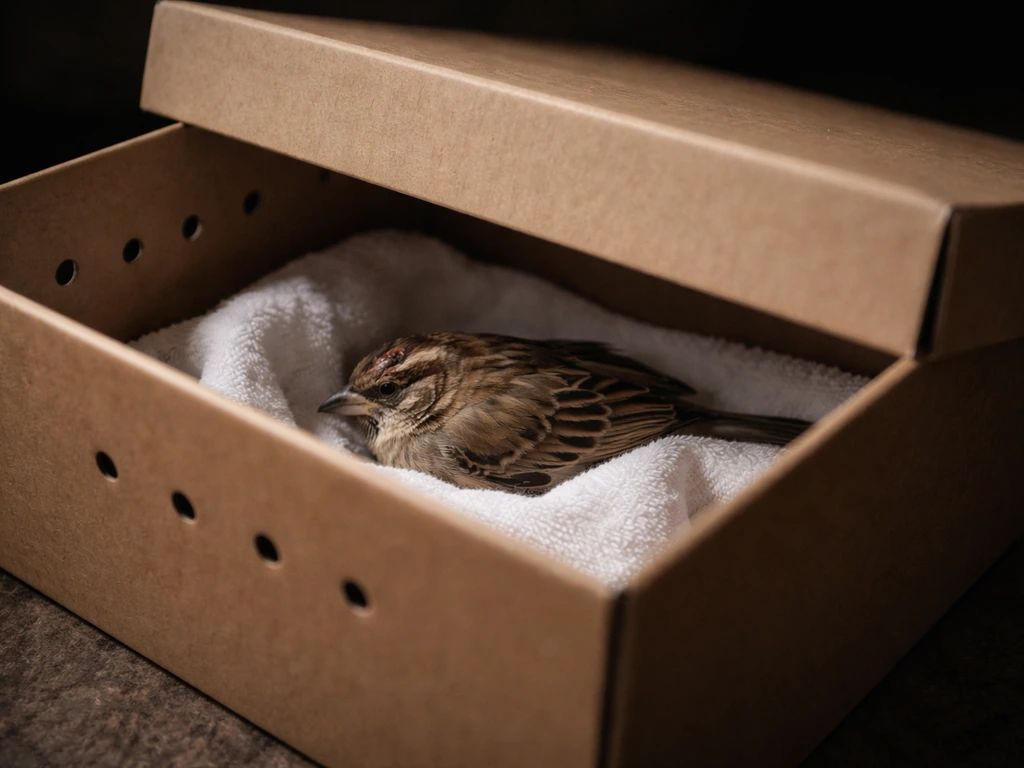
The most important thing you can do right now is reduce stress and keep the bird still. That means: stop handling it as much as possible, get it into a quiet and dark space, and keep it warm. These three things together address shock, which is a real and immediate risk for any injured bird.
Use a cardboard box with a lid. Poke several small air holes in the sides or lid before you put the bird in. Line the bottom with a folded towel or paper towels so the bird has something to grip. The box should be big enough for the bird to stand up and turn around without hitting the walls, but not so large that it slides around during transport. Place a light cloth or towel over the bird to reduce visual stimuli, or keep the box closed in a dark room. Avoid putting in food or water unless a wildlife rehabilitator has specifically told you to.
Warmth matters. An injured bird loses body heat quickly, especially in shock. Place the box somewhere warm (around 80 to 85 degrees Fahrenheit is often cited for small birds in shock), or put a heating pad set to low under half the box so the bird can move away from the heat if needed. Don't put the heat source inside the box where the bird can contact it directly.
If there is active bleeding, apply gentle pressure with a clean cloth. Don't try to clean deep wounds or apply antiseptics, hydrogen peroxide, or ointments. Basic wound care only: stop the bleeding if you safely can, cover it lightly with a clean cloth if the wound is open and exposed, and leave it for the vet. If a bone is visibly sticking out, do not touch it or try to push it back. Get the bird contained and get help fast.
Some wildlife resources describe a technique of gently taping both wingtips together over the bird's back to stabilize a broken wing for transport. This can reduce movement and pain in some situations, but it's not something to attempt without guidance, especially if there's significant swelling or an open wound. Tape applied over swelling can cut off circulation as the swelling changes. Unless a rehabilitator has walked you through it over the phone, the safer approach is just to keep the bird in a snug, well-lined box.
When it's an emergency and who to contact
Call a wildlife rehabilitator or avian vet now if you see any of the following. Don't wait an hour to see if the bird improves.
- Visible bone protruding through skin (open fracture)
- Active bleeding that isn't slowing down
- Open-mouth breathing or tail bobbing (signs of respiratory distress)
- The bird was in a cat's or dog's mouth (puncture wounds cause internal infection risk even without visible injury)
- The bird is a baby or juvenile that has fallen from a nest
- The bird has not flown off or improved after one hour, despite no obvious injuries
- There is a head tilt, circling, or other neurological signs alongside the wing problem
For pet birds like parrots, cockatiels, or budgies, contact an avian veterinarian directly. An avian vet has the tools (including x-ray equipment) to actually diagnose whether a wing is fractured and can provide pain management, surgical stabilization, or splinting as needed. For wild birds, contact a licensed wildlife rehabilitator. They are legally permitted to handle and treat wild birds and are trained specifically for these situations. Your local wildlife rescue center or animal control office can usually connect you with one quickly.
Window collisions deserve special mention. A bird that flew into glass may look okay for the first few minutes, but many have internal injuries, concussions, or shoulder damage that doesn't show immediately. Knowing how to tell if a bird has a concussion can help you assess whether a window-strike bird has more going on than just the wing. If it hasn't flown off within an hour or two, contact a rehabilitator regardless of how it looks.
Pet attacks are another high-urgency scenario. Cat saliva in particular carries bacteria that cause serious systemic infection in birds within hours, even when puncture wounds are tiny and nearly invisible. If you know or suspect a cat was involved, treat it as an emergency and get to a vet or rehabilitator the same day, no exceptions.
If you're unsure whether you're dealing with a broken wing or something else entirely, it can help to read up on related injuries. For instance, if the bird also seems to be favouring one foot or not using its legs normally, how to tell if a bird has a broken leg covers those signs in detail. Similarly, if the bird is limping but otherwise mobile, the guidance on what to do if your bird is limping can help you triage the situation more clearly.
How to prepare for transport and help the bird recover
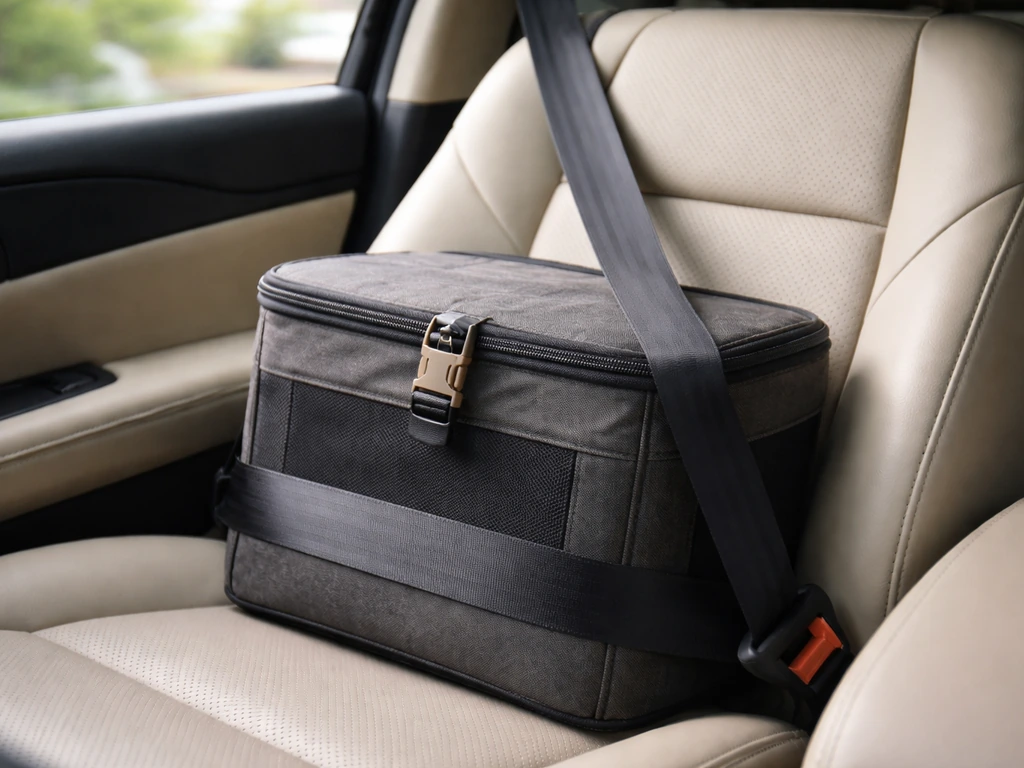
Once the bird is in a secure, dark, warm box, the next job is getting it to help as quickly as possible. Call ahead to the wildlife rescue center or avian vet before you arrive, so they can prepare and give you any specific instructions for your situation. Have this information ready when you call: what kind of bird it is (or your best guess), where you found it, what happened (collision, cat attack, found in yard, etc.), what the wing looks like, and whether there is bleeding or other visible injuries.
During transport, keep the box secured so it doesn't slide around in the car. Minimize conversation and keep the radio off or very low. Stress during transport is a genuine risk, and a quiet ride makes a real difference. One person should drive while another monitors the box if possible, but don't open the box repeatedly to check on the bird. Once it's in there, leave it in the dark and quiet.
Do not offer food or water during transport. This is one of the most common well-meaning mistakes. An injured bird may inhale water or food if its coordination is off, and certain foods are outright toxic to some species. The rehabilitator or vet will handle nutrition once they've assessed the bird's condition and ability to swallow safely.
It's also worth knowing that wing injuries in birds vary a lot in severity and outcome. Some fractures heal remarkably well with proper treatment, especially in young birds. Others, particularly open fractures or those involving the shoulder joint, can be more complicated. A wildlife rehabilitator or avian vet will give you a realistic picture of the prognosis once they've examined the bird. Your job right now is simply to get it there safely.
Once you've handed the bird off to a professional, let them do their job. Ask if they accept follow-up calls for status updates, many rehabilitation centers are happy to give brief updates. And if you're in an area where resources are limited, your local wildlife agency, humane society, or even a general-practice vet may be able to point you toward licensed help. The important thing is not to try to rehabilitate the bird at home yourself. With a broken wing, even well-intentioned home care often causes more harm than good, and birds need professional intervention to have any real chance at recovery and release.
FAQ
Can I confirm a broken wing just by looking at it, or do I need an x-ray?
You can only assess the likelihood. A visible droop, dragging wingtip, or open wound strongly suggests a serious wing problem, but fracture, dislocation, and severe sprain can look similar without imaging. An x-ray is what confirms the exact injury and helps decide whether splinting or surgery is needed.
What should I do if the bird’s wing looks droopy but it won’t stop moving or thrashing?
Stop trying to look deeper or test range of motion. Your goal is containment and stress reduction. Use a towel to gently secure the bird, place it in a warm, dark box with air holes, and seek help immediately, because repeated thrashing increases the risk of turning a fracture into an open injury.
Is “one wing lower” always a broken wing?
Not always. Some birds hold a wing oddly from pain in the shoulder or chest, and angel wing can also create a drooping look, especially in young birds developing gradually. If the bird had a recent incident (window strike, fall, pet attack), prioritize acute trauma over gradual conditions and treat it as an emergency until a rehabber or avian vet rules it out.
How can I tell if it’s more like a dislocation than a fracture?
You usually cannot reliably distinguish them by touch or appearance alone. Instead, use behavior and severity signals: significant swelling, bruising, bleeding, or an obvious wound increases urgency for fracture. If the bird guards the wing tightly and shows strong pain response, treat it as serious and get professional evaluation quickly.
Should I tape the wingtips together for transport if it seems safer?
Only do that if a licensed wildlife rehabilitator or avian vet specifically instructs you for that exact situation. For some injuries, especially with swelling that changes over time or any open wound, tape can restrict circulation. When in doubt, keep the bird in a snug, well-lined box and avoid adding restraints.
Is it okay to offer water or food while I’m waiting for a rehabilitator?
No, not unless a professional tells you to. Injured birds can have impaired coordination and may aspirate, and some species-specific foods can be harmful. Keep the bird warm and quiet, and let the vet or rehab center handle feeding based on swallowing ability and injury severity.
When is bleeding a “call now” emergency?
Call immediately if there is active bleeding, blood soaking through the feathers, or any bone visible through the skin. Apply gentle pressure with a clean cloth only if it can be done safely, do not clean deep wounds, and do not try to push any exposed bone back in.
What transport setup works best for a suspected broken wing?
Use a lidded cardboard box with air holes, line the bottom with a folded towel or paper towels for grip, and keep the box just large enough for the bird to turn without hitting the sides. Reduce visual stimuli with a light towel over the box or a dark room, and secure the box in the car to prevent sliding.
If the bird seems okay after a window strike, should I still worry about the wing?
Yes. Some birds look fine briefly but still have internal injuries or shoulder trauma that can worsen later. If it has not flown off within an hour or two, contact a wildlife rehabilitator or avian vet regardless of whether the wing looks droopy.
My bird is a pet, not wild, what’s different about how I should handle the situation?
For pet birds, contact an avian veterinarian directly and avoid trying home stabilization beyond basic containment and warmth. Pets often have species-specific risks and may require analgesia and imaging promptly, so delayed care can increase pain and reduce recovery chances.
How can I tell if the wing injury might be part of something worse?
Watch for non-wing signs that change the urgency, such as open wounds on the body, breathing with an open beak, abnormal posture like lying flat or prolonged hunched fluffed posture, head tilting, unequal leg use, or lack of weight-bearing. Those can indicate concussion, additional fractures, or systemic injury, and they justify immediate professional care even if the wing droop seems mild.
Next Article
Can a Bird Live With One Wing? Survival and First Aid
Can a bird live with one wing? Injury outcomes and step-by-step first aid, plus when to get urgent help.