If you searched "what do you give a sick bird joke" hoping for a punchline, the answer is "tweetment" (yes, that joke exists). But if you actually have a sick or injured bird in front of you right now, this article is the practical guide you actually need. The real question here is: what do you give, do, or provide to a sick or injured bird to keep it alive until professional help arrives? And that answer is far more urgent than any joke.
What to Give a Sick Bird: First Aid and Care Steps
Marcus Chen
13 Apr 2026
Why this question is really about bird first aid
Search phrases with the word "joke" in them often come from people who half-remember a riddle but are also genuinely in a panic about a bird they just found. The site you're on is built for exactly that situation. Whether you found a bird that hit a window, got caught by a cat, fell from a nest, or is simply sitting on the ground looking dazed, this guide covers what to do in the next 30 minutes. That window of time matters more than almost anything else.
Birds in distress deteriorate fast. Shock, cold, and stress can kill a bird that might have survived with basic stabilization. So skip the joke for now and focus on the bird in front of you.
First: protect yourself before you touch anything
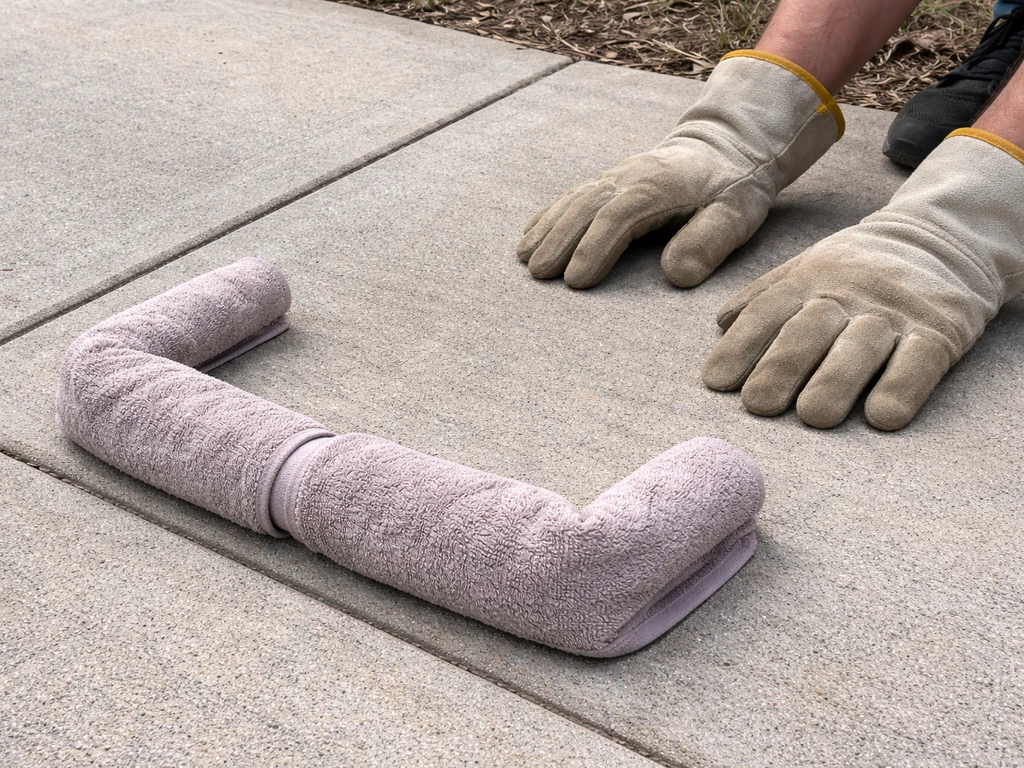
Before you pick up a sick or injured bird, put on thick work gloves if you have them. Even small birds can deliver a surprisingly sharp bite or scratch when they're scared, and some birds carry parasites or bacteria. Gloves let you handle the bird safely while keeping the interaction brief, which is what you want. The goal is not to comfort the bird through prolonged contact; it's to move it to a safe container as quickly as possible.
If you don't have gloves, use a folded towel or a thick cloth. Keep children and pets away from the area before you approach. An already-stressed bird that gets spooked mid-rescue can injure itself further trying to flee.
Quick assessment: what are you actually dealing with?
Before you touch the bird, take ten seconds to look at it. You're not diagnosing it; you're figuring out how serious the situation is and whether it needs emergency help right now.
- Is the bird bleeding visibly from anywhere on its body?
- Is a wing or leg hanging at an odd angle or dragging on the ground?
- Is the bird breathing rapidly or with an open beak and labored effort?
- Is it unable to stand or keep its head upright?
- Is it shivering or completely limp?
- Did you witness it hit a window or get grabbed by a cat or dog?
- Does it try to run but cannot fly away when you approach?
Any of the above means the bird is genuinely injured or in shock, not just temporarily stunned. A bird that runs but cannot take flight is one of the clearest signs that something is wrong. Head trauma, internal injuries, and eye injuries from window collisions are often invisible from the outside, which means even a bird that looks "okay" can be in serious trouble. If you're not sure whether what you're seeing is a bird having a seizure or just trembling from shock, treat it as an emergency either way.
What to actually give a sick bird right now
Here is the honest answer: the best things you can give a sick or injured bird are warmth, darkness, quiet, and time to stabilize before it gets professional care. That's it. There is no food, drink, or supplement that helps more than those four things in the immediate window.
Step 1: Get it into a safe container
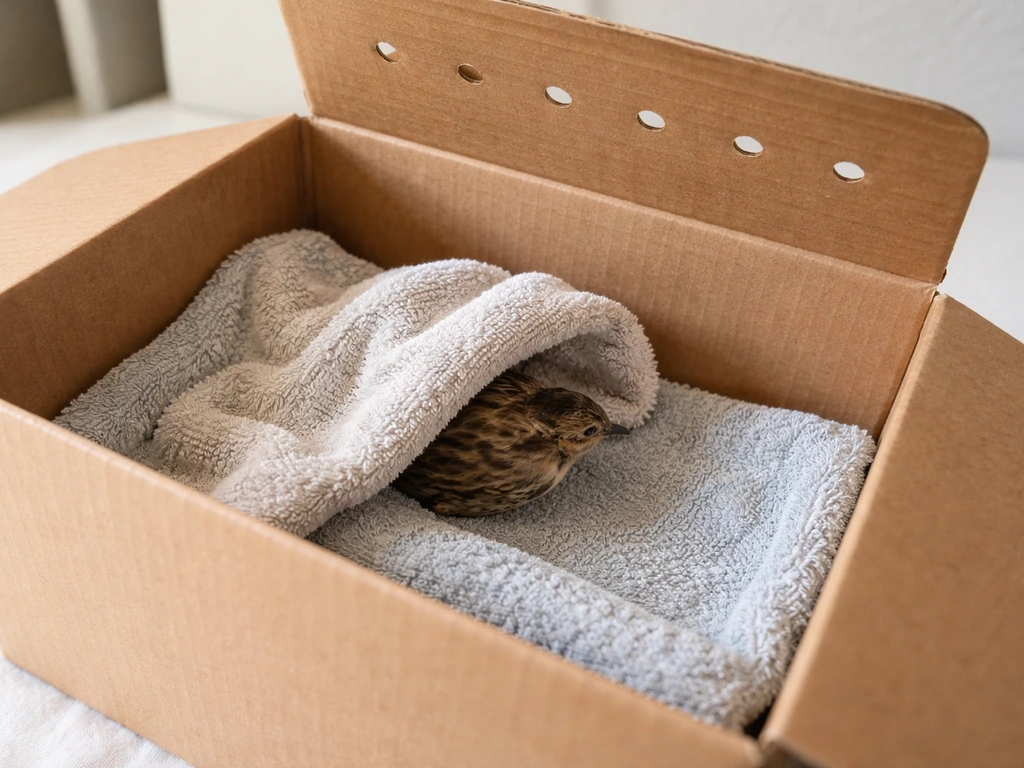
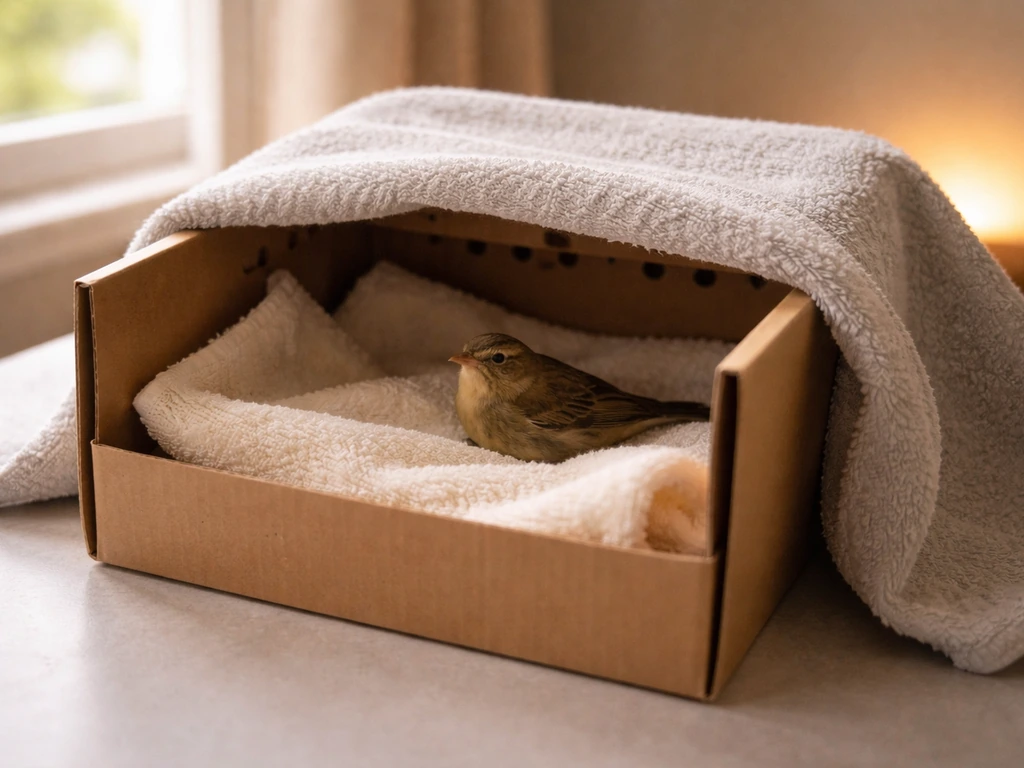
Grab a cardboard box, paper bag, or any container you can close. Poke several small air holes in the lid or sides for ventilation. Line the bottom with a folded towel, crumpled paper towels, or a soft cloth. Do not use anything slippery like newspaper or plastic bags. The bird needs traction so it can stay upright without struggling.
Drape a towel over the bird, covering its head too. This is not cruel; covering the head dramatically reduces stress in birds. With the bird covered, gently cup it with both hands, tuck its wings against its body, and lower it into the box. Close the box immediately. Do not keep peeking in. Every time you open it, you reset the bird's stress response.
Step 2: Add gentle warmth
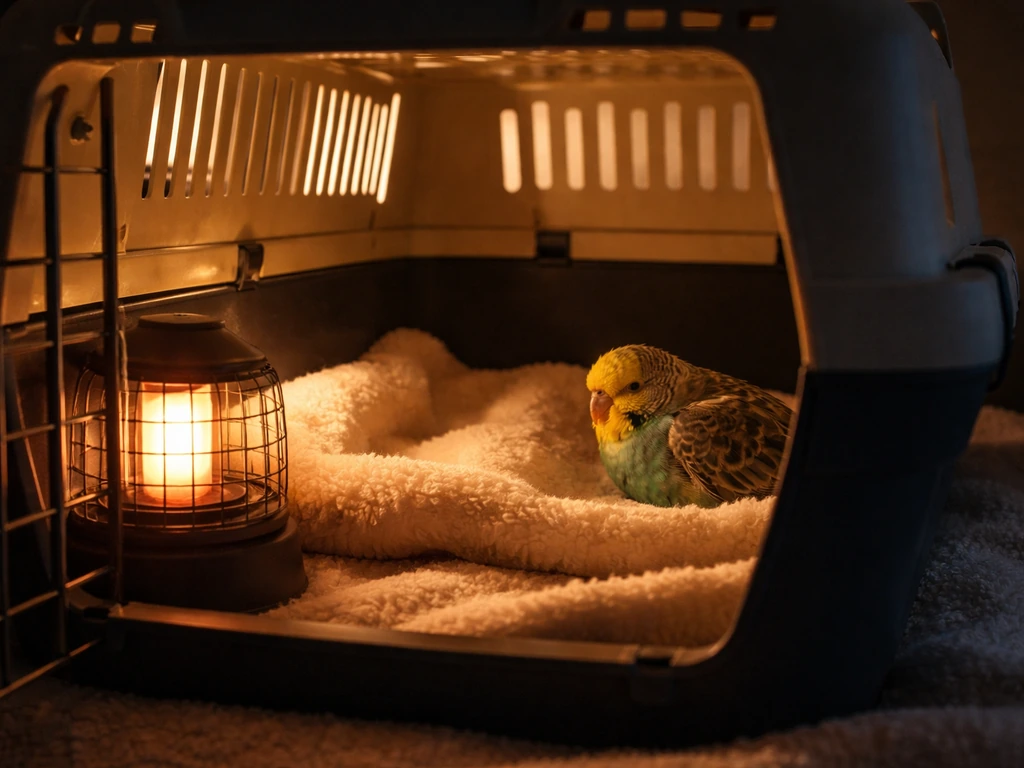
Temperature regulation is one of the most important things you can do. A compromised bird loses body heat fast, and keeping it warm can be the difference between it surviving until help arrives or not. Supportive care for sick or injured captive birds can include a [heated enclosure maintained at least 85°F in a quiet, restful environment](https://www. avianwelfare.
org/shelters/pdf/NBDshelterssupportive_care. pdf), where birds may average 103, 106°F body temperature. Place a heating pad set on its lowest setting under only one half of the box, not the entire bottom. This gives the bird a warm side and a cooler side so it can move if it gets too hot.
Never place the bird directly on a heating pad or heat source. If you don't have a heating pad, wrap a hot water bottle in a towel and set it inside the container next to the bird, not under it.
Step 3: Keep it dark, quiet, and away from everything
Place the closed box in a warm room, away from pets, children, loud music, and direct sunlight. A bathroom or a closet works well. Resist the urge to check on it constantly. Think Wild's guidance suggests that if there's no visible bleeding or obvious fracture, you can hold a bird in this setup for about an hour before taking the next transport steps, but do not wait longer than that without seeking professional guidance.
What NOT to give or do (this part is critical)
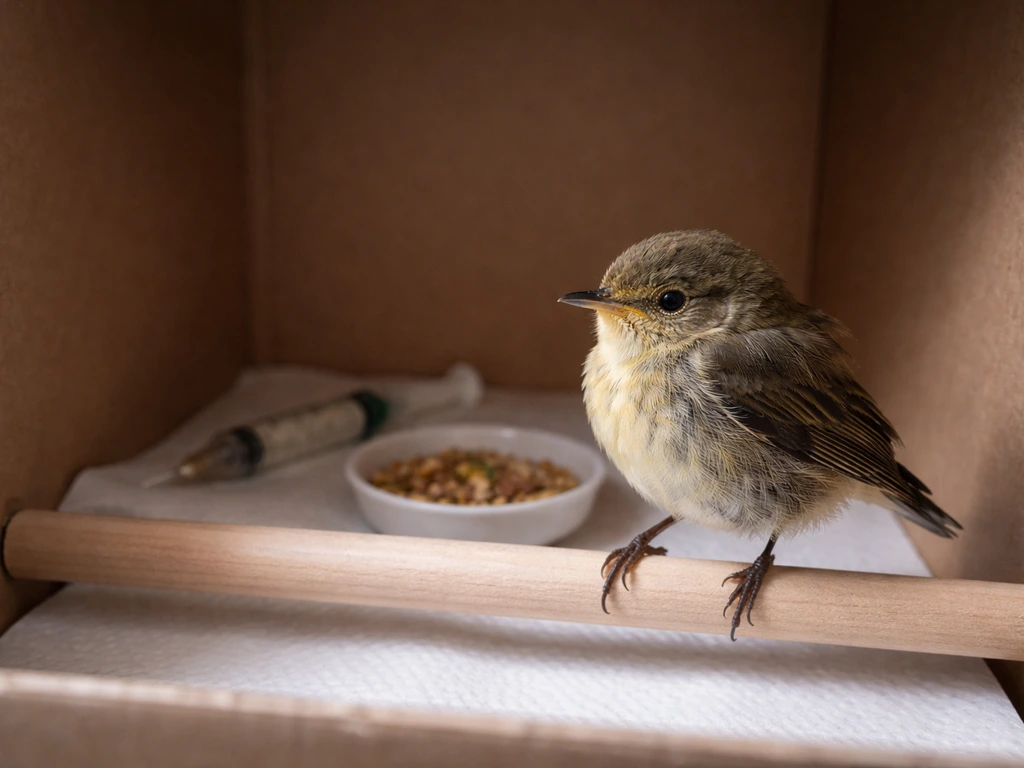
This is where most well-meaning rescuers make their biggest mistakes. The list of things not to do is just as important as the list of things to do, and some of these mistakes can kill a bird faster than the original injury.
- Do not give food of any kind. Tufts Wildlife Clinic states explicitly that feeding an injured bird an incorrect diet can result in injury or death. You almost certainly don't know what this specific bird eats, and forcing food into a stressed bird that can't swallow properly is dangerous.
- Do not give water or any liquid. Never squirt water into a bird's mouth. Birds, especially baby birds, can inhale fluid into their lungs instantly and drown. This applies to water, juice, milk, or anything else.
- Do not use a syringe or dropper to give fluids. Even if the bird looks dehydrated, this technique requires training. Do not attempt it.
- Do not give any human medications, not ibuprofen, aspirin, Benadryl, nothing. Human pain relievers are toxic to birds.
- Do not try home remedies you've seen online. Honey water, sugar water, bread soaked in milk, these are all harmful.
- Do not handle the bird more than necessary. Prolonged handling raises stress hormones to dangerous levels, even if the bird seems calm.
- Do not keep the bird in a brightly lit or noisy space while you wait.
If you're wondering what you can safely provide for a bird that's in pain specifically, the honest answer is that what to give a bird for pain is almost nothing at home. Pain management for birds requires a licensed vet. Your job is stabilization, not treatment.
For a broader look at safe versus unsafe options, the guide on what to give a sick bird goes deeper into species-specific considerations and what a rehabilitator might recommend once you've made contact.
When to call for help immediately (don't wait)
The stabilization steps above buy you time, but they are not a substitute for professional care. Call a wildlife rehabilitator or avian vet as soon as the bird is safely contained. Do not wait to see if it "gets better" on its own. Some situations are emergencies from the first moment:
- Visible bleeding that isn't stopping
- Broken wing or leg (bone visible, or limb at a wrong angle)
- Seizure activity or convulsions
- Complete inability to hold its head up
- The bird was caught by a cat (cat saliva causes severe infection within hours)
- The bird is a protected species (raptors, songbirds, waterfowl) and handling them without authorization may require a permitted rehabilitator by law
- The bird is a baby or hatchling with no feathers
Birds that appear to be having neurological episodes are particularly urgent. If you notice tremors, loss of coordination, falling to one side, or repetitive head movements, read up on how to help a bird having a seizure while you wait for the rehabilitator to pick up the phone, but do not delay that call.
How to find help near you
In the US, the fastest way to find a permitted wildlife rehabilitator is to call the US Fish and Wildlife Service or search the National Wildlife Rehabilitators Association directory online. Many states have their own hotlines. Virginia, for example, has a toll-free number (1-855-571-9003) specifically for locating rehabilitators for injured birds. Always call ahead before transporting so the facility can prepare for the bird's arrival and confirm they can take it. Mass.gov also provides an official way to find a wildlife rehabilitator, and it notes that many rehabilitators cannot pick up injured wildlife so you may need to transport the bird yourself Mass.gov provides an official way to find a wildlife rehabilitator.
If you can't reach a wildlife rehabilitator immediately, any avian veterinarian can provide emergency assessment. General practice vets can sometimes help in a crisis too, though an avian specialist will have the right equipment and medications. Do a quick search for "avian vet near me" or "wildlife rehabilitation [your city or county]" to find your closest option.
How the bird's specific condition changes your approach
| Situation | Immediate action | Urgency level |
|---|---|---|
| Window collision, stunned but no visible injury | Box, dark, warm, quiet for up to 1 hour; monitor | Moderate: call rehab if not recovering |
| Bleeding wound | Box immediately, apply no pressure yourself, call now | High: do not wait |
| Broken wing or leg | Box with minimal handling, call immediately | High: do not wait |
| Seizure or convulsions | Box gently, dark and warm, call immediately | Very high: emergency |
| Caught by a cat or dog | Box, call within the hour even if no wounds visible | Very high: infection risk |
| Baby bird fallen from nest | Box, call rehab before doing anything else | High: requires specialist guidance |
| Lethargic, cold, not flying | Warmth first, then box, call rehab | High: shock or illness likely |
| Heat exhaustion | Cool shaded area, box, call rehab | High: do not delay |
Temperature extremes in either direction can be life-threatening. If the bird you've found seems cold and shivering, the guide on how to help a cold bird walks through the warming process in more detail. On the flip side, if the bird was found in direct sun on a hot day and seems limp or disoriented, read about how to help a bird with heat stroke before you apply warmth, because the approach is different.
Getting the bird safely to help
Transport is the final step and it matters more than people realize. Keep the box on the seat next to you or on the floor of the passenger side during the drive, somewhere stable where it won't slide around. Do not put it in the trunk. Keep the car warm but not hot. Do not play loud music. Do not open the box during transport.
If the bird is showing neurological symptoms during transport, knowing the difference between seizure activity and normal distress movements can help you describe the bird's condition accurately when you arrive. Information on how to treat bird seizures is something the vet will handle, but being able to describe what you saw will help them move faster.
When you call ahead, tell the facility the species if you know it, where you found the bird, what condition it's in (bleeding, can't fly, seizure, etc.), and roughly when you can arrive. This one phone call can mean the difference between the bird going straight into triage versus sitting in a waiting room.
What to expect once you hand the bird off
Once a licensed rehabilitator or avian vet takes over, your job is done. Do not expect to get the bird back, especially if it's a wild species. Wildlife rehabilitation is a legal process, and the goal is always release back into the wild when possible. You've done the hard part by getting it there alive.
If the bird survives and is treated for neurological issues, staff may discuss ongoing monitoring for issues like recurring episodes. The guide on how to stop a bird seizure can give you some context for what that treatment process looks like, even if you're not the one administering it.
The bottom line is this: the best thing you can give a sick bird is a safe, dark, warm container and a fast phone call to someone qualified to help. Everything else, the food, the water, the medicine, the holding and cooing and trying to get it to drink, does more harm than good. Trust the process, make the call, and get the bird to care as quickly as you can.
FAQ
Can I give a sick bird water or food to help it recover faster?
In the first 30 minutes, avoid food and water unless a licensed rehabilitator or avian vet specifically instructs you. Even if the bird looks thirsty, liquids increase the risk of choking or aspiration, especially if it is weak, dazed, or neurologically abnormal.
If the bird is a baby or fledgling, can I still use the same box and warming steps?
Yes, but priority is even more about warmth and stability. Use the same enclosed, ventilated container, keep it dark, and avoid handling longer than necessary. If you can see open-mouth begging behavior, do not feed it yourself, because the species and correct formula matter and common mistakes can be fatal.
What if the bird is fully alert and just looks “tired,” should I still call for help?
If it cannot fly, keeps falling, has trouble standing, has visible eye injuries, or shows repeated head movements or tremors, treat it as an emergency and call a rehabilitator. A bird that looks awake but is grounded often has internal injury or shock that you cannot safely assess at home.
How warm is “warm enough” inside the container without overheating the bird?
Aim for a gentle temperature gradient rather than making the whole box hot. Using a heating pad on the lowest setting under only one half lets the bird self-regulate. If the bird is panting, unusually hot to the touch, or very lethargic, stop adding heat and contact a professional.
Is it okay to put the bird in a pet carrier or plastic bin instead of a cardboard box?
A closed container can work if it has ventilation and traction. However, avoid slick surfaces that prevent standing or balancing. Also, plastic bins can hold heat unevenly, so always create a warm side and cooler side and never place heat directly under the bird.
Should I cover the bird’s head immediately, or only if it seems calm?
Cover it right away after placing it in the container. Reducing visual stimulation lowers stress quickly in most birds, and stress spikes can worsen shock. The towel should not block breathing or ventilation holes.
How often can I check the bird while it’s in the box?
Minimize peeking. Repeatedly opening the container resets stress and can chill the bird. Check only when necessary for ventilation and to confirm the bird is staying in the intended setup, then keep the box closed until the call is complete and transport begins.
If there is bleeding, should I try to stop it myself?
Do not attempt extensive wound treatment at home. For bleeding, focus on immobilizing the bird in the covered container and getting professional help quickly. If bleeding is visible, mention it when you call, since the rehabilitator may want a specific approach during transport.
What should I do if the bird starts “seizing” while I’m waiting to call?
Call immediately, then describe what you saw: whether the head repeatedly jerks, whether it falls to one side, and whether the episodes are continuous or intermittent. Keep the container dark and stable, and avoid handling more than necessary, since stimulation can worsen stress.
Are over-the-counter medications or home remedies ever safe for an injured bird’s pain?
Do not give human pain relievers, antibiotics, or supplements. Bird dosing is species-specific and many common drugs can cause severe harm. Pain control is a licensed veterinary job, your role is warmth, darkness, quiet, and rapid referral.
Should I take off the bird’s bandage or clean wounds if it’s dirty?
Do not wash or re-bandage. Uncontrolled cleaning can delay stabilization and introduce infection or additional stress. If cleaning is required, a rehabilitator or vet will do it under appropriate conditions.
Can I keep the bird at home overnight if it seems better?
Do not “wait overnight” if the bird was injured or shows abnormal symptoms like inability to fly, neurological signs, or eye trauma. Even if it improves briefly, deterioration can return when stress and temperature balance shift. Contact a rehabilitator or avian vet for next steps and timing.
What’s the best way to transport the bird if my car is cold or hot?
Use the box on a stable surface like the passenger floor or next to you, and keep the vehicle at a comfortable, moderate temperature. Avoid direct sun on the box, do not place it in the trunk, keep music quiet or off, and do not open the container during the drive.
If I can’t find a wildlife rehabilitator right away, what is my backup plan?
Call an avian veterinarian or a general practice vet that can do emergency stabilization. If you can tell them the species, condition (can’t fly, bleeding, seizure), and your estimated arrival time, they can prepare sooner and triage faster.
Next Article
What to Give a Sick Bird: Safe First Aid and Feeding
Step-by-step safe first aid and what to feed a sick bird, including when not to, hydration, and dangers of force feeding