
If your bird is convulsing right now, here is what to do: clear away anything that can hurt it, dim the lights, keep the space quiet, and do not try to restrain it. If you meant “sick bird” in the sense of a joke, you can also try searching for the exact prank or format you are looking for sick bird joke. That is the short version. The rest of this guide walks you through everything else, step by step, so you can get through the next few minutes safely and make the right call about getting professional help.
How to Help a Bird Having a Seizure: First Aid Steps
Marcus Chen
20 Apr 2026
Recognize a seizure vs. other emergencies
A seizure and a breathing crisis can look similar in birds, and it matters that you tell them apart because the immediate response is slightly different. A bird having a seizure will typically fall off its perch, lose control of its body, thrash its wings, paddle its legs, twitch repeatedly, or go rigid. It may roll onto its side, bob its head involuntarily, or clench its feet. Its eyes may be wide open or fluttering. It usually cannot respond to you during the episode.
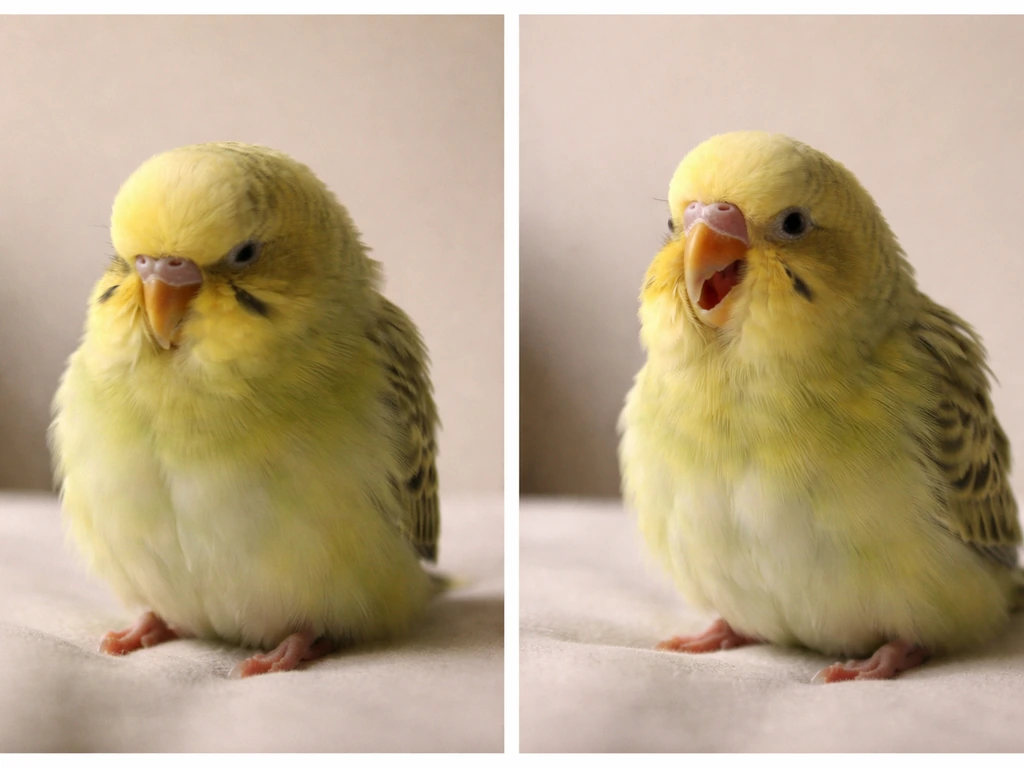
A breathing emergency looks different. Watch for open-mouth breathing, a pumping or bobbing tail, labored panting at rest, wheezing, or a clicking sound with each breath. A bird in respiratory distress is usually still conscious and may even be trying to perch. If you are seeing those signs, that is a separate kind of emergency, and the approach to stabilizing the bird for transport still applies, but you should know it is not a seizure.
Other things that can look like a seizure include a window collision (sudden impact causing temporary disorientation and loss of balance), a severe fright response, or heatstroke. If your bird just hit a window and is stunned, the symptoms can mimic a seizure briefly. If you are unsure, treat it as a seizure until you know more.
What to do right now: safety, handling, and the big do's and don'ts
Your instinct will be to grab the bird and hold it still. Do not do that. Restraining a bird mid-seizure can cause broken bones, dislocated wings, or serious stress that makes the situation worse. The bird is not aware of its surroundings during the episode and cannot protect itself from you accidentally injuring it.
Here is what to actually do in the first moments:
- Clear the immediate area. Remove hard toys, perches, food dishes, cage bars it could thrash against. If the bird is in a cage, open the door and lay a soft towel on the cage floor to cushion it.
- Dim the lights. Bright light and noise can intensify or prolong a seizure. Turn off overhead lights or draw curtains if you can do it quickly.
- Lower the volume. Turn off TVs, music, or anything loud. Ask anyone in the room to speak quietly and stop moving around.
- Do not offer water or food during the seizure. A bird cannot swallow safely while convulsing and can aspirate liquid into its lungs.
- Do not put your fingers near its beak. A bird in a seizure has no control and can bite hard without intending to.
- Start timing. Note when the seizure started. This is one of the most important pieces of information you can give a vet.
If the bird is in a location where it is actively in danger of falling from a height, you can gently slide a folded towel under it without holding it down. The goal is just to cushion the surface, not to control the bird.
After the seizure stops: what to watch for in the next few minutes
Most seizures in birds last under two minutes. When it stops, the bird will likely be disoriented, weak, and frightened. This post-seizure period is called the postictal phase, and it is normal for the bird to seem confused, wobbly, or unresponsive for a short time afterward. Give it space. Sit quietly nearby and observe.
These are the things you need to watch and record, because every detail helps the vet:
- How long did the seizure last? (Under one minute, one to two minutes, or longer?)
- Did the whole body convulse, or just part of it (one wing, the head, one leg)?
- Is the bird breathing? Watch the chest or sides for movement.
- Is the bird conscious and responsive, or still unaware of you?
- Did it have more than one seizure in quick succession?
- Is it trying to right itself, or completely limp?
- Any unusual smell in the room, or has the bird been exposed to anything recently (fumes, new cleaning products, foods)?
If the seizure lasts longer than two minutes, or if the bird has back-to-back seizures without recovering in between, that is a medical emergency. Do not wait. Call an avian vet or wildlife rescue immediately while someone else stays with the bird.
Set up a safe, warm, quiet space while you make the call
Whether you are dealing with a pet bird or a wild bird you found outside, the stabilization setup is the same. You want warmth, darkness, and minimal stimulation. This reduces stress on the bird's system and buys time while you arrange professional help.
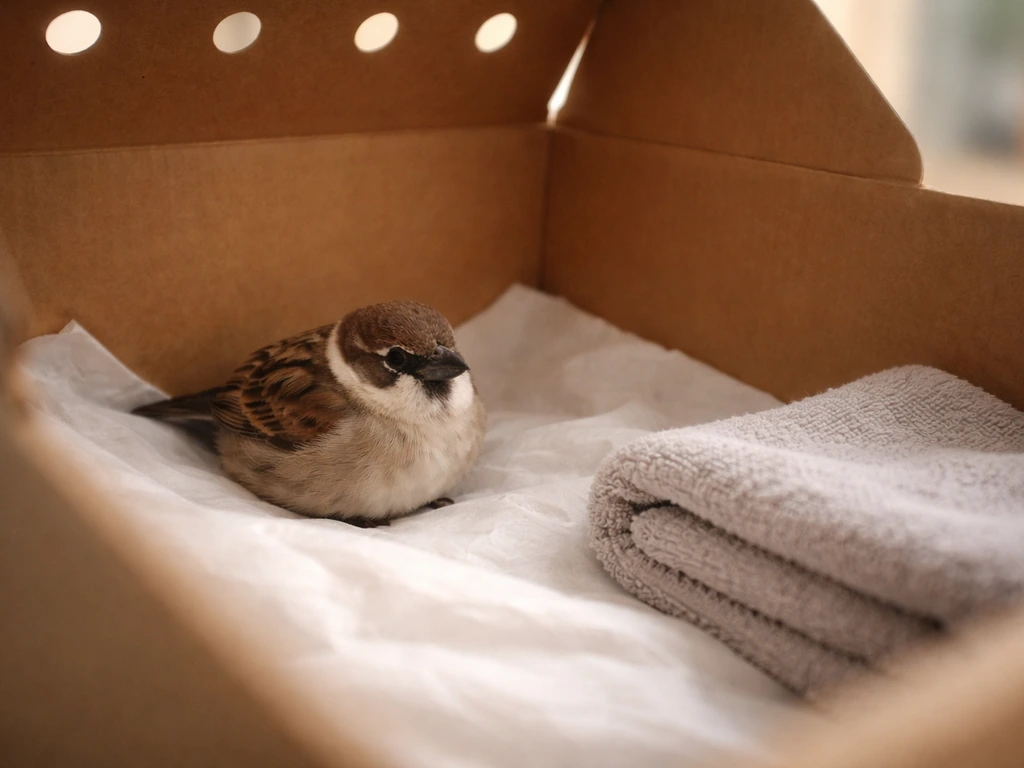
- Find a small cardboard box or a travel carrier. Smaller is better because it limits how much the bird can thrash and injure itself.
- Line the bottom with a soft, non-fraying towel or paper towels. Avoid anything with loops the bird's toes can catch in.
- Do not add a perch. A post-seizure bird cannot grip safely and will fall.
- Poke small air holes in the sides if using a cardboard box.
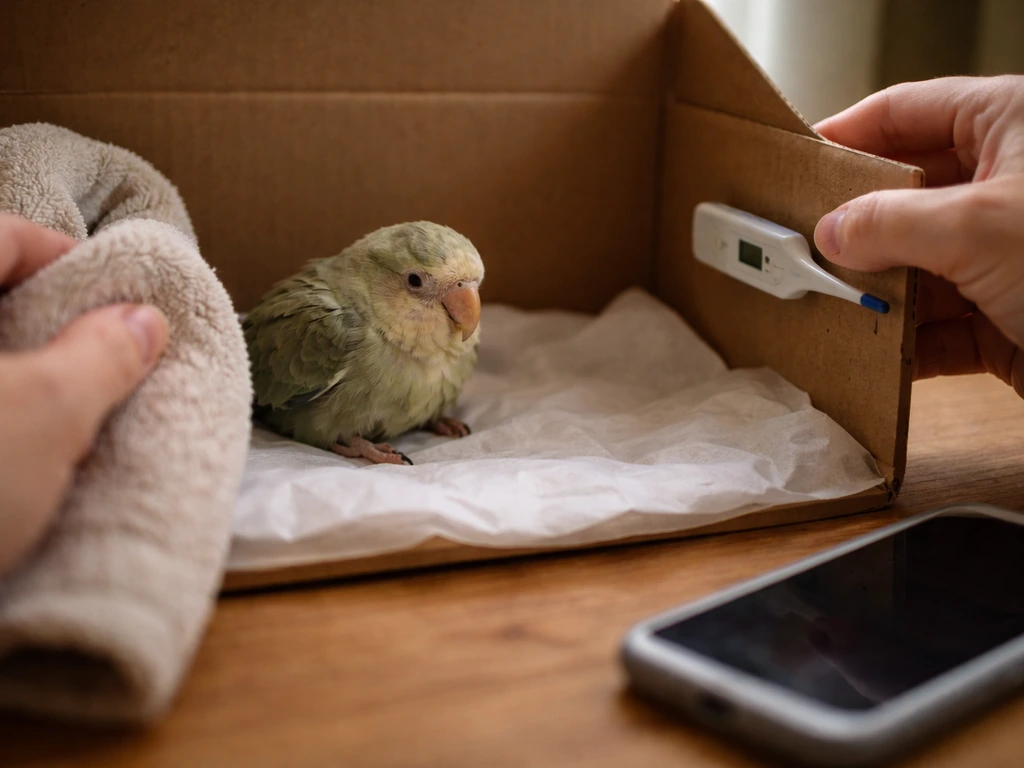
- Place the box in a warm room, around 80 to 85 degrees Fahrenheit (27 to 29 degrees Celsius) if possible. You can place a heating pad on the lowest setting under one half of the box so the bird can move away from the heat if needed.
- Cover the box with a light cloth or close the flaps to keep it dim.
- Keep the space quiet. No kids, no pets, no loud sounds nearby.
- Check on the bird every five to ten minutes without opening the box fully, just listen for movement.
Do not try to give the bird food, water, or any medication at this stage. Even well-meaning interventions like dropper-feeding water can cause aspiration in a weak or disoriented bird. If you are looking for a different kind of help, you might also wonder what do you give a sick bird, but for now focus on safe first aid until a professional advises you dropper-feeding water. Warmth and quiet are genuinely the most helpful things you can provide right now.
When to get emergency help, and who to call
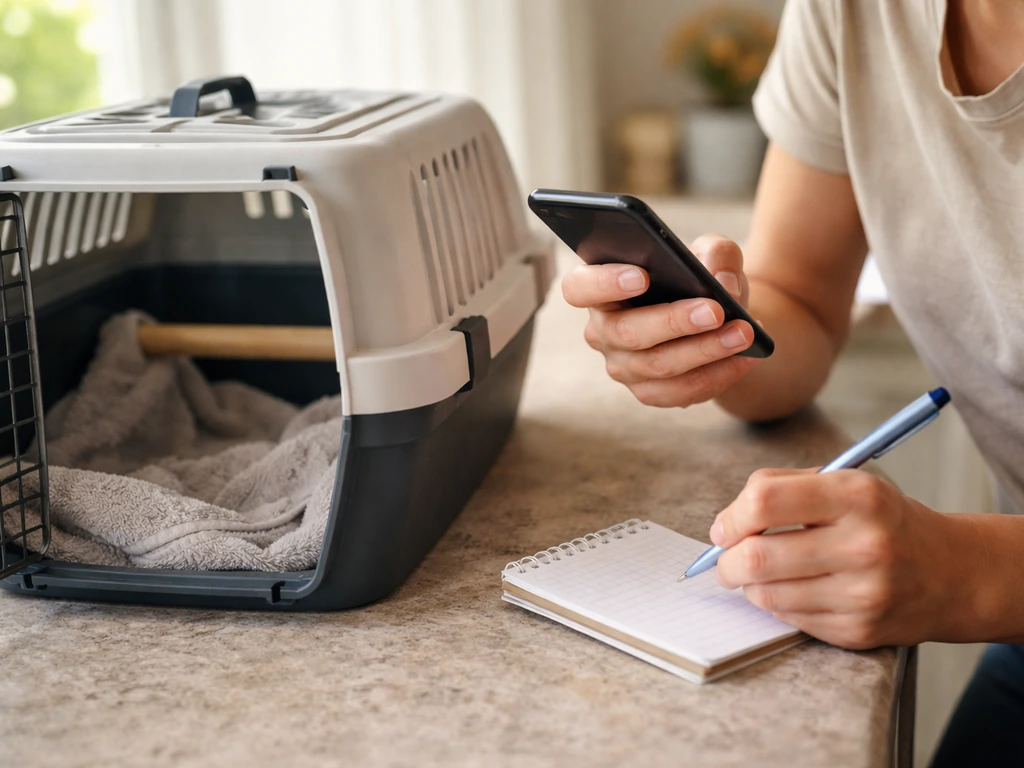
Here is the honest answer: any bird that has a seizure needs to be seen by a professional, even if it seems to recover completely. If you are wondering how to stop a bird seizure, the key first step is to seek veterinary care right away seizure needs to be seen by a professional.
Once you have the bird safe, focus on how to treat bird seizures by getting veterinary guidance right away how to stop a bird seizure. Seizures are a symptom, not a diagnosis, and the underlying cause will not fix itself. VCA Animal Hospitals is explicit on this point: a bird having a seizure requires immediate veterinary attention even when the episode resolves on its own.
Call right now, not tomorrow, if any of the following are true:
- The seizure lasted more than two minutes
- The bird has had more than one seizure in the past hour
- The bird is not breathing or breathing very irregularly after the seizure
- The bird is completely unresponsive more than ten minutes after the seizure ended
- There is visible injury (blood, a wing at a wrong angle, a leg that looks broken)
- You suspect poison or chemical exposure (fumes, toxic food, pesticides)
For a pet bird, search for an avian veterinarian specifically. General small-animal vets vary widely in their bird experience, so ask when you call whether they regularly treat birds. For a wild bird, contact your nearest wildlife rehabilitation center. In a local Reddit discussion about emergency wildlife help in Charlottesville, [Wildlife Center of Virginia](https://www.
reddit. com/r/Charlottesville/comments/1tpqddq/urgentwildliferehabrequired/) was mentioned as a good option for after-hours or when you need help in conjunction with an emergency. Wildlife Rescue League in Northern Virginia lists a wildlife helpline contact for getting local help [wildlife rehabilitation center](https://www. wildliferescueleague.
org/wildlife-helpline/). Many areas have 24-hour wildlife hotlines, and a quick search for 'wildlife rescue near me' or 'bird rehabilitation [your state or country]' will usually surface options. If you are in the US, the National Wildlife Rehabilitators Association (NWRA) and the Wildlife Center of Virginia both maintain searchable directories.
When you call, tell them: the species if you know it, how long the seizure lasted, whether it has had more than one, what symptoms you noticed, and any possible exposures (new foods, aerosols, open windows near traffic, etc.). The more specific you are, the faster they can help.
Likely causes and what to tell the vet
You do not need to diagnose the bird yourself. That is the vet's job. But understanding the common causes helps you give better information and ask better questions. In pet birds, seizures are most commonly caused by: If you are also wondering what to give a bird for pain, ask the avian vet first, because some pain medications can be unsafe for birds.
- Nutritional deficiencies, especially calcium or vitamin D3 deficiency, which is very common in birds on seed-only diets
- Heavy metal toxicity, particularly lead or zinc from cage materials, toys, or ingested objects
- Exposure to household toxins: non-stick cookware fumes (PTFE/Teflon), scented candles, aerosol sprays, cleaning products, or cigarette smoke
- Infection: bacterial, viral, or fungal illness affecting the brain or nervous system
- Low blood sugar, especially in small birds that have not eaten
- Heatstroke or extreme temperature changes
- Head trauma from a collision or fall
- Idiopathic epilepsy, which means seizures with no identifiable underlying cause, a diagnosis of exclusion that a vet arrives at after ruling out everything else
When you get to the vet, try to bring the following information: the bird's normal diet, any recent changes in food or environment, what the bird may have chewed on or been near, the bird's age, and a description of what the seizure looked like including duration. If the bird is a wild bird and you found it outside, note the location and whether there were any signs of chemicals, pesticides, or predator activity nearby.
The vet will likely run bloodwork, check calcium and glucose levels, and may recommend imaging or further testing depending on what they find. If no cause is found after thorough testing, the bird may be diagnosed with idiopathic epilepsy and managed with ongoing care.
After your bird recovers: prevention and follow-up
Once the immediate crisis is over and the bird has been evaluated, there are real steps you can take to reduce the risk of another seizure and support the bird's long-term health. Think of this as the conversation to have with your vet and the changes to make at home.
- Review the diet: if the bird is on a seed-only diet, talk to the vet about transitioning to a pellet-based diet with appropriate fresh foods, since nutritional deficiency is one of the most fixable causes of seizures in pet birds
- Remove non-stick cookware from the kitchen entirely if you have a pet bird in the home; PTFE fumes are odorless and lethal to birds at normal cooking temperatures
- Audit the cage for potential metal toxicity: check that toys, cage bars, and accessories are confirmed bird-safe and zinc-free
- Eliminate aerosols, scented candles, air fresheners, and heavily fragranced cleaning products from the bird's environment
- Keep the cage away from drafts, direct sun, and extreme temperatures
- Schedule a follow-up vet appointment even if the bird seems fine, especially if the cause was not fully identified
- Keep a short log of any future episodes: date, duration, symptoms, and what happened just before it started
- Ask the vet about emergency medications to have on hand if the bird is diagnosed with epilepsy
A single seizure is frightening, but with the right response in the moment and proper follow-through with a professional, many birds go on to live full, healthy lives. The worst thing you can do is assume it was a one-off and skip the vet visit. The best thing you can do is stay calm, act quickly, and get the bird to someone who can find out what caused it.
FAQ
What should I do if the seizure stops but my bird seems weak or confused for a while?
If the seizure is over but the bird is still uncoordinated or very sleepy, keep the bird in the same warm, dim, quiet setup and call the vet anyway. Do not assume “it’s fine now” means the underlying cause has resolved.
Can I move my bird to a different place while it is seizing?
Do a quick safety check first. Remove loose perches, offer a towel-lined floor, and keep the cage or box away from hazards, but do not hold the bird down or try to open the beak. If you must move it, use a towel to gently slide the carrier or towel under it.
How can I tell whether it is a seizure or a breathing emergency when I am panicking?
If the bird is breathing normally, you can usually wait for help, even though it looks “off.” If you see open-mouth breathing, wheezing, clicking with each breath, tail pumping, or labored breathing, treat it as a breathing emergency and seek immediate care for respiratory distress rather than focusing only on seizure first aid.
When is it safe to give my bird water or food after a seizure?
Do not offer water by dropper or any food right after the episode. In the first minutes the bird may not swallow safely and can aspirate. Wait until a vet advises feeding or the bird is fully alert and breathing comfortably, then follow professional instructions.
How warm should I keep the bird, and how do I avoid overheating it?
Yes. If the bird is chilled, warmth helps recovery, but avoid overheating. Use a low, gentle heat source (like a warm room or a mild heat pad under part of the towel) so the bird can move away if it gets too warm. Never heat directly against the bird’s body.
Do I still need a vet visit if my bird had one short seizure and then acted normal?
Any seizure in a bird is a medical symptom, so plan for a professional evaluation even if it was brief and the bird seems back to normal. The vet can check glucose and calcium and look for toxins, infections, trauma, or metabolic issues that may not be obvious.
What if I think something toxic caused the seizure, like fumes or a new cleaner?
If you suspect toxin exposure, stop further exposure immediately (remove the bird from the area, secure or ventilate around the suspected source, and bring the packaging or product name if you have it). Do not try to “counteract” it with home remedies, because wrong substances can worsen injury.
What are the first aid steps if the bird is wild and I cannot reach an avian vet?
For a wild bird, limit handling and keep it warm and dark, then contact a wildlife rehabilitator right away. While waiting, prevent further injury by reducing movement and keeping the bird in a secure, ventilated container. Do not give medications unless the rehabber instructs you.
What details should I write down for the vet if I’m trying to call while staying with the bird?
Record a simple timeline: start time and end time, whether it recurred, what the bird did (rigid, paddling, thrashing, head bobbing), and how it acted afterward (alert, wobbly, unable to perch). Also note any recent changes (new food, aerosols, window access, chewing hazards) to help the vet triage possible causes quickly.
Is it ever okay to give my bird leftover seizure medication or a human medicine if the episode happens again?
Do not give human seizure medications or leftover prescriptions. Birds can have very different dosing and some meds worsen breathing or cause dangerous side effects, especially if the seizure was triggered by a metabolic problem or toxin.
Next Articles
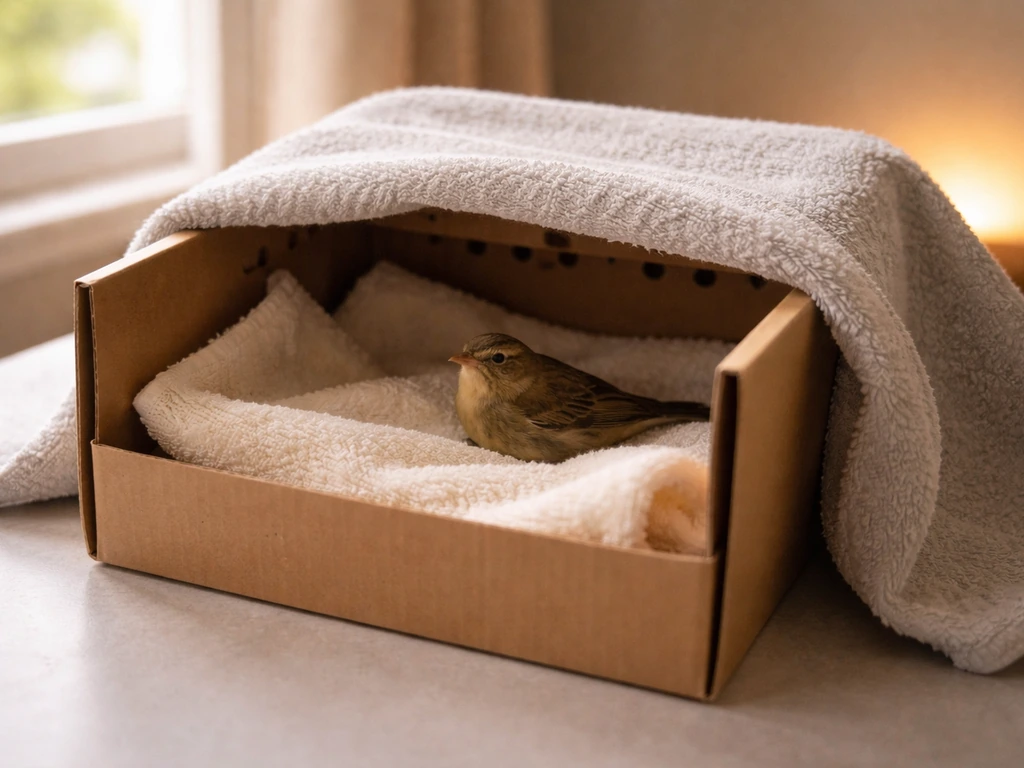
What to Give a Sick Bird: First Aid and Care Steps
Step-by-step first aid for a sick bird: what to give, what to avoid, and when to call an avian vet.
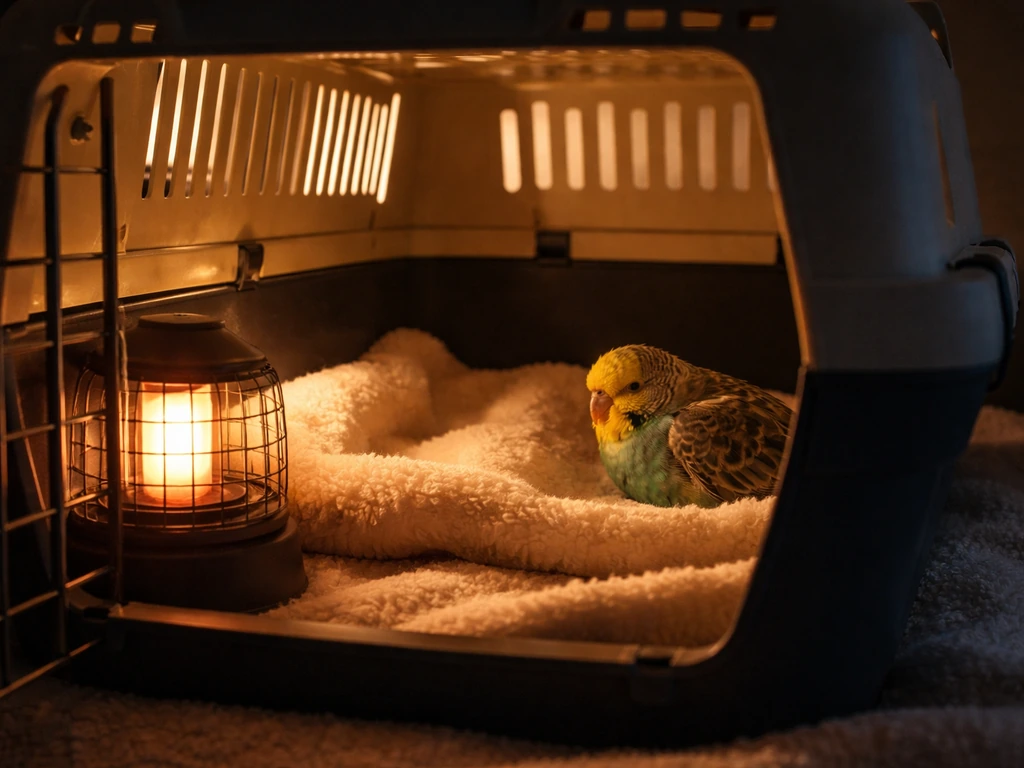
What to Give a Sick Bird: Safe First Aid and Feeding
Step-by-step safe first aid and what to feed a sick bird, including when not to, hydration, and dangers of force feeding
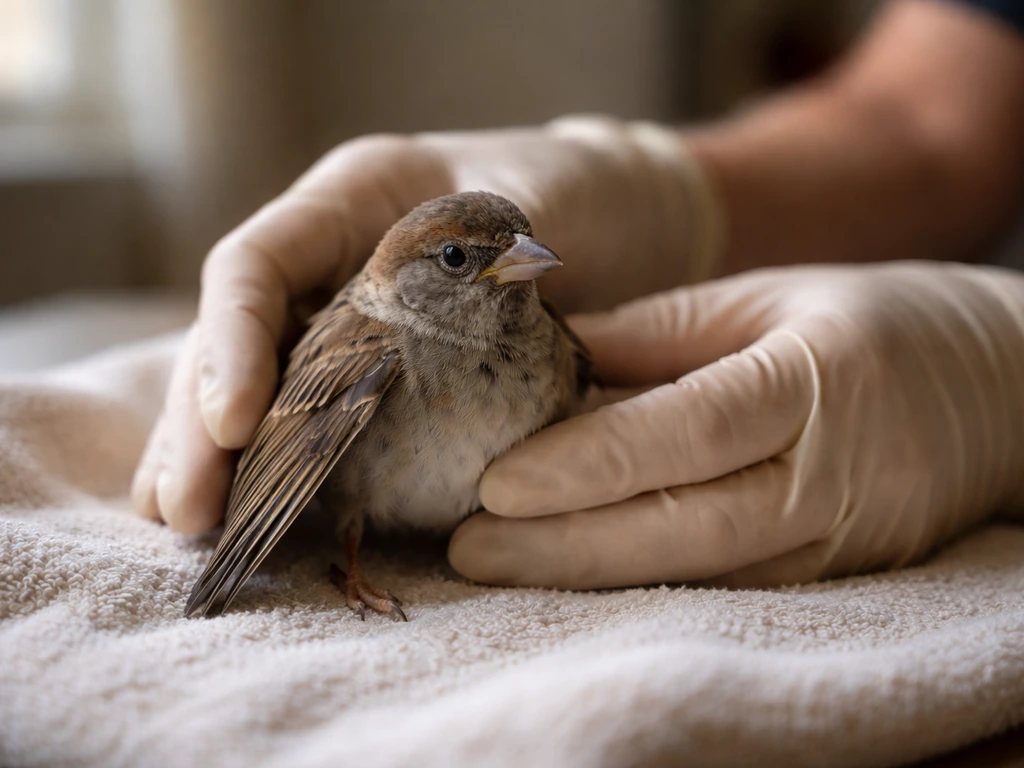
Can a Bird Live With One Wing? Survival and First Aid
Can a bird live with one wing? Injury outcomes and step-by-step first aid, plus when to get urgent help.