The most important thing to know before you give a sick bird anything: feeding is usually not the first step. I know that feels wrong, especially when you're watching a bird sit motionless and want to do something. But offering food or water before a bird is stable can cause choking, aspiration, or make injuries worse. Before you even think about what to feed, you need to focus on warmth, quiet, and safety. That's true whether you've found a wild bird in your yard or you're watching your pet parakeet sit fluffed up at the bottom of the cage. Before we talk food, let's talk stabilization.
What to Give a Sick Bird: Safe First Aid and Feeding
Marcus Chen
10 Apr 2026
Stabilize before you do anything else
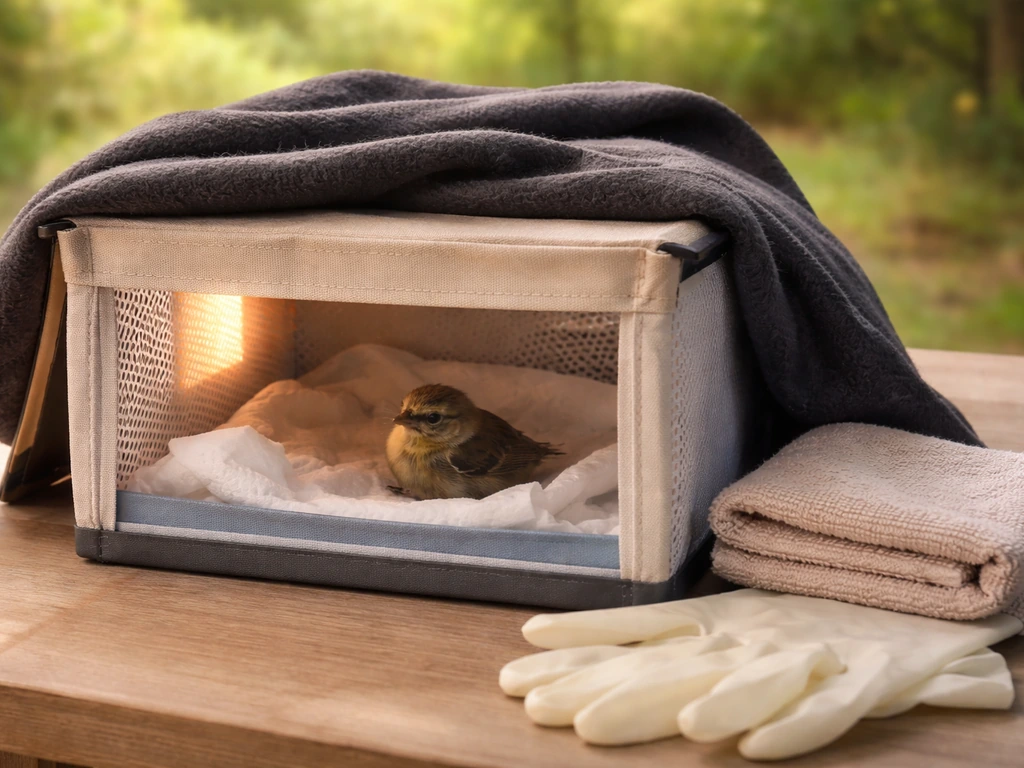
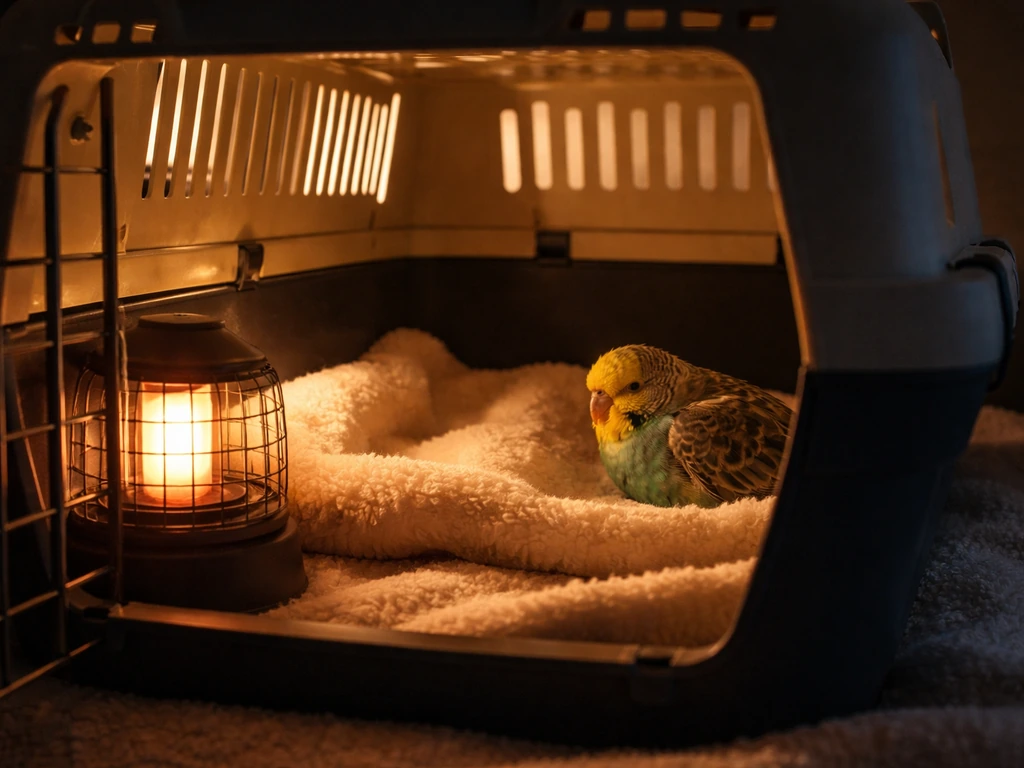
The wildlife field has a saying that applies perfectly here: heat, dark, and quiet. Those three things save more birds than food ever will in the first hour. Place the bird in a ventilated box lined with a clean cloth or paper towel. Keep it in a warm room, away from pets, children, and noise. Avian welfare guidance recommends an enclosure temperature of at least 85°F for a sick or injured bird. A heating pad on the lowest setting under half the box works, or a warm (not hot) rice sock placed nearby. Give the bird an option to move away from the heat source so it doesn't overheat.
Do's before feeding
- Place the bird in a small, ventilated box in a warm, dark, quiet space immediately
- Wash your hands before and after any handling
- Check for obvious injuries: bleeding, broken wings, a drooping leg, or eye trauma
- Keep the bird away from drafts, direct sunlight, and household pets
- Contact a wildlife rehabilitator or avian vet before offering food or water if it's a wild bird
- If you must offer something, check that the bird can hold its head up and swallow on its own first
Don'ts that matter most
- Do not offer food or water to a bird that can't hold its head up
- Do not squirt water directly into the beak or down the throat
- Do not try to feed a bird that is vomiting, seizing, or clearly in respiratory distress
- Do not give milk, bread, cat or dog food, or alcohol-based products
- Do not keep handling the bird to check on it — stress alone can kill an already-weak bird
- Do not leave food and water inside the box unattended; spilled water can chill the bird
If the bird is shaking, tilting its head, or going limp, those are neurological symptoms that go beyond food and warmth. Read up on how to tell if a bird is having a seizure so you can recognize what you're dealing with before deciding on any intervention.
What to feed a sick bird at home (species-neutral basics)
If the bird is alert, can hold its head up, and is showing interest in its surroundings, you can cautiously consider food. The key word is cautiously. For most situations, the goal at home is to keep the bird stable and hydrated, not to provide a full meal. You are bridging the gap until a professional can take over.
For pet birds (parrots, finches, canaries, cockatiels), offer their normal food first. A sick bird eating its own familiar diet is far better than a sick bird eating something new that stresses its digestive system. Soft foods are easier to manage: cooked plain rice, small pieces of soft fruit (apple, melon, mashed banana), cooked egg, or moistened pellets. Avoid anything seasoned, salted, or high in sugar. If your bird normally eats seeds, a small amount is fine, but seeds alone are nutritionally thin for a recovering bird.
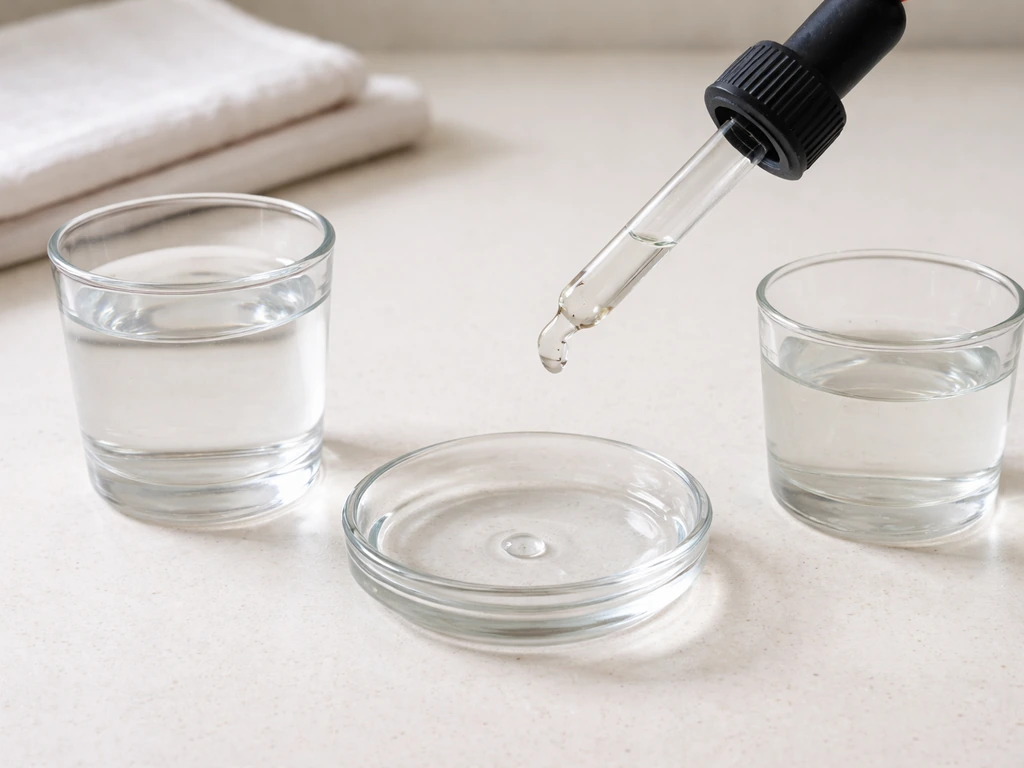
For fluids, a drop of room-temperature clean water placed at the tip of the beak (not squirted in) is the safest approach. The AAV's avian first aid guidance recommends using an eyedropper to deliver water one drop at a time only when you've confirmed the bird can swallow. Electrolyte solutions formulated for birds (available at most pet stores) are a better option than plain water if dehydration is a concern, as plain water doesn't replace lost electrolytes. Do not use human sports drinks, as sugar and sodium levels are too high.
Safe options at a glance
| Food/Fluid | Safe to Offer? | Notes |
|---|---|---|
| Room-temperature clean water (drops) | Yes, with caution | One drop at a time via eyedropper only if bird can swallow |
| Bird-safe electrolyte solution | Yes | Better than plain water for dehydrated birds |
| Cooked plain rice or soft grain | Yes | Small amounts; no salt or seasoning |
| Soft fruit (apple, melon, banana) | Yes | Small pieces; avoid citrus for very small birds |
| Cooked egg (plain) | Yes | Good protein source for weak birds |
| Normal pet bird pellets (moistened) | Yes | Familiar food is less stressful |
| Bread or crackers | No | Low nutrition, can expand in crop |
| Milk or dairy | No | Birds cannot digest lactose |
| Cat or dog food | No | Wrong protein ratios, additives |
| Human sports drinks | No | Too much sugar and sodium |
| Seeds only (long-term) | Caution | Fine short-term but not nutritionally complete for recovery |
Feeding methods: hand-feeding, syringe, and crop feeding
How you feed matters just as much as what you feed. There are three methods people commonly attempt: hand-feeding (placing food near the beak and letting the bird eat voluntarily), syringe feeding (delivering liquid or soft food via a small oral syringe without a needle), and crop feeding or gavage (inserting a tube directly into the crop). Each carries a different level of risk, and one of them you should not attempt at all without professional training.
Hand-feeding
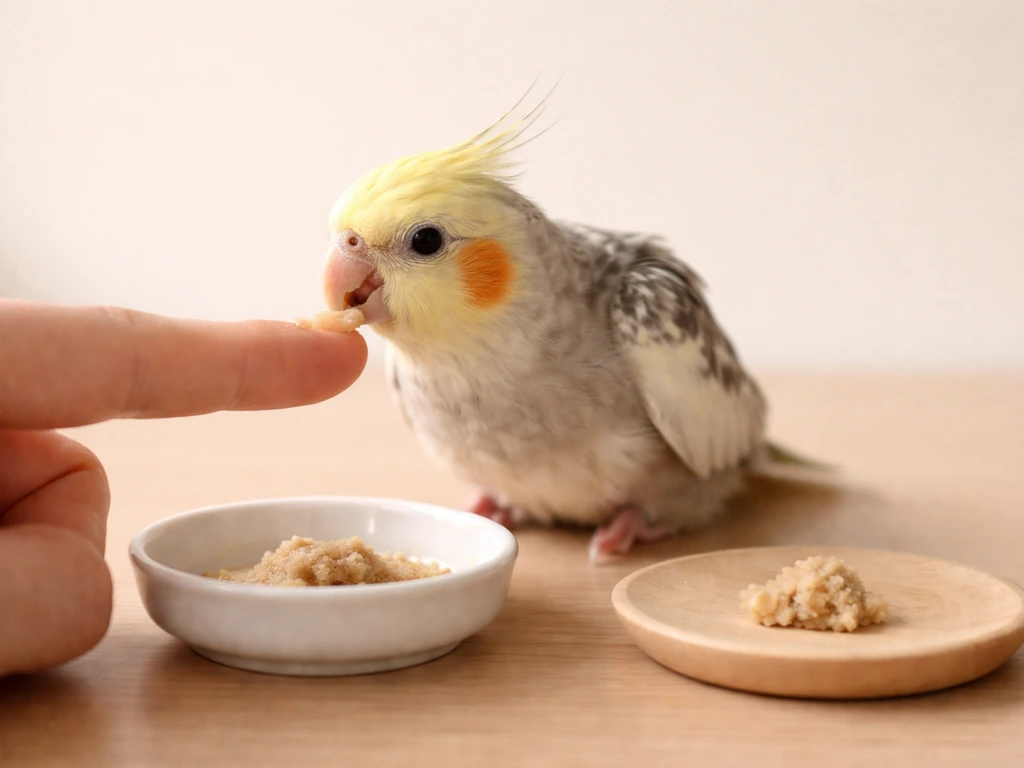
This is the safest method and the one to try first. Place a small amount of appropriate food on a flat surface or in a shallow dish at beak level. Let the bird eat on its own terms. Avian welfare professionals consistently say that enticing the bird to eat voluntarily is the priority. If the bird reaches toward the food, that's a good sign. If it shows no interest at all after 15 to 20 minutes, don't push it. A bird that won't eat on its own is telling you something, and that message usually points toward professional help, not more food.
Syringe feeding
A small oral syringe (no needle, blunt tip) can be used to deliver liquid nutrition or water if the bird is too weak to eat on its own but can still swallow. Gently place the tip of the syringe at the side of the beak and deliver tiny amounts slowly, allowing the bird to swallow between each small push. Never squirt fluid in rapidly. Watch for any gurgling, head shaking, or labored breathing, all of which signal fluid may be going to the airway rather than the esophagus. If you see any of those signs, stop immediately. Aspiration of fluid into the lungs can cause aspiration pneumonia, which is life-threatening. This is also a good moment to consider whether what to give a bird for pain is a question you need answered, since a bird in pain may actively resist feeding attempts.
Crop feeding (gavage)
Crop feeding involves passing a soft tube or gavage needle down the esophagus directly into the crop (a pouch in the throat where birds store food before digestion). Do not attempt this at home. Without the right equipment, species-specific knowledge of tube length, and hands-on training, you can perforate the crop, push the tube into the airway, or cause fatal injury. This is a technique used by avian veterinarians and trained wildlife rehabilitators. If a bird needs crop feeding, it needs a professional.
Wild bird vs. pet bird: the rules are different
This is one of the most important distinctions in this whole article, so stay with me for a moment. The guidance for wild birds and pet birds is genuinely different, and getting this wrong can cause real harm.
Sick wild birds
For wild birds, the official guidance from multiple wildlife agencies, including the Wildlife Center of Virginia, Virginia DWR, AZ Wildlife, and the Washington Department of Fish and Wildlife, is consistent and unambiguous: do not feed or give water unless instructed by a permitted wildlife rehabilitator. This isn't overly cautious bureaucracy. There are real reasons. A wild bird that appears simply weak may actually have head trauma, internal injuries, or disease that isn't visible on the outside. Food can interfere with treatments a rehabilitator will need to provide. Forcing water on a traumatized or dehydrated bird can trigger vomiting or aspiration. The Bi-State Wildlife Hotline puts it bluntly: until you have species-specific instructions, do not feed or water the bird at all.
Your job with a wild bird is stabilize (warm, dark, quiet), contain safely, and get professional help as fast as possible. The bird does not need you to feed it in the next hour nearly as much as it needs you to make a phone call. In the meantime, if the bird seems cold or lethargic, you might also want to read about how to help a cold bird, since hypothermia is often the more urgent problem than hunger.
Sick pet birds
For pet birds in your care, you have more latitude and responsibility. You know the species, ideally the diet, and can observe the bird more closely. The priority is still stabilization, warmth, and minimizing stress. But if your bird is normally eating a specific diet and you can confirm it can swallow, offering familiar food is appropriate while you arrange a vet visit. Don't switch to new foods during illness. Sick birds have compromised digestion and adding unfamiliar items can make things worse. Keep it simple, familiar, and soft.
Also watch for temperature-related distress. Birds can deteriorate quickly from heat as well as cold, and if you suspect overheating played a role in your bird's condition, it's worth understanding how to help a bird with heat stroke as a parallel concern alongside feeding decisions.
Matching what you offer to the symptoms you see
Not every sick bird needs the same thing. Looking at the specific symptoms can tell you a lot about whether feeding is even appropriate right now.
Weak but alert, can swallow
This is the most favorable situation for cautious at-home feeding. Offer small amounts of appropriate food and water drops as described above. Watch the bird eat at least once before leaving it unattended with food. A bird that can lift its head, track movement with its eyes, and swallow water placed at its beak tip is a candidate for gentle supportive feeding.
Dehydration signs (sunken eyes, dry mucous membranes, skin tenting)
Dehydration is serious and needs professional treatment in most cases, because severe dehydration requires fluids delivered in a controlled way. At home, if the bird can swallow, a bird-safe electrolyte solution delivered one drop at a time is a reasonable bridge. But forcing fluids into a dehydrated bird that can't swallow can cause fluid to enter the airway. When in doubt, warmth and professional contact come before any fluid attempt.
Window collision or concussion
A bird that has flown into a window may be stunned but not seriously injured, or it may have significant head trauma. Do not attempt to feed a window-collision bird right away. Place it in a quiet, dark box and wait at least 30 minutes. Many birds recover and fly away on their own. If the bird is still unable to hold its head upright, has asymmetrical eye movement, or appears to be seizing, it needs professional care, not food.
Beak injury
A cracked, broken, or severely injured beak makes self-feeding extremely difficult and sometimes impossible. Soft, moist food placed very close to the beak can be tried, but do not attempt to push food into a damaged beak. This is a situation that needs avian veterinary assessment as soon as possible.
Crop issues (swollen crop, hard crop, regurgitation)
If you can see or feel a swollen, hard, or visibly distended crop, stop feeding entirely. A crop impaction, sour crop (bacterial/yeast overgrowth), or other crop problem is made worse by adding more food. This is a veterinary situation. Same goes for a bird that is actively regurgitating or vomiting. Never feed a vomiting bird.
Respiratory distress
A bird breathing with its beak open, tail bobbing, or making clicking and wheezing sounds is in respiratory distress. Feeding is completely off the table in this scenario. The airway is compromised, and any feeding attempt risks aspiration. If your bird is showing these signs alongside neurological symptoms, resources like how to help a bird having a seizure may give you parallel guidance while you reach a vet.
Force-feeding: why it's dangerous and what to do instead
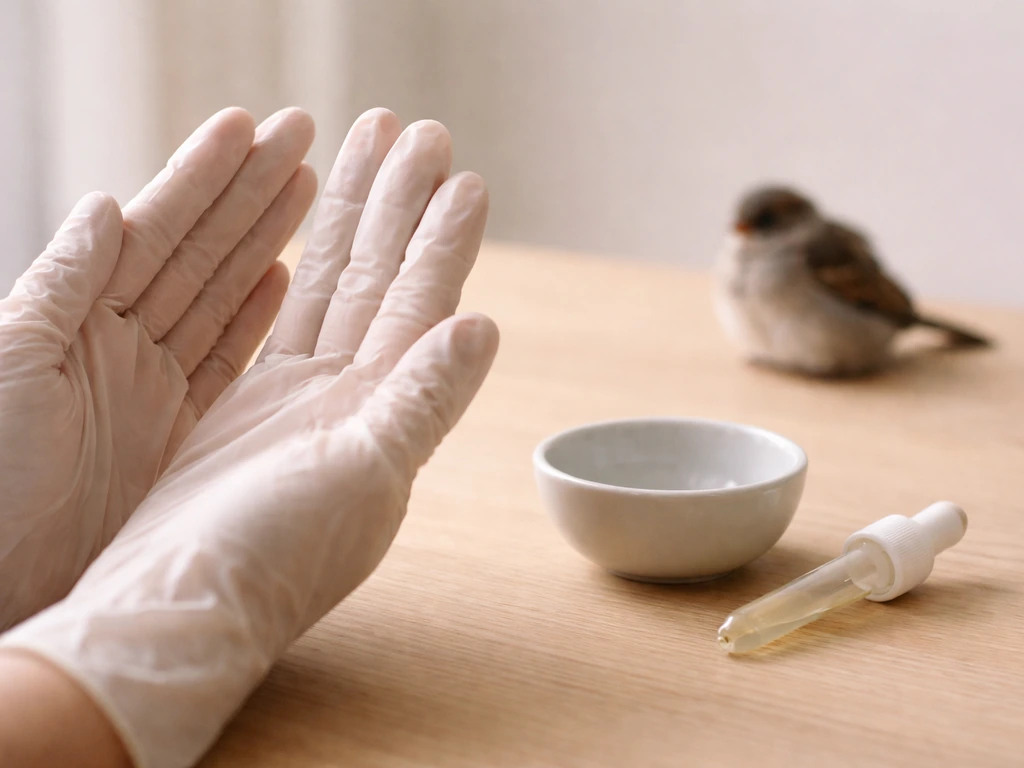
I want to be direct here because this is where people can cause serious harm with the best of intentions. Force-feeding a sick bird, meaning physically prying the beak open and pushing food or water in, is dangerous. The Merck Veterinary Manual specifically states it is strongly recommended not to force feed a bird unless specifically instructed to do so by your avian veterinarian, because birds can inhale food directly into the lungs and develop respiratory infections. VCA-affiliated guidance is equally clear: never force a bird to eat with a syringe or spoon, because it may cause aspiration pneumonia, a life-threatening condition where food enters the lungs.
The instinct to force-feed makes emotional sense. You want the bird to eat. You can see it's losing energy. But a bird that won't eat on its own is either too stressed, too injured, or too ill to safely process food. Pushing food in doesn't fix the underlying problem and adds a new, potentially fatal one.
When force-feeding might be justified
There are situations where assisted feeding is medically necessary, such as birds that are too weak to eat but still have normal swallowing reflexes, or birds with certain diseases requiring medication mixed into food. In those cases, assisted feeding is done by avian veterinarians or trained rehabilitators using proper gavage equipment, correct tube sizing, and careful positioning. It is not casual or improvised. VCA notes that birds who won't eat on their own may need hospitalization for this purpose, underlining that it's a clinical intervention, not a home remedy.
Safer alternatives to force-feeding
- Offer food voluntarily and wait; a bird that feels safer and warmer may begin eating on its own
- Try different textures: finely mashed, very soft food may appeal to a bird that won't take solid pieces
- Place a tiny drop of water or electrolyte solution at the tip of the beak and see if the bird laps it
- Use a blunt-tipped oral syringe to deliver very small drops slowly at the beak corner, stopping if you see any signs of aspiration
- Contact an avian vet or wildlife rehabilitator as soon as possible if the bird still won't eat voluntarily after stabilization
It's also worth noting that seizure-like episodes can sometimes look like a bird struggling to swallow or eat. If the issue you're seeing involves uncontrolled movements or muscle rigidity, read about how to treat bird seizures and how to stop a bird seizure before attempting any feeding, because feeding a seizing bird is never safe.
Red flags: when to stop DIY and call for professional help
There's no shame in recognizing when the situation is beyond at-home care. In fact, knowing when to make the call is one of the most important things you can do for the bird. Here are the signs that mean stop, don't feed, and contact a professional right now.
- The bird cannot hold its head upright or keep its eyes open
- There is visible bleeding, a broken or dangling wing or leg, or an obvious wound
- The bird is vomiting or regurgitating repeatedly
- The beak is cracked, broken, or missing a piece
- The bird is breathing with its mouth open or making respiratory sounds
- You can feel or see a hard, swollen, or impacted crop
- The bird is seizing, trembling uncontrollably, or has lost coordination
- The bird has been attacked by a cat or dog (cat bites especially carry serious infection risk even with no visible wound)
- The bird has visible maggots, parasites, or a foul smell
- The bird has not improved after 30 to 60 minutes of warm, dark, quiet rest
For wild birds, Virginia DWR maintains a toll-free wildlife conflict helpline available Monday through Friday from 8:00 AM to 4:30 PM that can connect you to a permitted wildlife rehabilitator near you. The Wildlife Center of Virginia also has staff available by phone to provide guidance. The National Wildlife Rehabilitators Association and NWRA's directory are good starting points for finding help in other states. If it's after hours, many areas have emergency wildlife hotlines or humane society contacts that can bridge the gap.
For pet birds, an avian veterinarian is your first call. General practice vets vary widely in their avian experience, so specifically look for one who lists birds as a specialty. Have the bird's weight, normal diet, and a timeline of symptoms ready when you call. The faster you get there, the better the odds.
And if you're ever looking for a lighter moment in the middle of all of this stress, there's always the what do you give a sick bird joke to remind you that people have been worrying about birds for a very long time.
The bottom line: feeding a sick bird is not the first response, it's a later step that only makes sense once the bird is warm, stable, and able to swallow safely. Virginia Department of Wildlife Resources also advises not to give injured birds food or water until you have guidance from wildlife professionals only makes sense once the bird is warm, stable, and able to swallow safely. Your most powerful tools in the first hour are a quiet box, gentle warmth, and a phone call to someone who knows what they're doing.
FAQ
What if the bird is sitting fluffed up or weak, but I’m not sure it can swallow?
Yes. If a bird is not upright enough to swallow, you should not place food or water at the beak tip. Instead, focus on warmth and quiet, and contact an avian vet or permitted wildlife rehabilitator. For pet birds, a simple check is whether the bird can hold its head up and swallow when offered a single drop, never repeated forcefully.
How long should I wait before trying food again for a pet bird that won’t eat?
Letting a pet bird skip one normal feeding is usually safer than trying to force it to eat. Do not keep offering small bites continuously if the bird shows no interest, because that can increase stress and aspiration risk if swallowing is impaired. Offer a small, familiar option once, then reassess after a short wait and move to professional guidance if it still won’t eat.
Can I switch to a different food to tempt a sick bird to eat?
Avoid trying to “upgrade” the diet during illness. If your bird won’t eat the familiar soft version of its usual food, that is a reason to get medical help rather than switch to different items. Examples of what to avoid include human foods, bread, dairy, and anything heavily seasoned, because even small amounts can worsen GI problems or cause dehydration through added sugars and salts.
Are there symptoms where I should stop feeding even if the bird seems hungry?
Do not give food or fluids if the bird is regurgitating, actively vomiting, or breathing with an open beak, tail bobbing, clicking, or wheezing. These signs point to swallowing or airway problems, and adding any intake increases aspiration risk.
What should I do if the bird coughs or makes gurgling sounds after a water drop?
If you offer water and you see gurgling, head shaking, labored breathing, or the bird coughing, stop immediately. Those are aspiration warning signs. Warmth and professional help come first, and you should not retry until an avian veterinarian or trained rehabilitator tells you it is safe.
If my bird usually eats seeds, is it okay to give only seeds while it’s sick?
No. Seed alone is nutritionally thin for most sick birds, and it can also worsen recovery if the bird’s digestion is slowed. If seeds are the bird’s usual diet, offer a small familiar amount only as part of normal feeding options, and prioritize soft, familiar foods that are easier to digest.
When dehydration is suspected, can I use electrolytes at home, and how do I know it’s safe?
For pet birds, offering familiar food can be appropriate only after stabilization, and only in tiny amounts. If dehydration is a concern and the bird can swallow, one drop at a time of a bird-formulated electrolyte is reasonable. If the bird cannot swallow reliably, do not attempt fluids at home, because dehydration often requires controlled clinical support.
What if I notice the crop looks full or swollen, can I still give soft food?
If the crop looks swollen, hard, visibly distended, or you notice sour or worsening odor with ongoing digestive trouble, stop all feeding and contact a professional. Feeding can worsen impaction or sour crop, and the correct treatment often involves medical assessment rather than more food.
How soon after a window collision should I try giving food or water?
Do not feed a window-collision bird right away, especially if it cannot hold its head upright, shows abnormal eye movement, or appears to be having seizure-like episodes. Wait in a quiet, dark setup first (about 30 minutes is a practical rule of thumb), then reassess only if alert and swallowing safely.
What if the bird’s beak is cracked or bleeding, can I still offer soft food?
For birds with injuries to the beak, do not push food into the mouth or try to force access past damage. Instead, use warmth and immediate vet or wildlife professional care. If feeding is necessary for survival, professionals can use appropriate positioning and equipment without causing additional trauma.
Is hand-feeding safer than using an oral syringe for a sick bird?
Hand-feeding is usually the lowest-risk assisted option, but only when the bird is alert, upright enough to swallow, and not showing respiratory distress or regurgitation. If the bird leans away, goes limp, or shows swallowing difficulty, stop and switch to stabilization plus professional help.
Why is crop feeding never recommended at home, even if the bird seems weak?
Do not use gavage or crop feeding at home. Even if you think you understand tube insertion, incorrect tube length, angle, or bird positioning can cause fatal injury or place material into the airway. If assisted feeding is truly needed, it must be done by an avian veterinarian or trained wildlife rehabilitator with proper equipment.
If the bird is having seizure-like episodes, should I still offer food or water afterward?
If you suspect seizure-like activity, do not offer food or fluids until the episode clearly stops and the bird can swallow safely afterward. Seizure activity can be mistaken for swallowing trouble, and feeding during or right after uncontrolled movements greatly increases aspiration risk.
If I’ve stabilized the bird with heat, when do I still need to get urgent care instead of waiting?
Warmth can mask urgent deterioration, so use your eyes and breathing status as your decision tools. If breathing looks hard or the bird is worsening despite warmth, you should escalate quickly. For pet birds, being seen the same day is often important when a bird stops eating, becomes very lethargic, or shows breathing changes.
Next Articles
Can a Bird Live With One Wing? Survival and First Aid
Can a bird live with one wing? Injury outcomes and step-by-step first aid, plus when to get urgent help.
Can a Bird Survive With One Eye? What to Do Now
Learn if birds can cope with one eye and what to do now for an injured bird’s eye safely and urgently.
Can a Bird Survive With a Broken Beak? What to Do Now
Learn if a bird with a broken beak can survive, spot danger signs, and do safe first aid until a vet rescues it.