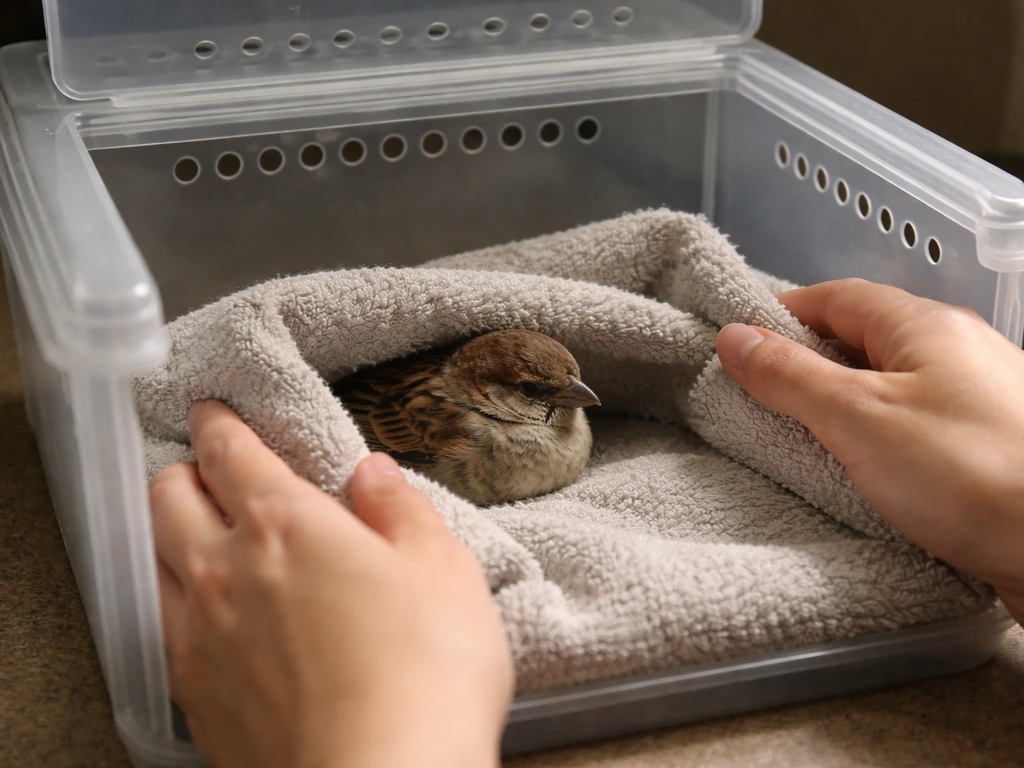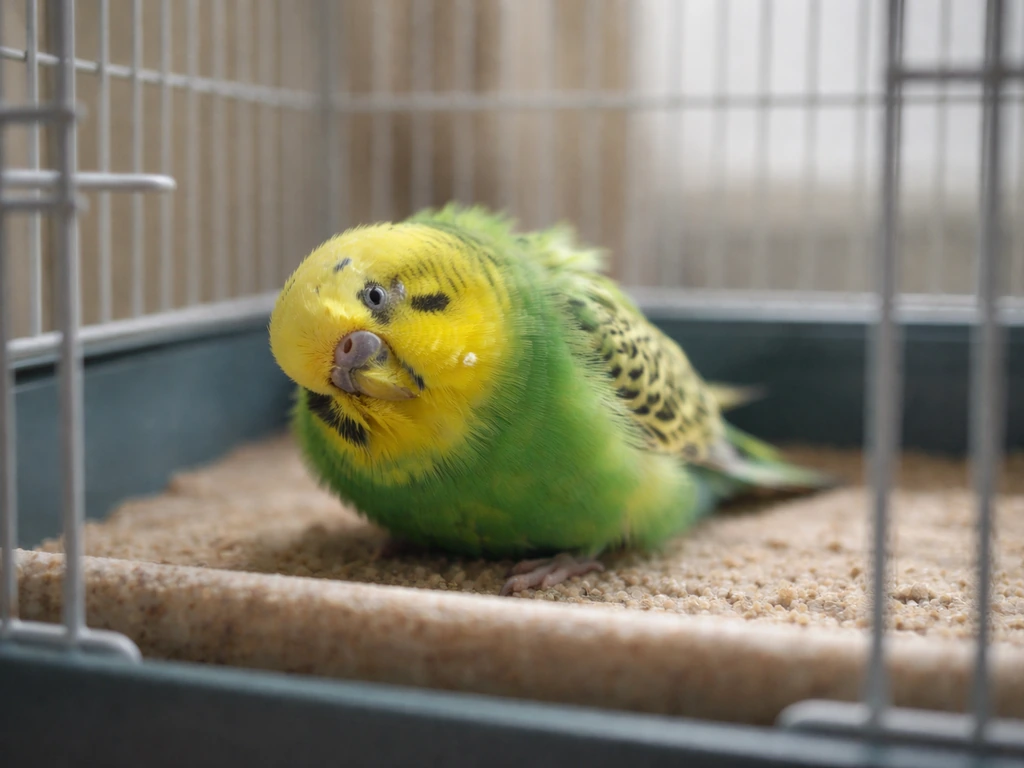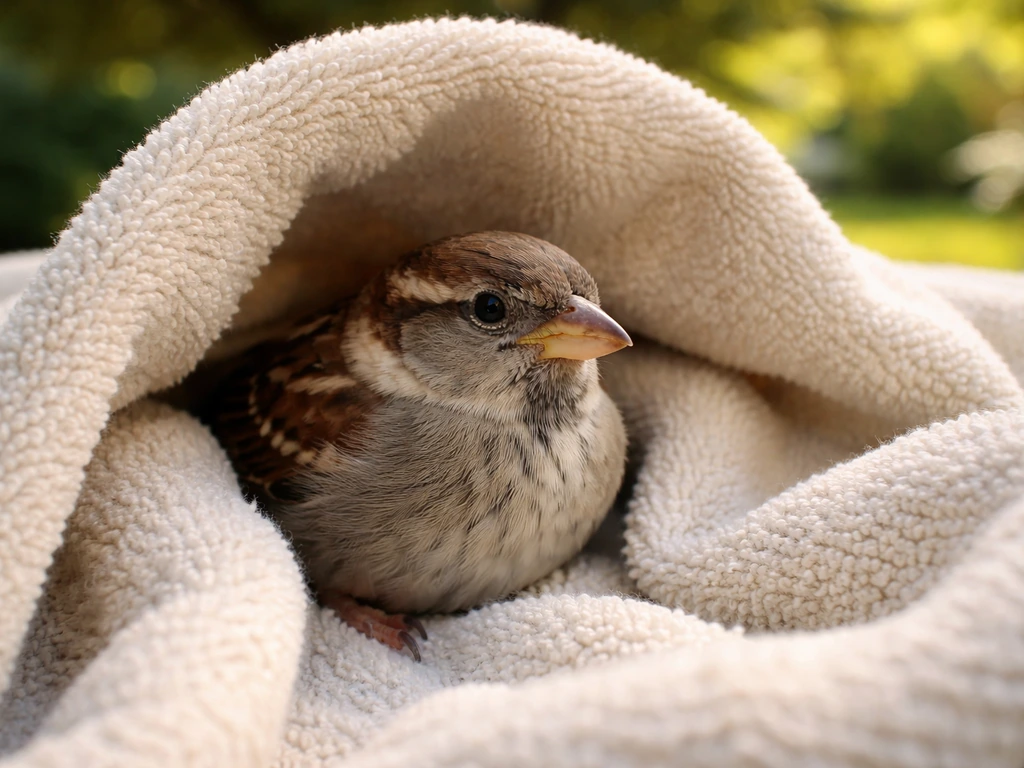
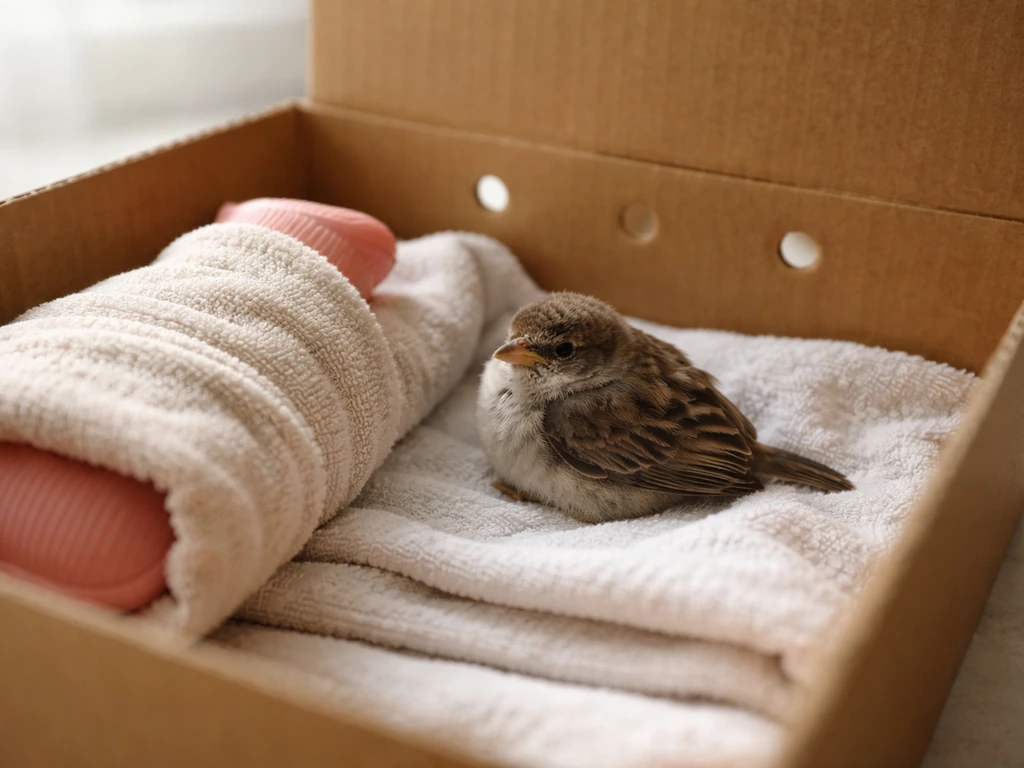
When you find a cold, limp, or unresponsive bird, the most important things you can do right now are: contain it gently in a dark, ventilated box, add a gentle heat source wrapped in a towel, keep it quiet, and contact a wildlife rehabilitator or avian vet as soon as possible. Do not feed it, do not give it water, and do not leave it loose in a room. Most birds that seem "cold" are actually in shock, recovering from a collision, or suffering from an injury or illness, and warmth plus professional help gives them the best chance.
How to Help a Cold Bird: Step-by-Step Rescue and Warming
Marcus Chen
6 May 2026
What "cold bird" usually means (it's rarely just temperature)
A bird that feels cold to the touch, sits fluffed up on the ground, or doesn't fly away when you approach is almost always telling you something is seriously wrong. Birds are warm-blooded and run high body temperatures, so feeling cold is a symptom, not just a weather inconvenience. There are three main reasons a wild bird ends up this way.
- Hypothermia or chilling: Extended exposure to cold, wet, or windy conditions has drained the bird's ability to regulate its own temperature. You'll often see shivering, fluffed-out feathers, and extreme lethargy.
- Shock from trauma: A window collision, a hit from a car, or an attack by a cat or dog can send a bird into physiological shock. The body diverts blood away from the extremities, causing the bird to feel cold even in warm weather.
- Illness or injury: Infection, internal injury, or a broken bone can mimic cold symptoms. A hunched stance, fluffed feathers, labored breathing, or tail bobbing are all red flags that go beyond simple chilling.
It's worth knowing that a bird sitting with fluffed feathers isn't always in crisis, birds fluff up naturally to conserve heat on a chilly morning. The difference is behavior: a healthy bird flies away when you get close. A bird that lets you walk up and pick it up needs help.
Before you touch it: a quick safety check
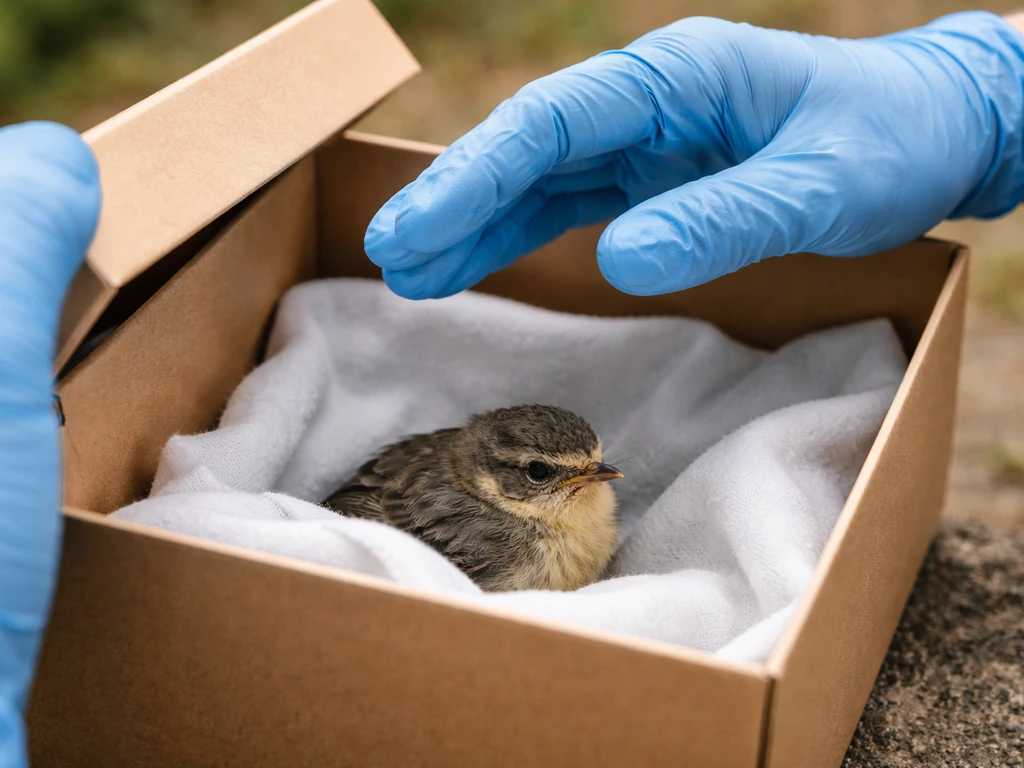
I know the instinct is to scoop the bird up immediately, but pause for just 30 seconds first. This protects both you and the bird.
- Wash or glove your hands. Wild birds can carry salmonella, parasites, and in some regions, avian influenza. Thin nitrile gloves from a first aid kit work perfectly. If you have nothing, use a cloth or paper towel as a barrier.
- Scan for disease signs before touching. If the bird is seizing, has discharge from its eyes or beak, or appears to be in a flock that's dying around it, step back and call animal control or a wildlife authority before handling.
- Look around for hazards. A cat nearby, an open road, or a child reaching for the bird all need to be managed before you focus on the bird itself.
- Keep your movements slow and quiet. Stress is genuinely dangerous for birds in shock. A sudden grab can kill a bird that was otherwise recoverable.
Quick assessment: is the bird breathing and how hurt is it?
Once you've picked the bird up carefully (supporting its body from underneath, with its wings held gently against its sides), do a fast check before you box it up. You don't need to be a vet for this, you're just looking for obvious problems.
- Breathing: Watch the chest or tail. Slow, regular movement is a good sign. Tail bobbing with each breath, open-mouth breathing, or a gurgling sound suggests respiratory distress — that bird needs a vet today, not tomorrow.
- Responsiveness: Does it react to being held? A bird that grips your finger, blinks, or tries weakly to move is in much better shape than one that is completely limp and unresponsive.
- Visible injuries: Check for blood, a drooping wing, a leg that hangs at an odd angle, or wounds around the neck and back (common after cat attacks, even when there's no visible blood). Feel gently along the wings for lumps or breaks.
- Eyes: Both should be open or at least reactive. A closed or sunken eye often means the bird has been ill or injured for some time.
- Feathers and skin: Bare patches, wet or oily feathers that won't lay flat, or skin wounds all suggest this bird has been struggling for a while.
This check should take less than a minute. You're not diagnosing, you're deciding how urgently the bird needs professional help, and whether it's stable enough for a short warming period first.
How to warm a chilled or stunned bird safely
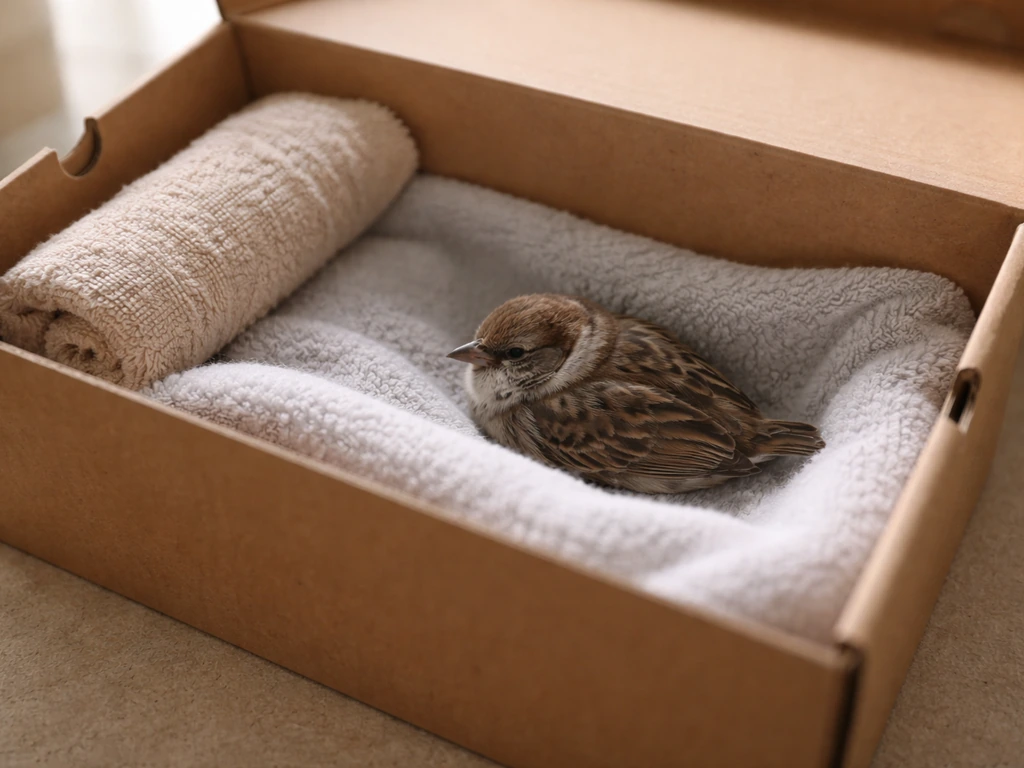
Warmth is the single most helpful thing you can do at home, but it has to be done carefully. Overheating a bird is a real risk, and a bird that burns against a heat source is worse off than one that stayed cold. If you suspect heat stroke, cool the bird only enough to prevent further overheating and contact a wildlife rehabilitator right away Overheating a bird is a real risk.
Setting up the container
Use a shoebox or any cardboard box with a lid. Poke several small air holes in the lid, not the sides, which lets in too much light. Line the bottom with a folded cloth, a small towel, or a few layers of paper towels. Place the bird gently inside and close the lid. Dark and quiet is the goal: darkness reduces stress and helps the bird's nervous system begin to calm down.
The right heat source
The safest options are a hot water bottle wrapped in a towel, or a clean sock filled with uncooked rice and microwaved for about 60 to 90 seconds. Before putting it near the bird, press it against your own wrist or inner arm, it should feel warm, not hot. If it's uncomfortable for you, it will burn the bird. Place the heat source against one side of the box, not under the bird, so the bird can move away from it if needed. Refresh the heat source as it cools. Never use a heat lamp, a heating pad set directly under the bird, or place the box on a radiator. These can spike to temperatures that cause thermal burns before you notice anything is wrong.
Where to keep it and for how long
Put the box somewhere warm, quiet, and out of reach of pets. A bathroom or bedroom works well. Keep the radio and TV off in that room. Leave the bird alone, resist the urge to check on it every five minutes. For a stunned bird (like one that hit a window), check after 30 minutes. Some birds recover quickly and will be fluttering around the box, which means they're ready to release outside. If the bird hasn't improved after one to two hours, it needs professional care. Don't continue warming at home beyond that window hoping it will turn around on its own.
Red flags that mean stop waiting and get help now
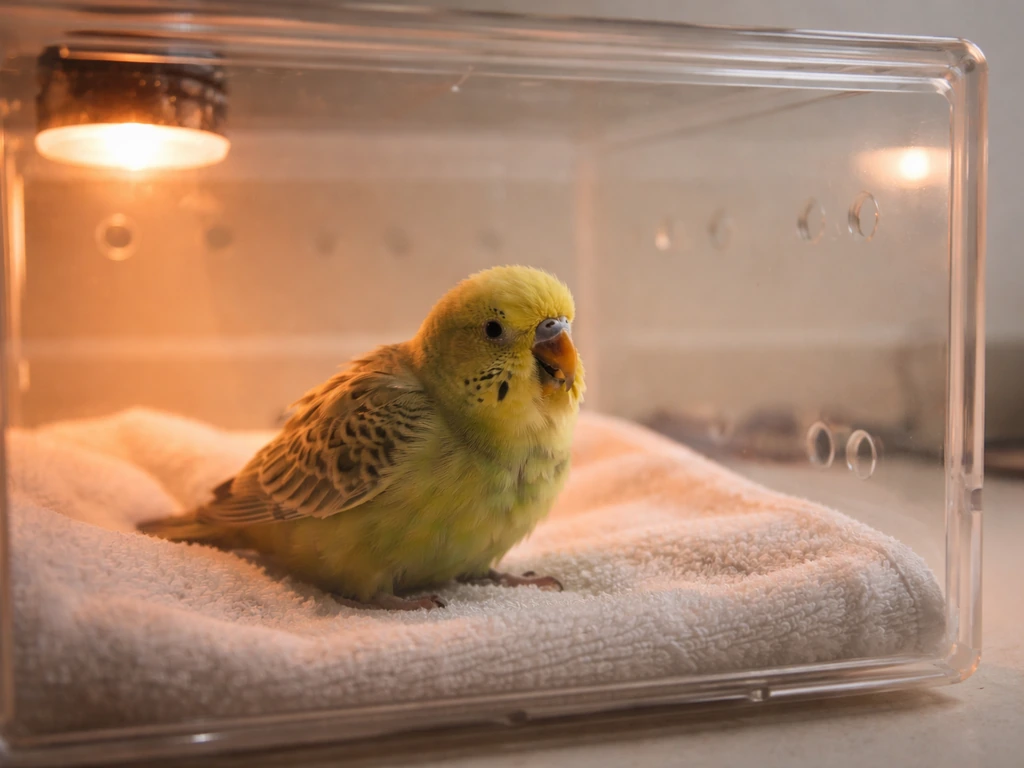
Warming at home is a bridge, not a treatment. These signs mean the bridge is over and the bird needs a rehabber or avian vet right away, regardless of how long you've been warming it.
- Open-mouth breathing or tail bobbing with each breath
- Seizures, tremors, or uncoordinated movement (circling, falling to one side)
- Blood, visible wounds, or puncture marks anywhere on the body
- A drooping or obviously broken wing or leg
- Complete limpness or no response to handling at all
- Visible swelling around the head, neck, or eyes
- Any bird that was caught by a cat or dog, even with no visible injuries
- A bird that was cold and hasn't improved after one to two hours of warming
Cat and dog attacks deserve special emphasis. Even a bird that looks completely uninjured after being caught by a cat will almost certainly die within 24 to 48 hours without antibiotics. Cat saliva carries bacteria that are lethal to birds, and puncture wounds are invisible under feathers. If a cat or dog was involved, treat it as an emergency from the start.
What to do depending on how you found the bird
Window or vehicle collision
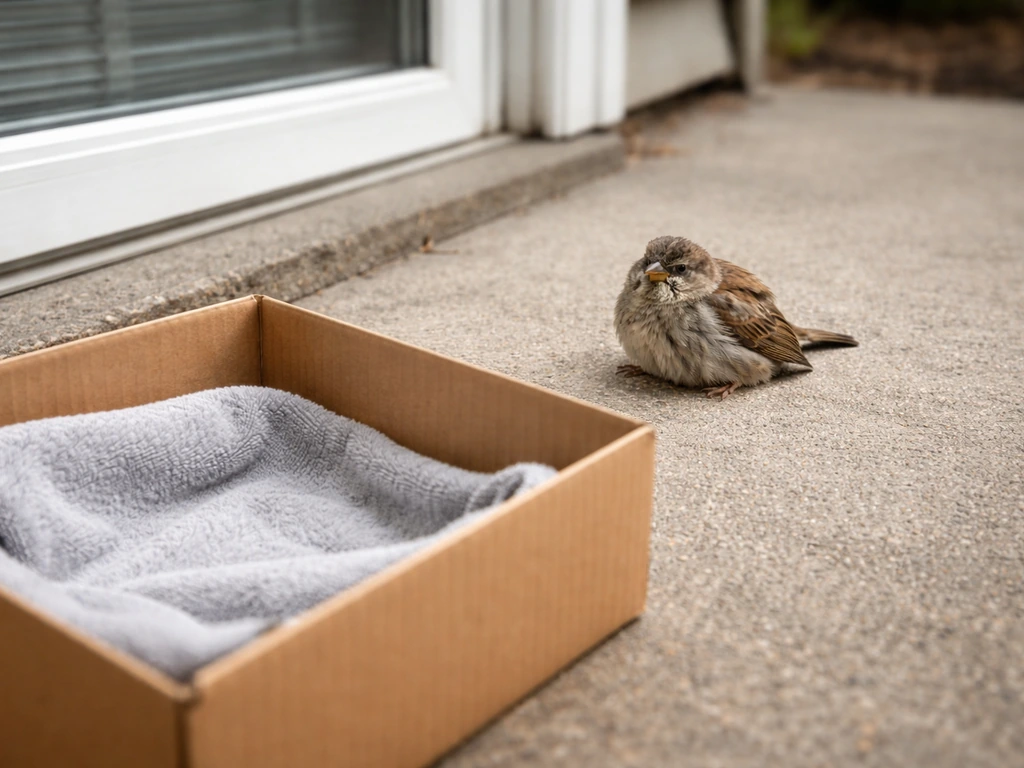
This is one of the most common scenarios. A bird hits a window or car, falls to the ground, and sits there looking dazed. Many birds recover from mild strikes within 30 minutes, they're stunned, not seriously injured. Box the bird up immediately (cats and hawks can find a grounded bird very fast), add a gentle heat source, and place it somewhere warm and dark. Check at 30 minutes and again at one hour. If it's alert and moving strongly, take it outside, open the box, and let it fly out on its own. If it's still sitting quietly or seems unsteady, it needs a wildlife rehabber. Even birds that seem to recover fully can have internal injuries from the impact, so if you have any doubt, make the call.
Cat or dog attack
Do not wait to see if it improves. Contain the bird carefully, keep it warm and quiet, and contact a wildlife rehabilitation center or avian vet immediately. Tell them it was caught by a pet. They'll likely need to start antibiotics very quickly, and time genuinely matters here. While you're waiting to connect with a rehabber, handle the bird as little as possible and keep it in the dark box.
Baby bird or nestling found cold on the ground
First, look for the nest. If you can see it above you and safely reach it, place the baby back inside. The parents will not reject it because you touched it, that's a myth. Then watch from a distance (at least 15 to 20 feet away) for up to an hour to confirm the parents return. If the nest is destroyed or you can't find it, make a small substitute from a berry basket or plastic container with drainage holes, line it with dry leaves or grass, and attach it as high up in the nearest tree as you can reach. Watch again to see if parents return.
If the parents don't return, the bird is injured, or the baby is a naked pink nestling (not yet feathered), it needs a licensed wildlife rehabilitator. In the meantime, warm the baby gently using the same box-and-heat-source setup described above. Do not feed it anything and do not give it water, even if it's gaping its mouth open. Avian Wildlife Center advises not to feed or give water to a cold baby bird and emphasizes that misinformation online about feeding can be dangerous blank" rel="noopener noreferrer">Do not feed it anything and do not give it water. Instead, focus on gentle warming and contact a licensed wildlife rehabilitator for guidance on what to give a sick bird do not feed it anything and do not give it water. Young birds need species-specific diets that are very easy to get wrong, and a well-meaning feeding can cause more harm than going hungry for a few hours.
Bird found cold with no obvious cause
A bird that's cold, fluffed, and lethargic but has no clear injury history is likely sick. Illness can cause all the same symptoms as cold exposure and shock. Box it up, warm it gently, and call a wildlife rehabber or avian vet. If you are trying to decide whether the situation is urgent, start by treating it like a sick bird and get professional guidance quickly Box it up, warm it gently, and call a wildlife rehabber or avian vet.. These birds often look like they just need warming but actually have infections, internal parasites, or organ problems that only a professional can address. If you also notice the bird seems to be having neurological symptoms like tremors or unusual movements, that's a separate emergency you'll want to flag immediately when you call for help. If you suspect seizure activity, that is a neurological emergency and you should treat it as such when you call for help neurological symptoms like tremors or unusual movements. If the bird is showing seizure-like tremors or uncontrolled movements, follow the steps for how to stop a bird seizure while you arrange urgent professional help. If you suspect a seizure, keep the bird warm and contained and call an avian vet or wildlife rehabilitator right away. If the bird is having a seizure or fits, treat it as an emergency and flag the neurological signs when you call for help neurological symptoms like tremors.
Things that feel helpful but can actually hurt the bird
When you're trying to help, it's natural to want to do more. But several common instincts can genuinely harm a bird in this state.
| What to avoid | Why it's harmful | What to do instead |
|---|---|---|
| Feeding the bird (bread, seeds, worms) | Wild birds need species-specific diets; wrong food can cause aspiration or digestive shutdown in a traumatized bird | No food at all until a professional assesses it |
| Giving water | Birds in shock or distress can easily inhale fluid into their lungs (aspiration), which is fatal | No water; keep the bird contained and warm |
| Using a heat lamp or heating pad directly under the bird | Unregulated heat causes thermal burns and overheating before you realize it's happening | Use a warm (not hot) wrapped water bottle or rice sock on one side of the box |
| Handling the bird repeatedly to check on it | Handling causes extreme stress and can push a bird in shock over the edge | Check once per hour, minimum. Leave it alone otherwise |
| Keeping the bird for more than a few hours | It is illegal in most places to keep wild birds without a license, and home care cannot replace professional rehabilitation | Contact a rehabber or vet within one to two hours of finding the bird |
| Releasing it too soon | A bird that can stand in your hand but can't sustain flight will land in a vulnerable spot | Release only if the bird is visibly alert, strong, and flies immediately when the box is opened outdoors |
Getting the bird to professional help
Finding a wildlife rehabber or avian vet near you
The fastest ways to find help depend on where you are. In the US, searching "wildlife rehabilitator" plus your state or county on Google usually surfaces local options quickly. You can also call your state's fish and wildlife agency, a local Audubon chapter, or your nearest humane society, all of them keep referral lists. Animal control dispatchers often know who to call even if they don't handle birds themselves. For after-hours situations, many wildlife rehab centers have emergency lines or at minimum an answering machine with an on-call number. An avian vet (not just any vet, one who specifically treats birds) is a good alternative if a rehabber isn't reachable. General vet clinics can sometimes stabilize a bird even if they're not specialists.
Transporting the bird safely
Keep the bird in the closed, ventilated box for the entire drive. Put the box on the seat next to you or on the floor, somewhere stable where it won't slide. Turn the radio off or keep it very low. Don't open the box during transport. The combination of motion, sound, and handling is genuinely stressful for an injured bird, and keeping everything as calm and dark as possible is the kindest thing you can do during that window.
What to tell the rehabber when you call or arrive
The more specific you can be, the faster they can help. Try to have these details ready:
- What species it is, or a description if you don't know (size, color, beak shape)
- Where exactly you found it (specific location, habitat type)
- When you found it and how long you've had it
- What happened, if you know (window strike, cat attack, found cold in yard, etc.)
- What symptoms you noticed (cold, limp, bleeding, breathing problems, seizures)
- Whether you gave it any food or water
- How you've been keeping it warm
You don't need to have all the answers. Rehabbers are used to getting calls from people who found a mystery bird with no backstory. Just tell them what you know, describe the symptoms honestly, and follow their instructions from there. The fact that you contained the bird, kept it warm, and didn't feed or water it puts you ahead of most people who find an injured bird, you've already done the most important things right.
FAQ
What should I do if the bird won’t stop struggling or seems to panic once I put it in the box?
Keep the box closed and dark, and avoid checking or repositioning it. A struggling bird is often stressed, so placing the heat source on only one side lets it move away if needed. If the bird seems to be overheating (panting, gaping with heat exposure, extremely restless against the warmth), remove the heat source and call a rehabilitator for guidance rather than adding more heat.
Can I use a heating pad at any setting if I wrap it in a towel?
It’s still risky because heating pads can create hot spots and can warm the bird from below. If you only have a heating pad, use it to warm the surrounding room or the outside of the box briefly, not in direct contact with the bird or directly under it. The safest approach remains a hot water bottle or a rice sock placed against the side of the box, warmed to wrist comfort first.
How warm should the bird feel during warming, and how do I tell if I’m overheating it?
You’re aiming for gentle warmth, not a “hot” bird. Pressing the heat source against your wrist for comfort is your best calibration. Signs of overheating include the bird being unusually frantic, moving as if it is burning, or worsening heat stress concerns. If you see those, stop adding heat, keep the bird in the dark box, and contact professional help right away.
How often should I check the bird while it’s warming at home?
Minimize checking. The article recommends a specific window for stunned window-hit birds, but in general you should resist frequent peeking. For most cases, do one check after about 1 to 2 hours, and do not continue warming beyond that if there’s no improvement. Frequent handling increases stress and can delay treatment.
What if the bird is alert and looks stronger after warming, can I release it immediately?
Only consider release if it is clearly mobile and behaves like it can fly, and if it is an outdoor-safe situation. For window-hit birds, the guidance is to open the box after about 1 hour if it’s alert and moving strongly, then let it fly out on its own. If there’s any unsteadiness, even slight, or if you are unsure whether there was an injury, call a rehabber instead of releasing.
Should I give water to a dehydrated bird or one that’s chirping and gaping?
Do not give water. Even if the bird is vocal or has an open mouth, young or injured birds can aspirate fluids, and species-specific needs are different. The safer next step is to keep it warm and contained, then contact a rehabber or avian vet for instructions.
What if I already fed or gave water before reading this, is the bird doomed?
Not necessarily, but don’t repeat it. Stop feeding and do not give more water. Keep warming gently in the box and contact a wildlife rehabilitator or avian vet, especially if the bird is a baby, was caught by a pet, or seems to be coughing, choking, or struggling to breathe.
How do I tell the difference between a chilly healthy bird and one that needs urgent help?
A quick behavioral check helps: healthy wild birds typically fly away when you approach. If it doesn’t flee, sits fluffed and limp, or you can pick it up, treat it as seriously wrong and get professional help. Feeling cold is a symptom, not just weather discomfort.
Do baby birds count as “cold birds,” and should I warm them the same way?
Yes for initial stabilization. If a baby is naked and not yet feathered, or if the nest is missing or parents do not return, it needs a licensed rehabilitator. In the meantime, warm gently using the same box plus side heat-source approach, but still do not feed or give water, because a correct, species-specific diet is critical.
If I find a nestling, when should I stop trying the nest and call someone?
If you cannot safely reach the nest, can’t find it, the nest is destroyed, parents do not return after a reasonable watch period, or the baby is injured or still naked, you should switch to professional care. Keep the baby warm in the box while you arrange guidance, since time matters for survival and stabilization.
What makes cat or dog involvement different from other injuries?
Pet involvement is a medical emergency even when feathers look intact. Cat saliva bacteria can be lethal within 24 to 48 hours, and puncture wounds can be hidden. Treat it as urgent from the start, keep the bird warm in the box, and tell the rehabber or vet it was caught by a pet.
Should I try to stop a seizure-like tremor on my own before calling for help?
Keep the bird warm and contained, and flag the neurological symptoms when you contact a rehabber or avian vet. Do not attempt food or water. If the bird is fitting, follow immediate safety steps you have available, then prioritize urgent professional guidance as the next step.
How should I transport the bird, and is it okay to open the box for quick questions?
Keep the box closed and dark for the entire trip, stable so it doesn’t slide. Avoid opening during transport because motion, noise, and handling increase stress. If you must communicate, do it by phone through the box environment, then continue without delaying care.
What details should I tell the wildlife rehabber or avian vet to speed up decisions?
Describe exactly where you found the bird, what it was doing (fluffed, limp, unresponsive, unsteady, vocal but weak), whether there was pet exposure or a collision (window, car), and how long it has been with you. Also mention what you have already done (contained in a ventilated dark box, warmth method used, and that you did not feed or give water).